Journal of
eISSN: 2373-4310


Research Article Volume 14 Issue 3

Institute of Education, Science and Technology of South of Minas Gerais – IFSULDEMINAS, Inconfidentes Campus, Brazil
Correspondence: Mariana Borges De Lima Dutra, Federal Institute of Education, Science and Technology of South of Minas Gerais – IFSULDEMINAS, Inconfidentes Campus, Brazil
Received: August 13, 2026 | Published: September 1, 2026
Citation: Testa AFD, Dutra MBDL. Study of the impact of front-of-package nutritional labeling on product personification and sensory acceptance using verbal affective scales and emojis in chocolate-flavored wafer biscuits. J Nutr Health Food Eng. 2026;14(3):138-144. DOI: 10.15406/jnhfe.2026.14.00395
Biscuits and cookies are indulgent food items subjected to industrial processing and formulated with various functional ingredients, being widely consumed across Brazilian households. Enacted in October 2022 in Brazil, front-of-package (FOP) nutritional labeling was considered the most significant innovation in food labeling regulations, providing explicit clear-cut information regarding high contents of public-health-relevant critical nutrients. Packaging serves as the primary contact point between consumers and food products, conveying key extrinsic information and acting as a non-sensory determinant that substantially influences purchasing decisions. Consequently, the primary objective of this study was to evaluate the impact of various front-of-package nutritional warning labels on chocolate-flavored wafer biscuits with respect to product personality profiling, sensory acceptance, and emotional responses. The research was executed in two sequential stages: in the first stage, six prototype packaging designs of chocolate-flavored wafer biscuits featuring distinct FOP nutritional warnings were evaluated using the product personification technique by 200 participants; in the second stage, sensory evaluations were conducted on six samples of a single commercial type of chocolate-flavored wafer biscuit from the same national market-leading brand in Brazil, differing strictly in the FOP nutritional warnings associated with them during evaluation, using verbal affective scales and emoji-based emotional response testing. For the data analysis in this study, analysis of variance (ANOVA), Tukey's test, and principal component analysis (PCA) were used. In the Product Personification Test, the results demonstrated that packaging designs with varying FOP nutritional warnings evoked distinct human personality profiles; packaging displaying warning labels conveyed images associated with older, more sedentary individuals, whereas packaging lacking FOP nutritional warnings aligned with younger, physically active profiles. In the second stage, the presence of different FOP warning labels did not significantly impact (p > 0.05) the sensory acceptance of the identical chocolate-flavored wafer biscuit samples. In the External Preference Map, the selected emojis reflected fine variations in participant perception, with a predominance of negative emotional reactions indicating low affective response, potentially driven by the presence of nutritional warnings, thus demonstrating that emoji usage represents an intuitive sensory tool for capturing subtle consumer emotional reactions.
Keywords: external preference mapping, purchase intention, personality profiling, emotional responses
Labels serve as essential communication vehicles between food products and consumers. In Brazil, the National Health Surveillance Agency (ANVISA) and the Ministry of Agriculture, Livestock, and Supply (MAPA) are the primary regulatory authorities overseeing food labeling standards. They mandate the declaration of compulsory information to guarantee food quality and safety while mitigating potential consumer health risks.1
Recognizing that label terminology can often be difficult to comprehend and potentially misleading—particularly regarding negative nutrients that increase the risk of non-communicable chronic diseases—ANVISA approved new regulatory framework standards for nutritional labeling in 2020 through Resolution RDC No. 429 and Normative Instruction IN No. 75, aimed at ensuring clearer and more accessible consumer information.2–4
These revised labeling standards introduce significant structural improvements in label legibility to facilitate product reading and comprehension. A key innovation is the mandatory implementation of front-of-package (FOP) nutritional labeling featuring a stylized magnifying glass icon on the principal display panel. This icon alerts consumers to high contents of nutrients of public health concern, specifically added sugars, saturated fat, and sodium.5
According to the Brazilian Association of Biscuit, Pasta and Industrialized Bread & Cake Industries (ABIMAPI), Brazil ranks as the third-largest global producer of biscuits and cookies, with an annual production reaching 1.5 million metric tons in 2022 and generating revenues of approximately R$ 29 billion. Furthermore, market research indicates that these bakery items are present in over 99% of Brazilian households.6
The bakery biscuit sector is segmented into diverse categories classified according to characterizing functional ingredients or physical presentation. Under Brazilian food legislation, wafer biscuits are defined as products formulated from wheat flour, starch, chemical leavening agents, butter or vegetable fat, milk, and eggs. They are produced as pressed sheets that may be layered with diverse flavored cream fillings.7
Investigating consumer behavior is of paramount importance to elucidate the underlying psychological and sensory drivers governing food purchasing decisions. Adapted from consumer market research, the Product Personification Technique enables researchers to characterize target consumer segments by attributing human personality traits, lifestyle behaviors, and socioeconomic characteristics to inanimate commercial products. This qualitative strategy allows brands to establish deeper symbolic and emotional connections with consumers.8
Sensory traits and emotional responses elicited by food consumption represent critical determinants of consumer food preferences and strategic drivers in new product development. Sensory evaluation methodologies designed to quantify emotional responses during food intake can be effectively integrated with traditional affective and descriptive sensory tests.9
Recent scientific investigations have explored the utilization of emojis as a rapid measurement method for evaluating consumer emotional and affective responses. These pictorial representations have gained widespread adoption in digital communication to express immediate feelings and emotional states, with facial emojis being particularly effective at capturing a wide spectrum of psychological reactions.10
External Preference Mapping (PREFMAP) is a statistical modeling technique based on Principal Component Analysis (PCA) that correlates descriptive sensory attributes or extrinsic features with consumer preference data. This approach yields two-dimensional graphic representations identifying highly accepted product samples while mapping consumer perceptions to specific product characteristics.11 This methodology overcomes the intrinsic limitations of classical affective sensory tests, which aggregate data across heterogeneous populations and frequently fail to capture individual preference patterns across distinct market segments.12
Accordingly, the present study aimed to evaluate the impact of different front-of-package nutritional warning labels on consumers of chocolate-flavored wafer biscuits using the product personification technique to delineate the product's personality profile and consumer expectations, combined with affective sensory tests and emoji-based emotional response mapping.
Prior to study execution and consumer testing, the research protocol was registered on the Plataforma Brasil and approved by the Human Research Ethics Committee under Certificate of Presentation for Ethical Appraisal (C.A.A.E.) No. 77868124.8.0000.8158.
Product personality profiling assessment
To assess the product personality profile via the personification technique, six distinct packaging prototypes for chocolate-flavored wafer biscuits were designed using CorelDRAW® Graphics Suite 2020. The packaging layout followed standard market formats for wafer biscuits, employing a blue and brown color scheme featuring illustrations of chocolate and wafer biscuits to reinforce visual identity. Standard commercial label elements were maintained across all prototypes, including product identity declaration, standardized net weight (100 g, reflecting market averages), and a fictitious brand name ('Dellana').
Prototype construction incorporated contemporary front-of-package (FOP) nutritional labeling regulations. While Brazilian regulations mandate warnings for three critical nutrients—high in added sugar, high in saturated fat, and high in sodium—other Latin American countries (e.g., Argentina, Chile, and Mexico) additionally enforce 'high in calories' warning labels for energy-dense foods.13
Consequently, the six packaging prototypes differed exclusively in their FOP nutritional warning icon configurations: Packaging 1 contained no FOP warning label (control); Packagings 2 and 3 contained single nutrient warnings indicating 'high in added sugar' and 'high in saturated fat', respectively; Packaging 4 featured a 'high in calories' FOP warning icon; Packaging 5 combined two critical nutrient warnings ('high in added sugar' and 'high in saturated fat'); and Packaging 6 incorporated all three warning labels ('high in added sugar', 'high in saturated fat', and 'high in calories'). Figures 1–6 Illustrative packaging prototypes of chocolate-flavored wafer biscuits with varying FOP nutritional warnings.
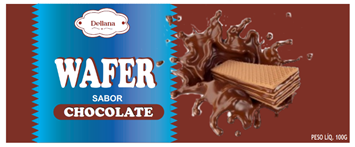
Figure 1 No FOP label.
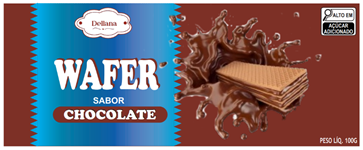
Figure 2 High in added sugar.

Figure 3 High in saturated fat.
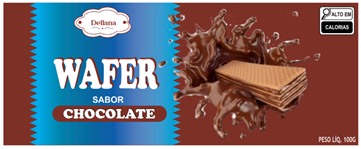
Figure 3 High in calories.

Figure 5 High in added sugar and saturated fat.
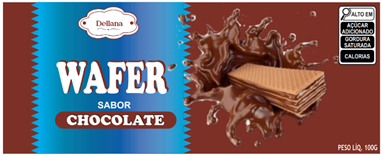
Figure 6 High in added sugar, saturated fat, and calories.
Product personality profiling across the six packaging prototypes was performed via an interactive, exploratory online survey administered through Google Forms. The survey instrument comprised structured sections gathering socioeconomic demographic data and evaluated the perceived personality traits associated with each prototype. A convenience sample of 200 participants was recruited via digital communication channels and social media platforms: Instagram, Facebook and whatsapp, because these platforms target young consumer and the primary household decision-makers. Participants were defined as individuals who completed the entire questionnaire and submitted their responses via the provided link in google questionnaire.
The questionnaire was structured into distinct sections: participant consent and socioeconomic demographic profiling, followed by standardized survey instructions. In subsequent sections, consumers evaluated the personality profile of each packaging prototype sequentially using the product personification technique.
Each prototype assessment section comprised ten standardized items requiring participants to personify the package as a human individual and assign lifestyle, demographic, and character traits, including estimated age, gender, marital status, occupation, personality characteristics, transport mode, physical activity, and dietary habits.14 Questionnaire items were identical across all six packaging treatments evaluated in randomized sequential order. For the data analysis, an external preference map was constructed from the results obtained in the personification test (questionnaire administration) using the Sensomaker® software,15 allowing the identification of the personification test attributes that characterize each prototype
Sensory evaluation of chocolate-flavored wafer biscuits
For sensory acceptance testing, six identical samples of a single commercial chocolate-flavored wafer biscuit from the market-leading national brand in Brazil were evaluated. Samples differed solely in the FOP nutritional warning label associated with them during serving. Biscuits were purchased from retail establishments in Poços de Caldas, Minas Gerais, Brazil, packaged in intact flow-pack plastic wrappers within commercial shelf-life specifications (net weight 92 g).
The commercial wafer biscuits were partitioned and presented in conjunction with distinct FOP warning cards: Sample 1 was presented without any FOP nutritional warning label (control); Samples 2, 3, and 4 were presented with FOP warnings for 'high in added sugar', 'high in saturated fat', and 'high in calories', respectively; Sample 5 featured combined warnings for 'high in added sugar' and 'high in saturated fat'; and Sample 6 featured the complete combined FOP label ('high in added sugar', 'high in saturated fat', and 'high in calories').
Samples were presented to panelists following a balanced complete block design (STONE; SIDEL, 2010). Biscuits were cut into standardized portions measuring approximately 4.5 × 2.0 × 1.0 cm (~5 g per serving) and served on disposable white napkins coded with three-digit random numbers. Potable water (200 mL) was provided for palate cleansing, with panelists instructed to wait 30 s between sample evaluations to prevent carryover effects. Evaluation sheets featured explicit representations of the corresponding FOP warning label assigned to each coded sample block.
Sensory tests were conducted under blind testing conditions in individual sensory booths isolated from the sample preparation laboratory. A total of 120 untutored consumers participated in the sensory session (51% female, 49% male; aged 18 to 64 years), representing a diverse demographic sample. Panelists were not required to have participated in the online personification survey. Sensory acceptance across appearance, aroma, flavor, texture, and overall impression attributes was scored using a 9-point structured hedonic scale anchored at extremes by 1 ('dislike extremely') and 9 ('like extremely').16 Concurrently, panelists completed an emoji check-all-that-apply (CATA) ballot selecting all pictorial emojis corresponding to emotional states elicited during sample consumption.10
Data analysis was performed using Sensomaker® software.15 An External Preference Map was constructed using Principal Component Analysis (PCA) on personification survey frequency data to map descriptive terms characterizing each package prototype. Sensory acceptance scores (appearance, aroma, flavor, texture, overall impression) were evaluated via Analysis of Variance (ANOVA) and Tukey's Honest Significant Difference (HSD) post-hoc test at a 5% significance level (p ≤ 0.05). Principal Component Analysis was further applied to construct an Internal Preference Map correlating overall impression scores with emoji-derived emotional response profiles.
Demographic profiling of personification survey respondents (n = 200) revealed a female majority (71.6%), predominantly aged between 22 and 31 years (37.7%). Regarding household income, 33.9% reported earnings between 3 and 4 minimum wage units. Educational background indicated that 27.3% held postgraduate qualifications, and 44.8% were single.
Preference mapping provides a multidimensional graphical display derived from multivariate statistical analysis, capturing differences in product acceptance and segmenting consumers according to their product associations.17 Figure 7 illustrates the External Preference mapping personification attributes to each prototype packaging design.
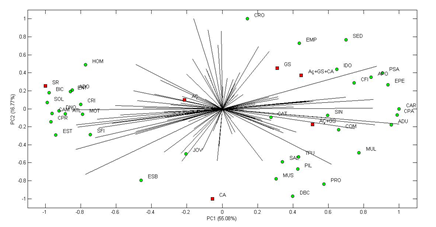
Figure 7 External preference map displaying product personification descriptors and consumer segment associations across packaging prototypes.
Legend: SR = No FOP label; AÇ = High in added sugar; GS = High in saturated fat; CA = High in calories; AÇ+GS = High in added sugar and saturated fat; AÇ+GS+CA = High in added sugar, saturated fat, and calories.
Attributes: CRI = Child; ADO = Adolescent; JOV = Young adult; ADU = Adult; IDO = Elderly (>65 years); MUL = Female; HOM = Male; CPA = Partnered; SOL = Single; SFI = No children; CFI = With children; EST = Student; EMP = Employed; PRO = Professional/Employer; APO = Retired; CAT = Athletic build; CRO = Robust build; ESB = Slender; EPE = Overweight; CPR = Proportional body; SIN = Sincere; ENT = Enthusiastic; COM = Competent; CAR = Car/Truck; TPU = Public transport; MOT = Motorcycle; BIC = Bicycle; SED = Sedentary; ATL = Athletics; CAM = Walking; MUS = Weight training; PIL = Pilates/Yoga; PSA = Healthy lifestyle; SAU = Healthy; DBC = Meat-based diet; DNO = Standard diet.
The External Preference Map projects product acceptance in relation to descriptive personality terms. Prototypes 3 (GS), 5 (AÇ+GS), and 6 (AÇ+GS+CA) were projected in the same multidimensional quadrant.
Packaging 3 (GS) was characterized as an elderly female (>65 years), partnered, with children, employed, possessing a robust body build, sincere personality, using a car/truck for commuting, sedentary, and consuming an unhealthy diet. Packaging 5 (AÇ+GS) was associated with an adult female (30–65 years), partnered, with children, working as a self-employed professional/employer, athletic build, sincere, using public transit, practicing pilates/yoga, and consuming a meat-based diet. Conversely, Packaging 6 (AÇ+GS+CA) was characterized as an elderly female (>65 years), partnered, with children, retired, overweight, sincere, using private motor vehicles, sedentary, and having an unhealthy diet.
In sharp contrast, Packaging 1 (SR—control without FOP labeling) projected into an opposing spatial domain, defining a personality profile distinct from all warning-bearing prototypes. Packaging 1 was personified as a male adolescent (12–18 years), single, without children, student, proportional body build, enthusiastic, commuting by bicycle, practicing walking exercises, and adhering to a standard balanced diet.
These spatial projections demonstrate that Packagings 3 and 6 share close conceptual proximity, establishing similar symbolic profiles in consumer perception. Conversely, Packaging 1 occupies a distinct position, demonstrating a highly differentiated personality profile. According to Avis and Aitken,18 product personality is a multidimensional construct encompassing visual perceptions and subconscious symbolic associations. In the present study, distinct FOP warning labels evoked specific consumer profiles varying in age, gender, and physical activity. This differentiation underscores the capacity of food packaging and labeling elements to 'come alive' symbolically, constructing affective bonds between product identity and consumer self-concept.
Freling et al.19 noted that establishing clear product personality profiles yields strategic advantages, including heightened brand loyalty and consumer self-expression. This phenomenon is evident in multi-warning prototypes like Packaging 5, which was associated with active adult profiles possessing higher health consciousness. Complete warning labels may reinforce trust among health-oriented consumer segments. Delgado-Ballester et al.20 emphasized that commercial products carry symbolic meanings reflecting social stereotypes. The association of Packagings 3 and 6 with sedentary elderly profiles and Packaging 1 with active youth demonstrates how consumers project human attributes onto packaged foods based on visual labeling cues.
Faria and Sousa21 highlighted packaging as a primary marketing component capable of driving consumer attraction. The presence or absence of FOP warnings exerted a profound impact on personification patterns: Packaging 1 evoked youthful, uninhibited associations, suggesting that the absence of warning labels is perceived as an invitation to indulgent, carefree consumption, whereas warning labels signal health risks typical of older demographic groups.
Thomas and Sekar22 noted that personifying a product with adolescent traits does not restrict consumption to teenagers; rather, it appeals to consumers of any age who value youthful attributes. Furthermore, Souza23 applied personification testing to gluten-free bread packaging, finding that detailed ingredient claims were associated with health-conscious profiles, whereas uninformative packaging was linked to sedentary adolescent profiles.
Sensory evaluation of chocolate-flavored wafer biscuits with different front-of-package (FOP)
Sensory acceptance scores for chocolate-flavored wafer biscuit samples evaluated under different FOP warning label conditions are detailed in Table 1.
|
FOP Label Treatment |
Appearance |
Aroma |
Flavor |
Texture |
Overall Impression |
|
SR |
7.82 ± 1.15 a |
7.65 ± 1.21 a |
7.91 ± 1.08 a |
7.88 ± 1.12 a |
7.85 ± 1.05 a |
|
AÇ |
7.78 ± 1.18 a |
7.58 ± 1.25 a |
7.84 ± 1.15 a |
7.80 ± 1.20 a |
7.79 ± 1.11 a |
|
GS |
7.75 ± 1.20 a |
7.60 ± 1.22 a |
7.80 ± 1.18 a |
7.76 ± 1.19 a |
7.74 ± 1.14 a |
|
CA |
7.80 ± 1.12 a |
7.62 ± 1.19 a |
7.86 ± 1.10 a |
7.82 ± 1.15 a |
7.81 ± 1.08 a |
|
AÇ+GS |
7.71 ± 1.24 a |
7.55 ± 1.28 a |
7.78 ± 1.21 a |
7.72 ± 1.22 a |
7.70 ± 1.16 a |
|
AÇ+GS+CA |
7.68 ± 1.26 a |
7.52 ± 1.30 a |
7.75 ± 1.25 a |
7.69 ± 1.25 a |
7.66 ± 1.20 a |
Table 1 Mean sensory acceptance scores across sensory attributes for chocolate-flavored wafer biscuits presented with different front-of-package (FOP) nutritional warning labels
*Means followed by identical superscript letters within the same column do not differ significantly at p ≤ 0.05 according to Tukey's HSD test.
Legend: SR, No FOP label; AÇ, High in added sugar; GS, High in saturated fat; CA, High in calories; AÇ+GS, High in added sugar and saturated fat; AÇ+GS+CA, High in added sugar; saturated fat, and calories.
Sensory evaluation demonstrated no statistically significant differences (p > 0.05) among treatments across appearance, aroma, flavor, texture, or overall impression scores. These results indicate that the cognitive presence of front-of-package nutritional warnings during sensory testing did not alter the immediate organoleptic perception of the product.
This outcome suggests that consumer liking in highly palatable indulgent foods remains primarily driven by intrinsic sensory traits (flavor, crispness) rather than extrinsic nutritional warnings. Indulgent food items are predominantly consumed for hedonic pleasure rather than nutritional value.24 The emotional appeal of chocolate flavor overrides cognitive nutritional warnings during active consumption.
Ulhoa and Marquez25 described food packaging as 'silent salespersons' delivering visual cues that shape expectations. Ribeiro et al.26 found that brand familiarity significantly influenced Pilsen beer acceptability. Souza23 showed that comprehensive label information enhanced gluten-free bread acceptance, whereas insufficient labeling negatively impacted consumer intent, reinforcing the role of labeling transparency.
Figure 8 presents the External Preference Map integrating overall impression hedonic scores with emoji-based emotional response selections across treatments.
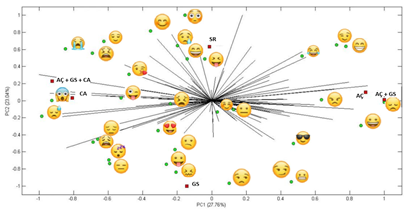
Figure 8 External preference map showing spatial orientation of wafer samples associated with distinct FOP warning labels and emoji-derived emotional response vectors.
Legend: SR = No FOP label; AÇ = High in added sugar; GS = High in saturated fat; CA = High in calories; AÇ+GS = High in added sugar and saturated fat; AÇ+GS+CA = High in added sugar, saturated fat, and calories.
In the preference map, consumer response vectors were widely dispersed across sample quadrants, indicating subtle emotional differentiation. Samples 4 (CA) and 6 (AÇ+GS+CA) projected in close proximity, associated with negative emoji vectors expressing surprise, sadness, and distress


Sample 1 (SR—control) and Sample 3 (GS) projected into distinct quadrants; SR associated with positive/playful emojis


Negative emojis reflect feelings of discomfort, disapproval, and guilt elicited by warning icons. Emojis provided a highly intuitive diagnostic tool for capturing spontaneous emotional responses that traditional 9-point hedonic scales failed to detect.
The results revealed that the majority of the emojis selected by the participants were negative in nature, suggesting poor sample acceptability. This trend may be related to the perception of front-of-pack nutritional labeling on the wafer biscuits. The use of emojis proved to be a direct and intuitive way to capture emotions generated by the interaction with the products and their labeling, highlighting reactions that were not as evident in the previous stages.
According to Santos,27 the use of front-of-pack (FOP) nutritional labeling faces challenges related to the "halo effect," where a positive evaluation of a specific nutrient or the absence of warnings on the front panel of the package can lead consumers to believe that the product is healthier than it actually is. Furthermore, Oostenbach et al.28 point out that FOP labeling also affects product taste expectations, causing foods perceived as healthier to be considered less palatable. Conversely, products featuring warnings for critical nutrients may have their taste perception negatively influenced, being associated with an excess of the ingredient in question.
Previous studies corroborate the efficacy of using emojis in sensory analysis. Cruz et al.29 validated an emoji list to evaluate the acceptance of probiotic fermented milks by children. Positive emojis, such as those expressing joy and satisfaction, indicated greater appreciation of the formulations, while negative ones signaled rejection. These findings demonstrate that emojis are valuable tools for capturing detailed emotional reactions, supplementing overall sensory acceptance data.
Similarly, Jaeger et al.30 investigated the capacity of emojis to characterize food and beverage products. The results showed that positive emotions predominate, reflecting the pleasure associated with consumption, whereas negative emotions, when present, contribute to discriminating between samples. The research highlighted that emojis and emotional words offer complementary insights, both being valid yet non-interchangeable approaches.
Schouteten et al.31 also explored the application of emojis to generate discriminative emotional profiles, particularly in studies involving children. In this context, emojis proved effective in predicting children's food choices, supplementing traditional methods. Although less frequently applied in adult studies, emojis capture spontaneous and intuitive responses. In the case of the wafer biscuits, the use of emojis enabled the identification of emotional perceptions associated with front-of-pack nutritional labeling, offering valuable insights into how these warnings can influence consumer behavior toward indulgent products.
The Product Personification Test demonstrated that front-of-package (FOP) nutritional warning labels significantly modulate the symbolic personality profile of chocolate-flavored wafer biscuits in consumer perception. Packaging featuring warnings for high saturated fat, added sugar, and caloric content was strongly associated with older, sedentary demographic profiles following less healthy diets. Conversely, packaging lacking FOP nutritional warnings was personified as a young, physically active, and enthusiastic consumer.
In sensory acceptance evaluations, the presence of FOP nutritional warnings did not significantly alter hedonic scores for appearance, aroma, flavor, texture, or overall impression, indicating that intrinsic organoleptic pleasure remains the primary driver of immediate acceptability in indulgent bakery products.
However, External Preference Mapping incorporating emoji-based emotional profiling revealed underlying affective nuances, with warning-bearing samples eliciting higher frequencies of negative emotional reactions (discomfort, guilt, concern). Emojis proved to be an efficient, intuitive sensory method for capturing subtle emotional responses to extrinsic food labeling cues.
None.
The authors states there are no conflicts of interest.

©2026 Testa, et al. This is an open access article distributed under the terms of the, which permits unrestricted use, distribution, and build upon your work non-commercially.