Journal of
eISSN: 2373-633X


Review Article Volume 16 Issue 5

Pharmacology Department, Medical Research and clinical studies institute, National Research Centre, Giza, Egypt
Correspondence: Manal M E Ahmed, Pharmacology Department, Medical Research and clinical studies institute, National Research Centre, Giza, Egypt
Received: September 18, 2025 | Published: October 3, 2025
Citation: Ahmed MME. CAR-engineered natural killer cells: advancing next-generation cancer immunotherapy. J Cancer Prev Curr Res. 2025;16(5):125‒128. DOI: 10.15406/jcpcr.2025.16.00589
The advent of chimeric antigen receptor (CAR) technology has catalyzed a paradigm shift in cancer treatment. While CAR-T therapies have shown remarkable success in hematological malignancies, their limitations— especially in treating solid tumors—necessitate alternative strategies. CAR- NK cell therapy emerges as a promising immunotherapeutic platform that combines the innate cytotoxicity of NK cells with the precision of CAR targeting. This review provides an updated perspective on the development, advantages, and current challenges of CAR-NK cells, underscoring their lower toxicity, “off-the-shelf” potential, and applicability in both blood cancers and solid tumors. Technological innovations, clinical trials, and synthetic biology strategies are also explored, highlighting the future trajectory of CAR-NK therapies.
CAR-NK cell therapy is an emerging cancer treatment that combines the power of Chimeric Antigen Receptor (CAR) technology with Natural Killer (NK) cells, which are a type of immune cell known for their ability to recognize and kill cancerous or infected cells.1
NK cells are part of the innate immune system and have the unique ability to detect and destroy abnormal cells, such as cancer cells or infected cells, without needing prior exposure. Unlike T cells, NK cells don’t require antigen presentation and can kill a wide range of targets.
A CAR is a synthetic receptor that is engineered to give immune cells the ability to recognize specific proteins on the surface of cancer cells. Traditional CAR-T cells are T cells that have been genetically modified to express a CAR. For CAR-NK cells, the NK cells are modified with a similar CAR.2
CAR-NK cells are derived from various sources such as peripheral blood, umbilical cord blood, or induced pluripotent stem cells. Once collected, NK cells are genetically engineered to express the CAR, which allows them to recognize and target specific antigens on cancer cells. The CAR on NK cells can be designed to target tumor-specific antigens (proteins) found on the surface of cancer cells. When CAR-NK cells encounter these cancer cells, they bind to the antigen and initiate an immune response to destroy the cancerous cells.3
Chimeric antigen receptor (CAR) therapy has revolutionized cancer immunotherapy, particularly through CAR-T cells. However, safety concerns, cost, and limited efficacy against solid tumors have led to growing interest in alternative platforms. Natural killer (NK) cells, which can recognize transformed cells independent of MHC presentation, offer a compelling solution. Their engineering into CAR-expressing effector cells presents a unique opportunity to overcome the constraints of T-cell-based therapies.1–3
CAR-NK cells are genetically modified to express antigen-specific receptors that enhance their tumor-targeting precision. These constructs typically consist of an extracellular scFv targeting tumor antigens, fused to intracellular domains like CD3ζ, 2B4, or DAP10/12. Compared to CAR-T cells, CAR-NK cells demonstrate innate cytotoxicity, lower incidence of cytokine release syndrome (CRS), and the potential for universal donor use due to their reduced reliance on HLA matching.4
Chimeric Antigen Receptor-engineered Natural Killer (CAR-NK) cells are an emerging platform in cellular immunotherapy, combining the broad innate immune capabilities of NK cells with the precision targeting provided by synthetic antigen receptors. These engineered lymphocytes aim to harness
NK cells demonstrate strong cytotoxic potential while overcoming several limitations of traditional T-cell–based therapies, such as cytokine release syndrome (CRS), neurotoxicity, and graft-versus-host disease (GvHD).5
Molecular architecture of CAR constructs in NK cells
CAR constructs in NK cells follow a modular architecture, similar in principle to those used in CAR-T cells, but with key modifications to better align with NK cell biology:
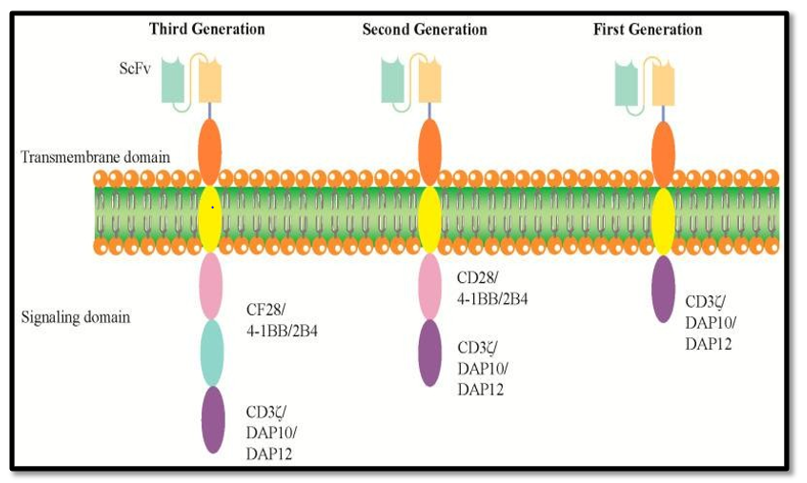
Figure 1 Specific CAR constructs for CAR-NK cells.6
Signaling pathways activated in CAR-NK cells
Upon antigen engagement, the intracellular domains of CARs activate a cascade of downstream signaling events:
|
Feature |
CAR-T Cells |
CAR-NK Cells |
|
Activation Domains |
CD3ζ + CD28/4-1BB |
CD3ζ + DAP10/12, 2B4 |
|
Risk of CRS/GvHD |
High |
Low |
|
HLA Dependence |
Requires HLA matching |
HLA-independent |
|
Tumor Killing Mechanism |
CAR-specific only |
CAR-specific + innate |
|
Allogeneic Use |
Risk of GvHD |
Compatible with universal donors |
|
Cytokine Profile |
High IL-6, TNF-α, IFN-γ |
Mild cytokine secretion |
Table 1 Comparison with CAR-T Cell Design
The molecular design of CAR-NK cells incorporates features of adaptive and innate immunity. By integrating NK-specific signaling domains and leveraging NK cells’ safety and multi-modal cytotoxicity, CAR-NK platforms offer a compelling alternative to CAR-T therapies. Continued research aims to enhance persistence, tumor infiltration, and function in immunosuppressive environments.7
Key distinctions include: Cell Source: CAR-T cells are usually autologous; CAR-NK cells can be derived from multiple sources including:
These diverse sources enable standardized, allogeneic, and scalable “off- the-shelf” products.
Signaling domains: CAR-T cells utilize T cell signaling motifs such as CD3ζ, often combined with co-stimulatory domains like CD28 or 4-1BB to enhance activation and persistence. CAR-NK cells, however, are engineered to leverage NK-specific signaling domains such as DAP10, DAP12, and 2B4, which better align with NK cell activation pathways and functions.8
Toxicity and safety: One of the major limitations of CAR-T therapies is the potential for severe toxicities, including cytokine release syndrome (CRS) and immune effector cell-associated neurotoxicity syndrome (ICANS). CAR- NK therapies secrete lower levels of IL-6 and TNF-α therefore have demonstrated a significantly lower incidence of these adverse effects such as CRS and neurotoxicity due to their distinct cytokine profiles and immune regulation mechanisms.4
Dual targeting capacity: NK cells retain natural killing via NKG2D, CD16, etc.
Broader targeting capability: Natural killer cells inherently possess the ability to recognize and kill tumor cells through various activating and inhibitory receptor interactions, independent of antigen specificity. This provides CAR-NK cells with an advantage in targeting a wider array of malignancies, including solid tumors, which remain a challenge for CAR-T therapies.9
No need for prior sensitization: Unlike T cells, which need prior exposure to cancer cells to be effective, NK cells do not require such priming. This innate capability enhances the readiness and immediate effectiveness of CAR-NK therapies.10
Shorter in vivo persistence: CAR-T cells are designed for long-term persistence and memory formation, which is beneficial for sustained tumor surveillance but can lead to prolonged inflammation and associated toxicities. In contrast, NK cells have a shorter lifespan in vivo, reducing the risk of chronic immune activation while still offering therapeutic benefits.11
Allogeneic compatibility: NK cells’ reduced HLA recognition allows universal donor use.
Expansion and manufacturing: CAR-NK cells lend themselves well to standardized expansion and large-scale, off-the-shelf manufacturing protocols. The ability to create universal donor cell banks further enhances their potential for widespread clinical application and rapid deployment (Figure 2).12
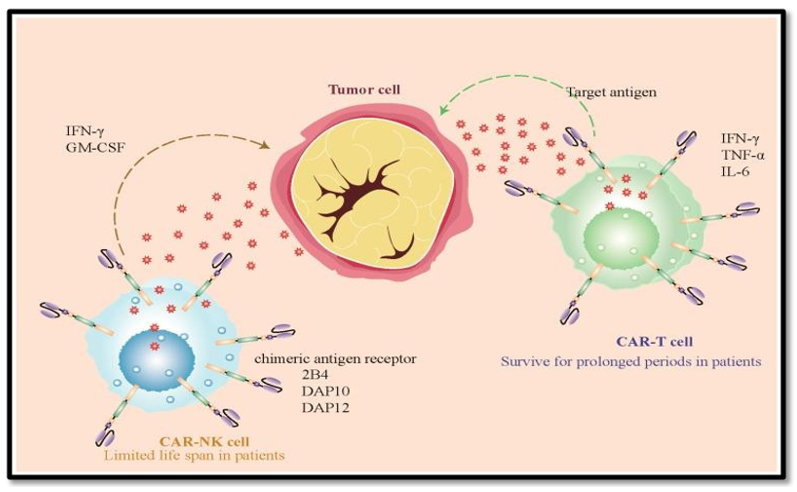
Figure 2 CAR-T and CAR-NK cell therapy mechanisms against tumor cells
The left side of the image represents CAR-NK cells, which recognize target antigen on Tumor cells through CAR. These cells have 2B4 and DAP10/DAP12 as activating ligands and can secrete cytokines such as IFN‐γ and GM-CSF. The right side represents CAR-T cells, which also recognize and bind to target antigens on Tumor cells through CAR. CAR- T cell signaling molecules such as CD3ζ, CD28 and 4-1BB and can secrete cytokines such as IFN‐γ, TNF-α and IL-6; The tumor cells in the center show their target antigens, which are the targets for recognition and binding by CAR-T and CAR-NK cells (Table 2).13
|
Feature |
CAR-T Cells |
CAR-NK Cells |
|
Cell Source |
Autologous T cells (PBMCs) |
Cord blood, peripheral blood, iPSCs, NK-92 |
|
Toxicity |
High (CRS, ICANS) |
Low |
|
Persistence |
High |
Moderate |
|
Manufacturing |
Patient-specific, Complex |
Scalable, Off-the-shelf |
Table 2 Comparison of CAR-T and CAR-NK Cell Therapies
In brief, CAR-NK therapies offer several advantages over CAR-T approaches, particularly in safety, manufacturing scalability, and broader targeting potential. As research and clinical trials progress, CAR-NK therapies are poised to become a critical component of next-generation cancer immunotherapy.
Chimeric Antigen Receptor (CAR)-engineered Natural Killer (NK) cell therapy has demonstrated promising clinical efficacy, particularly in hematological malignancies. One of the most notable applications has been in CD19- positive B-cell malignancies. Clinical trials, such as NCT03056339, have shown that CAR-NK cells derived from umbilical cord blood and engineered to express anti-CD19 CARs, interleukin-15 (IL-15), and an inducible caspase 9 safety switch can induce complete remission (CR) and partial remission (PR) without inducing severe adverse effects such as cytokine release syndrome (CRS) or neurotoxicity.4 These characteristics highlight the favorable safety profile of CAR-NK cells compared to CAR-T therapies (Figure 3).
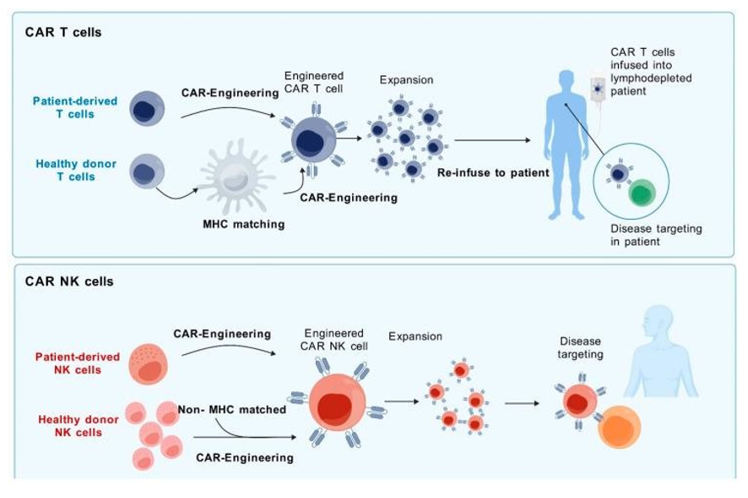
Figure 3 Comparison of CAR-T cell and CAR-NK cell therapy process
The figure illustrates the entire process from cell acquisition to disease targeting for both CAR-T cells and CAR-NK cell therapies. For CAR-T cells, MHC matching is required to prevent rejection. For CAR-NK cells, there is less need for MHC matching.13
Additionally, trial NCT05020678 is investigating CAR-NK therapies targeting CD19 in relapsed/refractory non-Hodgkin lymphoma (NHL), chronic lymphocytic leukemia (CLL) and B cell acute lymphoblastic leukemia (B-ALL). Early data suggest these therapies are well-tolerated and may provide durable responses.
Efforts are also underway to extend CAR-NK therapy to solid tumors, traditionally a challenging frontier for adoptive cell therapy due to the immunosuppressive tumor microenvironment and antigen heterogeneity. Novel strategies include engineering CAR-NK cells with chemokine receptors for improved trafficking (e.g., CXCR4, CCR7), use of tumor microenvironment-resistant constructs, and combinations with checkpoint inhibitors or oncolytic viruses.14
As CAR-NK technology evolves, its role in clinical oncology continues to expand, with the potential to offer an off-the-shelf, safer, and efficacious alternative to current immunotherapies (Table 3).
|
Trial ID |
Target Antigen |
Indication |
Outcome/Status |
|
NCT03056339 |
CD19 |
B-cell malignancies |
CR and PR, no CRS/neurotoxicity |
|
NCT05020678 |
CD19 |
B-cell leukemia |
Ongoing, early positive signals |
|
NCT04319757 |
HER2 |
Solid Tumors |
Under investigation |
Table 3 Selected Clinical Trials Involving CAR-NK Cells
Advances in gene editing (e.g., CRISPR/AAV), cytokine co-expression (IL-15, IL-12), and checkpoint disruption (PD-1 knockout) have amplified CAR-NK cell functionality. Synthetic biology tools allow for more durable, specific, and responsive CAR-NK constructs—opening avenues for precision immunotherapy (Table 4).
|
Innovation |
Purpose |
Example |
|
|
IL-15 Co-expression |
Enhance persistence |
iPSC-derived CAR-NK with IL-15 |
|
|
PD-1 KO |
Reduce exhaustion |
CRISPR-edited CAR-NK |
|
|
Logic-gated CARs |
Increase specificity |
AND/NOT gated NK constructs |
|
Table 4 Synthetic Biology Strategies Enhancing CAR-NK Efficacy
Challenges
Critical hurdles include improving in vivo persistence, enhancing trafficking into solid tumors, preventing off-target cytotoxicity, and standardizing GMP-grade manufacturing pipelines. Emerging strategies, such as metabolic reprogramming and incorporation of suicide switches, are being explored to mitigate these issues.8–10
While promising, there are still challenges with CAR-NK cell therapy:
Future directions
Ethical and economic considerations
CAR-NK therapies may offer a more cost-effective and ethically viable solution due to reduced manufacturing complexity and allogeneic compatibility. Nevertheless, rigorous informed consent, data privacy, and long-term follow-up must guide clinical implementation.12–14
Manufacturing and regulatory considerations
GMP-grade production, quality control, cryopreservation, and scalability are central to CAR-NK therapy development. Regulatory bodies emphasize consistency and safety for allogeneic products.
Combination therapies
Combining CAR-NK with immune checkpoint inhibitors, oncolytic viruses, or radiation may synergize effects in solid tumors. Artificial intelligence can also optimize CAR designs.
CAR-NK cell therapy stands at the forefront of next-generation immunotherapy. Its inherent safety, versatility, and compatibility with synthetic biology position it as a transformative modality in both hematologic and solid tumor oncology. Continued research will determine its long-term viability and integration into routine clinical practice.
None.
The author declares that she has no competing interests.

©2025 Ahmed. This is an open access article distributed under the terms of the, which permits unrestricted use, distribution, and build upon your work non-commercially.