eISSN: 2576-4470


Research Article Volume 9 Issue 3
1Anthropologist, Research Officer, National Centre for Education/Ministry of Scientific Research and Innovation (CNE/ MINRESI), Cameroon
2Ethno-Geographer, Senior Research Officer at CNE/MINRESI and GRAMUR, Cameroon
Correspondence: Henri Yambene Bomono, Ethno-Geographer, Senior Research Officer at CNE/MINRESI and GRAMUR, Cameroon
Received: June 21, 2025 | Published: June 30, 2025
Citation: : Fosso S.R., Yambene B.H. The gendered dimensions of urban survival : street vending among internally displaced women in Yaoundé, Cameroon. Sociol Int J. 2025;9(3):137-142. DOI: 10.15406/SIJ.2025.09.00428
The rising conflicts and limited social security all over, are pushing many families to re-organize themselves in other to acquire and manage their resources. This paper seeks to show how families escaping from the threats of the separatist fighters in the two English speaking parts of Cameroon try to organize themselves in order to gather resources for their well-being in Yaoundé. During crisis, there are tremendous movements of people from one setting to the other; these movements create new realities in families, social settings and professional engagements. These displaced persons who usually arrive in waves bring about changes in some aspect in the society. This is seen in the way marriages, births, and deaths are organized as well as economic activities and health related issues. These changes also create distortion in the way financial, human and natural resources are managed in the community. The determination to cope and make the best out of their lives, usually push them to come out with different livelihood activities. These activities, whether skilled or unskilled enable them to gain financial autonomy and take care of their families. Since men who are usually the breadwinners in their families are directly concern with the fighting on the battle field, they sometimes get killed or are captured while the rest of the family displaces. In this new setting, the woman has to assume the role of the head of household, where she takes care of everyone under her roof. This work will make use of the theory of social change with focus on revolutionary social change by Karl Marx.
Keywords: female, conflict, internally displaced, empowerment, well-being
In February 2021, more than 700.000 internally displaced persons (IDPs) were recorded as a result of the socio-political crisis in the Anglophone North West and South West regions of Cameroon.1 Hundreds of thousands of the displaced are women, who are heading households and rearing children without outside support (International Crisis Group). Women have suffered hugely in the resulting conflict, which has forced most of them to carry out survival activities just to enable them take care of their families. According to Ruiz Abril,2 armed conflicts usually result in economic, social, and political breakdown, and in the immediate aftermath of conflicts, government priorities tend to focus on rebuilding infrastructures and basic services and restoring the economy as a means to serve the immediate needs of the population and create employment. This is because, unemployment tends to be unusually high in post-conflict settings. In many conflict and post-conflict societies, markets do not work and the private sector is almost non-existent as a result of economic breakdown. Infrastructures are depleted with large consequences on women’s ability to access markets.2 Conflicts force many women to move from their original area of settlements to other towns where they struggle and hope for better employment opportunities. Over the years, internally displaced persons have remained one of the most vulnerable groups of people in the society especially women, who find themselves in unsuitable conditions.3 According to Cazabat Christelle,4 internal displacement often leads to a deterioration of living standards because IDPs tend to lose their property, assets, capital, income and livelihoods. Although the Government continues to provide security in conflict-affected areas of the country, the protection situation in the North-West and South-West regions of Cameroon remains a concern. Various assessments reported many communities settled in remote forest areas. They are as well exposed to risks of violence and exploitation (sexual and gender-based violence, arbitrary arrests, forced recruitment of children into armed groups, kidnapping, etc.). Women and children are most at risk of sexual and gender-based violence, while men and boys are generally deprived of their rights to assembly, free movement and association.5 They also often struggle to find new livelihood opportunities in urban areas. For us to give a better understanding to the topic at hand, this paper will answer the following questions. How do internally displaced families organize themselves, in order to gain social and economic autonomy in Yaounde? What are the challenges faced by families that are headed by females in accessing the job market? (Have the public authorities implemented assistance programs? What assistance are they entitled to? Are there private national or international organizations to which they are affiliated? How has movement of people as a result of conflict change the social structure of families? The theory of social change by Karl Marx is taken into consideration to explore the changes that have occurred as a result of the conflict and also the changes that displace women expect to experience at the different strata of the society in order to gain better livelihood.
This research was carried out in the month of March to April 2025. This research was done in Yaounde, the capital city of Cameroon where displaced women from the English-speaking towns are settled. Street vendors are seen at the Accacia, Mendong Nkolbisson, Mvog-betsi, Nsam and Mokolo markets, where there is a high concentration of English speakers. Apart from that, small roundabout has been occupied by some of these women to carry out their activities such as Damas, Etoug-Ebe, Entre Simbock and MEEC carefours.
Population for the study
The population for the study was chosen based on the fact that the women were displaced as a result of the conflict and were carrying out street vending activities in one of the above-mentioned sites.
In depth interview
Data was collected with the help of in-depth interview, where the respondent were asked to respond to the different questions posed to them. The tool for this method was the interview guide. Also, the local council authorities were also interviewed based on this method. This method was used to collect data because of it in-depth attribute. Details about the challenges faced by these women, their different activities and the extent to which they organize themselves to survive were gotten with the help of this technique.
Key informant interview
Key informants were also contacted for the study. They gave us insight of the activities displaced women and how they go about their challenges on the field with the council authorities. Also, council authorities recounted the difficulties they have with street vendors in the different markets.
Snowball
Snowball technique was used to collect data for the study; through this technique it was easy to get respondents. Those identified gave us the contact of other displaced women who were engage in street vending activities.
This was another method for data collection which help in this study. Observation was used to collect information on people’s action in the market place that is where they place their goods, the types of goods that they sell, how they react to council works and how their goods are being seized when they are not in the right order with the council authorities. Though this tool was very suitable to collect data, it had its limitation in that not only displaced women were being challenged by the council authorities’ other women who are not IDPs were part of the situation.
Camera
Photos of those hawking in the market were taken this help to show us the reality of what is happening in the market.
Primary /secondary data
Primary and secondary data were collected differently. The primary data was collected from respondent who gave their opinions and the secondary data was collected from books, journal and other literature.
Informed consent
The project was explained to the respondents and permission was taken from them before their pictures were taken.
Data processing
Data was collected with through qualitative research method. Interview guides were produced. The data collected from the field were sorted according to the theme and sub-themes, direct quotes were removed and date, place and city of the interview were notified. Pictures were inserted in the document for demonstrations. The data was analyses within the content of the subject at hand to produce the results. The findings were discussed and conclusions made.
Challenges in conducting the field work
The main challenge in conducting this field work was lack of access, it was not easy to have access to the displaced women. Not everyone was ready to talk about their activities, since there was no immediate solution to their problems. Also, during interview, the women were so distracted because they wanted to serve their customers, so they had to stop at one point and then come back to continue the interview, this made the interview process unnecessarily long.
Shift in activities for internally displaced women
The continuous struggle for survival by women in the conflict affected regions of Cameroon, has caused unsystematic migration to other towns to seek better livelihood opportunities. This displacement weakened the existing strong economic system that was built to empower women through their activities. For example, the Mbororo women who were specialized in producing milk, yoghurt, butter and cheese from milks actually halted their activity because the cattle were in serious danger, some were stolen and others attacked and killed as a result of the on-going crisis while some herders moved out of the area. In other cases, they could not go far to graze, thereby reducing the quality of their by-product. This activity which was exclusively kept for women for their economic empowerment has lost its ground in this conflict affected area, thereby causing the women to become jobless or engage in gardening around their homes.
Other women moved to big cities like Yaoundé without any knowledge of the social and economic disposition of the town. They move hoping to continue with their farming and trading activities or pick up new and profitable employments. Due to the complexity in acquiring land in Yaounde, the hardship in settling in descent accommodation couple with communication challenges experienced by displaced women and their families, they find it hard to easily cope. In all, these displaced women try to survive by engaging in different economic activities which they think can enable them became financially autonomous. To accomplish this, majority of the displaced women turn into agricultural and non-agricultural activities, and because they cannot easily occupy the public space, they engage in street -vending as an immediate surviving strategy.
Other women hawk non-food items like used clothes, kitchen utensils, mobile phones operators, beauty product and other household requirements. They either move from one section of the market with their goods on their heads or hands and some carry theirs on hand trucks or pushcart while others station theirs on small tables or on the ground at different points in the market depending on available space (Figure 1).

Figure 1 Photo showing article of vendors.
Source: Field work Yaounde 2025 Fosso S, Reine
The above picture shows used dresses that are display on the ground for sale, displaced women buy these dresses in bales and retail them just outside the market because they do not have shops in the market where they can sell. Selling outside the market enable them to access their buyers. They sell at different prices ranging from a 100FRS and above. Over used clothes are sold at a lesser price (Figure 2).
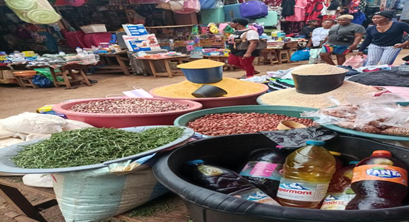
Figure 2 Photo showing food stuff owned by a displaced woman.
Source: Field work Yaounde 2025. Fosso S, Reine
The above photo is showing the different food items that are sold by a displaced woman. Dealing in different food stuffs enables her to attract many clients and make some profit. With this, she is able to sell food that are in and out of season so that she can always have something to offer to the client.
This shift in activity enables the displaced women not to stay on one economic activity as before but to hawk different commodities according to the need of the time. In all of this, the displaced women have to create a network of demand and supply, where they are able to get their goods at all times. The most thought-provoking issues is that, these displaced women lack capital to carry out trade in large scale, in this case, they try to create links with big business owners from whom they can get weekly or monthly supply and pay at the end of the week or month. With this, they are sure of constant supply of goods to hawk that is why they are mostly called “buyam sellam.” These women need to be autonomous and since they cannot get credit from the bank due to lack of collateral to back them, some of them engage in daily savings as a means of gathering money, hoping to expand their businesses. These strategies put in place by displaced women to gain financial autonomy enable them to have a stable life as internally displaced persons. Where they sell food stuff freshly harvested from the farm like corn, vegetables and fruits.
Extend to which the state has assisted internally displaced women to became economically empowered
Cameroon’s socio- economic profile is challenging, ranking 151 out of 191 in the human development index in 2021-2022 with high rate of poverty, limited access to basic services and lack of opportunity, with the informal sector dominating with agriculture being the primary sector which employs a great majority of the population especially women.6 According to international organization for migration 2024 (IOM),7 humanitarian need for internally displaced persons in Cameroon remain high while funding for humanitarian assistance on the other hand remains very low to meet the much-needed assistance.
However, it has been noticed that internal displacement and related needs have expanded to the neighboring cities of Cameroon like Douala, Bafoussam as well as communes in Yaoundé. Looking at this, the head of state took the initiative to put in place the emergency humanitarian assistance plan for the Northwest and Southwest regions where some priority areas were identified as follow, protection of displaced persons, food and basic needs, healthcare, education, the resumption of the economic and agricultural activities, housing, and the reconstitution of individual administrative documents.
Apart from this, there are specific actions carried by the state to meet the need of IDPs seeking safety in Yaounde. In this case, the Cameroonian government, in collaboration with humanitarian organizations, provides assistance to internally displaced persons (IDPs) from the North-West and South-West regions living in Yaoundé, focusing on protection, food, shelter, and other basic needs like cash assistance which is given to very vulnerable sets of IDPs. Even though IDP women are usually considered to be vulnerable, especially those who are head of households, they hardly benefit from cash assistance from the state.
The extent to which displace women organize themselves to survive
Village and religious networks are the most common set-ups through which internally displaced women associate themselves to survive. Women who have displaced as a result of the crisis struggle to get connected to their village associations already existing in the city of Yaounde. With this, the women are able to get information about where and how to get lucrative jobs as well as to get commodity for sale. These existing networks are usually very helpful to displaced persons because through them, this category of women can easily find their feet in the community.
To survive in an area with already existing social and economic challenges, makes it hard for them to excel to their full potentials, especially when family responsibilities need to be handled by these same women. They still manage to organize themselves in such a way that will enable them cope. Women with children usually involve their children in their activities; they give some of their articles to their children to sell alongside with them. These articles range from food stuff to non-food items.
Women who roast different food items like corn, plums, plantain and cocoyam usually expand their sales by giving some of the roasted stuff to their children to hawk in and out of the market. This helps them to reach out to those who cannot displace themselves just to buy the above-mentioned items. Children of displaced women play a very vital role in their survival process. With their young and dynamic nature, these children can easily access every part of the street and the market with their goods, and make huge revenue for their mothers. Other women choose particular days to hawk their goods and the rest of the days they go to their farms and others spend the whole week hawking hoping to make much money from the sales, in order to settle the high cost of living in the city of Yaoundé (Figure 3).

Figure 3 Displaced woman vending cooked food in Yaounde
Source: Field work Yaoundé 2025 by Fosso S. Reine
The above picture presents a woman carrying cooked food in a one-wheel truck, she moves around in the market and serve food to those willing to buy. This makes access to her client very easy. On the other hand, she might not find it easy with the tax collectors who may want her to pay some token before having access to the market space.
Apart from this, internally displaced women organize themselves in to small credit unit usually call “njangi”, within their village association. This is usually done by carrying out monthly savings. Village associations are very credible because they enable these internally displaced women to take small loans with little interest rate. The interest rates are kept very low so as to enable them take loans and pay without constraints. The churches also play a central role in assisting internally displaced women in their survival process. Different churches have given various names to the sections that takes care of the humanitarian needs of their Christians. These names are as follow, in the Catholic Church it is known as caritas while in the Presbyterian Church it is called Diakonia committee Fund Drive and in the Baptist church it is called property and maintenance committee.8 They provide services to displaced women which can enable them became autonomous. They train them on the production of detergent, sewing, hair dressing, baking etc.
After the training, the women are expected to start a business project from which they can sustain themselves as well as their families and not always run the church for financial assistance. Aside from this, these humanitarian sections also give financial assistance to very vulnerable and illness-stricken women who are not able to do anything for themselves. In some cases, they send their children to school and provide feeding for them.
Challenges faced by internally displaced women in carrying out their activities
As displaced person, they think that moving to a town like Yaoundé where there is no crisis, will enable them to go about their businesses with no pressure. This is far from being true, especially in a time when the government is trying to put order in the city of Yaoundé by chasing those who are hawking in public spaces and other reserved areas. In January 2025, the city mayor of Yaoundé banned hawking in strategic areas in the city, in his release, he said, his decision followed increasing concern about street congestion, safety hazard, and the growing concern about the disruption caused by the presence of informal vendors in public spaces.
This new regulations targets street vendors operating in portable and makeshift setups. The message was not well received by those carrying out street vending. Internally displaced women who have lost everything as a result of the on-going crisis and are trying to recuperate are those highly affected by the above decision. They see this as an attack on their source of living. The city mayor promised to lay legal sanctions on those violating the ban in line with the law in force. Most of the time, the city mayor moved around with forces of law and order and seized the goods of these street vendors, to the extent that the vendors have nicknamed them “awara” which means coming. This change in the social sphere is not positively received by people who are coming out from crisis and want to make a living in a new area where they think it is conducive for them.
Each time one of the vendors pronounce the word “awara”, the others immediately carry their goods and run away because they know the forces of law and other and the council workers will seize them. Both food items and non-food items are seized and carried together in the same truck to the council, thereby leaving these vendors unemployed. It has been realized that in the absence of formal sector employment, markets seem to be the easiest entry points for new immigrants in African cities to connect to the urban economy.9 This is true for Yaounde with the high influx of internally displaced women from the crisis affected areas, who are seeking to have a sustainable livelihood by involving in vending activities.
At the level of the local council
The effect of the on-going conflict in the Northwest and South region is felt in the council and most especially in the markets. The overcrowding in the markets in Yaounde especially those mentioned above are as a result of the arrival of internally displaced person with women and children being at the top. With this, the local councils have to play their roles which is to provide services to the community like markets, secondary road, water and sanitation etc and to generate revenues through the collection of market tax and tolls which their administration highly depend on. Those hawking are given daily amount of 150FRS to pay and a ticket is issued upon payment. According to information gotten from one of the key respondents.
“On Saturdays we are expected to pay a sum of 500FRS and we are not given any receipt and they only collect the money and do not give us where to sell our goods it is too much for us. If we do not pay this money our goods are seized and destroyed. My goods were seized by the council because I was on the street and they said I was blocking the way for people to pass, I had to pay a sum of 2000FRS for it to be release” (April 2025, 10,45 am Yaoundé, Acacia market ).
This is very and often challenging for most hawkers who have to pay even when they have not sold. This puts the vendors and the council authorities in constant conflict because the vendors try to escape from these taxes saying that it is too much for them to pay. Internally displaced women who depend on small capital to start their businesses find it difficult to easily integrate because of the constant upheavals with council officials who are out to collect revenues irrespective of people’s financial situations or their displacement challenges.
Vendors are required to pay tax on the space they occupy, sanitation tax, publicity tax etc. depending on the types of articles they are hawking. Since these vendors need to sell and make some money, they try to escape from the tax collectors and hid themselves in nearby shops. Some hawk in the afternoon because they know the council administrators will pass round and collect taxes in the morning. Street vendors come out with all types of strategies that can enable them escape from paying taxes to the local as well as municipal councils. Women who sell fruits and vegetables think that what they are asked to pay as vendors is more than what they gain from their sales. This is because their goods get perish easily and nobody compensates them for the lost neither the council but they expect them to pay tax.
Laws regulating street vending in Yaounde
Street trading is carried out in public spaces that are not specifically designated for trade, and as such, it enters into competition with other urban services such as traffic flow, access to buildings and other commercial activities in the city.10 Besides that, street vendors carry out their activities on pavements and on the alignment of buildings, where they are expected to have a setback of four meters from the building. In Yaoundé, street vending is regulated by Cameroon's 1990 Law on Commercial Activity (though a 2015 law replaced it, the 1991 regulation remains in force) and a Ministerial Order to regulate Itinerant Trade (Commerce Ambulant).
Street vendors are required to pay for the temporary occupation of public spaces, which is the first administrative and fiscal recognition of their presence. On march 2023, the special fund for equipment and inter-municipal intervention (FEICOM) in collaboration with other institutes, like the university of Douala, came out with and online platform to collect tax from street vendors. The project was called infom’All city, the purpose of the project was to invite vendors to register on the platform and benefit from a selling place officially offered to them by the municipality, that way they are legally recognized as vendors. This was done in collaboration with the local authorities where the local development tax is collected and the value added tax (VAT) is also required from street vendors. Revenues collected from street vendors are used to carry out developmental projects in the city of Yaoundé like the building and expanding of markets etc.
Tax regulatory challenges faced by internally displaced vendors
All business operators are required to comply with the tax situation of their council area. But we realized that this situation usually falls short from being true because of the business environment where the internally displaced women find themselves. They believe that there is a lot of corruption at the level of the tax collectors. This is seen in the inadequate law enforcement and inconsistent regulations of taxes that cause vendors to become frustrated and do not comply with tax regulations.
Also, the rent seeking attitude of tax collectors and the owners of make shift stores usually disappoint these women. Come to think that they have to pay rent to the owner of the space they are occupying and also pay taxes to the local council. All these are usually very challenging to them especially as they are struggling to pick up from the crisis situation. Regulatory challenges have affected internally displaced women who are said to be low-income persons and depend steadily on street vending for livelihood. Some of them need to sell and pay their rents, school fees for their children and feeding for their families.
New contours of the family in relation to public policies
New family dynamics actually stem up as a result of conflict and displacement. Most of the women who have displaced from the Northwest and Southwest region are faced with new shift in social, economic and political connectivity which in turn pose directly on child upbringing. The change in social setting, new neighborhood and different interactive network and financial opportunities create a shift in all the facets in the displacement trajectory. The family which is the smallest unit in the society are often very much affected by this change. Mothers prefer to carry their children with them to the market because they do not trust those in their environment. These women are not aware of the danger they are exposing their children to by bringing them to public spaces at very tender ages (Figure 4).
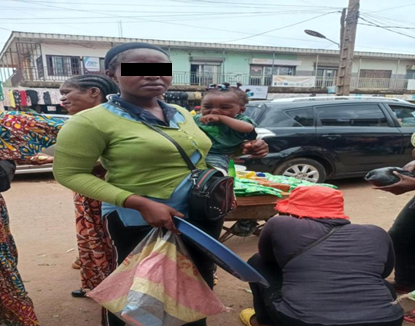
Figure 4 Photo of a displace vendor with her child in the market.
Source: Field work Yaoundé, 2025. Fosso S, Reine
The above photo shows a young lady who is carrying her child and selling in the market, she moves from one end of the market with her baby because, she has to take protect her and provide feeding and shelter. She has decided to come with her to the market because she does not have anyone to take care of the child. It might also be that she does not trust those around to guide her child because of cultural differences.
Also, this change causes displaced women to lose their power of self-reliance and begin with a dependency policy and affects their decision-making quality in the society. Since they have to fend for their children, they carry the very tender ones on their backs while they hawk and the little ones of school age assist them in the market, because they have been driven from school because they lack tuition fee. The family adopt new work shift and child upbringing practices. In cases where the woman is the head of house, she organizes in such a way that the children stay with their neighbors while they go to the market. On the other hand, elder children became a source of emotional strength, moral stability and familial support for the displaced women especially in families that are led by female head of house. However, the shifting of community has led to isolation from Kins, natal family member’s friends as well as neighbors. This change in social structure affects the cultural stability of the society and the values and norms which are acquired in a stable environment. According to Yemmafouo,11 street vending creates a new form of socialization, especially among young children from different background. This continuous contact with the market space can create violent gangs, pick pockets as well as future business men and women through power relation and sharing.
Conflict will continue to push people out of their original settlements to new areas. The continuous struggle for survival by women in the conflict affected regions of Cameroon, has caused unsystematic migration to other towns to seek better livelihood opportunities. This displacement weakened the existing strong economic system that was built to empower women through their activities. As displaced persons, these women try to create new networks through cultural as well as religious associations. This study reveals to survive in an area with already existing social and economic challenges, makes it hard for them to excel to their full potentials, especially when family responsibilities need to be handled by these same women. Our results also show that displacement is associated with changes, these changes being voluntary or involuntary are presented in the social, economic and political sphere of those concern. Displaced women engage in gainful activities even those that they have never carried out, as a means of obtaining economic autonomy. With limited capital they are force to carry out street vending in and around the market and in other public spaces.
On the other hand, street vending had been banned in Yaoundé following a release by the city Mayor in January 2025, who said, his decision was taken following increased concern about street congestion, safety hazard, and the growing concern about the disruption caused by the presence of informal vendors in public spaces. All this is as a result of the continuous influx of displaced persons due to the on-going crisis in the two English speaking regions. The above decision has not stopped the city mayor and the council officials from collecting taxes from these street vendors on daily bases and on weekends like Saturdays. A total of 1700 per week and a sum of 6,800 per month is collected without providing them with any direct services. To assist street vendors, gain recognition by the state, a special project called infom’All city, was put in place on March 2023, by the special fund for equipment and inter-municipal intervention (FEICOM) in collaboration with other institutes, like the University of Douala. They came out with and online platform to collect taxes from street vendors. This project failed to meet the need of street vendors due to the irregularities and inconsistencies in the adjustment of taxes for street vendors. Findings show that regularity challenges have affected internally displaced women who are said to be low-income persons and depend steadily on street vending for livelihood. Displaced women might find it difficult to provide other services such as healthcare, nutrition, education for themselves and their children because they are not able to survive the high cost of living and the low income they gain from their activities.
Though street vendors are constantly in conflict with the councils’ authorities their activities help to reduce the impact of unemployment in Yaoundé especially among internally displaced women. With the continuous increase in the prices of commodities in the market, the taxes levied on street vendors have also increased. Informal commercial activities have actually empowered internally displaced women living in Yaoundé to a greater extent in that, these women have been able to carry out sustainable activities through the different networks such as village reunion, religious groups and other networks. Income and economic status often represent the ability to achieve basic needs, with higher income helping to maintain a certain standard of living or buffer against major life events.12 Internally displaced women who are able to fulfil their basic material and psychological needs are happier than those who cannot. However, the experience of loss as a result of conflict especially for those who had already established a lifestyle, creates pain. The pain is experienced at different levels because of the changes that have set in. These changes are seen at the level of employment, in housing and accommodation space, in relationships and new family rules. These changes affect the way displaced women survive in Yaoundé where they are seeking for refuge and support from the government and other humanitarian groups. From the research one can say that even though internally displaced women are struggling with the situation of tax regulations, they cannot really complain because they are not the only ones affected by the irregularities in the informal trade sector rather, they form a sub set of those who are affected by the above challenges.
None.
The authors declare that there are no conflicts of interest.

©2025 :, et al. This is an open access article distributed under the terms of the, which permits unrestricted use, distribution, and build upon your work non-commercially.