eISSN: 2576-4470


Research Article Volume 9 Issue 2
Adjunct professor, Universidade Federal de Catalonia, Brazil
Correspondence: Fabíola Aparecida Sartin Dutra Almeida, Adjunct professor of the Department of Letters of UFCAT, Universidade Federal de Catalonia, Brazil
Received: April 22, 2025 | Published: May 14, 2025
Citation: Almeida FASD, Abreu AS. The benefits of CLIL - content and language integrated learning in language education: an appraisal analysis. Sociol Int J. 2025;9(2):100-105. DOI: 10.15406/sij.2025.09.00423
The present study aims to investigate the contributions of the Content and Language Integrated Learning (CLIL) approach to English Language (EL) teaching in the Brazilian educational context. To achieve this, we evaluate data from articles and theses examining the implementation outcomes of CLIL in Brazil. For this purpose, we will use the Appraisal System, developed by Martin and White (2005), as a theoretical-methodological tool. This system is part of Halliday's Systemic Functional Linguistics (1994), which allows us to understand the evaluative meanings of language according to its usage context. The Attitude subsystem was selected as the linguistic analysis methodology, aiming to deeply understand the descriptive linguistic resources used in the analyzed samples to highlight the benefits of using CLIL. The CLIL approach represents an innovative strategy that integrates subject content learning with language development, providing students with a more meaningful and contextualized learning experience. By mobilizing knowledge from different areas simultaneously, this methodology enhances the acquisition of the English language more naturally and dynamically, surpassing traditional language teaching models. The results show that the use of this contemporary and contextualized teaching approach in EL teaching provides significant contributions in various educational settings, highlighting its potential to promote a more integrated, interdisciplinary, and engaging learning experience for Brazilian students.
Keywords: Content and Language Integrated Learning, Systemic Functional Linguistics, Appraisal System
Considering the advancement of technology and globalization in today’s society, English has become increasingly present in people's lives as a means of communication among citizens from different parts of the world. According to Ethnologue, English is currently the most widely spoken language, with approximately 1.12 billion speakers worldwide. Given the opportunities that can arise from mastering this language, studying English has become increasingly necessary.
Fluency in the English Language (henceforth EL) can provide opportunities for better job positions, scholarships, and access to diverse academic content—since most major research and academic works are published in English. Most importantly, it can minimize inequality in opportunities among people, forming globalized citizens capable of social and cultural interaction with individuals from different parts of the world, breaking communication barriers.
Based on this perspective, it is necessary that EL be taught effectively in basic education schools in our country, enabling students to communicate in the target language. Learning a language goes far beyond grammar rules and structures; the focus of learning should be its use in social contexts. Faced with this scenario, I present the Content and Language Integrated Learning approach (henceforth CLIL) as an alternative for English teaching in Brazilian schools. CLIL seeks to create an immersive and practical environment that provides a meaningful educational experience for students, preparing them to interact in a global and daily context as critical speakers of the language.
I discovered the CLIL approach through a shift in the teaching model at the private school where I teach which was implementing a bilingual . During training to apply this methodology, I became motivated to teach English in a more enjoyable and meaningful way. Over the course of the school year, I progressively observed how this approach positively contributed to the students’ linguistic development, which inspired me to deepen my studies on CLIL and its possibilities for application in other educational institutions in Brazil.
Given this, the objective of this study is to reflect on the advantages of using the CLIL approach in EL teaching by analyzing data collected from articles and thesis discussing its use in Brazilian schools. As the theoretical foundation for this research, we will use Systemic Functional Linguistics (SFL) and the Appraisal System (AS), which will be used to analyze results in the selected texts. The application of SFL and the Appraisal System in this research allows for a deeper understanding not only of the practical results of CLIL implementation but also of the socially constructed meanings surrounding this approach in the Brazilian educational context. SFL, more specifically through the Appraisal System, enables us to identify how different participants assess the effectiveness of CLIL, its possibilities, and limitations, offering valuable insights for the development of educational policies and more effective pedagogical practices in EL teaching.
The specific objectives of this study are: (i) to present the principles and characteristics of the CLIL approach, highlighting its advantages in integrating curricular content with English language learning; (ii) to explore experiences and practices of CLIL implementation in Brazilian schools; and (iii) to identify CLIL’s contributions to student engagement in EL learning, emphasizing its capacity to promote globalized education.
The corpus of this research includes scientific works related to the use of CLIL in Brazilian schools, aiming to highlight the relevance of applying contemporary and communicative methodologies in English teaching, as presented here, demonstrating its contributions to the country’s educational landscape.
This study is structured as follows: first, the CLIL approach, its concepts, and characteristics will be presented. Second, Systemic Functional Linguistics and its Appraisal System will be introduced. Third, the methodology used in the research will be outlined. Fourth, the corpus will be analyzed according to the Appraisal System. Lastly, final considerations will be presented, followed by the references.
When thinking about language teaching methods, one can find a wide range of options, historically, there have been dozens of them. However, in this study, we will focus on the methods most relevant to the current discussion, leaving some concepts to be addressed later in the research.
Delving into the field of teaching methods, the grammar-translation method has been used since the first decade of the 19th century, according to Kelly.1 This practice involved memorizing lists of foreign language words and grammar rules and associating them with the native language. Understanding texts and forming sentences required the strict application of syntactic rules. This method, focused on vocabulary and syntax, was based on the translation and interpretation of texts and followed a deductive approach.2
Today, this method is still widely used in schools, although translation does not encourage students to develop meaning directly from the target language. The process of making sense remains centered on the mother tongue. Moreover, working with isolated texts and sentences solely to teach grammar rules does not stimulate students’ critical thinking nor prepare them to use the language practically in real communication contexts.
We use language not only to relate expression to content, mirroring reality, but to act upon reality.2 To be inserted into and capable of acting in reality, students need more than grammatical knowledge of the language—they need to be able to think and express themselves in a variety of everyday situations and contexts.
In the search for new methods to meet the needs of language teaching, the Communicative Approach had a great impact, aiming mainly at developing communicative competence and giving rise to several alternative approaches.3
The CLIL approach emerged as one of these variations but with an additional focus. CLIL, developed in Europe in the 1990s, is based on the idea that a foreign language can be learned more effectively when used as a means of building knowledge in other subject areas. CLIL was not created specifically for language or subject content teaching alone—it represents an innovative fusion of both fields.
“CLIL is a dual-focused educational approach in which an additional language is used for the learning and teaching of both content and language. That is, in the teaching and learning process, there is a focus not only on content, and not only on language. Each is interwoven, even if the emphasis is greater on one or the other at a given time. CLIL is not a new form of language education. It is not a new form of subject education. It is an innovative fusion of both.”4
This duality represents a major shift in language teaching. It organically combines language development with the acquisition of specific knowledge from different curricular areas. This approach is closely aligned with Brazil's National Common Curricular Base (BNCC). The BNCC establishes that knowledge must be constructed in an interdisciplinary way. It acknowledges the relationships between different fields and the need to overcome traditional disciplinary fragmentation. The BNCC proposes that skills and competencies be developed in an integrated manner, allowing students to make connections across various areas of knowledge.
Although it was not initially designed for language teaching, CLIL has been increasingly adopted for that purpose due to the benefits it offers in learning additional languages. “Many of those involved in foreign language teaching, researchers and other stakeholders, embrace CLIL in the hope that the deficiencies in foreign language learning can be overcome and, at the same time that it may meet new socio economic needs.”4,5
The structure of CLIL is grounded in four essential principles, known as the “4 Cs”: Content, Communication, Cognition, and Culture (Figure 1).4
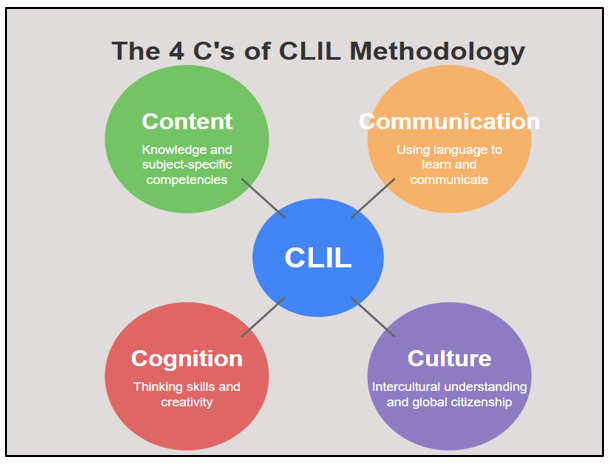
Figure 1 pillars of the CLIL methodology.
Source: created by the author
These components work in an integrated manner to develop essential skills in students, creating an educational environment in which they become the protagonists of their own learning process. Students are constantly challenged to solve problems—whether linguistic or subject-related— which stimulates the development of critical thinking through analysis, comparison, and synthesis of information presented in an additional language and from different cultural perspectives.
“When the teacher pulls back from being the donor of knowledge and becomes the facilitator, as is often found in CLIL practice, forces are unleashed which empower learners to acquire knowledge whilst actively engaging their own and peer-group powers of perception, communication, and reasoning.”4
Unlike the traditional grammar-translation method, which focuses on grammar rules and literal translation, CLIL seeks immersion, in which the student learns subjects such as science, history, or math using the target language as the medium of instruction. This approach allows learners to simultaneously develop subject knowledge and language skills, promoting communication in real and everyday situations.
CLIL proposes the creation of an environment that provides a meaningful educational experience for the student. By using this approach, students take an active role in developing their potential, engaging in inquiry and problem-solving processes that mobilize complex cognitive skills and encourage critical thinking in the target language, preparing them to interact in global and everyday contexts as critical users of language.
Although its application in the Brazilian context is still limited, this research aims to present, through specific analyses, an overview of the potential advantages that CLIL can bring to the educational field, particularly in EL classes.
Systemic-Functional Linguistics (SFL) is an important theoretical approach in contemporary linguistic studies. It constitutes a theory that understands language as a system of social meaning, not just a set of rules. Initially developed by British linguist Michael Halliday in the 1960s and 1970s, one of the main aspects of the theory is the conception of language as a system of choices,6 which are made influenced by social, contextual, and cultural factors of the speaker/writer at the moment of communication.
Three essential metafunctions constitute the pillars of SFL, as they are present in every communicative situation: Ideational, which starts from the expression of ideas, feelings, and emotions, and through which we attribute meaning to our experiences; Interpersonal, through which we assume social roles when communicating and interacting with others; and Textual, which structures social expressions and interactions, expressing them in the form of text.7
Halliday and Matthiessen6 write that when someone speaks or writes, they are producing a text; 'text' refers to language in any instance that makes sense to those who know the language, which is, above all, a resource for constructing meanings. Therefore, text is a process of constructing meanings from context.6
Thus, SFL uses text as an object of analysis at different levels, which can be explored in different ways: as an object by itself, to understand why it means what it means, and we can also analyze the text from its discourse, considering what it reveals about the language system in which it is inserted and how linguistic choices reflect the context in which it is inserted.
The Appraisal System (AS), proposed by Martin and White,8 is situated at the semantic-discursive stratum of language and is part of the Interpersonal metafunctions of Systemic Functional Linguistics. As an analytical tool within this stratum, the system aims to systematize evaluations through language by analyzing the manner and intensity with which speakers or writers express opinions, attitudes, feelings, and judgments in their discourse. The authors point out that we can find both explicit evaluations, which are easily identified in the text, and implicit ones, which require greater interpretative attention and skill from the analyst.
Within the Appraisal System, there are three subsystems: Engagement, Attitude, and Graduation. The Engagement subsystem analyzes how the language user positions themselves in relation to the opinions presented in the discourse. The Attitude subsystem is related to the expression of feelings, used to assess emotional expressions, judgments, and positive or negative evaluations present in discourse. The Graduation subsystem seeks to classify phenomena according to the intensity with which evaluations are expressed.8
In this research, the Attitude subsystem was used as the analytical tool for the articles. This subsystem is divided into three areas: Affect, Judgment, and Appreciation. Among these, the concepts of Judgment and Appreciation were used to compose the analyses presented.
The category of Affect is related to the emotions and feelings expressed in the discourse to be analyzed, allowing the evaluation of the author’s positive or negative sentiments regarding the subject in question. These evaluations can be made explicit through terms that directly name the feelings or implicitly through elements that require interpretation by the reader/listener.9
Judgment evaluates behaviors according to the social context in which the language user is situated, considering expectations, norms, and behavior standards. “[...] these are evaluations made about ethics and morality established by the Church, the State, or other institutions”.1 Judgment can be divided into Social Esteem, which refers to how society perceives cultural behaviors, and Social Sanction, which encompasses norms formalized by law.10 Social Esteem Judgments are divided into: normality – which classifies how typical or unique a person or behavior is; capacity – which assesses the ability or competence of the individual; and tenacity – which determines how reliable the individual is. Social Sanction Judgments are formalized by laws and decrees that establish codes of conduct, and noncompliance may result in penalties. The values in this realm uphold civic duties and religious practices: veracity – which verifies the degree of honesty; and propriety – which evaluates the ethical integrity of the individual.8
The category of Appreciation “covers the speaker’s reactions and evaluations of reality”.2 This evaluative resource can be applied to natural phenomena, events, situations, and other elements, being connected to our reactions and personal opinions. Thus, we can make positive or negative evaluations about the object being assessed. Appreciation is structured into three subtypes: Reaction, Composition, and Valuation. Reaction is related to the impact things have on individuals; Composition relates to our perception regarding how ordered things are; and Valuation concerns the social value attributed to things.
Figure 2 below highlights the Attitude subsystem, helping to better understand the types and subtypes within the categories of Judgment and Appreciation.
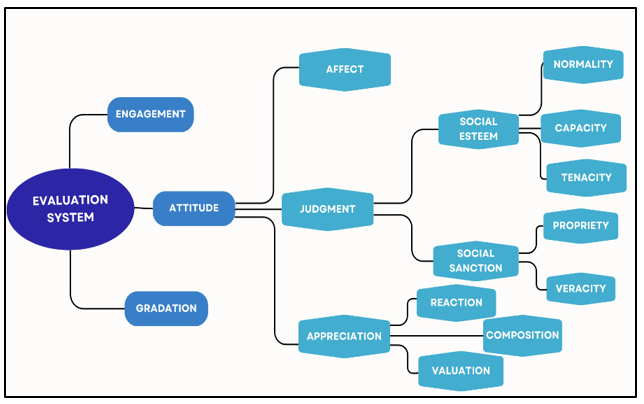
Figure 2 diagram of the attitude subsystem and its subdivisions within the categories of judgment and appreciation.
Source: created by the author
1 “[...] são avaliações emitidas sobre a ética e a moralidade estabelecidas pela Igreja, pelo Estado ou por outras instituições” (Almeida, 2010, p.100).
2 “abrange as reações dos falantes e as avaliações da realidade” (Almeida, 2010, p. 108).
This study is configured as a meta-research, also known as research about research. Its goal is to compare, synthesize, and critically evaluate previous scientific studies regarding the use of the CLIL approach in Brazilian schools by analyzing the findings of other academic works and research.
Meta-research is a methodological approach that involves the systematic analysis, synthesis, and critical evaluation of previously conducted primary studies on a specific topic. Unlike primary research, which gathers data directly from real-world sources, meta-research works with results from previous scientific investigations, aiming to identify patterns, trends, convergences, and gaps in the existing body of knowledge.11
According to Cooper,12 there are different types of meta-research, such as meta-analysis (which uses statistical methods to integrate quantitative results), meta-synthesis (focused on the integration of qualitative studies), and systematic review (which combines quantitative and qualitative approaches). The present study falls under the category of meta-synthesis, as it is interpretative in nature and uses the Appraisal System to analyze studies that present results about the use of CLIL in Brazilian schools.
The bibliographic data analyzed were collected from seven studies, sourced from academic databases, theses, dissertations, and other credible sources.
To obtain data from the CAPES platform, we conducted a search using the keywords “CLIL + ensino de língua inglesa” (CLIL + English language teaching) — without quotation marks — for the period between 2020 and 2025. This search yielded four studies addressing the use of CLIL in EL teaching. To find additional relevant works, we used Google Scholar with the search terms “pdf + CLIL + ensino de inglês” and “pdf + CLIL para o ensino de línguas”. From these searches, the selection criterion for analysis was to focus on studies that specifically addressed CLIL as a method for teaching EL, since some of the works discussed the teaching of Italian, German, etc.
In total, seven studies were selected for reading and analysis using the Appraisal System. However, the analysis was conducted on only three of the seven, as the other four articles did not feature practical CLIL applications in schools, making it unfeasible to analyze the results of their implementation. Specific samples from these three articles were chosen for inclusion in this research.
The analysis procedure followed a series of steps: (i) the articles that presented practical results of CLIL application in Brazilian schools were selected; (ii) within these texts, we identified excerpts that reported the outcomes of the studies; (iii) the excerpts were separated and grouped into macro-categories in which contributions of CLIL to EL teaching could be identified; (iv) linguistic resources present in the texts that could be evaluated through the Attitude subsystem—such as epithets, attributes, processes, etc.—were identified; (v) these resources were classified according to the subcategories of Attitude: Affect, Judgment, and Appreciation; (vi) finally, the linguistic resources were examined in the context of the texts and in relation to their communicative function, allowing us to understand how the use of CLIL was evaluated in these documents (Table 1).
|
|
Title |
Authors |
Publication / Reference |
|
Article 1 |
Inglês na Infância, pra quê (quem?) Os Letramentos Críticos Aliados à Abordagem CLIL no Ensino de Língua Inglesa no Fundamental I: relatos de experiência. |
Costa leite, p. M. De c.; rizzuti, g.; de souza ribeiro, j. J. |
Papéis: Revista do Programa de Pós-Graduação em Estudos de Linguagens - UFMS. 2022;26(51):1–21. |
|
Article 2 |
Content and language integrated learning – CLIL and storytelling INSTRUCTIONS: proposta de sequência didática para processo de biletramento (português – inglês) no Ensino Fundamental Anos Iniciais do IEMA Integral Bilíngue. |
COSTA,Ingrid Barbosa da |
São Luís, Brazil: Universidade Federal do Maranhão, Programa de Pós-Graduação em Gestão de Ensino da Educação Básica; 2024. 189 p. |
|
Article 3 |
A educação bilíngue e as escolas públicas: ensaio sobre o enfrentamento das dificuldades de sua implementação e seu papel fundamental na constituição de agentes transformadores em um contexto descolonial. |
PENA,Monica Sipriano |
Revista CBTecLE. 2022;6(1):1–14. |
|
Article 4 |
Inglês na escola pública: uma proposta pedagógica baseada na metodologia clil. |
LUZ, Dimas Silva. |
Universidade Estadual do Sudoeste da Bahia – UESB
|
|
Article 5 |
Formação inicial em língua inglesa baseada na metodologia de ensino-aprendizagem de línguas e conteúdos (CLIL) integrados à área de produção animal no Instituto Federal de Rondônia Campus Colorado do Oeste/Ro. |
Ferrari, m. H.; nichio, e. R.; xavier, g. C.; nogueira, l. B.; mesquita, a. A.; negrão, f. De m. |
Brazilian Journal of Development. 2020;6(6):39326-39337. |
|
Article 6 |
Ensino de Língua Estrangeira no Brasil: interfaces da abordagem de conteúdo e linguagem no ensino remoto.
|
SILVA, Ana Lúcia Farias da; RAMOS, Teresa Cristina Giarolla; SODRÉ, Rachel Fontes. |
Revista Científica Multidisciplinar Núcleo do Conhecimento. 2020;19(12):98–112.
|
|
Article 7 |
Ensino de Inglês como Língua Adicional para e com crianças: repensando a prática por meio da abordagem CLIL integrada à experiência de Dewey. |
Dos santos kieling, h.; selbach, h. V.; reichert assunção tonelli, j |
Olhares & Trilhas. 2024;26(1):1–19. |
Table 1 Selected articles for analysis
Source: created by the author
In order to synthesize the results from the analyses on the use of CLIL, this section presents a qualitative analysis of some of the selected articles based on the concepts studied within the Appraisal System. These texts depict the benefits of using CLIL in English Language (EL) teaching. Seven texts were collected for analysis, based on the criterion that they specifically addressed the use of the approach in EL teaching—since CLIL does not have this as its sole function. Among the seven, three articles were selected for the final analysis. The following analyses were conducted in accordance with the Attitude subsystem within Martin and White’s8 Appraisal System.
The excerpts were grouped into macro-categories related to how CLIL was evaluated in the texts. These categories are: interdisciplinarity, vocabulary and grammar, and creative and cognitive skills.
Interdisciplinarity
The first category analyzed was interdisciplinarity. The following analyses aim to highlight the advantages provided by the application of CLIL in this area.
Example 1
“One of the facilitators connecting the extension project and the school informed us that many students there had great difficulties [Judgment – Capacity -] in mathematical operations, text interpretation, and motor skills. To my surprise [Appreciation – Reaction +], the CLIL approach not only allowed us to work on this in the classroom while practicing English, but it also guided me and enabled classes through the lens of Critical Literacies [Appreciation – Valuation +].”13
In Example 1, the expression “allowed us to work on this in the classroom” refers to the advantages CLIL offers in addressing the “great difficulties” faced by students in other subject areas. This conveys a negative Judgment of Social Esteem – Capacity, while the reference to the CLIL approach as a guiding tool is an instance of positive Appreciation – Valuation, reinforcing its effectiveness in interdisciplinary teaching. The expression “to my surprise” signals an emotional response to the approach, thus also representing a positive Appreciation – Reaction, showing that the results generated by CLIL use were unexpectedly positive for English classes.
Example 2
“As could be observed, the activity led to a type of learning that clearly shows that English classes based on content provide a great [Appreciation – Valuation +] opportunity for learners to acquire not only English but also content from other subjects, which is extremely enriching [Appreciation – Valuation +] in the educational process. The activity also pointed out that CLIL has great potential [Appreciation – Valuation +] for intercultural learning.”5
In Example 2, the author uses expressions such as “great,” “extremely enriching,” and “great potential” to describe the contributions of CLIL to the lessons, which reflect three instances of positive Appreciation – Valuation. These terms emphasize the success of CLIL in both English and interdisciplinary content learning, strengthening the view of its positive value within an interdisciplinary context.
Vocabulary and grammar development
The following examples are categorized based on how CLIL contributes to grammar and vocabulary development in EL classes.
Example 3
“This integrated approach not only reinforced [Appreciation – Valuation +] the learning of specific vocabulary but also improved [Appreciation – Valuation +] students’ spatial understanding and navigation skills in EL.”14
In Example 3, the author shows how CLIL positively influenced the lessons. By stating that it “reinforced the learning of specific vocabulary” and “improved spatial understanding,” the author explicitly expresses positive Appreciation – Valuation, indicating that the approach was effective in enhancing students' vocabulary and contextual understanding. Implicitly, there is also a positive Judgment of Social Esteem – Capacity, suggesting that CLIL had a valuable impact on students' linguistic and interdisciplinary abilities.
Example 4
“This approach not only reinforced [Appreciation – Valuation +] vocabulary and grammar structures, but also developed [Appreciation – Valuation +] listening, speaking, and presentation skills, encouraging students to express their preferences and personal experiences.”14
Here, the terms “reinforced” and “developed” are used to positively evaluate the students’ skill development due to CLIL. This reflects explicit Appreciation – Valuation, indicating benefits such as grammar and vocabulary improvement and the development of communicative skills. Implicitly, this again suggests a positive Judgment – Capacity, as the value attributed to the approach stems from its impact on learners’ performance.
Example 5
“This activity aimed to consolidate [Appreciation – Valuation +] vocabulary and grammar structures learned, promoting [Appreciation – Valuation +] integration of writing and creativity skills.”14
In this example, two instances of positive Appreciation – Valuation are identified through the expressions “consolidate vocabulary” and “promoting integration of skills,” affirming the effectiveness of the activity. These also imply a positive Judgment – Capacity, validating the value and utility of the applied CLIL-based practice.
In this macro-category, it was observed that the evaluations focused primarily on the approach itself, reinforcing its positive value. However, this positive value gains relevance because it promotes student learning capacity, which is evidenced by implicit positive Judgments of Social Esteem – Capacity.
Development of creative and cognitive skills
As the final macro-category, we examine how CLIL supports the development of creative and cognitive skills—an essential component of the approach, which aims to create materials and content that stimulate students to develop such abilities.
Example 6
“During the activity, it was possible to observe that CLIL has the potential [Appreciation – Valuation +] to promote intercultural aspects more effectively than the traditional FL teaching model [Appreciation – Valuation +].”5
In Example 6, the phrase “CLIL has the potential” conveys a positive Appreciation – Valuation, indicating an intrinsic value in achieving certain educational goals. The phrase “more effectively than the traditional model” further reinforces this positive evaluation by showing CLIL’s superiority in promoting intercultural aspects.
Example 7
“The activity reinforced [Appreciation – Valuation +] language learning, as well as promoted [Appreciation – Valuation +] collaboration, creativity, and planning skills.”14
In Example 7, the use of “reinforced” and “promoted” reflects a positive Appreciation – Valuation, recognizing the added value CLIL brought to the class by contributing to the development of several essential skills.
A quantitative chart is presented below to illustrate the elements of the Attitude subsystem found in the analyses (Figure 3):
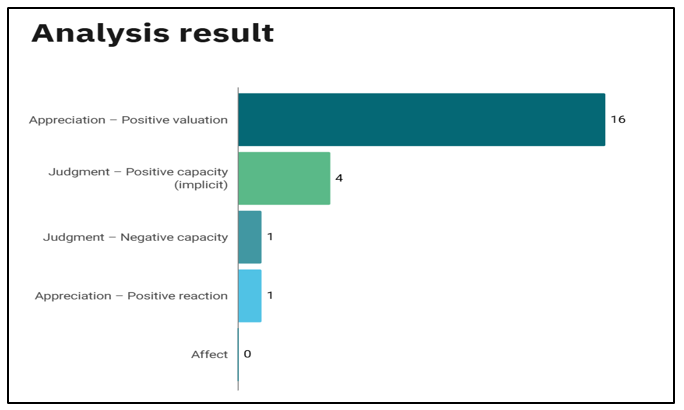
Figure 3 illustrative chart of the analyses conducted.
Source: created by the author
Based on the chart, we can observe the predominance of positive Appreciation – Valuation, reflecting positive evaluations about the value and effectiveness of CLIL implementation in educational contexts. Judgment of Social Esteem – positive Capacity (implicit) appears as the second most frequent element, with four occurrences, showing that the value attributed to the approach is linked to its impact on students’ skill development. Meanwhile, Appreciation – positive Reaction and Judgment of Social Esteem – negative Capacity were each identified once, indicating that the authors of the analyzed articles focused their evaluations mostly on value-based aspects of the approach.
It is also worth noting that no instances of Affect were found. This can be attributed to the technical and objective nature of the analyses, which focused on evaluating CLIL’s value in promoting interdisciplinary, lexical, grammatical, and cognitive development. Based on the results, we see that the authors considered CLIL effective for language teaching and assigned it considerable value in Brazil’s educational context.
This research aimed to analyze, through the Appraisal System,8 the use of the CLIL approach for English Language (EL) teaching. The analyses revealed a promising perspective regarding the use of this approach for teaching foreign languages in Brazil, highlighting an innovative alternative that stands apart from traditional language teaching methods.
Although its implementation is not yet widespread in the Brazilian context—making it difficult to find practical classroom applications—the results obtained through the Appraisal System8 demonstrate the transformative potential of this approach in English language education. By integrating content and language, CLIL can offer a more meaningful and contextualized educational experience.
Systemic Functional Linguistics (SFL) proved to be a fundamental analytical tool in this investigative process, offering resources for analyzing linguistic and discursive data. Its ability to reveal meaning-making processes and different dimensions of interpretation represents a significant methodological advance for researchers and educators seeking to understand more deeply the processes involved in language teaching and learning.
In this sense, the findings of this study not only underscore the relevance of the CLIL approach, but also invite the academic and educational communities to rethink traditional language teaching strategies. The integration of content, language, cognition, and culture proposed by CLIL presents an innovative perspective that can significantly contribute to the formation of individuals who are more critical, fluent, and prepared for the challenges of an increasingly globalized and multilingual society.
None.
The authors declare that they have no conflicts of interest related to the present work.

©2025 Almeida, et al. This is an open access article distributed under the terms of the, which permits unrestricted use, distribution, and build upon your work non-commercially.