eISSN: 2576-4470


Short Communication Volume 8 Issue 1
1University of São Paulo, Brazil
2State University of Campinas, Brazil
Correspondence: Marco Bettine, Professor at the University of São Paulo, Brazil
Received: January 10, 2024 | Published: January 26, 2024
Citation: Bettine M, Picoli L, Bin A. Emerging themes in procurement, a bibliometric analysis.Sociol Int J.2024;8(1):8-14. DOI: 10.15406/sij.2024.08.00370
This work aims to identify emerging themes in Procurement, through an exploratory analysis of the literature. The research method is bibliometric review with Vosviewer software. The selection considered articles published from the year 2000 onwards in international publications available on the Web of Science and Scopus platforms. We started with a universe of 7529 articles, reduced to 4440 after reviewing the keywords and then 1498 articles after selecting the areas of activity of the journals, adhering to the research object. Duplicates were then eliminated, totaling 1179 articles. As a result of the research, we point out: (a) a 7.5 times greater number of publications about Procurement identified in 2020 compared to 2000, supporting the growing importance of the topic; (b) the analysis of the most important journals on the topic considered impact by Quartile, H Index and Qualis and demonstrated a lack of alignment between the metrics and prestige of the journals; (c) in the most cited articles, three groups of subjects were identified: (1) Supplier selection, contracting and management process; (2) Technological innovation; (3) Sustainable procurement.
Keywords: procurement, innovation, sustainability
Procurement is responsible for purchasing goods and services used by companies1 and for this purpose, it is responsible for the interface and management between the company and its suppliers. The area must identify the right suppliers for each company's needs and conduct the subsequent contracting process. To achieve this, its main objectives are: (a) guarantee the best price for purchases, once the minimum desirable technical characteristics have been defined (b) guarantee productivity and optimization of the area's cost (c) transparency in data and reports (d) optimization of processes, ensuring fluid and integrated processes, internally and in its interface with other areas of the company.2 These steps are conducted by the purchasing area, with specific rules, aimed at ethical conduct and the equalization of 5 main parameters: price, quality, quantity, deadline and location of the service or delivery of the product.3,4
Procurement used to be seen as an operational and inefficient area of companies.3,5,6 In recent decades, automation, artificial intelligence, data analysis and big data tools are being explored to optimize the purchasing process, seeking for more fluid, digital and integrated processes. There is a growing recognition of procurement central role in improving organizational performance and increasing shareholder values. Aligned with the company's mission and objectives, it results in competitive advantages, whether through the acquisition of products or services at a lower price or through differentiation.7,8
This article aims to identify, interpret, and classify publications about procurement over the last two decades, with the aim of identifying which elements culminate in this transformation. The research method was the bibliometric review of published literature. To select the articles, articles published from the year 2000 onwards in international vehicles available on the Web of Science and Scopus platforms were considered. We chose the Web of Science and Scopus databases as both are relevant to the academic literature in the research area of this study, and compatible with Vosviewer, used for bibliometric analysis, together with the Excel software. Excel supported the descriptive analyses, while Vosviewer supported the creation of networks based on the articles selected by the researcher.
The article is structured as follows: first the research method is described, then the results obtained and discussion are presented. After these steps, conclusions and recommendations for future work are presented.
The research method of this study is a bibliometric review of publications from the last 20 years on purchasing in organizations, available on the Web of Science and Scopus platforms. The selection of articles was conducted in the Web of Science and Scopus databases due to their relevance to academic literature in administration.
Keyword search was conducted in the databases.
Initially, we searched for the presence of the word procurement in the title of the articles, filtering only articles in English, published from the year 2000 until the date of the research, carried out in January 2021, resulting in 3516 papers found. Analyzing the titles of the publications selected, it was identified that a large part of them referred to public purchases, not linked to the research object, as the aim was to identify the literature about procurement in companies. Therefore, another review was carried out, including words that should not appear in the title: public; government; health. The result was 2,666 papers found. Then, a new filter was applied, the word procurement should also appear in the abstract and in the key words, which resulted in 2,085 papers found. The next step was to analyze the research areas of these articles, to verify their adherence to the research object. Figure 1 shows the areas up to this point in the selection process.
Figure 1 illustrates that there were research areas not adherent to the topic. Aiming to evaluate the literature from a business perspective, only the areas of operational research, management and economics were selected, resulting in 709 selected articles.
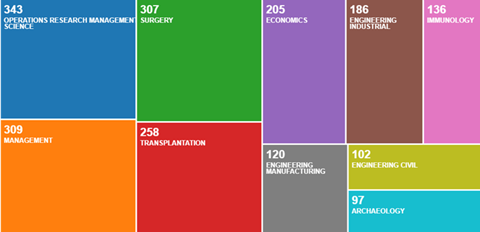
Figure 1 Research area of the 2.085 articles selected about procurement, from 2000 until 2021, in English.
Source: Web of Science.
Same filters used in Web of Science were used in Scopus, adapting the functionalities of each tool. We searched for the presence of the word procurement in the title, excluding the words public; government; health, filtering only articles published from the year 2000 until the date of the search, in January 2021, resulting in 4,013 papers. It was then combined with the same words in the abstract, reducing to 2,355 articles. To select the research areas, it was filtered articles falling within an area called by Scopus as business, management and accounting, resulting in 789 articles selected.
This step consisted of eliminating duplicate articles found in both databases. In Web of Science, the selection contained 709 articles, and in Scopus, 789 articles, totaling 1,498 articles. Of these, 319 duplicate articles were identified. Excluding them, the total number of articles considered in this bibliometric review resulted in 1,179. This step was carried out with Zotero and Microsoft Excel (Figure 2).
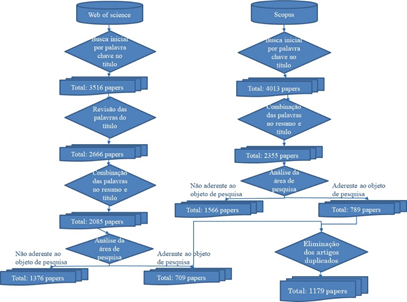
Figure 2 Represents the selection of articles described previously.
Bibliometric analysis was conducted using Microsoft Excel and Vosviewer, loading the 1,179 articles selected articles. First, the entire database was analyzed to identify the main journals, distribution of articles over the years, co-authorship by country, author and institution. Then, the 40 most cited articles were then selected and an analysis of them was conducted, categorizing them.
The 1,179 articles are spread across 353 different journals. The 10 journals with the highest number of publications on procurement concentrate only 25% of the articles. The two journals with the most publications in our study, International Journal of Procurement Management and European Journal of Operational Research, concentrate only 4% of the selected articles each. Within this selection, two specific magazines in the purchasing area are identified, Journal of Purchasing and Supply Management and International Journal of Procurement Management, as well as eight magazines with a broader scope.
We analyzed the impact of the 10 journals with the highest number of publications, classifying them into quartiles Q1, Q2, Q3 and Q4, with Q1 being the journals with the greatest relevance in the scientific area, ranking among the 25% with the highest impact factor; Q2 between 25% and 50%; Q3 between 50% and 75%; Q4 is the last quadrant. The quartile classification is calculated by Clarivate using the annual average number of citations of the journal's articles over the last two years. Journals were also identified using the H index, which calculates the number of articles combined with the number of their respective citations. For example, a journal with index H 21 had 21 articles cited at least 21 times each in the last two years. Both indexes for each journal analyzed were obtained from the website https://www.scimagojr.com/. The last impact analysis was the use of the Qualis 2013-2016 classification, obtained through the CAPES Sucupira platform see Table 1.
|
Journal |
Impact factor |
% articles |
|
International Journal of Procurement Management |
Q2. H Index 20. No Qualis. |
4% |
|
European Journal of Operational Research |
Q1. H Index 243. Qualis A1 in business. |
4% |
|
International Journal of Production Economics |
Q1. H Index 172. Qualis A1 in business. |
3% |
|
International Journal of Production Research |
Q1. H Index 125. Qualis A1 business. |
3% |
|
Production and Operations Management |
Q1. H Index 102. Qualis A2 in engineering. |
3% |
|
Jane's Defence Weekly |
No impact factor found |
2% |
|
Journal of Purchasing and Supply Management |
Q1. H Index 80. No Qualis. |
2% |
|
Management Science |
Q1. H Index 237. Qualis A1 in business. |
2% |
|
International Journal of Industrial Organization |
Q1. H Index 80. No Qualis. |
1% |
|
Manufacturing & Service Operations Management |
Q1. H Index 77. No Qualis. |
1% |
Table 1 Impact factor of journals with the highest number of publications based on the 1,179 selected articles
Source: the authors.
Publications per year
The year of publication of the articles was analyzed. Since 2000 the quantity of articles published has increased significantly, as shown in Figure 3, indicating growing interest in academic studies on this topic. Taking year 2000 as a base, after a decade the number was already 4.8 times greater, and continued to grow, reaching in 2020 a number of publications 7.5 times greater than in the year 2000 (Figure 3).
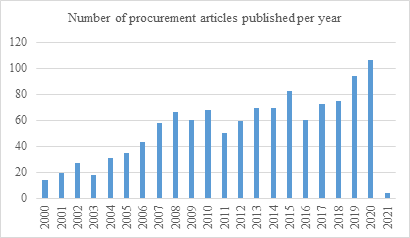
Figure 3 Number of publications per year.
Source: the authors.
Co-authorships
Vosviewer was used to create a co-authorship map. In this Vosviewer functionality, the list of items is determined based on the number of co-authored documents. The selected unit of measurement can be by country, author or institution. We carried out the three analyses, shown below. First, a co-authorship map was created by country, selecting 10 documents as a minimum limit of articles per country, thus identifying the 22 most representative countries in the sample, as identified in Figure 4.
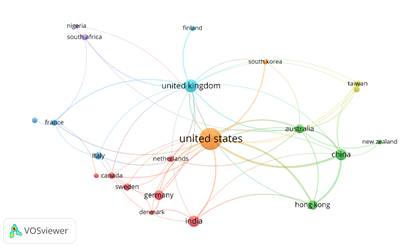
Figure 4 Co-authorship map per country.
Source: Vosviewer.
In this selection universe, 30% of the number of articles are from authors affiliated with institutions in the United States, a volume three times greater than the second country with the highest number of publications, Great Britain, followed by China, India and Germany. The central position of the United States in the network is also noted, indicating co-authorship with several of the other highlighted countries.
Then, co-authorship analysis was carried out by author, using a minimum limit of 5 documents per author. From a total of 1,693 authors, this selection identified 5 authors with the greatest strength in their network of connections, as shown in Table 2.
|
Author |
Articles |
Citations |
|
Eriksson PE. |
10 |
56200% |
|
Schoenherr T. |
7 |
26400% |
|
Chan APC. |
5 |
20400% |
|
Gupta M. |
5 |
24200% |
|
Mishra AN. |
5 |
28800% |
Table 2 Top authors in the co-authorship map
Source: Vosviewer.
To finalize, a co-authorship analysis by organization, using a minimum limit of 3 documents per organization. From a total of 1,419 organizations, this selection identified 6 main organizations, located in Hong Kong, the United States and China, as shown in Table 3.
|
Organization |
Articles |
Citations |
|
Robert h. smith school of business, university of Maryland, college park, md 20742, United States |
5 |
269 |
|
Department of building and real estate, the hong kong polytechnic university, Hung Hom, Kowloon, Hong Kong |
3 |
12 |
|
Naveen jindal school of management, university of texas at dallas, richardson, tx 75080, United States |
3 |
21 |
|
School of business administration, south china university of technology, guangzhou, 510640, China |
3 |
20 |
|
School of business administration, south china university of technology, guangzhou, 510640, China |
3 |
20 |
|
School of business administration, south china university of technology, guangzhou, 510640, China |
3 |
20 |
Table 3 Top organizations on the co-authorship map
Source: Vosviewer.
Articles citations
Vosviewer was also used to identify the articles with the highest number of citations. Parameterizing the minimum of 100 citations, 40 articles were selected. Meaning that, of the 1179 articles considered in this study, only 3% (40 articles) had more than 100 citations, demonstrating that procurement, although showing increasing academic interest, is still a small field of study.
At this stage, an analysis of the 40 most cited articles selected in this study was conducted, with the aim of identifying patterns and similarities. Three thematic categories were identified: (1) Supplier selection, contracting and management process; (2) Technological innovation; (3) Sustainable procurement. Table 4 below presents it.
|
Author |
Year |
Citations |
Article |
Cathegory |
|
|
Bajari P, Tadelis S |
2001 |
436 |
Incentives versus Transaction Costs: A Theory of Procurement Contracts |
1 |
|
|
Dada M |
2007 |
274 |
A Newsvendor’s Procurement Problem when Suppliers Are Unreliable |
1 |
|
|
Love PED |
2002 |
249 |
Influence of Project Type and Procurement Method on Rework Costs in Building Construction Projects |
1 |
|
|
Byggeth S, Hochschorner E |
2006 |
220 |
Handling trade-offs in Ecodesign tools for sustainable product development and procurement |
3 |
|
|
Davila A, Gupta M, Palmer RJ, et al. |
2003 |
217 |
Moving procurement systems to the internet: The adoption and use of e-procurement technology models |
2 |
|
|
Mukhopadhyay T, Kekre S |
2002 |
212 |
Strategic and Operational Benefits of Electronic Integration in B2B Procurement Processes |
2 |
|
|
Gebauer J, Shaw MJ |
2004 |
196 |
Success Factors and Impacts of Mobile Business Applications: Results from a Mobile e-Procurement Study |
2 |
|
|
Chan APC, Yung EHK, Lam PTI, et al. |
2001 |
189 |
Application of Delphi method in selection of procurement systems for construction projects |
1 |
|
|
2002 |
174 |
A conceptual model for assessing the impact of electronic procurement |
2 |
||
|
Croom SR |
2000 |
169 |
The Impact of Web‐Based Procurement on the Management of Operating Resources Supply |
2 |
|
|
Eriksson PE, Westerberg M |
2011 |
164 |
Effects of cooperative procurement procedures on construction project performance: A conceptual framework |
1 |
|
|
Teo TSH, Lin S, Lai K |
2009 |
147 |
Adopters and non-adopters of e-procurement in Singapore: An empirical study |
2 |
|
|
Andersson D, Norrman A |
2002 |
146 |
Procurement of logistics services—a minutes work or a multi-year project? |
1 |
|
|
Subramaniam C, Shaw MJ |
2002 |
145 |
A Study of the Value and Impact of B2B E-Commerce: The Case of Web-Based Procurement |
2 |
|
|
Puschmann T |
2005 |
145 |
Successful use of e-procurement in supply chains |
2 |
|
|
Blome C, Hollos, D, Paulraj A, et al. |
2014 |
139 |
Green procurement and green supplier development: antecedents and effects on supplier performance |
3 |
|
|
Sheffi Y |
2004 |
133 |
Combinatorial Auctions in the Procurement of Transportation Services |
1 |
|
|
Hohner G, Rich J, Ng E, et al. |
2003 |
128 |
Combinatorial and Quantity-Discount Procurement Auctions Benefit Mars, Incorporated and Its Suppliers |
1 |
|
|
Caplice C, Sheffi Y |
2003 |
127 |
Optimization-based procurement for transportation services |
1 |
|
|
Mukhopadhyay S K, Ma H |
2009 |
126 |
Joint procurement and production decisions in remanufacturing under quality and demand uncertainty |
1 |
|
|
Hoejmose SU, Adrien Kirby AJ |
2012 |
125 |
Socially and environmentally responsible procurement: A literature review and future research agenda of a managerial issue in the 21st century |
3 |
|
|
Presutti Jr WD |
2003 |
121 |
Supply management and e-procurement: creating value added in the supply chain |
2 |
|
|
Martinez De Albeniz V, Simchi Levi D |
2005 |
119 |
A portfolio approach to procurement contracts |
1 |
|
|
Seifert RW, Thonemann UW, Hausman WH, et al. |
2004 |
118 |
Optimal procurement strategies for online spot markets |
1 |
|
|
Aboelmaged MG |
2010 |
118 |
Predicting e‐procurement adoption in a developing country: An empirical integration of technology acceptance model and theory of planned behaviour |
2 |
|
|
El Wardani MA, Messner J I, Horman MJ, et al. |
2006 |
114 |
Comparing Procurement Methods for Design-Build Projects |
1 |
|
|
Mishra AN, Konana P, Barua A, et al. |
2007 |
114 |
Antecedents and Consequences of Internet Use in Procurement: An Empirical Investigation of U.S. Manufacturing Firms |
2 |
|
|
Rai A, Brown P, Tang X, et al. |
2009 |
113 |
Organizational Assimilation of Electronic Procurement Innovations |
2 |
|
|
Parkes D C, Kalagnanam J |
2005 |
109 |
Models for Iterative Multiattribute Procurement Auctions |
1 |
|
|
Soares Aguiar A, Palmados Reis A |
2008 |
109 |
Why do firms adopt E-procurement systems? Using logistic regression to empirically test a conceptual model |
2 |
|
|
Meehan J, Bryde D |
2011 |
109 |
Sustainable procurement practice |
3 |
|
|
Gunasekaran A, Ngai EWT |
2008 |
106 |
Adoption of e-procurement in Hong Kong: An empirical research |
2 |
|
|
Cheung S O, LamT I, Leung MY, et al. |
2001 |
105 |
An analytical hierarchy process based procurement selection method |
1 |
|
|
Lindberg N, Nordin F |
2008 |
105 |
From products to services and back again: Towards a new service procurement logic |
1 |
|
|
Pereira CR, Christopher M, Da Silva AL, et al. |
2014 |
105 |
Achieving supply chain resilience: the role of procurement |
1 |
|
|
Peleg B, Lee HL, Hausman WH, et al. |
2002 |
104 |
Short-term e-procurement strategies versus long-term contracts |
1 |
|
|
Xu H |
2010 |
103 |
Managing production and procurement through option contracts in supply chains with random yield |
1 |
|
|
Oezener O O, Ergun O |
2008 |
102 |
Allocating Costs in a Collaborative Transportation Procurement Network |
1 |
|
|
Chang H H, Wong KH, |
2010 |
101 |
Adoption of e-procurement and participation of e-marketplace on firm performance: Trust as a moderator |
2 |
|
|
Gunasekaran A, McGaughey RE, Ngai EWT, et al. |
2009 |
100 |
E-Procurement adoption in the Southcoast SMEs |
2 |
|
Table 4 Most cited articles grouped by thematic categories
Source: the authors.
This category has 20 articles, representing 50% of the sample of 40 articles. These are articles about the purchasing process itself, covering the selection of suppliers, or the contracting process, or even supplier management, in search of finding the best value for the organization. The most cited article in our entire database of 1179 articles is found in this category, Incentives versus Transaction Costs: A Theory of Procurement Contracts.9 This is an article with an exploratory research method that evaluates advantages and disadvantages of pricing formats in a contracting process, comparing pre-defined prices and models with incentives linked to the success in delivering the service or product. The second most cited article in this category is A Newsvendor’s Procurement Problem when Suppliers Are Unreliable,10 addresses the problem of unreliable suppliers, and its impact on the quantity purchased, price and level of service.
This category has 16 articles, representing 40% of the most cited sample. They explore the challenges and benefits of implementing and using technological innovation in procurement. The study led by Davila (2003) presents e-procurement as its most important technological solution, which is a tool where transactions between buyer and supplier are conducted on the internet. It can offer features such as reverse auction, e-catalog and marketplace. As the main benefits of adopting technological innovation, the literature11,12 presents reduction in administrative costs, purchasing transaction costs, reduction of errors, more efficient processes, shortening the purchasing process time, reducing inventory levels, competitiveness of the price paid for products or services, reducing the number of active suppliers, visibility into supply options and interaction with suppliers.
The authors also converge in their understanding of the challenges of adopting technology. Integration with other technologies and with supplier and customer systems stands out. Key aspects of security, quality and safety of the system and its interface, easy-to-use, so that its complexity does not inhibit its use. It is also presented the risk related to the cooperation of suppliers in adapting to the new tools required by their customers and business challenges, the interaction with the current business model and workflow.4,10,11 Added to these factors identifies the importance of support from senior leadership and the company's internal response, its organizational readiness. The wrong choice about which technology to adopt could result in financial loss and a second future transition when adopting another technology that proves to be more suitable.10
There is a vast literature on the adoption of e-procurement, which converges by presenting expected challenges and benefits. The selection used in this review delimits articles with a high number of citations, which brings a time bias, however, recent literature leads to similar conclusions on the topic.1,6,13
This category deserves to be highlighted because although it has only 4 articles, they are recent articles and have already a high number of citations, demonstrating academic interest in the topic.
14provide a bibliometric review of the literature on sustainable purchasing. The authors, who reviewed 188 articles on the topic, reinforce that the importance is related to the potential impact on reputation and business performance. The authors highlight that sustainability covers not only environmental aspects but social issues, corruption, human rights and working conditions.
The oldest and most cited article in this thematic category, Handling trade-offs in Ecodesign tools for sustainable product development and procurement,15 published in a specific magazine on the topic, Journal of Cleaner Production, investigates the process of development and acquisition of products highlighting the need to include life cycle and sustainability analysis in the assessment.
This article investigated, through a bibliometric review, the emerging themes in Procurement. The bibliographical review demonstrated that the number of articles per year has increased significantly, reaching in 2020 a number of publications 7.5 times greater than in the year 2000. This panorama indicates a continuous and growing interest in literature on the topic, internationally.
It is also necessary to consider the dispersion of literature published on the subject in different areas of knowledge, with a large number of authors and institutions linked to them. The highlight in the collaboration network is North American institutions. The analysis of the periodicals where purchasing articles are published at an international level identified that publications on purchasing are dispersed, centralizing 25% of the volume in the 10 periodicals with the highest number of publications.
Categorization by subject in the main publications on the topic - understood as being the most cited in the period - is in line with the main objectives of the area. The categories identified are all, directly or indirectly, related to the objectives of the area. (1) Supplier selection, contracting and management process, in search of ensuring the best value for the organization, is a category that is directly related to the objective of guaranteeing the best price for purchases; (2) Technological innovation in purchasing, optimizing processes to contribute to the area's objectives, permeates all of the area's objectives, mainly optimizing processes and productivity, visibility and reliability of information; (3) Sustainable purchasing, a trending topic, with 10% of articles, a high number of citations, still recent, indicating emerging prominence in current literature, related to the objective of the basic role of the area, selecting and contracting services and products as needed from the company.
This work included a literature review through bibliometrics of articles published on purchasing in organizations, in international vehicles, in the last 20 years. As a limitation, the selection and filter method stands out, which is done quantitatively, which carries possible errors and system parameterizations.
The literature reflects the increased importance of the purchasing area in companies, with emphasis on two emerging areas: innovation in purchasing and sustainable purchasing. Innovation in purchasing due to its potential impact on all objectives in the area, from prospecting and selecting suppliers, hiring and management, fluidity of processes and cost of the area, also including expected benefits in visibility and transparency of information. Sustainable purchasing, as it is a new category with growing importance in international literature, brings a different perspective to the area, highlighting the role of the correct selection of suppliers and its consequences throughout the contracting chain.
As a suggestion for future work, considering that the bibliometric analysis did not bring relevance to Brazil, it would be to investigate whether the evolution of the Purchasing areas of Brazilian companies is aligned with the most trending themes globally. Another suggestion would be to delve deeper into sustainable purchasing, which proved to be a trending topic. Regarding innovation in purchasing, there is a lack of work on the moment after the adoption of technological innovations, identifying whether the expected benefits and challenges are actually found.
The authors would like to thank the XLV Encontro da ANPAD - EnANPAD 2021.
The authors declare that they have no conflicts of interest related to the present work.
No Funding.

©2024 Bettine, et al. This is an open access article distributed under the terms of the, which permits unrestricted use, distribution, and build upon your work non-commercially.