Journal of
eISSN: 2574-8114


Review Article Volume 11 Issue 5
 Ângela Amorim, Andréa Marinho, Paula Vieira de Castro
CITEVE's Textile Microbiology Laboratory - Technological Centre for the Textile and Clothing Industry of Portugal, Vila Nova Famalicão, Portugal
Correspondence: Nuno Pinto, CITEVE's Textile Microbiology Laboratory - Technological Centre for the Textile and Clothing Industry of Portugal, Vila Nova Famalicão, Portugal
Received: September 05, 2025 | Published: September 19, 2025
Citation: Pinto N, Amorim A, Marinho A, et al. Textile degradation: a comprehensive review and experimental approach. J Textile Eng Fashion Technol. 2025;11(5):243-252. DOI: 10.15406/jteft.2025.11.00429
The textile industry´s evolution, driven by advancements in microelectronics, biotechnology and synthetic fiber production, has intensified environmental concerns, particularly with fast fashion´s reliance on non-biodegradable materials. The pursuit of degradable textiles is impeded by unclear definitions and limitations in current testing standards, which are primarily designed for plastics and do not adequately address the degradability specific to textiles. Textile degradation occurs through physical and biological (biodegradation) processes, in which the complex organic compounds are broken into simpler ones, in anaerobic and aerobic environments. Even though plastic degradation standards have been modified for textiles, variations in test settings and durations pose difficulties, and further work is needed to increase the precision of textile biodegradation assessments. This paper provides a comprehensive review of the degradation process and the associated testing methods. Additionally, within the scope of the be@t project, an investigation was conducted to assess the degradability of cotton, lyocell and polyester fibers - representing a natural, regenerated, and synthetic fibers, respectively - under laboratory simulated composting conditions. The study utilized standards intended for plastics, with necessary modifications to accommodate textile testing.
Keywords: sustainability, degradation, biodegradation, microorganisms, textile, standards
The textile industry is the oldest consumer goods manufacturing industry, with its roots dating back to prehistoric times. The earliest textile products recorded were made from vegetable-based materials and have since evolved over the centuries. During the Paleolithic Era, cave Men used animal skins to protect their bodies, a necessity that always accompanied humanity.1,2 Advancements in microelectronics, computer science and biotechnology have significantly propelled the industry forward. The discovery of synthetic fibers has been particularly transformative, as these fibers offer increased durability, resistance and ease of manipulation.3 Portugal has a rich history in the textile industry. The northern region alone contributed to 80% of the industry's jobs and businesses,4 underscoring its significance to the country. Despite this, the sector faced growing competition from global players like China, India, and Pakistan. In response, European companies optimized their product offerings, reduced production costs, and expanded the range of goods available for trade.5
The textile and apparel industry is currently recognized as one of the most environmentally polluting sectors due to its fiber production, manufacturing and transportation processes.6,7 However, consumers also play a significant role in environmental impact through their purchase of clothing, use of chemicals for cleaning, water and energy consumption, and disposal of products, all of which have a substantial global impact.6 The combination of low costs and fast fashion significantly affects consumers, leading to mass production, increased consumption, and reduced product utilization, ultimately resulting in higher waste generation. It is estimated that 20 pieces of clothing are created per person annually worldwide.6 The accessibility of fashion to consumers has led to an increase in apparel searches at the European Union, with clothing consumption accounting for 2–10% of the environmental impact.7 Prior to reaching consumers, clothes undergo multiple stages, and it is challenging to quantify all the waste generated by this industry. Various strategies are being developed to address these issues, including ecological printing and dyeing, as well as the use of more natural fibers without the use of pesticides.8 In textile printing, natural dyes are gaining popularity over synthetic dyes due to their non-carcinogenic and biodegradable nature. Natural dyes are extracted from nature and are healthier options as they do not include any chemicals harmful for the human body.9–13
Even though utilizing natural fibers is more environmentally beneficial, it's important to note that 2.6% of the world's water is used in the production of cotton, contributing to air and groundwater pollution.14 Additionally, the textile industry heavily relies on synthetic fibers such as nylon and polyester, which are derived from petrochemical materials, non-biodegradable and result in higher carbon dioxide (CO2) emissions.14 Therefore, the use of these conventional fibers may not be the most sustainable approach, prompting the need to explore alternative solutions. However, to achieve a sustainable industry, there are three strategies evolving. First one involves the development of textiles that degrade efficiently in controlled microbial conditions, through composting or anaerobic environments, in order to decrease waste in landfills and open landfills. This is possible adapting test methods and infrastructures to new waste management. Another strategy is the creation of biologically based technologies that break down textile fibers into their component's monomers for recycling.15,16 This can be done using microorganisms, enzymes, or a combination of both, along with process intensifications such as heating and grinding. These industrial processes depends on controlled environments to produce desire conditions. The last strategy focuses on minimizing the impact of releasing textile waste into the natural environment. Although the environment is inherently uncontrollable, materials should be designed to degrade without causing immediate or long-term ecological harm.15,16
Textile fibers can be separated into two distinctive groups, natural fibers and non-natural fibers.17 The first group comprises fibers derived from natural sources such as animals, plants and minerals. In response to the rising demand for natural fibers as sustainable alternatives to synthetic ones, extensive research has been conducted in recent years to discover and developed alternative options, such as hemp, banana and nettle fibers, to serve as eco-friendly substitutes in the textile industry.18–23 However, their production requires a substantial amount of water, land or energy.24,25 Also, fibers of plant origin often require a larger quantity of pesticides and herbicides to prevent the evolution of parasites.17 Non-natural fibers are produced through chemical processes using natural or synthetic materials.24,25 These fibers are divided into two main types: regenerated fibers and synthetic fibers. Man-made fibers derived from natural polymers (for example, cellulose) that have been modified by chemical reagents and are known as artificial fibers (such as viscose, lyocell and modal). On the other hand, synthetic fibers are entirely manufactured in the laboratory from polymers that do not occur naturally, typically from petroleum by-products24,26 and are categorized into organic and inorganic types. Organic synthetic fibers are derived from sources that grow in the soil, are obtained from animal skin, or are produced by insects.27 Polyamides, polyesters and polyolefin are some commonly used examples. Inorganic fibers are made from materials like glass, carbon, boron, silica, carbide, alumina, potassium titanate and ceramics. Different materials offer unique properties that make them suitable for various applications.2,28–30
Degradation
When considering sustainable materials, the term "biodegradable" is likely well-known, as it is a concept frequently encountered nowadays. Nevertheless, we often see the term being misused by many, leading to confusion and doubts among society. This confusion frequently stems from a lack of clear definitions and standards, causing consumers to question what truly qualifies as biodegradable, and how effective these materials are in mitigate environmental impact. However, the desire to create biodegradable materials has emerged as a direct response to our current environmental challenges. The growth of the world population led to increased production and consequently to an intensification of waste.6 Understanding the process and finding ways to accelerate the decomposition of fabrics is essential for a more sustainable and circular economy. The proliferation of waste from fast fashion in landfills and open spaces has a significant impact on the environment.31 The substantial accumulation of waste in landfills increases carbon emissions and can also contaminate water sources.
However, the disposal of textile products is not the only cause of pollution generated by this industry. During the textile fibers production, there is an accumulation of processes that cause huge environmental damage. Fibers often contain toxic chemicals from dyeing, bleaching, mercerizing, printing and finishing processes, which can infiltrate wastewater systems.31 During the dyeing process of a fabric, not all dye is completely bonded to the material and it can be discarded with the wastewater. This wastewater must be threated to not cause any risk to the environment.32,33 For example, Gita et al.34 showed that an exposure of 5-40 ppm of six textile dyes significantly reduces the profile of vital elements like carbon (C), hydrogen (H), nitrogen (N) and sulfur (S), as well as the reduction of growth rate of the algal population Spirulina platenisis.
Degradable materials are engineered to reduce carbon emissions and fabric waste by degrading after disposal. However, their ability to decompose depends on several factors, which can be divided into biotic and abiotic categories.35–37 Biotic degradation (biodegradation) involves the breakdown of complex materials into simpler ones by microorganisms such as bacteria, fungi and viruses under environmentally favorable conditions.38,39 On the other hand, abiotic degradation does not involve microorganisms but occurs through oxidation and hydrolysis,40 through thermal, mechanical or chemical processes (Figure 1).
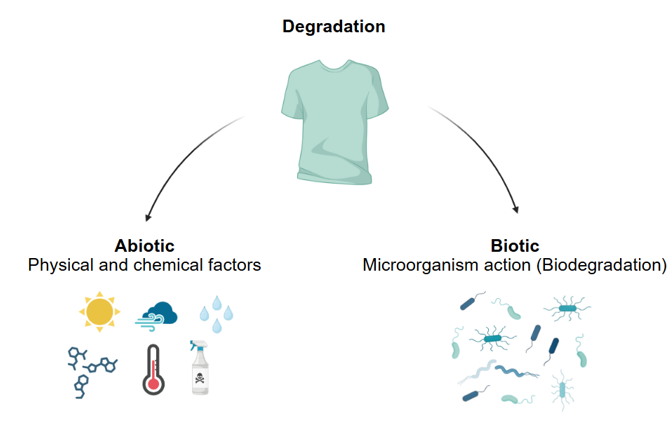
Figure 1 Schematic representation of biotic and abiotic degradation.
Biodegradation
The biodecomposition of textile materials can be divided in four steps40,41: Biodeterioration, depolymerization, assimilation and mineralization. Biodeterioration is the initial step for biodegradation. The microorganisms attach to the surface of the textile breaking it into small fragments. These fragments are then decomposed through enzyme action (depolymerization). The result will be assimilate and decompose to small compounds (assimilation) that will transformed to simpler molecules like carbon dioxide (CO2), methane (CH4), biomass and mineral salts (mineralization).40,41 Apart from the activity of the microorganisms, the environmental conditions (temperature, oxygen (O2), humidity, pH and UV radiation), and the type of material (crystallinity, surface, porosity, dyeing and finish and polymer composition) contributes to the rate of biodegradation.35,40 For example, viscose fibers are hygroscopic, meaning that, these fibers absorb the moisture from the environment, which can increase the organism activity. These fibers are known to be easily degraded by microorganisms when buried, however, the biodegradability between cellulose origin fibers differ due to the chemical structure and physical characteristics.42–45
Textiles can provide favourable conditions that promote bacterial growth on their surface.46,47 The microorganism attach to the fiber and expand along the polymer matrix, attacking, most likely, the hydrocarbon polymer near the end of the molecular chain.39 Along the degradation process, the complex is decomposed into simpler organic monomers.39 As the degradation proceeds, the molecular weight of the fiber reduces, either through chemical mechanisms (production of ammonium, nitrate, hydrogen sulfide and organic acids) or enzymatic action (activity of lipases, esterase’s, proteases and ureases).48
Cellulose constitutes the primary component of natural fibers and its biodegradation is triggered by enzymatic hydrolysis.49 During the degradation process, cellulose is broken down to glucose, which serves as a nutrient source for microbial development. Enzymes play a central role in this process, acting to reduce the fiber´s degree of polymerization, which in turn results in a loss of mechanical force.2,50 Cellulosic fiber, compared to non-cellulosic, are more susceptible to microorganism attacks because of their hydrophilic structure (retains more water, O2 and nutrients).51 As mentioned before, the rate of crystallinity is proportional with the rate of cellulose breakdown. Non-cellulosic fibers, have a low level of crystallinity, making these fibers harder to breakdown and degrade.49 Brunšek et al.44 demonstrated the degree of disintegration of cellulosic fibers (hemp, jute and sisal fibers), regenerated cellulose fiber (viscose) and polylactic acid (PLA) biopolymer, in soil burier tests under controlled conditions.44 In this study, after 11 days, the cellulosic fibers recorded a higher loss of mass compared to the regenerated and the PLA biopolymer, with hemp being the highest degraded fiber. In another soil burial study, Sular V. and Devrim G52 showcased the biodegradability behavior of cotton, viscose, modal, tencel, PLA and polyethylene terephthalate (PET) fibers.52 After a four-month burial, within the cellulosic fiber, modal, cotton and viscose fabrics degraded up to 90%. The tencel fabrics degraded 60% and in the synthetic fibers, only PLA lost weight. These studies display the response of different fibers to soil burial degradation. The results of both studies determined by weight loss, may differ since the type of soil used, the time the fibers were buried, the type of fabric produced. Vildan S. and Devrim G52 used knitted fabrics and Brunšek et al.44 used individual fibers prepared to resemble textile bundles.
Textile waste is frequently a complex mixture of natural fibers sourced from plants and animals, along with synthetic fibers produced from petrochemicals.53 Natural fibers are normally considerable biodegradable, compared to petrochemical synthetic fibers that are not.54 These petrochemical products, for example, polyester, can be recycled into new materials,53,55 however the separation of textile mixtures is difficult and expensive.56 Using microorganisms well known to degraded natural materials, such as bacteria and fungi, could efficiently increase the degradation rate of natural fibers, helping the separation of natural fibers from synthetic ones.53 Freeman et al.53 compared for the first time the biodegradation caused by several fungi under identical conditions. In this study, ten textiles were inoculated with 14 fungi (Ascomycota and Basidiomycota) and incubated at 25-30ºC for 1-2 months. They demonstrated that, using fungi to accelerate the decomposition of fabrics has the potential to reduce the volumes entering the landfills. It should be noted that the ascomycete Chaetominum globosum was, consistently, the most effective fungi in the degradation of cellulosic materials in this study.53 Environmental pollution and the challenges of separating textile blends for recycling can be addressed by using the degradability capabilities of fungi.53 Saprophytes and pathogens also have the same degradation capabilities for plant materials as fungi, and it has been observed in Lazìc et al.57 and Selim et al.58
Biodegradation and degradation evaluation
The biodegradability and degradability measurement requires standards methods. These methods serve as the foundation for complying with regulatory requirements, making labeling claims, and facilitating waste management logistics and control. Standardized test methods replicate the conditions in which the biodegradation is expected to take place.16 Notably, test methods used to measure the desired biodegradation of textile materials are adapted from standards intended for plastics, even though these methods do not incorporate textile materials.16,59
There are some active institutes for biodegradable materials when it comes with biodegradable and composting plastics.60 These institutes play an important role in helping the industry to create biodegradable and compostable materials60 and are described below:
The norms available display the test procedures as well as testing conditions (pH, temperature, concentrations, moisture, etc.). The test conditions listed also depend on the test environment or place of disposal, such as landfill/home composting, industrial composting, marine environment and anaerobic digestion. The standards can be divided in two different groups (Figure 2):
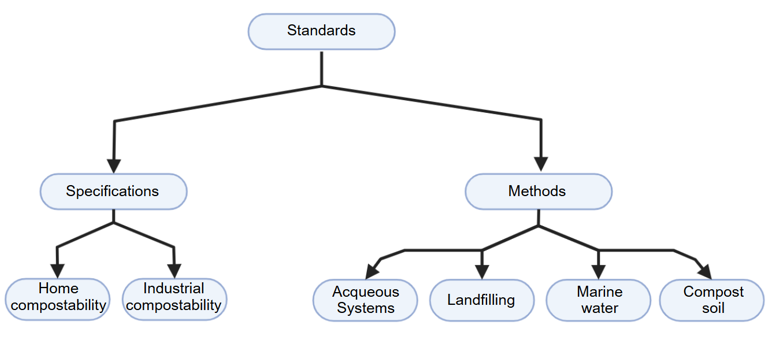
Figure 2 Types of standards.
Standard specifications that outline products requirements and establish a testing framework, incorporating various tests, criteria and acceptable performance levels (Table 1);
|
Standards |
Normative references |
||
|
ISO 1708861 |
ISO 472 |
ISO 14852 |
ISO 17556 |
|
ISO 11268-1 |
ISO 14855-1 |
EN 14582 |
|
|
ISO 11268-2 |
ISO 14855-2 |
ISO 14851 |
|
|
ISO 11269-2 |
ISO 16929 |
OECD 208 |
|
|
EN 1499562 |
ISO 14851 |
ISO 16929 |
ISO 14855 |
|
ISO 14852 |
OECD 208 |
||
|
ASTM D640063 |
D883 |
OECD 208 |
ISO 14855 |
|
D5338 |
NP EN 13432 |
D6868 |
|
|
D6866 |
|||
|
AS 473664 |
ISO 14851 |
AS 4454 |
ISO 10634 |
|
ISO 14853 |
ISO 14852 |
ASTM E1676 |
|
|
ISO 16929 |
ISO 14855 |
||
|
NP EN 1343265 |
EN 13193 |
ISO 14851 |
ISO 14855 |
|
EN 13427 |
ISO 14852 |
||
|
ISO 1860666 |
ISO 14851 |
ISO 16929 |
ISO 14855-1/2 |
|
ISO 14852 |
ISO 20200 |
ISO 21067 |
|
|
ASTM D686867 |
ASTM D883 |
ASTM D6866 |
ASTM D6002 |
|
ASTM D3715 |
OECD 208 |
ASTM D6400 |
|
|
ASTM D5338 |
EN 13432 |
ISO 14851 |
|
|
AS 581068 |
AS 4454 |
ISO 20200 |
ISO 14855 |
|
AS 4736 |
ASTM E1676 |
ISO 10634 |
|
|
ISO 14852 |
NP EN 13432 |
||
|
UNI 1135569 |
UNI 11183 |
ISO 10390 |
|
|
UNI 10780 |
ISO 20200 |
||
|
CEN/TS 16822*70 |
ISO 14006 |
ISO 14044 |
ISO 14040 |
|
ISO 14021 |
CEN ISO/TS 14067 |
||
Table 1 Degradability standards specifications
(*) specifies instructions for textiles
Testing standards that define detailed procedures for conducting test methods, evaluating the results and specifying permissible limits (Table 2).
|
Standard |
Conditions |
Normative reference |
||
|
ASTM D533873 |
Aerobic |
ASTM D618 |
ASTM D2908 |
APHA 2540D |
|
ASTM D883 |
ASTM D3590 |
APHA 2540E |
||
|
ASTM D1293 |
ASTM D4129 |
ISO 14855 |
||
|
ASTM E355 |
ASTM E260 |
|||
|
ISO 1485174 |
ISO 8245 |
|||
|
ISO 1485275 |
ISO 8245 |
|||
|
ISO 14855-176 |
ISO 5663 |
|||
|
ISO 8245 |
||||
|
ISO 14855-277 |
ISO 11721-1 |
|||
|
ISO 14855-1 |
||||
|
EN 1703378 |
ISO 472 |
ISO 11268-2 |
ISO 17556 |
|
|
ISO 527-1 |
ISO 11274 |
ISO 4591 |
||
|
ISO 527-3 |
ISO 12846 |
ISO 4592 |
||
|
ISO 7765-1 |
ISO 17294-2 |
ISO 4593 |
||
|
ISO 11268-1 |
OECD 208 |
ISO 10390 |
||
|
ISO 15685 |
||||
|
NF U52-00179 |
EN 17033 |
|||
|
ISO 1755680 |
ISO 10390 |
|||
|
ISO 10694 |
||||
|
ISO 11274 |
||||
|
ASTM 598881 |
ASTM D425 |
ASTM D2980 |
ASTM D5511 |
|
|
ASTM D618 |
ASTM D2989 |
APHA 2540D |
||
|
ASTM D883 |
ASTM D4129 |
APHA 2540G |
||
|
ASTM D1193 |
ASTM D4972 |
ISO 11261 |
||
|
ASTM D1293 |
ASTM D5338 |
ISO 17556 |
||
|
ASTM D2974 |
||||
|
ASTM D669182 |
ASTM D618 |
ASTM D1193 |
ASTM D4129 |
|
|
ASTM D883 |
ASTM D2593 |
|||
|
OECD 30683 |
ISO 8245 |
|||
|
APHA 1985 |
||||
|
DIN SPEC 4872*84 |
ISO 14851 |
ISO 4915 |
||
|
ISO 20079 |
ISO 4916 |
|||
|
ISO 1622185 |
ISO 7827 |
ISO 10708 |
ISO 14593 |
|
|
ISO 9439 |
ISO 14592-1 |
ISO 14592-2 |
||
|
ISO 10707 |
||||
|
ISO 21701*86 |
ISO 1628-1 |
|||
|
ISO 13885-1 |
||||
|
ISO 14855-1 |
||||
|
ISO 11721*87 |
Disintegration |
ISO 139 |
|
ISO 8022 |
|
ISO 7218 |
ISO 13934-1 |
|||
|
EN 1480688 |
ISO 3310-1 |
|||
|
EN 13193 |
||||
|
EN 1404589 |
EN 13193 |
|||
|
ISO 3310-2 |
||||
|
ISO 2020090 |
ISO 3310-1 |
|||
|
ISO 1692991 |
No references |
|||
|
ISO 1598592 |
Anaerobic |
ISO 8245 |
||
|
ISO 1173493 |
ISO 10634 |
|||
|
ISO 11923 |
||||
|
ASTM 551194 |
ASTM D618 |
ASTM D3590 |
ISO 15985 |
|
|
ASTM D883 |
ASTM D4129 |
APHA 2540D |
||
|
ASTM D1293 |
ASTM E260 |
APHA 2540E |
||
|
ASTM D1888 |
ASTM E355 |
APHA 212 |
||
|
ASTM D2908 |
ISO 1364-1 |
|||
|
ISO 1485395 |
No references |
|||
Table 2 Degradability standards methods
(*) specifies instructions for textiles
Inside the standard specifications, as referred, the instructions listed by each norm depends on the specific disposal environments. Most of the standards listed in Table 1 are intended for plastics under home and industrial compostability, and only CEN/TS 16822 specifies instructions for textiles.
The standards referred in Table 2 encompass different ways and environments in which biodegradability can be assessed. In general, field tests and laboratory experiments are used to detect biopolymer degradation.71 In field tests, degradability is examined under variable environmental conditions. In their turn, in laboratory simulation tests, controlled experiments can be conducted in various media such as soil, compost and seawater, inoculated, or not, with microorganisms to observe their behavior.39 The calculation of the degradation can be achieved by measuring the weight loss, microscopy evaluation, tensile properties, the products of mineralization and by intermediates of biodegradation by Gas Chromatography or High-Performance Liquid Chromatography.72 In a study of Sular V. and Devrim G.,52 mentioned above, the degradation behavior of the textiles were assessed by determining the weight loss after soil burial. The structural changes in the fibers were observed by scanning electron microscope (SEM) analysis. Besides the SEM analysis, a Fourier Transformed Infrared (FTIR) analysis was performed and the total organic carbon in the soil was determined. These combined methods provide a comprehensive understanding of both physical and chemical transformations that occur during degradation.
Textiles can be degraded in aerobic or anaerobic conditions. Complete aerobic biodegradation is most precisely assessed through methods like DOC – dissolved organic carbon, the evaluation of O2 deficiency and production of CO2 (respirometric methods).96 The approaches are based on the quantification of CO2 produced and O2 consumed,97 and accurately reflect the progress of organic matter biodegradation.98,99 When a textile is subjected to these methods, the amount of CO2 released from microbiological metabolism would not be released in a non-biotic degradation. S. Collie et al.100 studied the biodegradation capabilities of unmodified and chemically modified wool fibers, as well for synthetic fibers and regenerated cellulose.100 In this work, which followed the ISO 14855-1:2012 (measures biodegradability through the CO2 produced), it was observed the completely biodegradation of the regenerated cellulose and the rapid biodecomposition of both types of wool. The synthetic fibers showed no biodegradation.
Anaerobic digestion of materials requires the action of three types of organisms: fermentative bacteria, acetogenic bacteria and methanogenic bacteria.16 The anaerobic process can be carried out in mesophilic (20-45 ºC) and thermophilic (>45 ºC) temperatures.101–103 Anaerobic digestion processes are usually applied to organic waste with a low inorganic content, which is processed in a closed reactor over a defined period of time.104–106 There are 4 sequential steps involved in anaerobic digestion: hydrolysis, acidogenesis, acetogenesis and methanogenesis.107 These steps are responsible for the production of biogas,108 a renewable energy source composed primarily of methane (55-65%), carbon dioxide (30-45%) and trace amounts of hydrogen sulfide (H2S).109 J. Azcona et al.101 explored the structural changes of fibers during anaerobic digestion.101 In this study, the cellulose-based fibers showed an increase in biogas production due to the solubilization of acetate. The highest biogas production in the protein-based fibers occurred earlier than the cellulose-based fiber. Other physical-chemical techniques were used to assess the structural changes during the anaerobic degradation (observation of the fiber crystallinity, changes in fibroin and keratin, evaluation of the methane yields and usage of a modified Gompertz model to assess and compare the anaerobic degradation performance of the fabrics). Other studies also evaluated the anaerobic degradation involving textile industry wastewater.110,111
There are some standards for testing the biodegradation of plastics that textile researchers have adopted to evaluate the biodegradation of textile materials. Although these tests have been adapted for textile applications, several issues persist. The duration of the tests may vary depending on the composition of textiles. Despite these challenges, plastic degradability standards continue to be utilized for textiles. For the aerobic biodegradation tests, the main differences are noted in the temperature, time and scale of the test and the composition in which the material is exposed to. For example, ISO 20200 (2023) has a max test duration of 90 days, however the ISO 14855-1(2012) is extended to 180 days,. Some standards can be related to each other having same objective, this is, for example, ISO 14855-1, ISO 14855-2, and ASTM D5338 determine the ultimate aerobic biodegradation in composting conditions, as ISO 20200, ISO 16929, EN 14806 and EN 14045 determine the level of disintegration, also, in composting conditions. In an anaerobic biodegradation the temperature required is normally 35-37ºC, except in ASTM D5511-02 and ISO 13975, which describes specific thermophilic conditions (more than 50ºC). Both anaerobic and aerobic degradation are important processes in the breakdown of organic materials. Although plastic biodegradation standards have been adapted for textiles, differences in test conditions and durations present challenges, and further refinement is required to improve accuracy in assessing textile biodegradation.
Besides the test duration, the environment in which the materials are put in (temperature, humidity, composition of the matrix), standards can vary on the scale of the simulation. Standards like ISO 14855, ISO 20200 are test methods performed in a laboratory scale compared to ISO 16929 and EN 14045, which display test methods at a pilot-scale.112 Due to the high pollution of textiles, it is of great importance to extrapolate degradation methods from a laboratory scale to a pilot scale, once, a laboratory result may not be enough to prove its degradability in a composting facility.113 In a pilot scale test simulations conditions are closer to reality, since laboratory scale methods involve highly controlled conditions, which can be difficult to adapt the laboratory conditions into larger scale simulations. For example, Chong et al.114 found some discrepancies when testing the disintegration rates (using ISO 20200) of two blends, one designed for rigid packaging and the other for soft packaging, in a lab-scale composting test and in an industrial composting plant. Both blends were polylactic acid based. Results from this study showed that the samples, in a lab scale environment, achieved disintegration levels that were not observed in the industrial composting plant. However, in another study, Tuong et al.115 evaluated the disintegration levels of a eco-friendly packaging under laboratory (using TCVN 12409) and in pilot scale composting (using TCVN 12408). Similar disintegration behaviors were observed at both scales.
This highlights the importance of validating the laboratory results through pilot scale testing. Although temperature, duration and the composition of the matrix may significantly alter the results, the adoption of pilot scale methods enables a more realistic assessments of degradability and reduces the risk of misleading conclusions, especially when it comes to a big industry such as the textile industry.
As this review has shown, there are several standards for determining the degradability and biodegradability of materials, but very few are aimed at textiles. Under the Be@t project, CITEVE is developing an internal method to determine these characteristics in textiles. This method is based on the NP EN 13432 (2015), ISO 20200116 and ISO 11721-187 standards.
The NP EN 13432 is a standard with requirements for packaging recoverable through composting and biodegradation, and test program and evaluation criteria for the final acceptance of packing. ISO 20200 is a test method that determines the degree of disintegration of plastic materials under simulated composting conditions in a laboratory scale environment. The method targets plastics materials, however, some changes have been made to allow testing on textile products. ISO 11721-1 is a soil burial test for determination of the resistance of cellulose-containing textiles to micro-organisms.
Following the method developed, the degree of disintegration under compost conditions at a laboratory scale was evaluated in three different woven fabrics: cotton, lyocell and polyester. These fibers were selected as they represent the three main categories of textile materials. Cotton was included as a benchmark for the natural fiber due to its use in the textile industry. Lyocell, a regenerated cellulose fiber which undergoes an industrial processing, was chosen to represent the artificial fibers. Polyester, a common synthetic fiber used worldwide, characterized by durability and resistance. By comparing these categories it is possible to assess the differences in behaviors during a disintegration process as well as provide insights into the environmental impact of commonly used fabrics and their potential to sustainable waste management.
Test preparation
For the test, a reactor made of polypropylene was used, measuring 30 cm x 20 cm x 10 cm (length, width, height). Additionally, on the middle of the 20 cm wide slides, were made two holes of 5 mm, this allowed the trade of gas between the inner atmosphere and the outside environment. The test materials were previously dried at 40ºC until constant mass.
Test procedure
In the polypropylene reactors, universal subtract was weighted and water was added until a wet consistency was achieved. The test material was buried in the middle of the substrate, weighted, then closed and maintained under a temperature of 58±2 ºC, for a maximum period of 90 days. The water in the reactors were restored in accordance with the timings and instructions described in the ISO 20200.116
Test termination
After the test period had ended, the reactor boxes were retrieved from the incubator. The test material that remained in the soil was carefully washed with water and dried at 40ºC, until it reached a constant weight.
Calculation of the degree of disintegration
With the weights collected, the degree of degradation of the material was calculated using the equation described in ISO 20200:
(1)
Where:
mi is the initial dry mass of the test material;
mf is the dry mass of the test material recovered.
Textile specimens were prepared, submerged in water, and incubated in a moist substrate at 58ºC for a set period to assess biodegradation. According to NP EN 13432,65 the specimens were considered biodegradable if, after burial, the specimens exhibited a 90% reduction in weight. The dyed cotton, lyocell and polyester were buried for 40, 50 and 90 days, respectively. Figures 3–5 show the progression of the degradation of the woven fabrics over time.
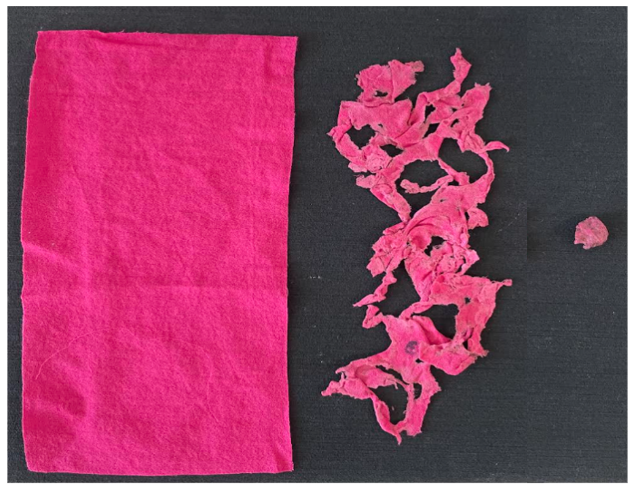
Figure 3 Types of standards.
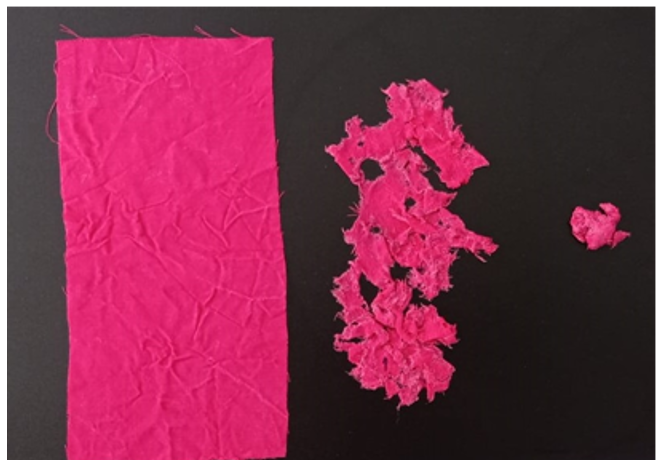
Figure 4 Dyed lyocell before, after 35 days and 50 days of soil burial at 58ºC, respectively.
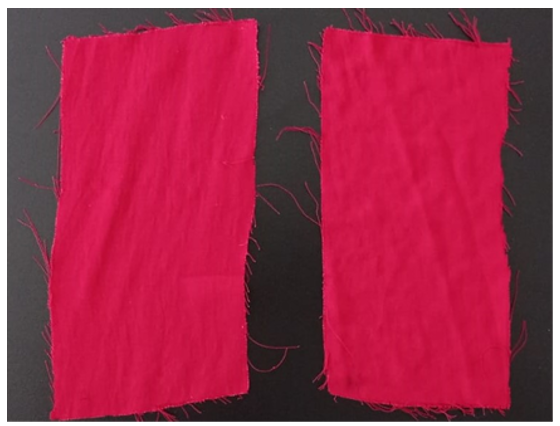
Figure 5 Dyed polyester before (left) and after 90 days (right) of soil burial at 58ºC.
It was observed that, after 40 days, the dyed cotton had reached a level of disintegration superior to 90%, while the lyocell required 50 days to reach the same mark. For the polyester, even during the maximum period (90 days), the textile did not show any signs of degradation.
These results gave us insights into how different textile materials behave when exposed to the action of microorganisms and controlled environmental conditions. The cotton woven, out of the three textiles tested, took less time to reach the 90% weight loss. For being a natural fiber and composed of 90% to 95% cellulose,117 it was expected to be more rapidly decomposed than the other two. Lyocell fiber, as an artificial fiber of natural origin, containing cellulose and described as a “green and eco-friendly fiber”,118,119 is also expected to exhibit higher levels of degradation in a smaller period of time. The polyester fiber, derived from petrochemical sources, was anticipated to exhibit non-degradation following the 90-day testing period. To ensure the reliability of these results, the tests were repeated. The repetition of the experiments yield consistence outcomes, with similar disintegration patterns and time intervals in each case. These reproducibility strengths the confidence in the trustworthiness of the disintegration intervals reported.
The textile industry evolution, while driven by remarkable advancements in technology and material science, has brought significant environmental challenges, particularly through the proliferation of non-biodegradable materials. Significant gaps in standardization, testing procedures and regulatory frameworks have been identified as a result of this review´s exploration of the difficulties associated with evaluating textile biodegradability. The lack of consistent standards on how the textile materials decompose in various environmental settings makes it more difficult to understand the real ecological impact. Through an in-depth analysis of biodegradation processes and international testing methodologies, this work emphasizes the need for tailored standards that accurately evaluate the impact of different types of fibers in the environment. The study conducted under the be@t project further demonstrated the variability in the degradation capabilities of cotton, lyocell and polyester fibers under composting conditions, reaffirming the importance of material specific assessments.
Beyond the standardized tests, ongoing research for the innovation of textile materials is crucial. The development of enhanced degradation technologies and creation of bio-based fibers significantly reduce the textile footprint. These efforts combined can propel the industry towards a model where the materials are designed for biodegradability without compromising performance. Technological advancements and environmental responsibilities are crucial for the alignment of the textile industry with global sustainability goals and ensuring a greener future.
None.
The authors acknowledge the financial support from integrated project be@t – Textile Bioeconomy (TC-C12-i01, Sustainable Bioeconomy No. 02/C12-i01.01/2022), promoted by the Portuguese Recovery and Resilience Plan (RRP), Next Generation EU, for the period 2021 – 2026.
The authors declare no conflicts of interest or competing interests, including financial, intellectual property, or personal relationships that could influence the research findings.

©2025 Pinto, et al. This is an open access article distributed under the terms of the, which permits unrestricted use, distribution, and build upon your work non-commercially.