Journal of
eISSN: 2574-8114


Research Article Volume 11 Issue 5
 Md Osman Goni,2 Sheikh Sha Alam2
1Department of Apparel Merchandising & Management (AMM), Chittagong BGMEA University of Fashion & Technology, CBUFT, Chattogram, Bangladesh
2Department of Production, Bengal Synthetic Mill, Chattogram, Bangladesh
Correspondence: Sheikh Sha Alam, Department of Production, Bengal Synthetic Mill, Chattogram, Bangladesh
Received: September 11, 2025 | Published: October 23, 2025
Citation: Rahman M, Goni O, Alam SS. Investigation of the relationship between load and elongation in Partially Oriented Yarn (P.O.Y.) during the polyester filament spinning process. J Textile Eng Fashion Technol. 2025;11(5):274-277. DOI: 10.15406/jteft.2025.11.00433
Partially Oriented Yarn (POY) is a type of polyester filament yarn produced through the molten spinning process, where semi-crystalline polyester chips are melted and extruded to form continuous filaments. This study investigates the relationship between applied load and elongation characteristics of polyester POY manufactured using this technique. The POY samples analyzed were of the semi-dull type and varied in denier and filament count: 114/36, 130/36, and 248/48. Semi-dull polyester chips were processed through an extruder, and the resulting filaments were wound at controlled speeds to produce POY with varying structural parameters. Mechanical testing was conducted to evaluate properties such as load-bearing capacity and elongation behavior. The average elongation values observed were approximately 123.90%, 125.73%, and 138.06% for the 114/36, 130/36, and 248/48 samples, respectively, under corresponding loads of 328.33 g, 348.33 g, and 548.33 g. These results indicate that although elongation tends to increase with applied load, the relationship is not strictly linear. Instead, the data suggest that other influencing factors—such as denier, filament count, and the internal molecular orientation of the yarn—play a significant role in determining elongation performance. Understanding these variables is crucial for optimizing POY properties for downstream processing and final applications in both textile and industrial sectors.
Keywords: polyester, tensile, load, elongation, polyester PO
Polyester filament yarn, a continuous synthetic fiber, is primarily produced through the polymerization of pure terephthalic acid (PTA) or dimethyl terephthalate (DMT) combined with ethylene glycol (MEG), using esterification or transesterification followed by a polycondensation process. The resulting polymer is spun and post-treated to yield long, strong, and versatile fibers, which are typically wound into bobbins and used in various industrial and textile applications.1–3
One significant form of polyester filament is Partially Oriented Yarn (P.O.Y.), which serves as an intermediate product in Draw Textured Yarn (DTY). P.O.Y. is obtained by high-speed spinning of molten polyester, but without full stretching, resulting in yarns with medium orientation and crystallinity. These yarns are later drawn and texturized to enhance elasticity, bulk, and softness for final applications in apparel, upholstery, automotive textiles, labels, and industrial products like belts, ropes, and nets.4,5
The mechanical behavior of P.O.Y., especially its load-bearing capacity and elongation characteristics, plays a critical role in determining its performance during processing and in end-use applications.7–10 Excessive elongation may lead to deformation under stress, while insufficient elongation can cause brittleness, reducing its ability to withstand cyclic or dynamic loads. Therefore, understanding the critical relationship between load and elongation in the P.O.Y. process is essential for optimizing its mechanical properties and ensuring the reliability of the final product.
The study aims to investigate the relationship between applied load and elongation in polyester Partially Oriented Yarn (POY) produced via molten spinning, considering variations in denier and filament count. It also seeks to evaluate the influence of intrinsic yarn properties, such as internal structure, on tensile behavior and the potential nonlinearity of the load–elongation relationship.
Methods of experiments
The materials used in this study were semi-dull, which were acquired from HUMVIRA, HENGYI, INDORAMA, and POLYRON. "The measured average elongations of the POY were approximately 123.9%, 125.73%, and 138.06% under applied loads of 328.33 g, 348.33 g, and 548.33 g, respectively. The textile test machine used in this study was a Partially Oriented Yarn (POY) Elongation Test Machine.
Sample preparation
Before testing, the yarn must be properly conditioned under standard atmospheric conditions of 20 ± 2°C temperature and 65 ± 5% relative humidity to ensure accuracy and consistency. A specific length of yarn, typically around 500 mm, is carefully clamped between the jaws of the testing machine, making sure that no twist or slack is present in the sample. This preparation ensures reliable measurement of the yarn’s properties.
Test procedure
The yarn is clamped firmly on both sides without any slack, ensuring proper alignment for testing. A constant rate of extension (CRE), typically 500 mm/min or as specified by the relevant standard, is then applied. Once the machine is started, it gradually pulls the yarn until it either reaches a specified elongation or breaks. Throughout the process, the force applied (load), and the corresponding elongation (distance) are continuously recorded in real time, providing accurate data for evaluating the yarn’s tensile properties.
Test results
POY 114/36 D/F
POY 114/36 refers to Partially Oriented Yarn (POY) with a denier of 114 and 36 filaments. The "114" indicates the yarn's thickness (114 grams per 9000 meters of yarn), while "36" signifies that it is composed of 36 individual filaments. The standard range adopted in this study is 114 ± 2, indicating the acceptable tolerance limits (Table 1).
|
Sl. No/Name of test |
Denier |
Load |
Elongation |
||||
|
1 |
114.6 |
315 |
325 |
340 |
123.2 |
122.4 |
122.8 |
|
2 |
113.6 |
325 |
335 |
330 |
123.6 |
125.6 |
125.8 |
|
Average |
114.1 |
320 |
330 |
335 |
123.4 |
124 |
124.3 |
Table 1 POY 114/36 D/F
In this study, to ensure consistency in the analysis, the standard elongation range adopted is defined as 123 ± 3 (Figure 1). This controlled range establishes the permissible tolerance limits within which variations in elongation are considered acceptable, thereby minimizing experimental error and enhancing the reliability of the results. By maintaining this standard, the study ensures that all samples are evaluated under uniform conditions, allowing for accurate comparison of performance and reducing the influence of external factors. Such precision in defining the elongation range improves the data's reproducibility and strengthens the validity of the experimental findings.
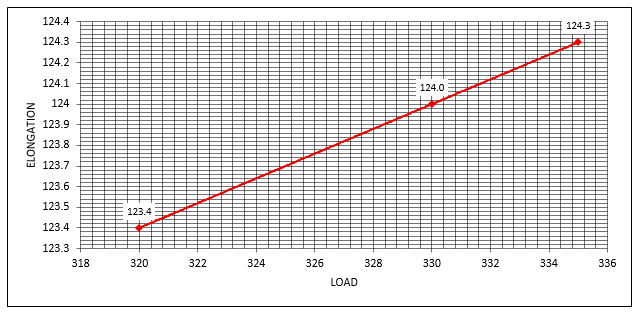
Figure 1 Load-Elongation curve of POY 114/36 D/F.
Test results
POY 130/36 D/F
POY 130/36 refers to Partially Oriented Yarn (POY) with a denier of 130 and 36 filaments. The "130" indicates the yarn's thickness (130 grams per 9000 meters of yarn), while "36" signifies that it is composed of 36 individual filaments. The standard range adopted in this study is 130 ± 2, indicating the acceptable tolerance limits (Table 2).
|
Test |
Denier |
Load |
Elongation |
||||
|
1 |
129.6 |
335 |
345 |
350 |
125.2 |
125.4 |
125.8 |
|
2 |
130.6 |
345 |
355 |
360 |
124.6 |
126.6 |
126.8 |
|
Average |
130.1 |
340 |
350 |
355 |
124.9 |
126 |
126.3 |
Table 2 POY 130/36 D/
In this study, to ensure consistency in the analysis, the standard elongation range adopted is defined as 125 ± 3 (Figure 2). This specified range sets the permissible tolerance limits within which variations are considered acceptable, ensuring uniformity in testing conditions and minimizing discrepancies across samples. By adhering to this controlled range, the experimental process becomes more reliable, as it reduces the potential impact of uncontrolled deviations and enhances the accuracy of the data collected. Ultimately, maintaining this elongation range strengthens the reproducibility of the study and supports the validity of the results obtained.
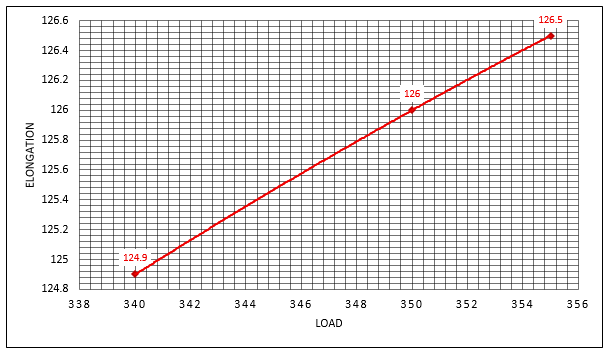
Figure 2 Load-Elongation curve of POY 130/36 D/F.
Test results
POY 248/48 D/F
POY 248/48 refers to Partially Oriented Yarn (POY) with a denier of 248 and 48 filaments. The "248" indicates the yarn's thickness (248 grams per 9000 meters of yarn), while "48" signifies that it is composed of 48 individual filaments. The standard range adopted in this study is 248 ± 2, indicating the acceptable tolerance limits (Table 3).
|
Test |
Denier |
Load |
Elongation |
||||
|
1 |
248.6 |
535 |
545 |
550 |
136.2 |
137.4 |
138.8 |
|
2 |
247.6 |
545 |
555 |
560 |
137.6 |
138.6 |
139.8 |
|
Average |
248.1 |
540 |
550 |
555 |
136.9 |
138 |
139.3 |
Table 3 POY 248/48 D/F
In this study, to maintain consistency in the analysis, the standard elongation range was set at 138 ± 3 (Figure 3). This defined range provides clear tolerance limits within which variations are considered acceptable, ensuring uniformity across all measurements. By controlling elongation within these limits, the experimental procedure minimizes inconsistencies, enhances data reliability, and supports accurate comparisons between different yarn samples. Establishing such a standard range also strengthens the study's reproducibility, improving the validity and robustness of the experimental findings.
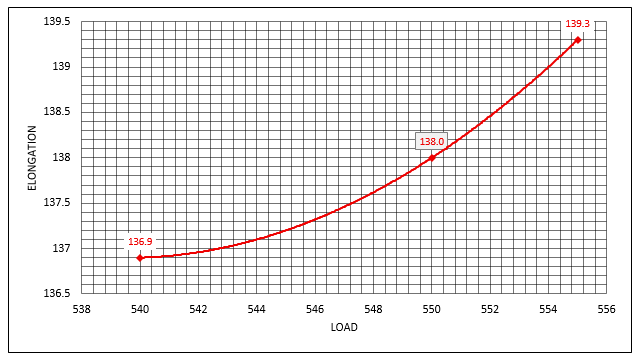
Figure 3 Load-Elongation curve of POY 248/48 D/F.
This study investigated the relationship between load and elongation in three types of Partially Oriented Yarn (POY) with varying denier and filament counts: 114/36, 130/36, and 248/48. The experimental results reveal several significant trends and characteristics as outlined below:
POY 114/36 D/F
The average applied load during testing was approximately 328.33 grams, corresponding to an average elongation of 123.9%. The elongation values ranged between 123.2% and 125.8%, all of which fall within the predefined acceptable range of 123 ± 3%, thereby confirming the reliability of the results. While a general increase in elongation was observed with increasing load, minor variations were also noted. These deviations are influenced by intrinsic material characteristics beyond the applied load, such as filament orientation, yarn uniformity, and microstructural features, which can subtly affect the overall tensile behavior.
POY 130/36 D/F
The average load recorded was 348.33 grams, with elongation values ranging from 124.6% to 126.8% and a mean of approximately 125.73%. These results align well with the standard range of 125 ± 3%, confirming the reliability and consistency of the testing procedure. When compared to the 114/36 sample, the 130/36 yarn required a slightly higher load to achieve similar elongation levels, which can be attributed to the increase in yarn thickness (denier) that enhances its strength and resistance to deformation.
POY 248/48 D/F
This group exhibited the highest average load of 548.33 grams, accompanied by an average elongation of 138.06%. The elongation values, which ranged from 136.2% to 139.8%, remained well within the acceptable limit of 138 ± 3, validating the consistency of the results. The combination of higher denier and greater filament count played a significant role in enhancing the yarn’s load tolerance and elongation capacity, thereby reflecting superior mechanical strength and improved ductility compared to the other samples.
This study aimed to explore the relationship between applied load and elongation behavior in Partially Oriented Yarn (POY) produced via the polyester filament spinning process. By evaluating yarn samples with varying denier and filament configurations—specifically 114/36, 130/36, and 248/48—the research sought to elucidate how these structural parameters affect the mechanical performance of POY. The results demonstrated that elongation generally increased with the applied load, consistent with viscoelastic behavior. However, each POY variant exhibited distinct elongation characteristics influenced by its specific denier and filament count. Notably, yarns with higher denier values required greater applied forces to achieve comparable levels of elongation, indicating enhanced ductility and superior load-bearing capabilities. This suggests that the filament density and denier play a critical role in governing the deformation behavior and energy absorption capacity of POY under tensile stress.
In conclusion, the mechanical response of POY under applied load is governed by a complex interplay of physical dimensions (such as denier and filament count), internal molecular orientation, and processing conditions inherent to the spinning method. These findings underscore the importance of tailoring POY structural parameters to meet the mechanical demands of downstream processes, such as draw-texturing, as well as specific end-use applications in the textile and industrial sectors. A deeper understanding of these relationships can contribute to optimizing production strategies, enhancing product consistency, and achieving better performance in functional applications where mechanical resilience and controlled deformation are critical.
None.
Data availability
All data related to the research are included in the manuscript.
The authors did not receive any internal or external funding for this research.

©2025 Rahman, et al. This is an open access article distributed under the terms of the, which permits unrestricted use, distribution, and build upon your work non-commercially.