Journal of
eISSN: 2574-8114


Opinion Volume 11 Issue 4
 Vivek A Ganti2
1Principal Research Scientist -Emeritus Status, MSE, Georgia Institute of Technology, Atlanta, USA
2Entrepreneur Currently Operating in Silicon Valley, California
Correspondence: Radhakrishnaiah Parachuru, PhD, MSE, Principal Research Scientist -Emeritus Status, Georgia Institute of Technology, MSE, Atlanta, GA, USA
Received: August 08, 2025 | Published: August 22, 2025
Citation: Parachuru R, Ganti VA. Energy harvesting textiles – a look at selected textile-based energy harvesting approaches of the last decade. J Textile Eng Fashion Technol. 2025;11(4):194-200. DOI: 10.15406/jteft.2025.11.00422
Energy harvesting textiles represent a truly transformative development in the area of wearable smart textiles. These integrate renewable energy technologies—photovoltaic, piezoelectric, thermoelectric, and triboelectric systems—directly into fabrics to autonomously power low-power devices. Each harvesting principle brings unique advantages and limitations -- photovoltaic systems provide high energy output under light but face challenges in flexibility and washability; piezoelectric and triboelectric systems excel in capturing motion-induced energy but deliver low power densities; thermoelectric materials harness body heat, but the efficiency remains low. Recent advances in hybrid textile architectures demonstrate the feasibility of combining these principles within a single structure, using flexible materials like PVDF, PEDOT:PSS, CNTs, and MXenes. These hybrids show improved performance via energy complementation, especially when integrated using scalable techniques such as electrospinning, fiber coating, or embroidery.
Commercial viability of the systems remains somewhat poor by challenges in terms of scalability, energy density, mechanical durability, and washability. Compared to commercial batteries, current textile systems provide significantly lower energy outputs, suitable primarily for intermittent or low-demand applications such as biometric sensors or IoT wearables. Promising solutions include encapsulation techniques, electrospun nanofiber coatings, and the integration of energy storage units like supercapacitors. Several studies have demonstrated wash-resistant designs that maintain functionality across multiple laundry cycles, marking a critical step toward real-world adoption. While the field is still evolving, the convergence of material innovation, smart integration, and textile engineering is rapidly pushing energy harvesting textiles closer to practical reality.
Keywords: photovoltaic, piezoelectric, thermoelectric, triboelectric, nano-generator, scalability, energy density
Textiles are being dramatically repurposed as energy-harvesting power plants using solar fabrics to capture sunlight,1,2 and also by using triboelectric and piezoelectric textiles to capture motion.3–5 Solar fabrics are embedded with flexible PV cells—either woven into fibers or coated on surfaces—to turn outer garments into mini-solar farms. The PV cells range from thin-film or organic polymer-based PVs to the futuristic perovskite tech and photoanode-woven hybrids. Contemporary overviews dive into the ins and outs of these photovoltaic textiles, detailing how to maintain flexibility, washability, and durability in wearable gear. Kinetic, thermal, and RF energy sources are being exploited with next-generation textile technology. Triboelectric nanogenerators (TENGs) and piezoelectric fabrics capture motion when people wearing garments walk or when rain drops fall on fabrics; the captured mechanical energy is converted to power. There are dual-action fabrics: solar plus triboelectric, similar to the Georgia Tech fabric that charges a capacitor in just a minute using sunlight and motion. Thermal and RF harvesting are also being practiced.6,7 Piezo-thermo “dual envelope” fabrics for Navy SEAL-style suits harvest both heat and movement, while printed textile rectennas capture ambient Wi-Fi at 2.45 GHz—on fabric.
Thus, textiles are going way beyond fashion—they are now a significant part of alternative energy generation. Progressive textile manufacturers around the globe are preparing themselves for the era of energy-harvesting fabrics, where threads don’t just cover the body, but generate power.
The selection of piezoelectric, triboelectric, thermoelectric, and photovoltaic energy harvesting techniques for textile integration is driven by their ability to exploit diverse ambient energy sources—mechanical motion, body heat, and sunlight which are commonly encountered in wearable contexts. These principles are inherently low-profile, scalable, and fiber-compatible, making them suitable for incorporation into fabrics without compromising comfort or flexibility. Moreover, each technique complements the others - piezoelectric and triboelectric harvest intermittent motion, thermoelectric captures continuous thermal gradients, and photovoltaic provides daytime power, collectively enabling hybrid systems that ensure more consistent and sustainable energy supply for wearables.
Photovoltaic (Solar) textiles
What it is: Fabrics integrated with flexible solar cells or photovoltaic fibers
How it works: These textiles capture sunlight and convert it into electricity.
Examples:
Technology behind it:
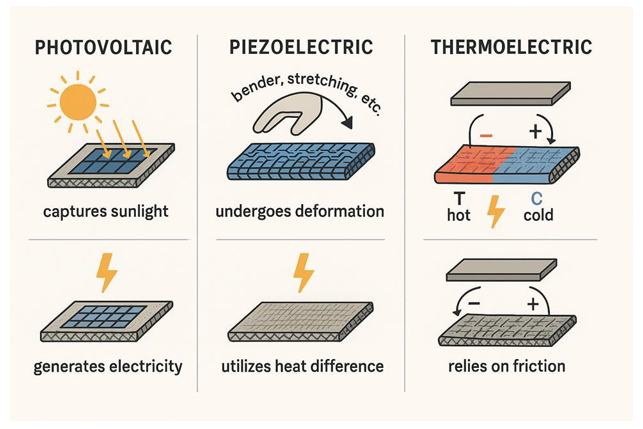
Figure 1 Pictorial illustration of three main categories.
Piezoelectric textiles
What it is: Fabrics embedded with piezoelectric materials (like ZnO nanowires) that generate electricity when bent, stretched, or pressed.
How it works: Converts mechanical stress into electric charge.
Examples:
Fact: A jogging outfit could one day power a smartwatch, thus eliminating the need to separately charge the smart watch.
Thermoelectric textiles
What it is: Fabrics that exploit the Seebeck effect—converting heat gradients into electricity
How it works: When one side of the fabric is warmer than the other, electrons flow and generate power.
Examples:
Common materials: Bismuth telluride, carbon nanotubes + conductive polymers
Triboelectric Nanogenerator (TENG) textiles
What it is: These use the triboelectric effect—basically static electricity generation by friction between two materials
How it works: Fabrics rub against each other or your body, creating a charge.
Examples:
Hybrid textiles
What it is: Textiles that combine multiple energy sources—solar, kinetic, thermal—for maximum output
Example: A single fabric made with:
These are being explored for off-grid wearables, disaster relief clothing, or self-sustaining IoT sensors.
Key industries promoting textile-based energy harvesting
What are some current hurdles faced by the technology
But the momentum is building. Textile-based energy solutions are a legit flex—sustainable, flexible, and fashion-forward.
Here is an overview of the design and functional requirements for energy-harvesting textile structures using piezoelectric, thermoelectric, photovoltaic, and triboelectric principles, along with a cost-comparison table.
Piezoelectric textiles: design & functional requirements
Thermoelectric textiles: design & functional requirements
Photovoltaic textiles: design & functional requirements
Flexible dye-sensitized, organic polymer (e.g., perovskite), CIGS thin films, or crystalline-silicon microcells on fibers10
Triboelectric textiles: design & functional requirements
Pairs of triboelectric materials (e.g., PTFE, nylon) attached/coated to textile layers or fibers12
Interlaced layers (knit, woven, braided), compressible woven TENGs, nonwoven mats—e.g., recent texTENG for DIY-friendly designs.13
|
Principle |
Material cost* |
Fabrication complexity |
Typical power density |
Estimated textile cost** |
|
Piezoelectric |
Medium ($20–50/m²) |
Medium–High (electrospinning, layering) |
μW–mW/m² |
$25–75/m² |
|
Thermoelectric |
Medium ($15–40/m²) |
Medium (ink deposition, yarn knitting) |
μW–tens mW/m² |
$20–60/m² |
|
Photovoltaic |
High ($50–150/m²) |
High (clean environments, PV film deposition) |
mW–tens mW/m² |
$60–200/m² |
|
Triboelectric |
Low–Medium ($10–30/m²) |
Low–Medium (weaving, coating) |
mW–W/m² (lab peak) |
$15–50/m² |
Table 1 Cost comparison
*Raw material market prices in 2025
**Includes processing & expected scale-up margins
Triboelectric solutions offer a balance of low cost and simplicity, excelling in high-motion scenarios but with variable output.
Hybrid textile energy harvesting systems integrate multiple principles—piezoelectric, triboelectric, thermoelectric, and photovoltaic—to optimize power output and reliability in variable environments. By harvesting energy from diverse stimuli (motion, light, temperature difference), these systems offer sustained power generation even when one energy source is unavailable.
Piezoelectric + Triboelectric
Photovoltaic + Thermoelectric
Piezoelectric/Triboelectric + PV/TE
|
Mode |
Individual Power Density |
Hybrid Power Synergy |
Efficiency Boost |
|
Piezoelectric |
μW–mW/m² |
Adds mechanical output |
Depends on motion frequency |
|
Triboelectric |
μW–mW (lab: W/m²) |
Enhanced with multiple contact points |
High peak, variable |
|
Photovoltaic |
mW–tens mW/m² |
Continuous under light |
Efficient under direct sunlight |
|
Thermoelectric |
μW–mW/m² |
Boosted by sunlight or body heat |
Modest in wearables |
Table 2 Combined vs. Individual performance
Synergy Gains: Combined systems don't merely add outputs—they improve reliability. For example, a hybrid PV-TE-piezo structure can yield >2x total output compared to each source alone under real-life wear conditions.13
Design considerations
Practical integration examples
Conclusion
Yes, hybrid energy harvesting in textiles is both feasible and functionally superior to single-method approaches. Combining piezoelectric, triboelectric, photovoltaic, and thermoelectric systems enables complementary power sourcing—mechanical, thermal, and solar—resulting in higher overall efficiency and reliability. Hybrid systems outperform individual techniques, especially in dynamic, real-world wearable applications.
Textile energy harvesting techniques—based on piezoelectric, thermoelectric, photovoltaic, and triboelectric principles—are technically feasible but still face several scalability challenges before widespread commercial deployment. These span material constraints, fabrication processes, integration issues, and economic viability.
Piezoelectric textiles
Thermoelectric textiles
Photovoltaic textiles
Triboelectric textiles
Integration at Scale: Ensuring uniform contact/separation mechanisms in large fabric panels remains technically demanding (Table 3).
|
Challenge |
Description |
|
Textile Compatibility |
Functional coatings must withstand bending, washing, and abrasion. Most energy harvesting materials are not inherently textile-grade. |
|
Manufacturing Scale |
Lab-scale printing, coating, or knitting doesn't always translate to roll-to-roll or garment-level production. |
|
Power Density |
Even in combined systems, output per area may not yet support high-demand electronics. |
|
Cost & Standardization |
Lack of cost-effective production processes and standardized testing impedes commercialization. |
Table 3 General challenges across all techniques
Noteworthy Insights
Conclusion
While textile-based energy harvesting is technically achievable, true commercial scalability is constrained by material limitations, fabrication complexity, and cost-performance trade-offs. Piezoelectric and triboelectric systems are closer to scale via fiber/yarn integration, whereas photovoltaic and thermoelectric options require breakthroughs in stability and manufacturing. Collaborative innovation in materials science, textile engineering, and device design is essential to bridge the lab-to-market gap.
Hybrid smart textiles integrate multiple energy harvesting mechanisms (solar, mechanical, thermal) and occasionally energy storage, offering self-sustained power for low-power wearable electronics. But how do they compare to conventional commercial batteries in terms of energy performance? (Table 4)
|
Feature |
Hybrid Smart Textiles |
Commercial Batteries |
|
Energy Density |
Typically, μWh–mWh/cm² |
100–250 Wh/kg (Li-ion) |
|
Power Density |
μW–mW/cm²; peaks at ~W/m² (triboelectric+solar) |
100–1000 W/kg |
|
Sustainability |
Self-replenishing (ambient energy) |
Finite charge cycles; requires replacement |
|
Scalability |
Emerging for wearables |
|
|
Flexibility & Comfort |
High (especially with nanofibers and textile weaving) |
Mature and mass-produced Low (rigid form factors) |
Table 4 Performance metrics comparison
Key findings from literature
Smart textiles are ideal for low-power electronics like wearables, environmental sensors, or health monitors—not high-drain devices like laptops or electric vehicles
Conclusion
Hybrid smart textiles currently cannot match commercial batteries in terms of energy or power density. However, they provide sustainable, self-powered operation without recharging, which is ideal for lightweight, flexible, and wearable applications. Their strength lies in complementing traditional batteries or replacing them in low-demand, mobile, or maintenance-free environments.
To ensure energy harvesting textiles are washable, researchers are designing systems that combine durable encapsulation, resilient materials, and wash-compatible architectures. These strategies aim to preserve functionality under mechanical stress, water exposure, and detergent exposure—key for user acceptance and product longevity
Encapsulation with textile-compatible coatings
Approach: Laminating energy harvesting modules with waterproof, flexible synthetic textiles using industrial lamination (e.g., PU films, silicone rubber).
Example: Embedded monocrystalline silicon solar cells endured up to 50 laundry cycles (ISO 6330:2012) while retaining full energy performance in most samples.
Yarn-integrated electronics
Approach: Embedding miniature solar cells within the yarn’s core and sealing them with fine copper wires and textile fibers.
Performance: Maintained 90% power after 15 machine washes and retained fabric softness, breathability, and flexibility.19
Electrospun nanofiber coatings
Approach: Coating conductive yarns with electrospun PVDF or polyamide nanofibers enhances adhesion and durability.
Example: PVDF-coated CNT yarns retained functionality after 10 washing cycles and 1,200 rubbing cycles, with increased power after fatigue cycles.20
Self-charging all-in-one systems
Approach: Combine washable triboelectric nanogenerators (TENGs) and supercapacitors in single flexible units using carbon cloth coated with waterproof silicone rubber. Performance: Maintains voltage output (~280 V) after multiple use cycles and is suitable for direct garment integration (Table 5).21
|
Method |
Wash Durability |
Key Features |
|
Textile encapsulation (lamination) |
50 cycles |
Maintains photovoltaic efficiency |
|
Yarn-embedded cells |
15 cycles |
Retains fabric flexibility |
|
Electrospun coatings |
10+ cycles |
Adheres well to fibers; abrasion-resistant |
|
TENG + supercapacitor systems |
Confirmed in simulation |
Self-charging, stretchable, waterproof |
Table 5 Summary of techniques
Washability in energy harvesting textiles is achievable through material engineering (PVDF, silicone, carbon cloth) and smart integration (yarn-embedded electronics, nanofiber coatings, laminated structures). The best-performing systems maintain over 80–90% efficiency after multiple domestic wash cycles, meeting textile industry standards and paving the way for commercial applications.
Recommendations for improving commercial viability and real world usability of energy harvesting textiles
To improve the commercial viability and real-world usability of energy harvesting textiles, future efforts should prioritize the development of multifunctional, textile-compatible materials that combine flexibility, durability, and high energy conversion efficiency. Standardizing washable encapsulation methods such as breathable hydrophobic coatings or nanofiber barriers will be essential to ensure long-term performance in everyday environments. Roll-to-roll fabrication techniques and coaxial yarn architectures must be scaled to reduce manufacturing costs and enhance reproducibility. Integration of modular energy storage (e.g., flexible supercapacitors or textile batteries) and power management circuits within the garment architecture can enable self-sustaining systems. Additionally, establishing industry-wide testing protocols for mechanical fatigue, laundering, and skin-contact safety will accelerate consumer trust and adoption in sectors such as healthcare, sportswear, and military gear.
None.
None.
The authors declare that there is no conflict of interest.

©2025 Parachuru, et al. This is an open access article distributed under the terms of the, which permits unrestricted use, distribution, and build upon your work non-commercially.