Journal of
eISSN: 2373-633X


Narative Review Volume 16 Issue 4
 Abolfazl Beyraghdar,2 Dariush Gholami,1 Gholamreza Motalleb3
1Faculty of Biotechnology, Amol University of Special Modern Technologies, Amol, Iran
2Department of Biology, Mashhad branch, Islamic Azad University, Mashhad, Iran
3Department of Biology, Faculty of Science, University of Zabol, Zabol, Iran
Correspondence: Seyed Hossein Khaleghinejad, Faculty of Biotechnology, Amol University of Special Modern Technologies, Amol, Iran
Received: August 09, 2025 | Published: September 9, 2025
Citation: Khaleghinejad SH, Beyraghdar A, Gholami D, et al. A narrative review of interleukin-2-based therapies in cancer: recent advances, challenges, and safety considerations. J Cancer Prev Curr Res. 2025;16(4):102‒105. DOI: 10.15406/jcpcr.2025.16.00586
Interleukin-2 (IL-2)-based immunotherapy, one of the earliest immunomodulatory approaches in cancer treatment, has played a pivotal role in activating cytotoxic T cells and natural killer (NK) cells. Nonetheless, the clinical application of IL-2 encounters obstacles such as a brief half-life, significant toxicity, and inadvertent stimulation of regulatory T cells. This review intends to scrutinize recent advancements in the development of engineered IL-2 derivatives, furnish a comprehensive overview of the cytokine's structural and functional attributes, evaluate clinical and preclinical research, and investigate novel strategies to mitigate adverse effects while enhancing therapeutic efficacy. Evidence suggests that emerging variants such as Bempegaldesleukin, THOR-707, and MDNA11 hold promise for safer and more efficacious treatments, with improved pharmacokinetics and targeted cellular activity. Furthermore, the utilization of computational methods and structural modeling as supplementary tools for predicting receptor interactions and biological outcomes is vital in the advancement of next-generation immunotherapies. Despite notable progress, considerable gaps in understanding persist regarding the molecular mechanisms and structure-function relationships of IL-2 derivatives, underscoring the need for more comprehensive and integrative research.
Keywords: immunotherapy, cancer, IL-2, cytokine engineering, IL-2 receptor
Cancer remains one of the most significant global health issues; according to international reports, there are presently approximately 19 to 20 million new cases and nearly 10 million deaths worldwide annually. If the current trend continues, it is projected that by 2050, the number of new cases will surpass 35 million, with fatalities approaching 18 million.1–3 This notable increase in disease burden, particularly in resource-constrained countries due to aging populations and rapid demographic growth, imposes substantial pressure on healthcare systems. In this context, targeted therapies that concentrate on molecular and immune characteristics have gained particular prominence. Unlike conventional chemotherapy or radiation therapy, which are associated with a high risk of adverse effects, immunotherapy presents the multifaceted potential to activate the immune system against cancer cells, thereby enabling more precise and less complex treatment modalities. Recent advancements in molecular technology, cytokine engineering, and CAR T-cell receptor-based therapies have attracted significant attention from researchers and investigators.4–9
Recent investigations in cancer research have identified cytokines, notably interleukins, as crucial regulators of immune homeostasis and antitumor immunity. These signaling molecules, including IL-2, IL-15, and IL-21, are instrumental in the precise modulation of innate and adaptive immune responses through the regulation of T-cell proliferation, activation of natural killer (NK) cells, and preservation of memory cells. IL-2 is recognized as a multifunctional cytokine that not only facilitates the proliferation of CD8⁺ cytotoxic T lymphocytes and NK cells but also influences the differentiation of regulatory T cells (Treg) and the induction of activation-induced programmed cell death, thereby maintaining the equilibrium between immune activation and suppression.10–13
In comparison, IL-15 presents distinct immunological advantages by inducing fewer T regulatory cells (Treg) and promoting the long-term survival of memory CD8⁺ T cells and natural killer (NK) cells. Additionally, IL-21 has demonstrated synergistic effects in antitumor therapies, particularly when combined with IL-15, by facilitating B-cell differentiation and the development of T follicular helper (Tfh) cells. This positions IL-2 as a potent immune activator and regulator, while IL-15 and IL-21 also play vital roles, each with complementary strengths, in targeted immunotherapy strategies for cancer.14-18 To further explain the functional differences among the interleukins commonly used in immunotherapy, Table 1 provides a comparative overview of the immune properties, degree of regulatory T cell (Treg) stimulation, and toxicity of the cytokines IL-2, IL-15, and IL-21.10,12,18
|
Interleukin |
IL-2 |
IL-15 |
IL-21 |
|
Features |
|||
|
Stimulation of CD8⁺ T cells |
Strong |
Strong |
Moderate |
|
NK Cell Activation |
Strong |
Strong |
Moderate |
|
Stimulation of Treg cells |
High |
Very low |
Negligible |
|
Natural Half-Life |
Short |
Short |
Medium |
Table 1 Comparison of immune function, stimulation of regulatory T cells, interleukins IL-2, IL-15 and IL-21 in cancer immunotherapy
Immunotherapy is an innovative approach in cancer treatment that harnesses the immune system's ability to recognize and eliminate tumor cells. Interleukin-2 (IL-2), a key cytokine responsible for regulating the growth and activation of immune cells, was among the first immunomodulators to gain regulatory approval for clinical use, mainly in metastatic renal cell carcinoma and melanoma. The primary role of IL-2 is to support the survival, proliferation, and effective operation of cytotoxic T-lymphocytes (CTLs) and natural killer (NK) cells, making it a crucial component in developing immune-based therapies.19,20 However, clinical enthusiasm for recombinant human IL-2 (aldesleukin) has been tempered by significant challenges, including a short half-life in vivo, a limited therapeutic window, and the potential to cause severe toxicities such as vascular leak syndrome. Additionally, unmodified IL-2 non-selectively stimulates both effector T cells and immunosuppressive regulatory T cells (Tregs), which can weaken antitumor immune responses and facilitate immune evasion. Among various immunotherapy strategies, cytokines, particularly interleukin-2 (IL-2), have attracted attention because of their vital role in activating T lymphocytes and natural killer (NK) cells.15,20–25
The objective of this comprehensive review is to examine recent developments in the design of IL-2 derivatives, analyze their structural and functional properties, assess clinical and preclinical research, and delineate existing knowledge gaps to enhance the future prospects of IL-2-based immunotherapies.
Over the past two decades, considerable efforts have been dedicated to overcoming these challenges through the design and development of engineered IL-2 variants. Innovative strategies have concentrated on selectively modulating the IL-2 receptor binding specificity to preferentially activate immune effector cells while minimizing the stimulation of Tregs and systemic side effects.20,22,26 These methodologies include site-directed mutagenesis, PEGylation, fusion proteins, and computational protein engineering, which have contributed to a new generation of modified IL-2 drugs such as Bempegaldesleukin (NKTR-214), THOR-707, and MDNA11. Many of these candidates are presently in advanced stages of clinical evaluation, reflecting the substantial interest and progress within this domain. Recent preclinical and early clinical data indicate that structurally optimized IL-2 variants can enhance antitumor immunity with reduced toxicity, thereby providing an essential proof of concept for rational cytokine engineering.27–32
Interleukin-2 (IL-2) facilitates immune responses through its binding to specific receptors expressed on the surface of immune cells, including CD8+ T lymphocytes and regulatory T cells (Treg). These receptors comprise three subunits: α (CD25), β (CD122), and γc.22,23,33–37 The variability in the sensitivity and functional response of the immune system to IL-2 is dependent on the particular combination of these subunits (Figure 1).
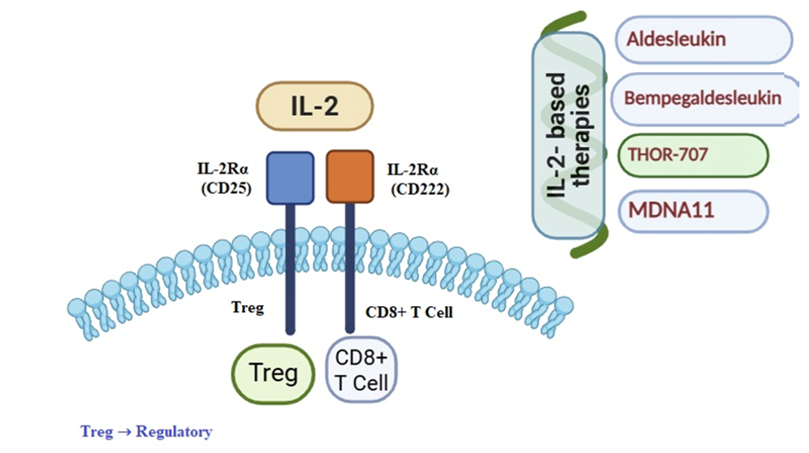
Figure 1 IL-2 signaling pathway and drugs based on it.
Several modified forms of IL-2 are currently at various stages of research and clinical development, each endeavoring to enhance pharmacokinetic properties and mitigate toxicity. Table 2 below presents some of the most significant IL-2-based therapeutics.38–45
|
Name of the drug |
Features |
State of development |
|
Aldesleukin |
Recombinant form of human IL-2 |
FDA-approved for kidney cancer |
|
Bempegaldesleukin |
IL-2 with a pegged chain to increase half-life |
Clinical phase 3 |
|
THOR-707 |
IL-2 engineered to avoid Treg stimulation |
Developing |
|
MDNA11 |
IL-2 super agonist with receptor binding regulation |
Developing |
Table 2 Characteristics and development status of interleukin-2 (IL-2)-based drugs in cancer immunotherapy.
Despite these advancements, substantial gaps in knowledge persist regarding the precise understanding of the structure-function relationships that govern IL-2 variant behavior, receptor interactions, and downstream immunological outcomes.23 Numerous IL-2 derivatives have yet to be comprehensively compared through integrated computational and biophysical analyses. This limitation is partly attributable to the complexity of their modifications and the inherent challenges associated with experimental characterization. In silico methods, including molecular modeling, docking, and stability predictions, now serve as potent and complementary tools for systematically assessing the structural and functional impacts of amino acid substitutions, chemical modifications, and engineered binding interfaces. Standardization of computational protocols such as molecular modeling and dynamic simulations alongside experimental biophysical and immunological tests can provide a comparative framework and enable systematic evaluation of different IL-2 derivatives. Nevertheless, the current literature remains limited, often focusing on individual molecules or restricted parameters. Consequently, there continues to be a need for comparative frameworks that integrate structural biology, immunology, and therapeutic design.23,46-50
Interleukin-2 (IL-2)-based immunotherapy continues to be a promising approach for the treatment of a variety of cancers, due to its ability to activate killer immune cells such as CD8⁺ cytotoxic T lymphocytes and natural killer (NK) cells. Despite these advances, significant knowledge gaps remain in the precise understanding of the structure-function relationships governing IL-2 variant behavior, receptor interaction, and downstream immunological consequences. Many IL-2 derivatives have not been rigorously compared side by side using integrated computational and biophysical analyses, in part due to the complexity of their modifications and the inherent challenges of experimental characterization. In silico approaches, including molecular modeling, docking, and stability predictions, now provide powerful and complementary tools for systematically evaluating the structural and functional consequences of amino acid substitutions, chemical modifications, and engineered binding interfaces. Further research, particularly through combined computational and experimental approaches, is necessary to optimize IL-2-based therapies and fully exploit their therapeutic potential.43,51–54
None.
No funding support was received from any organization.
No conflict of interest was declared by the authors.

©2025 Khaleghinejad, et al. This is an open access article distributed under the terms of the, which permits unrestricted use, distribution, and build upon your work non-commercially.