Journal of
eISSN: 2469 - 2786


Research Article Volume 13 Issue 3
1 Department of Agricultural Innovation for Sustainability, Faculty of Agriculture, Tokyo University of Agriculture, Japan
2Department of Nutrition and Dietetics, Faculty of Family and Consumer Sciences, Kamakura Women’s University, Japan
Correspondence: Akiko Yamada Taniguchi, Department of Agricultural Innovation for Sustainability, Faculty of Agriculture, Tokyo University of Agriculture, 1737 Funako, Atsugi, Kanagawa 243-0034, Japan
Received: August 26, 2025 | Published: September 18, 2025
Citation: Taniguchi AY, Kazami M, Noguchi H, et al. Production of miso using koji mold isolated from the leaves of Rhus javanica nurude: part 2. J Bacteriol Mycol Open Access. 2025;13(3):155-157. DOI: 10.15406/jbmoa.2025.13.00416
In this study, we previously isolated koji mold from the leaves of Rhus javanica (hereafter referred to as “Nurude”) and produced soybean miso. Following on from last time, we produced rice koji from Nurude leaves and produced rice miso. When the general components of the produced rice miso were measured, the moisture content was 44.3g/100g, protein 10.4g/100g, lipids 4.9g/100g, ash 15.5g/100g, and carbohydrates 24.9g/100g.
Despite the very short maturation period of three months, this rice miso had the same components as regular miso, and the raw materials had been well decomposed.
As with soybean miso, it was confirmed that the koji mold isolated from Nurude decomposed the raw materials well, confirming that koji mold isolated from Nurude leaves can be used to produce miso.
Keywords: koji mold, Aspergillus oryzae, Rhus javanica nurude, rice miso, miso production
A letter describing the production of miso paste (hishio) from the leaves of the Nurude tree has been discovered.1-3 It was written by a nun 700 years ago, in the late Kamakura period, to an acquaintance living in Fukushima Prefecture. This letter describes how to make miso paste, and inspired the decision to produce miso paste from Nurude.
Nurude is a member of the Anacardiaceae family.4 It is a deciduous shrub found throughout Japan. It has long been used as an ingredient in herbal medicines and was revered in ancient societies as a tree with magical powers, believed to protect against illness and disaster.5
Nurude leaves are naturally infested with koji mold, as noted in the "Illustrated Guide to Native Trees.6 It is said that koji mold has long been used to make miso and soy sauce, but currently there is no known production of miso or soy sauce using Nurude leaves.
Last time, we isolated koji mold from Nurude leaves and produced soybean miso. This time, following on from the last time, we produced rice koji from Nurude leaves and produced rice miso, so we will report on this.
Raw materials
The Nurude leaves used to isolate the koji mold were collected from Nurude trees growing wild on the Atsugi Campus of Tokyo University of Agriculture (Figure 1). The rice used was the "Haenuki" variety from Niigata Prefecture, and the soybeans were Tsukui Zairai soybeans from Atsugi City, Kanagawa Prefecture.
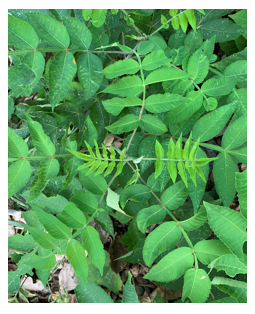
Figure 1 Rhus javannica ‘’Nurude’’.
Nurude rice miso production
Koji mold was isolated from Nurude leaves. As in the previous study, the leaves were lightly washed with water and soaked in saline for 20 hours. They were then inoculated onto a standard agar medium (meat extract, peptone, sodium chloride, agar, pH 7 and cultured at 35°C for 4 days (Figure 2). The koji mold used for isolation was certified by a testing institution as not producing aflatoxins (Figure 3).
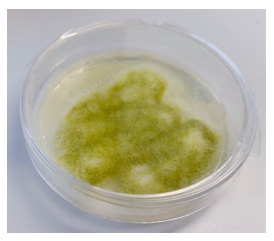
Figure 2 Koji mold Aspergillus oryzae: cultured at 35℃ for 2 days.
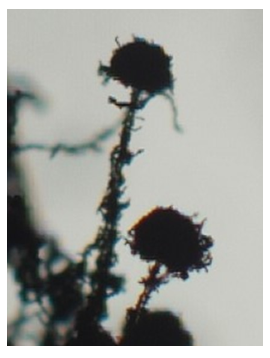
Figure 3 Koji mold Aspergillus oryzae (×100).
The isolated koji mold spores were placed on 500g of steamed rice, mixed thoroughly, and incubated at 35°C for 4 days to produce rice koji. 200g of salt was added to this rice koji to make shio koji. 500g of minced steamed soybeans were added and mixed thoroughly. The mixture was packed into an airtight container and aged at 35°C for three months to produce rice miso (Figure 4).
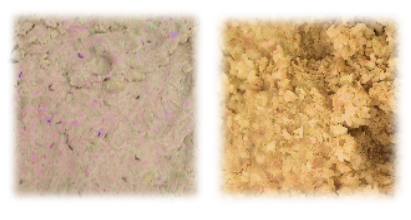
Figure 4 Nurude rice miso.
Left: Immediately after production, Right: Matured for 3 months at 35℃.
As in the previous study, the general analysis of rice miso followed the measurements in the Standard Tables of Food Composition in Japan. Moisture7 was measured using the atmospheric pressure heating and drying method, protein8 using the Kjeldahl nitrogen method, lipid9 using the Soxhlet extraction method, and ash10 using the direct ashing method at 550°C. Each test used 2g of miso, which was precisely weighed. Carbohydrate11 was calculated using the subtraction method, subtracting moisture, protein, lipid, and ash from 100.
General component analysis of nurude rice miso
The results of the general analysis of the produced Nurude rice miso are as follows (Table 1).
|
Moisture |
Protein |
Fat |
Ash |
Carbohydrate |
|
44.3 |
10.4 |
4.9 |
15.5 |
24.9 |
Table 1 General component analysis of nurude rice miso (g/100g miso)
Moisture
The moisture content was 44.3g/100g, which is higher than the value in the Standard tables of food composition in Japan12 of 42.6g/100g. Generally, rice miso is softer and more soluble than soybean miso, but this miso had a higher water content, making it even more soluble.
Protein content
The nitrogen content of Nurude rice miso was 1.80g/100g, and the protein content was 10.3g/100g. This was higher than the 9.76g/100g for sweet miso according to the Standard Tables of Food Composition in Japan12 and slightly lower than the 12.5g/100g for light-coloured spicy miso. Since protein content is determined by the ratio of rice to soybeans, this Nurude rice miso contained sufficient protein and was highly nutritious.
Fat content
The fat content of Nurude rice miso was 4.9g/100g. Compared to the 8.6g/100g reported for soybean miso in the previous study, the fat content was lower due to the use of less soybeans. This miso was lower in calories than soybean miso. The lipid content was higher than that of sweet miso (3.0g/100g) according to the Standard Tables of Food Composition in Japan,12 and lower than that of light-coloured spicy miso (6.0g/100g).
Ash content
The ash content of Nurude rice miso was 15.5g/100g, which was higher than that of sweet miso (6.8g/100g) and light-coloured spicy miso (14.2g/100g) according to the Standard Tables of Food Composition in Japan.12 Like Rice Lacquer bean miso, it is high in minerals, suggesting that this miso has functional properties.
Carbohydrates
The carbohydrate content of Rice Lacquer miso was 24.9g/100g, which was lower than that of sweet miso (37.9g/100g) according to the Standard Tables of Food Composition in Japan.12 Sweet miso is thought to have a high carbohydrate content because it contains a large amount of rice as an ingredient. The carbohydrate content of the light-coloured spicy miso was slightly lower than that of the standard miso, at 21.9g/100g.
Miso typically takes six months to a year to mature, but this rice miso, like soybean miso, was only matured for a very short period of three months. Despite this, the composition of the miso was not significantly different from that of regular miso. It was confirmed that the koji mold isolated from Nurude leaves was able to decompose the ingredients.
In this study, we isolated koji mold from the leaves of Nurde and used it to produce rice miso (Figure 5). Measurements of the general components revealed the moisture content of the produced rice miso to be 44.3g/100g, protein content 10.4g/100g, lipid content 4.9g/100g, ash content 15.5g/100g, and carbohydrate content 24.9g/100g.
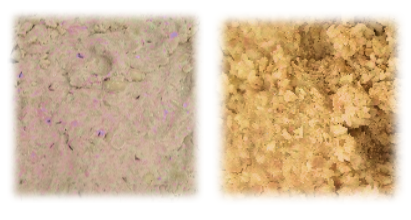
Figure 5 Nurude rice miso and cutted leaves.
This Nurude rice miso was sufficiently matured, and despite the very short aging period of three months, its components were not significantly different from those of regular miso, and the raw materials had progressed in decomposition. It was confirmed that the Koji mold isolated from Nurude was decomposing the raw materials, confirming that Nurude leaves can be used to produce rice miso, just as with the soybean miso reported previously.
The purpose of this study demonstrated the production of rice miso using natural koji mold isolated from Nurude leaves, and characterized the general composition of the Nurude rice miso using the Standard Tables of Food Composition in Japan. As a future topic, we plan to examine changes in the water-soluble fraction of miso during aging and describe the changes during aging. And, we plan to further investigate the amylase and protease activity of the Koji mold isolated from Nurude leaves.
Currently, miso is made from koji mold using controlled spores, but if the Nurude plant is available, it is believed that miso can be made by isolating the koji mold from the Nurude leaves.
None.
The authors declare that there are no conflicts of interest.

©2025 Taniguchi, et al. This is an open access article distributed under the terms of the, which permits unrestricted use, distribution, and build upon your work non-commercially.