Journal of
eISSN: 2469 - 2786


Research Article Volume 13 Issue 3

School of Life Sciences, Shanghai University, China
Correspondence: a-Yong Lu, School of Life Sciences, Shanghai University, Shanghai200444, PRC, China
Received: August 08, 2025 | Published: September 2, 2025
Citation: Da-Yong L. COVID-19 conception advances, epidemics, pathology and therapeutics . J Bacteriol Mycol Open Access. 2025;13(3):135-139. DOI: 10.15406/jbmoa.2025.13.00413
The coronavirus (COVID-19, SARS-Co-2) heavily swept the globe for several years. However, the healthcare state and legislature for COVID-19 is generally different due to various socioeconomic conditions of different countries. The more powerful vaccines, drugs or therapeutic strategy should be gradually superseded for current ones.
The origin and hidden nature of COVID-19 pandemics and medication should be elucidated. The global vaccinations and therapeutic evaluation are ongoing now. Advanced knowledge and opinion continues to grow. The existing knowledge and technology for COVID-19 should be revaluated.
The epidemic condition, different types of viral character, human vaccination, and therapeutic variability worldwide totally determine the outcomes and capability against COVID-19. Different strategic platforms can reach different therapeutic responses and benefit. To reduce viral-induced social damage, a possibility of futuristic guidelines in different medications should be established in the upcoming decade. This article summarizes this spectrum of diagnostic and therapeutic achievements into COVID-19 trials.
Keywords: covid-19, viral pathology, herbal medicine, drug development, viral prevention, viral transmission
Epidemic burden
The coronavirus (Covid-19, SARS-Co-2) swept the globe heavily. However, the healthcare state and legislature for COVID-19 is generally different due to various socioeconomic conditions of countries. Vaccine, drug or other therapeutic strategy is available nowadays. However, a lot of difficulty remains. Advanced techniques and legislatures need to be developed.
The origin and hidden nature of COVID-19 pandemics and medications are developed.1-4 The positive side of past global effort was the greater-range of global vaccinations. Advanced knowledge and opinion continues to grow for which safe guide the quality of preventive and therapeutic strategies. To speed up global efforts against COVID-19 spread, existing knowledge should be challenged and revaluated in the future. The epidemic condition, different types of viruses, vaccinations and therapeutics worldwide collectively determine our armament and capability against COVID19. Different strategic avenues can reach different medical and pharmaceutical responses against viral spread, pathogenesis and human mortality. By facilitating global alertness and mechanisms against viral-induced social damage, a possibility of futuristic guidelines should be established in the future. This article addresses this spectrum of diagnostic and therapeutic insights into different facets of COVID-19.
Early stage of global epidemics
The COVID-19 spread was rapid at the beginning (>100,000,000 global infection in the first 10 months).3 Only a short length of time (three to four months), the world was shadowed with panic and uncertainty. The origin and wave of COVID-19 spread raised public health concern globally. As a result, the speed of reaction and mobility of healthcare drugs, tools and professional staffs contribute a lot for viral epidemics controls. Mode of viral spread, vaccination, diagnosis and therapeutics can be shared in medical, pharmaceutical and technical fields.
Medical development for COVID-19
For global fight against COVID-19, novel and general pathological -therapeutic relations, especially viral vaccination should be discovered in the clinic. Many management systems (viral vaccination, preventive efforts and precision viral diagnosis should be relied.5-8 Facing with the complexity of global actions, a retrospective is needed for knowledge highlights and promotions. Several factors for viral restriction are especially discussed in the following sectors.
Viral origin hypotheses
Wild-animal contacts or eating: To avoid repeat outbreak, COVID-19 origin discovery is the top priority. Comparison between COVID-19 and other virus origins, such as HIV or Ebola (evidence and hypotheses) is the first step. (Table 1) Investigating these pathways and processes is precious for understanding COVID-19 origin and infection in mass population.6
In early studies, wild animals are attributed for virus transmission and outbreak (zoonotic arguments). In this theory, government in China shut down most of wild-animal markets in epidemic times (Jan-April, 2020). Yet, it threatened socioeconomic harmony. Government action in this pathway was globally lifted since 2021-2022. In medical knowledge, different risk factors should be still monitored in the future.
Zoonotic hypothesis was based on past researches for other viral species. The first case of COVID-19 was arisen from fish-market in Wuhan, China. This possible viral source, especially in sea-food contamination, were noticed early.
Chemical or biological interaction or activation; Gradual viral evolution from non-lethal species to lethal pathogens in nature is more like to happen. This is a possible avenue but no existing data supports this hypothesis. (Table 1)
|
Biology |
Source |
Evidence |
|
Zoonotic |
Bat, pangolin and others |
Viral co-existence between animals and human |
|
Aquatic |
Sea-foods |
Large quantity of viral in sea-foods |
|
Mutation |
Other life-form |
Existence of other coronavirus (SARS-Co & MERS-Co) |
Table 1 Hypotheses for Covid-19 origin
Scale of viral transmission and prophylactics measures
Covid-19 transmissible and spread is still a major challenge. Since no hypothesis for COVID-19 origin has been confirmed worldwide, more complicate matter may happen. Governmental legislature means a lot for COVID-19 transmissibility restrains.3 The infectious restriction campaign needs not only biological discovery, but also governmental stipulations Several pathways can be used for fight against viral spread and mortality reduction (Table 2).
|
Origin or emergency |
||||||
|
Food contamination |
Viral mutation |
Climate factors |
||||
|
Transmittable prevention |
||||||
|
Vaccines |
Masks |
Social distance |
Sanitation |
Routine viral test |
||
|
Personal caution |
||||||
|
Regular physical exercises |
Restrict unhealthy habits |
Tension-free life-style |
||||
|
Food requirement |
||||||
|
Vegetables |
Fruits |
Meats |
Nuts |
Sea-foods |
||
Table 2 Healthcare relation for COVID-19 management
In addition, several prophylactics measures are recommended to most people.7-8 Life-style efforts or prophylactic herbs are useful in small number of countries like China and India.
Diagnosis and vaccination promotion
Viral vaccination and diagnosis are two critical factors for preventing COVID-19 spread. Integrative efforts should be made to link two risk factors for different strains and forms (beta, gamma, delta, omicron and others). Different sensitivity and specificity of diagnostic systems and vaccines for various viruses asked for more workload. Tripled workload has to be made for diagnostic teams and normal human population. Constructive ideas and diagnostic architecture should be discussed (Table 3).9
|
Viruses |
Signs & symptoms |
Morphologic view |
Molecular biology |
|
Viral presence Viral load Viral components Viral variations |
Respiratory tract Fever Cardiovascular Inflammatory |
Pulmonary Organ damage Multi-organ failure Organ liquefy |
Thrombosis-related Cytokine/chemokine Biomarkers Pathological pathways |
|
Diagnostic data computation and integration |
|||
|
Algorithms |
Real time statistics |
Data-mining |
Drug selections |
Table 3 Sophisticate viral diagnostic architecture
Transmissible reduction should be based on high quality of viral detection and diagnosis in the clinic. Real-time and massive-scale diagnostic system like image thermometer need to be developed in the future. This kind of diagnostic breakthroughs may play decisive roles for COVID-19 identification in real time.
COVID vaccination did not work completely. Herd immunity is an ongoing biomedical hypothesis for immune threshold prediction in a mass population.10 Due to the immaturity of this hypothesis, viral epidemic control was not stable.
Clinical symptoms
Patients with COVID-19 infection have different sign, symptoms or organ damages. Due to different profiles of pathogenesis, theory should be extracted from vast biomedical data.11 In order to promote therapeutic responses, molecular targeting and drug selection should be boosted.12-20 New approaches of personalized medicine are needed in the future.
COVID-19 genome encodes 5 viral proteins (spike-glycoprotein, membrane, nucleocasip protein and envelop protein). The viral transcriptase is integrated single-strand viral RNA with nucleoproteins. It is an important target for viral replication and pathogenesis.14,15 These components trigger viral entry and replica in infected cells and organs.
The spike-glycoprotein of COVID-19 can recognize angiotension converting enzyme receptor (ACE-2) in epithelial cells, especially respiratory tracts. After binding, positive viral RNA by nucleocapid phospholate proteins, cell infection will happen. Correspondingly, these three molecules are proposed to play key roles of viral infection. Apart from respiratory tracts, the ACE-2 in the surface of major epithelial cells of other organs can also been recognized by COVID-19. These multi-functional mechanisms are associated with human symptoms and mortalities.
Pathological diversity
One of the greatest difficulties for coronavirus theranostics is a variability of disease onset and drug responses.9 Uncertainty of these relations will lose patient lives. The multi-levels and steps of pathogenesis should be further investigated. Patho-therapeutic relationship knowledge could help drug selections among different individuals and pathologic stages. (Table 4 & Figure 1)
|
Symptom variation |
Main symptoms |
|
Mild |
Low-fever, sour throat, headache, cough, fatigue and others |
|
Moderate |
Pulmonary symptoms (dyspnoea & tachypnea without severe disease) |
|
Severer |
ARDS, sepsis, septic shocks and other |
|
Other organs |
Liver, gastrointestinal, cardiovascular, neurology and hemotology |
Table 4 Symptoms for different viral cases and stages
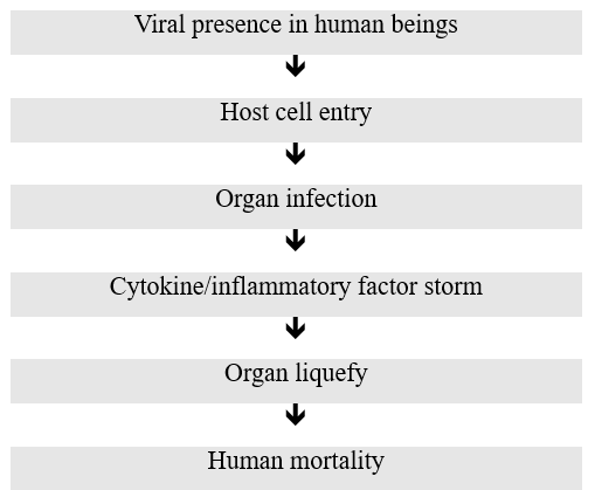
Figure 1 Pathological cascade of virus-induced human mortality.
Diagnostic updating
Transformation of disease diagnosis from viral detection (COVID-19 positive) to biochemical or molecular parameters is a cornerstone for diagnostic and therapeutic maturity. Many infected patients are diagnosed with viral positive. No further categorization or positive markers could be given for therapeutic decision-making. As a result, diagnostic transformation can save life of multi-thousand. (Table 5)
|
Types |
Major diagnosis |
|
Viral |
Genomic, viral proteins and others |
|
Physics |
X-ray, CT, oxygen saturation, temperature and others |
|
Biochemical |
Hemoagglutination, esterase |
|
Symptoms |
Major diagnosis currently available |
Table 5 Current types of viral diagnosis
Basic knowledge
Vaccine-induced side-effects and mortality (blood coagulation, pulmonary nodules and others) were commonly reported in the earliest. It should be known what types of human population are not suitable for COVID-19 vaccination and how to improve technology of viral vaccination?6
Formulae comparison for different Covid-19 vaccines
The formulae of COVID-19 vaccines are diverse worldwide. Several categories of Covid-19 can be seen. The variability of benefits and safety issues among different vaccines needs to be compared for a longer period of time. Following factors must be noticed first;
Any deadly virus vaccines may have risks despite many successes in the past. Due to potential risks, the pilot side-effects and anti-viral efficacy for different COVID-19 vaccines should be evaluated.16-19
Dilemma
COVID-19 treatment is a complicate due to a plethora of such reports and literature worldwide. The biggest challenge for therapeutics is the drug targets and types (viral-load inhibition or symptom alleviation).20-22 Anti-viral agents or drugs vary in toxicity. Therapeutic selection and paradigms could reduce treatment toxicity in most infectious patients.
Traditional medicine
The infectious patients in eastern countries may receive different forms of herbal treatment.23-31 In China and India, there is a good preparedness for herbal or plant resources. Chinese doctors often prescribe approximately a half number of fixed herbal products for viral spread prevention and symptom alleviation.
Side effects
Usual antiviral agents or drugs have multitude undesired side effects like haematological, cardiovascular and central nerve system (CNS).4 A lot of therapeutic toxicities can be mitigated by drug combination, like cancer and HIV treatments.32 Of course, these kinds of knowledge gaps can be filled by transition of viral diagnosis, therapeutics and drug selection.
Etiological, pathologic, diagnostic and therapeutic information
Anti-covid-19 campaign is progressing. Viral diagnosis, pathology, pharmacology and medicinal chemistry are constantly renewed. Several pathways are most relevant.
Major avenues for future study
Cellular genomic penetration
Cellular viral genomic study is possibly associated with disease progress.3 It was gradually noticed that genomic pathways play key roles for viral spread, pathogenesis and treatment, especially human mortality. It suggests that human genomic study may promote fighting against COVID-19 spread and pathogenesis.
Viral spread restriction
COVID-19 transmissibility is high. It is very different from other strains of infective viruses. In this new era, viral spread restriction is the most important. The hottest topic nowadays is vaccine develop and global vaccination. Due to a wide-variety of vaccine-formulae and technology, a great deal of research repetition should be avoided in the future. Thus, both scientific and technical exploitation should be safe-guided.
Drug develop
A great medical significance is to find effective drugs. It is very important to design and evaluate anti-COVID-19 agents and drugs.35-38 Useful animal and human cell models (in vitro, in vivo and in silico models) are indispensable. Computational and simulation techniques are especially fundamental.39,40 However, these computational networks should assist with experimental validation. (Table 6)
|
Molecular targets |
|||||||||
|
3 CLPro |
ACE-2 |
RdRp |
PLPro |
Helicase |
|||||
|
Antiviral activity or viral-load evaluation (in vitro, in vivo & in silico) |
|||||||||
|
Synthetic compounds |
Natural compounds |
Bio-agents |
Herbal or marine |
||||||
|
Viral pathology |
|||||||||
|
Attachment |
Replica |
Genome |
Egress |
||||||
|
Fatal symptoms |
|||||||||
|
Respiratory stress |
Blood oxygen |
Cytokine storm |
Thrombosis |
||||||
|
Nano-medicine |
|||||||||
|
Increasing contact |
Barrier penetration |
Efficacy promotion |
Drug stabilization |
||||||
|
Herbal or plants |
|||||||||
|
Whole-body regulation |
Phyto-chemistry |
Viral inhibition |
Low toxicity |
||||||
|
From single agents to drug combination |
|||||||||
|
Every possibility |
Different targets |
Survival benefits |
|||||||
|
Computation |
|||||||||
|
Molecular-docking |
Artificial intelligence |
Machine learning |
|||||||
Table 6 Drug developmental strategy for COVID-19 treatments
Global fight against COVID-19 is challenging in the future. Look forward to new blueprints in the field of clinical diagnosis and integrated trials. New light will be shed after biomedical exploration in the future.
Shanghai Science & Technology Foundation of High Education, 97A49.
The author declares that there are no conflicts of interest.

©2025 Da-Yong. This is an open access article distributed under the terms of the, which permits unrestricted use, distribution, and build upon your work non-commercially.