eISSN: 2469-2794


Case Study Volume 14 Issue 1
 Júlio César Rodrigues Rocha, Lívia Arruda Castro Praça
Forensic Department, Forensic Expertise of the State of Ceará (PEFOCE), Brazil
Correspondence: Lívia Arruda Castro Praça, Forensic Department, Forensic Expertise of the State of Ceará (PEFOCE), Brazil
Received: December 29, 2025 | Published: January 23, 2026
Citation: Queiroz FVS, Rocha JCR, Praça LAC. Forensic expert work in determining the cause of deaths resulting from airbag system failures. Forensic Res Criminol Int J. 2026;14(1):14-20. DOI: 10.15406/frcij.2026.14.00460
This study presents a dual-case forensic investigation involving two fatal traffic incidents in the State of Ceará, Brazil, in which the cause of death was determined to be exclusively related to the failure of airbag inflator systems. The cases involved a 2008 Toyota Corolla and a 2009 Honda Fit, both subjected to low-to-moderate frontal collisions that resulted in airbag deployment. In each event, the victims sustained atypical penetrating–blunt injuries: a fatal neck wound with immediate death in Case 1, and a head injury leading to death several days later in Case 2. Autopsy examinations revealed metallic objects whose morphology was incompatible with ballistic projectiles, prompting a detailed forensic engineering assessment of the vehicles. Examinations identified perforation of the airbag modules and metallic fragments within the steering wheel assemblies that precisely matched the objects recovered from the bodies, confirming rupture of the inflator cylinders. Complementary procedures included vehicle-deformation speed estimation (Crash3), photogrammetry, and 3D computational simulation, which indicated airbag deployment at approximately 19–21 km/h in Case 2. SEM and EDS microstructural analyses demonstrated ductile fracture patterns and stress concentrations consistent with structural failures reported in international airbag inflator recalls. Both vehicles had outstanding recall notices that had not been addressed. The findings highlight the critical role of integrated scene investigation, forensic engineering, and medicolegal analysis in establishing the juridical cause of death and emphasize the urgent need to improve recall communication and compliance to mitigate population risk.
Keywords: forensic investigation, airbag failure, deaths
This paper aims to present the results obtained through forensic analysis of two traffic accidents with fatalities that occurred in the State of Ceará. After thorough examination by a multidisciplinary team, it was concluded that the deaths were caused exclusively by injuries from fragments of airbag system components. It is worth noting the similarity between the cases, especially in the circumstances and morphology of the fragments of the parts that were found, both in the bodies of the victims and in the vehicles they were driving, which are very similar. This leads us to believe that the parts are products of the same manufacturer and, consequently, have the same airbag system failure that led to the deaths of the victims in these two cases.
For a better description and understanding of the cases discussed, the first occurrence was defined as Case 1 and the second as Case 2.
Case 1 refers to a traffic accident involving a 2008 Toyota Corolla (Figure 1), which collided head-on with a fixed obstacle (pole), the determining cause being that the driver of the vehicle left the roadway.
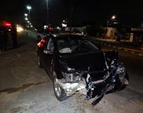
Figure 1 Vehicle from Case 1, showing frontal deformation consistent with a low-to-moderate impact that triggered airbag deployment.
Case 2 involves a Honda Fit, manufactured in 2009 (Figure 2), which collided head-on with a wall after its trajectory was altered by another vehicle that advanced into the right-of-way and collided with its rear left side.
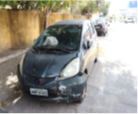
Figure 2 Vehicle from Case 2, demonstrating frontal structural damage associated with the collision event analyzed.
It should be noted that in both cases, the victims suffered injuries caused by a sharp object. In case 1, the victim was injured in the neck and died at the scene. In case 2, the victim was struck in the head, was taken to the hospital, and died ten days after the accident.
Among other purposes, the forensic investigation aims to determine the circumstances of the death of the two victims involved in the traffic incidents reported above, based on the analysis of data obtained from the site surveys conducted by experts, as well as medico-legal findings and complementary examinations of the vehicles, carried out by experts from the forensic engineering center, seeking to correlate the similarity of the cause of the two cases with the failure of the airbag system.
The expert work in the two cases under study followed similar procedures and was carried out in different stages, which are described below.
Examination at the scene of case 1
In Case 1, the vehicle was found with damage to the front end after colliding with a pole (Figure 3 and 4). The driver of the vehicle was found unconscious in the driver's seat with a perforating contusion injury to the right side of the neck, which was caused by a rigid object, similar to a 12-gauge shotgun pellet, which lodged in the right rear of the neck, as shown in Figure 5 and 6.
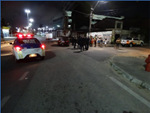
Figure 3 Scene of the incident in Case 1, depicting the final resting position of the vehicle relative to environmental obstacles.

Figure 4 Final positions of both the vehicle and the victim in Case 1, illustrating the post-impact spatial conFiguretion relevant to the forensic reconstruction.
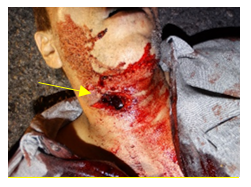
Figure 5 Penetrating–blunt injury observed on the victim’s neck in Case 1, representing the primary fatal wound associated with airbag inflator fragmentation.
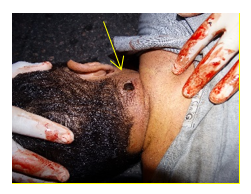
Figure 6 Metallic object recovered from the victim’s neck in Case 1, initially suspected to be ballistic but later identified as a fragment of the airbag inflator assembly.
Autopsy of the victim in case 1
After analysis by the medical examiner during the autopsy, it was found that the victim died due to penetrating trauma to the neck by a blunt object, which led to hypovolemic shock. An object was found inside the victim's body, its morphology atypical of firearm projectiles, as shown in Figure 7 and 8.
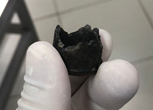
Figure 7 Additional view of the metallic object removed from the victim’s neck in Case 1, highlighting its irregular morphology.
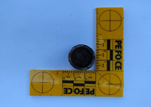
Figure 8 Metallic fragment recovered from another location on the victim’s body in Case 1, consistent with explosive inflator rupture.
Forensic engineering examination in case 1
The complementary examination carried out on the vehicle by experts from the forensic engineering center revealed important evidence, namely:
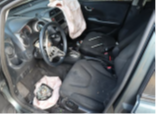
Figure 9 Interior of the vehicle from Case 1, showing evidence of airbag deployment and fragmentation-related damage.
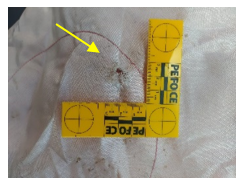
Figure 10 Perforation in the driver-side airbag cushion in Case 1, indicating the high-velocity passage of metallic fragments through the airbag fabric.
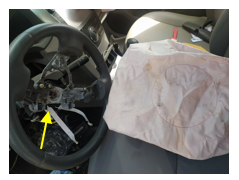
Figure 11 Location of the airbag component inside the steering assembly that matched the fragment removed from the victim in Case 1.
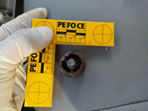
Figure 12 Airbag inflator component recovered from the steering wheel that structurally corresponds to the fragment extracted from the victim’s body.
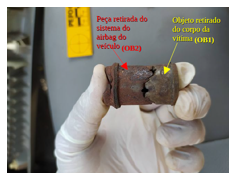
Figure 13 Reconstruction showing the junction of the two fragments forming a single original component from the airbag inflator.
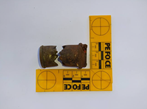
Figure 14 Close-up of the matched fragments, confirming that both originated from the same airbag inflator piece.
After careful analysis, it was found that the two pieces that complemented each other were the airbag system inflator.
Examination at the scene of case 2
The scene of the incident in Case 2 was characterized by the presence of two damaged vehicles after a collision resulting from one of them failing to yield the right of way. In the case under study, the vehicle of interest is the one in which the fatal victim was driving at the time of the accident. The impact and dynamics on the vehicle were characterized by damage concentrated in the front and rear left areas (Figure 15 and 16).
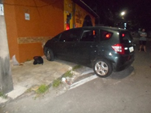
Figure 15 Scene of the incident in Case 2, depicting the vehicle’s resting position and surrounding context at the time of forensic examination.

Figure 16 Vehicle from Case 2 with visible frontal damage, consistent with a collision severe enough to activate the airbag system.
The expert who conducted the on-site investigation concluded that the accident was caused by the other vehicle involved failing to yield the right of way.
Medical examination of the victim in case 2
The driver of the vehicle in question was a female victim who was rescued with a head injury and later died, which is why there are no photographic records of the injury. Subsequently, after learning that during surgery on the rescued victim, the doctor had removed an unidentified rigid object (Figure 17 and 18) and that there were no other injuries related to the incident that could have caused the victim's death, the police authority responsible for the case was prompted by a family member to request a complementary examination of the vehicle and the object removed from the body in order to identify its origin (Figure 19 and 20).
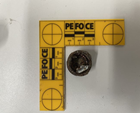
Figure 17 Metallic object removed from the victim’s body in Case 2, corresponding to a fragment expelled from the inflator assembly.
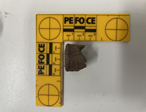
Figure 18 Alternate view of the same metallic fragment removed from the victim in Case 2, showing its deformation pattern.

Figure 19 Position of the vehicle from Case 2 during the complementary forensic inspection, illustrating structural deformation.
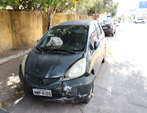
Figure 20 Condition of the vehicle at the time of examination, with emphasis on areas relevant to impact analysis.
Forensic engineering examination in case 2
The additional examination of the vehicle by experts from the Forensic Engineering Center was carried out in the police station courtyard and involved several steps, such as analysis of the vehicle parts and correlation with the traces found; estimation of the impact speed based on deformation and photogrammetry; simulation of the accident using 3D scanning software. The examination revealed important traces, which were similar to those found in case 1, namely:
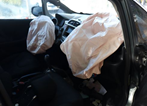
Figure 21 Driver- and passenger-side airbags deployed in the vehicle from Case 2, confirming inflator activation at the time of the collision.

Figure 22 Perforation observed in the airbag cushion from Case 1, demonstrating escape of metallic fragments through the fabric.
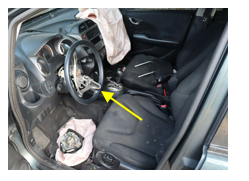
Figure 23 Location within the steering wheel assembly of the airbag component that matched the fragment recovered from the victim in Case 2.
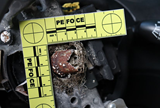
Figure 24 Central steering wheel component corresponding to the fragment removed from the victim’s body in Case 2.
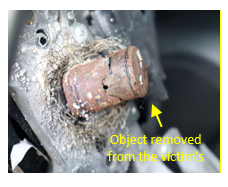
Figure 25 Matched inflator fragments from Case 2, reconstructed to show that they form a single original component.
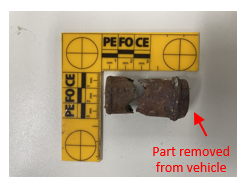
Figure 26 Combined view of the fragments from Case 2, confirming their origin from a single airbag inflator piece.
Estimation of impact speed
Given the scenario presented, we sought to determine the speed of the victim's vehicle at the moment of impact with the fixed obstacle, such as a wall, when the airbag was deployed. To this end, a thorough and accurate examination of the vehicle was carried out, applying two analysis methodologies, the first using the "Crash3 algorithm" and the second using photogrammetry applied to images of the accident.
In the first methodology, vehicle deformation analysis procedures were used (Figure 27 and 28), through the "Damage Analysis" module, whose calculation results showed that the estimated vehicle speed was 21 km/h, with a standard deviation of 1 km/h.
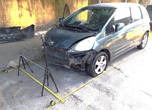
Figure 27 Measurements on the vehicle to estimate speed using the deformation method.
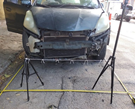
Figure 28 Measurements on the vehicle to estimate speed.
The second methodology was based on the analysis of the video of the moment of impact, which, through the relationship between space and time, made it possible to estimate the speed of the vehicle using photogrammetry procedures, which estimated a speed of 19 km/h. The video of the moment of the accident was obtained from the police. Some frames from the video are shown in Figure 29 and 30.

Figure 29 Frames from the moment the victim's vehicle collides with the wall, analysis using photogrammetry.
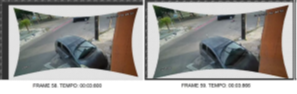
Figure 30 Frames from the moment the victim's vehicle collides with the wall, aiming to estimate the speed using photogrammetry.
Computer simulation
Given the scenario presented, we sought to determine the speed of the victim's vehicle at the moment of impact with the fixed obstacle, such as a wall, when the airbag was deployed. To this end, a thorough and accurate examination was carried out.
After estimating the speeds of the vehicles, both at the moment of collision and at the moment of impact with the fixed obstacle, a computer simulation was performed to analyze the complete dynamics of the accident, as well as other variables and considerations relevant to the case. It should be noted that the simulation does not aim to faithfully demonstrate the scenario of the event, but essentially to present the actions of the event that occurred. For this, the model and characteristics of the victim's vehicle were used as a reference, which was scanned externally and internally using a 3D laser scanner, generating a point cloud of the vehicle's morphology, as well as 360º images of the interior of the car, whose three-dimensional model was used as a reference parameter for implementing the computer simulation, as shown in Figures 31–37.
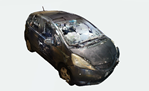
Figure 31 Result of 3D scanning of the victim’s vehicle.
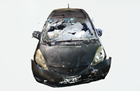
Figure 32 3D model result of the victim's vehicle, after scanning.
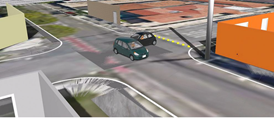
Figure 33 Computer simulation, seen from another angle, of the moment of collision between the vehicles.
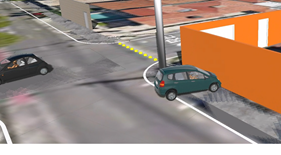
Figure 34 Computer simulation, with a close-up view, of the moment of impact of the Honda vehicle against the wall.
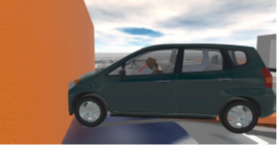
Figure 35 Computer simulation, highlighting the illustration of the driver/victim's position and the trajectory of the fragment that detached from the airbag system.
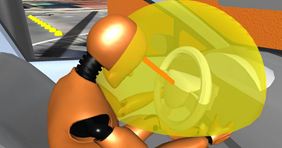
Figure 36 Computer simulation, with a view of the trajectory (in red) of the fragment that hit the victim.
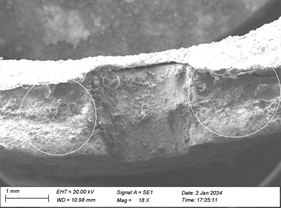
Figure 37 Macrographs of fracture surfaces from the Honda Fit (Case 2) inflator component, showing regions of elevated stress concentration.
Microscopic analysis of the parts
Taking into account the circumstances of the two cases, a detailed study was carried out on the microstructures of the fragments of the inflator parts of the examined vehicles, using microscopy analysis, whose images were obtained using a Scanning Electron Microscope (SEM) belonging to the Forensic Expertise Department of the State of Ceará.
Through microscopic images obtained by SEM and the use of energy dispersive spectroscopy (EDS), which allows for precise chemical analysis, we sought to verify the characteristics of the fractures in the parts of the two cases examined, with the aim of determining, if possible, the cause of the failures.
Fig. 38 shows that the fractures occurred in the regions of highest residual stress in the material, which is precisely around the holes in the part through which the propellant gases pass during deflagration. It should be noted that this behavior was observed in both cases.
To better characterize the fracture of the material, microanalyses of the fracture were performed using SEM (Scanning Electron Microscope). Figure 38 and 39 show the microstructure in greater detail, revealing the predominance of circular, dimple-like structures characteristic of ductile fractures. It should be noted that similar fracture behavior was observed in both cases.
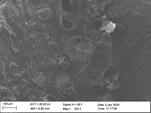
Figure 38 Fracture characteristics of the inflator component from the vehicle in Case 2, indicating ductile rupture behavior.
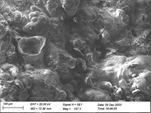
Figure 39 Fracture characteristics of the inflator component from the vehicle in Case 1, consistent with structural failure.
In light of this scenario, this study suggests urgent and comprehensive action by the competent authorities, including a statement through the appropriate agencies and media outlets to alert the population, especially vehicle owners, about the imminent risk to physical integrity, given that the two vehicles in the cases presented contained in their respective documents a note from the manufacturer calling for a recall of the airbag system, as shown in Figure 40 and 41.

Figure 40 Vehicle documentation from Case 2 showing the recall notice for airbag inflator replacement.
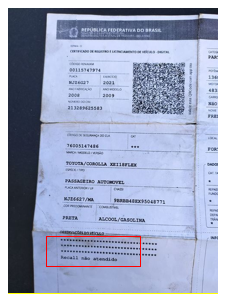
Figure 41 Vehicle documentation from Case 1 indicating the recall notice that had not been attended.
In view of the above and based on the evidence and material traces collected during the forensic investigation, supported by the complexity of the technical elements of criminalistics value recorded, analyzed, and systematically presented, taking as support the physical and mechanical fundamentals, it is concluded that the objects removed from the bodies of the victims in the two cases and collected for analysis are fragments of the airbag inflator cylinder, which caused the death of the respective victims in the circumstances described above.
None.
The authors declare that there are no conflicts of interest.

©2026 Queiroz, et al. This is an open access article distributed under the terms of the, which permits unrestricted use, distribution, and build upon your work non-commercially.