eISSN: 2379-6367


Research Article Volume 13 Issue 4
 Micah Shaver, Jerry Darsey
Center for Molecular Design and Development, University of Arkansas at Little Rock, USA
Correspondence: Jerry Darsey, University of Arkansas at Little Rock, Arkansas 72204, USA, Tel (501)916-6541
Received: June 28, 2025 | Published: July 11, 2025
Citation: Nwashili A, Shaver M, Darsey J. Design of novel therapeutic medications using AI and quantum mechanical techniques for Amyotrophic Lateral Sclerosis (ALS). Pharm Pharmacol Int J. 2025;13(4):119-125. DOI: 10.15406/ppij.2025.13.00475
Approximately one in every 500 adult fatalities are caused by amyotrophic lateral sclerosis, ALS, suggesting that over 500,000 individuals currently residing in the United States may develop this disease.1
Amyotrophic lateral sclerosis (ALS) is a progressive neurodegenerative disease that affects nerve cells in the brain and spinal cord. It causes muscle weakness and wasting and eventually leads to death. There is currently no cure.
Familial cases of amyotrophic lateral sclerosis (FALS) can be associated with genetic mutations affecting superoxide dismutase type-1 (SOD1) gene.2 The discovery that mutations in SOD1 were key players in amyotrophic lateral sclerosis (ALS) marked the first instance of identifying a gene directly linked to the disease.3
The goal of this research is to take known therapeutic drugs that target (inhibits) SOD1 protein in the treatment of ALS. By leveraging molecular modeling (Gaussian 09 Quantum Mechanical Software), modify these molecules, to identify modified small drug molecules with increased potency. To achieve this, an Artificial Intelligence (AI) software, NASA Software (NETS Back propagation Simulator) was trained to predict the IC50 values of the newly modified molecule drugs. The half maximal inhibitory concentration (IC50) of a drug-like compound is an informative measure of its effectiveness. A lower IC50 value indicates the molecule’s effectiveness at low concentration.
In this study, we modeled more than 50 modifications to eight (8) known molecules, ten (10) of these modifications showed a significant decline in the predicted IC50 values from the experimental IC50 values found in the literature, representing a nearly 12-fold enhancement in the potency of the therapeutic drug molecule. The methodology utilized in this study, which was developed in our lab, shows the potential to yield numerous new drugs to treat ALS with significantly improved treatment.
Keywords: neurodegenerative disease, artificial intelligence (AI), therapeutic medication, amyotrophic lateral sclerosis
Amyotrophic lateral sclerosis (ALS) is a fatal neurodegenerative disease that strikes usually later in life.4 ALS disease targets motor neurons in the brain and spinal cord that control our voluntary movements. This results in progressive muscle weakness that worsens over time, ultimately leading to death. With an average life expectancy of 1-5 years5 and no cure, ALS disease represents a significant challenge.
Amyotrophic lateral sclerosis (ALS) can be categorized into sporadic and familial. Sporadic ALS is the most prevalent form of the disease, which is not linked to genetic background. Familial ALS (FALS) is characterized by a genetic inheritance pattern.6 Cu, Zn superoxide dismutase, SOD1, plays a crucial role in about 20% of inherited ALS (familial ALS or FALS). Mutations in this gene are a known cause of the disease.7
Eight small-molecule inhibitors8 were chosen for this study with the aim of identifying potential candidates for more potent drug development. The modifications to these drug-like molecules’ structures offer the potential to discover more effective drugs in the treatment of SOD1-type Amyotrophic Lateral Sclerosis (ALS).
The IC50 value, representing the half-maximal inhibitory concentration, serves as a key metric in this study. It quantifies the effectiveness of a compound in inhibiting a specific biological process. Lower IC50 values correspond to higher potency, signifying that a lesser concentration of the drug is required to achieve 50% inhibition. A focus on lower IC50 values and consequently enhanced potency holds significant value beyond this study. Improved potency translates to several potential benefits, including enhanced therapeutic efficacy, improved patient compliance, reduced development time, and costs.
Gaussian 09, a general-purpose ab initio computational quantum mechanics software package, was employed in this research.9 This software leverages the fundamental principles of quantum mechanics to perform calculations on various molecular properties. For this specific study, only the optimization functionality was utilized. This feature optimizes the geometry of a molecule to the most stable and generates a data file containing key physicochemical properties, crucial for the AI training within this research, including Lowest Unoccupied Molecular Orbitals (LUMOs), Highest Occupied Molecular Orbitals (HOMOs), and the total dipole moment.
ANN architecture
The NASA-JSC (NASA-Johnson Space Center) "NETS" software leveraged within this study, is designed to serve as a pivotal tool for customizable artificial intelligence (AI) application. The specific AI software is an Artificial Neural Network (ANN) software.10 Its primary function lies in furnishing a flexible system capable of manipulation through the utilization of the generalized delta back propagation learning method. This method is a fundamental algorithm for training artificial neural networks, particularly those of a complex nature with multiple layers. By efficiently calculating the gradients of the loss function in relation to the network's weights, back propagation streamlines the training process, eliminating the need for laborious individual calculations for each weight.
An artificial neural network represents an AI computational technique tailored for constructing computer programs capable of learning from data. Rooted in a conceptual framework inspired by the cognitive mechanisms of the human brain, these networks incorporate mathematical representations of biological neurons. Initial network configuration entails the establishment of connections or neurons, followed by iterative problem-solving attempts. Through successive iterations, the network refines its performance by diminishing connections that lead to failure while reinforcing those associated with success, as illustrated in Figure 1. In essence, a neural network assimilates data, learns underlying patterns within the dataset, and subsequently provides predictive insights for new datasets having similar attributes.

Figure 1 Neural network architecture used in this study.
The input layer is composed of 41 nodes, encompassing the molecule's unique properties: the dipole moment, 20 LUMOs (Lowest Unoccupied Molecular Orbitals), and 20 HOMOs (Highest Occupied Molecular Orbitals). Within the neural network architecture, the "hidden layer" constitutes a layer of mathematical functions essential to the training process. In the present research, the number of nodes within this hidden layer was set at 10, a determination informed by the research mentor's extensive experience in artificial intelligence. It is worth noting that the selection of this parameter represents more of an art than a science, relying heavily on empirical insights rather than scientific guidelines. The output layer comprises a single node containing the IC50 value, the output parameter of focus within the research context.
Specifically, the steps taken in the application of our procedure to design a new therapeutic drug for the treatment of ALS is shown in Figure 2. Specifically, we select the known molecules currently used to treat ALS. We next do a literature search to find the IC50 value of each molecule. Next, we run the Gaussian 09 calculations of each of these molecules. We next extract the molecular orbitals as input to our AI software, starting at the orbital gap. We extract the smallest negative value HOMOs (occupied eigenvalues) and the 20 smallest positive value LUMOs (virtual eigenvalues). We also extract the dipole moment for each molecule. Next, we create the architecture of the artificial neural network as shown in Figure 1, placing the LUMOs, HOMOs, and Dipole Moments in the input nodes and the IC50s in the output node. We then run the AI program to train it to establish a correlation between the input and output.
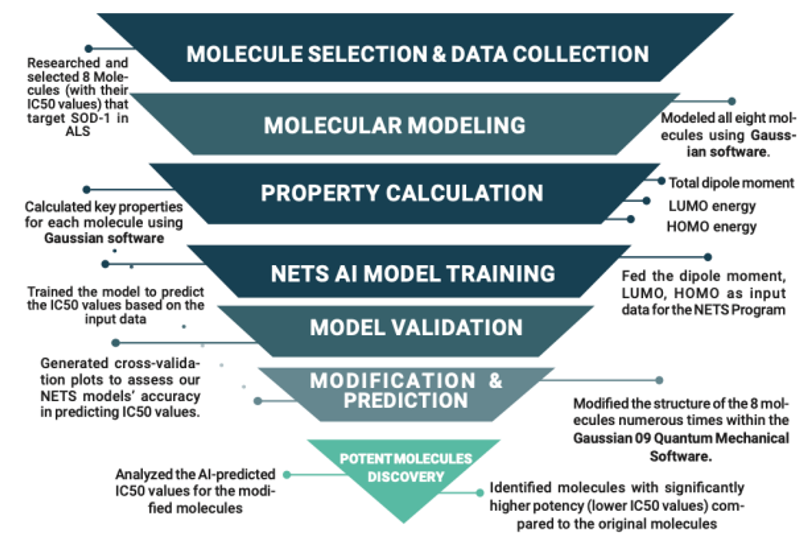
Figure 2 Process flow of the methodology adopted for this study.
Once we achieve a convergence limit of .001, we consider the network trained. We then perform a cross-validation by eliminating one set of data from one molecule, train on the remaining set of data and they ask the network to predict the IC50 of the data set that was left out. We then repeat the cross-validation with another set of data, repeating until every set of data has had its turn being left out. We next plot a cross-validation of the predicted vs. experimentally predicted IC50. If there is a strong correlation, this plot should produce a straight line at a 45° angle with an R2 value of 0.90 or higher. The final step in this process is to modify the therapeutic drugs and run the Gaussian 09 program to calculate the molecular orbitals and dipole moment. The modified molecule’s MOs and dipole moment is presented as input to the AI program and asked to predict the IC50. If the calculated IC50 value is between two and ten times smaller, (more potent), this modification should be considered for synthesis and measurement of the IC50. Figure 2 summarizes this methodology.
Data collection
It was crucial that for the goals of this research study be met, we extensively researched drug-like molecules that have shown to have positive effects in the treatment of Amyotrophic Lateral Sclerosis, specifically SOD1 mutation associated in the pathophysiology of ALS. Eight drug-like molecules that target SOD1 protein to inhibit its activity in ALS pathology, were selected.8 Precisely, the researchers in this study,8 developed a high-throughput screening (HTS) system that discovered small-molecule inhibitors of the SOD1 mutation interaction with Derlin-1. Additionally, the IC50 values of each molecule were collected from the research literature as well (Table 1).

Table 1 Eight drug-like molecules that target SOD1 protein to inhibit its activity in ALS
Molecular modeling & property calculation
Molecular modeling is a powerful computational technique that utilizes the laws of physics and incorporates experimental data. It allows scientists to analyze molecules at an atomic level, including details like the number and type of atoms, types of bonds, bond lengths and angles, and overall geometry. Additionally, it can calculate various properties like molecular energy, enthalpy, and geometry optimization.11
This ability to analyze and predict molecular properties makes molecular modeling invaluable in drug discovery. By understanding the relationship between a molecule's structure and its biological activity (structure-activity relationship), researchers can design drugs with specific desired properties.11
In a bid to understand the correlation between the molecule’s structure and its experimental IC50 value, we modeled the eight small-molecule inhibitors collected at the Molecule selection step, leveraging the Gaussian 09 Quantum Mechanical Software, geometry optimization feature was utilized The LUMO (Lowest unoccupied molecular) energy, HOMO (Highest occupied molecular orbital) energy and total dipole moment, collectively form a unique representation of each molecule’s structure, these key physicochemical properties crucial for inhibitor activity were calculated for each molecule using the Gaussian 09 Quantum Mechanical Software.
AI model training and validation
For the key properties calculated, the 20 LUMOS, the 20 HOMOS, and the total dipole moment, a total of 41 nodes made up the input layer of the neural network within our AI program. The molecules’ key properties, alongside their experimental IC50 values were used in Training the ANN Model configured/built in this research. After training with the input/output data pairs for 7(seven) of the 8(eight) molecules collected, the network was prompted to predict the IC50 value of the molecule left out from training initially. This cross-validation step was repeated until each molecule had a predicted IC50 value. The goal is for the Model to effectively learn the correlation between these properties and their corresponding bioactivity, while minimizing the loss function to predict IC50 values accurately.
To determine how well the NETS AI software was predicting the IC50 values, it became crucial to evaluate its learning accuracy using a cross-validation plot. Cross-validation plots are statistical visualization tools used to assess the performance of machine learning and Artificial Intelligence models and algorithms. This technique iteratively divides the data into multiple folds. Each fold serves as a validation set in turn, while the remaining folds are used for training.
Furthermore, the cross-validation plot generated a performance metric, the statistical coefficient of determination (R²). The R2 value is used to identify the strength of a model, it ranges between .1 to .9. The more the R2 value tending towards 1.0, the higher the model’s performance.
Modification and prediction
In a bid to discover novel small-molecules with enhanced potency against SOD1, surpassing existing inhibitors reported in the literature, it became imperative to introduce strategic modifications to the eight (8) small-molecule to explore the chemical space and potentially improve their inhibitory activity. These modifications involved the targeted substitution of hydrogen atoms at various positions (ortho, Meta, and para) on the aromatic rings with halogens like bromine and chlorine.
The Gaussian 09 quantum mechanical software was utilized to model the structures of the modified molecules. The software’s optimization functionality ensured that the generated structures adopted their most stable geometries before calculating their (20 LUMO values, 20 HOMO values and total dipole moment) key properties. These calculated properties were then used as input data for our previously trained and validated NETS model.
As mentioned earlier, our NETS model had undergone rigorous training and validation to ensure its accuracy in predicting the bioactivity of unseen compounds. Leveraging this model's capabilities, we employed it to predict the IC50 values (concentration required for 50% inhibition) of the newly designed molecules. The predicted IC50 values provided insights into the potential inhibitory potency of these novel candidates.
AI Model training and validation
Using the values in table x, cross-validation plots to assess our NETS models’ accuracy in predicting IC50 values were generated.
Figure 3 below shows the cross-validation plot, the experimental literature IC50 values on the x-axis and the AI predicted IC50 values on the y-axis. Each data point within the plot corresponds to an individual molecule (Table 2).
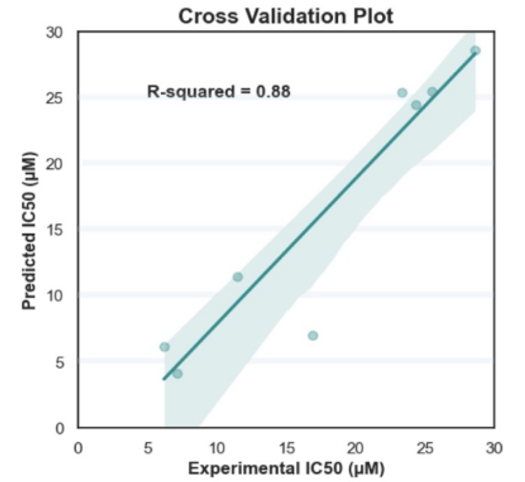
Figure 3 Cross validation plot of the eight (8) molecule inhibitors.
|
Molecule ID |
Experimental IC50 (μM) |
Predicted IC50 (μM) |
|
#56 |
23.3 |
25.4 |
|
#56-20 |
7.11 |
4.2 |
|
#56-21 |
24.3 |
24.5 |
|
#56-23 |
25.5 |
25.5 |
|
#56-25 |
16.9 |
7 |
|
#56-26 |
6.2 |
6.2 |
|
#56-30 |
28.6 |
28.6 |
|
#56-33 |
11.5 |
11.5 |
Table 2 Experimental IC50 values and ANN predicted IC50 values in μM
Insights drawn from the validation plot in Figure 3 suggests a positive correlation between the predicted and experimental IC50 values. This means that as the predicted IC50 of a small molecule increases, the corresponding experimental IC50 value also tends to increase.
Furthermore, the R-squared value of 0.88 signifies a good positive correlation. An R-squared value closer to 1.0 indicates a perfect relationship between the variables and that the model performs well on the data.
Modification and prediction
Within this study, approximately 50+ modifications to the eight (8) known molecules were modeled. Through analyzing the model’s predicted IC50 values for the modified molecules, we identified modified molecules with significantly lower IC50 values from the experimental IC50 values collected.
Ten (10) of these modifications showed a nearly 12-fold enhancement across the modified molecules. This would imply that these novel molecules are 12 times more effective in the treatment of SOD1 type ALS. Some of these molecules and the modifications made are shown in Table 3 below.
|
Drug-Like Molecule |
Modification |
Experimental IC50 (μM) |
Predicted IC50 of modified molecules (μM) |
|
Molecule #56 |
Replaced hydrogen atom in the meta position with bromine in “R benzene ring” |
23.3 |
2.5 |
|
Molecule #56 |
Replaced hydrogen atom in the ortho position with chlorine |
23.3 |
1.7 |
|
Molecule #56-21 |
Replaced hydrogen atom in the para position with bromine |
24.3 |
4.8 |
|
Molecule #56-12 |
Replaced hydrogen atom in the ortho position with chlorine |
24.3 |
3.5 |
|
Molecule #56-23 |
Replaced hydrogen atom in the para position with chlorine |
25.5 |
5.2 |
|
Molecule #56-30 |
Replaced hydrogen atom in the para position with chlorine |
28.6 |
6.3 |
Table 3 Molecules modifications, comparing the experimental IC50 and predicted IC50
Figure 4 depicts the original chemical structure of molecule 56. The Gaussian software was employed to introduce a targeted modification to the modeled molecule. Specifically, a single hydrogen atom on the benzene ring was substituted with a chlorine atom (Figure 5). The initial IC50 value of molecule 56 was determined to be 23.3 μM. Notably, the NETS model predicted a significant improvement in inhibitory potency following the chlorine substitution. The modified molecule exhibited a predicted IC50 value of 1.7 μM, representing a nearly 14-fold enhancement.

Figure 4 Molecule #56, a drug-like molecule modeled using Gaussian 09 quantum mechanical software.
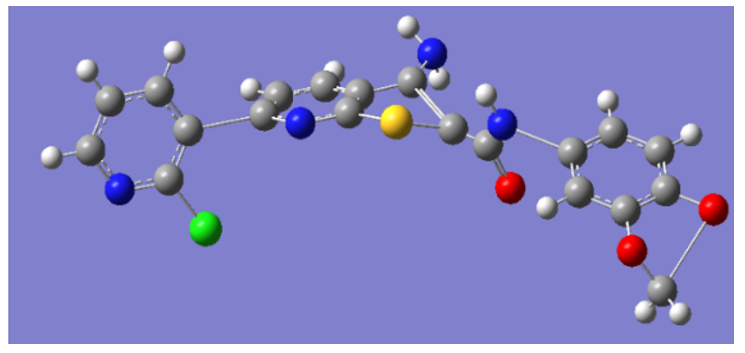
Figure 5 Molecule #56, a drug-like molecule modeled using Gaussian 09 quantum mechanical software.
The objective of this research project is to discover a pipeline of drug-like molecules with significantly increased potency. By leveraging molecular modeling and artificial intelligence algorithm, and subsequent validation of the AI model’s performance, ten (10) novel molecule inhibitors were identified exhibiting a nearly 12-fold enhancement. Suggesting that these modified molecules are more effective in the treatment of SOD1 type ALS. This breakthrough translates to enhanced therapeutic efficacy, improved patient compliance, reduced development time, and reduced costs.
In the future, we plan to significantly expand our research by modeling over 100 new sets of modified molecules. This expanded dataset will allow us to identify a wider range of candidates with potentially even better IC50 values.
Following this exploration, research would be re-conducted to find more drug-like molecules that have been experimentally proven to target SOD1 in the treatment of ALS. Subsequently, more molecules would mean more data points to improve our model training and further strengthen our model’s performance, guiding towards the most promising avenues for therapeutic development. After finding potentially better drug-like molecules, we will attempt to synthesize them.
We would like to thank the NIH for the NIGMS (P20 GM103429) grant and the Graduate School of the University of Arkansas at Little Rock for financial support. We would also like to thank Dr. Phil Williams with the Mid-South Bioinformatics Center at the University of Arkansas at Little Rock.
The authors declare there is no conflict of interest.
None.

©2025 Nwashili, et al. This is an open access article distributed under the terms of the, which permits unrestricted use, distribution, and build upon your work non-commercially.