eISSN: 2379-6367


Research Article Volume 13 Issue 3

1Central Public Health Laboratory, Ministry of Health, Ramallah, Palestine
2Faculty of Pharmacy, Al-Quds University, P. O. Box 20002, Abu- Dies, Palestine
Correspondence: Saleh Abu-Lafi, Faculty of Pharmacy, Al-Quds University, Abu-Dies, Palestine, Tel ++972-2-2799360
Received: April 29, 2025 | Published: June 3, 2025
Citation: Jahajha A, Abu-Lafi S. Metal content in wild Calamintha incana leaves: analytical determination and environmental implications. Pharm Pharmacol Int J. 2025;13(3):90-94. DOI: 10.15406/ppij.2025.13.00471
Calamintha incana (C. incana) is widely used in Palestine as a medicinal tea, traditionally valued for its therapeutic properties and aromatic essential oils. The region’s diverse topography and rich biodiversity contribute to the plant's unique phytochemical and elemental composition. While the essential oils of C. incana have been previously studied, its inorganic profile remains less explored. This study investigates the metal content in the leaves of wild C. incana collected from various regions in Palestine using inductively coupled plasma–optical emission spectroscopy (ICP-OES). Eighteen elements were detected in dried leaf samples, including macro elements (Ca, K, Mg, Na), essential trace elements (Fe, Mn, Zn, Cu, Mo, Ni), and potentially toxic metals (Al, Cd, Cr, Co, Ag, Ba). High concentrations of calcium (17,226–22,001 ppm), potassium (4,609–17,435 ppm), and magnesium (2,160–4,100 ppm) were observed. Notably, aluminum levels were elevated in six samples (513.9–1,111 ppm), while toxic metals such as Co, Cd, Ni, and Cr were present in lower concentrations. These findings contribute to a more comprehensive understanding of C. incana’s chemical profile, highlighting its potential nutritional and toxicological implications in traditional medicinal use.
Keywords: Calamintha incana, medicinal plants, ICP-OES, metal content, herbal tea
C. incana, Calamintha incana; ICP-OES, inductively coupled plasma–optical emission spectroscopy; Al, aluminum; Ba, barium; Ca, calcium; Cd, cadmium; Co, cobalt; Cr, chromium; Cu, copper; Fe, iron; K, potassium; Mg, magnesium; Mn, manganese; Mo, molybdenum; Na, sodium; Ni, nickel; Ag, silver; Zn, zinc; HNO₃, nitric acid; LOD, limit of detection; LOQ, limit of quantitation; RSD, relative standard deviation; WHO, world health organization
Palestine's unique topography gives rise to diverse weather and climate conditions, fostering a rich biodiversity.1 This region is home to numerous medicinal plants used to treat a variety of ailments, though many remain underexplored in scientific literature. Herbal medicine is deeply embedded in Palestinian culture, playing a vital role in public health. The hills and mountains of Palestine are home to over 2,600 plant species, with more than 700 recognized for their medicinal properties.2,3 However, the efficacy, safety, toxicity, dosage, and usage of these plants are rarely studied, and much of the knowledge is passed down orally through generations.4
One such plant is Calamintha incana (C. incana), commonly found in Palestine. Despite its prevalence, there are no studies in Palestine addressing the analysis of its chemical components or pharmacological properties. The genus Calamintha is widespread across Europe, the Mediterranean, Central Asia, North Africa, and the Americas.5 c. incana belongs to the Lamiaceae (or Labiatae) family, which consists of 236 genera and over 7,000 species. This mint family is significant to humans due to its aromatic flavor, fragrance, and medicinal uses.6 Many biologically active essential oils have been extracted from various members of the Lamiaceae family, with several species used in traditional medicine worldwide to treat conditions such as microbial infections, cancer, malaria, and inflammation.7,8
In recent years, there has been increasing interest in the role of trace elements in human health, as evidenced by the growing number of studies exploring their functions in traditional medicine. Plant minerals are categorized into macro, micro, and trace elements based on the quantities required for human health and growth.9 Trace elements such as selenium (Se), manganese (Mn), copper (Cu), zinc (Zn), and iron (Fe) have gained attention for their roles in enzyme functions related to antioxidation, normal cell metabolism, aging prevention, and the reduction of cardiovascular, diabetes, and immune system diseases.10
At the same time, medicinal plants may contain harmful metal contaminants, which can pose risks to human health. The concentration of metals in plants can serve as an indicator of their safety and purity.11,12 To our knowledge, no studies have examined the types or amounts of metals present in C. incana in Palestin
Reagents
Milli-Q ultra-pure water (resistivity > 18 MΩ⋅cm) was used throughout the analysis. High-purity nitric acid (3%, Optima grade) was purchased from Fisher Chemicals. Certified multielement standard solution 5 for ICP and certified multielement standard solution 3 for ICP were obtained from Fluka, Switzerland. Reference material IAEA-359 (Trace and Minor Elements in Cabbage) was sourced from the International Atomic Energy Agency (IAEA), Austria.
Instruments
A PerkinElmer ICP-OES (DV7300, USA) was used for elemental analysis. Sample digestion was carried out using a CEM microwave digestion system (MARS 6, USA).
Procedure
All plastic and glassware used in the analysis were cleaned by soaking in a 10% nitric acid solution (1:9 v/v HNO₃ to water) overnight. Subsequently, they were thoroughly rinsed with Milli-Q ultra-pure water and air-dried prior to use to prevent contamination.
Sampling
Six samples of dried leaves of C. incana were collected from different cities across Palestine. The samples were homogenized using a clean mortar and pestle, transferred into clean containers, and stored under dry conditions until further analysis.
Digestion procedure
Microwave-assisted acid digestion was employed for sample preparation. Approximately 0.50 g of each C. incana dried leaf sample and certified reference material was accurately weighed and transferred into PTFE digestion vessels. To each vessel, 10 mL of concentrated nitric acid (HNO₃) was added. The digestion process was carried out using a microwave digestion system (CEM MARS 6) under the parameters specified in Table 1. After completion of digestion, the vessels were allowed to cool to room temperature, and the digested samples were diluted to a final volume of 50 mL with Milli-Q ultra-pure water. Blanks were prepared using the same procedure for quality control.
|
Sample type |
Ramp time (minutes) |
Hold time (minutes) |
Digestion temperature (°C) |
|
C. incana dried leaves |
20 |
10 |
200 |
|
Reference material |
20 |
10 |
200 |
|
Reagent blank |
20 |
10 |
200 |
Table 1 Digestion parameters for MARS 6 microwave digestion system
Blank and standard solution preparation
To prepare the blank and standard solutions, a 3% (v/v) nitric acid (HNO₃) solution was used as the diluent. This was prepared by diluting 42 mL of high-purity 70% HNO₃ (Optima grade, Fisher Chemicals) to 1000 mL with Milli-Q ultra-pure water in a volumetric flask. The same solution was used as the analytical blank and as the diluent for all standard solutions. All standard solutions were prepared using calibrated micropipettes by appropriate dilution of certified multielement standard solution 5 and standard solution 3 for ICP (Fluka, Switzerland). The concentrations of the working standard solutions and the corresponding elements are summarized in Table 2.
|
Element |
Stock Std. ppb |
Std # 1 ppb |
Std # 2 ppb |
Std # 3 ppb |
Std # 4 ppb |
|
Ag |
10010 |
10.01 |
50.05 |
100.1 |
1001 |
|
Al |
10010 |
10.01 |
50.05 |
100.1 |
1001 |
|
Ba |
10010 |
10.01 |
50.05 |
100.1 |
1001 |
|
Ca |
19980 |
9.99 |
49.95 |
99.9 |
|
|
Cd |
10010 |
10.01 |
50.05 |
100.1 |
1001 |
|
Co |
10010 |
10.01 |
50.05 |
100.1 |
1001 |
|
Cr |
10010 |
10.01 |
50.05 |
100.1 |
1001 |
|
Cu |
10010 |
10.01 |
50.05 |
100.1 |
1001 |
|
Fe |
10000 |
100.1 |
500.5 |
1001 |
10010 |
|
K |
19990 |
1 |
5 |
10 |
|
|
Mg |
40000 |
2 |
10 |
20 |
|
|
Mn |
10010 |
10.01 |
50.05 |
100.1 |
1001 |
|
Mo |
10010 |
10.01 |
50.05 |
100.1 |
1001 |
|
Na |
99900 |
5 |
24.98 |
49.95 |
|
|
Ni |
10010 |
10.01 |
50.05 |
100.1 |
1001 |
|
Pb |
10010 |
10.01 |
50.05 |
100.1 |
1001 |
|
Sr |
10010 |
10.01 |
50.05 |
100.1 |
1001 |
|
Zn |
10010 |
10.01 |
50.05 |
100.1 |
1001 |
Table 2 Summary of the concentrations of standards used in the ICP analysis of minerals
ICP-OES analysis
After digestion, all samples were cooled to room temperature and diluted to a final volume of 50.0 mL with Milli.Q ultra-pure water, with calibration standards prepared as described previously. The elemental analysis was performed using a Perkin Elmer ICP-OES (DV7300, USA) with operational parameters set as follows: RF power at 1450 W, plasma gas flow at 15 L/min, auxiliary gas flow at 0.2 L/min, nebulizer gas flow at 0.8 L/min, measurement mode set to peak area, three replicates per sample, read time ranging from 2 to 10 seconds, and both axial and radial plasma view modes. These optimized conditions ensured accurate and reproducible detection of trace and major elements in the plant samples.
Elements calibration curves
The calibration was prepared using a multi-element standard solution in a matrix of 3% HNO3, with linear correlation coefficients for all elements greater than 0.999. Figure 1 shows the calibration curves for typical elements such as Ca, Mg, Na, and K.
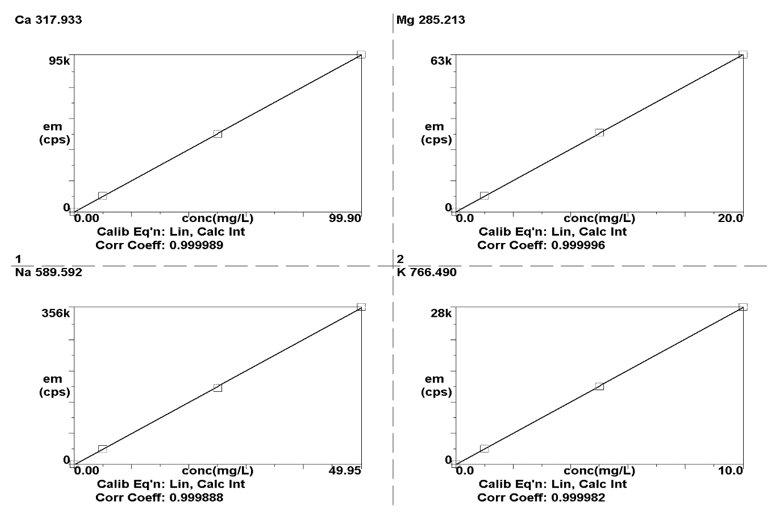
Figure 1 Typical elements calibration curves.
c. incana samples
The C. incana samples collected from different locations were analyzed and the results obtained from the ICP-OES analysis are presented in Table 3.
|
Sample ID |
Element |
Wavelength, nm |
Conc. (Sample) |
Unit |
RSD (Conc.), n=3 |
|
Calamintha- Jenin |
Al |
396.158 |
557.507 |
mg/kg |
1.63 |
|
Ba |
233.528 |
22.871 |
mg/kg |
2.24 |
|
|
Cd |
228.802 |
0.361008 |
mg/kg |
16.94 |
|
|
Cr |
267.708 |
ND |
mg/kg |
- |
|
|
Co |
228.613 |
0.6384 |
mg/kg |
26.26 |
|
|
Cu |
327.404 |
ND |
mg/kg |
- |
|
|
Mn |
257.607 |
24.222 |
mg/kg |
1.72 |
|
|
Mo |
202.032 |
ND |
mg/kg |
- |
|
|
Ni |
231.601 |
1.949 |
mg/kg |
7.63 |
|
|
Ag |
328.072 |
ND |
mg/kg |
- |
|
|
Zn |
206.199 |
52.417 |
mg/kg |
1.87 |
|
|
Fe |
238.201 |
503.786 |
mg/kg |
1.61 |
|
|
Na |
589.604 |
369.837 |
mg/kg |
0.17 |
|
|
K |
766.5 |
8986.85 |
mg/kg |
0.42 |
|
|
Ca |
315.887 |
17226.12 |
mg/kg |
0.21 |
|
|
Mg |
279.077 |
2161.826 |
mg/kg |
0.63 |
|
|
Calamintha-Hebron |
Al |
396.158 |
513.868 |
mg/kg |
1.49 |
|
Ba |
233.528 |
31.765 |
mg/kg |
1.01 |
|
|
Cd |
228.802 |
ND |
mg/kg |
- |
|
|
Cr |
267.708 |
ND |
mg/kg |
- |
|
|
Co |
228.613 |
0.345 |
mg/kg |
19.35 |
|
|
Cu |
327.404 |
ND |
mg/kg |
- |
|
|
Mn |
257.607 |
52.713 |
mg/kg |
1.91 |
|
|
Mo |
202.032 |
ND |
mg/kg |
- |
|
|
Ni |
231.601 |
1.071 |
mg/kg |
24.98 |
|
|
Ag |
328.072 |
ND |
mg/kg |
- |
|
|
Zn |
206.199 |
58.341 |
mg/kg |
1.38 |
|
|
Fe |
238.201 |
537.558 |
mg/kg |
1.98 |
|
|
Na |
589.604 |
339.883 |
mg/kg |
1.62 |
|
|
K |
766.5 |
11020.24 |
mg/kg |
0.88 |
|
|
Ca |
315.887 |
22001.11 |
mg/kg |
2.27 |
|
|
Mg |
279.077 |
4101.981 |
mg/kg |
0.86 |
|
|
Calamintha-Nablus |
Al |
396.158 |
668.393 |
mg/kg |
0.69 |
|
Ba |
233.528 |
29.65 |
mg/kg |
0.46 |
|
|
Cd |
228.802 |
0.445746 |
mg/kg |
9.65 |
|
|
Cr |
267.708 |
ND |
mg/kg |
- |
|
|
Co |
228.613 |
0.578808 |
mg/kg |
30.28 |
|
|
Cu |
327.404 |
ND |
mg/kg |
- |
|
|
Mn |
257.607 |
21.532 |
mg/kg |
1.75 |
|
|
Mo |
202.032 |
ND |
mg/kg |
- |
|
|
Ni |
231.601 |
3.062 |
mg/kg |
16.96 |
|
|
Ag |
328.072 |
ND |
mg/kg |
- |
|
|
Zn |
206.199 |
47.874 |
mg/kg |
1.49 |
|
|
Fe |
238.201 |
557.778 |
mg/kg |
0.61 |
|
|
Na |
589.604 |
958.116 |
mg/kg |
0.66 |
|
|
K |
766.5 |
4608.798 |
mg/kg |
0.22 |
|
|
Ca |
315.887 |
21612.75 |
mg/kg |
1.34 |
|
|
Mg |
279.077 |
2353.95 |
mg/kg |
0.31 |
|
|
Calamintha-Qalaqilya |
Al |
396.158 |
775.978 |
mg/kg |
0.63 |
|
Ba |
233.528 |
14.071 |
mg/kg |
0.63 |
|
|
Cd |
228.802 |
0.343 |
mg/kg |
14.55 |
|
|
Cr |
267.708 |
ND |
mg/kg |
- |
|
|
Co |
228.613 |
0.826 |
mg/kg |
2.68 |
|
|
Cu |
327.404 |
ND |
mg/kg |
- |
|
|
Mn |
257.607 |
29.117 |
mg/kg |
1 |
|
|
Mo |
202.032 |
ND |
mg/kg |
- |
|
|
Ni |
231.601 |
1.547 |
mg/kg |
24.69 |
|
|
Ag |
328.072 |
ND |
mg/kg |
- |
|
|
Zn |
206.199 |
124.002 |
mg/kg |
1.35 |
|
|
Fe |
238.201 |
668.82 |
mg/kg |
1.25 |
|
|
Na |
589.604 |
378.074 |
mg/kg |
1.51 |
|
|
K |
766.5 |
10582.68 |
mg/kg |
1.05 |
|
|
Ca |
315.887 |
19694.04 |
mg/kg |
1.61 |
|
|
Mg |
279.077 |
2229.473 |
mg/kg |
0.55 |
|
|
Calamintha-Ramallah |
Al |
396.158 |
784.069 |
mg/kg |
3.44 |
|
Ba |
233.528 |
13.867 |
mg/kg |
5.54 |
|
|
Cd |
228.802 |
ND |
mg/kg |
- |
|
|
Cr |
267.708 |
ND |
mg/kg |
- |
|
|
Co |
228.613 |
0.643 |
mg/kg |
12.05 |
|
|
Cu |
327.404 |
ND |
mg/kg |
- |
|
|
Mn |
257.607 |
33.54 |
mg/kg |
4.01 |
|
|
Mo |
202.032 |
ND |
mg/kg |
- |
|
|
Ni |
231.601 |
2.351 |
mg/kg |
24.26 |
|
|
Ag |
328.072 |
ND |
mg/kg |
- |
|
|
Zn |
206.199 |
52.861 |
mg/kg |
1.54 |
|
|
Fe |
238.201 |
670.348 |
mg/kg |
3.74 |
|
|
Na |
589.604 |
662.442 |
mg/kg |
0.82 |
|
|
K |
766.5 |
10337.25 |
mg/kg |
0.73 |
|
|
Ca |
315.887 |
18134.99 |
mg/kg |
0.08 |
|
|
Mg |
279.077 |
2207.49 |
mg/kg |
0.46 |
|
|
Calamintha-Tulkarm |
Al |
396.158 |
1111.488 |
mg/kg |
1.62 |
|
Ba |
233.528 |
23.538 |
mg/kg |
1.88 |
|
|
Cd |
228.802 |
0.499 |
mg/kg |
18.61 |
|
|
Cr |
267.708 |
ND |
mg/kg |
- |
|
|
Co |
228.613 |
0.609308 |
mg/kg |
6.37 |
|
|
Cu |
327.404 |
ND |
mg/kg |
- |
|
|
Mn |
257.607 |
47.424 |
mg/kg |
2.84 |
|
|
Mo |
202.032 |
ND |
mg/kg |
- |
|
|
Ni |
231.601 |
3.477 |
mg/kg |
2.32 |
|
|
Ag |
328.072 |
ND |
mg/kg |
- |
|
|
Zn |
206.199 |
83.928 |
mg/kg |
1.14 |
|
|
Fe |
238.201 |
961.986 |
mg/kg |
2.88 |
|
|
Na |
589.604 |
2516.018 |
mg/kg |
1.71 |
|
|
K |
766.5 |
17435.24 |
mg/kg |
1.31 |
|
|
Ca |
315.887 |
19325.8 |
mg/kg |
0.8 |
|
|
Mg |
279.077 |
3269.818 |
mg/kg |
1.08 |
Table 3 Minerals concentration in C. incana leaves
Twelve elements were detected and quantified in most of the dried C. incana leaf samples. The concentrations of elements that were not detected were either below the limit of detection or exhibited a relative standard deviation (RSD) greater than 20%. Figure 2 illustrates the availability of minerals in C. incana leaves.
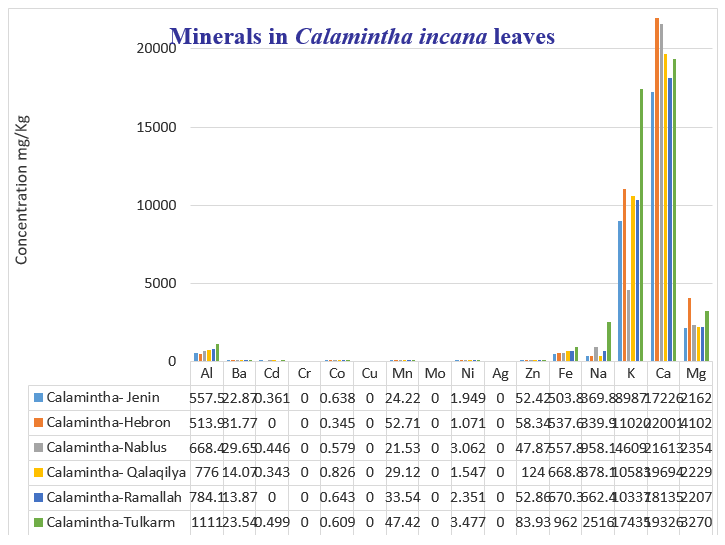
Figure 2 Minerals in in C. incana leaves.
The abundant minerals in the tested C. incana leaves were Calcium, Potassium, and Magnesium. The high levels of these minerals are consistent with their important roles in the biosynthesis of primary and secondary metabolic products.13 The main minerals are highlighted in the chart shown in Figure 3.

Figure 3 Main minerals in C. incana leaves.
Limit of detection and the limit of quantitation
The blank sample was analyzed 11 times under optimized conditions, and the Limit of Detection (LOD) and the Limit of Quantification (LOQ) were determined for each element, as shown in Table 4.
|
# |
Element |
Wavelength (nm) |
LOD (ppb) |
LOQ (ppb) |
|
1 |
Al |
396.158 |
16.434 |
54.78 |
|
2 |
Ba |
233.528 |
6.489 |
21.63 |
|
3 |
Cd |
228.802 |
6.102 |
20.34 |
|
4 |
Cr |
267.708 |
9.297 |
30.99 |
|
5 |
Co |
228.613 |
10278 |
34.26 |
|
6 |
Cu |
327.404 |
16.848 |
56.16 |
|
7 |
Mn |
257.607 |
1.899 |
6.33 |
|
8 |
Mo |
202.032 |
17.541 |
58.47 |
|
9 |
Ni |
231.601 |
9.078 |
30.26 |
|
10 |
Ag |
328.072 |
6.84 |
22.8 |
|
11 |
Zn |
206.199 |
2.379 |
7.93 |
|
12 |
Fe |
238.201 |
17.25 |
57.5 |
|
13 |
Na |
589.604 |
4.48 |
14.93 |
|
14 |
K |
766.5 |
3.14 |
10.46 |
|
15 |
Ca |
315.887 |
4.35 |
14.49 |
|
16 |
Mg |
279.077 |
1.61 |
5.37 |
Table 4 The detected mineral, related wavelength, LOD, LOQ and the concentration in C. incana
Reference material
The reference material was analyzed using the same conditions as the C. incana samples, and the recoveries of elements were calculated as shown in Table 5.
|
Sample ID |
Element |
Wavelength |
Conc. (Sample) |
Unit |
RSD n=3 |
Certified value |
Recovery |
|
Reference material |
Al |
396.158 |
117.31 |
mg/kg |
7.79 |
- |
- |
|
Ba |
233.528 |
10.494 |
mg/kg |
1.93 |
11 |
95.40% |
|
|
Cd |
228.802 |
ND |
mg/kg |
- |
0.12 |
- |
|
|
Cr |
267.708 |
ND |
mg/kg |
- |
1.3 |
- |
|
|
Co |
228.613 |
0.649 |
mg/kg |
6.25 |
- |
- |
|
|
Cu |
327.404 |
ND |
mg/kg |
- |
5.67 |
- |
|
|
Mn |
257.607 |
25.257 |
mg/kg |
2.93 |
31.9 |
79.18% |
|
|
Mo |
202.032 |
ND |
mg/kg |
- |
- |
- |
|
|
Ni |
231.601 |
ND |
mg/kg |
- |
1.05 |
- |
|
|
Ag |
328.072 |
ND |
mg/kg |
- |
- |
- |
|
|
Zn |
206.199 |
39.898 |
mg/kg |
1.23 |
38.6 |
103.36% |
|
|
Fe |
238.201 |
154.911 |
mg/kg |
1.4 |
148 |
104.67% |
|
|
Na |
589.604 |
454.564 |
mg/kg |
1.36 |
580 |
78.37% |
|
|
K |
766.5 |
24481 |
mg/kg |
0.59 |
32500 |
75.33% |
|
|
Ca |
315.887 |
14747.32 |
mg/kg |
1.48 |
18500 |
79.72% |
|
|
Mg |
279.077 |
1421.054 |
mg/kg |
0.59 |
- |
- |
Table 5 Minerals concentration in Reference material sample
The growing global use of medicinal plants has raised concerns about their safety, efficacy, and quality. While mineral content in various medicinal plants has been studied in developed countries, no data exists for C. incana in Palestine. In this study, sixteen minerals were analyzed, including Ag, Al, Ba, Ca, Cd, Co, Cr, Cu, Fe, K, Mg, Mn, Mo, Na, Ni, and Zn. Method validation followed USP <233>, with recoveries and RSDs within acceptable limits (70–150% recovery and ≤20% RSD), confirming the accuracy and precision of the results.14 Minerals are vital for plant and human health. In C. incana leaves, calcium was the most abundant (17,226–22,001 mg/kg). The second most abundant was potassium (4,609–17,435 mg/kg), and Magnesium ranked third (2,162–4,102 mg/kg). Notably, the leaves showed high potassium and low sodium content—an ideal combination for supporting cardiovascular health.15
Metals in C. incana: Safety concerns
Aluminum was detected at elevated levels in all analyzed Calamintha incana leaf samples, with concentrations ranging from 513.9 to 1111.5 mg/kg. This implies that consuming a cup of tea made from 2 grams of dried leaves could lead to an aluminum intake of approximately 1028 to 2223 µg, significantly exceeding the U.S. EPA's recommended maximum concentration of 750 µg/L in drinking water. Chronic exposure to high levels of aluminum has been linked to neurodevelopmental toxicity and embryo toxicity, raising valid safety concerns for long-term or frequent consumption.16
Mineral composition in medicinal plants varies depending on factors such as soil type, environmental contamination, and plant maturity. The relatively high aluminum content in C. incana underscores the necessity for toxicological evaluation of herbal teas, particularly those consumed regularly. Contrary to the popular belief that natural products are inherently safe, the World Health Organization (WHO) stresses the importance of monitoring heavy metal levels in medicinal plants to mitigate health risks.17
With regard to other toxic metals, the study found that: Cadmium (Cd) levels ranged from 0.343 to 0.499 mg/kg, exceeding the WHO permissible limit of 0.3 mg/kg in most samples.17 Chromium (Cr) was not detected in any sample, indicating levels below the limit of detection (LOD). Cobalt (Co) levels varied from 0.345 to 0.826 mg/kg. While WHO does not set a specific limit for cobalt in herbal materials, these values fall within the general safe range for foodstuffs (up to 1 mg/kg). Essential elements like zinc (Zn) and copper (Cu) are generally permitted at higher concentrations due to their physiological importance. WHO guidelines allow up to 50 mg/kg for Zn and 20 mg/kg for Cu.17 The Zn concentrations in C. incana leaves ranged from 47.87 to 124.00 mg/kg, with some samples exceeding the permissible level. Copper was not detected in any of the tested samples.
These findings highlight the need for rigorous quality control and safety monitoring in herbal medicinal products, in line with WHO recommendations. Ensuring compliance with heavy metal limits is crucial for protecting consumer health while preserving the therapeutic value of traditional plant-based remedies.
This study successfully determined the mineral composition of C. incana leaves collected from various locations in Palestine using validated ICP-OES methodology. Sixteen elements were analyzed, and the most abundant minerals were calcium, potassium, and magnesium-essential nutrients involved in key biological functions. The results showed that C. incana is a rich natural source of these macro-elements, suggesting its potential contribution to dietary mineral intake. However, elevated aluminum levels detected in all samples raise concerns about long-term consumption and highlight the need for monitoring metal content in medicinal plants. These findings support the need for safety assessments of traditionally used herbs and align with WHO recommendations on the quality control of herbal medicines. Further studies are recommended to evaluate seasonal, environmental, and processing effects on mineral content and to assess potential health risks from heavy metal accumulation.
None.
The authors declare that there is no conflict of interest.
None.

©2025 Jahajha, et al. This is an open access article distributed under the terms of the, which permits unrestricted use, distribution, and build upon your work non-commercially.