eISSN: 2379-6367


Research Article Volume 13 Issue 4
1Department of Pharmacy, North South University, Dhaka, 1229, Bangladesh
2School of Pharmacy, BRAC University, Dhaka 1212, Bangladesh
3Department of Pharmacy, University of Asia Pacific, Dhaka, Bangladesh
4Department of Pharmaceutical Technology, Faculty of Pharmacy, University of Dhaka, Dhaka-1000, Bangladesh
Correspondence: Fatema-Tuz-Zohora, Assistant Professor, Department of Pharmacy, University of Asia Pacific (UAP), Dhaka, Bangladesh, Tel 01675338774
Received: June 04, 2025 | Published: July 9, 2025
Citation: Nowsher S, Ahmed Z, Fatema-Tuz-Zohora, et al. Exploring the management and prescription patterns of pediatric pneumonia in tertiary hospitals: a closer look at treatment variations and antibiotic use. Pharm Pharmacol Int J. 2025;13(4):112-117. DOI: 10.15406/ppij.2025.13.00474
According to World Health Organization (WHO), pneumonia is a form of acute respiratory infection that affects the lungs. The leading infectious cause of death in children worldwide is pneumonia. In 2019, pneumonia took the lives of 740180 children under the age of 5. Antibiotics are effective in treating bacterial pneumonia, but only one-third of children who develop pneumonia receive the accurate dose. In this paper, we are trying to determine whether the pneumonia treatment pattern in hospitals of Bangladesh for pediatric patients is following the standard guideline treatment or varies from the guideline. And so, we have collected 110 prescriptions from seven hospitals of Bangladesh. Some of these prescription patterns of those hospitals vary from the standard guidelines- IDSA, WHO, NIH, IAP. However, some prescribed medicine patterns are also similar to the guidelines. According to the guidelines, Meropenem is not recommended as a first-line treatment for pneumonic children. But, in case of the treatment pattern in samples collected from hospitals of Bangladesh, Meropenem is the second highest (32.73%) used medicine for pneumonic children. Moreover, Amoxicillin is recommended as the first line treatment for children in standard guideline, but this medicine is rarely found in the collected prescription. The irrational use of antibiotics and increased rate of resistance leads to major challenges. It is very essential to raise awareness regarding the use of antibiotics and non-antibiotics among the people of Bangladesh.
Keywords: pneumonia treatment, antibiotic misuse, antibiotic resistance, pediatric pneumonia, Bangladesh healthcare
Pneumonia is becoming the health burden globally and a leading cause of mortality.1 According to World Health Organization (WHO), pneumonia is a form of acute respiratory infection that affects the lungs. When a healthy person breathes, small sacs in their lungs called alveoli fill with air. And when someone builds up pneumonia in their lungs, the alveoli are filled with pus and fluid, which makes breathing difficult and reduces oxygen intake. There are different classes of pneumonia, from which almost 450 million cases of community-acquired pneumonia have been observed annually.2
Childhood pneumonia is becoming a global public health concern. The leading infectious cause of death in children worldwide is pneumonia. In 2019, pneumonia took the lives of 740180 children under the age of 5. Children and families worldwide are affected by pneumonia, although southern Asia and sub-Saharan Africa have the greatest death rates.
Pneumonia can be prevented in children and treated with affordable, low-tech medicine with simple treatments. Early diagnosis, appropriate supportive care & rational drug use can lower the mortality rate of children.3 Viruses, bacteria, and fungi are all potential causes of pneumonia. Antibiotics are effective in treating bacterial pneumonia, but barely one-third of children who develop pneumonia receive the prescribed dose.4
(Table 1)
|
Classification |
Descriptions |
|
Community-Acquired Pneumonia (CAP) |
Patients who acquire the condition in the community are said to have community acquired pneumonia which is described as an acute infection of the pulmonary parenchyma.5 |
|
Healthcare-Associated Pneumonia (HCAP) |
HCAP is a relatively new nosocomial pneumonia category that describes infections that occur before hospitalization in individuals who have certain risk characteristics (such as-immunosuppression, previous hospitalization, living in a nursing home, needing dialysis).6 |
|
Ventilator-Associated Pneumonia (VAP) |
It is defined as an infection of pulmonary parenchyma occurring at least 48 hours after endotracheal intubation.7 |
|
Hospital-Acquired Pneumonia (HAP) |
It is defined as an infection of the pulmonary parenchyma in individuals who develop the condition at least 48 hours after being admitted to the hospital or within 14 days after being released.8 |
Table 1 Classification of pneumonia
Sample size: Randomly 110 prescriptions collected from seven hospitals of different regions of Bangladesh such as- Dhaka, Narayanganj and Sylhet.
Sampling method: Multistage sampling
In this paper, we are trying to find out whether the treatment pattern of pneumonia in hospitals of Bangladesh for pediatric patients are following the standard guideline treatment or vary from the guideline. We have collected 110 prescriptions from seven hospitals located in the major cities of Bangladesh. We have followed Infectious Diseases Society of America (IDSA), Indian Academy of Pediatrics (IAP), National Institute of Health, US & guidelines of WHO to compare the treatment & prescription patterns of the collected sample prescriptions with Standard Guidelines. We have analyzed the treatment pattern and prescription habits of pediatric pneumonia of Bangladesh whether it is similar to standard guideline or it varies from it. And if it varies, then how much the pattern varies and what can be the possible reasons behind it.
Among the 110 prescriptions from seven hospitals, the ages of the children are categorized into three distinct groups.
38.18% (42 out of 110) children were between 0 months to <6 months, 28.18% (31 out of 110) children were between 6 months to < 5 years and 10.91% (12 out of 110) children were >5 years have been found. In 22.73% of the cases (25 out of 110) examined, the age information was absent from the prescriptions.
The age group of 0 months to < 6 months children are highly affected with pneumonia. And the next group is 6 months to < 5 years. And it represents that the children below 5 years of age are mostly affected with pneumonia (Figure 1).
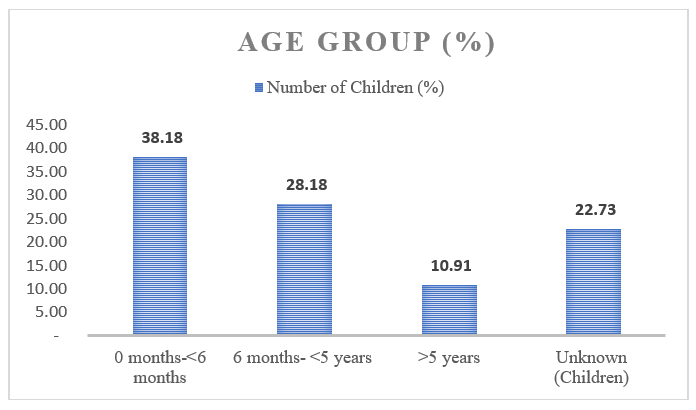
Figure 1 Age group classification (%) of 110 children.
Malnutrition or undernourishment, particularly in newborns who are not exclusively breastfed, may hamper a child's immune system. The risk of pneumonia in children is further increased by pre-existing conditions including measles and HIV infections with symptoms.5
Figure 2 represents the gender of the 110 children. And among the 110 prescriptions of seven hospitals, 42% (46 out of 110) were male, 24% (26 out of 110) were female children and 34% (38 out of 110) data were not found on the prescriptions. The analysis of prescriptions indicates that there is a lack of clear information regarding the age, gender, symptoms, or disease conditions in prescriptions. This absence of detail is considered poor practice, as such information can significantly influence patient treatment.
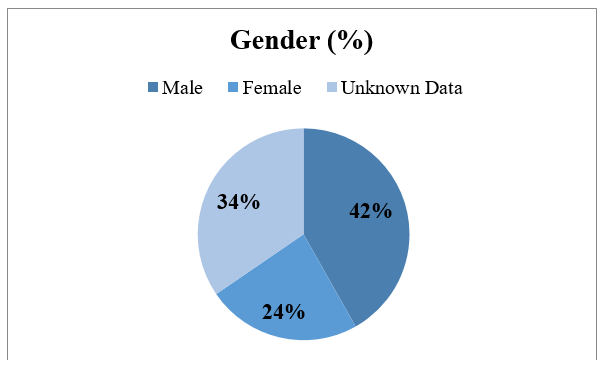
Figure 2 Gender classification (%) of 110 children.
According to NIH, men are more affected than women in community-acquired pneumonia (CAP).9 And our analysis of 110 prescriptions represents the similar case. Here, the number of male children patients are higher than female.
The following graph (Figure 3) represents the disease condition with co-morbidities of the children whether they are only suffering from pneumonia or more than one disease. Among the 110 cases, 20% patients were found with co-existing disease and 80% of the children are suffering from pneumonia only.
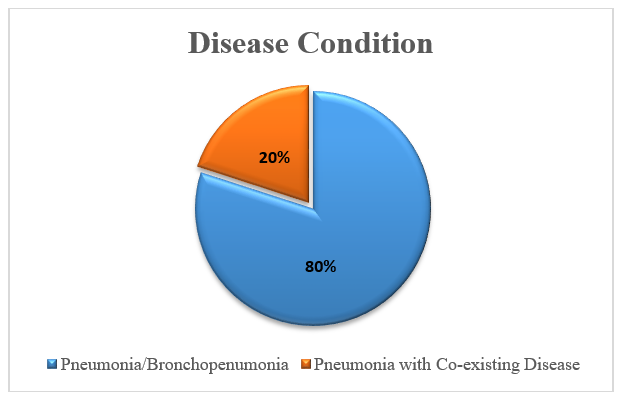
Figure 3 Disease condition (%) of 110 children.
The mostly suffered co-morbidities of the children are Myocardial Infarction, Septicemia, Lung abscess, Conjunctivitis, Vomiting, constipation, congenital heart disease etc.
The above graph (Figure 4) shows that cardiovascular disease condition and co-morbidities with pneumonia found in 110 children. Among all the prescriptions, 4.5% children were affected with cardiovascular disease along with pneumonia, 11.8% children are having other co-morbidities like acute bronchitis, chest in drawing, pulmonary TB, septicemia, conjunctivitis, measles, vomiting, constipation etc., including pneumonia. And, 83.6 % children are having only pneumonia.
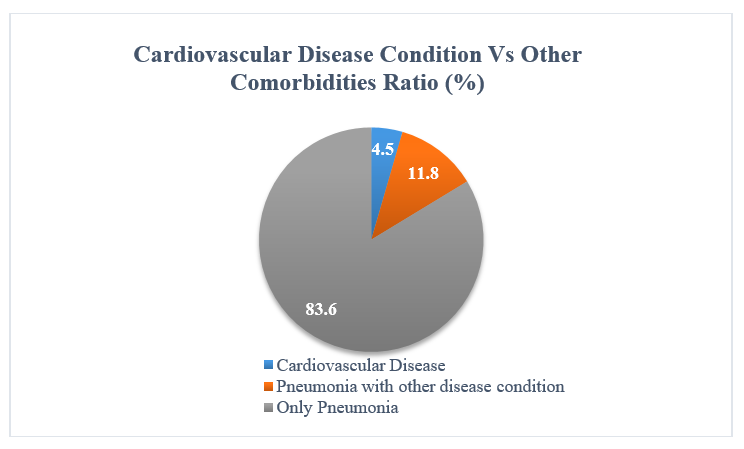
Figure 4 Cardiovascular disease condition Vs other co-morbidities ratio.
About one-third of hospitalized patients die within a year of being released from the facility due to community-acquired pneumonia (CAP), which is responsible for high mortality rates in both pediatric and adult populations globally. The high rates of death and morbidity are intimately linked to cardiovascular issues. Patients with CAP may experience cardiovascular issues both during and after their hospital stay.10 In the above Figure 5, 26% treatments of the surveyed prescriptions are supportive or symptomatic treatment and 74% treatments are non-supportive treatment.
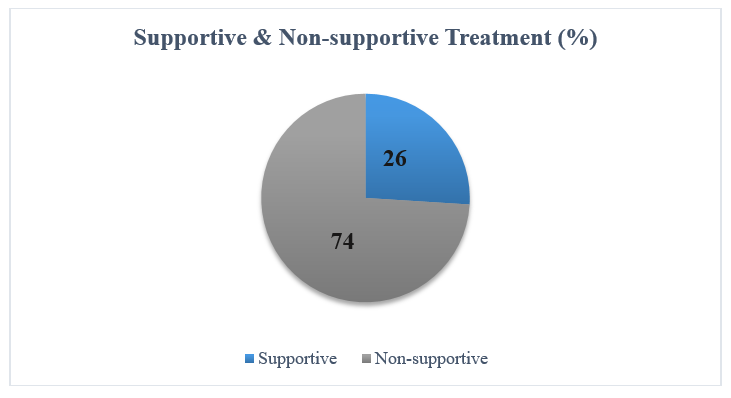
Figure 5 Supportive treatment Vs non-supportive treatment.
The above graph (Figure 6) represents the pattern and frequency of antibiotic use in hospitals of Bangladesh. Here, the mostly used antibiotics are Ceftriaxone and Meropenem. Ceftriaxone is used 36.36%, Meropenem is used in 32.73% and Amikacin is used 25.45% in the prescription. Besides, Amikacin, Metronidazole, Ceftazidime, Gentamicin, Levofloxacin, Flucloxacillin Sodium, Vancomycin are also used with high frequency.
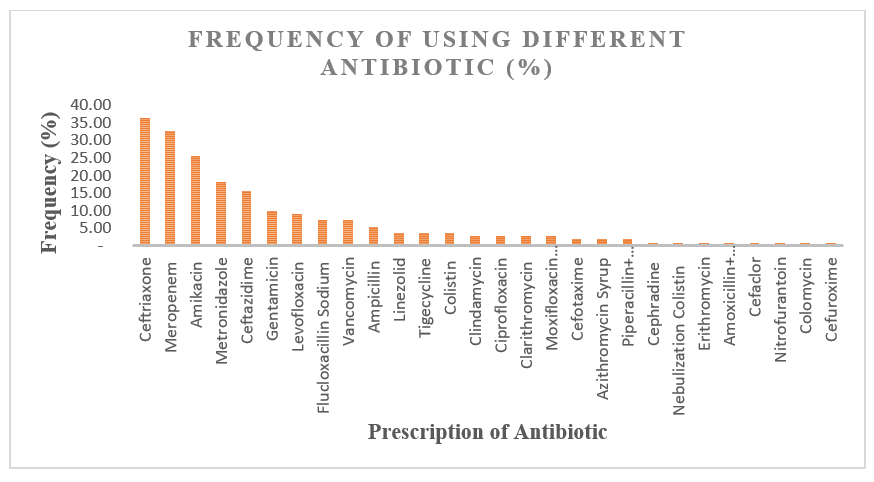
Figure 6 Frequency of antibiotic use (%).
Similarly, the pattern and frequency of non-antibiotic use has been observed in the hospitals of Bangladesh, which is represented in Figure 7.
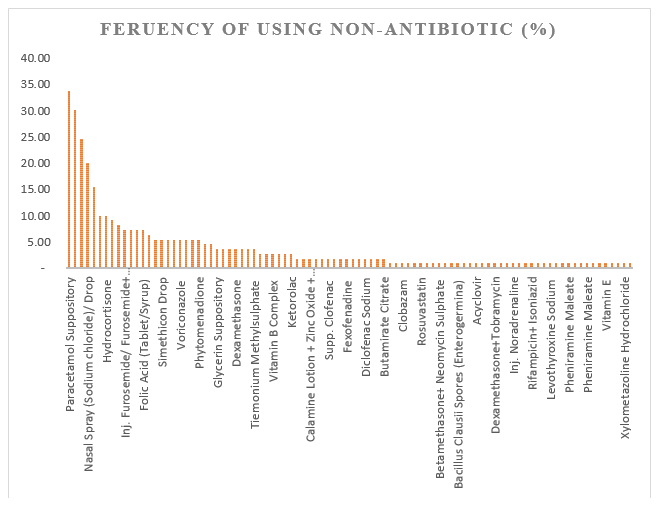
Figure 7 Use of non-antibiotic (%).
The above table (Table 2&3) shows the frequency of medicines found in the prescriptions and among them the yellow marked medicines are antibiotics. For example, if we see the first one from the table, Ceftriaxone has been found in 40 prescriptions among 110 prescriptions and this is an antibiotic of Cephalosporin third generation group. Similarly, Paracetamol suppository has been found 37 times among 110 prescriptions. If we summarize both of Figure 6 & 7, then we will observe that, Ceftriaxone, Meropenem and Amikacin are the most highly prescribed antibiotics and Paracetamol, O2 inhalation and nebulization are the common treatment of non-antibiotics from 110 prescriptions.
|
Medicine Name |
Frequency |
% |
Medicine Name |
Frequency |
% |
Medicine Name |
Frequency |
% |
||
|
Ceftriaxone |
40 |
36.36 |
Colistin |
4 |
3.64 |
Rosuvastatin |
1 |
0.91 |
||
|
Paracetamol Suppository |
37 |
33.64 |
Esomeprazole |
4 |
3.64 |
Aluminium Hydroxide+ Magnesium Hydroxide |
1 |
0.91 |
||
|
Meropenem |
36 |
32.73 |
Mupirocin |
4 |
3.64 |
Amoxicillin+ Clavulanic acid |
1 |
0.91 |
||
|
Nebulization WindeI Plus & Budicort) |
33 |
30 |
Tiemonium Methylsulphate |
4 |
3.64 |
Atorvastatin Calcium |
1 |
0.91 |
||
|
Amikacin |
28 |
25.45 |
Hydrocortisone Acetate Cream |
3 |
2.73 |
Betamethasone+ Neomycin Sulphate |
1 |
0.91 |
||
|
Paracetamol Syrup/Tab |
27 |
24.55 |
Clindamycin |
3 |
2.73 |
Calcium Gluconate |
1 |
0.91 |
||
|
Nasal Spray (Sodium chloride)/Drop |
22 |
20.00 |
Ciprofloxacin |
3 |
2.73 |
Cefaclor |
1 |
0.91 |
||
|
Metronidazole |
20 |
18.18 |
Clarithromycin |
3 |
2.73 |
Mebendazole |
1 |
0.91 |
||
|
O2 Inhalation |
17 |
15.45 |
Montelukast |
3 |
2.73 |
Bacillus Clausii Spores (Enterogermina) |
1 |
0.91 |
||
|
Ceftazidime |
17 |
15.45 |
Moxifloxacine Hydrochloride |
3 |
2.73 |
Calcium Lactate |
1 |
0.91 |
||
|
Gentamicin |
11 |
10.00 |
Vitamin B Complex |
3 |
2.73 |
Sodium Picosulphate |
1 |
0.91 |
||
|
Domperidone |
11 |
10.00 |
Vitamin C |
3 |
2.73 |
Acyclovir |
1 |
0.91 |
||
|
Hydrocortisone |
11 |
10.00 |
Zinc Oxide Cream |
3 |
2.73 |
Enoxaprin Sodium |
1 |
0.91 |
||
|
Dextrose + Sodium Chloride |
10 |
9.09 |
Ketorolac |
3 |
2.73 |
Linagliptin |
1 |
0.91 |
||
|
Levofloxacin |
10 |
9.09 |
Levetiracetam |
2 |
1.82 |
Dexamethasone+ Tobramycin |
1 |
0.91 |
||
|
Omeprazole |
9 |
8.18 |
Cefotaxime |
2 |
1.82 |
Doxophylline |
1 |
0.91 |
||
|
Flucloxacillin Sodium |
8 |
7.27 |
ORS (Oral Rehydration salt Glucose based) |
2 |
1.82 |
lnj. Dopamine |
1 |
0.91 |
||
|
lnj. Furosemide/ Furosemide+ Spirolactone/ Spironalactone |
8 |
7.27 |
Calamine Lotion + Zinc Oxide + Glycerin |
2 |
1.82 |
lnj. Noradrenaline |
1 |
0.91 |
||
|
Normal saline/IV |
8 |
7.27 |
Pethidine Hydrochloride |
2 |
1.82 |
Multivitamin & Cod liver oil |
1 |
0.91 |
||
|
Paracetamol Drop |
8 |
7.27 |
Aspirin |
2 |
1.82 |
Nystatin |
1 |
0.91 |
||
|
Vancomycin |
8 |
7.27 |
Azithromycin Syrup |
2 |
1.82 |
Rifampicin+ Isoniazid |
1 |
0.91 |
||
|
Folic Acid (Tablet/Syrup) |
8 |
7.27 |
Supp. Clofenac |
2 |
1.82 |
|
Diazepam |
1 |
0.91 |
|
|
Ambroxol Hydrochloride |
7 |
6.36 |
Hydroxyzine Hydrochloride |
2 |
1.82 |
Lactulose |
1 |
0.91 |
||
|
Digoxin |
6 |
5.45 |
Pyridoxine Hydrochloride |
2 |
1.82 |
Nitrofurantoine |
1 |
0.91 |
||
|
Simethicon Drop |
6 |
5.45 |
Fexofenadine |
2 |
1.82 |
Levothyroxine Sodium |
1 |
0.91 |
||
|
Ampicillin |
6 |
5.45 |
Chlorhexidine Hydrochloride + Nystatin |
2 |
1.82 |
Sodium Valproate |
1 |
0.91 |
||
|
Phenobabital |
6 |
5.45 |
Famotidine |
2 |
1.82 |
Risperidone |
1 |
0.91 |
||
|
Miconazole Nitrate |
6 |
5.45 |
Piperacillin+ Tazobactam |
2 |
1.82 |
Pheniramine Maleate |
1 |
0.91 |
||
|
Voriconazole |
6 |
5.45 |
Diclofenac Sodium |
2 |
1.82 |
Budesonide |
1 |
0.91 |
||
|
Ondancetron |
6 |
5.45 |
Pyrazinamide |
2 |
1.82 |
Colomycin |
1 |
0.91 |
||
|
Zinc Sulfate Monohydrate |
6 |
5.45 |
Cholecalciferol |
2 |
1.82 |
Chlorpheniramine Maleate |
1 |
0.91 |
||
|
Phytomenadione |
6 |
5.45 |
Butamirate Citrate |
2 |
1.82 |
Pheniramine Maleate |
1 |
0.91 |
||
|
Oxymetazoline Hydrochloride |
5 |
4.55 |
Fungicidal |
1 |
0.91 |
Clopidogrel+ Aspirin |
1 |
0.91 |
||
|
Cetirizine |
5 |
4.55 |
Cephradine |
1 |
0.91 |
Pantoprazole |
1 |
0.91 |
||
|
Glycerin Suppository |
4 |
3.64 |
Monobasic Sodium Phosphate+ Dibasic Sodium Phosphate |
1 |
0.91 |
Cefuroxime |
1 |
0.91 |
||
|
Paracetamol lnj. |
4 |
3.64 |
Clobazam |
1 |
0.91 |
Vitamin E |
1 |
0.91 |
||
|
Ondancetron |
4 |
3.64 |
Nebulization Colistin |
1 |
0.91 |
Dexamethasone |
1 |
0.91 |
||
|
Linezolid |
4 |
3.64 |
Ketotifen Fumerate |
1 |
0.91 |
White Paraffin+ Liquid Paraffin |
1 |
0.91 |
||
|
Dexamethasone |
4 |
3.64 |
Erithromycin |
1 |
0.91 |
Xylometazoline Hydrochloride |
1 |
0.91 |
||
|
Tigecycline |
4 |
3.64 |
Probiotic |
1 |
0.91 |
Diphenhydramine Hydrochloride |
1 |
0.91 |
Table 2 Prescribed generics from 110 prescriptions
|
IDSA Guideline |
WHO |
Treatment pattern in surveyed prescriptions |
|
1. Oral/parenteral Amoxicillin/ Amoxicillin and Clavulanic acid combination is the first choice for children and infants of all ages. |
Amoxicillin is recommended in WHO as a first line treatment. |
The 110 surveyed prescriptions do not have any single data for prescribing Amoxicillin. Only one prescription of a 4-year child contains a combination of Amoxicillin and Clavulanic acid injection. However, the ratio of Amoxicillin and Clavulanic acid combination with injection form is only 0.9%. |
|
2. Ampicillin is recommended as first line treatment. |
Ampicillin is recommended as first line treatment. |
Ampicillin frequency in 110 prescriptions was only 5.4%. |
|
3. Considered in cases of infection with extended-spectrum beta-lactamase (ESBL)-producing organisms or other multidrug-resistant bacteria, not for routine use |
Not listed as a standard or first-line agent for pneumonia. Its use is reserved for cases with high suspicion or evidence of infection by multidrug-resistant organisms, or when first-line therapy fails |
Meropenem is the second-highest prescribed antibiotic in the surveyed prescriptions. |
|
4. Ceftriaxone is recommended as a second-line treatment. |
Ceftriaxone is recommended as second-line treatment. |
Ceftriaxone is the highest prescribed antibiotic in the surveyed prescriptions. |
|
5. Guideline recommends Oseltamivir or Zanamivir, Peramivir (parenteral) as last line treatment. |
____ |
Only 1 prescription has Acyclovir with 500 mg in injection form has been found. |
Table 3 Comparison between the standard guideline & treatment pattern of pediatric patients in Bangladesh
From the chart (Figure 8), 27 drugs (22.5%) are antibiotics and 93 drugs (77.5%) are non-antibiotic treatments among the total 120 generics of 110 prescriptions.
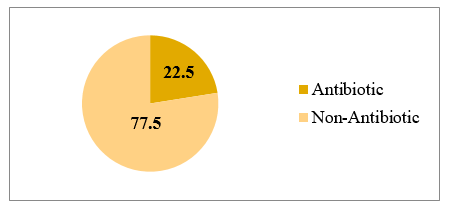
Figure 8 Antibiotic Vs Non-antibiotic (%).
According to standard guideline, oral/ parenteral Amoxicillin and the combination of Amoxicillin and Clavulanic acid combination are the first choice for children and infant of all ages. Besides, Amoxicillin is also recommended in WHO. However, the 110 surveyed prescription lack any specific data regarding prescribing Amoxicillin. Only 1 prescription of a 4-year child contains a combination of Amoxicillin and Clavulanic acid injection. This indicates that the proportion of the amoxicillin and clavulanic acid combination in its injectable form is merely 0.9%. The frequency of Ampicillin in surveyed prescriptions was 4.5% and among those prescription 1.8% is prescribed with high dose of 200mg/320 mg/500 mg. However, the standard guidelines suggest a parenteral dosage of 150-200mg of Ampicillin for infants.
The dosage of Azithromycin closely aligns with the standard guidelines. Oral/parenteral Clarithromycin is also a first choice as per standard guideline with 15 mg/kg for children but prescribed Clarithromycin frequency in surveyed prescriptions is notably low, at only 2.7% with a dose of 500 mg. Standard Guideline recommends Gentamycin 5-7 mg/kg/day and Amikacin 15mg/kg/day and in some instances, combination of both drugs. Almost all surveyed prescription follows standard guideline except 2 prescriptions where deviation has been observed for a 1-year-old patient. In case of Ciprofloxacin/ Linezolid/ Clindamycin/ Vancomycin, the treatment pattern follows the standard guideline.
The highest prescribed antibiotic for hospitalized patient is Ceftriaxone which is recommended as second line treatment in standard treatment guideline (STG). Only one prescription has Acyclovir with 500 mg in injection form has been found in the surveyed prescriptions. However, standard guideline recommends Oseltamivir or Zanamivir, Peramivir (parenteral) as the last line treatment. Meropenem is the second highest prescribed antibiotic in surveyed prescription. Though this molecule is not listed as a standard or first-line agent for pediatric pneumonia. Due to resistance patterns and irrational use of antibiotic in Bangladesh, recent articles show the importance of Meropenem for children suffering from pneumonia.11
Polypharmacy and overdose have been found in case of antibiotic and non-antibiotic both cases by surveying 110 prescriptions. Polypharmacy has become a challenge particularly in children with comorbidities. The adverse effects of using multiple drugs cannot be avoided. The people of Bangladesh prefer self-medication rather than taking the concern of physician at initial stage. They often take suggestions from the pharmacy shop employee/ owner end to treat a disease which leads to emergence of antibiotics. In addition, they often do not complete the course of antibiotic prescribed by the physician which poses high risk. We have observed some combination of antibiotics such as Amoxicillin and Clavulanic acid or Piperacillin and Tazobactam in the prescription pattern. In addition, some antibiotics are prescribed with higher dose. The physicians may need to choose combined antibiotics or multiple antibiotics with higher doses to treat their patients. This scenario indicates that now-a-days, healthcare professionals do not have any choice left to treat this severity to save their patients from antibiotic resistance cases.
The widespread misuse of antibiotics, non-human antibiotic use, poor drug quality, inadequate surveillance, and aspects of individual and societal poverty (poor healthcare standards, malnutrition, chronic and recurrent infections, unaffordability of more expensive and effective drugs) have a greater impact on developing nations. Additionally, given the lack of newer medications, resistance must be controlled before we run out of ways to combat it. Bangladesh, a growing nation in Southeast Asia with a high level of ABR, represents a regional and international threat.12 After analyzing the prescriptions, we can conclude that some of the prescriptions deviate from the standard guideline and using overdose and multiple antibiotics. The prescription pattern needs to be more justified and accurate according to the standard guideline. However, there are several factors that needs to be improved otherwise overcoming the emergence of resistance will be unattainable.
Bangladesh's inadequate healthcare standards and irrational use of antibiotics contribute to the global problem of antibiotic resistance.12 Following standard guidelines are the proper practice of Healthcare professionals. However, due to higher rate of multiple antibiotics resistance, Physicians may need to deviate from the standard guideline to save their patients from high risk. Irrational use of antibiotics and polypharmacy have been a regular issue in many developing countries and Bangladesh is not an exception from this scenario. Our analysis from the study shows the deviation of prescription pattern due to the emergence of antibiotic resistance in Bangladesh. We all need to be cautious regarding this challenge. Healthcare professional specially physicians prescribing pattern and counseling from physicians and pharmacists play the vital role from which antibiotic rational use can be reestablished. Otherwise it will remain unsolvable and tend to severe complications, incurable infections and high mortality. According to one of the recent studies antibiotic resistance has the potential to cause over 40 million deaths within 2050 if proper awareness is not enhanced.13
The sample size of 110 prescriptions from seven hospitals in major cities may not fully represent the diverse healthcare settings across Bangladesh, limiting the generalizability of the findings. Missing patient data, such as age and gender, limits detailed analysis. The cross-sectional design lacks clinical outcome and microbiological data, restricting insight into the impact of prescription deviations and antibiotic resistance. Addressing these limitations in future research would enhance understanding of pneumonia management in Bangladesh for pediatric patients.
None.
The authors declare there is no conflict of interest.
None.

©2025 Nowsher, et al. This is an open access article distributed under the terms of the, which permits unrestricted use, distribution, and build upon your work non-commercially.