eISSN: 2377-4304


Research Article Volume 12 Issue 4
1Faculty of Medicine and Pharmaceutical Sciences of the University of Douala, Cameroon
2Department of Obstetrics Gynecology at Laquintinie Hospital, Douala- Cameroon
3Bamenda Faculty of Health Sciences, Cameroon
4Faculty of Health Sciences of Buea, Cameroon
5Kribi District Hospital, Cameroon
6Faculty of Medicine and Biomedical Sciences of Yaoundé, Cameroon
Correspondence: Essome Henri, Faculty of Medicine and Pharmaceutical Sciences, University of Douala, Department of Obstetrics Gynecology at Laquintinie Hospital, Cameroon
Received: June 29, 2021 | Published: July 12, 2021
Citation: Essome H, Boten M, Ebo FO, et al. The socio-clinical particularities of preeclampsia in a disadvantaged African black environment. Obstet Gynecol Int J. 2021;12(4):218-221. DOI: 10.15406/ogij.2021.12.00580
Introduction: Pre-eclampsia is one of the major causes of maternal and neonatal morbidity and mortality in the world. The complexity of its etiopathogenesis involves, among other things, age, primi-gravidity, obesity, lack of sensitization to the partner's sperm.
Objective: It was to describe the socio-clinical profile of the preeclampsia pregnant woman received in consultation in our service and to compare it with that of a control population.
Methodology: We carried out a situational study of prospective descriptive and analytical type during 07 months from 01 November 2018 to May 31, 2019, in the obstetrics and gynecology department of the Laquintinie Hospital in Douala. We recruited in consultation a continuous series of 150 pregnant women including 50 preeclampsia that we matched to 100 non preeclampsia all at a gestational age greater than 20 weeks of amenorrhea. The variables of interest were age, pregnancy, parity, gestational age, marital status and body mass index. The statistical tests were considered significant for a value of p˂0.05.
Results: The preeclampsia pregnant woman in our series had a mean age of 27.80±5.80, mostly in the 25-30years, pauci-gravid, nulliparous and obese grade 1 with a gestational age predominantly ≥37 weeks of amenorrhea. This profile was non-exposing and heterogeneous compared to the control group of the same racial strain and to data from the literature.
Conclusion: Our preliminary study suggests the existence of certain socio-clinical peculiarities in the preeclampsia pregnant woman in the black African environment.
Keywords: pre-eclampsia, black race, profile, motley
Pre-eclampsia is defined as the occurrence of arterial hypertension (HTN) associated with proteinuria after 20 weeks of amenorrhea in a previously normal pregnant woman1 and occurs in 2 to 7% of pregnancies.2 According to the WHO, it is one of the major causes of maternal and neonatal morbidity and mortality in the world (14%) and especially in developing countries.3 Its frequency in the world is estimated at 20% of hypertensive pregnant women4–7 and its lethality remains high in developed countries7–10 and even more in African series.11 In France, it remains the second cause of maternal death after bleeding during delivery12 with around 20 deaths per year.13,14
In black Africa, its prevalence is around 25%.15 It affects one pregnancy in 2000 with 30% maternal deaths and 20% fetal and neonatal mortality.16 In Cameroon, it represents a main pathological entity in hypertensive diseases in pregnancy with 77.88% of hypertensive patients and a frequency of 4.97%.6
It is the third leading cause of maternal mortality, after postpartum hemorrhage and infections in Cameroon.4,17
It is therefore a worrisome pathology due to its high prevalence and a severe form of pregnancy-induced hypertension which involves the short-term maternal and fetal prognosis and from which several risk factors and complications arise.
The data in the literature being mainly Western, we initiated this situational study to search for predictive factors inherent in the black race and thus participate in a better knowledge and management of this pathology in pregnancy in our environment.
Inclusion criteria
We included in our study pregnant women from our study population who gave their informed consent without distinction of age, pregnancy or parity.
Pre-eclampsia group
Exclusion criteria
Were excluded from our study: Common exclusions: smoking, chronic renal failure, chronic liver disease, blood crass disorders, treatment with anti-vitamin K.
Specific exclusions
Non-preeclampsia group: risk factors for preeclampsia (previous diabetes, chronic arterial hypertension, anti-phospholipid syndrome, lupus, history of preeclampsia), gestational hypertension.
Sampling: We carried out a sampling for convenience, consecutive and not exhaustive
Procedure
Administrative procedures: The study protocol had been approved by the Institutional Research Ethics Committee for Human Health of the University of Douala by issuing an ethics clearance N°1727 CEI-Udo/02/2019/T. The collection was carried out with respect for confidentiality by means of anonymous files. We also obtained permission from the director of Laquintinie Hospital.
Collection of data: After obtaining informed consent following the explanations relating to the study, the data were collected using a computerized and structured data sheet whose variables of interest were:
Statistical analysis
The data collected was recorded, analyzed and entered using Epi Info 7, Excel 2013 and the EPI Data 3.1 software (Lauritzen, Denmark). Quantitative variables were grouped together as a mean with standard deviation. Qualitative variables in the form of numbers and percentages. The comparison of the qualitative values was made using the Chi-square test and the quantitative variables using the Student test. The p-value was significant for a value less than 0.05.
We approached 187 pregnant women, and retained 150 (Figure 1).
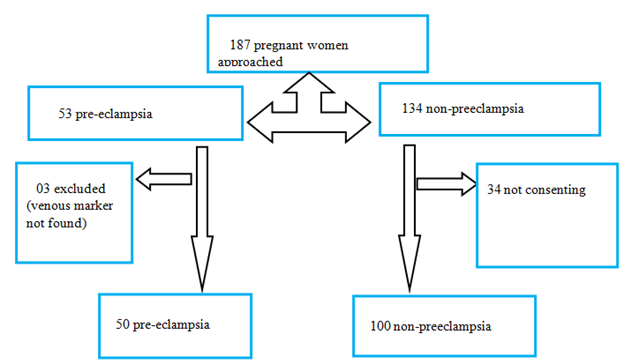
Figure 1 Process of recruiting study participants.
General characteristics of the study population
The ages varied from 16 to 40years old. The mean age of preeclampsia was 27.80±5.80 and 29.05±5.29 in non-preeclampsia patients without a statistically significant difference. Preeclampsia and non-preeclampsia drugs were more represented in the 25-30years age group, respectively 32% versus 37% without statistically significant difference. Singles were in majority in both groups, 68% in preeclampsia and 62% in non-preeclampsia patients without statistically significant difference (Table 1).
Variables |
Pre-eclampsia |
Normal pregnant women |
P |
N= 50 n (%) |
N= 100 n (%) |
||
Age (years) |
|||
Mean±standard deviation |
27.80±5.80 |
29.05±5.29 |
0.189 |
[15-20] |
4 (8) |
2 (2) |
0.077 |
[20-25] |
9 (18) |
22 (22) |
0.568 |
[25-30] |
16 (32) |
37 (37) |
0.545 |
[30-35] |
12 (24) |
18 (18) |
0.386 |
[35-40] |
8 (16) |
17 (17) |
0.876 |
[40-45] |
1 (2) |
4 (4) |
0.52 |
Marital status |
|||
Single |
34 (68) |
66 (66) |
0.806 |
Married |
16 (32) |
34 (34) |
0.806 |
Table 1 Socio-demographic characteristics of our population
The mean gravidity was 2.66 ± 1.45 in the preeclampsia and 2.82±1.76 in the non-preeclampsia patients without a statistically significant difference, with the extremes of 1 and 8. The paucigravid were the most common in preeclampsia (40%) and primigravid in non-preeclampsia patients (34%). The mean parity of the preeclampsia was 1.26±1.30 and 1.37±1.42 in the non-preeclampsia, without a statistically significant difference, with the extremes of 0 and 5. The nulliparas were majority in both groups (Table 2).
Variables |
Preeclampsia |
Normal pregnant women |
P |
N=50 n (%) |
N=100 n (%) |
||
Gravidity |
|||
Mean±standard deviation |
2.66±1.45 |
2.82±1.76 |
0.579 |
Primigravid |
17 (34) |
34 (34) |
1 |
Paucigravid |
20 (40) |
32 (32) |
0.331 |
Multigravid |
13 (26) |
30 (30) |
0.609 |
Grand multigravid |
0 (0) |
4 (4) |
0.151 |
Parity |
|||
Mean±standard deviation |
1.26±1.30 |
1.37±1.42 |
0.647 |
Nulliparous |
21 (42) |
39 (39) |
0.723 |
Primiparous |
7 (14) |
22 (22) |
0.242 |
Pauciparous |
18 (36) |
26 (26) |
0.204 |
Multiparous |
4 (8) |
13 (13) |
0.362 |
Table 2 Obstetric history of our population
The majority gestational age in the two groups was ≥37 weeks with a mean in the preeclampsia of 36.16±3.41 against 33.43±5.61 in the non-preeclampsia with a statistically significant difference (p=0.047).
The mean body mass index in preeclampsia patients was 31.16±4.71 compared with 30.23±4.73 in non-preeclampsia patients without a statistically significant difference. Obese grade 1 pregnant women were significantly in majority among those with preeclampsia (40% versus 16%) (p=0.001). On the other hand, grade 2 obesity significantly affected 21% of non-preeclampsia patients compared with 6% of preeclampsia patients (p=0.018) (Table 3).
Variables |
Preeclampsia |
Normal pregnant women |
P |
N= 50 n (%) |
N= 100 n (%) |
||
Gestational age (wa) |
|||
Mean±standard deviation |
36.16±3.41 |
34.43±5.61 |
0.047 |
20-33 |
18 (36) |
37 (37) |
0.904 |
34-36 |
8 (16) |
26 (26) |
0.167 |
≥37 |
24 (48) |
37 (37) |
0.196 |
BMI (Kg/m²) |
|||
Mean±standard deviation |
31.16±4.71 |
30.23±4.73 |
0.258 |
18.5-24.9 |
3 (6) |
8 (8) |
0.657 |
25-29.9 |
21 (42) |
51 (51) |
0.298 |
30-34.9 |
20 (40) |
16 (16) |
0.001 |
35-39.9 |
3 (6) |
21 (21) |
0.018 |
≥40 |
3 (6) |
4 (4) |
0.584 |
Table 3 Gestational age and Body mass index in our population
Sociodemographic and clinical characteristics
The international literature recognizes advanced age, primi-gravidity, nulliparity, obesity and lack of exposure to sperm of partner as factors that may lead to the onset of preeclampsia.
These socio-clinical factors were variably found in our study as much as the work of other authors.
Age
Ages ≤18 years and ≥40years are reported in the literature as a predictor of pre-eclampsia; this data is non-consensual and is the opposite of our findings as well as those of others who otherwise report the same data as us, Awolola et al. in 2016 in Nigeria,13 Han et al in 2014 in China,14 Namavar et al. in 2009 in Iran15 and Nirmala et al in 2015 in India.16 The age group of 25 to 30years of age in these different studies, including our own, corresponds to the optimal age group for human procreation.
Obstetric history
Gestation
Primi-gravidity in our series was neither predominant nor prone to preeclampsia in the group exposed as opposed to pauci-gravids who were more represented although not exposed to this pathology.
Like the reference age of less than 18 years, we also did not find the high frequency of primigravid as reported by the literature.
The mean pregnancy was 2.66±1.45 in the preeclampsia and 2.82±1.76 in the non-preeclampsia patients, with a statistically insignificant difference. These results are identical to those found by Namavar et al. in 2009 in Iran.15
Parity
It was without specificity and therefore not exhibiting. The mean parity of preeclampsia was 1.26±1.30 and 1.37±1.42 in non-preeclampsia patients with a statistically insignificant difference. Our results were identical to those reported by Awolola et al in 2016 in Nigeria.13 Nulliparas were in the majority in both groups, in contrast to the work of Han et al. in 2017 in China14 which found only nulliparas. This difference in our opinion is to be put to the credit of the limitation of birth in China as opposed to our customs which are projected towards mass procreation.
Gestational age
The gestational variable in our series seemed to us to be exposing to pre-eclampsia. But this finding seems questionable to us because the preeclampsia pregnant women included, unlike the control group, were mostly at term.
The mean gestational age in preeclampsia patients was 36.16±3.41 and 33.43±5.61 in non-preeclampsia patients with a statistically significant difference. These results were identical to those found by Awolola et al. in 2016 in Nigeria,14 Namavar et al. in 2009 in Iran15 and Nirmala et al. in 2015 in India.16
Body mass index (BMI)
Pregnant women with preeclampsia were significantly obese grade 1 while obesity grade 2 statistically affected the control group. This contradiction is compelling because exposure to pre-eclampsia is expected to increase in relation to the severity of obesity. This suggests the probable existence of other factors that only future studies can elucidate.17–19
At the end of our study, the preeclampsia pregnant woman in our environment is obese pauci-gravid nulliparous aged on average 27.80±5.80 and her profile did not seem to be significantly exposed to the onset of preeclampsia.
As this study is preliminary, we plan to expand it later in a multicenter way with the largest possible sample to elucidate the questions that remained unanswered in our analysis.
Limitation of the study
The size of our sample may lack statistical power. The variables relating to exposure to the sex of the spouse were not explored in this study given the cultural barriers of our environment. The status of disadvantaged patient seemed to us unusable because highly divergent and without reference in our environment but also vis-à-vis African and international studies.
None.
None.
The authors declare no conflicts of interest in preparing this article.

©2021 Essome, et al. This is an open access article distributed under the terms of the, which permits unrestricted use, distribution, and build upon your work non-commercially.