eISSN: 2377-4304


Research Article Volume 16 Issue 5
17th-year Medical Student, Rafael Landívar University, Guatemala
2Department of Gynecology and Obstetrics, Guatemalan Social Security Institute, Guatemala
3Department of Gynecology and Obstetrics, Roosevelt Hospital, Guatemala
Correspondence: Dr. Andrea Sofía López Enríquez, Gynecologist and Obstetrician, Gynecology Endoscopy, 6ta calle 4-40 zona 3 de Mixco, Colonia El Castaño, Ciudad de Guatemala, Tel 50253184807
Received: October 16, 2025 | Published: November 4, 2025
Citation: Noriega AMS, Enríquez ASL, Romero LAG, et al. Frequency of complications in ectopic pregnancy during 2020-2023 hospital Roosevelt, Guatemala. Obstet Gynecol Int J. 2025;16(5):161-164. DOI: 10.15406/ogij.2025.16.00805
Ectopic pregnancy is defined as the acute or chronic course of an extrauterine gestation in which the developing blastocyst implants in a location other than the endometrial lining of the uterine cavity. 69.2% of patients may experience complications. The risk of mortality in these patients is 10 times higher than in patients with intrauterine pregnancies.
Keywords: frequency, ectopic pregnancy, complications
Ectopic pregnancy is defined as the acute or chronic course of an extrauterine pregnancy in which the developing blastocyst implants in a location other than the endometrial lining of the uterine cavity. The main locations are: fallopian tube, ovaries, interstitium, uterine scar, abdominal area, etc. In 95% of cases, it occurs in the fallopian tubes. Both intrauterine and extrauterine pregnancies are known as heterotopic multiple pregnancies, which are uncommon. The clinical manifestations are diverse, but there are pathognomonic signs such as pain, bleeding, nausea, and tenderness.1–4
There are also different risk factors, including a history of ectopic pregnancy, abnormalities, and previous surgeries, among others. Complications can be serious and increase patient mortality. It has been established that ruptured ectopic pregnancies can lead to hemodynamic imbalances and shock in up to 5% of cases. In addition, at least 69.2% of patients will experience some type of complication and may have a mortality rate 10 times higher than in an intrauterine pregnancy.5,6
In Guatemala, in the department of Huehuetenango, there was one case of ectopic pregnancy for every 318 pregnancies, while another study in San Marcos reported that 23.6% of patients with this diagnosis were between the ages of 21 and 25.7,8
This study investigated the frequency of complications and clinically and epidemiologically characterized patients diagnosed with ectopic pregnancy who consulted the Gynecology and Obstetrics Department at Roosevelt Hospital between 2020 and 2023, given that there is little up-to-date evidence on the subject in Guatemala and that, prior to this research, there were no associations between patients with ectopic pregnancy and complications. The Roosevelt Hospital was chosen as the study center because it is a tertiary care hospital, a national referral center, and a teaching hospital. With high demand for care, in 2022 alone, around 11,000 cesarean sections and 18,000 deliveries were performed.9 Therefore, the purpose of this thesis is to establish concrete statistical data that will help identify associations and the frequency of complications in this group of patients.
A descriptive cross-sectional study was conducted using a total of 100 medical records of patients diagnosed with ectopic pregnancy who were admitted to the Department of Gynecology and Obstetrics at Roosevelt Hospital, Guatemala, between January 2020 and December 2023.
Inclusion criteria: all patients with a confirmed diagnosis of ectopic pregnancy, documented through clinical evaluation, ultrasound and laboratory findings.
Exclusion criteria: incomplete medical records and cases in which the diagnosis of ectopic pregnancy was not confirmed.
The study population was selected through non-probabilistic convenience sampling, including all eligible cases that met the inclusion criteria within the study period.
For each patient, the following variables were collected:
Data collection was carried out using a standardized google form designed for this study. Information was obtained directly from hospital records, operative notes, and laboratory reports, ensuring confidentiality and anonymity of the patients.
Statistical analysis included the calculation of absolute and relative frequencies, 95% confidence intervals (CI), and odds ratios (OR) to assess associations between selected variables and the presence of complications. The data were analyzed using the EPI info version 7.2.5.0.
Of the 100 patient medical records collected, an absolute frequency of 52 (95% CI 42-62) patients presenting with complications was found (Graph 1). The trend line for the distribution of cases with complications fluctuated over the four years (Graph 2). A higher absolute frequency of complications was observed in patients aged 20-34 years (40; 95% CI 30-50)), unmarried (19; 95% CI 12-28), primary school education (23 95% CI 15-32), evangelical (26; 95% CI 18-36), and housewife (37; 28-47) (Table 1). Fifty-one percent (95% CI 38-64) who consulted for “pain” had complications, 57% (95% CI 37-75) who consulted for “bleeding” had complications, and those who consulted for other reasons had 44% (95% CI 14-79) complications.
|
Variable |
Characteristic |
No. patients |
Complication |
Prevalence |
|
Age |
Under 20 years old |
8 |
2 (0.24-7) |
25 (3-65) |
|
20-34 years old |
76 |
40 (30-50) |
53 (41-64) |
|
|
35 years or older |
16 |
10 (5-18) |
63 (35-85) |
|
|
Civil status |
Married |
28 |
15 (9-24) |
54 (34-72) |
|
Coupled |
41 |
18 (11-27) |
44 (28-60) |
|
|
Single |
31 |
19 (12-28) |
61 (42-78) |
|
|
Education |
Illiterate |
6 |
4 (1-10) |
67 (22-96) |
|
Elementary school |
36 |
23 (15-32) |
64 (46-79) |
|
|
Middle school |
20 |
7 (3-14) |
35 (15-59) |
|
|
High school |
30 |
17 (10-26) |
57 (37-74) |
|
|
University |
8 |
1 (0.03-5) |
13 (0.32-53) |
|
|
Religion |
Evangelical |
43 |
26 (18-36) |
60 (44-75) |
|
Catholic |
32 |
19 (12-28) |
59 (41-76) |
|
|
Jehovah's Witness |
1 |
0 |
- |
|
|
None |
24 |
7 (3-14) |
29 (13-51) |
|
|
Work |
Yes |
31 |
11 (6-19) |
35 (19-55) |
|
No |
7 |
4 (1-10) |
57 (18-90) |
|
|
|
Housewife |
62 |
37 (28-47) |
60 (46-72) |
Table 1 Characterization of patients with ectopic pregnancy, Roosevelt Hospital. Guatemala, January to December 2020 to 2023. (N=100)
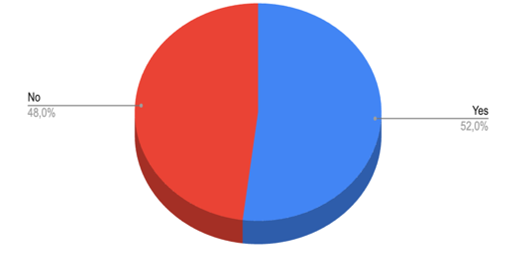
Graph 1 Frequency of complications in patients with ectopic pregnancy, Roosevelt Hospital. Guatemala, January to December 2020 to 2023. (N=100).
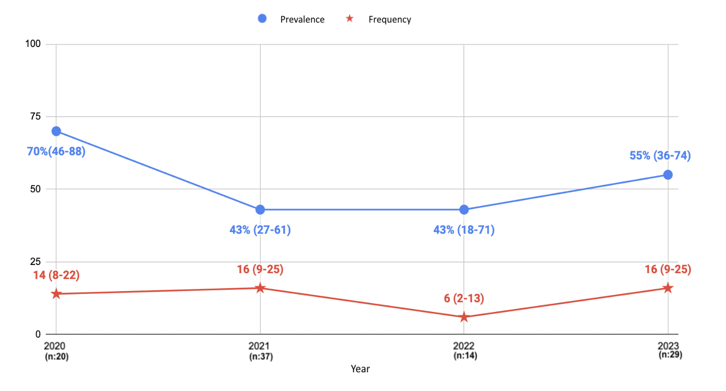
Graph 2 Frequency and prevalence of complications per year of consultation for patients with ectopic pregnancy, Roosevelt Hospital. Guatemala, January to December 2020 to 2023. (N=100).
Regarding comorbidities, 28 patients presented one or more comorbidities, with a prevalence of 57% (95% CI 37-76) with presence of complications. Among the comorbidities observed were diabetes mellitus, chronic arterial hypertension, thyroid disease, overweight, and obesity, among others. The prevalence of complications in patients with diabetes mellitus, anemia, immunocompromise, epilepsy, irritable bowel syndrome, thyroid disease, and heart murmur was 100%.
There were 34 primigravida patients and 66 multigravida/grand multigravida patients; among these groups, there was a higher prevalence of complications in grand multiparous patients (60%, 95% CI 15-94), and the more pregnancies the patients had, the higher the prevalence of complications due to ruptured ectopic pregnancy, reaching 75% (95% CI 19-99) in grand multiparous patients.
Forty-five percent (95% CI 35-55) of the population had a history of gynecological-obstetric surgery, which cesarean sections had a higher frequency of complications at 58% (95% CI 42-72) (Table 2). It was found that even 6-10 years after surgery, it was possible to find an ectopic pregnancy with a prevalence of 88% (95% CI 47-99) for complications.
|
Previous procedure |
No. patients |
Frequency of |
Prevalence (%) |
|
Cesarean section |
32 |
26 (58%, 42-72) |
81 (64-93) |
|
D&C* |
8 |
4 (9%, 2-21) |
50 (16-84) |
|
MVA** |
2 |
1 (2%, 0.06-12) |
50 (1-99) |
|
Other |
3 |
2 (4%, 0.5-15) |
67 (9-99) |
Table 2 Type of previous gynecological-obstetric procedure in patients with ectopic pregnancy and surgical history, Roosevelt Hospital. Guatemala, January to December 2020 to 2023. (N=45)
*Instrumental uterine curettage.
**Manual vacuum aspiration.
According to surgical records, there were complications in 83% (95% CI 36-99) of patients with adhesions. The contralateral sides and adnexa of the female reproductive system were reported as normal in 57% of patients; however, in patients who were reported to have an abnormality, there was a higher prevalence of complications.
In addition, 17 patients presented with obstetric hemorrhage, and 16 of them had an additional complication (Table 3). It should be noted that, despite not meeting the criteria for obstetric hemorrhage as such, there were 76 patients with blood loss of more than 100 cc during the course of ectopic pregnancy.
|
Variable |
Characteristic |
No. patients |
Complication |
Prevalence |
|
Adhesions |
No |
75 |
37 (39%, 29-49) |
49 (38-61) |
|
Yes |
6 |
5 (5%, 2-12) |
83 (36-99) |
|
|
Multiple |
15 |
10 (10%, 5-18) |
67 (38-88) |
|
|
Contralateral |
Normal |
57 |
30 (31%, 22-42) |
53 (39-66) |
|
No indication |
24 |
13 (14%, 7-22) |
54 (33-74) |
|
|
Endometriosis |
2 |
1 (1%, 0.03-6) |
50 (1-99) |
|
|
Hydrosalpinx |
1 (1%, 0.03-6) |
100 (21-100) |
||
|
Ovarian cyst |
6 |
3 (3%, 1-9) |
50 (12-88) |
|
|
Loss of fallopian tube anatomy |
5 |
3 (3%, 1-9) |
60 (15-95) |
|
|
Fibroids |
1 |
1 (1%, 0.03-6) |
100 (21-100) |
|
|
Blood loss |
Less than 100 cc |
3 |
0 |
|
|
100-599 cc |
57 |
21 (22%, 14-31) |
37 (24-51) |
|
|
600-999 cc |
19 |
14 (15%, 8-23) |
74 (49-91) |
|
|
1,000-1,499 cc |
9 |
8 (8%, 4-16) |
89 (52-99) |
|
|
1,500 or more |
8 |
8 (8%, 4-16) |
100 (63-100) |
Table 3 Surgical report on female anatomy in patients who underwent surgical treatment for ectopic pregnancy, Roosevelt Hospital. Guatemala, January to December 2020 to 2023. (n=96)
With regard to the type of complication, 96% (95% CI 87-99) of anemia, 37% (95% CI 24-51) of acid-base disorders, 33% (95% CI 20-47) of obstetric hemorrhage, 29% (95% CI 17-43) with the need for some type of transfusion, 21% (95% CI 11-35) with hypovolemic shock, 17% (95% CI 8-30) with some type of hydroelectrolytic disorder, 10% (95% CI 3-21) with thrombocytopenia, 6% (95% CI 1-16) with renal failure, and 6% (95% CI 1-16) requiring admission to the intensive care unit (Graph 3).
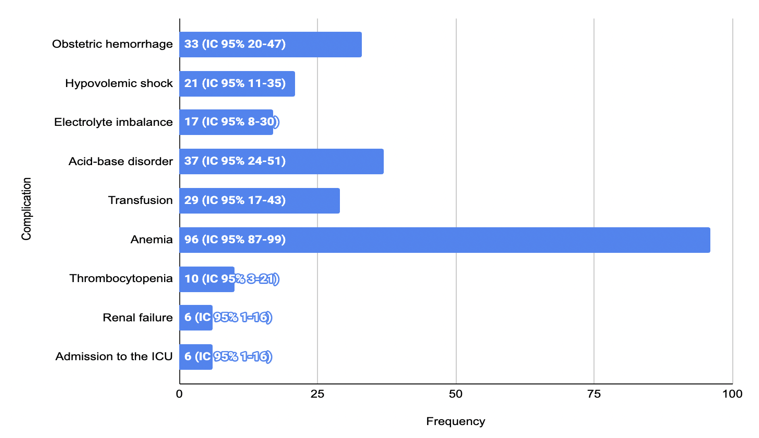
Graph 3 Frequency of types of complications in patients with ectopic pregnancy, Roosevelt Hospital. Guatemala, January to December 2020 to 2023. (n=52).
This study provides an overview of the problems associated with complications in patients with ectopic pregnancy. Regarding the years in which ectopic pregnancies occurred, there was a trend in the distribution of cases with complications that fluctuated over the years, while the prevalence of complications in relation to their frequency of occurrence per year peaked at 70% (95% CI 46-88) in 2020, then dropped to 43% (95% CI 18-71) in 2021 and 2022, and subsequently increased in 2023 to 55% (95% CI 36-74). Overall, there was an absolute frequency of 52 (95% CI 42-62) patients who presented with complications (Graph 2).
It is important to identify these cases of patients with ectopic pregnancy because they represent an obstetric emergency. With regard to the reason for consultation, it is essential to assess the signs of pain and bleeding, as these can lead to complications in these patients.
Despite evidence that the prevalence of complications was higher in older pregnant patients, no statistically significant association could be established in this study [OR: 0.6 (95% CI 0.2-2), P: 0.4]. Concerning to the characteristics of patients with the highest frequency of complications, it was established that they were patients over 35 years of age, single, illiterate, evangelical, and housewives.
Of the 52% of patients who presented a complication, 16 (95% CI 9-25) patients were identified as having a comorbidity. Although overweight and obesity did not have a high prevalence, they did show a high absolute frequency of complications, suggesting that attention should be paid to patients with ectopic pregnancy who have these metabolic diseases. However, this study was unable to establish a statistically significant association to determine that having one or more comorbidities may pose a risk for complications in an ectopic pregnancy [OR: 1.3 (95% CI 1-3), P: 0.6].
No statistically significant association was found in patients with a history of complications in a previous pregnancy [OR: 2 (95% CI 1-6), P: 0.1], despite the fact that 81% (95% CI 58-95) of patients with comorbidities had complications.
Forty-five percent (95% CI 35-55) of the population had a history of previous gynecological-obstetric surgery (cesarean section, LIU, AMEU, others). The highest frequency of complications was for cesarean sections, of which 81% (95% CI 64-93) had a complication, and a statistically significant association was established between a history of previous gynecological-obstetric surgery and the risk of having a complication [OR: 5 (95% CI 2-12), P: 0.0001].
Of the total number of patients who presented complications (n:52), a frequency of 32 (95% CI 23-42) patients with right-sided localization and 20 (95% CI 13-29) with left-sided localization was determined. The most affected site was the fallopian tubes, with a higher prevalence of complications in ruptured ectopic pregnancies of 63% (95% CI 47-77). Of the 100 patients, 96 were taken to the operating room for surgical treatment and 4 were treated with methotrexate. The surgical records of the 96 patients showed that, despite a higher frequency of complications in patients without adhesions, the prevalence of complications with respect to their frequency was higher, at 67% (95% CI 38-88), in patients who did have adhesions. In addition, a statistically significant association was found for this study between blood loss greater than 1,000 cc and the presence of complications in addition to obstetric hemorrhage [OR: 19 (95% CI 2-151), P: 0.0003].
Within the 52% (95% CI 42-62) of the population that did experience complications, 95% (95% CI 87-99) had anemia, with mild, moderate, and severe cases accounting for 37% (95% CI 24-51) for acid-base disorders, 33% (95% CI 20-47) for obstetric hemorrhage, 29% (95% CI 17-43) for the need for some type of transfusion, and 21% (95% CI 11-35) for hypovolemic shock. It should be noted that 16 of the 17 patients with obstetric hemorrhage had this additional complication, 17% (95% CI 8-30) for hydroelectrolytic disorders, 10% (95% CI 3-21) for thrombocytopenia, 6% (95% CI 1-16) for renal failure, and 3 patients were transferred to the Adult Intensive Care Unit for further management due to more severe complications such as diabetic ketoacidosis, pulmonary thromboembolism, pleural effusion and consolidated pneumothorax, and pelvic abscess; it should be noted that these 3 patients had the greatest blood loss, exceeding 2,000 cc.
More than half (52%) of patients with ectopic pregnancies experienced complications, demonstrating that this condition continues to represent a high-risk obstetric emergency at Roosevelt Hospital. This complications were more frequent in women over 35 years of age, who were single, had a low level of education, were engaged in housework, and were evangelical Christians, suggesting that socioeconomic and cultural factors could influence delays in seeking medical attention and clinical outcomes could be worst.
A statistically significant association was found between a history of gynecological surgery and the occurrence of complications (OR: 5; 95% CI: 2–12; p=0.0001), highlighting the need for specialized follow-up in women who have had cesarean sections or other previous interventions, even after 6-10 years.
Also obstetric hemorrhage during the course of ectopic pregnancy was associated with a markedly higher risk of additional complications (OR: 19; 95% CI: 2–151; p=0.0003), confirming its relevance as a clinical marker of severity for this patients. As well as ruptured ectopic pregnancies showed a higher prevalence of complications, especially anemia, acid-base disorders, need for transfusion, and hypovolemic shock, underscoring the importance of timely diagnosis and treatment to reduce maternal morbidity.
The findings of this study reinforce the urgency of strengthening early detection, reproductive education, and access to timely gynecological and obstetric services, especially in women with a history of surgery or known risk factors.
None.
None.
The authors declare that there is no conflict of interest.

©2025 Noriega, et al. This is an open access article distributed under the terms of the, which permits unrestricted use, distribution, and build upon your work non-commercially.