eISSN: 2377-4304


Research Article Volume 16 Issue 6
 Alessandra Haddad MD PhD,2 Maria Oneide Teixeira Alves MD,3 Maria Paula del Nero MD,4 Eliandre Palermo MD,4 Christine Munia MD,4 Meire Parada MD,4 Monica Manela-Azulay MD PhD,5 Rafael Tomaz Gomes MD PhD,6 Cristhine Kamamoto MD PhD,6 Alessandra Nogueira MD6
1Hexsel Dermatologic Clinic, Porto Alegre, RS -Brazil
2Associate Professor of Plastic Surgery at UNIFESP. Coordinator of Graduate Program at Hospital Israelite Albert Einstein. Plastic Surgeon, SP -Brazil
3Private Practice. Gynecologist, SP -Brazil
4Private Practice. Dermatologist, SP -Brazil
5Associate Professor of Dermatology at the Federal University of Rio de Janeiro and FTESM. Chairman of Female Intimate Dermatology of IDPRDA Santa Casa RJ -Brazil
6Galderma, Brazil
Correspondence: Cristhine Leão, MD, PhD, Galderma, Av. Nações Unidas, 14.261. 4º Andar, Ala A, Torre A. Várzea de baixo, Brazil, Tel + 55 11 93315-7523
Received: November 01, 2025 | Published: November 12, 2025
Citation: Hexsel D, Haddad A, Alves MOT, et al. Expert recommendations on poly-L-lactic acid and hyaluronic acid filler for labia majora and mons pubis: addressing skin laxity and volume restoration. Obstet Gynecol Int J. 2025;16(6):182-188. DOI: 10.15406/ogij.2025.16.00809
Introduction: Women’s concern with the aesthetic appearance of the vulva is not new, and the demand for genital rejuvenation procedures has consistently increased over the past decades.
Objective: To present recommendations from experts panel focusing on labia majora (LM) and mons pubis (MP) soft tissue augmentation and skin flaccidity improvement considering injectable hyaluronic acid (HA) and poly-l-lactic acid (PLLA-SCA), respectively.
Methods: A Brazilian expert-panel composed by six dermatologists, one gynecologist and one plastic surgeon proposed recommendations for soft tissue augmentation and skin flaccidity treatment of the LM and MP areas.
Results: The primary age groups seeking female genital rejuvenation typically include women in the perimenopausal period, younger patients who have experienced significant weight loss following bariatric surgery, and individuals who have recently changed sexual partners. The panelists categorized the indications into three main components: trophic, functional, and aesthetic.
Conclusion: This manuscript summarizes expert recommendations for soft tissue augmentation (injectable HA) and skin flaccidity treatment (PLLA-SCA) of the LM and MP.
Keywords: polylactic acid, polyglycolic acid copolymer, hyaluronic acid, dermal fillers, skin aging, rejuvenation, vulva
Women’s interest in the appearance of their vulva is not a recent phenomenon, and the demand for genital rejuvenation procedures continues to rise, with a 36% increase in labiaplasty procedures performed from 2020 to 2021.1 Beyond aesthetic motivations, however, there is also a functional component to consider. The labia majora (LM) play a vital role in protecting the labia minora and the vaginal introitus, acting as a cushion against trauma or friction during physical activity and sexual intercourse, while also helping to reduce the risk of infections. LM hypotrophy is strongly associated with chronic vulvitis, vulvovaginal dryness, recurrent urinary tract infections, and related symptoms such as dyspareunia and pruritus.2
Amongst surgical approaches to genital rejuvenation, including vaginoplasty, labiaplasty, clitoral hood reduction and LM augmentation, complication rates range from 2.65% to 6%,3,4 often involve a significant recovery period. In a survey of 563 members of the International Urogynecological Association (IUGA), only 54% recommended surgery despite its greater efficacy compared with clinical treatment. This hesitation was primarily due to the concerns about postoperative dyspareunia, which was reported by 83% of the surveyed surgeons.5
Non-surgical therapeutic approaches include lifestyle modifications, pelvic floor physiotherapy, the use of lubricants, laser and energy-based devices, and minimally invasive procedures.6 Autologous fat grafting and injectable fillers such as hyaluronic acid (HA) and collagen biostimulators have been described as viable options to enhance volume and improve skin laxity of LM and MP.7,8 However, fat transfer procedure depends on the availability of a donor site, and it typically requires a surgical setting. Minimally invasive procedures offer shorter recovery times and immediate results, although they are not entirely free of complications.9 Notwithstanding, there is a paucity of literature specifically addressing genital rejuvenation through minimally invasive injectable procedures using injectable HA and collagen biostimulators, with most publications focusing on vaginal rejuvenation and/or LM augmentation.7,8,10–13 In this context, the present report provides expert recommendations on LM and MP soft tissue augmentation using HA filler and skin laxity management with poly-l-lactic acid (PLLA-SCA).
Female external genital anatomy
The anatomy of the female external genital encompasses both non-erectile and erectile structures. The non-erectile components include the MP, LM, labia minora, anterior labial commissure, and the vestibule, whereas the erectile components consist of the bulb of the clitoris and glans clitoris. The appearance of these structures varies widely,14 and there is no universally accepted definition of what constitutes “normal” or “ideal” vulvar anatomy. Perceptions of the genital aesthetics are highly individual and influenced by cultural, social, and personal preferences.
The MP is anatomically considered the most superior structure of the female external genitalia. Its variability is primarily determined by the amount of subcutaneous fat, which tends to increase with weight gain, and by the degree of ptosis, which become more pronounced with aging. The LM are symmetrical, prominent skin folds containing subcutaneous fat, extending from the MP and converging at the midline in front of the anus, at the perineum (Figure 1). The skin and subcutaneous layers are thicker in the superior portion, and progressively thinner toward the inferior part (Figure 2). The LM act as a protective cushion during physical activity and provide mechanical protection for the labia minora and vestibulum. The proportional relationship between the LM and labia minora is essential for maintaining genital health and preventing infections. The expert panel emphasized the importance of understanding vulvar stratigraphy for accurate clinical assessment and procedural planning (Figure 2).
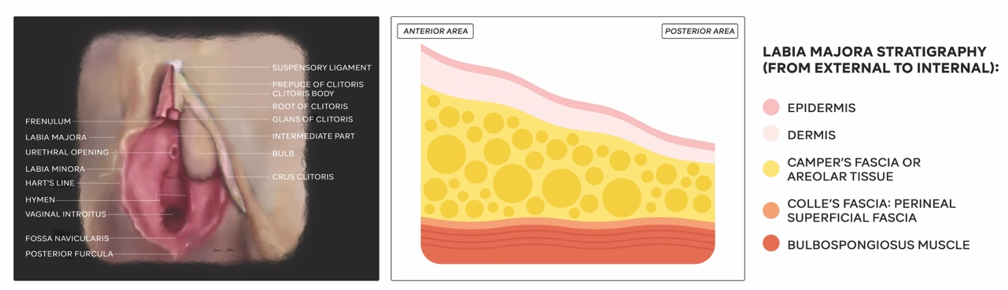
Figure 1 Anatomy of female genitalia and LM stratigraphy (supine position; image courtesy of Dr Haddad). Colle’s fascia represents the safety margin to avoid vascular injury, as most vascular structures lie below this layer.
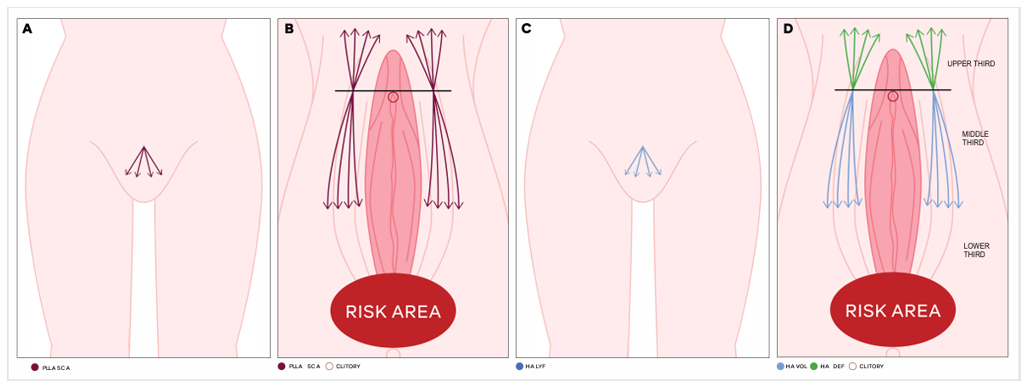
Figure 2 A and B: schematic illustration of PLLA-SCA single-entry point on the mid-line of mons pubis (red arrows); C: central entry point in mons pubis (HALYF); D: one entry point on each labia majora - HADEF in anterior commissure of labia majora and HAVOL in middle third. Risk area: the perineal artery (internal pudendal artery branch) is located more superficially in this region, increasing the risk of intravascular injection. (B,D). The lower third should be avoided as the perineal artery is more superficial in this area.
Innervation of the region of interest for female genital rejuvenation is primarily conducted by the pudendal nerve, which arises from the second, third, and fourth sacral spinal roots. Vascularization occurs mainly through the internal and external pudendal vessels, which originate from the internal iliac and femoral arteries respectively.15 Venous drainage is through the internal and external pudendal veins: the external pudendal vein drains into the great saphenous vein, while the internal pudendal vein drains into the internal iliac vein. The venous drainage of the external female genitalia is through the internal and external pudendal veins15.
A panel of Brazilian experts, consisting of six dermatologists, one gynecologist, and one plastic surgeon, all highly experienced in minimally invasive injectable procedures and recognized as opinion leaders in the field of aesthetic medicine, convened in December 2022 to develop recommendations regarding soft tissue augmentation and skin laxity treatment of the LM and MP regions.
Expert panel consensus was developed using a Nominal Group Technique–inspired methodology. Prior to the in-person session, all participating experts completed a structured pre-meeting presentation exploring key domains of LM and MP rejuvenation (indications, product selection, injection technique, safety considerations, and procedural sequencing). During the meeting, led by a neutral trained medical facilitator, presentation-based topics were discussed sequentially; points of agreement and divergence were captured verbally and documented in real-time. Open discussion and clarification rounds were used to achieve convergence on controversial items. Recommendations were then refined and consolidated, integrating clinical experience with available literature. This process resulted in the consensus statements reported in this manuscript.
Within this methodological context, recommendations were based on the experts’ clinical experience and supported by scientific evidence; however, they were not formally graded using an evidence-hierarchy system.
Patient profile
According to the experts’ clinical experience, the primary age group seeking female genital rejuvenation typically includes women in the perimenopausal period, generally over 40 years of age. However, the panel also identified additional indications in younger patients, particularly those between 30 and 40 years old who have experienced significant weight loss following bariatric surgery, as well as individuals who have recently changed sexual partners.
Based on the reasons reported by patients seeking female genital rejuvenation, the panel classified the indications into three categories:
Women presenting with body dysmorphic disorder3, a history of permanent filler use in the area to be treated, genital rejuvenation requests originating from the partner (not patient),16 or underlying autoimmune diseases should be carefully evaluated before any intervention.
Patient assessment
Symptoms should be evaluated through a comprehensive anamnesis. During visual inspection, clinicians should assess skin quality and pigmentation, hair distribution, the volume and shape of the MP, LM symmetry, proportionality relative to the labia minora, and overall functionality. Physical examination should include assessment of skin texture and laxity (draping, wrinkled appearance) through palpation and pinch test, respectively.
The panel agreed that classification of labia minora should consider its size, degree of exposure - either due to labia minora redundancy or LM hypotrophy - and functionality, specifically its ability to adequately protect the vaginal aperture and reduce infection risk. Physicians should also examine for the active lesions (e.g., genital herpes, local infections), scars or any cutaneous lesions that might require surgical management in the treatment area. A history of episiotomy may result in anatomical changes that increase the risk of complications and pain during injection.
Technique
Skin laxity
According to the expert consensus, PLLA-SCA can be reconstituted with sterile or bacteriostatic water before use, and the recommended final dilution volume is 16 mL, including an optional addition of 1 mL of 2% lidocaine immediately before injection. Once reconstituted, the product should be used immediately. For the treatment of skin laxity, the panel recommended PLLA-SCA injection in the MP and the upper two-thirds of the LM, to achieve a lifting effect of the MP while avoiding excessive weight or volume in the LM (Table 2) (Table 3) (Figure 2) (Figure 3).
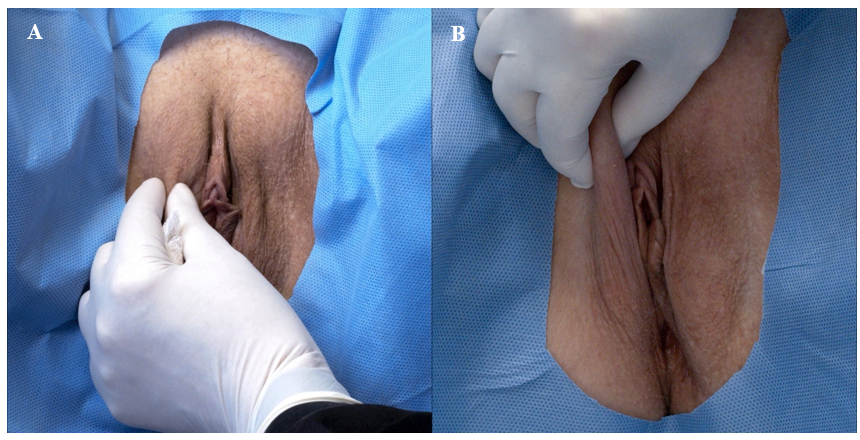
Figure 3 LM before (A) and 3 months after PLLA-SCA injection for the improvement of skin laxity. One vial/session was used, with half a vial/side, over 3 treatment sessions with PLLA-SCA. Courtesy of Dr. Doris Hexsel.
Soft tissue augmentation
The selection of the HA filler should be guided by its rheological properties considering the patient’s clinical indication. NASHA® technology employs a patented stabilization process that produces minimally modified HA, resulting in a firm gel with pronounced lifting capacity and targeted tissue integration.17 In contrast, OBT™ technology renders a more flexible gel, with tissue integration properties suitable for areas of subject to movement18 or trauma mechanical. An optimal balance between tissue integration and low hydrophilic properties is required to prevent excessive swelling after procedure.
For central MP, the expert panel recommended HALYF, due to its suitable lifting and projection capacity. The panel advised using HA fillers with more flexible gel properties for LM augmentation, particularly in cases of clitoral or labia minora exposure resulting from disproportion between the labia minora and majora and/or inadequate coaptation. These fillers were also indicated for the correction of LM asymmetries. For the anterior commissure, HADEF was suggested to provide subtle camouflage of the clitoris hood (Figure 2). The injection should be performed approximately 1.5 cm away from inguinal region, as the femoral artery is more superficially located in this area. HAVOL was characterized by its larger particle size and soft-tissue support, was identified as suitable for effective LM augmentation (Figure 2) (Figure 4) (Figure 5).
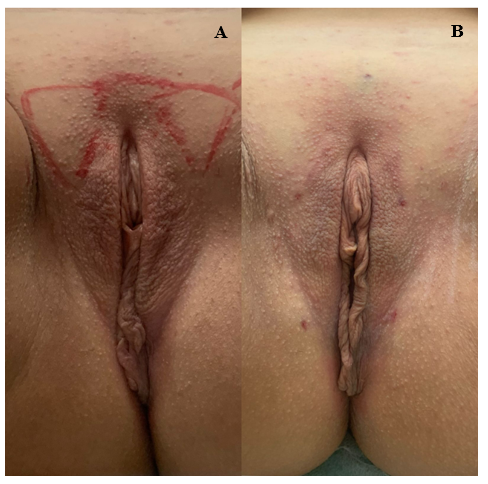
Figure 4 Before (A) and 2 months after (B) HA filler injection.
Courtesy of Dr. Maria Oneide Teixeira Alves.
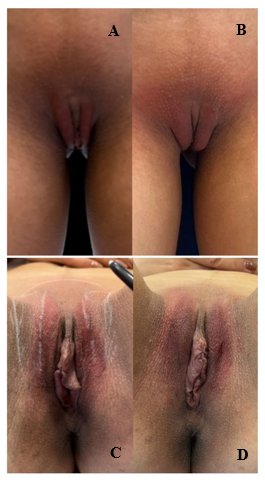
Figure 5 Before (A,C) and 2 months after (B,D) HA filler injection.
Courtesy of Maria Oneide Teixeira Alves.
Skin quality
When improvement in skin quality and/or symptom such as dryness and reduced hydration are desired, 1-2 syringes of HA-RSB (NASHA®, 0.01- 0.02ml/cm2) may be injected into the superficial subdermal plane of both LM and MP.
Injection technique and product administration
Pre-procedure imaging is essential and should be performed in both upright and gynecological positions, particularly when the main complaint involves clitoral hypertrophy secondary to anabolic steroid use or post-bariatric surgery.
Skin disinfection should be performed using aqueous chlorhexidine, provided no allergy has been reported. This formulation is preferred, as alcohol-based preparations may cause a burning sensation. The panel recommended the use of 2% lidocaine without epinephrine for local anesthesia at the entry points, or alternatively, a topical anesthetic.
A single entry point along the midline of the MP and one for each LM allows access to both superior and inferior regions. The LM entry point should be positioned at least 1 cm medial to the perineal fold, aligned with or slightly inferior to a horizontal line passing through the clitoris, at the junction between the upper and middle thirds of the LM. If necessary, an additional central entry point in the midline of MP may be added (Figures 2A-2D).
For both PLLA-SCA and HA injection, the panel recommended the use of 18-22G cannulas (50-70mm), oriented perpendicular to major vessels, employing a linear threading and retrograde fanning technique. Slow, incremental injection of small filler amounts into the marked areas is preferred, avoiding bolus injections. The target plane should be the superficial subcutaneous layer, just below the dermis, avoiding deeper planes to respect the safety boundary of Colles’ fascia. The lower third of the LM should be avoided, as the perineal artery lies more superficially in this region.
According to the indication, product selection is summarized in Table 1, while the volume per session and per side, number of sessions, and intervals between sessions are detailed in Table 2 and Table 3.
|
Product |
Indication |
Areas |
|
|
PLLA-SCA |
· Skin laxity only |
· MP and superior two thirds of LM* |
|
|
· Skin laxity with small volume loss |
|||
|
· Skin draping or wrinkling |
|||
|
HA |
NASHA® |
· Pronounced lifting capacity and targeted product integration in the tissue is needed |
· MP |
|
OBT™ |
· Area of movement and/or trauma |
· Superior two thirds of LM* |
|
|
SKB |
· Skin quality, symptoms improvement |
· Skin fold and wrinkled skin |
|
Table 1 General recommendations for use of injectable
*Avoid injecting the lower third on the labia majora.
|
|
Volume |
Number of treatment sessions |
Interval between sessions |
|
LM |
Total maximum volume (per side): 5-6mL |
1-3 |
30-60 days |
|
(0.1-0.2mL/cm2) |
|||
|
MP |
Total maximum volume: 4-6ml |
1-3 |
30-60 days |
|
(0.1-0.2mL/cm2) |
Table 2 PLLA-SCA volume, number of treatment sessions and interval per sessions for treatment of the labia majora and mons pubis
*LM, labia majora; MP, mons pubis
|
|
Indication |
HA |
Mean Volume per session |
Volume per side |
Number of treatment sessions |
Interval between sessions |
|
Anterior commissure of LM |
Hide clitoris hood |
HADEF |
1ml |
0.5ml |
||
|
LM |
Volumizing, soft tissue augmentation (for cases of exposure of clitoris or labia minora due to lack of proportion of labia minora and labia majora, labia majora coaptation issues), asymmetries correction |
HAVOL |
1ml |
0.5ml |
Usually, 1. If needed a second session may be indicated |
45-90 days |
|
MP |
Lifting, reshaping, tightening |
HALYF |
1ml |
0.5ml |
|
|
Table 3 HA filler: indication, volume, number of treatment sessions and interval per sessions for treatment of the labia majora and mons pubis
Pre, during and post procedure recommendations
As a best practice, a prior gynecological assessment should be performed before any aesthetic treatment. There was no consensus regarding hair removal before the procedure. While some experts do not recommend hair removal at all, others advise patients to undergo the procedure between two hours and one week before treatment. If performed on the same day, the panel recommended the use an electric shaver to avoid microtraumas and reduce the risk of infection. Expert recommendations also include avoiding, when possible, the use of anticoagulants, vitamin E, vaccines, NSAIDS, Gingko-biloba, and immunomodulatory drugs (i.e., anti-TNF) for at least 15 days before the procedure. It is advisable to avoid injecting during the menstrual period and to wear comfortably clothing on the day of the procedure.
For post-procedure measures, the panel recommended use of anti-viral prophylaxis when HA is injected, use of a neutral cleanser, cold compresses for symptom relief, and avoidance of tight clothing, physical and sexual activity for 24–48 hours, depending on the treatment extension. Use of anti-inflammatory drugs or steroids is not indicated to avoid compromising the response to injectable PLLA-SCA. If PLLA-SCA was injected, massage in the treated area should be performed 2x/day for 7 days with an antiseptic cleanser.
Safety assessment
The most frequently observed adverse events reported by the panel during clinical practice were edema (usually mild, duration 3-4 days) and erythema. In a systematic review concerning surgical and non-surgical LM augmentation procedures, the reported adverse events were minor and transient. Hyperemia, edema, and ecchymosis were common to all treatment modalities.10
Nevertheless, the panel raised theoretical concerns regarding potential infections in the treated area, systemic embolism, and other adverse events associated with injectable PLLA-SCA and HA filler. It is essential to respect the safety margin of Colles’ fascia to avoid vascular injury, as most vascular structures lie below this layer. In addition, injections should not be performed through entry points located in the lower third of the LM, since the perineal artery lies more superficially in this region.
A literature review using the keywords “genital aesthetic injection, vaginal injection, vaginoplasty, vaginal tightening, penile augmentation, penis injection, hyaluronic acid, fat grafting, pulmonary embolism, alveolar hemorrhage, hypoxemia, and dyspnea”, resulted 14 cases of pulmonary embolism following genital aesthetic injection. Amongst these, 11 cases involved treatment of vaginal wall, 2 of the penis/scrotum, and 1 case of G-spot. The injected substances include silicon (8 cases), autologous fat graft (1 case), polyacrylamide (1 case), HA (2 cases), and in 1 case combining HA and collagen. In the HA- related cases, 2 were associated with vaginal wall treatment and 1 with G-spot enhancement,9 all of with fall outside the scope of this article.
PLLA-SCA is a biocompatible, biodegradable implant that induces subclinical inflammation, followed by type 1 collagen deposition in the extracellular matrix leading to gradual neocollagenesis, structural support and improvement of skin laxity.19,20 PLLA-SCA has been approved for use in EU since 1999 and is currently approved for the treatment of wrinkles and facial lipoatrophy. In the US, it has been approved since 200921 for correction of facial wrinkles and facial lipoatrophy in individual with HIV. HA dermal fillers have been used for aesthetic purposes since the 1990s. The first crosslinked HA filler of non-animal origin was approved for use in the EU 1996 and in the US in 2003. Currently, HA fillers are used for different purposes of aesthetic indications and are available with varying gel characteristics such as their firmness, water retention, durability, and particle size. The indications discussed in this paper are not currently regulatory approved for the aesthetic injectable products - PLLA-SCA and NASHA®/OBT™ HA fillers - described along the text.
Following the loss of ovarian follicular activity, both size and volume of LM decrease, while labia minora may increase in size.22 Although these changes significantly affect quality of life, the true prevalence of these problems may be underestimated, since a large proportion of women do not seek medical assistance for their symptoms23 or discuss them with their physicians.24,25
In a multicenter retrospective study, female population seeking genital rejuvenation underwent surgery for functional (76%) or cosmetic (53%) reasons, 33% to improve self-esteem, and only 5% were encouraged to have surgery by a romantic partner.26 The most frequently reported reasons for undergoing genital procedures included vaginal hypotrophy labia minora redundancy, pain or discomfort during physical activity or sexual intercourse, or clothing use,27,28 as well as symptoms associated with vulvovaginal atrophy, such as dryness and recurrent urinary infections (reported in up to 43%23 and 15%29 postmenopausal women respectively). Embarrassment, dissatisfaction with vulvar appearance or a strong desire to improve strained relationships were also mentioned.26,30,31 Although vulvar dissatisfaction has been reported as early as adolescence32 most commonly this complaint is observed during perimenopause and considering the Brazilian population is aging, it is important for the clinician to be prepared to meet this demand.33
A MEDLINE search on non-surgical female genital rejuvenation by Vanaman et al.34 identified reports describing energy-based devices, HA fillers, and fat transfer—many of which are beyond the scope of the present paper. In a systematic review on labia majora augmentation, the most common technique was lipofilling. For HA fillers (19–20 mg/mL), the total injected volume ranged from 2 to 6 mL per session.10 Macrolane®, used by Hexsel et al.,12 is no longer commercially available. Fasola et al.8 treated patients with mild to moderate labia majora hypotrophy using a 19 mg/mL HA filler, and those with severe hypotrophy using a 21 mg/mL HA filler, with no reported complications. The authors injected one-third of the filler into the subcutaneous layer and two-thirds between the lip dartos and the fibrous tunic of the labia majora. Nevertheless, the panel agreed that injection into the subcutaneous layer alone is sufficient, requiring less product. Furthermore, since HA is hydrophilic, massage should be avoided to minimize the risk of edema.
Zerbinatti et al.13 reported significant clinical improvement in a visual analog scale (VAS), as assessed by both patient and investigator, after treatment of hypotrophy of the LM with a PEG-crosslinked HA. Although those authors proposed an entry point in lower third of the LM, this panel did not recommend this approach, especially for beginners, since the perineal artery (a branch of the internal pudendal artery) ties more superficially in this area, increasing the risk of intravascular injection. In addition, the panel suggested concentrating the injected volume in the superior and middle thirds of the labia majora to promote a lifting effect and to prevent excessive weight in the lower portion.
The panel discussed minimally invasive injectable procedures, which demonstrate a faster onset of results compared with surgical or ablative laser techniques. The experts included injectable HA for labia majora soft tissue augmentation and mons pubis contouring, and PLLA-SCA for skin laxity treatment, as both are non-permanent, provide immediate (HA) and gradual (PLLA-SCA) results, and have a well-established safety profile. These recommendations are based on expert opinion and therefore inherently carry limitations related to subjectivity and the absence of controlled comparative trials and robust sample population.
A systematic approach and injectable treatment strategy for the LM and MP regions were discussed by a multidisciplinary panel of eight physicians, and the resulting insights were consolidated into expert-based recommendations. These indications are preliminary, non-regulatory, and should be interpreted as expert-opinion guidance rather than formal clinical recommendations.
The authors thanks Danielle Shitara, Carolina Siega, Mauricio Dourado, and Ana Carolina for the editorial assistance. Galderma Brazil supported the board and manuscript writing assistance.
Statement of prior presentation
This is an original manuscript and was submitted as a poster at the International Master Courseon Aging Science (IMCAS) Americas, 20 July to 22 July 2023, Cartagena de Indias, Colombia.
None.
Drs Hexsel and Haddad are speakers, consultants, advisors and investigators for Galderma Brazil. Drs Alves, Del Nero, Parada, Guarnieri are speakers, consultants and advisors of Galderma Brazil. Dr Palermo is speaker and advisor of Galderma Brazil. Dr Manela-Azulay is advisor of Galderma Brazil. Drs. Nogueira, Tomaz and Kamamoto are employees of Galderma Brazil.

©2025 Hexsel, et al. This is an open access article distributed under the terms of the, which permits unrestricted use, distribution, and build upon your work non-commercially.