eISSN: 2377-4304


Research Article Volume 15 Issue 6
1Fellowship Gynecology Oncology in Hospital Aleman of Buenos Aires, Argentina
2Mastology Section Head, Hospital Aleman of Buenos Aires, Argentina
3Gynecologic Oncologist in Hospital Aleman of Buenos Aires, Argentina
4Head of Gynecology Service in Hospital Aleman of Buenos Aires, Argentina
5Head of Surgical Department, Hospital Aleman of Buenos Aires, Argentina
Correspondence: Camargo Alfredo, Gynecology Oncology/Mastology Service, Hospital Aleman of Buenos Aires, CABA, Argentina
Received: September 20, 2024 | Published: November 22, 2024
Citation: Boixart A, Camargo A, Dallochio MP. Differences in demographic and tumor characteristics of HER 2+ BC between patients <70 vs ≥70 years. ObstetGynecol Int J. 2024;15(6):266‒271. DOI: 10.15406/ogij.2024.15.00770 DOI: 10.15406/ogij.2024.15.00770
As life expectancy increases, an increasing number of breast cancers are being diagnosed in older women. In younger patients with HER2+ breast cancer, the demographic and tumor characteristics and their treatment have been widely elucidated, but this is not the case with regard to the correct management of BC in older women. The aim of this investigation was to compare demographic, tumor characteristics and respective treatments in patients with HER 2+ BC to evaluate their relevance in an aging population and whether there is undertreatment within our population ≥70 years. In our analysis, only 29 of 44 patients eligible for neoadjuvant chemotherapy underwent this procedure. This is mainly represented by the ≥70 years group, where 2 of 12 patients underwent neoadjuvant chemotherapy. HER 2+ breast cancer in older patients remains an aggressive cancer that requires as much attention as that occurring in younger patients, justifying the same degree of intervention.
Keywords: HER 2+ breast cancer, older adults, demographic and tumor characteristics, breast cancer undertreatment
Breast cancer (BC) is the most common carcinoma worldwide and is the leading cause of cancer death in women around the world. According to the 2020 report of the IARC (International Agency for Research on Cancer), there were 2,261,419 new cases/year, which resulted in 684,996 deaths.1 In Argentina, the numbers show the same trend, where 19,386 new cases are diagnosed and 5,645 women die per year.2,3
We see an increase in life expectancy worldwide, especially in developed countries and in the female population. Understanding that age is a strong risk factor for the development of breast cancer, today we find a worldwide incidence of breast cancer in women over 70 years of age of 506,710 women and 241,866 died in the same annual period.1,4,5
As technological developments focused on health care improve and evolve, this age group will continue to increase. In the US, it is expected that by 2030, women over 70 years of age with BC will increase from the current 22% to 35%.4,5,7 There is a higher mortality from cancer in this age group compared to young patients. This establishes a significant health disparity that could be explained by advanced presentation, delayed diagnosis, undertreatment, deterioration of organ function and the presence of multiple morbidities.6
In the majority of these studies, they are excluded. Only 3% of patients over 70 years of age are included in prospective studies where new therapies for breast cancer are analyzed.8–10
The percentage of elderly patients with aggressive subtypes, both triple negative and HER 2+, is very similar to that described in patients under 70 years of age.11,12
Older women with BC are often undertreated.13,14 It has been proposed that life expectancy and comorbidities should guide treatment decisions in each patient, because a 70-year-old patient without comorbidities has a life expectancy of approximately 15 years and, therefore, should receive cutting-edge treatment to this pathology.15,16
About 15-20% of all BC cases overexpress human epidermal growth factor receptor 2 (HER 2). Overexpression of HER 2 in BC is characterized by a more aggressive evolution and worse prognosis in the absence of treatment. Activation of HER 2 occurs through dimerization with other proteins of the family, triggering multiple subsequent pathways necessary for the abnormal proliferation of cancer cells.17–19
In this subtype, management based on both adjuvant and neoadjuvant chemotherapy and anti-HER2 agents has changed the evolution, improving disease-free survival, as well as overall survival.20
The available knowledge of clinicopathological parameters in patients < 70 years of age provides a solid basis for estimating risk and making treatment proposals. In order to be able to transpolate these data to patients ≥70 years old, we are missing some key and often individual parameters, such as functional status, life expectancy, risks and benefits of the applied therapy, possible treatment barriers and patient preferences.
The aim of this research is to compare the clinicopathological characteristics of patients < 70 years old vs. ≥ 70 years with HER2+ BC to evaluate its relevance and thus better management in an aging population. As a secondary objective, we intend to determine if undertreatment exists within our population ≥ 70 years of age.
This is a retrospective, descriptive study, which was carried out at the Hospital Alemán, Buenos Aires, Argentina. From a total of 1.391 patients with breast cancer, the population belonging only to HER 2+ was selected, during the period from January 2010 to December 2020.
The data were obtained from the digitized medical history file of patients treated in the Mastology Service of the Hospital Alemán. They were organized in an Excel table with multiple entries.
The total number of HER 2+ patients were divided into two groups according to their age, on the one hand, patients under 70 years of age and in the other group, patients 70 years of age or older. Age at diagnosis was considered.
Patients were considered HER 2+ according to the ASCO/CAP 2013 guideline determination (Chart 1).21
|
Intensity |
Membrane |
% Cells |
Result |
|
+++ |
Complete |
>10% |
Positive (3+) |
|
-/+ |
Incomplete |
≤10% |
Negative (0-1+) |
|
+/++ |
Complete/Incomplete |
>10% |
Borderline (2+) |
|
+++ |
Complete |
≤10% |
Borderline (2+) |
|
+++ |
Basolateral |
>10% |
Borderline (2+) |
Chart 1 Operational manual of pathological anatomy of breast cancer/María Viniegra; et.al. - 3rd ed. - Autonomous City of Buenos Aires: National Cancer Institute, 2014
In case of an equivocal result (2+), in situ hybridization techniques were performed, in our cases FISH (immunofluorescence in situ hybridization), considering FISH to have >2.2 copies positive.22
Their median age, menopausal status, current pregnancy and subpopulation under 40 years of age were analyzed as shown in Table 1 in the results section.
|
Characteristics |
<70 years |
≥ 70 years |
n=111 |
|
Patients |
89 (80,18%) |
22 (19,82%) |
|
|
Median age |
50 years |
72 years |
|
|
Average age |
49,45 |
73,27 |
|
|
<40 years |
15 (13,51%) |
- |
|
|
Menopause |
36 |
22 |
|
|
Pregnant |
1 |
- |
|
Table 1 Demographic characteristics of patients with Her2+ BC <70 and ≥70 years
The variables considered were the following:
In the period 2010-2020, in our institution, a total of 1391 patients were diagnosed with BC. The subpopulation with HER 2+ BC obtained was (n= 111) (7.98%), with patients under 70 years of age (n= 89), and patients 70 years or older (n= 22) (Table 1).
As shown in Table 2, there are no statistically significant differences in terms of the main tumor characteristics.
|
Características |
<70 años |
≥ 70 años |
p = |
|
Histological type |
|||
|
Ductal |
81 (91,01%) |
20 (90,91%) |
0.997 |
|
Lobular |
2 (2,25%) |
- |
0.482 |
|
Ductolobular |
3 (3,37%) |
2 (9,09%) |
0.275 |
|
Other |
3 (3,37%) |
- |
0.39 |
|
Histological grade |
|||
|
GH 1 |
- |
- |
- |
|
GH 2 |
40 (44,94%) |
8 (36,40%) |
0.64 |
|
GH 3 |
49 (55,06%) |
14 (63,60%) |
0.706 |
|
ILV |
17 (19,10%) |
1 (4,50%) |
0.142 |
|
Ki67 % |
|||
|
Ki 67 >20% |
73 (70,78%) |
17 (77,27%) |
0.808 |
|
Ki67 >30% |
42 (47,19%) |
13 (59,09%) |
0.57 |
|
Hormonal receptors |
|||
|
RE-/RP- |
43 (48,31%) |
9 (40,91%) |
0.703 |
|
RE-/RP+ |
4 (4,49%) |
1 (5,88%) |
0.992 |
|
RE+/RP- |
8 (8,99%) |
2 (9,09%) |
0.989 |
|
RE+/RP+ |
34 (38,20%) |
10 (45,45%) |
0.686 |
|
Lymph node involvement |
|||
|
0 |
62 (69,66%) |
20 (90,91%) |
0.446 |
|
3-Jan |
19 (21,35%) |
2 (9,09 %) |
0.262 |
|
>3 |
8 (8,99%) |
0 |
0.163 |
|
Metastatic debut |
|||
|
Bone |
3 |
- |
- |
|
Hepatic |
1 |
- |
- |
Table 2 Tumor characteristics of patients with Her2+ BC <70 and ≥70 years
Regarding the form of presentation through imaging studies, we found a nodular image in 61/89 (68.50%) of patients < 70 years of age and 16/22 (72.73%) in those > 70 years of age. The remaining form of presentation was microcalcifications, found in 28/89 (31.50%) and 6/22 (27.27%) respectively, both findings without statistical significance, (p = 0.872) and (p = 0.778) respectively.
Regarding the nodular images, their size was taken into account, as summarized in Table 3.
|
Size |
<70 years |
≥ 70 years |
p= |
|
Average size of tumor lesions |
29,28mm |
21,75mm |
- |
|
<2 cm |
31 (50,80%) |
8 (50,0%) |
0.973 |
|
2 a 5 cm |
23 (37,70%) |
7 (43,75%) |
0.772 |
|
>5 cm |
7 (11,50%) |
1 (6,25%) |
0.577 |
|
Total |
61 |
16 |
0.872 |
Table 3 Comparative table of sizes of nodular lesions by imaging between both groups
Tumor size was also evaluated in all surgical specimens, of which patients who underwent neoadjuvant surgery and had pCR were excluded (Table 4).
|
Size |
<70 years |
≥ 70 years |
p= |
|
|
n=73 |
n=19 |
|
|
Average tumor size |
17,99mm |
20,30mm |
|
|
<2 cm |
57 (78,08%) |
10 (50,0%) |
0.292 |
|
2 a 5 cm |
13 (17,81%) |
10 (50,0%) |
0.031 |
|
>5 cm |
3 (4.11%) |
- |
0.366 |
|
Total |
73 |
20 |
- |
Table 4 Tumor size in surgical specimen, patients who performed neoadjuvant surgery and had pCR were excluded
In the group of patients ≥ 70 years old there were no cases with tumor size > 5 cm, but within the tumor size range between 2 to 5 cm there were 10 patients of whom none received neoadjuvant treatment; Only one of them was offered it, and the patient did not agree.
In those under 70 years old with tumor size > 5 cm, we identified 3 patients, who underwent neoadjuvant therapy and had a partial response. With tumor size between 2 to 5 cm, 13 patients, of which 8 performed neoadjuvant therapy without pCR.
We can see in Table 5 the information obtained from the surgical specimen regarding the presence of associated ductal carcinoma in situ (DCIS) and its respective grade.
|
DCIS |
<70 years |
≥ 70 years |
p= |
|
High grade |
50 (86,20%) |
16 (94,12%) |
0.825 |
|
Intermediate |
8 (13,80%) |
1 (5,88%) |
0.424 |
|
Low |
- |
- |
|
|
TOTAL |
58 (65,17%) |
17 (77,27%) |
0.639 |
Table 5 DCIS, ductal carcinoma in situ. Presence of associated DCIS and its respective degree
Regarding the surgical treatment performed in each patient, the management of the axilla and how many patients underwent immediate breast reconstruction (IBR) after mastectomy can be seen in Table 6.
|
Surgery |
<70 years |
≥ 70 years |
p= |
|
BCS |
50 (56,18%) |
15 (68,18%) |
0.608 |
|
Mastectomy |
39 (43,82%) |
7 (31,82%) |
0.498 |
|
IBR |
15 (33,46%) |
2 (28.57%) |
0.728 |
|
Sentinel Node |
45 (50,56%) |
18 (86,36%) |
0.187 |
|
Lymphadenectomy |
44 (49,44%) |
3 (13,64%) |
0.034 |
Table 6 Surgical treatment received, number of patients with immediate post-mastectomy breast reconstruction, and axillary management
BCS, breast-conserving surgery; IBR, immediate breast reconstruction
Another important factor to analyze in both groups of patients is the indication for neoadjuvant therapy and the response to it. According to the data from the digitized file of clinical records, we found that it was indicated for 32 patients, 29 < 70 years (32.58%) and 3 ≥ 70 years (13.64%) of these, 2 from the youngest population and 1 of the older adults did not accept said treatment.
Patients who met the criteria for neoadjuvant therapy:
Neoadjuvant chemotherapy was performed by 84.37% (27/32) and 16.67% (2/12) (p= 0.030). pCR was obtained in 59.26% (16) and 100% (2) respectively, (p= 0.614). The most frequently used treatments were Doxorubicin + Cyclophosphamide + Paclitaxel + Trastuzumab and Docetaxel + Carboplatin + Trastuzumab + Pertuzumab.
Patients with neoadjuvant criteria who did not undergo treatment:
Patients who had grade 3 adverse effects (hematological toxicity, arterial hypertension, allergic reactions, cardiotoxicity and peripheral neuropathy) and who had to suspend Trastuzumab due to severe cardiotoxicity were also discriminated between both groups.24,25 As shown in Graph 1, the two patients < 70 years of age in whom Trastuzumab was suspended were 59 and 62 years old, had not undergone neoadjuvant therapy, and had no previous heart disease. In the group ≥ 70 years old, the two patients who discontinued were 72 and 73 years old, had not undergone neoadjuvant therapy, and both had been diagnosed and treated for arterial hypertension during the last 4 years.
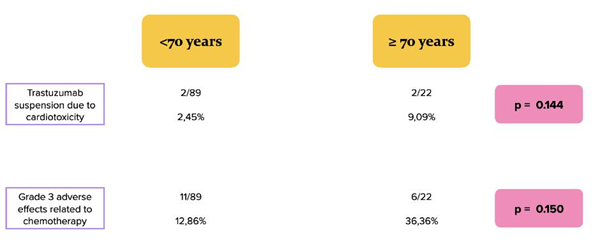
Figure 1 Shows how many patients Trastuzumab was suspended as adjuvant due to causing severe cardiotoxicity and how many patients had grade 3 adverse effects caused by adjuvant chemotherapy.
Regarding grade 3 adverse effects, none of the patients required definitive suspension of adjuvant treatment; in most cases it led to dose reduction or partial suspension of treatment. Most frequently used adjuvant chemotherapy Doxorubicin + Cyclophosphamide + Paclitaxel + Trastuzumab.
Of the 11 patients < 70 years: two allergic reaction, six hematological toxicity, two arterial hypertension and one cardiotoxicity. In the group ≥ 70 years: one peripheral neuropathy, two cardiotoxicity, three hematological toxicity.
We analyzed how many patients met the criteria for oncological genetic counseling according to NCCN (National Comprehensive Cancer Network)26:
All patients who had an indication for oncological genetic counseling performed it. Of the patients < 70 years of age, 15 of them underwent it because they were under 40 years of age and the remaining two because they had a family history of 1st degree oncology. As for those ≥ 70, one had a family history and another belonged to the Ashkenazi ethnicity. In all patients, a test was performed to search for mutations in the BRCA1-2 genes. No genetic mutation was found in either group.
According to the latest update from the American College of Radiology (ACR),27 some of the criteria for requesting breast MRI are: for screening in high-risk patients, staging, evaluation of axillary status, patients undergoing neoadjuvant therapy, and evaluation of breast prostheses. In our study, this imaging method was used in 18 women < 70 years of age (20.22%) and in 1 (4.54%) ≥ 70 years of age, (p=0.124).
The demographic and tumor characteristics of our cohort are similar to those published worldwide. In our study we obtained a lower proportion of patients with HER 2+ BC, 7.98% versus 15-20% which is published worldwide.17
We found a statistically significant difference in the rate of lymphadenectomies performed between both groups of patients. This difference is explained by several reasons.
Firstly, we have the patients with positive lymph nodes who received neoadjuvant therapy, most of whom underwent axillary lymphadenectomy. Beyond works such as ACOSOG Z1071, SENTINA and SN FNAC published between 2013-2015, the post-neoadjuvant sentinel lymph node technique began to be standardized in our institution from 2018, undergoing modifications to the present. In the rest of the patients, lymphadenectomy was performed because a pCR was not achieved.28–30 Secondly, in the case of patients who did not undergo neoadjuvant treatment, lymphadenectomy was indicated because they did not meet the criteria of the ACOSOG Z001131 study.
Axillary involvement was not statistically significant (p=0.100), <70 years (n=27) vs. ≥ 70 years (n=2).
An aspect worth highlighting in our work is the number of patients ≥ 70 years old with a tumor size between 2 and 5 cm who did not undergo neoadjuvant treatment (n=10) (Table 4). Within our institution, neoadjuvant treatment with chemotherapy + trastuzumab began to be used at the beginning. 2012. The use of double blockade (Trastuzumab + Pertuzumab) + neoadjuvant chemotherapy began in 2015.
According to current evidence, we know that neoadjuvant therapy should be considered in tumors larger than 2 cm or positive lymph node or inflammatory carcinoma, all with overexpression or amplification of HER 2.32 The objectives of treatment are: achieving pCR as a predictor of better disease-free survival (DFS) and overall survival (OS), increase the likelihood of breast-conserving surgery instead of mastectomy, and evaluate tumor sensitivity to chemotherapy.
In our analysis we obtained statistical significance when compared with the population < 70 years of age (p= 0.031). In these 10 cases that did not perform neoadjuvant treatment, one of them was offered and did not agree. All received adjuvant chemotherapy. Four of these patients underwent mastectomy and in two cases lymphadenectomy.
It is this group of eight patients ≥ 70 years of age who we consider would have benefited from neoadjuvant chemotherapy. After comprehensive geriatric assessment carried out by specialized gerontologists.
In 2010, the NOAH trial was published in which neoadjuvant chemotherapy with trastuzumab followed by adjuvant trastuzumab versus neoadjuvant chemotherapy alone was performed in patients with locally advanced HER 2+ BC. In which it was found that the addition of trastuzumab increased the proportion of women who achieved a pCR from 19 to 38%.33
Among the works that support the use of neodjuvant in HER 2+ BC we have the phase II NEOSPHERE study, in which women who received the combination Pertuzumab + Trastuzumab prior to surgery had a pCR rate of 17.8% higher than those who received therapy based only on Trastuzumab.34
At the end of 2013, the TRYPHAENA study was published, which was carried out to evaluate the cardiac tolerability of neoadjuvant pertuzumab and trastuzumab administered with standard anthracycline-containing or non-anthracycline chemotherapy regimens in HER 2+ BC.35
This led to the approval of Pertuzumab in October 2013 by the FDA (U.S. Food and Drug Administration). In Argentina, the ANMAT (National Administration of Medicines, Food and Technology) approved it for this use at the beginning of 2015. Therefore, the patients who benefited from this therapy were those diagnosed as of 2015.
Regarding the adjuvant treatment received, 100% of the patients were prescribed Trastuzumab as part of the therapy. Today, and with new studies published, we are authorized to indicate Pertuzumab + Trastuzumab as adjuvant therapy in selected patients.
The recent study that established new guidelines for these patients was APHINITY, which investigated whether Pertuzumab, when added to adjuvant Trastuzumab and chemotherapy, improves outcomes among patients with early HER 2+ BC. It was evident that Pertuzumab significantly improved DFS rates in patients with positive axilla.36
The controversy over breast screening in the elderly implies a greater probability of diagnosis in advanced stages3. Within our population, this is not a significant fact, since this group of patients continues their annual check-ups on a regular basis.
Although older adults represent a significant portion of BC patients, there are still few standardized guidelines on how best to treat and evaluate this population. This is why the Institute of Medicine, the American Society of Clinical Oncology (ASCO) and the Cancer and Aging Research Group have well defined the knowledge gap in the care of these older patients and emphasize the need for greater research efforts.8,37,38
Although older people with BC have a higher risk of side effects and treatment-related mortality, undertreatment at any age is linked to poor outcomes.
Regardless of the subtype of BC and the prognosis, patients over 70 years of age do not always receive adequate treatment.39,40 Inadequate assessment of functional age as well as the lack of available data in older adults with cancer contribute to this disparity. It is important that patients and their caregivers clearly define the goals of treatment with their mastologist and oncologist, along with the possible side effects caused.
Hence the concept of functional age mentioned above, this is different for each patient. For example, a 75-year-old person may be very independent and active, while another person of the same chronological age may be confined to their home and need daily assistance. How BC treatment affects the individual patient will largely depend on functional status.
Incorporating some basic concepts of geriatric assessment into practice could better evaluate older patients and guide both treatment and care.
Nowadays there is a strong movement toward geriatric evaluation for almost all older patients with BC and it is especially important for those women in whom chemotherapy is being considered. To be able to carry it out, more professionals specialized in both geriatrics and oncology of older adults are needed.41–43
It is for these points reviewed that appropriate treatment guidelines for older adults with BC and more studies on how standards of care affect this population are needed.
Recently, the European Society of Breast Cancer Specialist (EUSOMA) in conjunction with the International Society of Geriatric Oncology (SIOG) published an update on the management of older patients with BC, the previous one being from 2012.
In this new update they emphasize that the treatment of BC in this population is a challenge because the disease is very heterogeneous and there is not enough evidence specific for older adults. Also that decision making should not be based solely on age, but should include geriatric evaluations in addition to careful consideration of life expectancy, competing risks of mortality and patient preferences.
These guidelines were expanded to include chemotherapy toxicity prediction calculators, cultural and social considerations, surveillance imaging, genetic screening, gene expression profiling, neoadjuvant systemic treatment options, bone-modifying medications, targeted therapies, and supportive care. Recommendations were updated on geriatric evaluation, ductal carcinoma in situ, screening, primary endocrine therapy, surgery, radiotherapy, adjuvant systemic therapy, and secondary breast cancer.44
In our analysis, the different behavioral approaches according to the age of the patients were revealed, where we obtained as a result that only 29 of 44 patients with criteria for undergoing neoadjuvant chemotherapy underwent neoadjuvant chemotherapy. This is mainly represented by the ≥70-year-old group, where 2 of 12 patients underwent neoadjuvant chemotherapy. HER 2+ breast cancer in elderly patients continues to be an aggressive cancer, which demands as much attention as that which occurs in younger patients, which justifies the same level of intervention at the time of diagnosis, surgical treatment, adjuvant chemotherapy and neoadjuvant. Age should not be the only factor to take into account when making a decision. We should perform a comprehensive geriatric assessment to decide and continue with the most appropriate treatment with the greatest benefit for our patients.
None.
None.
The authors declare no conflicts of interest.

©2024 Boixart, et al. This is an open access article distributed under the terms of the, which permits unrestricted use, distribution, and build upon your work non-commercially.