eISSN: 2377-4304


Review Article Volume 11 Issue 1
1Pan African University of Life and Earth Sciences (Including Health and Agriculture) institute, University of Ibadan, Nigeria
2Cavendish University, Uganda
Correspondence: Atuhaire S, Pan African University of Life and Earth Sciences (Including Health and Agriculture) institute, University of Ibadan, Ibadan, Nigeria
Received: February 14, 2020 | Published: February 25, 2020
Citation: Atuhaire S, Mugisha JF. Determinants of antenatal care visits and their impact on the choice of birthplace among mothers in Uganda: a systematic review. Obstet Gynecol Int J. 2020;11(1):77-81. DOI: 10.15406/ogij.2020.11.00492
Objective: The utilization of Antenatal Care (ANC) services to the recommended time by WHO is still low in developing countries. In Uganda, about 990,000 women become pregnant annually, 90 to 94% of whom attend at least the first ANC visit while 65% and 58% of them attend four or more times in urban and rural areas respectively with eventual health facility birth at about 62%, homebirth and TBA together at about 38%. The study determined antenatal care attendance and the mother’s choice of birthplace in Uganda.
Materials and methods: Using electronic databases mainly Google Scholar, Science Direct, PubMed and African Journals Online, and journal articles of international Website, 70,195 articles were identified but only 19 met the Cochrane review inclusion criteria hence were reviewed.
Results: Reviewed studies attribute a decline in antenatal care visits and subsequent choice of birthplace to institutional, demographic and socio-economic factors. The demographic factors are maternal age (mothers less than eighteen years are less likely to utilize maternal health services than those above), marital status, occupation, residency, distance from home to the health facility, and parity. The socio-economic factors are mothers’ and partners’ levels of education (less educated women and their partners are less likely to utilize ANC), household income which affects transportation and medical bills, cultural norms and taboos, patriarchy society, enrollment on ANC in the third trimester, and intrinsic factors of attending ANC such as obtaining ANC card to present in case of emergency. Institutional factors include quality of medical care, availability of logistics and supplies, and health workers’ influence in terms of attitude, referral, competences, and staffing.
Conclusion: Pregnant women who attend ANC are more likely to deliver in the health facility than those who do not at all. To enable them to attend ANC to full term and have a health facility delivery, their empowerment for increased self-efficacy through education, sustainable livelihood training and provision of subsidized capital alongside partner involvement. The facilitation of health facilities would also attract them.
Keywords: antenatal care, childbirth, child health, choice of the birthplace, maternal health, women’s health
ANC, antenatal care; FANC, focused antenatal care; HIV, human immunodeficiency virus; MDGs, millennium development goals; PMTCT, prevention of mother to child transmission; SDGs, sustainable development goals; SMI, safe motherhood initiative; UBOS, Uganda bureau of statistics; UDHS, Uganda Demographic and health survey; UNDP, United Nations development programme; UNFPA, United Nations population fund; WHO, World health organisation
Antenatal Care (ANC) is a point of contact between health care service providers and pregnant women during which, interventions are offered to ensure the safety of both the mother and the fetus.1–4 Averagely, 69% of the mothers in Africa attend antenatal care at least four times.1,5 A minimum of four visits is essential for life-saving. It actually has the potential to reduce the congenital abnormalities that develop during pregnancy.6–9 The current global maternal mortality rate is 529,000 per annum, 95 to 99% of which occur in developing countries.6,9–11 Uganda is among the Sub-Saharan countries still having high maternal mortality ratio2,12 which by 2017 was 336 per 100,000 live birth.13
World Health Organization (WHO) recommends Focused Antenatal Care (FANC) requiring all stakeholders to be more goal-oriented, specific and targeting each mother’s needs.10 About 990,000 women in Uganda become pregnant annually.7 Of these, about 90 to 94% attend at least the first ANC visit, with only 65% to 58% attending four or more times of ANC in urban and rural areas respectively.13 The trend is similar to other countries in Sub-Saharan Africa. In Tanzania, 99.8% of the mothers have at least one ANC visit, 46.7% of them deliver at a health facility.14 In Ethiopia, 76% of mothers have at least one ANC visit, 27% of them deliver at a health facility.15 In South Africa, about 55.9% of the mothers deliver at a health facility birth.16
The choice of birthplace could be attributed to both sociodemographic and institutional factors. proximity to health facilities, transportation costs, socio-cultural beliefs, low utilization of maternal health package and less ANC visits.17–19 Childbirth that is not attended by a skilled health worker contribute to maternal mortality, and morbidities such as post-partum hemorrhage, post-partum eclampsia, and obstetric fistula19,20 as well as mother to child transmission of HIV.16,21
Governments including the Republic of Uganda have health policies aimed to provide high quality and affordable health services for social and economic enhancement. The Ministry of Health (MOH) Uganda has also done well in assuring health and productive lives through disease prevention, health promotion, and increasing access to care. In 2017, the MOH ensured that 75% of facilities had essential drugs at all times and also 71% of health facilities were staffed but still, 35 to 42 mothers do not have the minimum number of antenatal care visits recommended by WHO. Health facility delivery also remains low more especially in rural areas,7,9, 22,23 a gap this study addressed. This study contributes to the long-standing issue of safe motherhood.24,25 It also informs policy and provides information necessary for the maintenance of the women’s health during pregnancy, childbirth and postpartum period.
A search for electronic copies of relevant articles was done in two steps: first, the author searched for articles from various online databases including, Science Direct, PubMed, Google Scholar, African Journals Online and several other open access individual journals and websites published starting from 1970 to date. Also, since then to date several studies have been conducted in the area of maternal and newborn health, besides the theme has been part of the global agenda all this time. The period between 1970 was considered to include studies that could have possibly attracted the Alma-Ata declaration on primary health care of which maternal and child health is critical components. Science direct provided 788 on ANC attendance and1356 on factors influencing the choice of birthplace in Uganda. PubMed generated 51 articles on ANC attendance and 2 on factors influencing the choice of birthplace. Google Scholar hit 68000 articles on the topic generally.
Secondly, from a pool of 70195 articles identified, 1018 were duplicates leaving behind 69177 articles whose titles and abstracts were read to enable selection and inclusion of 32 full texts for analysis. Following the Cochran review procedure,26 only 19 relevant and quality papers were included. The Preferred Review Items for Systematic and Meta-Analysis (PRISMA) flowchart27 2 indicates how inclusion and exclusion were done as in Figure 1.
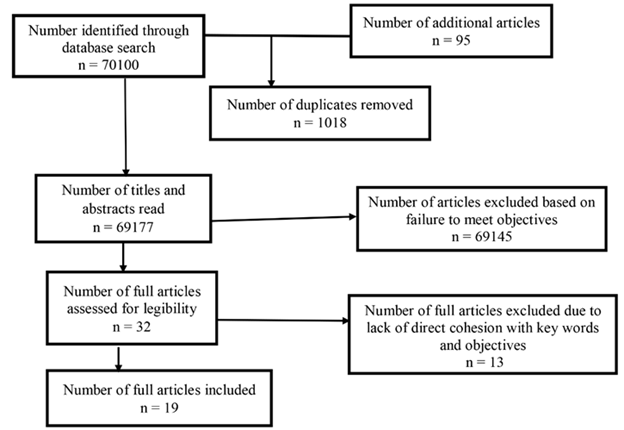
Figure 1 PRISMA flowchart of literature selection and inclusion criteria.27
Antenatal care visits
ANC is necessary for assessment and identification of probable risks of pregnancy and associated risk factors to both the mother and the fetus during the gestation period, child labor and the puerperal period. This enables appropriate referrals in case of complications. Mothers are educated on probable danger signs and their prevention, suitable nutrition including breastfeeding, and contraception.3,9
In most developing countries, ANC does not assure quality prenatal diagnosis9 and ANC services are inconsistent, inadequate and differ by type, and quality across geographical regions.7,28 According to Ainomugisha PP,7 less than 50% of pregnant women receive counseling on dangerous signs of complications and undergo Prevention of Mother to Child Transmission (PMTCT) of Human Immunodeficiency Virus (HIV). Only 16% of the mothers utilize the full package of ANC. This is dependents so much on mother's and partner's levels of education, her economic status, geographical disparities, the physical condition of the health facility, and access to media.3,23
Geographically, women residing outside Kampala city and those in rural areas were less likely to have a complete recommended ANC package.29–32 According to Rutaremwa G, et al.,29 the Eastern region had a relative risk ratio of 0.2 (CI=0.1-0.5); Western and Central regions; 0.3 (CI=0.1-0.8) and Northern; 0.4 (CI=0.2-1.0). In Entebbe Municipality Uganda, a significant improvement with a P-value of 0.001 was observed in ANC utilization.5 Among the Sabiny, only 25% of the pregnant women delivered in the health facility as of 2013.33
In Bunyoro and Bugisu sub-regions, the uptake and utilization of ANC to at least four times is still low compared to other regions in the country with 45% and 47% respectively despite government’s effort to avert the situation. Health facility birth in Bunyoro and Bugisu is equally low with 57% and 56% respectively.13 According to Kawungezi et al.,9 8% of women in rural areas received ANC from specialists of whom 20% were from Southwestern, 3% from Eastern and 2% from Karamoja regions of Uganda. Generally, women from the Western region are more likely to attend ANC at least three times and have skilled birth attendance than women from the Northern, followed by those from the Eastern and the Central regions respectively.7
About 90% of women in Uganda are aware of the health facilities that offer ANC and safe delivery. They may not able to utilize them due socio-economic and institutional factors.28,34 According to Anyait A et al.,31 mothers with high socioeconomic status are three times more likely to deliver in a health facility at [95% CI:1.2–6.3] than those with lower socioeconomic status. Regarding religion, Muslim women who are married have reduced chances of utilizing maternal health services than Christian women in the same category.29
The level of education also influences ANC visits a great deal. Less educated are less likely to utilize ANC than those with secondary education or above.35 The other factors are marital status, mother’s employment status, family size, late ANC attendance, and intrinsic reasons for ANC attendance such as getting a card. Besides, decision making by husband only, distance, and media exposure, history of obstetric care, parity, perceived costs and quality of care, culture, and maternal age equally affect ANC utilization and choice of birth place.
Regarding maternal age, a study done in the Wakiso district in Uganda indicated that adolescent mothers were less likely to utilize ANC at least four times compared to adult mothers.35 This is associated with the fact that pregnant unmarried adolescents do not earn a salary to facilitate ANC visits and they are highly stigmatized. The institutional factors include health workers’ influence and attitude account for 72.04% of ANC attendance.9 Other institutional factors ranking highly as far as utilization of health facility delivery is concerned are physical access, adequacy of infrastructure, and availability of drugs and suppliers.23 These discourage mothers to attend ANC.36
Choice of birthplace among mothers in Uganda
Although the maternal mortality rate has reduced globally by 43% and the utilization of ANC and health facility delivery increased, homebirths and births under traditional birth attendants still prevail mostly in the developing countries. The situation in Sub-Saharan Africa is appalling and more so in rural areas.31 The choice of birthplace is not only affected by the social demographic factors of a mother and her family, but also the health providers’ attitudes. In addition, are the distance of the health facility from the mother’s residence, site of antenatal clinic, availability of supplies such as drugs, gloves, and cannula and general perception of the emergency obstetric care offered.34
Whereas about 36% of the mothers may decide birthplace on their own, 56% of them decide together with their partners and 8% with a friend or immediate relatives. Those residing in urban centers are 2.6 times more likely to deliver under skilled birth attendance than those in remote areas.37 Previous childbirth experience, and parity are also determinants.31 Women with one or two children were 2.2 times more likely to deliver under skilled attendance than multipara mothers.37
In some areas of Uganda such as Moroto and Napak districts, the hindrances to health care are mainly insecurity, socio-cultural factors, proximity with health facilities.23Also, the health workers' attitudes.7 Perceptions of pregnancy and its definition by pregnant women determine their decision to attend ANC. Women who perceive pregnancy as rewarding embrace ANC while those who perceive pregnancy as a source of misery, and pain shun ANC.38
About 90% of Uganda’s population in rural areas depends on traditional medicine to meet health needs. Traditional birthing methods are a norm and women in Uganda consider pregnancy as a test of endurance.29 Pregnancy and childbirth are considered a battle that women should confront.12 Communities in most African settings consider pregnancy as a natural and normal situation that does not need medical attendance but rather faith in God.32 Besides, mothers may also alter their mind regarding health facility birth in case they are told during ANC attendance that pregnancy is normal. Therefore, ANC attendance is considered a determinant of the choice of birthplace.32 The determinants of ANC and the choice of place of birth are represented in Table 1.
Antenatal care
Antenatal care attendance is generally low in Sub-Saharan Africa. Most mothers from this region have less number of ANC visits compared to the recommended episodes by WHO.16 According to Ainomugisha,7 ANC attendance generally depends on the availability and accessibility of the service in health care units. Parity and distance between home and health facility, perceptions on the need for care, a culture that may impose social restrictions, level of education for both the mother and her partner are equally important.3,9,38 But also, opportunity cost and interaction between the health service provider and the client. Concerning parity, primigravida and primipara mothers are more likely to attend antenatal care than mothers with two or more children.9
In rural Haiti, India, Myanmar, Timor-Leste, and Nepal, pregnant mothers may not have at least four times of ANC visits due to personal level factors, natural terrain, poor infrastructure and distance between homes and health facilities whereby mothers who reside beyond 5 kilometers are less likely to utilize maternal health services. Other factors in those regions are institutional factors.39–42 The institutional factors noted are the health workers’ attitude, inadequate implementation of the FANC, absenteeism, and inadequate supplies.43–45
The decline in ANC visits by the third and fourth visits is also attributed too late enrollment mothers who enroll late give birth soon after without attending the third or fourth visits.46 some mothers do it intentionally to avoid several visits.47 Again, lack of a companion to the facility when in labor and lack of autonomy also contribute.48
Choice of place of birth
The mother and her spouse in most communities in Africa determine the choice of birthplace. Cultural norms, mothers’ efficacy, experiences, autonomy, fertility preferences and condition of the pregnancy are paramount in making the decision.48 According to Stephenson R (2006), socioeconomic factors have a greater influence on the choice of birthplace than demographic factors.48 In addition are institutional factors especially the attitude of health workers and the quality of health services provided.32
A study done in Tanzania by Chorongo et al.6 noted that “a real woman” does not seek medical care during pregnancy because it is not a disease. A woman who seeks medical care is considered a coward. Thus, the majority attend ANC at least once to have the card to present to clinic in case of an emergency.6 These findings are consistent with those of a study carried out in Uganda.32 The study also notes that religion is one of the factors affecting ANC attendance and choice of birthplace because faith emphasizes reliance on God. Community perceptions and expectations also influence ANC attendance and choice of birthplace.12
Therefore, to curb down homebirths and or non-professional deliveries, women's emancipation and education are very significant mostly in rural areas. Improving the quality of care, facilitation of health units with logistics and supplies, and training of health workers through obstetric skills and attitude change would inspire pregnant women to opt for health facility birth.28 The study was narrowed to Uganda and yet other sub-Saharan African countries have similar issues. Therefore, a broader systematic review that addresses a wider geographical region needs to be done.
Pregnant women who attend ANC are more likely to deliver in the health facility than those who do not at all. To keep them on course, facilitation of health facilities and training of health workers in attitude change are necessary. Their empowerment for increased self-efficacy through education, sustainable livelihood training and provision of subsidized capital alongside partner involvement are equally pertinent.
The open access Journals that made this work possible are appreciated.
None.
The abstract of this paper was orally presented at the 5th International Conference on Public Health in Kuala Lumpur, Malaysia but the manuscript was not submitted for publication in July, 2019.

©2020 Atuhaire, et al. This is an open access article distributed under the terms of the, which permits unrestricted use, distribution, and build upon your work non-commercially.