eISSN: 2377-4304


Case Report Volume 16 Issue 4
 Adedayo Taiwo,1 Anabela Serranito2
1Registrar - Obstetrics & Gynaecology, Ourlady of Lourdes Hospital, Drogheda, Ireland
2Consultant - Obstetrics & Gynaecology, Ourlady of Lourdes Hospital, Drogheda, Ireland
Correspondence: Arthi Subramnanian, Obstetrics & Gynaecology, Our lady of Lourdes Hospital, Drogheda, Ireland, 6, Beaumont Grove, Beaumont Woods, Dublin 9, Tel 00353871847829
Received: September 26, 2025 | Published: October 7, 2025
Citation: Subramanian A, Taiwo A, Serranito A. Dermatological emergency in pregnancy - a case of generalised pustular psoriasis in an obstetric setting. Obstet Gynecol Int J. 2025;16(4):149-152.. DOI: 10.15406/ogij.2025.16.00802
Introduction: Pustular psoriasis of pregnancy (PPP) is a rare form of generalised pustular psoriasis occurring exclusively during pregnancy, typically emerging in the third trimester. With fewer than 400 documented cases since 2000, awareness is vital, as untreated PPP can lead to serious complications for both mother and fetus.
Case presentation: A 37-year-old Eastern European woman, with a psoriasis history since age 15, experienced an acute flare-up at 37 weeks and 3 days of gestation. She presented with severe itching and widespread pustular rashes. A skin biopsy confirmed PPP. Treatment included emollients, corticosteroids, intravenous fluids, and prophylactic low-molecular-weight heparin. Induction of labour was planned for 39 weeks, but an emergency caesarean section was performed at 38+3 weeks due to fetal compromise, resulting in good outcomes for both mother and baby.
Conclusion: Metabolic changes during pregnancy can trigger PPP, characterised by severe, sterile pustules. Corticosteroid treatment is often effective. PPP can lead to systemic symptoms in the mother, including fever and electrolyte imbalances, potentially resulting in severe complications like sepsis. It also risks disrupting placental blood flow, which can lead to intrauterine growth restriction or fetal demise.
Keywords: generalised pustular psoriasis, Pustular psoriasis in pregnancy, Impetigo herpetiformis
Pustular psoriasis of pregnancy (PPP) is a rare, pregnancy-exclusive dermatological condition, classified as a variant of generalised pustular psoriasis (GPPP) and often called impetigo herpetiformis (IH).1 Since 2000, fewer than 400 cases have been reported worldwide, highlighting its rarity and need for awareness.2
Clinically, PPP is primarily diagnosed based on symptoms such as significant erythema, raised plaques, and small, sterile pustules that spread and cause skin peeling, particularly on the trunk, abdomen, back, and thighs, while usually sparing the face, neck, hands, and feet.3
Typically appearing in the third trimester and possibly persisting postpartum, untreated PPP can pose severe maternal risks, including complications requiring urgent care. Recurrences in subsequent pregnancies are common, often earlier and more severe. Although usually resolving after childbirth, PPP can threaten maternal and fetal health, sometimes requiring expedited delivery. It can impair placental blood flow, risking intrauterine growth restriction (IUGR) or fetal death, making prompt intervention critical to prevent mortality.4
A 37-year-old Eastern European woman, G8 P4+3, conceived spontaneously after four uncomplicated evacuations and three prior vaginal term deliveries. She moved to Ireland three years ago and gave birth to her most recent child at the same hospital. She did not utilise dermatology services during her time residing in Ireland.
During her booking visit, no autoimmune or connective tissue disorders were noted. She was triaged for consultant-led antenatal care due to psoriasis. Diagnosed at 15, her last treatment was five years ago, involving six months of methotrexate infusion. Before this pregnancy, she had no flare-ups and managed her psoriasis vulgaris with betamethasone creams on her elbows. During pregnancy, she had three flare-ups, two of which were managed with adjusted topical steroids, without dermatology referral (Figure 1).
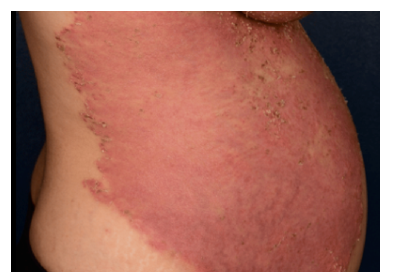
Figure 1 Patient with PPP.
At 37 weeks and 3 days, she was admitted from the antenatal clinic with generalised itching and severe erythematous pustular rashes on her abdomen, trunk, and thighs, which affected her sleep and mental health. On admission to the antenatal ward, she exhibited reassuring continuous tocography (CTG), with fetal biometry consistent with gestational dates, normal amniotic fluid volume, and normal umbilical artery Doppler readings. She was hemodynamically stable and underwent reassuring twice-daily CTG monitoring (Table 1).
|
S. No |
Tests |
Values |
Normal range |
|
1. |
Haemoglobin |
10.1 |
12.1 -15.1 g/dl |
|
2. |
White cell count (WCC) |
12.3 |
4.0 – 11.0 x 10⁹/L |
|
3. |
C-reactive protein (CRP) |
201 |
< 5 mg/L |
|
4. |
Erythrocyte sedimentation rate (ESR) |
34 (30 minutes) |
0 -20 mm/Hr (Female < 50 yrs of age) |
|
72 (1 hour) |
|||
|
5. |
Aspartate transaminase (AST) |
46 |
8-45 U/L |
|
6. |
Alanine transaminase (ALT) |
44 |
7- 55 U/L |
|
7. |
Alkaline phosphatase (ALP) |
162 |
30 -130 IU/L |
|
8. |
Calcium (Ca+) |
2.3 (corrected levels) |
2.1 -2.6 mmol/L |
|
9. |
Potassium (K+) |
3.7 |
3.5 -5.0 mmol/L |
|
10 |
Sodium (Na+) |
132 |
135 -145 nmol/L |
|
11 |
Albumin |
38 |
34-54 g/dl |
|
12 |
Vitamin D |
25 ng/ml |
>20ng/ml |
|
13 |
Phosphate |
0.9 mmol/L |
0.8 – 1.45 mmol/L |
Table 1 Blood test results
A dermatology consultation included blood tests such as FBC, CRP, ESR, LFTs, U&Es, Ca+, and vitamin levels, revealing low haemoglobin, high ESR and CRP, with normal calcium, phosphate, and vitamin D levels. Furthermore, a skin biopsy was conducted. The histopathology report showed Haematoxylin-eosin staining revealing epidermal neutrophilic migration, crusting, lymphocytes, acanthosis, and subcorneal spongiform pustules of Kogoj, confirming PPP (Figure 2).
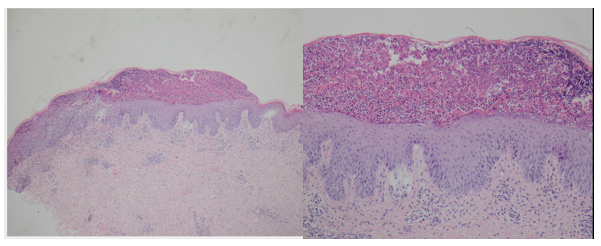
Figure 2 Histopathology slide with evidence of PPP.
She received emollients, corticosteroids, IV fluids, analgesics, and low-molecular-weight heparin. She remained as an inpatient for a week, with joint obstetric and dermatology care. During a multidisciplinary meeting, her delivery was reviewed, and it was decided to induce labour at 39 weeks due to her condition's impact on both mother and fetus. However, at 38 weeks and 4 days, troubling non-labouring CTG results prompted an artificial rupture of membranes, which revealed meconium-stained amniotic fluid. The CTG then showed pathological results, necessitating an emergency caesarean section, which was successfully performed with good APGAR scores. Post-surgery, she was discharged after four days, with a dermatology follow-up scheduled. One month later, her symptoms persisted, requiring ongoing dermatology treatment. At three months postpartum, a long-acting reversible contraceptive device was inserted.
Zumbusch Von Hebra first described this rare condition in 1872, calling it IH, which led to maternal deaths,1 and later termed it GPPP in 1910.1 Today, it is known as PPP, a GPPP variant with an unclear cause and development that often worsens during the third trimester of pregnancy.3,4
Etiology and pathogenesis
PPP can be psoriatic or non-psoriatic and has a genetic predisposition. Mutations in the IL36RN gene, which encodes an interleukin (IL)-36 receptor antagonist, are found in women with the non-psoriatic form of the disease.4 Triggers include hormonal contraceptives, elevated progesterone, stress, bacterial infection, and decreased parathyroid hormone, calcium, or vitamin D in pregnant women. The IL36RN gene stimulates the IL-7 pathway, sometimes with IL-23.4 Pregnancy-related metabolic changes can trigger PPP, resulting in severe, widespread sterile erythematous pustules in an annular pattern, usually responsive to corticosteroids. These triggers lower skin antileukoproteinase (elafin), reducing skin elasticity, leading to desquamation and sterile pustule formation in the epidermis.4,5
Diagnostic criteria
A clinical diagnosis is confirmed through a skin biopsy showing intraepidermal pustules, acanthosis, dermal neutrophil migration, spongiform pustules of Kogoj, scale crusts, and parakeratosis.3,4,6
The Japanese Dermatological Association (JDA) suspects or diagnoses GPPP based on four parameters: systemic symptoms, widespread sterile pustules, Kogoj’s pustules, and recurrence of these. All four confirm GPPP; more than two suggest suspicion.5 The European Rare and Severe Psoriasis Expert Network (ERASPEN) describes GPPP as characterised by recurrent sterile pustules on the central body, excluding the extremities, with or without systemic symptoms, in women.6
Symptoms and severity criteria
The condition involves systemic symptoms, such as fever, increased leukocytes and neutrophils, and electrolyte imbalances, including hypocalcemia and hypophosphatemia. It also shows heightened inflammatory markers, including high ESR and low albumin levels.5,6 GPP, as per JDA, is classified by a scoring system5 encompassing skin, systemic symptoms, and lab values, into Mild (0-6), Moderate (7-10), and Severe (11-17). Moderate to severe symptoms during pregnancy are associated with significantly adverse outcomes for both the mother and the fetus (Table 2).6
|
Skin symptoms (score) |
||||
|
Evaluation of skin symptoms |
Severe |
Moderate |
Mild |
None |
|
Area of erythema (whole body) |
3 |
2 |
1 |
0 |
|
Area of erythema with pustules |
3 |
2 |
1 |
0 |
|
Area of edema |
3 |
2 |
1 |
0 |
|
Symptoms and laboratory tests |
||||
|
Score |
2 |
1 |
0 |
|
|
Evaluation of systemic symptoms and laboratory findings |
Fever (°C) |
≥38.5 |
37.0 to < 38.5 |
<37 |
|
WBC count (/mL) |
≥15,000 |
10,000 to <15,000 |
<10,000 |
|
|
CRP level (mg/dL) |
≥7.0 |
0.3 to < 7.0 |
< 0.3 |
|
|
Serum albumin level (g/dL) |
<3.0 |
3.0 to < 3.8 |
≥3.8 |
|
|
Severity classification |
||||
|
Severity |
Severe |
Moderate |
Mild |
|
|
Evaluation of disease severity |
Total score |
11-17 |
7-10 |
0-6 |
Table 2 JDA criteria for GPP
Sequelae in pregnancy
During pregnancy, the immune system shifts between pro-inflammatory and anti-inflammatory states. Th1 cells dominate initially, but by the third trimester, Th2 cells take over. This transition, combined with IL-36 cytokine stimulation in genetically predisposed women, can trigger PPP in the final trimester.4 PPP may appear during pregnancy and resolve after delivery, recur in later pregnancies, or worsen and persist post-delivery in women with psoriasis vulgaris. Research aims to understand this immune balance and the responses that follow.1,3,4
In the third trimester, factors such as increased progesterone, hypocalcaemia, decreased skin elafin, and higher skin antileukoproteinase contribute to sterile pustule formation seen in pemphigoid gestationis.6 Elevated progesterone impacts skin and neutrophil migration to the epidermal-dermal junction, worsening immune response and pustule formation.4,6 PPP threatens thermoregulation, risking severe complications such as sepsis, multi-organ failure, tetany, seizures, and maternal death.1,3 It may also cause placental insufficiency, IUGR, or stillbirth. Without treatment, PPP endangers both maternal and fetal health, requiring vigilant monitoring and intervention.1,4,6
Treatment of PPP:
Timely intervention is crucial for placental insufficiency linked to PPP or refractory IH. Managing PPP involves immunosuppressants such as cyclosporine, corticosteroids, TNF-α inhibitors, and GMA, all of which are considered safe for use during and after pregnancy, as well as for breastfeeding. Mild cases may use topical steroids. Managing PPP requires correcting fluid and electrolyte imbalances with calcium, iron, and vitamin D.2,4
First-line treatments include cyclosporine at 2-5 mg/day, as well as topical and oral corticosteroids. For mild cases, low-dose prednisolone (15-30 mg/day) is recommended, while high-dose prednisolone (60-80 mg/day) is recommended for severe cases. Cyclosporine, a Category C drug, is considered safe in pregnancy, but its safety during breastfeeding needs more study.2,3 Second-line treatments involve corticosteroids and biologics. Infliximab, effective for severe PPP, is Category B but unsafe after 30 weeks’ gestation as it crosses the placenta.1,3 Third-line options include biologics, such as ustekinumab, and UVB therapy, which is safe during pregnancy and PUVA is recommended postpartum.2,3
Caution is warranted when using TNF-α inhibitors in patients with refractory IH. Certolizumab is recognised as a safe and effective biologic agent during pregnancy. Sterile pustules characterise PPP, and to prevent secondary skin infections, cephalosporins are the preferred antibiotics.3,4,6 A holistic approach to managing PPP includes symptomatic relief through emollients, stress management by addressing sleep concerns during pregnancy, and incorporating complementary therapies such as yoga and meditation. If the disease’s severity affects maternal mental health, considering expedited delivery may be necessary.2,4
Emerging treatments for PPP include the recombinant IL-1 receptor antagonist Anakinra, reported to be effective against IL36RN mutations, though further research is needed to evaluate its safety in pregnancy.2,3
PPP is a rare but serious condition characterised by pustules and erythema, with unclear causes that complicate management.4 It endangers the health of both mother and fetus, requiring swift diagnosis and treatment.1 A skin biopsy confirms PPP and rules out other skin disorders, with prompt, multidisciplinary care involving obstetricians, dermatologists, neonatologists, and others.2 Understanding immune factors and biological markers is crucial for effective management and the development of future treatments.6 Ongoing research into PPP's pathogenesis is leading to the development of biologic therapies that provide earlier and more effective interventions, thereby improving outcomes for both mother and baby.2,5,6
None.
Patient’s consent
Written informed consent was obtained from the patient for the publication of this case report, including using clinical images and other pertinent clinical information.
None.
The author declares that there is no conflict of interest.

©2025 Subramanian, et al. This is an open access article distributed under the terms of the, which permits unrestricted use, distribution, and build upon your work non-commercially.