Open Access Journal of
eISSN: 2575-9086


Mini Review Volume 8 Issue 1
 Levoshina Elizaveta2
1Associate Professor, Moscow State, P.I. Tchaikovsky Conservatory, Russia
2Laboratory assistant, Faculty of Biology, Lomonosov Moscow State University, Russia
Correspondence: Petrov Sergey, Associate Professor, Moscow State, P.I. Tchaikovsky Conservatory, Russia
Received: June 20, 2025 | Published: July 2, 2025
Citation: Sergey P, Elizaveta L. Problems of teaching musicians the rules health preservation and first aid. Open Access J Sci. 2025;8(1):104-106. DOI: 10.15406/oajs.2025.08.00251
The teaching of music students in the basics of safety and basic medical knowledge is considered against the backdrop of increased military action in some countries.
Keywords: teaching students, basics of medical knowledge
The shortcomings in the medical, moral and physical preparation of graduates of humanitarian educational institutions have become more noticeable in the context of military actions, as well as terrorist acts in crisis situations in the Middle East, Ukraine, Russia and other regions.
In the conditions of urban comfort, traditional methods of salvation and survival from the arsenal of folk medicine are practically lost. The overwhelming majority of actors and musicians know little about modern medical technologies, including those necessary in everyday life and personal life. In conditions of a shortage of medicines (in problem regions), the simplest herbal medicines, as well as more complex technologies, are rarely used.1–3
Students of many universities know nothing about perfluorane - the "blue blood" of Professor F. Beloyartsev, about the inexpensive drug "LitAr" for the treatment of bone and soft tissue defects in the case of household and mine-explosive injuries. A significant gap between educational programs and technological innovations in various areas of life hinders overall progress in situations of rescue and survival of the population in crisis conditions.4
Based on their own many years of study experience, as well as communication with future musicians, artists and teachers, the authors note their insufficient practical preparation for maintaining their own health and surviving in stressful situations.
The financial resources of music students do not always correspond to the complexity of their many years of study, which reduces their opportunities for health preservation during physical exercise and performance activities. The small size of the stipend (about 50 dollars) forces many male students to look for a part-time job, which requires increased nutrition and adequate sleep. About half of the students at some conservatories have neither. About 10-15% of our students sleep during classes, 40-45% willingly accept simple treats in the form of cookies and fruits (offered on the occasion of some holiday) and eat them immediately with a big appetite. Only a few behave like well-fed people, referring to a recent meal. During individual and group surveys, numerous problems and nutritional disorders are revealed in students living separately from their parents. They abuse fast food, eat few fruits and vegetables, avoid onions and garlic, do not know the available medicinal herbs that grow everywhere, do not know how to properly drink water and other drinks, including alcohol and energy drinks. Various aspects of these problems are considered in more detail in the works.5–11
According to our long-term observations, more than half of the students do not observe the diet, work and rest regimes, are poorly informed about the prevention of professional diseases of musicians and other dangers of social, technical and natural nature. Moreover, social dangers (legal, psychological, economic, criminal, informational, transport, family and household, etc.) arise hundreds of times more often than natural and technical ones, almost every day. This affects the health of musicians to varying degrees.
The lack of medical training and anti-stress training exacerbates possible failures and can lead to emotional burnout of performers. Nervous breakdowns occur. The brilliant composer and pianist S.V. Rachmaninoff found himself in a three-year depression after intense preparation and an unsuccessful performance of his First Symphony due to the fault of other performers.
Little time is allocated to developing practical skills in healthy lifestyle and life safety in beginning musicians in the context of difficult everyday and family realities, including on tour. Confusion and emotional burnout appear when faced with failures and difficulties in finances and personal intimate life.
The five-point assessment system does not always objectively reflect the level of students' knowledge and leads to an inflated self-assessment of their readiness for a healthy lifestyle and maintaining their health. Some conservatories lack classrooms and modern equipment, tools for training, poor sound insulation in places. The creation and maintenance of modern auditoriums necessary for training requires significant financial costs. Insufficient social support for young musicians, their anxiety about tomorrow make knowledge of medicine and the psychology of survival even more relevant.
According to the authors, the existing traditional 24-hour life safety training programs do not prepare a musician for the real complexities of modern personal and social life. Some useful developments are not even mentioned in the training materials. For example, for 30 years LitAr technology of Professor Sergey Litvinov (Samara, Russia) for bone and soft tissue regeneration is used to restore finger mobility after injuries and diseases. The implantable LitAr material can prevent bone resorption and reduce scarring after surgery. The material is a biopolymer mesh (alginate or collagen) attached to chains of a biocompatible substance that serves as a nutrient medium for the natural regeneration of damaged tissue. The LitAr material ensures the regeneration of kidney, liver, and eye tissue. Its use is possible against heart attacks, but many cardiac surgeons do not yet know about this technology.4
The material has all the regulatory and certification documents, and the city of Samara has the conditions for creating a medical center for the rehabilitation of musicians, athletes and military personnel. But officials have shown very limited interest. We hope that informing student musicians about such treatments will be useful for them and for the dissemination of new methods. Treatment of outstanding people contributes to the dissemination of new technologies. For example, the cure of record-holder in jumping Valery Brumel (after an open fracture) accelerated the international recognition of the technology of Professor Gavriil Ilizarov (pulling out broken bones). Instead of a wheelchair, Brumel again went out into the jumping sector.
Such examples can significantly activate the educational and cognitive activity of students. Analysis of problem situations is necessary to understand the role of safety measures and medical care in the work of musicians. Practical classes with simulators and robot mannequins (of which there is always a shortage) help to form their skills and abilities, assimilate genuine life values. This is especially important for musicians, since, due to their profession, they are cut off from the realities of life, work in an atmosphere of holidays and bright cultural events, not understanding many risks, including terrorist attacks, which have become more frequent at mass cultural events, concerts and festivals. Such events recently took place in Israel and Russia.
The ability to provide first aid in case of bleeding or poisoning. Studying the system of measures to protect the population in case of mass casualties is no less important for musicians than the history and theory of music. Therefore, we offered the following practical tasks to conservatory students:
About two thirds of students are not ready for the initial diagnosis of injuries and the choice of available methods of first aid. Only 10-15% of student musicians coped with the proposed tasks. This indicates the need to replace verbal theoretical training with more practice-oriented classes. When conducting practical classes, we used both group methods and work in pairs. Such an organization allowed us to simultaneously include all students in the process and promote an increase in their cognitive interest. Each task for practical work is preceded by a description of real events and a demonstration of different methods of action. In this case, we use both visual means and practical actions with the help of a teacher. In the left picture, a student shows a survival pose in which it is more convenient to wait for help. We discuss the issue of how to protect him from rain and cold.
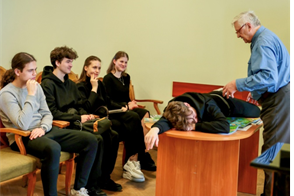
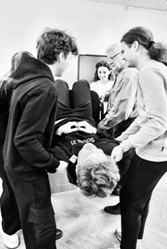
The photo shows that our classes were structured around solving situations in the event of “accidents.” In the absence of stretchers, tables and chairs were used to carry the hypothetical victims. This allowed everyone to be involved in solving the problem. In the right photo, 6 students are synchronously lifting and carrying a “victim” in the “frog pose” with a suspected pelvic bone fracture. He has a regular chair under his back and knees so that he doesn’t strain his abdominal muscles,
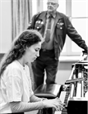
In this same auditorium, students performed their pieces in order to quickly return from a hypothetical sad situation to a more familiar creative environment for musicians.
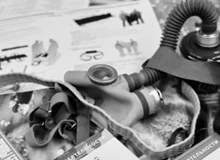
They also studied safety manuals, tourniquets, masks, bandages, adhesive plasters, cooling packs, disinfectant liquids, gas masks, transport tires and their analogues made from cardboard boxes from the buffet Appendix 1.
Creating problem situations helps motivate the cognitive activity of musicians, who are cut off from the dangers of life due to their functions. The teacher should build a more serious attitude of future artists to the problems of health protection and personal safety. The experience of conducting practice-oriented classes has shown an increase in the formation of practical skills in providing first aid from 20% to 80% of students Appendix 2.
None.
None.

©2025 Sergey, et al. This is an open access article distributed under the terms of the, which permits unrestricted use, distribution, and build upon your work non-commercially.