Open Access Journal of
eISSN: 2575-9086


Research Article Volume 8 Issue 1
 Luis Felipe dos Santos Silva, Luciana Karen Calábria
Institute of Exact and Natural Sciences of Pontal, Federal University of Uberlândia – UFU, Brazil
Correspondence: Alexandre Azenha Alves de Rezende, Institute of Exact and Natural Sciences of Pontal, Federal University of Uberlândia – UFU, Brazil
Received: September 29, 2025 | Published: October 31, 2025
Citation: Rezende AAA, Silva LFS, Calábria LK. Evaluation of the carcinogenic potential of ayahuasca employing the epithelial tumor test in Drosophila melanogaster. Open Access J Sci. 2025;8(1):236-240. DOI: 10.15406/oajs.2025.08.00268
Ayahuasca is a psychoactive drink used mainly by indigenous peoples. Its preparation involves the decoction of the Banisteriopsis caapi (Spruce ex Griseb.) C.V. Morton vine with Psychotria viridis Ruiz & Pav. leaves. The psychoactive effect is derived from the combination of the dimethyltryptamine from the shrub with the alkaloids from the vine. Given the promising therapeutic potential and the need for studies to evaluate the toxic potential of ayahuasca, the Drosophila melanogaster Epithelial Tumor Detection Test was used. Third instar larvae (72 + 4h) were treated with different concentrations (3.125; 6.25; 12.5; 25; 50 and 100%) of the ayahuasca tea. The adult individuals were analyzed using a magnifying glass, and the frequency of tumors was recorded in a specific spreadsheet. Under the experimental conditions used, it was possible to identify toxicity in all concentrations, except 3.125%. The identified toxic effect is probably associated with the presence of beta-carbolines, which are alkaloids and may have an insecticidal action. According to the results, no carcinogenic effect associated with the tea treatments was identified, thus, further studies are suggested so that ayahuasca can be used as a safe therapeutic practice.
Keywords: toxicity, alkaloids, betacarbolines, dimethyltryptamine
Since ancient times, the properties of alkaloids have been observed, being considered substances with therapeutic and toxic characteristics. These substances are present in hallucinogenic plants, which are used in the preparation of teas by indigenous peoples and traditional communities, resulting in the creation of cults and religions associated with the consumption of these beverages.1 Among the ritualistic preparations, ayahuasca stands out, a psychoactive beverage used mainly by indigenous peoples for purposes of ritualistic consecration and healing. The word ayahuasca is of Quechua origin (an indigenous language of South America), and is translated as vine of the dead or wine of the souls.2 Ayahuasca is a tea prepared from two plants, with different preparation methods possible. The best known preparation involves the decoction of the vine Banisteriopsis caapi (Spruce ex Griseb.) C.V. Morton, known as mariri, together with the leaves of the shrub Psychotria viridis Ruiz & Pav, popularly called chacrona, belonging to the botanical families Malpighiaceae and Rubiaceae, respectively.3
The psychoactive or consciousness-expanding characteristic of the tea is provided by the chemical compound N,N-dimethyltryptamine (DMT), present in the chacrona, being a serotonin agonist and its chemical structure is similar to serotonin.2,4 However, DMT when ingested does not have a psychoactive effect, as it is normally degraded by the monoamine oxidase (MAO) enzyme, present in the gastrointestinal and hepatic tract. This enzyme is responsible for the degradation of serotonin, but also degrades DMT.5 The effects produced by the ingestion of ayahuasca result from the combination of DMT with the alkaloids present in the mariri vine, which act as monoamine oxidase inhibitors (MAOI) and thus allow DMT to be orally active. The major alkaloids of mariri are harmine, harmaline and tetrahydroharmine THH (Figure 1), belonging to the class of beta-carbolines.1,2,3,6,7 During the rituals it is recommended to consume the tea on an empty stomach and a restrictive diet during the week preceding the consecration, as foods containing tyramine (cheeses, for example) can trigger toxic disorders in the body, since MAO is also responsible for degrading it.9
From 1930 onwards, the practice of using ayahuasca culminated in the appearance of Brazilian religious systems such as Barquinha, Santo Daime and União do Vegetal.1,2 In Brazil, religious use is guaranteed by Resolution No. 4 of the National Council on Public Policies on Alcohol and Other Drugs (CONAD).10 Much is still speculated about the therapeutic potential of ayahuasca, with evidence indicating beneficial effects in cases of alcoholism, depression, schizophrenia, attention deficit hyperactivity disorder, among other pathologies.8,10 Due to this guarantee of use and associated with the pharmacological effects resulting from ingestion, the need for further studies to evaluate the toxic and carcinogenic potential of the substances that make up the tea is noted. In a recently published review on toxic and adverse effects, using the PubMed and Web of Science electronic databases (among others), data from other reviews, preclinical, clinical and epidemiological studies, pharmacological surveillance and also case studies, demonstrated that the use of ayahuasca or just DMT is practically safe, although adverse events have been reported in humans, mainly in individuals who were already using psychoactive medications. In animal models, abortive or teratogenic effects were observed, especially at high doses.11
There is a global movement for the replacement of mammals in toxicological and genetic studies.12 In this context, Drosophila melanogaster, a model insect, is widely used in studies of genetics and developmental biology.13 Recent studies demonstrate the ability to evaluate the toxicity, mutagenicity, recombinogenicity and carcinogenicity of different xenobiotics.12–18 The evolutionary conservation of tumor suppressor genes between D. melanogaster and mammals has stimulated studies related to the development of tumors in this insect, which can directly contribute to the understanding of the genesis of carcinogenic processes in humans.16–18 Protein kinases and CDKs (cyclin-dependent kinases) form a complex responsible for controlling cell cycle regulation. Various oncogenes and tumor suppressor genes participate in this control, and the recessive gene wts (warts), homologous to the mammalian tumor suppressor gene LATS1,16,17 thus, given the evolutionary conservation between the D. melanogaster and human genomes, makes this insect a powerful model for the study of carcinogenesis.12–18
The Epithelial Tumor Clone Detection Test (ETT) makes use of a strain carrying the wts (warts) marker gene, which is located on chromosome 3 of the fly and is lethal to the zygote when homozygous. Therefore, the warts allele is maintained in the stock line with the presence of a chromosomal balancer (TM3). If there is a loss of heterozygosity in the cells that will give rise to each body structure, viable homozygous clones will form, which manifest as tumors (small warts) on the body of the adult fly.14–18 As this experimental model encompasses great versatility in laboratory work, it is ideal for testing the detection of genotoxic agents.18 Given the above, the objective of the present work was to evaluate the toxic and carcinogenic potential attributed to ayahuasca, using the ETT.
Chemical compounds and culture media
Ayahuasca was sourced directly from the supplier Mãe Terra Nordeste (CNPJ 42.722.549/0001-30 - https://maeterranordeste.com.br/). Ethyl carbamate (Urethane) served as the positive control, while distilled water was utilized as the negative control. The study is duly registered within the National System for the Management of Genetic Heritage and Associated Traditional Knowledge – SisGen (code: A8D6EDC). D. melanogaster strains were preserved in 250 mL flasks containing banana-based culture medium (composition: 1230 mL distilled water; 234 g banana; 37.5 g yeast; 16.5 g agar; 1.5 g Methylparaben; and 2.0 mL antibiotic) under conditions of 25°C and 60% humidity. For larvae collection, a specific oviposition medium was employed, composed of a thin agar layer (4%), enhanced with yeast and sucrose. During the experimental treatments, potato puree (produced by Yoki Alimentos S.A.) was employed as an alternative culture medium for D. melanogaster larvae cultivation,14,15 wherein varying concentrations of ayahuasca tea were introduced. To prepare these concentrations, ayahuasca tea was diluted with water and homogenized using a magnetic stirrer.
Epithelial tumor test in Drosophila melanogaster
Two strains of D. melanogaster were utilized: the multiple wing hairs (mwh) strain and the warts (wts) strain. The mwh strain has the genetic composition y; mwh jv. In recessive homozygous conditions, it displays the mwh phenotypic marker located on the left arm of chromosome 3 (autosome), resulting in the manifestation of multiple hairs on a single wing cell. This trait contrasts with the wild-type expression, which features a single hair per wing cell.14,15,18Conversely, the wts strain carries the wts genetic marker, which remains preserved in homozygous condition with the aid of a chromosomal balancer (TM3, Sb1). When expressed in its wild-type form, this marker functions as a tumor suppressor. The strains were maintained in stock vials containing banana-based culture media. They were kept within a biosafety cabinet under controlled environmental conditions of light/dark cycles (12h:12h), temperature, and humidity.
Cross
Males of the mwh strain (mwh/mwh) and virgin females of the wts strain were crossed. From this cross, two progenies were generated. One trans-heterozygous marked progeny (wts +/+ mwh), known as MH and carrying the wts gene, and another, balanced heterozygous (TM3, Sb1 +/+ mwh), called BH. For the ETT, only the MH generation is used. These individuals have long and thin hairs (head and thorax), unlike the BH individuals, so these characteristics serve to separate the individuals from the cross.18
Treatments
The treatments occur after the couples have been copulating for about 24h. After this time, the couples were transferred to oviposition medium-containing flasks for 8h and then removed from the flasks. After 72 ± 4h, third-stage larvae were washed with running water and collected using a fine mesh sieve. Subsequently, the collected larvae were placed in flasks containing the alternative medium (1.5g of potato puree)14,15 hydrated with 5mL of ayahuasca at concentrations of 3.125; 6.25; 12.5; 25; 50 and 100%. Distilled water was used as a negative control and Urethane as a positive control. The larvae (approximately 200) underwent chronic treatment (48h) until completing their metamorphosis. The treatment was done in duplicate (two vials per treatment). Parallel to the ETT, the toxicity of the different concentrations was evaluated through a survival test. Toxicity was measured by evaluating the percentage of individuals that completed the metamorphosis process after the treatments with each of the concentrations.
Fixation of flies and analysis of epithelial tumors
Emerging adults from the different treatments were collected and stored in flasks containing 70% ethanol and analyzed under a stereoscopic microscope in a Petri dish with glycerin, using entomological forceps. The results were recorded in a specific table containing the body division of the flies (head, eyes, body, legs, wings and halteres).14,15 The analysis of the flies for tumor quantification was conducted in a blinded manner to ensure the elimination of bias during the evaluation process.
Statistical analyses
The difference in the frequency of tumors in individuals treated with the different concentrations of the tea was compared with the negative control (water), using the Chi-square test for ratios of independent samples. To obtain the survival data, the survival rate of individuals (n=50) treated with the different concentrations of ayahuasca was compared with the negative control using the Chi-square test for ratios of independent samples (p≤0.05).14,15
Ayahuasca, as a strictly religious practice, has already been legalized in some countries in North America and Europe, as well as in Brazil, despite some restrictions imposed by CONAD.10,20 The tea is a complex mixture of plant origin and there is a need for studies that confirm its safe consumption, not only for religious purposes, but also for its future therapeutic administration. The lack of chemical characterization represents a limitation of the study; however, the authors acknowledge that the concentrations of bioactive compounds vary across preparations. This variability arises because the process does not adhere to a standardized recipe and utilizes plants that, being subject to diverse environmental conditions, may exhibit alterations in metabolite composition both quantitatively and qualitatively.
Studies with ayahuasca have shown other potential applications, such as neuroprotection, antimicrobial action, hypothermic and vasodilating activity, relief of eating disorders, treatment of skin lesions and antitumor effects. However, these properties are linked to the administered doses, with the highest efficacy being observed at the lowest concentrations.20,21
The way tea is prepared can interfere with the concentration of DMT and alkaloids. Furthermore, in rituals that use tea, the volume ingested can also interfere with the bioavailability of these compounds, which is directly linked to psychoactive effects or for treating other disorders or diseases, such as depression and cancer.20–22 The concentrations of the bioactive components in ayahuasca were not measured in the present study. Additionally, as the ayahuasca used was purchased, detailed information regarding its preparation is unavailable. Furthermore, it is not possible to directly correlate the concentrations administered to Drosophila melanogaster with those typically consumed during human spiritual rituals. In such rituals, the volume ingested is approximately 60 mL per dose, with some instances reaching up to three times this amount.
The number of alkaloids present in ayahuasca tea, ingested in consecration ceremonies, does not present toxicity to the human body and does not trigger physiological dependence.5 One of the limitations of the method used is that it is not possible to extrapolate the concentration used in human rituals to experimentation with D. melanogaster. Given the need to determine the concentrations to be tested, a survival curve was established14,15 (Figure 2). Third-stage larvae (72 ± 4h), derived from crossings, were treated with different proportions of ayahuasca tea (6.25; 12.5; 25; 50 and 100%). Based on the results obtained, toxicity could be identified in all concentrations (p≤0.05), except for 3.125% (Figure 2).
According to the process of coevolution, known as the Red Queen Theory, plant species are in constant search for survival, just like insects. So, the appearance of evolutionary mechanisms to ensure the permanence of the species is present in both.23
Plant defense mechanisms against insects can be mediated by alkaloids. In the vine, popularly known as mariri, (B. caapi) are present harmine, harmaline and THH (Figure 1). These alkaloids and their derivatives have insecticidal action, since they modify the physiology of insects, representing a defense resource of plants against predation.24 Thus, it is believed that the decrease in the number of individuals is related to the presence of these alkaloids, although they have not been quantified in the present work (Figure 2).
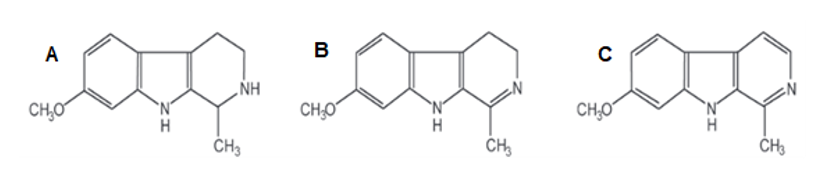
Figure 1 Chemical structures of beta-carbolines: A) Tetrahydroharmine (7-methoxy-1-methyl-1,2,3,4-tetrahydro-b-carboline); B) Harmaline (3,4-dihydro-7,8-ethoxy-1-methyl-b-carboline) and C) Harmine (7-methoxy-1-methyl-b-carboline).
Adapted from Pianura et al.7
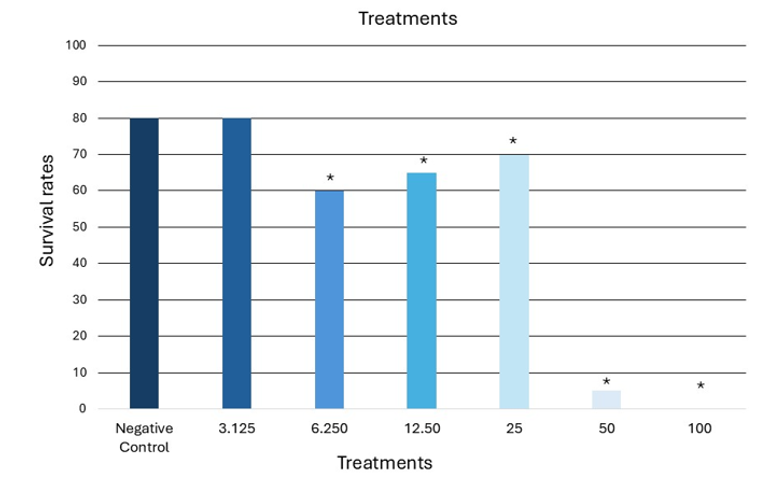
Figure 2 Survival rate (%) of D. melanogaster adults after treatment of third-stage larvae with different concentrations of ayahuasca.
*Concentrations with significant decrease in survival rate (p≤0.05). Source: Authors, 2024.
In recent decades, studies have shown the relationship between mutations and genomic instability, associated with carcinogenesis induced by beta-carbolines.25–27 For the ETT, a strain carrying the marker gene wts (warts) is used, which is located on chromosome 3 of the fly and is lethal to the zygote when in homozygosity. Thus, the wts allele is maintained in the stock strain with the presence of a chromosomal balancer (TM3). When DNA damage occurs, leading to loss of heterozygosity, it allows the formation of homozygous clones which manifest as warts on the epithelium of the flies.14–18
The evolutionary conservation of tumor suppressor genes between D. melanogaster and mammals has stimulated studies using this experimental model, since it can help understand carcinogenic processes in humans.17,18 In order to evaluate the carcinogenic potential of ayahuasca, the individuals who survived the treatment with the tea and who were carriers of the wts marker (MH individuals), had their bodies analyzed (Table 1) with the aid of a magnifying glass to quantify the tumors. For carcinogenic analysis, individuals from treatments with concentrations lower than those that show toxicity18 (Figure 2) should be analyzed. However, in the present work, all tested concentrations were analyzed in order to verify if the toxic effect would be related to carcinogenesis.
|
Treatment |
X2 calculated |
|
Positive control |
2,205,714 |
|
3.125 |
2,205,714 |
|
6.25 |
1,575 |
|
12.5 |
10,93793* |
|
25 |
8,406667* |
|
50 |
110,4235* |
|
100 |
129,5125* |
Table 1 Calculated values for the chi-square test corresponding to each treatment
*Different from negative control.
According to the results obtained (Table 1), the induction of tumors is not related to the concentration, and the total frequency of tumors in all treatments is not significantly different from the negative control (spontaneous frequency), even at concentrations that showed toxicity (Figure 2). Thus, we can infer that the toxicity caused by the compounds present in the tea does not promote carcinogenesis. Probably, the toxicity found in the present work is associated with the insecticidal action of the beta-carbolines.24,26,27
The difference in the number of individuals analyzed between the treatments is due to the availability of viable individuals of each treatment. At least 100 individuals were analyzed (Table 1). According to the data obtained in this work, it can be stated that, under the experimental conditions used, the tea did not show carcinogenic effect (Table 1). On the other hand, in a study that evaluated the genotoxicity of the alkaloid harmine by the Comet Test, it was demonstrated that there was significant DNA damage at all concentrations evaluated. In other studies, it has been shown that isolated harmine has antitumor action, suppressing the growth of bladder tumor, through the suppression of the angiogenesis process.25–27
Evaluating other components of ayahuasca, such as DMT, although not cytotoxic,21 it was possible to identify that this compound can induce chromosomal breaks (clastogenic effect), since DMT has the N-dimethyl group in its chemical structure.28 Apparently, the toxic, clastogenic and carcinogenic effects of DMT can also contribute to DNA damage and may be directly linked to the concentration of the administered dose.20,21
According to Mckena and collaborators,6 approximately 60 mg of DMT, 41 mg of harmaline, 467 mg of harmine and 160 mg of THH were found in 100 mL of the tea. On the other hand, a more recent study conducted by Pires and collaborators29 identified different concentrations: 31 to 73 mg of DMT, 64 to 172 mg of harmaline, 37 to 83 mg of harmine and 21 to 67 mg of THH. The concentrations of the compounds are different possibly because the ayahuasca, as the method of preparation, origin and environmental conditions in which the plants are subjected influence the concentration of these compounds.
Plants used in traditional medicine are generally considered safe, but some components may have toxic effects, especially when it comes to the concentration of the administered doses, so it is crucial to investigate their possible toxicity, including in prokaryotes. Although other studies have shown the absence of genotoxicity associated with ayahuasca tea, it has been shown to be mutagenic for some bacterial strains (TA98 and TA100). Although all living beings share common ancestors, some physiological mechanisms are not identical and/or conserved, such as DNA repair mechanisms and detoxification pathways, which could explain the toxic (Figure 2) and non-carcinogenic (Table 2) effect of ayahuasca tea on D. melanogaster and the genotoxic effect on prokaryotes21 and the absence of evidence of toxicity in humans to date.11,26
|
Treatments |
Number of individuals |
Frequency of tumors analyzed (%) |
Total |
X2 calculated |
|||||
|
Eyes |
Head |
Wings |
Body |
Legs |
Halteres |
||||
|
Negative Control |
130 |
0,007 (01) |
0,03 (04) |
0,038 (05) |
0,046 (06) |
0,007 (01) |
0,00 (00) |
0,013 (17) |
- |
|
Positive Control |
100 |
0,32 (32) |
0,25 (25) |
0,40 (40) |
0,81 (81) |
0,16 (16) |
0,10 (10) |
2,04 (204) |
28,06** |
|
Ayahuasca 100% |
0 |
0,00 (00) |
0,00 (00) |
0,00 (00) |
0,00 (00) |
0,00 (00) |
0,00 (00) |
0,00 (00) |
0,013* |
|
Ayahuasca 50% |
100 |
0,00 (00) |
0,02 (02) |
0,01 (01) |
0,04 (04) |
0,01 (01) |
0,00 (00) |
0,08 (08) |
0.345* |
|
Ayahuasca 25% |
100 |
0,00 (00) |
0,00 (00) |
0,05 (05) |
0,06 (06) |
0,00 (00) |
0,00 (00) |
0,11 (11) |
0.723* |
|
Ayahuasca 12,5% |
100 |
0,00 (00) |
0,00 (00) |
0,01 (01) |
0,13 (13) |
0,00 (00) |
0,00 (00) |
0,14 (14) |
1,240* |
|
Ayahuasca 6,25% |
100 |
0,00 (00) |
0,02 (02) |
0,03 (03) |
0,05 (05) |
0,00 (00) |
0,00 (00) |
0,1 (10) |
0.582* |
|
Ayahuasca 3,13% |
160 |
0,00 (00) |
0,012 (02) |
0,043 (07) |
0,05 (08) |
0,013 (02) |
0,00 (00) |
0,118 (19) |
2,409* |
Table 2 Frequency of epithelial tumors observed in heterozygous descendants for the wts tumor suppressor gene of Drosophila melanogaster exposed to different concentrations of ayahuasca tea
*Values considered not different from the negative control. **Value considered different from negative control.Negative Control: Ultrapure water; Positive control: ethyl carbamate (178.18mg/mL).
The results of previous evaluations of ayahuasca tea, as well as in the present work, are influenced by different forms of obtaining the tea, cultivation of the plants used, and the influence of environmental factors that can alter the concentration of alkaloids. In a study conducted almost forty years ago by Mckenaa and collaborators,6 about 60 mg of DMT, 41 mg of harmaline, 467 mg of harmine, and 160 mg of THH were found in 100 mL of the tea; however, a more recent study by Pires and collaborators[30] established the following concentrations: 31 to 73 mg of DMT, 64 to 172 mg of harmaline, 37 to 83 mg of harmine, and 21 to 67 mg of THH.
The variation in the concentration of bioactive compounds in the tea (DMT and beta-carbolines) may be linked to the divergent data in the literature, so more studies are necessary to better understand the potential and safe use of ayahuasca. The use of ETT for carcinogenic evaluation of different types of compounds has been used for several years. It is a versatile testing system that allows the evaluation of medicines, complex mixtures of environmental origin or chemical products, although there is no possibility of extrapolating concentrations and effects to humans.14–16 Until the present moment, this is the first work that evaluates the carcinogenic potential of ayahuasca using the ETT, thus contributing to the understanding of the biological action of the complex plant mixture known as ayahuasca.
Traditional therapies have been known since ancient civilizations, and this practice has been preserved over the centuries through experimentation, which allowed the isolation of the first drugs used in modern medicine. The number of publications on the therapeutic potential of these plants or natural substances, including their use in people unresponsive to conventional approaches, is increasing every year and in this context, reviews on ayahuasca have recently been published regarding its historical aspects, physiological effects and potential therapeutic uses.19,20,22,30
The search for new therapies, such as the use of ayahuasca, has gained prominence in the field of research, seeking to understand the mechanisms of action of the compounds present in these complex mixtures of plant origin in order to ensure safe use, since some secondary metabolites may be toxic, making toxicological evaluation studies essential. There is an eminent need for new therapeutic practices that can assist in the treatment of neurological pathologies and addictions. The toxic effects found in the present work and that are associated with the concentration of ayahuasca are inherent to the biological model used in this study, since several compounds found in the tea have insecticidal action. Until now, there is no evidence of the same effect, after use and during ritual consecrations by humans. The absence of a carcinogenic effect when applying the ETT demonstrates that there was no damage to the genetic material. On the other hand, ayahuasca tea is a complex mixture of products of plant origin and there is a need for more work to confirm its safe application, not only for religious purposes, but also to support its future therapeutic administration. This study investigated the carcinogenic potential of ayahuasca in the somatic cells of D. melanogaster, a widely recognized insect model in toxicogenetic and mutagenesis research. The findings are specific to this experimental model and cannot be directly applied to humans. Accordingly, additional research is necessary to confirm the safety of ayahuasca consumption.
We gratefully acknowledge the scholarship support provided by the PET-Biology UFU group.
The author declares there is no conflict of interest.

©2025 Rezende, et al. This is an open access article distributed under the terms of the, which permits unrestricted use, distribution, and build upon your work non-commercially.