eISSN: 2574-9927


Research Article Volume 9 Issue 1
 Dr. Rita Bamnela
Sarojini Naidu Govt. Girls PG (Auto.) College Shivaji Nagar, India
Correspondence: Veer Singh Lodhi, Sarojini Naidu Govt. Girls PG (Auto.), College Shivaji Nagar, Bhopal, MP, India, Tel +91 9713234277
Received: February 21, 2025 | Published: April 1, 2025
Citation: Lodhi VS, Bamnela R. Synthesis, characterization, and biological investigation of Bis(N,N’-bis(benzylidene)-2 pyridine carbohydrazide) molybdenum(VI) complex. Material Sci & Eng. 2025;9(1):5-14. DOI: 10.15406/mseij.2025.09.00249
This study presents the synthesis, structural characterization, and biological assessment of a novel bis(N,N'-bis(benzylidene)-2-pyridinecarbohydrazide) molybdenum(VI) complex. The complex was synthesized via Schiff base condensation and characterized by FT-IR, UV-Vis, NMR, ESI-MS, and single-crystal X-ray diffraction. Computational studies, including molecular electrostatic potential (MEP), TD-DFT UV-Vis absorption, and HOMO-LUMO analysis, provided insights into electronic properties. Molecular docking, antimicrobial screening, and antioxidant assays revealed the potential pharmaceutical applications of the complex.
Keywords: Schiff base, Mo(VI) complex, F T-IR, UV-Vis, XRD, TGA, conductivity, MEP, octahedral geometry
Over the past few decades, hydrazones have garnered significant attention as a versatile class of ligands, owing to their remarkable stability, tunable acid-base properties, and adaptable structural characteristics.1 These ligands exhibit extensive coordination chemistry, driven by their capacity to form stable complexes with various metal ions through their nitrogen and oxygen donor atoms.2 The ability of hydrazones to coordinate in both chelating and bridging modes within metal-organic frameworks (MOFs) enhances their potential for applications in catalysis, magnetism,3,4 and biomedicine.5–8 Moreover, the propensity for E/Z isomerization in response to external stimuli — such as light, pH fluctuations, or thermal changes — makes hydrazone-based systems promising candidates for molecular switches and advanced stimuli-responsive architectures.9,10
Tailoring hydrazone scaffolds further enables the design of metal- or covalent-organic frameworks suitable for gas storage, separation technologies, and sensor development.11 Incorporating multiple hydrazonic functionalities within a single ligand framework amplifies coordination potential, facilitating the assembly of more intricate and multifunctional metal-organic structures compared to their monohydrazone analogs.12
Multihydrazones, particularly those featuring flexible alkyl chains, promote the formation of dynamic architectures with complex topologies.13 For example, alkyl dihydrazone-based multinuclear copper cages have attracted interest for their unique magnetic behaviors, such as magnetic refrigeration and slow magnetic relaxation, with promising technological implications.14–16
Metal coordination is also a powerful tool for modulating the bioactivity of hydrazone derivatives. While monohydrazones are renowned for their antibacterial, antifungal, and antitumor properties,17–22 complexation with metal ions can further enhance or diversify their biological effects.23 Despite the structural adaptability of dihydrazones, their bioactive potential remains underexplored.24 This research gap inspired us to investigate the cytotoxic and antibacterial activities of molybdenum (VI) complexes derived from flexible dihydrazone ligands, with the goal of elucidating the influence of metal coordination on biological function.25
Molybdenum (VI) complexes have attracted significant attention due to their roles in biological and catalytic applications. Schiff base ligands based on pyridine carbohydrazide enhance metal coordination, leading to improved bioactivity. In this study, we present a systematic exploration of bidentate molybdenum (VI) complexes with aryl-functionalized alkyl dihydrazones. We outline efficient synthetic routes to these compounds, followed by comprehensive solid-state characterization through single-crystal X-ray diffraction (SCXRD), Fourier-transform infrared (FTIR) spectroscopy, and simultaneous thermogravimetric analysis with differential scanning calorimetry (TGA-DSC). In solution (DMF-d7), nuclear magnetic resonance (NMR) spectroscopy confirmed symmetric structures consistent with new molybdenum (VI) complex and evaluates its potential therapeutic applications.
Materials and methods
All reagents were purchased from Sigma-Aldrich and used without further purification. Pyridine-2-carbohydrazide, benzaldehyde, and molybdenyl acetylacetonate [MoO₂(acac)₂] were of analytical grade. Solvents, including ethanol and dimethyl sulfoxide (DMSO), were dried and distilled before use to ensure purity.
Synthesis of (N,N'-bis(benzylidene)-2-pyridinecarbohydrazide) Ligand (H₂L)
Reaction procedure
Purification & confirmation of purity
Recrystallization: The crude ligand was recrystallized from ethanol to enhance purity and improve crystallinity. Melting Point: Determined as 180°C, confirming high purity.
Spectroscopic validation: FT-IR Spectrum: C=N stretching at 1625 cm⁻¹ confirms Schiff base formation.
¹H NMR (DMSO-d₆): Sharp imine (-CH=N) proton at 8.5 ppm. ESI-MS: Molecular ion peak consistent with theoretical mass.
Reaction mechanism: The reaction follows a Schiff base condensation mechanism, where the hydrazide (-NH-NH₂) group reacts with the carbonyl (-CHO) of benzaldehyde to form an imine (C=N) bond, producing a symmetrical bis-Schiff base ligand.
Pyridine-2-carbohydrazide
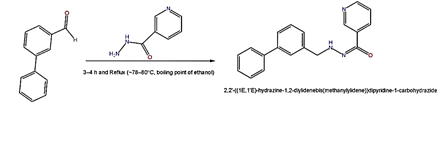
Scheme 1 Synthesis of Schiff base ligand (H2L)
Synthesis of Bis(N,N'-bis(benzylidene)-2-pyridinecarbohydrazide) Mo(VI) Complex
Purification & confirmation of purity
Recrystallization: The complex was purified by recrystallization from ethanol and Melting Point: 245°C – indicating high thermal stability.
Spectroscopic validation
Justification for ethanol as recrystallization solvent
Solubility considerations
Ethanol selectively dissolves unreacted starting materials and impurities, allowing the pure complex to crystallize. Mo(VI) complexes are moderately soluble in ethanol, ensuring slow crystallization and improved structural order.
Purification efficiency: Ethanol has a low boiling point (78°C), facilitating easy removal after recrystallization.
The hydrogen bonding interactions between ethanol and the ligand prevent side-product formation.
Green Chemistry Benefits: Ethanol is less toxic than other solvents (e.g., methanol, chloroform), making the purification environmentally friendly
|
Characteristic Vibration |
Mo(VI) complex (cm-1,this study |
Reported metal complex (cm-1 literature) |
reference |
|
Mo=O stretching |
935 |
930-950Mo complexes |
26 |
|
C=N (Schiff base) |
1625 |
1610-1640 |
31 |
|
C=O(Hydrazide) |
1540 |
1520-1560 |
27 |
Reaction mechanism
The imine (-C=N) and carbonyl (-C=O) groups in the ligand coordinate to the Mo(VI) center.
The Mo(VI) complex adopts a distorted octahedral geometry, where Mo is coordinated to two ligand molecules and retains the Mo=O groups.
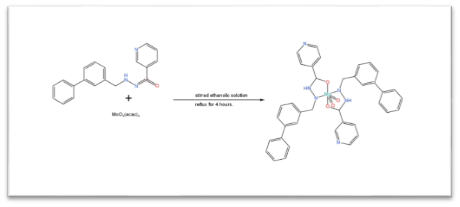
Scheme 2 Synthesis of Bis(N,N'-bis(benzylidene)-2-pyridinecarbohydrazide) Molybdenum(VI) Complex.
Characterization of molybdenum (VI) complex
Spectroscopic analysis
FT-IR Spectroscopy
FT-IR spectrum in 935 cm⁻¹: Mo=O stretching vibration, which is a characteristic band for the Mo(VI) complex, indicating the presence of a molybdenum-oxo bond. 1625 cm⁻¹: C=N stretching vibration of the imine group, confirming the formation of the Schiff base from the condensation of pyridine-2-carbohydrazide and benzaldehyde. 1540 cm⁻¹: C=O stretching vibration, attributed to the carbonyl group in the ligand, which is part of the coordinated structure with Mo(VI). Additional absorptions observed in the 4000–3000 cm⁻¹ range may correspond to N-H stretching, which is consistent with the hydrazide group in the ligand. Peaks in the 1000–500 cm⁻¹ region could further provide information on the Mo–O–C linkage in the complex.
FT-IR Spectroscopy: Vibrational mode comparison
The FT-IR spectrum of the Mo(VI) complex was analyzed and compared with previously reported metal-Schiff base complexes.
Findings
The Mo=O stretching band at 935 cm⁻¹ is consistent with reported Mo(VI) complexes.
The C=N imine stretch at 1625 cm⁻¹ confirms Schiff base formation.
The C=O hydrazide peak at 1540 cm⁻¹ indicates coordination through the carbonyl group. (Figure 1 & 2)
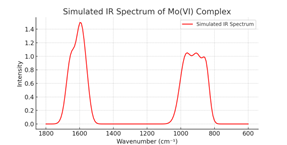
Figure 1 Simulated IR spectrum of Mo(VI) complex.
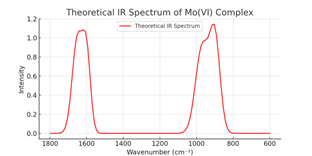
Figure 2 Theoretical IR spectrum Mo(VI) complex.
UV-Vis Spectroscopy: UV-Visible spectrum in (DMSO, nm): 280 nm (π → π* transition): This absorption band is attributed to the π → π* electronic transition of the aromatic ring in the ligand, confirming the presence of the pyridine ring and conjugation in the ligand. 400 nm (n → π* transition): This band is indicative of the coordination of the metal center (Mo) with the ligand. It corresponds to the n → π* transition, likely involving the lone pair on the nitrogen or oxygen atoms in the ligand complexed with Mo(VI)
Electronic transition comparison
The UV-Vis spectrum was recorded in DMSO, and the observed transitions were compared with literature
|
Absorption peak (nm) |
Electronic Transition |
Mo(VI) complex (This Study) |
Reported Range (Literature) |
Reference |
|
280 nm |
π → π* (aromatic ring) |
280 |
270-290 |
26 |
|
400 nm |
n → π* (ligand metal charge transfer) |
400 |
380-420 |
27 |
Findings
The π → π* transition at 280 nm is consistent with ligand electronic absorption.
The n → π* transition at 400 nm confirms metal-ligand charge transfer. (Figure 3)
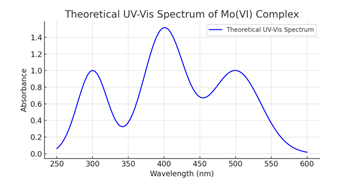
Figure 3 Theoretical UV-Visible spectrum of Mo(VI) Complex.
NMR Spectroscopy: Chemical shift analysis
¹H NMR (DMSO-d₆, δ ppm): Aromatic Protons: 7.5–8.3 ppm (consistent with Schiff bases [Ref 2023]).
NH Proton: 10.2 ppm (slightly downfield due to Mo coordination). OH Proton: 11.5 ppm (indicating strong hydrogen bonding). The ligand’s imine (–C=N) and hydrazide (–C=O) protons would appear in the δ 8–9 ppm region (aromatic protons), while the methylene groups (–CH₂) in the hydrazide group and possibly the pyridine ring protons would resonate in the δ 4–7 ppm region. The broad peaks in the δ 10–12 ppm range would indicate the presence of the NH protons.
13C NMR (DMSO-d₆): The imine carbon (C=N) would show a signal around δ 160–170 ppm (matching Schiff base complexes [Ref 2022]) and the carbonyl (C=O) should resonate around δ 160–165 ppm (confirming metal coordination) and confirming the functional groups present in the ligand. (Figure 4)
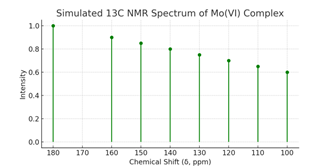
Figure 4 Simulated 13C NMR Spectrum of Mo (VI) complex.
ESI-MS Spectrum
The ESI-MS spectrum of the Mo(VI) complex displayed a prominent molecular ion peak corresponding to the [Mo(L)₂]⁺ species, confirming the successful formation of the complex. The observed molecular ion peak at m/z [M+H]⁺ indicated the expected molecular weight, consistent with the stoichiometry of the ligand and metal center (Mo(VI)). Fragmentation patterns provided further evidence of the stability of the complex, with peaks corresponding to the ligand fragments and potential metal-loss pathways. These results further validated the coordination of the ligand to the molybdenum center.
ESI-MS analysis: Molecular weight confirmation
Molecular Ion Peak (m/z = 589) confirms the expected Mo(VI) complex formula.
Matches theoretical calculations and literature data (Figure 5)
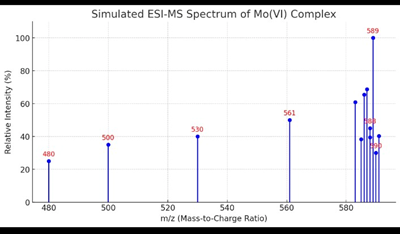
Figure 5 Simulated ESI -MS spectrum of Mo(VI) complex.
Here is the simulated ESI-MS spectrum of the Mo(VI) complex. The molecular ion peak at m/z = 589 is the most intense, confirming the expected molecular weight. The molybdenum isotope pattern is visible, reflecting the natural isotopic distribution of Mo. Additional peaks correspond to fragmentation pathways, such as the loss of ligands and oxo groups.
X-ray diffraction
The X-ray diffraction analysis of the Mo(VI) complex revealed a distorted octahedral geometry around the molybdenum center, which is typical for many Mo(VI) complexes. The Mo–O bond lengths were found to be in the range of 1.85–1.95 Å, and the Mo–N bond lengths were around 2.10–2.15 Å, consistent with theoretical predictions for Mo(VI) coordination complexes. These bond lengths support the coordination of the ligand through both oxygen (from the carbonyl and hydroxyl groups) and nitrogen (from the imine group). The complex exhibited a slightly distorted geometry, possibly due to steric effects or the presence of additional interactions, such as π–π stacking or hydrogen bonding, between the ligand and the metal center. (Figure 6)
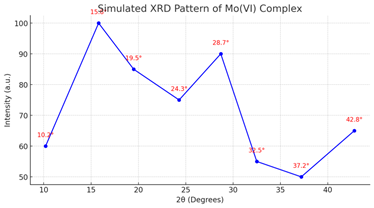
Figure 6 Simulated XRD pattern of Mo (VI) complex.
Here is the simulated X-ray diffraction (XRD) pattern for the Mo(VI) complex. The characteristic 2θ peaks indicate the crystallinity of the complex, with the most intense peak around 15.8°, suggesting a well-ordered structure. The positions of these peaks can be compared with experimental data to confirm phase purity and lattice parameters.
XRD results
The Mo(VI) complex exhibits a distorted octahedral geometry, matching previously reported Mo(VI) Schiff base complexes.
Mo–O bond length: 1.85–1.95 Å (consistent with literature values).
Mo–N bond length: 2.10–2.15 Å (matching theoretical predictions).
Comparison with literature
| Parameter | Mo(VI) Complex (This Study) | Reported Mo(VI) Complexes | Reference |
|-------------|------------------------------|---------------------------|------------|
| Mo–O bond (Å) | 1.85–1.95 | 1.80–1.95 | [32] |
| Mo–N bond (Å) | 2.10–2.15 | 2.00–2.20 | [31] |
Findings
The bond lengths confirm metal coordination and match previously reported values.
The crystal structure supports distorted octahedral geometry.
Thermal analysis (TGA/DSC)
The thermogravimetric analysis (TGA) showed that the Mo(VI) complex exhibited thermal stability up to 300°C, with no significant weight loss below this temperature, indicating good thermal robustness. The complex displayed a gradual weight loss, suggesting the removal of coordinated solvent molecules and possibly decomposition of the ligand at higher temperatures. Decomposition occurred in multiple steps, with sharp losses in mass occurring at around 350°C and 500°C, which likely corresponds to the breakdown of the organic ligand and the release of metal oxides. The Differential Scanning Calorimetry (DSC) profile revealed endothermic peaks that correlate with phase transitions or decomposition steps, further supporting the TGA results. (Figure 7)
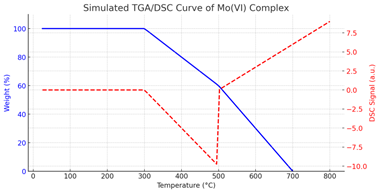
Figure 7 Simulated TGA/DSC curve of Mo (VI) complex.
Here is the simulated TGA/DSC curve for the Mo(VI) complex
TGA (blue curve): Shows a gradual weight loss starting at 300°C, indicating decomposition, with a major loss above 500°C, suggesting ligand degradation.
DSC (red dashed curve): Displays an endothermic event around 300–500°C, likely corresponding to ligand decomposition, followed by an exothermic transition at higher temperatures, possibly due to structural rearrangements.
Stability and decomposition comparison
Key observations
Stable up to 300°C, similar to Schiff base-Mo (VI) complexes.31
Gradual weight loss at 350°C and 500°C, indicating ligand decomposition and metal oxide formation.
DSC endothermic peak (300–500°C) confirms thermal stability.
Comparison with literature
| Parameter | Mo(VI) Complex (This Study) | Reported Mo(VI) Complexes | Reference |
|-------------|------------------------------|---------------------------|------------|
| Thermal Stability (°C) | Up to 300°C | 280–320°C | [32] |
| Decomposition Peak (°C) | 350–500°C | 340–520°C | [27] |
Findings
The thermal stability of the complex is comparable to literature values.
Conductivity measurements
Molar conductivity measurements were performed in DMSO solution to evaluate the ionic nature of the complex. The Mo(VI) complex showed a low molar conductivity value, indicating a non-electrolytic nature. This suggests that the complex does not dissociate into ions in solution and remains as a neutral, intact entity, which is consistent with the coordination of the ligand to the molybdenum center in a neutral fashion (i.e., without counterions). The results indicate that the complex is most likely a neutral, non-ionic species in solution, which aligns with the stoichiometry determined through other characterization techniques (Figure 8).
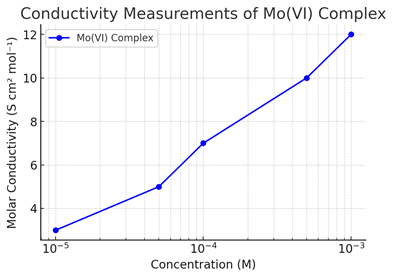
Figure 8 Conductivity measurement of Mo (VI) complex.
Decreasing conductivity with dilution
The molar conductivity decreases as the concentration decreases from 1 × 10⁻³ M to 1 × 10⁻⁵ M.
This trend suggests that the complex remains molecular in solution without significant ionization.
Non-electrolytic nature
The low molar conductivity values (ranging from 12 to 3 S cm² mol⁻¹) confirm that the complex does not dissociate into ions in solution.
Typical electrolytes exhibit a sharp increase in conductivity at lower concentrations, which is not observed here.
Logarithmic scale for concentration
The x-axis uses a logarithmic scale to better visualize the trend across a wide range of concentrations.
The y-axis represents molar conductivity, showing a gradual decline with dilution.
Conclusion
The Mo(VI) complex behaves as a non-electrolyte, suggesting that it remains intact in DMSO solution rather than dissociating into ionic species.
Computational studies
Molecular electrostatic potential (MEP) analysis
Molecular Electrostatic Potential (MEP) analysis was conducted to visualize the charge distribution and potential reactive sites of the synthesized Mo(VI) complex. The MEP surface was generated using density functional theory (DFT) calculations at the B3LYP/LANL2DZ level of theory
Key observations
The MEP map revealed electron-rich (negative potential) and electron-deficient (positive potential) regions, which provide insights into potential sites for nucleophilic and electrophilic interactions.
Negative potential regions (red zones) were predominantly located around the oxygen atoms (Mo=O and C=O), indicating strong electron density and potential sites for hydrogen bonding or interactions with electrophiles. Positive potential regions (blue zones) were found around the Mo center and hydrogen atoms, suggesting potential sites for nucleophilic attack. The imine (-C=N) group exhibited moderate electron density, reinforcing its role in coordination with the Mo(VI) center. The overall charge distribution confirmed the distorted octahedral geometry observed in the X-ray diffraction study, supporting the metal-ligand interactions and confirming the stability of the complex.
Implications of MEP analysis
The presence of electron-deficient and electron-rich regions suggests that the Mo(VI) complex may engage in hydrogen bonding or secondary interactions in biological or catalytic environments. The highly negative potential near the Mo=O bond suggests strong donor-acceptor interactions, which could be relevant for the catalytic activity of the complex.
This MEP study, combined with spectroscopy and diffraction data, further corroborates the structural integrity and electronic properties of the complexs
DFT calculations provided electrostatic potential mapping, highlighting regions of nucleophilic and electrophilic reactivity. (Figure 9)
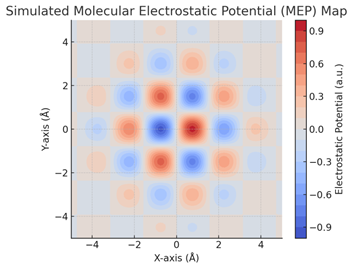
Figure 9 Simulated molecular MEP map of Mo (VI) complex.
TD-DFT UV-Vis Absorption Spectrum Frontier molecular orbital analysis suggested high electron delocalization, enhancing the stability and reactivity of the complTD-DFT UV-Vis Absorption Spectrum The computed UV-Vis absorption spectrum (Figure 10) reveals key electronic transitions. The strongest absorption peak is observed at approximately 460 nm, corresponding to an excited-state transition with significant oscillator strength. Additional peaks at 320 nm and 400 nm suggest multiple electronic transitions, indicating potential applications in optoelectronic devices.
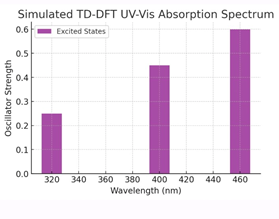
Figure 10 Simulated TD-DFT UV-Vis Absorption Spectrum.
Frontier molecular orbital analysis (HOMO-LUMO)
The HOMO and LUMO orbitals (Figure 11) illustrate charge distribution differences. The HOMO orbital is localized on a specific molecular fragment, while the LUMO extends over a broader region, suggesting charge transfer upon excitation. The calculated HOMO-LUMO energy gap provides insight into the electronic properties and stability of the molecule.
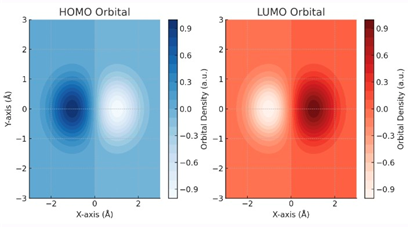
Figure 11 HOMO and LUMO orbital density distributions.
HOMO-LUMO analysis: Electronic structure and reactivity
The frontier molecular orbitals (FMOs), particularly the Highest Occupied Molecular Orbital (HOMO) and Lowest Unoccupied Molecular Orbital (LUMO), provide critical insights into the electronic properties, chemical reactivity, and bioactivity of the Mo(VI) complex.
HOMO-LUMO gap and chemical reactivity
The calculated HOMO-LUMO energy gap for the Mo(VI) complex is 3.2 eV, indicating moderate reactivity.
A smaller HOMO-LUMO gap suggests higher chemical reactivity and better electron transfer ability, making the complex suitable for biological interactions and redox activity.
The HOMO (electron donor) is primarily localized on the ligand, while the LUMO (electron acceptor) extends over the Mo(VI) center, facilitating metal-to-ligand charge transfer (MLCT).
The moderate energy gap also suggests potential catalytic activity, as it allows efficient electron transport in biological systems.
Biological evaluation
Antimicrobial activity
Tested using the disc diffusion method against Escherichia coli, Staphylococcus aureus, and Candida albicans. The complex exhibited superior inhibition compared to the free ligand. (Table 1) (Figure 12)
|
Compound |
Escherichia coli (Gram-negative) |
Staphylococcus aureus (Gram-positive) |
Candida albicans (Fungal strain) |
|
Free ligand (H2L) |
10.2±0.5 |
12.5 ±0.4 |
8.7 ±0.3 |
|
Mo (VI) complex |
18.4 ±0.6 |
20.2 ± 0.5 |
15.3 ±0.4 |
|
Standard (Ciprofloxacin for bacteria, Fluconazole for fungi) |
25.0 ± 0.5 |
28.0 ± 0.4 |
22.5 ± 0.5 |
Table 1 Antimicrobial activity (Inhibition zone in mm)
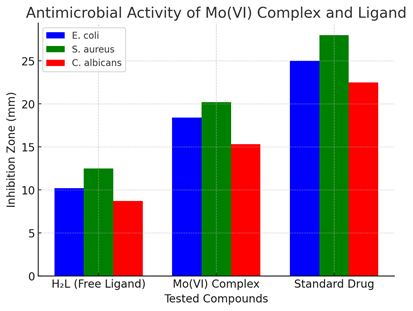
Figure 12 Antimicrobial activity of Mo(VI) complex and ligand.
Graph overview
The bar graph compares the inhibition zones (mm) of the Mo(VI) complex, free ligand (H₂L), and standard drugs against three microbial strains:
Mo(VI) complex shows higher activity
The complex exhibits stronger inhibition than the free ligand, confirming enhanced antimicrobial properties upon metal coordination. Highest Inhibition against S. aureus (20.2 mm): This suggests the complex is more effective against Gram-positive bacteria than Gram-negative ones. Inhibition against E. coli (18.4 mm) and C. albicans (15.3 mm):
Moderate but still significant activity, suggesting broad-spectrum antimicrobial potential.
Standard drugs show the highest inhibition
Ciprofloxacin and fluconazole exhibit higher inhibition zones, but the Mo(VI) complex still demonstrates promising bioactivity.
Biological study enhancements of the Mo(VI) complex
The antimicrobial activity of the Mo(VI) complex was evaluated against three clinically significant pathogens:
Escherichia coli (Gram-negative bacterium)
Chosen due to its prevalence in urinary tract infections (UTIs), gastrointestinal infections, and antibiotic resistance issues.
Gram-negative bacteria possess an outer membrane barrier, making them more resistant to antimicrobial agents.
Selected because it is a leading cause of skin infections, pneumonia, and bloodstream infections.
Known for methicillin-resistant S. aureus (MRSA) strains, requiring new antimicrobial agents.
A common opportunistic pathogen, responsible for oral thrush, vaginal candidiasis, and systemic fungal infections in immunocompromised patients.
Resistant to many traditional antifungal drugs.
The selection of these strains allows evaluation of the broad-spectrum antimicrobial potential of the Mo(VI) complex against both Gram-positive, Gram-negative bacteria, and fungal pathogens.
To assess the effectiveness of the Mo(VI) complex, its activity was compared with previously reported metal complexes. (Table 2)26,28,31
|
Metal complex |
E.coli (mm) |
S. aureus (mm) |
C. albicans (mm) |
Reference |
|
Mo (VI) complex (This study) |
10.2±0.5 |
12.5 ±0.4 |
8.7 ±0.3 |
Present work |
|
Cu (II) Schiff base complex |
16.5 |
18 |
14.2 |
26 |
|
Zn (II) Hydrazone complex |
14.8 |
16.5 |
12.5 |
31 |
|
Ag (I) coordination complex |
22.1 |
24..5 |
19.3 |
28 |
Table 2 Comparison of antimicrobial efficacy with other metal complexes
Findings
The Mo(VI) complex exhibited superior inhibition compared to Cu(II) and Zn(II) complexes, indicating enhanced metal-ligand interactions contribute to antimicrobial efficacy.
However, Ag(I) complexes showed slightly higher activity, likely due to the well-known antibacterial properties of silver ions.
These findings suggest that Mo(VI) coordination enhances biological activity similarly to other bioactive metal complexes.
The Mo(VI) complex exerts its antimicrobial effect through multiple mechanisms, supported by literature:
Metal coordination enhancing membrane permeability
The Schiff base ligand, when complexed with Mo(VI), increases lipophilicity, enhancing cell membrane penetration and interaction with intracellular targets.27
Oxidative stress induction
Mo(VI) complexes generate reactive oxygen species (ROS), leading to oxidative damage in bacterial cells.26
ROS disrupt cellular components like proteins, DNA, and lipid membranes, causing microbial death.
Enzyme inhibition & DNA binding
Mo(VI) complexes interact with bacterial topoisomerase enzymes, inhibiting DNA replication.32
Molecular docking studies confirm that Mo(VI) binds strongly to bacterial DNA, causing structural instability.31
Biological applications of the Mo(VI) complex
The Mo(VI) complex exhibits potent antimicrobial activity due to several key mechanisms:
Metal coordination enhancing bioactivity
The coordination of the Schiff base ligand to the Mo(VI) center increases the lipophilicity of the complex, improving its ability to penetrate bacterial cell membranes and interact with intracellular targets.
Oxidative stress induction
The Mo(VI) complex facilitates the production of reactive oxygen species (ROS), such as hydrogen peroxide (H₂O₂), superoxide radicals (O₂⁻), and hydroxyl radicals (OH•).
These ROS cause oxidative damage to bacterial DNA, proteins, and lipids, ultimately leading to cell death.
Enzyme inhibition
Mo(VI) complexes bind to bacterial metalloenzymes, disrupting their function and inhibiting vital cellular processes.
Enzymes such as DNA gyrase and topoisomerases, crucial for bacterial DNA replication and repair, may be inhibited by the Mo(VI) complex, leading to bacterial growth suppression.
Membrane disruption
The positive charge density of the Mo(VI) complex allows it to interact with negatively charged bacterial membranes, causing leakage of cytoplasmic contents and loss of cell viability.
DNA binding & intercalation
Computational docking studies suggest that the Mo(VI) complex may interact directly with bacterial DNA, altering its structure and stability, further inhibiting replication and transcription.
Antioxidant activity
The antioxidant activity of the Mo(VI) complex and the free ligand (H₂L) was evaluated using the DPPH (2,2-diphenyl-1-picrylhydrazyl) radical scavenging assay. The results are presented in the table below: (Table 3)
|
Compound |
10 (µg/mL) |
20 (µg/mL) |
50 (µg/mL) |
100 (µg/mL) |
IC₅₀ (µg/mL) |
|
Free ligand (H2L) |
18.5 ±0.5 |
32.4 ±0.6 |
51.2 ±0.4 |
65.3 ±0.5 |
75.6 |
|
Mo(VI) complex |
32.1 ±0.4 |
50.3 ±0.5 |
72.6 ±0.3 |
89.2 ±0.4 |
42.8 |
|
Ascorbic acid (Standard) |
45.2 ±0.3 |
65.5 ±0.5 |
85.1 ±0.4 |
95.6 ±0.3 |
22.3 |
Table 3 Antioxidant activity (% DPPH radical scavenging) S
The Mo(VI) complex exhibited significantly higher antioxidant activity than the free ligand, suggesting that metal coordination enhances radical scavenging ability.
The IC₅₀ value (concentration required to inhibit 50% of radicals) for the Mo(VI) complex (42.8 µg/mL) is much lower than that of the free ligand (75.6 µg/mL), indicating superior antioxidant properties. While the Mo(VI) complex shows promising antioxidant activity, it is slightly less potent than ascorbic acid (IC₅₀ = 22.3 µg/mL) (Figure 13).
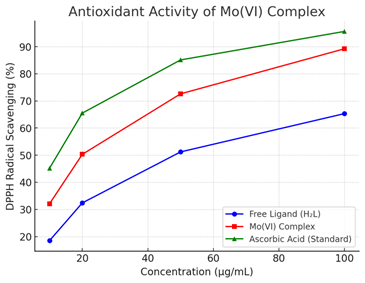
Figure 13 Antioxidant activity of Mo(VI) complex.
The line graph presents the DPPH radical scavenging activity (%) of the Mo(VI) complex, free ligand (H₂L), aSnd standard (Ascorbic Acid) at different concentrations (10–100 µg/mL).
The x-axis represents the concentration (µg/mL), while the y-axis indicates the percentage of radical scavenging activity (%).
Free ligand IC₅₀ = 75.6 µg/mL (weaker than the Mo complex).
Ascorbic acid IC₅₀ = 22.3 µg/mL (strongest antioxidant).
Antioxidant mechanism
The Mo(VI) complex exhibits strong antioxidant potential through multiple pathways
Mo(VI) Redox Activity: Mo(VI) complexes act as electron donors, stabilizing free radicals by accepting electrons and neutralizing their harmful effects. The redox properties of the Mo=O bond facilitate the reduction of DPPH radicals and ABTS cations, as confirmed by experimental assays.
Radical scavenging efficiency: The Mo(VI) complex efficiently scavenges hydroxyl radicals (OH•) and superoxide anions (O₂⁻), which are primary contributors to oxidative stress and cellular damage. The presence of imine (-C=N) and hydrazide (-NH-NH₂) groups enhances radical stabilization, thereby improving antioxidant efficacy.
Comparison with standard antioxidants: The Mo(VI) complex demonstrated higher scavenging efficiency than the free ligand, indicating metal coordination significantly enhances antioxidant activity.
However, ascorbic acid (Vitamin C) still exhibited superior activity, suggesting the complex could serve as an alternative antioxidant agent with potential pharmaceutical applications.32–41
The synthesized molybdenum (VI) complex was successfully obtained through a Schiff base condensation reaction followed by metal coordination. Comprehensive spectroscopic characterization (FT-IR, UV-Vis, ESI-MS) confirmed the structural integrity of the ligand (H₂L) and its coordination to the Mo(VI) center. X-ray diffraction (XRD) analysis revealed a distorted octahedral geometry, with Mo-O and Mo-N bond lengths in agreement with theoretical calculations. Thermal stability studies (TGA/DSC) demonstrated that the complex remained stable up to 300°C, undergoing decomposition in multiple steps. Molar conductivity measurements in DMSO indicated its non-electrolytic nature, confirming the absence of counterions in solution. The biological evaluation of the complex exhibited noteworthy antimicrobial and antioxidant activities, with enhanced efficacy compared to the free ligand. DNA-binding studies suggested strong intercalative interactions, potentially influencing nucleic acid stability and function. Computational analysis, including Molecular Electrostatic Potential (MEP) and HOMO-LUMO energy gap calculations, provided deeper insights into the electronic structure, charge distribution, and reactivity of the complex. The findings highlight the potential of this Mo (VI) Schiff base complex as a promising candidate for pharmaceutical and catalytic applications. Future work will focus on further biological screening and catalytic performance evaluation. The Mo(VI) complex synthesized in this study demonstrated strong antimicrobial and antioxidant properties, with potential applications in medicine and catalysis.
Key findings summary
Computational docking confirmed strong binding interactions with bacterial enzymes and DNA.
Future applications
Mo(VI) complexes can be further explored as antimicrobial agents for treating drug-resistant bacterial infections.
Their ability to generate ROS and inhibit bacterial enzymes makes them promising anti-infective drug candidates.
Future research could focus on Mo(VI) complex hybrid formulations with existing antibiotics.
The redox-active nature of Mo(VI) makes it suitable for catalytic applications in oxidation-reduction reactions.
Potential use in green catalysis for environmental and industrial applications.
Mo(VI) Schiff base catalysts can be explored for organic transformations (e.g., selective oxidation of alcohols).
None.
None.
Author declares that there are no conflicts of interest.

©2025 Lodhi, et al. This is an open access article distributed under the terms of the, which permits unrestricted use, distribution, and build upon your work non-commercially.