eISSN: 2574-9927


Review Article Volume 1 Issue 3
Correspondence:
Received: January 01, 1971 | Published: November 8, 2018
Citation: Dastidar MG, Sarkar BK, Mitra MK, et al. Effect of alkali on different iron making processes. MOJ Mining Met. 2018;1(3):89-98. DOI: 10.15406/mojmm.2018.01.00014
The Alkali metals enter the blast furnace through the raw materials. The alkali in the blast furnace form carbonates, cyanides and silicates at different temperature and heights of the furnace. At higher temperature zones the alkali move up along with the gases in form of vapors and when they reach lower temperature regions they condense on the downward charge materials. Alkali cause decrease in strength of the raw materials. They have catalytic effect on the Boudouard reaction. Alkalis lead to cracking of the refractories, scaffold formation and hanging. Alkali metals are removed with slag, with the off gas and rest circulates in the furnace. Other than the blast furnace Alkali have their negative effect on the other processes of an integrated steel plant like the agglomeration processes and also on the different alternative iron making processes like Corex etc.
Keywords: alkali, blast furnace, catalytic effect, alkali circulation
Iron making is the extraction of iron from its ore to a specified composition. The iron making processes can be classified in two types: smelting and direct reduction. The different iron making processes have been shown in Figure 1.
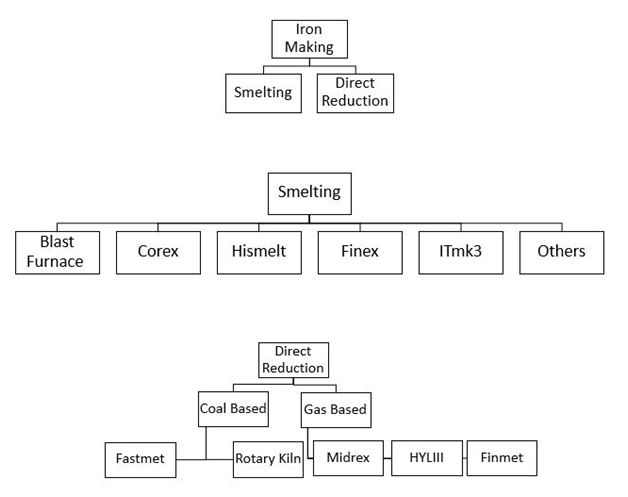
Figure 1 flow diagram showing all the iron making processes.
The blast furnace is the most popular iron making process. The BF is a counter-current heat exchanger where hot gas ascends in the furnace giving heat to the descending raw material while reducing iron oxides. The gas exits the furnace in the top where it has a temperature between 373and 423K. The hot metal and slag are separated during tapping in the bottom of the furnace in a tapping channel which has a skimmer. The skimmer has a small opening underneath it where iron flows since it is denser than slag. Iron is tapped into torpedo cars and slag into ladles.
Temperature profile in the blast furnace
The BF is divided mainly into three distinct temperature zones depending on the temperature and the physical state of the material. The temperature profile of the BF is showed in Figure 2.
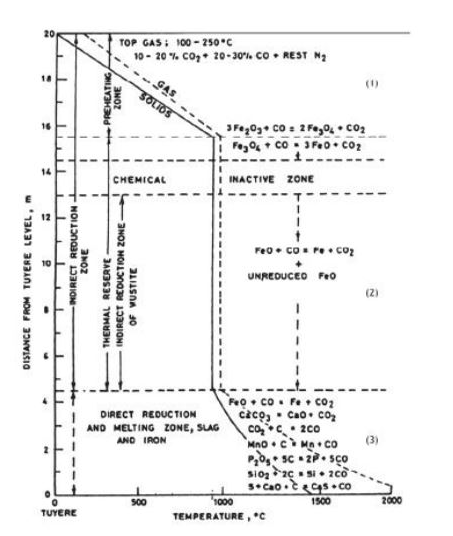
Figure 2 Temperature profile of the Blast Furnace.
Preheating zone
The raw materials moving down the furnace meets the hot gases ascending from the lower portion of the furnace in this zone where the heat exchange occurs between the charge and hot gasses. The temperature of the gases drop from 1073-1273K to 373-423K, leading to increase in temperature of the charge materials to 1073K. In this zone moisture from the burden is vapourized and carbonates decompose. Indirect reduction of hematite to magnetite starts at around 773K and magnetite to wustite reduction takes place in between 873-1173K. Coke is mainly inert in this zone, only the moisture and volatile matter are lost.
Thermal reserve zone
In this zone the temperature of solids and gasses are nearly the same, so there is almost no heat exchange. The temperature in this zone is 1073-1273K. Most of the indirect reduction of wustite to iron takes place in this zone. Water gas shift reaction takes place in this zone which decomposes moisture to provide hydrogen. Hydrogen is considered better reductant than carbon because of faster diffusion.
Melting zone
The cohesive zone starts where the iron bearing material stars to soften and deform, creating a mass of agglomerate particles sticking together, the burden material starts to melt in the lower part of this region. The blast furnace users now have adapted higher diameter furnaces so that the melting zone is lower but has enough volume for the refining process to take place. If the cohesive zone increases then the amount of indirect reduction decreases and as the melting zone increase the chances of silicon pickup also increases. The area below the melting zone is called active coke zone, where all materials (iron and slag) are melted beside coke. The deadman is a stable pile of coke in the hearth extending into the bosh zone.
The charge materials after crossing the thermal reserve zone get heated to 1673K from 1073K. The rising gases are cooled from 2173-2573K to 1073-1273K by the time they reach the thermal reserve zone. The remaining unreduced wustite is directly reduced with coke. Many endothermic reactions take place in this zone: decomposition of limestone, direct reduction of silica, phosphorous oxide and manganese oxide.
The other smelting and direct reduction processes are called the alternative iron making processes. Alternative iron making processes are not dependent on coke as the main source of reductant.
Alternative iron making can further be classified in two ways:
The blast-furnace operator’s main objectives are maximum production of pig iron of the required chemical composition at lowest cost. This can be achieved on the basis of quality of raw materials and by ensuring trouble free operation of blast-furnace. Both parameters are influenced by the presence of undesirable elements. The unwanted elements of the blast-furnace raw materials cause many technical problems in the sintering process as well as inthe blast-furnace ironmaking.1 It is widely known that alkali metals like potassium and sodium cause operational problems in the iron blast furnace.2,3 Alkalis get introduced in the furnace mainly via the raw materials, in different forms of silicates, oxides, carbonates or halides as a part of the gangue in the iron ore charge and coke4 These alkalis entering the furnace leave the blast furnace by mixing with slag and with the suspended fines in the top gas, except those absorbed by the refractories. Alkalis are known to cycle and accumulate in the iron blast furnace. The impact of alkalis on blast furnace operation has been a major concern to the iron making industry. Under certain conditions, the alkali materials, even in relatively low concentration in the burden, can rapidly accumulate in the furnace.
There are many ways in which alkalis affect the furnace production.5 some of them are given below which have been discussed in detail in the later segment of the paper.
The input of alkali should be monitored properly as the best way to avoid alkali circulation. In cases where the ore has higher alkali content many different methods can be employed to remove alkali. Most of the alkali is removed through slag and the rest fly off with the off gasses while the remaining alkali circulate in the furnace.9 The conditions that facilitate alkali removal through slag cause other serious problems like the composition of the hot metal its sulphur, silicon and manganese content are altered.7,10 Many works have been done for the removal of alkali keeping the hot metals final composition intact like for example addition of quartzite, olivine, dunite and calcium chloride.4,11,12 These facilitate the transfer of alkali to slag keeping the basicity in check. The alkali intake of a furnace should thus be kept in check in order to avoid the various problems of alkali circulation.
Alkali metals have different effects on some other iron making processes and other parts of a Integrated steel plant. Stjernberg and Ion C. have reported that alkali metals have deteriorating effect on the refractory of the rotary kiln for iron ore pellet production.13 It has been proposed that potassium vapors penetrate the refractory bricks through voids and brick joints and get entrapped. This potassium reacts with entrapped liquids and condenses for diffusion through the bulk. On reacting with the refractory material secondary mullites form around the primary mullite, this mechanism has been considered responsible for the degradation of the refractory lining. Das et. al. had reported that the flue dust from sinter plants have many value added products but there use is a problem because of presence of alkali.14 The alkali were removed with help of scrubbing and washing still alkali were present.
Among all the iron making processes the blast furnace is the dominant process all over the world. The study of alkali is therefore mainly studied in blast furnace conditions. It is reported that alkali enter blast furnace mainly through the raw materials. The problem mainly occurs because of their circulation of alkali in the blast furnace which leads to their accumulation in the blast furnace. The alkali have effect on the iron ore charge as well as the coke which inturn effects the entire operation and its efficiency.
Alkali circulation in the blast furnace
The important facts about alkali circulation in the blast furnace:
It can be concluded that alkali content in the raw material is not an accurate measure of alkali content in the furnace as the alkali accumulate in the furnace, iron oxides and gangue phases containing silica form low melting phases with alkali. Figure 3 illustrates the circulation of potassium in the blast furnace.
The favorable conditions for the reduction of alkali oxides, halides or silicates to metallic state can be found in the bosh and hearth zones. In the high temperature zone alkali silicates can be reduced by carbon, as in Ellingham diagram. The alkali silicates are reduced by carbon to alkali vapors. Alkali silicates can also be reduced by freshly reduced iron into alkali vapor in high temperature zones. The extents to which these reactions occur are dependent upon the partial pressure of carbon monoxide and temperature.18
Alkali vapors being produced by the reactions mentioned below,19 are carried upwards along the rapidly moving gas stream. Alkali oxides can be reduced either by solid carbon or gaseous carbon monoxide whereas alkali carbonates cannot be reduced by carbon in the blast furnace at lower temperatures. But at lower temperatures the alkali oxides are reduced by carbon monoxide.
At some point the temperature in the furnace becomes so high, that the alkali oxide is displaced by lime from the complex silicates along which it enters the furnace. Alkali cyanides are formed as this alkali oxide reacts with carbon and nitrogen, which, at the temperatures involved, must be entirely in the vapor phase. Cyanides are then converted either to silicates or carbonates after reacting with carbon monoxide and carbon dioxide, which then get deposited on the charge material coming down to the region where the cyanides form. Alkali silicates are the most stable alkali compounds under the blast furnace conditions. Alkali carbonates are stable till 1400°C then liquid cyanide becomes more stable than liquid carbonates. All the reactions mentioned above are given here (A stands for Potassium, K or Sodium, Na):
2A2SiO3 +2C = 2A(g)+2SiO2 + 2CO (1823K for Na and 1923 K for K)
2A2SiO3 +6C = 4A(g)+2Si +6CO (1823K for Na and 1923 K for K)
A2CO3 + CO = 2A + 2CO2 (Above 1473K)
2ACN + 4CO = A2CO3 + 5CO + N2 (At 1373K)
Acertain portion of alkali goes through into the slag and another portion escapes with the top gases. Some of the alkali enters the refractory whereas some of the alkali which were not removed with the slag accumulate in the above fashion in the furnace.
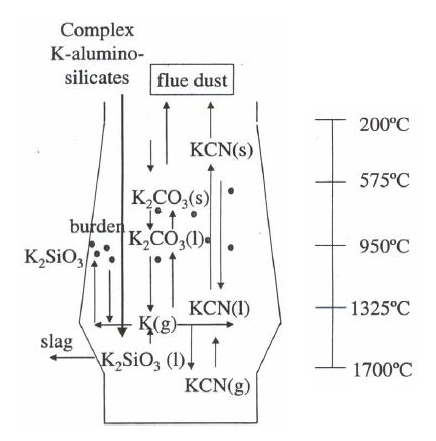
Figure 3 Potassium circulations in the blast furnace.18
Alkali effect on iron ore charge materials in blast furnace
Alkali metals entering the blast furnace along with the raw materials pose many problems to their mechanical strength. The alkalis keep on circulating in the furnace. The alkali vapors rising from below condense on the surface of lump, sinter and pellets leading to a decrease in mechanical strength leading to their fracture hence, deterioration in the gas permeability of the stock.20,21 Pellet disintegration occurs particularly rapidly under the influence of alkalis. Anton has reported in his work that effect on degradation of charge and generation of fines have been determined by reduction and mechanical tests.22 They found coarser metallic iron nuclei under the microscope, which were observed in soaked materials as opposed to in untreated ones. In work done earlier it was seen that alkali chlorides have a catalytic effect on the reduction of hematite to iron all the stages.23 It was seen that although the reduction of hematite to magnetite was accelerated but in case of magnetite to wustite the rate of reduction was lower than in case of hematite. It was stated that due to reduction from hematite to magnetite that magnetite structure would have more pores compared to magnetite in first stage of reduction. The pore morphology did not change although the volume increase gave rise to grater surface area for contact with the reducing gases. In one of the works it was seen that doping with potassium affected only the surface of the charge materials.24 it was seen that potassium increased the reduction rate of wustite. It was also found to be responsible for the groth and nucleation of iron. When potassium was added to partly reduced wustite it increases the transfer of reactants by making it much more permeable to gases. In another work it was found that the addition of alkali oxide had a significant effect on the reduction of wustite.25 The reduction rate decreased with increasing the alkali percent. The oxygen removal from doped wustite samples was higher than pure wustite due to faster whisker formation, this leads to the formation of a porous structure which in turn facilitates the access of the reducing gas. It was observed that swelling and compact disintegration took place clearly by decreasing the alkali content to give the maximum value with pure and less doped samples, this was attributed to the active whisker formation at higher reduction temperatures in pure wustite samples compared to doped samples.
Alkali effect on pellets
Alkali metals enter the blast furnace along with the raw materials and circulate in the furnace. In the lower portions of the furnace the alkali vapors come up with the ascending gases and in the lower temperature zones they condense on the pellets surface and move down along with them. Alkali metals have been reported to have bad effect on the reduction rate of pellets.22,It has been seen that the rate of reduction increases with alkali which can be due to the loss in strength of the pellets leading to cracking which enhances the mass transfer of reducing gases between the iron oxide grains. Many mechanisms have been proposed for the decrease in strength of the pellets due to alkali. Both acid as well as olivine pellets have been tested to study the effect of alkali on the pellets. The alkali present on the charge reacts to form alkali iron silicates which have very low liquidus temperature.26, The alkali silicates for the case of acid pellets form bridges between the iron oxide grains which help to release stress during transformation thus giving a better protection from degradation and swelling than basic pellets.27 In one of the earlier studies the alkali oxides effect on the reduction swelling behavior of hematite was investigated. Abnormal swelling was reported when synthetic Fe2O3 crystals were reacted with alkali oxides. According to the study, the addition of alkali has the following effects on the swelling behavior of Fe2O3 crystals. In the initial stage stress induced by the migration of Na2O and K2O inwards the crystal lead to fine cracks the crystals due to the alkali metal carbonates during the reduction. Then, a remarkable growth of the fibrous iron occurs inside the crack. The growth is enhanced due to the lattice defects which are introduced by the presence of alkali metal ions in hematite crystals. Figure 4 illustrates the average reduction swelling indices of pellet sample as a function of the average degree of reduction under certain reducing conditions. The figure indicates that sulphur in reducing atmosphere leads to pellet volume decrease, but in case of large amounts of potassium the volume increase was found to be 10.5% at the most.27
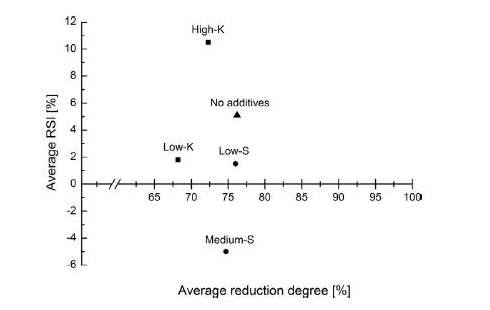
Figure 4 Average reduction swelling indices as a function of the average degree of reduction under certain reducing conditions.27
Alkali effect on sinter
Alkali metals reduce the resistance to cracking of sinters. In a chloride environment, the deposition of chlorides on the sinter surface reduces the surface area in contact with the reducing gases leading to decrease in reduction. Pure alkali atmosphere facilitates the reduction of hematite to magnetite at much lower temperatures leading to development of stresses in the sinter structure finally leading to cracking responsible for disintegration.28 In case of pure Cl atmosphere, due to the inhibiting nature the degradation is avoided in the earlier stages of reduction. Alkali atmosphere increases the reduction kinetics at lower temperatures. The effect of alkali on the strength and reduction of sinters is shown in figures below. P Besta et al. found that most of the alkali carbonates enter the furnace through the sinter mixture and coke. He even reported that the alkali removal depended a lot on the basicicty, FeS, and chlorides present. Increase in basicity of the sinter leads to decrease in the alkali content of sinter whereas sulphides inhibit the alkali transfer into the gas phase. The presence of chlorides support the removal of alkali from the furnace.29 Figure 5 & Figure 6 represent the alkali effect on the abrasion of sinter and on the reduction of sinters respectively.
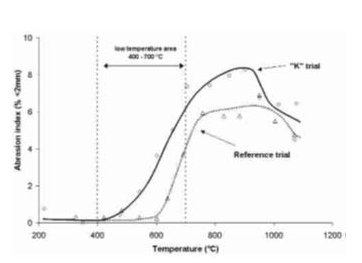
Figure 5 Abrasion curve of sinter alkali atmosphere.28
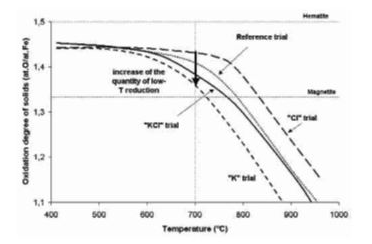
Figure 6 Reduction curves of sinter for the 4 types of trials.28
Alkali effect on metallurgical coke
Coke is used as reductant in the blast furnace process. Coke being the fuel determines the productivity of the furnace. The coke strength, the mineral matter, reactions during it’s descend determine how well the process commences. Alkali metals have been known to have a detrimental effect of the blast furnace cokes strength, which generates fines leading to a lower permeability in the coke bed decreasing the productivity. Alkali are also known for their catalytic action on the gasification reaction along with their tendency to form intercalation compounds.19 This leads to both chemical and mechanical weakening of the coke structure. The penetration into the coke microstructure results in differential volume expansion of the lattice. Crack formation takes place in the structure to relieve the stresses leading to higher contact area for high temperature reactions. The different effects due to alkali presence in coke are: intercalation with coke, swelling and build up of stresses leading to degradation. The effect of alkali on coke strength is uncertain as certain reports suggest the lead to abrasion of the alkali rich layer of coke whereas on the other hand another report suggests that alkali up to 5% does not have any adverse effect on the coke strength.30,31 High ash content of coke leads to higher alkali input leading to liquid phase formation and volume expansion causing cracks. But it was also reported that the alkali effect as catalyst on Boudouard reaction was the main factor in the process of coke degradation.32 The loss of strength of coke is high if the alkali is present at high temperatures even in the absence of carbon monoxide gas. In one of the works it has been shown that both sodium and potassium have a huge effect on the CSR and CRI of the coke. The coke consumption increases due to the high alkali rate leading to irregularities and instability. The ionic radius of alkali is higher than carbon, this causes pronounced lattice disturbance at high temperature due to diffusion of alkali into the graphite crystal system.33 In cokes with lower CRI the catalytic effect of alkali is higher when compared to cokes with higher CRI. The gasification of coke is accelerated with addition of alkali, the activation energy also gets reduced but the effect is not seen at higher temperatures.34,35 The alkali concentration was observed to increase as the coke descended through the furnace.36
The reactivity of coke with oxidizing gases depends on the structure of the coke material and hence in turn influences the coke behavior in the blast furnace. Various components of optical texture of coke effect its performance. S.Gupta had reported that the reactive maceral derived components were less reactive than the inert maceral derived components at high temperatures.37 Metallurgical coke has a microstructure which is composed of anisotropic carbon in the form of mosaics together with flow-type anisotropy as well as isotropic carbon. The fluidity of the carbonization system which determines the size and shape of the resultant anisotropy primarily depend on the physical and chemical properties of the coal. The interlocked and randomly orientated units of the mosaics sow higher resistance to crack propagation and fracture than the isotropic carbon or the flow-type anisotropic carbon. Anisotropic carbon is more resistant to gasification than isotropic carbon and this factor is important for the discussion of Boudouard reaction in the blast furnace. On gasification the mosaic units of anisotropic carbon, do not develop the fissures which occur in the flow-type anisotropy and resulting in better strength. The mosaics, a major part of the optical texture of metallurgical cokes, are more resistant to alkali attack than the flow-type anisotropy. The isotropic carbon is probably much more resistant.38 Co-carbonization has been used to produce cokes with suitable optical textures. The isotropic carbon has higher reactivity with CO2 which can be explained with the help of surface area and intrinsic reactivity. Isotropic carbon carbon has been reported to have a higher chemical reactivity,39 and surface area for unit weight compared to anisotropic carbon.40 The isotropic carbon has lower bulk density compared to anisotropic carbon.41 Metallurgical cokes microstructure contains many disordered carbon units along with complex mixture of alumino-silicates. During the descent of the coke morphological changes take place by formation of ordered carbon layer planes and intercalated species. It has been reported that the circulation of alkali in the furnace are responsible for the morphological changes in the structure of coke mentioned above.41
The alkali content of coke shows a similar trend in the different locations of the furnace although their concentration and distribution fluctuated in the radial direction. It has been reported that the alkali concentration increases in the coke as it descended through the blast furnace, and are evenly distributed throughout the coke matrix.42 In the upper zone of the furnace the reactivity of CO2 of the coke was much less compared to the lower zone coke owing to the increased alkali concentration. Due to the adsorption of the circulating alkali in the furnace the alkali level in the tuyere zone is quite high. The coke in the dead man zone was found to have the largest interlayer spacing and small crystallite dimensions. Alkali were not observed in raceway cokes whereas highest alkali concentration was observed in the deadman coke. The average number of lattice layers is quite large for deadman coke leading to interaction with alkali through diffusion or adsorption rather than intercalation.44 The potassium content of deadman cokes was more than fifteen times of that present in the feed coke. The coke in the tuyere level contains graphite crystals. The formation of graphite crystals on the coke surface decreases the reactivity in turn allowing the coke pieces to slide over each other affecting the mechanical stability of coke.44 Deformation of graphite crystals can be attributed to the vaporization of intercalate present in graphite. This causes dismembering of the crystals into sheets. This leads to generation of fines contributing to higher blast furnace dust. The amount of potassium intake by cokes at the tuyere level is also found to be inversely proportional to the temperature of the tuyere zone as well as to the degree of coke graphitization. The principal forms in which potassium exists have been identified as potassium enriched silicates, aluminosilicates, bonded to carbon and distributed throughout the carbonized minerals. Silicates and aluminosilicates act as alkali receptors yet half of the potassium was reported to be bonded to the carbonized minerals.46 It was seen that the alkali increased as the coke descended the furnace but the potassium content on the surface and core were not different indicating full penetration of potassium into the coke, results have indicated intergranular diffusion of potassium through the coke matrix.47 Coke with higher alkali content are carburized slower. Additional alkali load from injection of waste and recycling materials in the blast furnace is not all bad from the viewpoint of coke consumption. Coke preferentially reacts at its surface. The ash from injected materials forms many small globules on the coke surface, protecting the coke from degradation.48 The catalytic effect of formed iron coke can be used to bring down the thermal reserve zone where the reactivity of coke is enhanced by the presence of condensed alkali vapors.49
Catalytic influence of alkalis on coke reactivity
Many research works have been done over the years proposing different mechanisms of catalysis of the gasification reaction. Work has been done not only on coke but also on char.50 In test of coke doped with alkali, the catalytic effect of different alkali was found to be in the order of: Li<Na<K.51 Alkali metals reduce the activation energy of the gasification reaction, with the addition of alkali the catalyst sites are increased. Alkali carbonates have been tested to find out the catalytic effect on coke. Effect of sodium and potassium carbonates has been studied separately. It was seen that potassium carbonate had higher catalytic effect than sodium carbonate. The vapour cycle mechanism was the reason for the catalytic effect.The reduced carbonates again get converted back to carbonates as soon as they come in contact with CO2.52
It was reported that for the gasification reactions to take place it is necessary that the alkali carbonates be reduced as to provide the area for the reaction to take place.53 It was seen that during high alkali loading the alkali would act as the extra reactant on the other hand the carbon acts the limiting surface area, a carbon monoxide concentration profile with time was observed. It was also reported that the interior of coke structure had lower content of alkali and carbon dioxide due to which the reactions were not so severe in the centere although the alkali reach the interior of coke structure.54 It has been reported that potassium is the main variable in determining the rate of reaction of gasification reaction in ferromanganese production.55 The different mechanisms of catalysis of gasification of carbon was reviewed by Mackee.56 It was reported that the catalytic effect on gasification of carbon could be best understood by sequence of cyclic redox process. In this mechanism the alkali salts react with carbon substrate and are again reoxidised in oxidizing atmosphere. It was also reported that alkali intermidiates might react with the substrate to form intercalation compounds. In one of the experiments it was found that K2CO3 had the most pronounced effect on the coke oxidation and it was also seen that it catalyzed specifically the less ordered crystal structure.57
Alkali effect on refractory lining of blast furnace
The refractory lining in the blast furnace, from the shaft to the hearth is affected by alkali metals. The different zones of the furnace have different refractory bricks and the alkali attack is also different owing to the different temperature in the different zones. It was observed that in the region between shaft and bosh, and the hearth region the wear resistance of the lining was poor. The life of the refractory lining is affected primarily by thermal shock. Unwanted materials like alkali and zinc coming down the furnace along with the charge material have deteriorating effect on the lining life. The deteriorating effect of alkalis on the wear resistance properties of the refractory lining changes with the composition and type. In this review paper the deteriorating effect of alkali on different refractory bricks used in the blast furnace has been discussed. Among the alkali circulating inside the furnace, potassium mainly affects the refractories since sodium gets removed along with slag.
A1203-Si02 bricks are commonly used in the blast furnace; alkali oxides react with these at temperatures above 700oC. The product of alkali oxides with alumina silicates depends a lot on the temperature and the alumina composition of the bricks. The reaction products lead to expansion in volume and hence formation of cracks.58
Primarily carbon based and silicon carbide bricks are used in the lower part of the shaft and the bosh region. These bricks do not show any significant increase in volume upon interaction with alkalis. This can be credited to the amorphous structure of carbon which is resistant to the formation of intercalation compounds. On the other hand refractory in the lower parts of the furnace are highly affected by alkali attack. In between the lower part of the stack to the bosh the refractory were observed to completely wear off, whereas for bosh to the tuyere zone the effect on the refractory linings are almost similar. The refractory in the vicinity of shaft to tuyere where penetrated by foreign elements. It was observed that potassium was present in these refractory in the form of kalsilite. The wear of fireclay bricks is mainly due to kalisilite and its corresponding volume expansion.59 It has also been reported that alkali upon reaction with glass even form liquid phase other than alumino silicates which might lead to wear of the refractory.60
Study has also been carried out to understand the effect of alkali on carbon refractories. To prolong the life of blast furnace carbon refractories in the high temperature zones it is necessary to know the effect of alkalis on their wear resistance properties. The alkali penetrates the carbon bricks through pores and cracks and takes part in reactions that accompany cracking and swelling of the refractory. Refractories with higher number of pores and cracks are less resistant to alkali attack. Inside the refractory KAlSiO4 is the main phase. The formation of KAlSiO4 is accompanied with volume expansion. Most of the carbon refractories of blast furnace in china are made of calcined anthracite as the main constituent. The effect depends a lot on the micro porous structure of the calcined anthracites.61 In case of refractories with calcined anthracite as main constituent the micro porous structure was hampered leading to higher alkali attack. The presence of β-SiC helps in determining the micro porous structure of the refractory, and is much more resistant to alkali attack as compared to SiO2.
The amount of alkali oxides affecting the refractory is different in different regions of the furnace i.e in the upper stack only 5-10% K2O whereas at higher temperature 20-30% of K2O.62 Alkali peeling of fire-clay brick below the tuyere zone is related to K2O attacking the bonding constituents along the formation of high specific volume minerals like leucite and kaliophilite. Alkali attack above the tuyere can be prevented by enough liquid formation to prevent damage. A high silica refractory reacts with alkali oxides at lower temperatures to prevent the subsurface from alkali attack, this happens since silica is attacked first by alkali.
High alumina bricks there are a rapid formation of kaliophilite, which suggests that the use of high alumina under alkali attack deteriorates the lining. It has been reported that silicon nitride has higher resistance to alkali attack at higher temperatures and can be used to protect silicon carbide refractories used in the blast furnace.63 Blast-furnace slag at high temperatures reacts with silicon nitride to yield complex silicides of transition metals and nitrides of these metals. In case of alumina carbide refractories the pore structure is controlled by silicon addition of pore structure, permeability, microstructures, and alkali resistance of Al2O3-C refractories. Addition of silica helps in controlling the pore structure of alumina carbide refractories by promoting insitu formation of mullite and SiC whiskers. It was reported that the refractories with higher silicon carbide whiskers had a denser structure with less pores. The smaller pore size of the refractories means higher the alkali resistance of the alumina carbide bricks.64 In case of higher alkali percentage cracks appear in the refractory lining of the blast furnace stove.65 T. Cheng had previously reported that along with the refractory temperatureseven the iron flow in the hearth region plays an important role on the alkali attack on the refractory.66
Tuyere displacement
Fireclay bricks show remarkable swelling behavior due to the formation of alkali aluminosilicates. The furnace lining above the tuyere, particularly the bosh lining, disappears, that makes the tuyere brick less sustained. It has been suggested that such a displacement of the tuyere brick leads to the movement of the tip of the tuyere in the same direction.59 It becomes imperative to use bricks with lower porosity and higher resistance to alkali attack, in order to avoid tuyere displacement which might eventually lead to tuyere burnout. This technique provides effective cooling of the tuyere zone helpingto delay the alkali reaction. The main cause for the wear of refractories of the furnace walls is from alkali attack due to penetration of alkali vapor. Formation and the growth of alkali aluminosilicate such as kalsilite in fireclay brick lead to cracking and remarkable swelling.
Scaffold formation
The high alkali content of the raw materials – iron ore, limestone, coke in the form of halides, silicates and the erratic working of the blast furnace leads to the formation of scaffolds inside the furnace. A scaffold forms in the low temperature region of the blast furnace i.e. mid and upper stack. The scaffolds in the furnace lead to the reduction in the working volume of the furnace, impeding the smooth downward movement of the burden materials and the ascending gases which reducing the contact time of gas and charge which in turn reduces the process efficiency. In one of the works it was that while the inner layer contained high carbon with low alkali content, the intermediate layer contained about 10% alkali with low carbon content and the outer layer contains relatively lower alkali (4.43%) and carbon contents comparable to those in the intermediate layer.59 Figure 7 shows influence of alkali on scaffold formation.
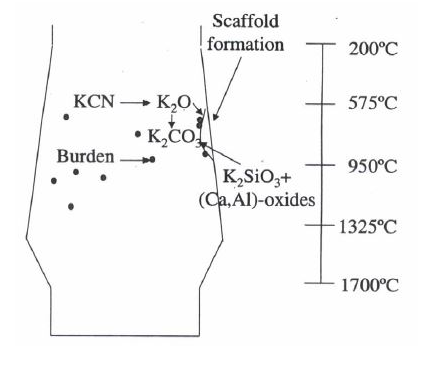
Figure 7 Suggested influence of potassium on the formation of scaffolds in the blast furnace.18
Removal of alkali from blast furnace
The rate at which the alkali get accumulated in the blast furnace depends primarily on their input and output rates.The Tolerable level or the maximum amount of accumulation, depends on the quality of the raw materials being used, composition of hot metal, and mode of operation. Alkali metals exit the blast furnace either along with the top gas or with the slag. Potassium is the alkali which predominantly exits with the top gas sodium is mainly removed with the slag.
The retention of alkalis in the slag results from slow reaction rate rather than due to the thermodynamics. Alkali reacts with silica to form alkali silicates which are removed from the furnace along with slag. The use of limestone is a common practice in blast furnace. In excess it reacts with silica to form calcium silicates which does not allow the formation of alkali silicates. This makes it very important to keep the basicity in check which is mainly given by (CaO+MgO) / (Si02+Al2O3). Here as we can see CaO percentage is proportional to the basicity. It is therefore necessary to maintain a slag regime with low basicity i.e. lower CaO content to avoid the accumulation of alkali in the furnace.67 the conditions required for the removal of alkali from the furnace via slag have detrimental effect on the blast furnace operation and the final hot composition.
Some of the main problems been faced are the pickup of silicon from slag on to metal, Sulphur in metal and manganese partition. The manganese oxides are much more stable than alkali oxides so any presence of alkali oxides in the slag reduces the manganese in the metal. The condition for Sulphur removal contradicts those of alkali removal. The conditions need to be balanced so as to get the required composition of hot metal without much of alkali accumulation. Addition of quartzite, which provides silica for the formation of silicates is one of the many remedies used for the removal of alkali from the furnace through slag. It is important to keep the basicity of slag in check so that the sulphur content in the hot metal can be controlled but the addition of silica reduces the basicity leading to higher sulphur values in the hot metal. Among other remedies the addition of olivine has been quite useful since it provides useful oxides required to remove the alkali as well as maintain the sulphur content of the hot metal. Another such method is the use of dunite which contains high percentage of silicate hydroxides which are ideal for alkali removal.68 Another work done states addition of mixture of dunite and high MgO bearing materials, this helps get rid of alkalis well as helps maintain proper basicity for low Sulphur content.69
Many works have proved before that the addition of Calcium chloride helps in the removal of alkali and scaffolds in the blast furnace.12 CaCl2 weakens the structure of alkalis present in the scaffolds. It has been seen that the addition of CaCl2 increases the alkali uptake by slag.70 Even the removal of alkali from the raw materials has been suggested by chloride volatilization. The addition of CaCl2 during the agglomeration processes for pellets and sinters helps to bring down the alkali percentage in the final product. This way the entry of alkali into the blast furnace can be controlled.
The alkali effect on the other iron making processes is different for the other iron making processes. Corex has this advantage over the blast furnace that they are insensitive to the alkali attack. In Corex since pure oxygen is used there is no cyanide formation in the tuyere level rather vapors of alkali carbonates are formed from the silicate reduction which depends on the CO2 content of the raw gas.71 The alkali output remains the same as input. In many of the direct reduction as well as smelting processes coal is used, which makes it important to understand the effect of alkali on the coal gasification reaction. The effect of alkali on the gasification of char was also studied in which they reported that the alkali salts reacted with the char substrate to crate sites on the surface where gasification could take place.72 Study ofsteam gasification of coal revealed that the alkali carbon complex determined the reaction rate. It was seen that the activation energy was lower for K doped samples compared to original coal.73 One work on the nature of the catalytic site revealed that potassium carbonate was dispersed all over the substrate, reacted with carbonaceous material at the edges of carbon microlayers to form groups. These sites were reported to be the dominant sites of gasification.73 It has also been reported in some works that the alkali showed the strongest influence on the reaction rate of the bouduard reaction which leads to higher coke consumption and electric power consumption in ferromanganese production.74-76
Iron making processes are affected by the presence of alkali in the charge materials. They cause a lot of problems in the proper functioning of the different iron making processes. They are responsible for decrease in strength of the charge materials leading to fines generation which hinder the smooth operation of the blast furnace. They catalyze the bouduard reaction leading to higher coke rate. The catalyzing effect of alkali leads to the solution loss reaction at a lower temperature. This in turn hinders the permeability and the productivity of the blast furnace. If the cohesive zone increases in height, the chances of Silicon pickup also goes up. They even help in formation of scaffolds which lead to problems in the furnace. The removal of alkali from blast furnace can be obtained through slag but that again increases the coke rate. The removal of alkali requires an acid slag which in turn hinders the slag properties required to maintain the final hot metal Sulphur and Silicon content. In this review it has been shown that alkali metals cause more problems in blast furnace compared to the other iron making processes. Itbecomes imperative to keep a check on the input and output of alkali of the reactor as the circulation & buildup of alkali adversely affect the iron production. In case the raw materials itself have high alkali content, the operator should adapt working on acidic slag for some period of time to remove the alkali already in circulation in the furnace. It is important to know the importance of alkali content on the different iron making processes so that the producer can choose the raw materials accordingly. By this measure the productivity of the iron making process is not compromised and also the procedure for the elimination of alkali can be taken into account if required.
None.
There is no conflict of interest in this work.

©2018 Dastidar. This is an open access article distributed under the terms of the, which permits unrestricted use, distribution, and build upon your work non-commercially.