MOJ
eISSN: 2574-8130


Research Article Volume 11 Issue 1
São Leopoldo Mandic School of Medicine, Araras, Brazil
Correspondence: Aline Ribeiro Rodrigues da Paz, São Leopoldo Mandic School of Medicine, Araras, Brazil
Received: March 18, 2026 | Published: May 15, 2026
Citation: Paz ARR, Paula ABN, Santos GAA, et al. Adaptation mechanisms to bereavement in elderly. MOJ Gerontol Ger. 2026;11(1):21‒24. DOI: 10.15406/mojgg.2026.11.00354
Background: Marital bereavement in late life is a potent stressor associated with increased morbidity, systemic inflammation, and accelerated cognitive decline. While grief is a universal experience, the mechanisms underlying successful adaptation versus pathological trajectories remain heterogeneous.
Objective: To map the neurobiological, cognitive, and psychosocial mechanisms of adaptation to bereavement in widowed older adults.
Methods: A scoping review was conducted following the Joanna Briggs Institute (JBI) methodology and the PRISMA-ScR checklist. Searches were performed in PubMed (2020–2025) using MeSH terms for bereavement, widowhood, and adaptation. Results: Adaptation is a multidimensional process. Neurobiologically, studies highlight amygdala hyperreactivity and altered connectivity with corticolimbic regions. Dysfunctional reward system activation in the nucleus accumbens is linked to persistent yearning. Cognitively, bereavement increases the risk of decline, though social engagement and resilience serve as protective modulators. Psychosocially, meaning-making, spirituality, and active coping strategies are key to healthy adaptation.
Conclusion: Successful adaptation involves complex interactions between biological and social variables. Identifying these mechanisms facilitates personalized geriatric care and highlights the need for targeted interventions to prevent prolonged grief in the elderly.
Keywords: aged, bereavement, widowhood, adaptation psychological, resilience psychological, geriatrics
Spousal bereavement in late life represents one of the most significant psychosocial transitions, frequently leading to a profound disruption of the individual’s biological and psychological equilibrium.1 In gerontology, this phenomenon is widely associated with the "widowhood effect," a clinical observation of a substantial increase in the risk of morbidity and mortality in the months following the loss of a life partner.2 Conceptually, modern bereavement theories suggest that this transition is not merely a transient emotional state, but a complex process of multidimensional adaptation that requires the reorganization of internal attachment working models and the reconstruction of a singular identity outside the marital dyad.3,4
From a neurobiological perspective, the loss of a spouse signifies the removal of a primary "external regulator" of the older adult's autonomic nervous system. The brain, having been habituated to the presence of the partner as a constant source of safety and reward, enters a period of significant dysregulation characterized by limbic hyperactivity and a compensatory effort from the prefrontal cortex to maintain emotional homeostasis.1,5 This transition is governed by the functional plasticity of specific neurocircuitries, where a failure to integrate the loss into a life narrative can result in sustained activation of the hypothalamic-pituitary-adrenal (HPA) axis, promoting systemic inflammation and increasing vulnerability to cognitive decline.2,3
Additionally, the role of the dopaminergic reward system emerges as a central pillar in understanding pathological grief in the elderly. The nucleus accumbens, when processing memories of the deceased, can generate a state of "attachment addiction"—a conceptual framework for yearning that manifests as a persistent biological craving.5 This mechanism explains why many older adults experience difficulty in redirecting motivational resources toward new activities, remaining trapped in an emotional seeking cycle that consumes cognitive and physiological reserves.3,5 Thus, grief is increasingly understood as a profound neurochemical reorganization.5
This study was conducted as a scoping review, following the three-step process proposed by the Joanna Briggs Institute (JBI) and adhering to the Preferred Reporting Items for Systematic Reviews and Meta-Analyses extension for Scoping Reviews (PRISMA-ScR) guidelines.
The Population-Concept-Context (PCC) framework was utilized to establish the research question: "What are the mechanisms of adaptation to bereavement described in literature for widowed older adults?" A systematic search was performed in the PubMed/MEDLINE database. To ensure contemporary relevance, the search was limited to peer-reviewed articles published between January 2020 and December 2025. Search strings utilized a combination of Medical Subject Headings (MeSH) and keywords, including: (“Bereavement”[Mesh] OR “Grief”[Mesh]) AND “Widowhood”[Mesh] AND “Aged”[Mesh] AND (“Adaptation, Psychological”[Mesh] OR “Resilience, Psychological”[Mesh]).
The systematic mapping of the literature reveals that adaptation to bereavement in the geriatric population is a non-linear, multidimensional phenomenon, governed by the complex interplay of neurobiological, cognitive, and psychosocial variables. The neurobiological substrate of grief in older adults is characterized by a significant reorganization of emotional processing circuits, where functional Magnetic Resonance Imaging (fMRI) evidence indicates that the amygdala serves as a primary hub for acute distress. In maladaptive grief trajectories, studies observe persistent amygdala hyperreactivity coupled with diminished functional connectivity between the amygdala and the ventromedial prefrontal cortex (vmPFC). This disconnection suggests a failure in "top-down" emotional regulation, where age-related changes in prefrontal executive control may limit the brain’s capacity to inhibit limbic distress signals, potentially prolonging the physiological stress response.
Furthermore, the adaptation process is heavily influenced by the dopaminergic reward system. Research into Prolonged Grief Disorder (PGD) highlights a paradoxical activation of the nucleus accumbens in response to reminders of the deceased. While healthy adaptation involves a gradual process of "de-binding" or reward-remapping, pathological trajectories are marked by a "craving" mechanism. In these instances, the memory of the deceased remains a primary reward stimulus, trapping the individual in a cycle of chronic biological seeking (yearning) that consumes significant physiological and motivational resources (Figure 1).

Figure 1 Neurobiological Mechanism of the Reward System in Adaptive versus Maladaptive Grief.
Legend: The diagram contrasts the role of the reward system, specifically the nucleus accumbens, in the mourning process. Following the loss of a primary reward stimulus (the spouse), two distinct mechanisms may occur. In the Maladaptive pathway, persistent nucleus accumbens hyperactivity creates a state of "attachment addiction," where memories of the deceased trigger a biological craving known as yearning, a hallmark of Prolonged Grief Disorder. In the Adaptive pathway, the brain undergoes "reward remapping," a process of dopaminergic stabilization that allows the older adult to detach from the chronic seeking cycle and reinvest motivational resources into new social bonds and life purposes.
The cognitive domain emerges as a critical mediator between the emotional shock of loss and long-term health outcomes. Spousal loss is associated with a heightened risk of decline in executive function and processing speed; however, cognitive reserve and resilience act as potent modulators. Older adults with higher baseline executive control demonstrate an enhanced capacity for cognitive reappraisal, facilitating a more rapid stabilization of the autonomic nervous system (ANS) and preventing the sustained exacerbation of systemic inflammatory markers, such as Interleukin-6 (IL-6) and C-reactive protein (CRP), which are frequently elevated during the acute phase of the "widowhood effect" (Figure 2).
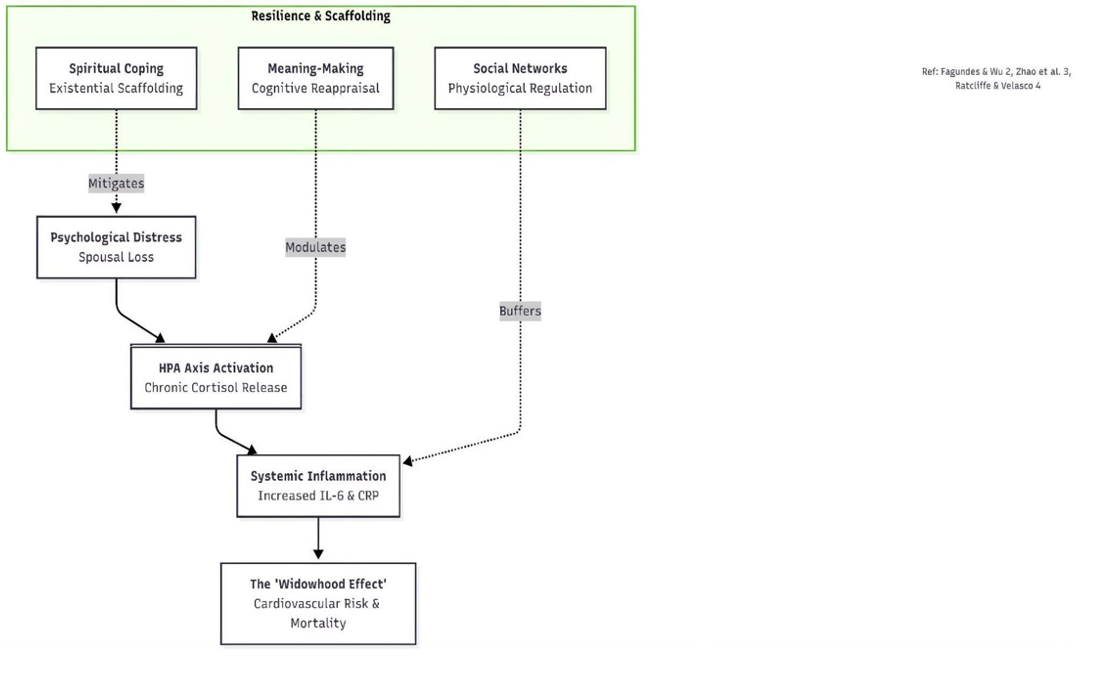
Figure 2 Systemic pathways of bereavement-induced distress and the role of resilience buffers.
Legend: This diagram synthesizes the transition from psychological distress to systemic health outcomes in widowed older adults. The primary pathway illustrates how chronic distress activates the hypothalamic-pituitary-adrenal (HPA) axis, leading to sustained levels of pro-inflammatory markers such as IL-6 and C-reactive protein (CRP), which underpin the "widowhood effect". Intersecting this pathway are critical resilience buffers identified in the literature: meaning-making and spiritual coping provide cognitive and existential scaffolding that modulates the stress response, while social networks act as essential physiological regulators that mitigate systemic inflammation. The integration of these factors determines the trajectory between pathological decline and healthy adaptation.
Psychosocially, the mechanism of meaning-making is essential to integrate the bereavement experience into a coherent life narrative, thereby preventing the fragmentation of self-identity outside the marital dyad. Complementing this internal reorganization, spiritual coping and active social engagement function as "existential scaffolding," providing a teleological framework that mitigates profound loneliness. In contrast, maladaptive psychosocial patterns, such as chronic emotional avoidance and social withdrawal, are associated with a failure to oscillate between the loss-oriented and restoration-oriented phases of the Dual Process Model. These avoidant behaviors are highly predictive of poorer clinical outcomes, as they correlate with sustained activation of the hypothalamic-pituitary-adrenal (HPA) axis and heightened systemic vulnerability (Figure 3).
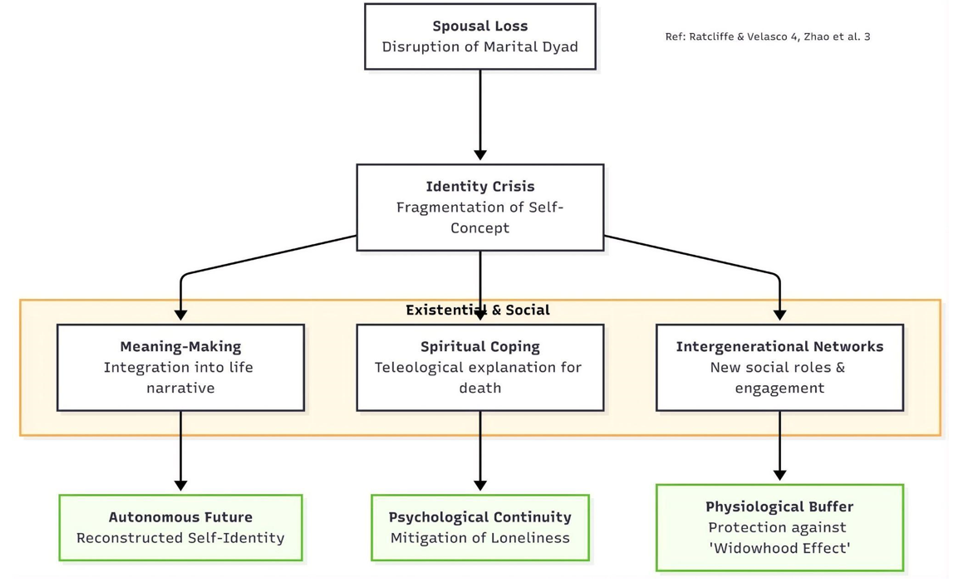
Figure 3 Psychosocial scaffolding and the process of identity reconstruction in late-life bereavement.
Legend: This diagram illustrates the transition from the disruption of the marital dyad to the reconstruction of an autonomous identity. Spousal loss initiates a crisis of the self-concept, which requires "existential scaffolding" to navigate. The model highlights three critical mediators: Meaning-making, which integrates the loss into a coherent narrative; Spiritual coping, providing a teleological framework that ensures psychological continuity; and Intergenerational networks, which offer new social roles. Together, these processes act as buffers that facilitate a transition from a shared history to an autonomous future, ultimately protecting the individual from the isolation-driven physiological decline associated with the widowhood effect
The synthesis of the evidence gathered in this scoping review indicates that the "neural signature" of grief in older adults is a defining factor in clinical outcomes, yet its interpretation requires a significant shift in current geriatric paradigms. While the literature consistently points to amygdala hyperreactivity as a hallmark of acute distress , a deeper analysis suggests that the primary deficit in late-life bereavement may not be the intensity of the emotional surge itself, but rather a diminished "top-down" inhibitory capacity of the prefrontal cortex.1,5 It is hypothesized that the geriatric brain is structurally more vulnerable to becoming "locked" in a state of limbic hyperarousal due to age-related changes in neural connectivity. From this perspective, emotional instability in widowed seniors may reflect a neurobiological failure of cognitive "brakes," necessitating interventions aimed at strengthening executive function rather than merely sedating the emotional response.
When contrasting the findings regarding the dopaminergic reward system, a significant paradox emerges. The nucleus accumbens, an area typically associated with motivation, may paradoxically become a source of profound psychological pain through the mechanism of "attachment addiction".5 This conceptual framework posits that for a subset of the elderly, grief represents a high-energy state of "chronic biological seeking" rather than a purely depressive, low-energy state. This distinction is clinically critical; if the underlying pathology is a dopaminergic loop of "yearning" rather than a serotonergic deficit of "sadness," the conventional reliance on Selective Serotonin Reuptake Inhibitors (SSRIs) may be fundamentally misaligned with the patient’s neurobiological substrate. Therefore, a reconsideration of pharmacological protocols is warranted, potentially focusing on "reward-relearning" strategies and executive reinforcement.
Furthermore, the cognitive stability reported in resilient groups of older adults provides a necessary counterpoint to the purely pathological view of widowhood. While bereavement is a risk factor for cognitive decline, it is not an inevitable trajectory. The process of "Meaning-Making" is suggested to act as a high-level executive task that performs endogenous neuromodulation, re-tuning the autonomic nervous system.4 This bridges the gap between psychosocial variables—such as spirituality—and the "hard" biological markers of systemic inflammation. An older adult who successfully reconstructs a life narrative may achieve active stabilization of the HPA axis through cognitive reappraisal, protecting the brain from the potential neurotoxic effects of chronic cortisol exposure.
Finally, the "widowhood effect" should be reinterpreted not as an unavoidable biological sentence, but as a systemic failure of co-regulation.2,3 Given that the aging brain functions as a social organ relying on external regulators for autonomic balance, the loss of a partner creates a "regulation void." Geriatric protocols must evolve to treat social connectivity as a vital clinical marker, equivalent to blood pressure or glucose levels. Future research should shift from observing decline to investigating how "restoration-oriented" activities specifically trigger neural plasticity in the aging brain.
The present scoping review demonstrates that adaptation to bereavement in widowed older adults is a high-order biological and psychosocial reorganization. The evidence suggests that the success of this transition is deeply rooted in the functional plasticity of specific neural circuits, governed by a complex interplay between limbic reactivity—specifically within the amygdala—and the executive capacity of the prefrontal cortex to modulate emotional distress.
This review bridges a critical gap by illustrating that the death of a spouse represents a profound disruption of a primary physiological regulator. The persistent activation of the reward system in the nucleus accumbens provides a theoretical basis for why some older adults remain in a state of chronic seeking, shifting the geriatric perspective from viewing grief solely as a psychological state to recognizing it as a state of neurobiological dysregulation.
From a clinical standpoint, the integration of cognitive health and psychosocial resources—such as meaning-making and spiritual resilience—functions as a protective scaffolding that prevents the exacerbation of systemic inflammation and cardiovascular vulnerability. Therefore, comprehensive geriatric care must transcend traditional symptom management. It is essential to implement screening protocols that assess neurobiological markers of distress, such as yearning intensity, alongside social connectivity.
Finally, this review identifies a significant gap in the literature regarding non-pharmacological interventions, such as neurofeedback or specialized cognitive-behavioral approaches, designed to specifically address the neural pathways of grief in the elderly. Future research should focus on developing these precision-based interventions to promote resilient adaptation, ensuring that the "widowhood effect" can be mitigated through evidence-based, multidimensional support.
None.
The authors declare that there are no conflicts of interest.

©2026 Paz, et al. This is an open access article distributed under the terms of the, which permits unrestricted use, distribution, and build upon your work non-commercially.