MOJ
eISSN: 2573-2919


Research Article Volume 11 Issue 1
 Eno-obong Sunday Nicholas,2 Ezekiel Adi Siman1
1Department of Chemistry, Faculty of Physical Sciences, Federal University Wukari, Nigeria
2Department of Pure and Industrial Chemistry, University of Nigeria, Nsukka
Correspondence: Ifeoma Juliet Opara, Department of Chemistry, Faculty of Physical Sciences, Federal University Wukari, Taraba State. P.M.B.1020 Wukari, Nigeria, Tel +2348035306015
Received: December 26, 2025 | Published: January 7, 2026
Citation: Opara IJ, Eno-obong SN, Siman EA. Harnessing sawdust for clean energy: production and optimization of bioethanol in Nigeria. MOJ Eco Environ Sci. 2026;11(1):5-9. DOI: 10.15406/mojes.2026.11.00373
Sawdust biomass was successfully employed for bioethanol production using Response Surface Methodology (RSM). The production process comprised three main stages: pretreatment, fermentation, and quantification of ethanol. Proximate analysis was carried out on the sawdust biomass to ascertain its potential for bioethanol production. The results showed that it has the potential for bioethanol production due to its relatively high volatile matter, low ash, and low moisture content which will improve the heating value of bioethanol. The design expert gave the optimum conditions for pretreatment and fermentation of reducing sugar. The pretreatment conditions include: 0.1% of HCl, 5 g of sawdust, pretreatment time of 45 min. which gave 0.400588 v/g as optimum value of fermentable sugar produced. While the optimum condition for fermentation of the reducing sugar produced include: 3 g of yeast, temperature of 37.5 °C and fermentation time of 48 h, which gave optimum yield 1.1824 v/g of bioethanol. These results demonstrate that sawdust is a viable, renewable, and environmentally friendly feedstock for bioethanol production.
Keywords: sawdust, biomass, bioethanol, biofuel, pretreatment, fermentation, renewable energy
Bioethanol emerges as the key factor in the world’s renewable energy sector, and it is mainly generated through the fermentation of plant sugars, making provision for a sustainable alternative to fossil fuels.1–4 Fossil fuels continue to be the primary source of global energy generation, accounting for around 80% of global energy consumption.2,5,6 Due to this reliance, greenhouse gas emissions have increased, with carbon dioxide (CO₂) being identified as the primary cause of anthropogenic climate change.7,8 Roughly 40% of the world's carbon emissions come from coal use alone, which is estimated to be over 6 billion metric tons per year and creates up to 18 billion tons of CO2.7,9 Global attempts to switch to cleaner, low-carbon, and renewable energy sources have increased due to the negative effects these emissions have on the environment, human health, and the economy.1,2 The detrimental effects of relying too much on fossil fuels are especially felt in Nigeria.10 The nation released about 80.5 million metric tons of CO2 yearly in 2010, ranking 44th in the world.11,12 Emissions are expected to increase further due to urbanization, industry, and population growth. Fuel combustion, gas flaring, cement manufacturing, and bunker fuels are important contributions.13 Nigeria is a significant producer of crude oil, but it is largely dependent on imported refined petroleum products, particularly gasoline. In addition to increasing CO2 emissions, burning these fuels emits dangerous volatile organic chemicals like benzene, toluene, and xylenes, which are extremely dangerous for the environment and public health.14,15 The Nigerian government enacted the National Biofuels Policy and Incentives,16 which required the blending of gasoline with up to 10 % bioethanol (E10) in order to lessen environmental damage, decrease reliance on fuel imports, and stabilize energy costs. This program signaled a strategic change in the transportation industry toward the use of renewable energy and the reduction of emissions. Biomass-based systems are particularly appealing among renewable energy options because they can lower emissions while improving energy security.2,17,18 Globally, biomass adds about 50 exajoules to the energy mix and has benefits including year-round availability, renewability, and near carbon neutrality.7,19–21 Biomass can be stored and transformed into a variety of energy carriers, unlike sporadic sources like wind and solar, which makes it appropriate for emerging nations with rising energy demands.14,15,1 Lignocellulosic biomass, which makes up around 90% of all plant matter worldwide, is the most prevalent and sustainable type of biomass.21,22 Cellulose, hemicellulose, and lignin make up lignocellulosic materials, which are mostly derived from forestry byproducts and agricultural leftovers. These feedstocks have many advantages, such as low cost, extensive availability, and little rivalry with food resources, despite structural complexity that makes conversion more difficult.24,25 Sawdust is a promising feedstock for the production of sustainable bioethanol, and is also a significant by-product of the wood from timber industries, which is still largely underutilized despite its high cellulose content and potential for energy.25 The ability of the industrial waste to be turned into a renewable fuel; its transformation into bioethanol is a prime example of the circular economy and waste-to-energy concepts. It is commonly known that bioethanol, which is produced by fermenting biomass sugars, is a renewable fuel that can be used as a gasoline substitute or supplement.1,2 Because of the fuel's oxygen content and physicochemical characteristics, ethanol-gasoline blends have been demonstrated to increase combustion efficiency and lower important regulated emissions like carbon dioxide (CO₂) and hydrocarbons (HC).26 Due to its higher octane rating, which enhances engine knock resistance, and its cleaner combustion characteristics, which lower emissions, bioethanol is well suited for use in gasoline-ethanol blends and flex fuel engines despite having a lower energy density (60-70%) that of gasoline.27 Therefore, producing bioethanol from sawdust not only provides a renewable energy source but also aids in waste management, pollution reduction, and energy security, particularly in countries that heavily rely on fossil fuels in the world.
All reagents used in this study were purchased from commercial suppliers (Sigma Aldrich, USA) unless otherwise stated. Standard approved procedures were used to carried out the analyses to ensure the reliability and accuracy of the results according to the standard methods by AOAC.28
Sample collection
Sawdust was collected from a Sawmill in Wukari, Taraba State, Nigeria as shown in Figure 1 below. The collected sample was washed, dried, pulverized, and later sieved using a mesh with a size of 1000 mm to obtain a fine sawdust particle, which was used for analysis following the design expert experimental runs.
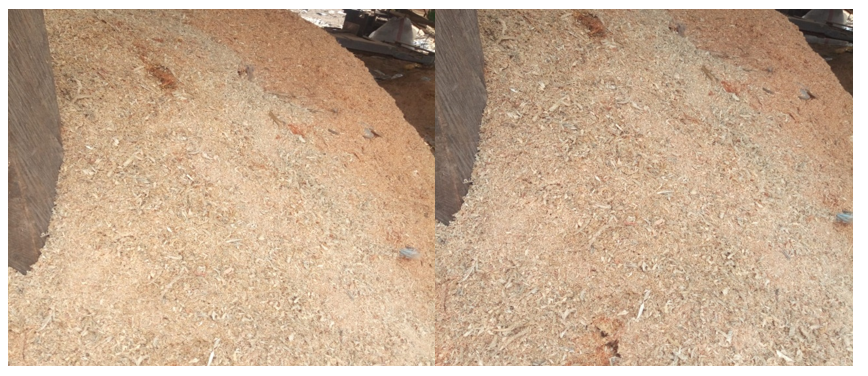
Figure 1 Picture of the collected sample (Sawdust).
Analysis of the collected sample
Proximate analysis of samples: Proximate analysis was carried out following the method described in ASTM29 with little modification.
Moisture content
The moisture content of the sawdust samples was assessed using the oven-drying method. A 2 g portion of each sample was accurately weighed into a watch glass and placed in an oven set at 105 °C. The samples were dried to a constant weight over 2 h. After cooling in a desiccator, the weight loss was recorded, and the moisture content was calculated as a percentage of the original sample mass.
MC = W1-W2 /W1×100
W1= initial weight
W2 = Weight after drying
Ash content
A Portion (2 g) sample of the sawdust was accurately weighed into a preweighed porcelain crucible. The crucible and its contents were then placed in a muffle furnace preheated to 600 °C and maintained at this temperature for 1 h to ensure complete combustion of the organic matter. After ashing, the crucible was carefully removed and allowed to cool in a desiccator to prevent moisture absorption. Once cooled, the crucible containing the residual ash was reweighed, and the ash content was calculated based on the weight difference, expressed as a percentage of the original sample mass.
AC (%) = (W2/W1) × 100
W1 = Original weight of dry sample
W2 = Weight of ash after cooling.
Volatile matter
A 2 g portion of the sample was placed in a partially covered crucible and heated in a muffle furnace at approximately 300 °C for 10 mins. After heating, the crucible was removed and allowed to cool in a desiccator. The loss in weight, corresponding to the volatile components released during heating, was measured and expressed as a percentage of the original sample mass.
VM = (W1-W2)/W1 × 100
W1 = Original weight of the sample
W2 = Weight of sample after cooling.
Preparation of sawdust for bioethanol production
Acid pretreatment: Dilute hydrochloric acid (1%) at varying concentrations was prepared and added to different weights of sawdust in separate conical flasks, according to the experimental design generated by Design-Expert software (17 runs). Each flask was covered with cotton wool and aluminum foil to minimize contamination and evaporation. The mixtures were then heated in a pressure pot at 121 °C for 1 h, until the pressure indicator began rotating, and maintained at this temperature for the full duration. After heating, the flasks were removed and allowed to cool to room temperature. The pH of each solution was subsequently adjusted to between 7 and 8 using an appropriate neutralizing agent. The resulting supernatant was collected and used for the determination of reducing sugars. Table 1 as shown below summarizes the experimental runs for the sawdust pretreatment using the response surface methodology (RSM).
|
Std. |
Run |
Factor 1 |
Factor 2 |
Factor 3 |
|
A: Amount of acid (W%) |
B: Amount of biomass (sawdust) (g) |
C: Time (Min.) |
||
|
7 |
1 |
0.1 |
12.5 |
60 |
|
15 |
2 |
1.55 |
12.5 |
45 |
|
5 |
3 |
0.1 |
12.5 |
30 |
|
16 |
4 |
1.55 |
12.5 |
45 |
|
4 |
5 |
3 |
20 |
45 |
|
6 |
6 |
3 |
12.5 |
30 |
|
3 |
7 |
0.1 |
20 |
45 |
|
12 |
8 |
1.55 |
20 |
60 |
|
11 |
9 |
1.55 |
5 |
60 |
|
9 |
10 |
1.55 |
5 |
30 |
|
1 |
11 |
0.1 |
5 |
45 |
|
10 |
12 |
1.55 |
20 |
30 |
|
14 |
13 |
1.55 |
12.5 |
45 |
|
17 |
14 |
1.55 |
12.5 |
45 |
|
13 |
15 |
1.55 |
12.5 |
45 |
|
2 |
16 |
3 |
5 |
45 |
|
8 |
17 |
3 |
12.5 |
60 |
Table 1 Experimental runs from design expert for pretreatment of sawdust
Fermentation of pre-treated sawdust
The pretreated sawdust hydrolysates were subjected to fermentation using yeast inoculation. For each experimental run, 250 mL conical flasks containing the pretreated solution were inoculated with an appropriate amount of yeast and incubated under varying temperatures and time periods as specified by the 17-run experimental design generated by Design-Expert software. The fermentation conditions for all runs are summarized in Table 2 below, illustrating the range of temperature and incubation time combinations evaluated to optimize ethanol production.
|
Std. |
Run |
Factor 1 |
Factor 2 |
Factor 3 |
|
A: Amount of yeast (g) |
B: Time (H) |
C: Temperature (oC) |
||
|
9 |
1 |
3 |
24 |
25 |
|
14 |
2 |
3 |
48 |
37.5 |
|
3 |
3 |
1 |
72 |
37.5 |
|
6 |
4 |
5 |
48 |
25 |
|
15 |
5 |
3 |
48 |
37.5 |
|
1 |
6 |
1 |
24 |
37.5 |
|
8 |
7 |
5 |
48 |
50 |
|
7 |
8 |
1 |
48 |
50 |
|
12 |
9 |
3 |
72 |
50 |
|
16 |
10 |
3 |
48 |
37.5 |
|
11 |
11 |
3 |
24 |
50 |
|
10 |
12 |
3 |
72 |
25 |
|
5 |
13 |
1 |
48 |
25 |
|
4 |
14 |
5 |
72 |
37.5 |
|
17 |
15 |
3 |
48 |
37.5 |
|
2 |
16 |
5 |
24 |
37.5 |
|
3 |
17 |
3 |
48 |
37.5 |
Table 2 Experimental runs from design expert for fermentation of sawdust
Fractional distillation
The fermented sawdust samples were concentrated using rotary-evaporator to ascertain the quantity of ethanol produced. The bioethanol produced was quantified using the method described by Zhang et al.30 for ethanol concentration and glucose concentration using gravimetric method. Fermentation broth (2 ml) is pretreated with 1M 3% Ca(OH)2 to remove organic acids and glycerol. Trichloroacetic acid (TCA) was then added to the fermentation broth in order to precipitate proteins and cell debris in the sample under acidic conditions. A straightforward centrifugation procedure was used to remove the precipitated components. Hexadecyltrimethylammonium bromide (CTAB) is then added to the supernatant to precipitate polysaccharides and any leftover proteins, which are then separated by centrifugation. Following these procedures, reducing sugars which were oxidized by adding 3, 5-dinitrosalicylic acid (DNS) under alkaline conditions with heating and quantitatively assessed by colorimetric detection were the primary interfering substance remaining present in the sample. In a parallel test, the sample was reacted with potassium permanganate (potassium permanganate was used in place of potassium dichromate to prevent its carcinogenicity), and the color change from the total alcohols and reducing sugars in the sample was quantified. The overall alcohol content in the sample can be determined by deducting the amount of absorbance rise caused by reducing sugars from the remaining absorbance decrease.
Proximate analysis
Proximate analysis was carryout on the sawdust biomass and the result shown in Table 3 below indicated that sawdust biomass has the potential for bioethanol production due to relatively high volatile matter, low ash, and low moisture content which will improve the heating value of bioethanol similar results has been reported by Manyuchi et al.31
|
Sample |
Moisture content (%) |
Ash content in (%) |
Volatile matter (%) |
|
Sawdust |
3.935 |
3.472 |
25 |
Table 3 Result of Proximate analysis
Processing of sawdust biomass for bioethanol production
Total of 17 experimental runs were established by design expert software using response surface methodology and adopting the central composite design. The results shows that for analyzing a factor, RSM requires a minimum of 17 experimental runs. Pretreatment of sawdust using RSM indicated that 0.1 w% of acid and 5 g of sawdust at 45 min. gave the optimum parameters for acid pretreatment of sawdust as indicated in Table 4 below. Also, Figure 2 below displayed the interaction among the three factors: amount of acid, amount of biomass and amount of fermentable sugar. The result has shown that the optimum conditions for producing fermentable sugar from Design expert runs (RSM) are 5 g of sawdust, 0.1% HCI, 45 min. duration which gives maximum yield of 0.400588 v/g fermentable sugar. Table 5 below showed the experimental run of the amount of yeast, time and temperature used in fermentation for bioethanol production. Figure 3 as shown below is the three dimensional surface diagram showing the interaction between three factors: temperature, amount of yeast added and quantity of ethanol produced. The optimum parameters for the production of bioethanol are 3 g of yeast, time (48 h), and 37.5 °C which gave the optimum bioethanol quantity on average (1.18824 v/g). This is the value at the point of interception of the three parameters on the 3D surface diagram shown in Figure 4 below. The yield of bioethanol produced is comparable to what has been reported in literature by Aja and Braide.32
|
Std. |
Run |
Factor 1 |
Factor 2 |
Factor 3 |
Response 1 |
|
A: Amount of acid (W%) |
B: Amount of biomass (sawdust) (g) |
C: Time Min. |
Amount of Fermented sugar |
||
|
7 |
1 |
0.1 |
12.5 |
60 |
0.5 |
|
15 |
2 |
1.55 |
12.5 |
45 |
0.2 |
|
5 |
3 |
0.1 |
12.5 |
30 |
0.2 |
|
16 |
4 |
1.55 |
12.5 |
45 |
0.2 |
|
4 |
5 |
3 |
20 |
45 |
0.5 |
|
6 |
6 |
3 |
12.5 |
30 |
0.11 |
|
3 |
7 |
0.1 |
20 |
45 |
0.3 |
|
12 |
8 |
1.55 |
20 |
60 |
0.3 |
|
11 |
9 |
1.55 |
5 |
60 |
0.4 |
|
9 |
10 |
1.55 |
5 |
30 |
0.5 |
|
1 |
11 |
0.1 |
5 |
45 |
0.4 |
|
10 |
12 |
1.55 |
20 |
30 |
0.6 |
|
14 |
13 |
1.55 |
12.5 |
45 |
0.3 |
|
17 |
14 |
1.55 |
12.5 |
45 |
0.5 |
|
13 |
15 |
1.55 |
12.5 |
45 |
0.7 |
|
2 |
16 |
3 |
5 |
45 |
0.5 |
|
8 |
17 |
3 |
12.5 |
60 |
0.6 |
Table 4 Experimental runs from design expert for pretreatment of Sawdust with the amount of fermented sugar produced
|
Std. |
Run |
Factor 1 |
Factor 2 |
Factor 3 |
Response 1 |
|
A: Amount of yeast (g) |
B: Time (H) |
C: Temperature (oC) |
Quantity of ethanol (v/g) |
||
|
9 |
1 |
3 |
24 |
25 |
1.1 |
|
14 |
2 |
3 |
48 |
37.5 |
1 |
|
3 |
3 |
1 |
72 |
37.5 |
1.2 |
|
6 |
4 |
5 |
48 |
25 |
1.2 |
|
15 |
5 |
3 |
48 |
37.5 |
1.3 |
|
1 |
6 |
1 |
24 |
37.5 |
1 |
|
8 |
7 |
5 |
48 |
50 |
1.2 |
|
7 |
8 |
1 |
48 |
50 |
1.2 |
|
12 |
9 |
3 |
72 |
50 |
1.3 |
|
16 |
10 |
3 |
48 |
37.5 |
1.4 |
|
11 |
11 |
3 |
24 |
50 |
1.2 |
|
10 |
12 |
3 |
72 |
25 |
1.2 |
|
5 |
13 |
1 |
48 |
25 |
1.3 |
|
4 |
14 |
5 |
72 |
37.5 |
1.2 |
|
17 |
15 |
3 |
48 |
37.5 |
1.1 |
|
2 |
16 |
5 |
24 |
37.5 |
1.3 |
|
3 |
17 |
3 |
48 |
37.5 |
1 |
Table 5 Experimental runs from design expert for fermentation of sawdust with quantity of ethanol produced
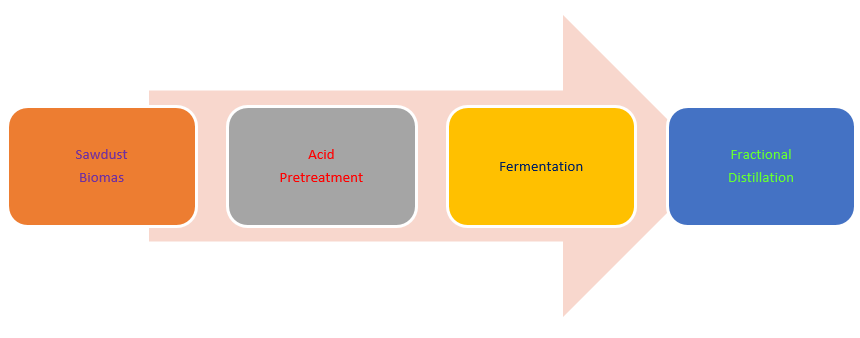
Figure 2 Bioethanol production processes flow from sawdust biomass.
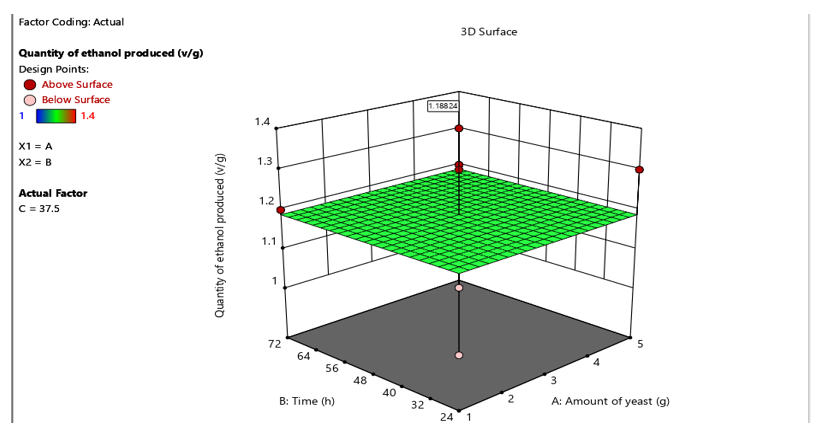
Figure 3 Optimum fermentation parameters and quantity of bioethanol produced.
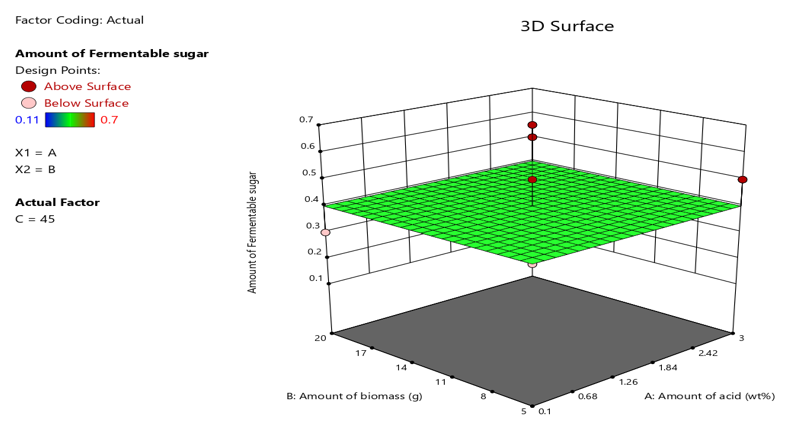
Figure 4 Sawdust optimal pretreatment parameters.
Based on the obtained results from this study, it was concluded that sawdust was effectively utilized as a feedstock for bioethanol production, with process optimization achieved using Design Expert 13 and Response Surface Methodology (RSM). The study demonstrated that RSM is a reliable and efficient tool for determining optimal conditions to maximize ethanol yield. From the results, the optimum conditions for the production of bioethanol are 0.1% HCl, 5 g sawdust, a pretreatment time of 45 min, with the production of 0.400588 V/g of fermentable sugar, which was inoculated with 3 g of yeast and fermented for 48 h, at 37.5 °C temperature, which gave an optimum yield of 1.18824 V/g of bioethanol. These findings highlight sawdust as a promising lignocellulosic biomass for sustainable bioethanol production. Being renewable and environmentally friendly, sawdust-derived bioethanol represents a viable alternative to fossil fuels, contributing to cleaner energy solutions and waste valorization.
The authors sincerely acknowledge the support and encouragement of the Department of Chemistry, Federal University Wukari, Taraba State, Nigeria and that of the staff of the Department of Pure and Industrial Chemistry, University of Nigeria, Nsukka towards the completion of this study.
No funding was received for conducting this study.
The authors declare no competing interests.

©2026 Opara, et al. This is an open access article distributed under the terms of the, which permits unrestricted use, distribution, and build upon your work non-commercially.
