MOJ
eISSN: 2573-2919


Research Article Volume 10 Issue 4

Department of Architecture and Urban Planning, Boyabat Vocational School, Sinop University, Turkey
Correspondence: Ömer Faruk Uzun, Department of Architecture and Urban Planning, Boyabat Vocational School, Sinop University, Turkey, Tel +90 541 627 92 38
Received: August 21, 2025 | Published: September 2, 2025
Citation: Uzun OF. An assessment on birdstrike in air operations. MOJ Eco Environ Sci. 2025;10(4):156-159. DOI: 10.15406/mojes.2025.10.00360
The aviation industry is growing rapidly as one of the most dynamic and critical industries in the modern world, but this growth brings with it various safety issues. One of these problems is bird strikes, which pose a major threat to flight safety. Bird strikes usually occur during take-off and landing and can lead to engine failures, structural damage and, rarely, loss of life. This review article aims to address the physical, economic and environmental aspects of bird strikes and to provide solutions to mitigate the impacts of these incidents. Within the scope of the study, many academic literatures are analysed and conclusions are drawn on land management and ecosystem-friendly aviation practices in accordance with international standards. The paper aims to raise awareness on bird strike prevention by providing guidance to airport administrations, aircraft manufacturers and aviation authorities. It also emphasises the need to create an aviation ecosystem that is less damaging to nature. As a result, it is evaluated that strategies to prevent bird strikes will contribute significantly to the sustainability of the aviation industry as well as increasing flight safety.
Keywords: aviation, air accident, bird strike, sustainable aviation, land management
The aviation industry, as one of the most dynamic and critical sectors of the modern world, is developing and growing day by day. However, this rapid growth brings with it various safety issues. One of these problems is bird strikes. Bird strikes are one of the major threats to flight safety and can cause serious costs, operational disruptions and, rarely, loss of life in both civil and military aviation operations. These incidents occur more frequently when aircraft are taking off, landing or flying at low altitudes, and their effects often result in engine failures, structural damage or flight diversion. And even the Wright brothers, who are considered to be the inventors of the aeroplane, had a very dangerous accident as a result of a bird strike (Figure 1).1
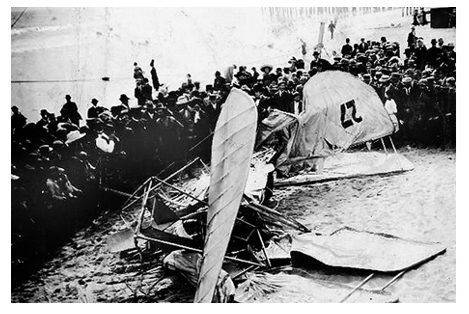
Figure 1 One of the first bird strike accidents in history.
Prevention and mitigation of bird strikes are critical to the sustainability and safety of the aviation industry. Especially in high passenger capacity operations such as commercial airline transport, such incidents can lead to both economic losses and damage to public safety. The International Civil Aviation Organisation (ICAO) and other aviation authorities have developed various regulations and standards to minimise bird strikes. However, it is still necessary to raise more awareness and increase technological solutions.
This review article aims to address the physical, economic and environmental aspects of bird strikes by analysing the existing literature and discussing solutions to mitigate the impacts of these events. At the same time, the impacts of bird strikes on wildlife will also be discussed, emphasising the importance of developing ecosystem compatible aviation practices.
The importance of this paper lies in its contribution to the efforts to improve safety in the aviation sector. This study, which aims to provide guidance for airport administrations, aircraft manufacturers and aviation authorities, will also shed light on the development of innovative solutions in aircraft design. A better understanding of the causes and consequences of bird strikes will guide the steps to be taken both to increase flight safety and to create an aviation ecosystem that is less damaging to nature.
In this context, such studies on aviation safety will allow the industry to move forward in a more sustainable, safe and effective manner, and will create an important awareness to minimise the impact of similar incidents in the future.
Linnel et al.2 conducted research at Lihue Airport in Kauai, Hawaii between 1990 and 1994 in response to the increase in bird strike accidents in aviation. The researchers, who specifically chose a tropical airport, conducted runway surveys between the dates they determined. In their researches, they have included detailed information on whether living things are singular or plural, and what are the types of living things in the crashes in the accidents.
In his book “Birds in air aviation: statistics, analysis and management”, El Sayed3 presented the relationship between birds and aeroplanes, two entities that use exactly the same environment. At the beginning of the book, the researcher mentions that collisions between birds and aeroplanes are unavoidable as they share the same space as mentioned earlier. The researcher also states that in the early days of flight operations, when piston-engined aircraft were available, although the number of flights was low, accidents occurred due to the low altitude of the aircraft. The author clearly demonstrates that with the widespread use of jet engines, especially after the 1980s, both the number of flights increased and the number of accidents caused by birds hitting the aircraft increased “dramatically”. According to the research, the collision resistance of the rotating modules in the engines of jet-powered vehicles is less durable than the modules of old type piston and propeller aircraft, and the speed and fuselage size of aircraft are increasing day by day. For all these reasons, the risk based on air creatures in airline transport continues to increase. Not only large aircraft but also small aircraft with fixed and movable wings for general aviation purposes are highly affected by this risk. In order to demonstrate the magnitude of the hazard, the author's research is detailed enough to calculate and express the force exerted on the aircraft in the collision based on the weight and speed of the bird hitting the aircraft. Photographs of aircraft fuselages, engines, cockpits, landing gear and other parts of the aircraft have been included.
Thorpe4 participated in the 26th meeting of the ‘International Bird Strike Committee, 1912-2002’ (IBSC) and published his academic study ‘Fatalities and destroyed civil aircraft due to bird strikes’. As the name suggests, he analysed airline accidents caused by bird strikes between 1912 and 2002. In his study, the researcher expressed the accidents caused by bird strikes from aircraft types to their weights. The author started to address the accidents with the first accident caused by bird strike in Ohio on 7 September 1908 by Orville Wright and proceeded chronologically with deeply analysed examples. In his study, the researcher made extensive use of the report of the International Bird Strike Committee, which met in London in 1996 and analysed the accidents caused by birds between 1912 and 1995. He mentioned that 42 fatal accidents occurred, 231 people lost their lives and 80 civil aircraft became unusable. The author mentioned that bird strike accidents continue to increase with the increasing airline traffic, and he mentioned the aircraft model, engine type, accident location and injured or dead casualties in the accidents. The author, who mentioned risks and concerns in his study, did not prefer to propose solutions. In this doctoral thesis, the fact that solutions will be proposed to minimise the bird risk increases its importance due to the above-mentioned issues.
Çoban5 published a paper titled ‘An Investigation on Bird Strike Incidents in Civil Aviation Sector: The Case of America’ at the IV National Aviation Technology and Applications Congress (UHAT-2017) held in 2017. This study, published as a full-text paper, is very important as it is entirely on the risk of bird strike in flight operations. The paper reveals that the risk of bird strike in aircraft accidents is a subject of academic study in itself. The author drew attention to the increasing airline traffic in the globalising world. Due to the advantage of the mode of transport, he pointed out that the said traffic will increase even more. In this context, while mentioning that the increasing traffic will increase the risk of accidents, he also mentioned the situations to be experienced in case of birds hitting the aircraft. The researcher has produced a very detailed study starting from the origin of the word bird strike in aircraft accidents, to the types of accidents, giving examples of different aircraft accidents with bird strikes. The International Civil Aviation Administration (ICAO) provides ideas for each airport operator to observe the presence of birds that pose a risk to aircraft and to take necessary measures to reduce this risk.
Terzioğlu,6 in his master's thesis titled ‘Team resource management in reducing human errors as the cause of aircraft accidents’, gave a wide and detailed coverage to the history of flight operations. The author, who studied the history of aviation in his thesis, also studied the accidents that occurred in the history of aviation and mentioned the aircraft involved in the accident as a result of bird strikes.
Tamer7 in his master's thesis titled ‘Investigation of the effect of human factor on aircraft accidents in aviation: The case of Tenerife plane crash’, he examined the human factor in accidents occurring in airline transport. The author mentioned that bird strikes also have a place in these accidents while classifying aircraft accidents according to the way they occur.
In his academic study, Erden8 investigated and analysed in detail the accident that caused both engines to become dysfunctional as a result of birds hitting the Airbus A320 aircraft with flight number 1549 of US Airways airlines departing from New York, United States of America in 2009. Erden mentioned that the aircraft, which was left without an engine due to a bird strike, was landed in the Hudson River with the incredible captain and flight crew management, and this accident has passed into the literature as an unbelievable and rare situation in aviation history. Unfortunately, most of the aircraft whose engines were damaged after bird strikes in history did not have this chance. This study shows that minimising the risk of bird strike is of vital importance for flight operations.
Çetingüç9 presented a comprehensive and cumulative report on the effects of flying creatures on aircraft accidents in his study. In this detailed study, which reveals that there are 8600 flying bird species and a total of 100 billion flying creatures, the author not only mentioned the collision of birds with aircraft, but also included the collision of flying creatures with each other. He has presented a different perspective on flight accidents with examples of the seasonal behaviour of birds, anatomical perception patterns, and the effect of wing shapes on accidents.
In his study, Noyan10 examined the environmental factors that pose a threat to airline transport and reported that passive methods and active methods are used to prevent bird-aircraft collisions. The researcher stated the number of bird-aircraft collision incidents in Turkish airspace between 1992-2005 as 144, analysed these accidents and stated that ‘Precision Instrument Approach System’ and ‘Low Altitude Wind Break Warning System’ which can help to prevent accidents should be used in all airports.
Georgiadis11 reported that more than 50 aircraft and 223 people have lost their lives due to bird strikes since 1912 in civil aviation activities and that the cost of damage caused by bird strikes in the world aviation industry is approximately 1 billion US dollars per year.
Canale et al.12 stated that bird strike was one of the events that caused aircraft accidents at Italian airports between 2001 and 2004. In another study conducted in 2013, the same researchers conducted a risk assessment of aircraft accidents that occurred between 1980-2010. They mentioned the importance of increasing international co-operation and data sharing to ensure flight safety.
Abrate13 reported that bird strike, which occurs when a flying bird strikes a moving aircraft, is a serious risk to flight safety and stated that bird strikes in aircraft can cause serious accidents and loss of life and/or property as they occur at very high speeds of approximately 150 m/s. The researcher reported that in cargo planes and private jets, bird strikes occurred when the bird entered the engine (76%) or hit the windscreen (7%), while in passenger aircraft, the bird struck the windscreen (54%), engine (13%) and wings (12%). In helicopters, bird strikes were reported to cause accidents when the bird struck the windscreen (39%), rotor (11%) or nose (11%).
Liu et al.14 emphasised that the deformation occurring in the accident increases as the impact speed and impact angle increase in bird strikes to aircraft.
Leski et al.,15 in their study of bird impact on aircraft, stated that aircraft speed and bird size are the most effective on the stresses on the fuselage.
Grimaldi et al.16 analysed the impact of a bird model weighing 1.8 kg on the windscreen of an aircraft at 155 m/s. In the study, three different impact angles (30°, 60° and 90°) were analysed and it was stated that the deformation on the windscreen surface increased as the angle increased.
Doğan,17 in his study titled ‘Wildlife management at airports and analysis of bird strikes’, mentioned that there may be many animals, including birds, mammals and reptiles, in and around airports and that these animals may jeopardise flight safety. He emphasised that the establishment of a special unit for the monitoring of wildlife in order to prevent this danger would increase airline safety.
Stating that bird strikes are a serious threat to aviation safety, Gülcan18 reported that 90% of foreign material damages on aircraft are caused by bird strikes. He stated that most bird strikes occur when the aircraft is at low altitude, during take-off and landing.
According to the statistics, more than 60% of bird strikes occurred when the aircraft was below 30 metres altitude, 70% when the aircraft was below 150 metres altitude and 90% when the aircraft was below 900 metres altitude. Since the thrust generated by the engines during take-off and landing manoeuvres is very high, 30% of the incidents occurred while the aircraft was taking off and 60% occurred while the aircraft was landing on the runway. Very few bird strike incidents were detected in foggy, rainy and snowy weather.19
In his study, Uzun20 presents an analysis on John F. Kennedy (JFK) Airport to reduce flight risks associated with wildlife that threaten aviation safety. It was revealed that garbage collection, recycling and similar facilities around the airport attract birds and other wild animals and adversely affect flight safety. The study analyses the presence of such structures in the 13-kilometre risk zone with dynamic mapping tools and evaluates their impact on flight safety. The methodology used includes Python-based software and geographic information systems such as Quantum GIS (QGIS). In addition, dynamic data analysis was performed with tools such as Google Maps API and Google Places API.
The results showed that more than 20 facilities around JFK Airport increase the risk of bird strikes. In this context, it is emphasised that land use around the airport should be managed in accordance with international standards. It is recommended that both the private and public sectors should cooperate to identify, categorise and remove risky structures. Land management strategies should aim to increase flight safety with regulations that do not attract wildlife.
Bird strikes in the aviation industry pose a significant threat to flight safety. Various academic studies and case studies show that bird strikes usually occur during take-off and landing at low altitudes, which can cause serious engine failures, fuselage deformation and loss of life. In particular, in the case of John F. Kennedy (JFK) Airport, it was found that the refuse collection and recycling facilities around the airport attract birds and other wild animals. This increases the frequency and impact of bird strikes, jeopardising flight safety.
Studies show that such structures within the 13-kilometre risk area can be analysed with dynamic mapping tools to reveal their impact on flight safety. Python-based software and geographic information systems such as Quantum GIS (QGIS) were used to detect and dynamically analyse such risky structures. The results showed that more than 20 structures around JFK Airport play a role in increasing bird strikes. Furthermore, the damage caused by bird strikes to aircraft engines, windscreens and other structural components was found to vary depending on factors such as speed, collision angle and size of the bird. In addition to this, other studies also reveal that there are efforts to find solutions for bird strike in many different fields.
Preventing bird strikes requires not only technical improvements, such as aircraft design and engine durability, but also improved land management around airports. While organisations such as the International Civil Aviation Organisation (ICAO) recommend creating an ecosystem around airports that does not attract birds, more effective policies need to be developed. For example, removal of garbage collection facilities, observation of bird behaviour and taking measures based on these observations come to the fore.
Such studies on bird strikes in the aviation sector emphasise the importance of international cooperation and data sharing to improve flight safety. In addition, the applicability of the software and dynamic analysis tools used to other airports may create effects to increase flight safety on a global scale. In addition, focusing on methods that will make aviation operations safer without disturbing the ecological balance will make significant contributions to science in this field.
Although each of the academic studies used in this article addresses the phenomenon of bird strikes from different perspectives, each study has distinct limitations, and discussing these limitations is important in terms of distinguishing strong evidence from weaker or contextual observations. For example, the study by Linnel and colleagues (1996) on Lihue Airport in Hawaii is limited in terms of generalizability because it presents data specific to a tropical region; these findings may not be directly applicable to airports with different climatic conditions. El-Sayed's (2019) book, while presenting the historical development and statistical dimension of bird strikes with strong data, offers solutions that remain largely theoretical and lack empirical testing, resulting in limited applicability. Thorpe's (2003) study clearly reveals the fatal consequences of bird strikes by presenting a long-term statistical data set, but it only contributes to our understanding of the scale of the problem because it does not develop any proposed solutions. Çoban's (2017) study, based on the example of the United States, provides valuable findings at the sectoral level, but its regional limitations make it difficult to generalize on a global scale. In the thesis studies conducted by Terzioğlu (2007) and Tamer (2021), bird strikes were addressed as a secondary factor in the context of human factors, and therefore, in-depth analyses focused on the subject were limited. Erden's (2020) assessment based on the Hudson River landing incident is a strong case study, but the generalizability of a single event is limited. Although Çetingüç's (2018) study provides a different perspective on the relationship between bird strikes and biodiversity, it relies more on theoretical inferences than field data in terms of methodology. Noyan's (2007) findings on environmental factors are valuable in the context of Türkiye, but have partially lost their relevance following technological developments. Although Georgiadis (2018) clearly highlights the economic dimension based on global statistics, it does not offer systematic recommendations for solutions. While the risk assessment studies by Canale et al. (2012, 2013) make important contributions, their focus solely on airports in Italy limits the generalizability of the findings.
Abrate (2016), Grimaldi et al. (2013), Liu et al. (2016), and Leski et al. (2002) have demonstrated the physical effects of bird strikes using robust experimental and numerical data. However, when not linked to field realities, their engineering-focused studies have limited practical application. While the studies by Doğan (2019) and Gülcan (2019) draw attention to wildlife management around airports, there are no long-term empirical tests demonstrating the applicability of their recommendations. Although the statistics presented by the FAA (2020) are based on a large data set, they should be used with caution in a global context as they are limited to US data. In conclusion, among the studies reviewed, research using large samples and long-term data provides stronger evidence, while case studies and regional studies should be evaluated more as contextual observations. This critical approach aims to highlight the strengths of the literature while also guiding future research.
The aviation industry faces a variety of challenges as one of the fastest growing and most critical industries in the modern world. Bird strikes continue to pose a significant threat to both civil and military aviation operations. Studies reveal that these events occur more frequently at low altitudes during take-off and landing and often lead to consequences such as engine failures, structural damage and flight diversion.
This paper evaluates the physical, economic and environmental impacts of bird strikes and discusses solutions to prevent such incidents. The findings from the research show that organising land management around the airport in accordance with international standards and creating an ecosystem that does not attract birds is critical to improve flight safety.
In this context, the necessity of identifying, categorising and removing risky structures with the cooperation of both public and private sectors was emphasised. Furthermore, technologies such as Python-based software and geographic information systems provide an important tool for more effective monitoring and management of such structures.
In conclusion, strategies to prevent bird strikes will not only increase flight safety, but also contribute to the sustainability of the aviation industry. Such studies will strengthen international cooperation, promote efficient data sharing and minimise the impact of similar incidents in the future, allowing the industry to move forward in a safer, efficient and environmentally friendly manner.
In addition to evaluating the existing literature in the conclusion section, it would be useful to mention some applications that could be implemented in future studies. For example, regularly analyzing land use around airports and systematically mapping high-risk areas could make a significant contribution. Furthermore, more frequent monitoring of bird migration routes and concentration areas using satellite data or geographic information systems will facilitate the adoption of proactive measures. Establishing regular data sharing mechanisms between airport management, local authorities, and airlines could also be a critical step in reducing bird strike risks. Furthermore, future studies comparing airports under different climatic conditions will increase the generalizability of the findings. Finally, developing applications that consider ecological sensitivities as well as technological solutions will present a more balanced approach in terms of both flight safety and sustainability.
None.
CRediT author statement
Ömer Faruk Uzun: Formal analysis, Investigation, Writing – Original Draft, Writing – Review & Editing, Supervision
None.
There are no conflicts to declare.

©2025 Uzun. This is an open access article distributed under the terms of the, which permits unrestricted use, distribution, and build upon your work non-commercially.
