MOJ
eISSN: 2573-2935


Research Article Volume 6 Issue 2
Professor of Psychiatry, University of Social Welfare and Rehabilitation Sciences, Iran
Correspondence: Saeed Shoja Shafti, Professor of Psychiatry, University of Social Welfare and Rehabilitation Sciences, Razi Psychiatric Hospital, Tehran-Iran, Tel 0098-21-33401220, Fax 0098-21-33401604
Received: January 05, 2019 | Published: March 5, 2019
Citation: Shafti SS. Second generation antipsychotic as supplementary medication in treatment-resistant obsessive compulsive disorder. MOJ Addict Med Ther. 2019;6(2):62-65. DOI: 10.15406/mojamt.2019.06.00148
Introduction: About half of patients with obsessive-compulsive disorder don’t respond appropriately to serotonin-Reuptake inhibitors. Hence, the objective of the present study was to examine that whether using olanzapine, as augmentative medication, in addition to current serotonin reuptake inhibitor, is useful for treatment-resistant obsessive-compulsive disorder.
Method: Eleven patients with obsessive compulsive disorder who had not responded appropriately to at least two preceding treatments with serotonin reuptake inhibitors had been assigned to receive olanzapine, in addition to serotonin reuptake inhibitor, for eight weeks, in an open-label design evaluation. Response, as well, had been evaluated by Yale-Brown Obsessive-Compulsive Scale (YBOCS), as the primary outcome measure.
Results: Around fifty four percent of patients responded to abovementioned maneuver. The mean+/-SD total score of YBOCS reduced significantly from 33.45+/- 4.47 to 25+/- 5.98, with a mean reduction of 24.56%.
Conclusion: Adding olanzapine to serotonin-reuptake inhibitors can be useful in treatment-refractory obsessive-compulsive disorder.
Keywords: obsessive-compulsive disorder, serotonin-reuptake inhibitors, olanzapine, treatment resistant
Obsessive Compulsive Disorder (OCD) is a mental health disorder that affects people of all ages, and occurs when a person gets caught in a cycle of obsessions and compulsions (1). Obsessions are unwanted and intrusive thoughts, images or urges that trigger intensely distressing feelings. Compulsions, too, are behaviours an individual engages in to attempt to get rid of the obsessions and/or decrease his or her distress. Most people have obsessive thoughts and/or compulsive behaviours at some point in their lives, but that does not mean that we all have “some OCD.” In order for a diagnosis of obsessive compulsive disorder to be made, this cycle of obsessions and compulsions becomes so extreme that it consumes a lot of time and disturbs patient’s important daily activities.1 Obsessions are thoughts, images or impulses that occur over and over again and seem to be outside of the person’s control, while individuals with OCD do not want to have these thoughts and find them disturbing. Anyhow, people with OCD usually realize that these thoughts don’t make any sense and are typically accompanied by intense and uncomfortable feelings such as fear, disgust, and doubt.2 Common obsessions in OCD includes: contamination, losing control, harm, obsessions related to perfectionism, unwanted sexual thoughts, religious obsessions, etc.2 Compulsions are repetitive behaviours or thoughts that a person uses with the intention of neutralizing, counteracting, or quitting their obsessions.2 Compulsions can also include avoiding situations that trigger obsessions.3 Common Compulsions in OCD include: washing and cleaning, checking, repeating, mental compulsions, etc.3 The DSM-V contains three specifies for the level of insight in OCD. Good or fair insight is characterized by the acknowledgment that obsessive-compulsive beliefs are or may not be true. On the other hand, while poor insight is characterized by the belief that obsessive-compulsive beliefs are probably true, absence of insight makes obsessive-compulsive beliefs delusional thoughts, and occurs in about 4% of people with OCD. 4 In line with a recent meta-analysis, people with OCD show mild, but wide-ranging, cognitive deficits; significantly regarding spatial memory; and to a lesser extent with verbal memory, fluency, executive function, and processing speed.5 Also, they show impairment in formulating an organizational strategy for coding information, set-shifting, and motor and cognitive inhibition.6 Functional neuroimaging during symptom provocation, as well, has revealed abnormal activity in the orbitofrontal cortex, left dorsolateral prefrontal cortex, right premotor cortex, left superior temporal gyrus, globus pallidus externus, hippocampus and right uncus. 7 With respect to management of OCD, while 50%-60% of patients with OCD fail to respond to a single trial of an SRI, 20-40% does not respond adequately even after several drug trials.8,9 Furthermore, though the selective serotonin reuptake inhibitors (SSRIs) are usually considered to be safe and well-tolerated, still a fraction of subjects do experience unbearable adverse effects and discontinue treatment too early.9 Therapeutic approaches in these resistant patients typically consist of augmentation treatments with buspirone, tryptophan, lithium and clonazepam or the addition of antipsychotic medications.9 But then again, the absolute results with these maneuvers were not promising so far and have remained rather investigational than decisive. Adding low-dose antipsychotics to standard antidepressant treatment has revealed to be effective in some patients, but extra-pyramidal adverse effects have limited the use of conventional antipsychotics.9 Therefore, management with atypical antipsychotics, which show fewer extra-pyramidal symptoms, could be a suitable alternative for treatment-resistant OCD patients. Helpful effects of adding risperidone to SRIs, as add-on therapy, has been detected in some cases of treatment-refractory OCD.10,11 In preceding assessments, including four open and one double-blind studies, favourable results had been exhibited by adding olanzapine, as add-on therapy, to the current serotonin-reuptake inhibitor.12–16 In the current study a new appraisal with olanzapine has been accomplished, in a non-western patient population, with treatment-resistant OCD.
11 female outpatients, after complete description of the process for them and providing the assigned informed agreement, came into the evaluation. The study, as well, had been approved by the ethics committee of the academy. The mean+/- SD age of the subjects was 39.2+/- 9.08 years. Samples have been diagnosed as OCD, consistent with the DSM IV-TR criteria. ‘Inclusion criteria’ in the current study consisted: 1- OCD symptoms of at least 3 years’ period, and 2- a score on the YBOCS12 of at least 18. The subject's mean+/- SD baseline score on the YBOCS was 33.45+/- 4.47 and the mean length of illness was 16.3+/-7.35 years. All the patients had both obsessions and compulsions. Besides, all cases had failed at least two treatments with an SRI at maximum dosage (Fluvoxamine 300mg /day, Clomipramine 250mg/day, Sertraline 200mg/day, Fluoxetine 80mg/day, Citalopram 80mg/day) and sufficient period (12 weeks). Failure had been defined as a less than 25% improvement on the YBOCS. In an eight-week assessment, all patients continued to take their recommended SRI at the maximum dose throughout evaluation. Four patients were receiving clomipramine (250 mg/day), three patients had been prescribed fluvoxamine (300mg/day), two patients were receiving fluoxetine (80 mg/day), one patient had been prescribed sertraline (200mg/day) and finally one patient was on citalopram (80 mg/day). Olanzapine addition started at an initial dose of 2.5 mg per day, and then had been increased by 2.5 mg increments in weekly meetings, to a maximum of 10 mg by week 4, and then this amount had been held constant up to the end of the assessment. No other psychotropic drug or psychosocial intervention was admissible during the course of the tryout. Patients had been visited by the same experienced evaluator at baseline and at the end of 4th and 8th week, when adverse events and clinical response could be assessed. The evaluator was not blind to the management and its purposes. The primary outcome measure in the present assessment was ‘YBOCS’.17 Complete response to treatment was demarcated of no less than 50% decrease in ‘YBOCS’, and partial response of no less than 25% reduction in ‘YBOCS’, in comparison with starting point. Side effects had been examined at each visit by means of patients' reports and clinical checkup by the said psychiatrist.
Among all cases, two patients could be accounted as full responders, with a mean decrease of 51% in YBOCS. Besides, four patients could be accounted as partial responders with no less than 25% reduction in YBOCS. Finally, five patients, as well, experienced no amendment in their obsessive or compulsive symptoms (Table 1, Figure 1). In those, who benefited from the management, improvement began within the first two weeks of augmentation. Generally speaking, mean total score of YBOCS enhanced significantly (24.56%) from baseline to endpoint (t=4.23, df=10, p<0.002) (Table 1, Figure 2). The most common side effects of olanzapine in the present survey consisted dyspepsia (n= 2), dizziness (n=2), somnolence (n=3), weight gain (n=2), tremor (n=1) and constipation (n=1). Since the adverse effects were slight and well-tolerated, no one dropped from the evaluation due to drug intolerance.
|
Patient No. |
Age (y) |
Sex |
Duration of OCD(y) |
Type of OCD Symptoms |
Comorbid Diagnosis |
Current SRI |
DailySRI Dose (mg) |
YBOCS (Baseline) |
YBOCS (Endpoint) |
% Change |
t |
P Value |
|
1 |
42 |
F |
10 |
contamination |
OCPD |
Fluoxetine |
80 |
39 |
19 |
51.28 |
||
|
2 |
38 |
F |
20 |
contamination |
None |
Fluoxetine |
80 |
32 |
24 |
25 |
||
|
3 |
34 |
F |
15 |
contamination |
GAD |
citalopram |
80 |
31 |
28 |
9.67 |
||
|
4 |
23 |
F |
7 |
Checking |
None |
Sertraline |
200 |
40 |
35 |
12.5 |
||
|
5 |
47 |
F |
15 |
contamination |
OCPD |
Fluvoxamine |
300 |
32 |
18 |
43.75 |
||
|
6 |
37 |
F |
11 |
contamination |
None |
Fluvoxamine |
300 |
29 |
28 |
3.44 |
||
|
7 |
50 |
F |
26 |
Precision |
None |
Fluvoxamine |
300 |
37 |
18 |
51.35 |
||
|
8 |
39 |
F |
18 |
contamination |
None |
Clomipramine |
250 |
33 |
31 |
6.06 |
||
|
9 |
28 |
F |
9 |
Checking |
OCPD |
Clomipramine |
250 |
25 |
18 |
28 |
||
|
10 |
54 |
F |
31 |
contamination |
None |
Clomipramine |
250 |
33 |
29 |
12.12 |
||
|
11 |
40 |
F |
18 |
contamination |
None |
Clomipramine |
250 |
37 |
27 |
27.02 |
||
|
Mean |
39.2 |
16.3 |
33.45 |
25 |
24.56 |
4.23 |
0.002 |
|||||
|
SD |
9.08 |
|
7.35 |
|
|
|
|
4.47 |
5.98 |
|
|
|
Table 1 Demographic characteristics of participants and the end-result of trial
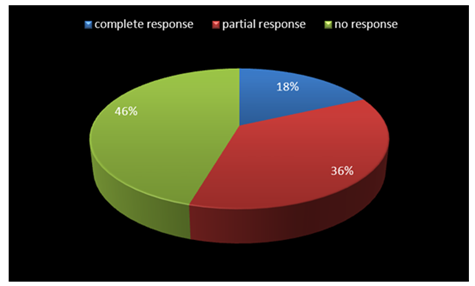
Figure 1 Percentage of response by add-on therapy.
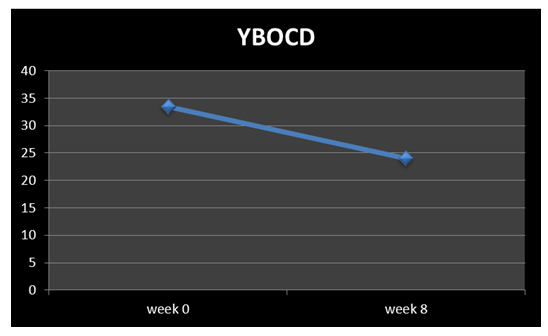
Figure 2 Significant decrease of YBOCD between baseline and week 8.
OCD is a long-lasting illness and while around 70% of patients who receive treatment experience a considerable improvement in their symptoms, OCD remains a chronic illness, with symptoms that may wax and wane during the life of the patient. Though OCD usually develops gradually, psychosocial stressors like changes in living situations, relationship problems, or work problems can cause sudden onset. 5% of cases, also, have episodic symptoms with partial or complete remission between episodes. Regardless of a person's age at onset, the content of obsessions does not determine prognosis.18
In their series of 560 patients in 1988, Rasmussen and Eisen reported that 85% had a continuous course with waxing and waning symptoms, 10% a deteriorative course and only 2% an episodic course marked by full remissions lasting six months or more. An Italian series by Lensi et al. in 1996 reported more patients with episodic or deteriorative courses in which 26% were episodic, 9% were deteriorative, and 64% were chronic.19 Patients with OCD are at high risk of having co-morbid depression and anxiety disorders. In a series of 100 OCD patients who had been evaluated by means of a structured psychiatric interview, the most common concurrent disorders were: major depression (31%), social phobia (11%), eating disorder (8%), simple phobia (7%), panic disorder (6%), and Tourette's syndrome (5%). In Koran et al.'s 1998 Kaiser Health Plan study, 26% of patients had no comorbid psychiatric condition, 37% had one and 38% had two or more co-morbid conditions.19 On the other hand, OCD seems to be associated with a mildly increased risk for alcohol abuse and dependence (20). Reports of the lifetime rate of body dysmorphic disorder in OCD patients are also prevalent, as well as findings by Barsky in 1992 indicating that patients with hypochondriasis have an elevated lifetime prevalence rate of OCD compared to medical outpatients from the same clinic. Eating disorders may be more common in OCD patients than in the general population, but the data are sparse. According to Rothenberg in 1990, OCD symptoms are common in patients with anorexia nervosa, second only to depressive disorders. Trichotillomania is another co-morbidity of OCD, as is Tourette's syndrome.20
The more severe the OCD, the more impaired the patients' social functioning, even after controlling for effects of concurrent depression. Moreover, Rasmussen and Eisen noted in 1992 that another indicator of reduced quality of life is lower likelihood of marriage among OCD patients.21 The high personal cost of OCD is mirrored in high social costs. The estimated 1990 direct costs of OCD to the United States economy were $2.1 billion, and the indirect cost (i.e., lost productivity) $6.2 billion, reported Dupont et al.21 The medications most frequently used are the selective serotonin reuptake inhibitors (SSRIs).22 Clomipramine, a medication belonging to the class of tricyclic antidepressants, appears to work as well as SSRIs but has a higher rate of side effects.22 SSRIs are a second line treatment of adult obsessive compulsive disorder (OCD) with mild functional impairment and as first line treatment for those with moderate or severe impairment.23 In 2006, the National Institute of Clinical and Health Excellence (NICE) guidelines recommended antipsychotics for OCD that does not improve with SSRI treatment.24
For OCD there is tentative evidence for risperidone and insufficient evidence for olanzapine. While Quetiapine is no better than placebo with regard to primary outcomes, small effects were found in terms of YBOCS score. The efficacy of quetiapine and olanzapine are limited by the insufficient number of studies. A 2014 review article found that while aripiprazole was effective in the short-term, no proof for the effectiveness of quetiapine or olanzapine in comparison to placebo was available.24 On the other hand, while quetiapine may be useful when used in addition to an SSRI in treatment-resistant OCD, these drugs are often poorly tolerated, and have metabolic side effects that limit their use. In addition, none of the atypical antipsychotics appear to be useful when used alone.24 Another review as well has reported that no evidence supports the use of first generation antipsychotics in OCD.24 Back to our assessment, the present study affords extra evidence that adding olanzapine to current SRI treatment may be effective for refractory cases. While this outcome is in opposite with the statement of Pignon et al. 24 it is in harmony with the findings of Weiss et al., Koran et al., Bogetto et al., Francobandiera G, Bystrisky A.10–16 Despite the fact that enhancement of SRIs with atypical antipsychotics displays profits, the main problem at this point is that there is not any complete agreement with respect to meaning of treatment-refractoriness. For example, most evaluations contained patients who had failed to respond to just one serotonin reuptake inhibitor. Therefore, they should be slightly eligible as treatment-resistant cases. Hence, the problem of poor response is still under debate and necessities additional examination. Furthermore, a perfect standard for no-response needs to be agreed upon, because the standards for response rates are not solid enough. Such discrepancies invalidate the comparison of Effect Sizes between different appraisals. Nevertheless, adding atypical antipsychotics to SRIs seems a promising approach on behalf of treatment–resistant obsessive-compulsive disorder. But it should not be overlooked that metabolic side effects of second generation antipsychotics, like olanzapine, in long term, necessitates proper clinical vigilance, too. There are yet restrictions to the findings of the current trial due to its open-label plan and small sample size. Also, the question of whether the extra attention given to the participants by the research team could account for the improvement needs to be taken into consideration. Certainly, supplementary studies, in connection with the mechanism of action of these augmentative tactics, are indispensable.
Adding olanzapine to serotonin-reuptake inhibitors can be useful in treatment-refractory obsessive-compulsive disorder.
None.
Author declares that there are no conflicts of interest.

©2019 Shafti. This is an open access article distributed under the terms of the, which permits unrestricted use, distribution, and build upon your work non-commercially.