MOJ
eISSN: 2573-2935


Research Article Volume 7 Issue 1
1University of Stirling, UK
2Regent’s University London, UK
3London Metropolitan University, UK
4Edinburgh Napier University, UK
Correspondence: Joanne Lusher, BSc (Hon’s) MSc PGC (TL) HE PhD CPsychol CSci AFBPsS SFHEA BPS, Chartered and HCPC Registered Health Psychologist, UK, Tel +44 (0)20 7487 7625
Received: October 25, 2022 | Published: December 30, 2022
Citation: MacNicol Y, Lusher J, Banbury S, et al. Parents’ narratives toward smoking in the home following a second-hand smoke story-telling education intervention. MOJ Addict Med Ther. 2022;7(1):7-13. DOI: 10.15406/mojamt.2022.07.00152
There is a strong link between cigarette smoking and socio-economic status, with three-quarters of children living in disadvantaged communities being exposed to second-hand smoke. The present study examined parents’ views of smoking in the home after they had been involved in a story-telling education intervention within a nursery environment. Thematic Analysis was conducted to pool together rich data about parents’ attitudes and perceptions of smoking in the home during semi-structured interviews that took place following participation in an education intervention.
Emergent themes identified that the story-telling intervention was useful to parents who felt that it might assist in protecting children from the dangers of second-hand smoke. Participants welcomed the story-telling resource used in the intervention and communicated that this allowed for reflection on their own smoking behaviour. Novel findings from this research highlighted how children positively influence their parents into making effective health behaviour decisions in relation to smoking practices. Parents still require information on the dangers posed by second-hand smoke and future research is necessary to adapt a measurable quantitative story-book intervention used for a wider and more diverse family context.
Keywords: story book intervention, secondary smoking, smoking behaviours, health inequalities, thematic analysis
Tobacco use is a concern of epidemic proportions with over 6 million deaths worldwide as a direct result of tobacco use and 890,000 resulting from exposure to second-hand smoke.1 Moreover, tobacco use remains elevated in areas of high deprivation with many smokers living in low- to middle-income families.1 Second-hand smoking can be described as inhaling smoke from another person’s cigarette, from the lit tip of the cigarette, what is exhaled by the smoker or breathing in the smoke that fills an enclosed space such as a person’s home.2 The evidence is clear, there is no safe level of exposure to second-hand smoke and children exposed to it can suffer serious acute and chronic illness.3 Children are especially vulnerable to the dangers of second-hand smoke due to breathing more quickly and underdeveloped lungs they are greater risk of respiratory infections such as asthma,4 pneumonia,5 middle ear disease,6 bacterial meningitis7 and sudden infant death syndrome.8 Whilst the number of children being exposed to second-hand smoke in the home is at an all-time low,9 health inequalities remain for three quarters of children living in disadvantaged communities still being exposed to second-hand smoke.10
Most of the previous research that has aimed to protect children and young people from the dangers caused by exposure to second-hand smoke utilised educational materials to inform parents and carers of the associated dangers of smoking in their home or car.11 However, research to date has remained small-scale and narrow in scope12,13 using qualitative interviews with visual methods to aid participant recall.14-18 Overall, this approach has generated expressions of feelings of disgust from participants towards smoking in the home and vehicle.17,18
Interestingly, children from advantaged backgrounds have previously been found more likely to experience feeling exposure to second-hand smoke as an issue, in comparison to children from disadvantaged backgrounds who perceived exposure to second-hand smoke as an issue only when in proximity with the smoker.18 It is therefore important to further unpick these perceptions to identify ways in which knowledge and understanding around the harmful effects of second-hand smoke can be better communicated to specific populations.
Barriers to challenging parents’ attitudes towards smoking in the home are evident because these beliefs are heavily rooted within cultural and social norms. For example, parents can feel disempowered and unable to change behaviours relating to other family members, especially in disadvantaged communities.14,15,16 Additionally, within disadvantaged communities, housing issues can often mean that outside space is limited, which adds a practical layer of obstruction for those in deprived communities to invest in harm reduction strategies such as smoking outside.19
Previous research has also identified a demand for resources to become available within education settings that positively influencing parental behaviour change.20 However, gaps in knowledge surrounding parental understanding of the dangers of second-hand smoking on children need to be identified before more effective strategies can be developed.10 Particularly, those that explore some of the previously reported feelings of infringement of human rights amongst parents who make exceptions and allow family members to smoke in the home without a full and comprehensive understanding of the risks.16 Finally, a review of the current literature identified that further research is essential to investigate interventions targeting early-years establishments to positively influence parental behaviour change.10
The present study set out to explore parental experiences and attitudes towards smoking following a story-telling intervention that was delivered to a deprived parent community in an early-years establishment. We also wanted to establish whether overall smoking levels had been impacted by this intervention.
Design
Using the SPIDER framework adapted from Cooke, et al.,21 the following research question was constructed for this study: What are parents and carers lived experiences and attitudes towards smoking in the family home following a nursery educational intervention?
Through purposive sampling, five nurseries based in Scotland, UK, were contacted and asked to participate in a study to evaluate the effectiveness of a story-book intervention qualitatively and to aid recruitment. At each site parents were invited to participate via a recruitment letter. A visual aid was offered to prompt responses. The story-telling intervention was delivered once per parent over the progression of one month (owing to time restraints and accessibility). Participants were then invited to take part in a semi-structured interview at 3 months to elucidate their views. Thematic analysis analysed the narratives and coded the main and supporting themes. A non-parametric analysis at 3 months also looked at pre (baseline measurement) and post smoking levels following the intervention.
Participants
The sample consisted of six parents/guardians mean age of 30± years who had nursery aged children who were purposefully selected for being smokers. The recruited sample consisted of five parents and one carer. All participants were from socially disadvantaged backgrounds and within the 10% most deprived communities within Scotland.22 Since this story-telling intervention was being administered to one of the parents, it was essential that the other parent was a non-smoker. The exclusion criteria consisted of non-smokers who did not have a nursery-aged child and their partners were also smokers. Participants who agreed to take part in the study were all female aged between 21 and 47 years; five were mothers of children attending nursery while one was a caregiver. At the time of the study all participants were current smokers, but all had attempted to reduce their smoking.
Materials
The study investigated parents’ views after they had been involved in a story-telling intervention within a nursery environment, the parents were also given a copy of the story-telling intervention to take home. The intervention highlighted the issues of second-hand smoke, and the study was designed to identify whether attitudes towards smoking at home had changed post-intervention. The story-telling intervention was initially used for primary aged children and has been proven to raise awareness of the dangers of second-hand smoking in parents and carers in the UK Scottish health sector.23,24
This adapted story telling intervention by Linda Morris has been used in NHS Greater Glasgow and Clyde. It consists of 26 pages and is entitled, “Jenny and the Bear” (2013). The book tells the story of Jenny, whose teddy bear gets a cough because her parents were smoking in the home. Written dialogue is followed by a pictorial representation of the words. For example, “It is raining on the way home. The bear gets wet. What will Jenny and Mummy do to make the bear feel better?” (p. 6), “Mommy has a cigarette. Does bear like the smell” (p.10), “Bear, Jenny and daddy go to the shop in the car. Daddy smokes in the car. What does Jenny do when daddy smokes?” This is followed by Jenny and the bear having a cold because of smoking and how the child and the teddy bear respond to mom and dad not smoking in the car and house. The latter part of the document reinforces concerns that second-hand smoking has on children.
An adapted smoking scale (S-SCQ) was used in a 16-item questionnaire which uses a 10-point Likert scale (0=completely unlikely to 9= completely likely).25 Subscales include the negative consequences of smoking, positive and negative reinforcement with smoking. Scores range from 0 (no smoking) to 144 (highest smoking level). The Cronbach’s alpha ranged from 0.84-0.95.
Data Collection
Participants were recruited from the five nurseries who delivered the story telling intervention in Scotland, UK. All parents who had children at one of the participating nurseries were offered the opportunity to take part in the study by means of a recruitment letter that was distributed at the end of the school day. This also included a participant information sheet, providing information on the study as well as a consent form.
Smoking behaviour pre and post intervention
Baseline (0 weeks) and post-intervention measurements (12 weeks) of smoking levels were taken to identify changes in smoking behaviour using the S-SCQ scale. An experienced facilitator also carried out individual semi-structured interviews at 12 weeks post intervention with each participant in a quiet confidential environment (participating nurseries) on a date, time and in a venue agreed by the participant.
Impact of the story telling intervention
The interview questions centred on current and past smoking habits and in what ways smoking habits had changed following the intervention. Further questions addressed how this might impact smokers’ behaviour more generally with regards to their smoking habits. Attitudes towards the smoking ban were established along with its impact might have on smoking in home. An interview guide was used to structure the interviews.
Interviews were digitally audio-recorded using a mobile phone application and transferred to a password protected computer, streamlining the transcribing process. All information was transcribed verbatim and anonymised with personal information given in the interviews being removed during transcription to ensure anonymity and held in accordance with the General Data Protection Regulation (GDPR) framework for data protection in accordance with the Data Protection Act, 2018.
Ethical procedures
Ethical issues were considered prior to undertaking this study to ensure the principles of beneficence and non-maleficence. Gatekeepers were approached prior to the commencement of this study and these included directors of education and nursery head teachers. Guidance from the local Research and Development team was considered and ethical approval was granted by The University Research Ethics Committee on 12 March 2019 (HLS/NCH/18/015).
Data analysis
Thematic analysis was used to analyse the data as it provides a commonly used method of data analysis which compliments the various designs within qualitative research.26 To aid in delivering robust transparency of findings, thematic analysis also gives context and rigour through a systematic framework which produces codes for data allowing pattern identification.26
NVivo was utilised to support the identification of themes as data analysis with the use of computer software packages that can enhance and promote rigour within the study as the researchers’ concepts of the data are not reflected in the findings.27 To avoid hindering the fluid nature of this approach and to avoid rigidity, interviews were reviewed multiple times and transcribed by the lead author who had undertaken the interviews. This process was carried out to enhance familiarisation with the data.28 The study adopted an inductive approach with no pre-existing assumption about the outcome of the analysis to maximise rigour, quality, and transparency of findings as they are derived purely from the data produced by the study.29 Data were grouped into themes following immersion in the data during the transcription process and through the familiarisation phase.
Basic descriptive statistics and a Wilcoxon signed rank test were conducted to measure pre and post-test story-book intervention measurement on smoking levels using SPSS 26.
Story-book intervention
Interviews were carried out to identify parents/carers views following on from a story-book intervention that informs families about the effects of second-hand smoke. Parents and carers from the five nurseries who delivered the intervention were invited to take part in the study to look at the impact of the intervention on their attitudes and experiences towards smoking in the home around young children. Six individuals were recruited, and all were interviewed. Transcribing verbatim and repeatedly listening to transcripts allowed familiarisation with the data. A mind map (Figure 1) was also created using NVivo software to support the narrative account of the findings.
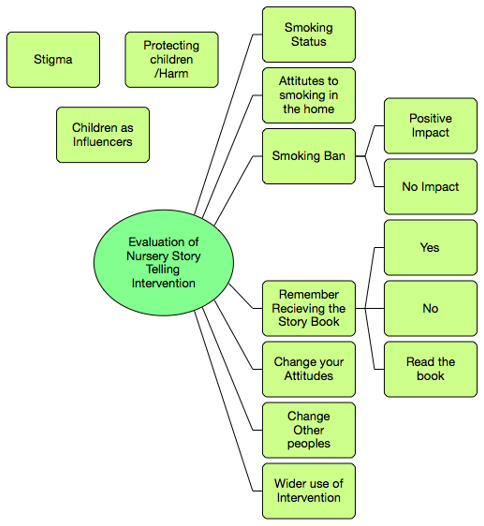
Figure 1 Coding Mind Map for Thematic Analysis.
(Image created with use of QSR International's NVivo qualitative data analysis software version 12, 2018).
Five of the six participants stated they had smoked. Participants were from two of the five nurseries. Both nurseries were in areas of high deprivation and while participants postcodes were unavailable, all stayed within the communities directly surrounding the nurseries. Using the nursery postcode, all participants were living within the 10% most deprived communities within Scotland, UK.
Emergent themes
As depicted in Figure 2, three key themes were identified from the thematic analysis
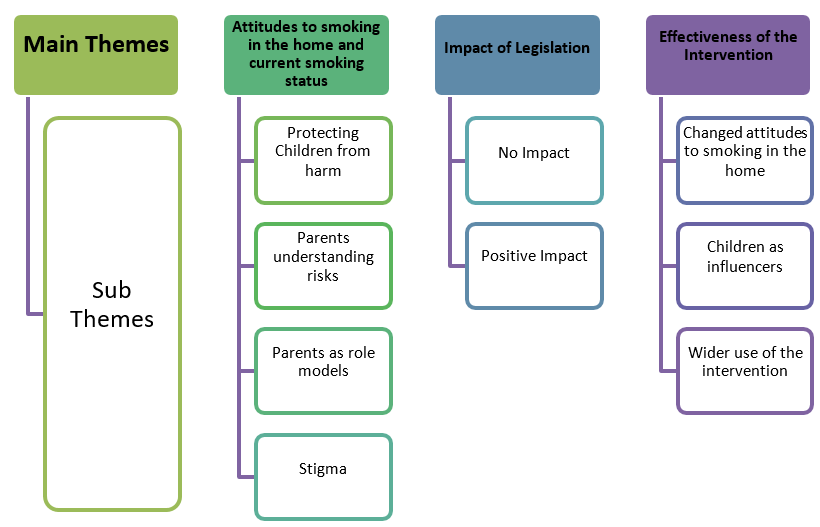
Figure 2 Themes and subthemes.
Attitudes to smoking in the home and current smoking status
The first key theme drawn from the data identified participants smoking status and attitudes towards smoking in the home. All participants were current smokers and had started smoking in their teenage years. Difficult family circumstances were discussed has having played a role in their choosing to smoke and difficulties quitting. Participants expressed a current desire to stop smoking and stated they had tried to quit at various points in their life. Central to this theme was a sense of disapproval of smoking in the home especially with children and young people. Participants displayed clarity in their thinking using language to demonstrate the distain they felt towards smoking in the home including words used to express condemnation as illustrated by participant B: “I detest it”.
These findings are consistent with the undertone running through previous research findings.14-18 Yousey30, in a qualitative study of parents with children under the age of five year found that while parents disliked smoking in the home exceptions were often made for family and friends.
Protecting Children from Harm
A sub-theme focussed specifically on feelings expressed by participants whilst discussing their attitudes towards smoking in the home, these had significant emotional depth with participants expressing their concerns over second-hand smoke and the risks this may pose to their children and their children’s health. Most expressed a strong desire to protect their children from any possible harm. This was achieved by either smoking outdoors or limiting smoking to one room in the home. Attitudes of concern were expressed in relation to the removal of their child’s individual choice; feelings of smoking in the home being unfair to their children or other family members; and a feeling of unjustness to force and inflict their smoking upon others, especially children who do not smoke, as participant F explained:
““I will go in the kitchen and have a smoke, she will stay in the living room, I’ll go in a different room from where she [daughter] is”.
It can be argued that participants provide examples such as the one above to lessen their own feelings of guilt about their smoking behaviour and offer this information to display themselves as more knowledgeable than others in relation to the risks posed by second-hand smoke.
Parents were able to demonstrate a limited understanding of children being exposed to smoke in the home, expressing concerns around children breathing in second-hand smoke. These concerns were based around respiratory health, with an absence of awareness expressed of a wider understanding of the impact that second-hand smoke can have on other illnesses. Whilst parents demonstrate an understanding of the danger posed to their children by second-hand smoke, their understanding is often limited, suggestive of the fact that information is required especially in areas of deprivation where parents need more support to embed tobacco restrictions within the home or indeed to smoke outside or to quit. Arguably, the knowledge that parents do have is confused and incomplete. Whilst parents were able to communicate knowledge of a degree of risk, few can link this with specific childhood illnesses or disease and parents do require further information on the dangers of second-hand smoke.32
Parents as role models
The harm reduction methods of smoking outside or imposing smoking restrictions within the home alongside parents/caregivers limited knowledge of the dangers of breathing in second-hand smoke served a multi-purpose for parents. Parents wanted not only to protect their child’s respiratory health, but they also wanted to secure their child’s future health and wellbeing. Parents discussed their feelings of being a smoker and the impact this might have on their child’s future by increasing the likelihood that their child would go on to become a smoker, as participant E remarked.
“They [child] will be like how come mummy can do it and I can’t, if Mummy’s allowed to do it, I can do it, so yeah”.
Participants clearly recognised they might have a negative impact on their child by encouraging the normalisation of smoking. They also recognised the fact that parents are role models and children will often mimic what they see in life, thus smoking becoming their social norm. These feelings were discussed in the context of future financial implications that smoking might have on their child.
Stigma
With participants being able to demonstrate an understanding of the dangers of smoking, increased awareness of the effects of second-hand smoke on children could increase parents desire to not feel stigmatised by smoking. Participants were concerned about what the nursery staff would think about them and the judgements they face being smokers:
“I would never want to send my child to nursery or wherever stinking of smoke”. [Participant C]
Parents reported feeling pressure to be seen as the good parent, giving examples of feeling guilty and even stupid when discussing with professionals their current smoking status. This can be both a motivator to change but also a barrier when seeking support to stop smoking.15 Perhaps these feelings around stigma run deeper than how other professionals or nursery staff see them as parents; perhaps participants are concerned with how their children will view them when they are older. To support this assumption, a Canadian study of young people aged 11-19 years found that parents who did not smoke were judged as good parents while smokers were seen to be bad parents with those young people living in homes with smokers feeling that they were treated unjustly by being exposed to second-hand smoke.32 This issue was touched on in the present study by participant C:
“I grew up in a home where both my dad and my step-mum smoked and the walls were yellow, it stunk, and my hair smelt a lot growing up”.
Barriers to effective smoking behaviour change were identified including limited information/education, stigma surrounding smoking and parents perceived ideas of professionals’ views towards them. Stigma can be a strong motivator to implement harm reduction strategies within the home. It is clear from this key theme that parents from disadvantaged communities do have the desire to protect their children from the dangers of second-hand smoke, but, along with contextual barriers that require more skill and support to succeed.
Impact of Legislation
A second major theme that was elicited from this study was the (lack of) impact of legislation on second-hand smoking. It was felt that government interventions to prevent exposure to second-hand smoke had little to no impact on behaviour. Participants explained smoking in the home as personal choice and based on inherent family values. Data identified a generational split suggesting that older generations find not smoking in the home or car especially around children and young people to be more challenging than younger generations. Older smokers grew up in an era where smoking was the social norm and felt less open to the stigmatisation associated with being a parent and smoking in the present, as participant C explains:
“I remember the ban came in and my dad was still smoking in the house smoking around grandchildren, but my papa, he stopped smoking inside the house but was still smoking around children, whilst my nanny, she just continued smoking in the house, same with all the old people in my family”.
There is wider evidence highlighting how parents who would like to stop smoking and protect their children from harm often feel powerless when dealing with grandparents, relatives, or friends.15 Grandparents can be a support for parents and relied upon to assist with childcare however parents feel they cannot impose smoking restrictions within the homes of their own parents. It is therefore important going forward that tobacco control efforts are not only aimed at parents, but consider the wider family network, this may in turn support parents to feel less stigmatised and support those wishing to make a stand without having a detrimental impact on social inclusion.
Effectiveness of the intervention
The final key theme that emerged from this study focused on intervention effectiveness. Half of all participants remembered receiving the story book, which appeared due to the daily challenges faced with chaotic lifestyles, difficult interpersonal relationships, changing family relationships and issues surrounding accommodation. This highlights the necessity for interventions to not be a one-off tick-box exercise, but something that is repeated and embedded within a curriculum that offers support from educational and healthcare professionals.33
Changed attitudes to smoking in the home
When participants were probed about the extent to which the intervention could change attitudes toward smoking in the home, responses showed mixed feelings. Participants said that the intervention raised some awareness of the dangers of second-hand smoke and that it might make people consider not smoking in their home with children, or even encourage others to quit smoking altogether:
“I think people would be more likely not to smoke in their house with their kids... it might raise awareness of second-hand smoke” (Participant A)
“I think it gets a good point.” (Participant B)
“People will think and maybe make them stop, maybe not fully but change what they are doing in the home and reduce it.” (Participant E)
Whereas other opinions were less confident:
“I don’t know if it would necessarily help or change attitudes.” (Participant B)
“I understand what the books saying I don’t know if…. if someone read the book they would obviously click and think oh no what I’m doing is wrong, I don’t, I think some might.” (Participant D)
These feelings of uncertainty mimic those of when participants discussed tobacco legislation. There was a feeling that smoking in the home remains linked to individual choice and inherent family values. In a study of Iranian adolescents aged 15-18 years, researchers concluded that those growing up in a family home where smoking is the norm were more likely to continue smoking into later life and found it harder to implement health behaviour changes.34 This was also seen in the present study:
“I think for the kids whose parents do smoke and smoke around them it will be like second nature”. (Participant A)
The supporting literature suggest that one intervention does not suit all and that prevention activities should start earlier in life.34 There is a need for multifaceted tobacco control interventions in early years.14 Moreover, it is evident from the current data that prevention activities need to take into account family context and normative beliefs in order to address inherent family values, which in turn will lessen the likelihood of children taking up smoking in the future.
Children as influencers
When discussing changing behaviours and other people’s behaviours an interesting concept of children as influencers was generated. There was a feeling that children as young as nursery age can have a powerful positive influence over what happens in the family home, as participant A and B declare:
“If their children ask them not to, and I feel like the story kind of edges towards that, that discussion of you shouldn’t be smoking in the house, you could give me a cold”.
“Reading the book, you’ve got more chance of your children changing your opinion on it, than the book itself changing your opinion…
I’d be more inclined to change my opinion based on what my kids said to me than based on the book itself.”
This notion of children as influencers is a relatively new one, previous studies with adults suggests that children are victims of second-hand smoke and lack the power required to influence adult behaviour in order to limit the danger posed to them by second-hand smoke.18 However, in light of the current findings, it may well be that children should be supported to positively influence parental behaviour with effective health promotion by use of intervention material such as the story-telling type adopted here.
Wider use of the intervention
While views on the impact that the intervention would have on other people was divided, all of the participants felt that the intervention should be used in other nurseries. Strong feelings were expressed about the intervention being successful in raising awareness of the dangers of second-hand smoke. Even if it did not reach everyone to make a change by either smoking outside or stop smoking altogether, it was conceded that the intervention would be worth investing in if it helped just one person to make a change and protect their child from the dangers of second-hand smoke:
“I do think it should be brought into other nurseries though, like because it could influence, even if it’s only changing some people’s minds it’s better than having no one’s minds changed at all, even one person may have a difference about it than no one, yeah. I don’t see it doing any harm, I certainly don’t see it doing any harm, if anything, good will come of it.” [Participant C]
It is evident that interventions such as the one evaluated here are well received by smoking parents. The findings highlight those parents from disadvantaged communities do place importance on their children’s health and future wellbeing. They want to change outcomes for their children but need the support of healthcare interventions to encourage positive health behaviour change.
Post-intervention smoking habits
The mean baseline smoking levels pre-story-book intervention for the six participants was 101.50±4.59, 57.33±10.19 and post-intervention smoking levels. A non-parametric Wilcoxon signed rank test at week 12 yielded significant outcomes with overall smoking levels being reduced post measurements (Z= -2.20, p=0.03).
This study set out to explore parents’ views on smoking in the home and second-hand smoke experiencing a story telling intervention delivered in a nursery environment. It was set within one geographical location in Scotland, UK, which has high deprivation and inflated smoking rates. With the aim to identify parents’ perceptions and attitudes around smoking in the family home, the key outcomes from this study centred on three key themes: Attitudes to smoking in the home and current smoking status; The impact of legislation; and Effectiveness of the intervention.
Parents from disadvantaged communities reported a desire to stop smoking but due to lifestyles, social norms and home circumstances found it harder to achieve this. This desire stems from an inherent goal to protect their children from harm and while parents may have limited knowledge of the effects of second-hand smoke, their existing knowledge shapes their view of smoking at home and the restrictions they have in place.16Like other published studies,14,15 parents in this present study recognised themselves as being role models and demonstrated a want for a different future for their child. Whilst parents demonstrated an understanding of the dangers associated with smoking, this awareness surrounding second-hand smoke also increased their desire to not feel stigmatised. Participants voiced their concerns over nursery staff making negative judgements about their parenting skills. It remained clear however that the motivators surrounding parents as role models and perceived stigma were also barriers to effective smoking related behaviour change. This theme identified parents need for further information and education on the effects of second-hand smoke to encourage positive changes in tobacco related behaviours.
When discussing the tobacco legislation, participants felt that government interventions had little to no impact on smoking behaviour. This point related to participants’ feelings that smoking is tied to inherent family values and personal choice. Parents’ expressed struggles negotiating tobacco control measures such as smoking outside within a wider family context; perceiving difficulty restricting smoking in group or informal childcare environments. Smoking in cars was felt to be easier to impose restrictions on due to it being visible to others and authorities. A generational split was also evidenced, suggesting that older generations may find refraining from smoking in the home or car especially around children and young people to be more of a challenge than it is for a younger generation; as they grew up in an era where smoking was the social norm and feel less open to the stigmatisation associated with being a parent and smoking in the present.35
During the interviews, when discussing the intervention in relation to their behaviours, parents voiced that they were smoking outside however one parent thought the intervention did make them think about their actions. However, when discussing the impact of the intervention on others attitudes to smoking in the home views were mixed. The feelings of uncertainty mimicked those when participants discussed tobacco legislation. There was a feeling that smoking in the home remains linked to individual choice and inherent family values. Parents’ identified children as influencers, they felt even nursery age could have a powerful positive influence over what happens in the family home. It was evident from the findings that parents from disadvantaged communities do want to protect their children, but to do so successfully, requires better information and education; and the support of effective healthcare interventions, such as the one evaluated within this study.
As this study has confirmed, smoking remains entwined with inherent family values and social norms and as a result, parents can struggle to set tobacco restrictions within their homes or the homes of their families and friends. It was also clear from listening to the voices of these parents that not one intervention fits all. Interventions must be tailored if they are to be effective in reducing second-hand smoking in specific groups. If given the right support, parents can go on to change the future outcomes for their child through positive health behaviour change impacting not just on smoking, but on social capital and wider social determinants of health.35,19
The early years second-hand smoke intervention evaluated here has raised some awareness of the dangers of second-hand smoking among parents and further work needs to be done to implement this into routine practice. However, this study included white heterosexual parents which further reflected the contents of the storybook. Adaptations to the book from a socio-cultural ethnic and sexuality-based background would also be needed. Family systems are diverse, and the current intervention has limited application. Research needs to examine how diverse adaptations to this intervention might impact diverse groups’ outcomes with second-hand smoking. To expand, a comparative analysis, among a larger and diverse population would compare gender, ethnicity, and sexuality with regards to the story-book interventions effectiveness to support equity of healthcare in NHS services and in schools and beyond.
Another interesting facet would be the impact of the intervention on smoking levels, including smoking cessation. Whilst the assessment tool in this study did not measure smoking levels in and outside the house, lower levels of smoking had been reported. This might suggest that the intervention supports smoking cessation. Whilst speculative, physically going outside to smoke might act as a deterrent. So direct and indirect effects of overall smoking patterns might be positively affected by this intervention. Research examining how levels of self-efficacy and smoking behaviour mediated by the story book interventions might shed insight into this dynamic and would be of interest in the adaptable and far reaching use of this intervention.
Going forward, tobacco control measures need to be multifaceted and inclusive of wider family and social networks to support parents from deprived areas to tackle the risks of second-hand smoke on their children. However, findings from the present study should be considered in light of some inevitable shortfalls. The qualitative findings and discussions here are pertaining to one small sample within a geographical area in Scotland, UK and therefore cannot automatically be generalised to a wider population.
Therefore, further research would be necessary to recognise the representativeness of the perceptions and attitudes expressed here to other populations and communities. Moreover, the participants in this study were all women, and the extent to which their views match those of fathers or male caregivers remains to be tested. Finally, this study did not set out to take into consideration the view of second-hand smoking from the child’s perspective and this is an area worthy of future research and development. It cannot be ignored that many children living in disadvantaged communities are exposed to environmental tobacco.9,10 More research would allow for a fuller appreciation of the complexities surrounding smokers in disadvantaged communities. Only when we understand the lived experience fully can we positively challenge the health inequalities that surround smokers from disadvantaged areas through the development and evaluation of effective interventions that aim to address second-hand smoking. These interventions need to be multifaceted and inclusive of family members and support networks.37
The present study pinpoints some significant complexities associated with quitting smoking that are experienced by smoking parents who live in deprived communities. Smoking remains bound to family values and social norms. Only through multiple, resource intensive and tailored interventions that consider the wider family context will we be able to succeed in reducing exposure to second-hand smoke for children in hard to reach and underprivileged societies.
We would like to thank participants for their time in this study.
The authors declare that there is no conflict of interest.

©2022 MacNicol, et al. This is an open access article distributed under the terms of the, which permits unrestricted use, distribution, and build upon your work non-commercially.