MOJ
eISSN: 2576-4519


Mini Review Volume 9 Issue 1
 Urriolagoitia-Calderón GM, Romero-Ángels B, Carrasco-Hernández F, Gallesgos-Funes FJ, Mireles-Hernández J, Velazquez Lozada E, Guereca-Ibarra JR, Suarez-Hernandez ML, García-Laguna MA
Instituto Politécnico Nacional, México
Correspondence: Guillermo Urriolagoitia Sosa, Instituto Politécnico Nacional, Escuela Superior de Ingeniería Mecánica y Eléctrica, Sección de Estudios de Posgrado e Investigación, Zacatenco, C.P. 07320, México
Received: September 13, 2025 | Published: September 29, 2025
Citation: Gomez-Niebla JA, Urriolagoitia-Sosa G, Urriolagoitia-Calderón GM, et al. Importance of biomodelling a detailed 3D knee for a mechanical analysis. MOJ App Bio Biomech. 2025;9(1):97‒98. DOI: 10.15406/mojabb.2025.09.00232
The use of bio-models as a tool for the visualization of the behavior in the anatomical structures while executing any task is useful to understand the function of the structural complex. In this paper is explained the development of a 3D bio-model of the knee joint considering as a primal resource the computed tomography technology. Also, it helps to understand how the knee is composed by different elements with different task each. This is important for disciplines like medicine, who can needs to know the structures to create prothesis of different bio-structures. Also is used in mechanical areas to understand the behavior when it is submitted to any load or pressure, here are included the daily movements like walking.
Keywords: biomodels, anatomical structures, knee joint
Human beings have always felt the need to find explanations for the behavior of different areas of the body, seeking the connection between the mechanical and biological aspects in order to understand how these branches work together. Currently, so-called bio-models are used as medical support in the diagnosis and treatment of patients with various health problems. These models are capable of visually demonstrating the behavior of the structural complex when subjected to different loads that the body undergoes on a daily basis.
Biomodeling is the design of digital models of the human body, which are used as medical support for the diagnosis and treatment of various conditions, such as malformations1 or degenerative diseases,2 but also to study the behavior in a specific sector of the population.3 The knee is a subject of study because of all the applications where it is used, considering as an example the model of a knee subjected to an external load acting as a crash during a motorcycle race.4 These models are generated from superimposed images, such as those obtained from imaging studies such as magnetic resonance imaging, computed tomography, and ultrasound.5
From these two-dimensional images, composed of pixels, it is possible to obtain three-dimensional (3D) models composed of voxels, which facilitates the study of human biological parts. The relationship between science and technological advances has allowed these innovative tools to make the analysis of the behavior of different biological structures easier, so that tests are carried out based on simulations.
Bio-models are generated from superimposed images using specialized computer programs.6 The main basis is to carry out studies involving imaging tools, in this case using computed tomography (CT).7,8 After getting the images to build the three-dimensional model, there is a segmentation procedure9 that is made from the model, thereby separating the components that give structure to the knee. During the segmentation process, carried out in Materialise Mimics, the different masks are separated according to the number of elements with which one wishes to work, thus differentiating the elements and creating distinct bodies (Figure 1).
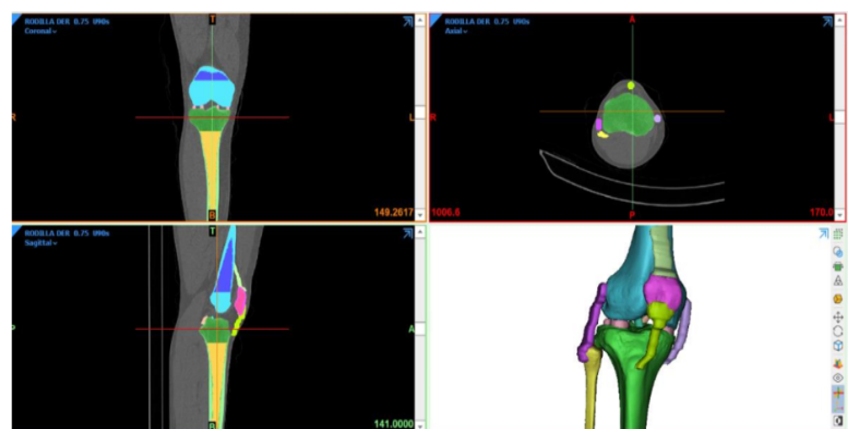
Figure 1 Vista del modelo en Materialise Mimics.
Once segmentation is complete, the model is transferred to the next software program, Materialisee 3-Matic, where the three-dimensional model undergoes finishing improvements and correction of any errors (Figure 2). It is also discretized for future mechanical analysis in Ansys Workbench (Figure 3).
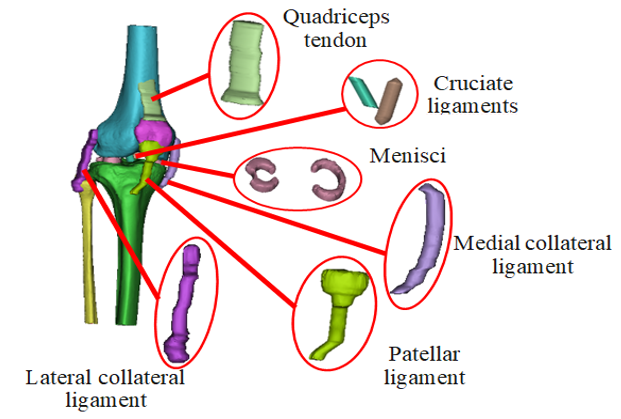
Figure 2 Finished model and corrected in 3-Matic.
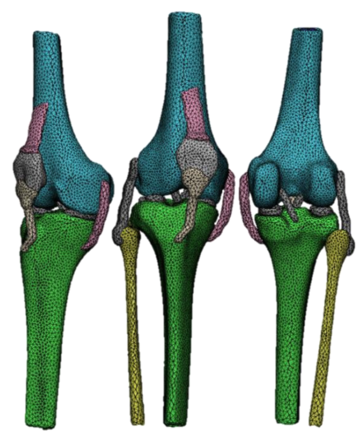
Figure 3 Segmented and ready for analysis model.
Finally, each model part is saved as a STL extension for later importation, resulting in a 3D knee joint model with morphological characteristics similar to the reality.
The importance of modeling the knee for a three-dimensional analysis is that is easier to understand the behavior of the complex structure, observing graphically where the stresses are acting during certain movement just with the application of the mechanical properties and the external load that simulates the walk, the couch and any other activity one wants to analyze.
When the analysis is effectuated, it is important to emphasize that the most complex the model is, the most like reality the analysis will be, for that reason, the biological structure must be anatomically detailed at the moment of making any analysis, and also the mechanical properties should be the closest to reality.
The authors gratefully acknowledge the financial support from the Mexican government by la Secretaría de Ciencia, Humanidades, Tecnología e Inovación and the Instituto Politécnico Nacional.
None.
The authors declare that there are no conflicts of interest.

©2025 Gomez-Niebla, et al. This is an open access article distributed under the terms of the, which permits unrestricted use, distribution, and build upon your work non-commercially.