MOJ
eISSN: 2576-4519


Research Article Volume 10 Issue 1
 Oleksii S Nekhlopochyn,2 Viktoria А Pastukhova,1 Tetiana А Malysheva2
1National University of Physical Education and Sport of Ukraine
2Romodanov Neurosurgery Institute of National Academy of Medical Sciences of Ukraine
Correspondence: Oleksii S. Nekhlopochyn, Department of spinal neurosurgery, Romodanov Neurosurgery Institute of National Academy of Medical Sciences of Ukraine, Ukraine, Tel +380 44 483-94-13
Received: April 23, 2026 | Published: May 13, 2026
Citation: Lysenko IA, Nekhlopochyn OS, Pastukhova VA, et al. Human-centered model of sports management in Ukraine: leadership and human capital development. MOJ App Bio Biomech. 2026;10(1):52-58. DOI: 10.15406/mojabb.2026.10.00241
Background: Sports management in Ukraine is undergoing a gradual but consequential shift away from administrative-command traditions toward models that place the individual - manager, coach, or athlete - at the centre of organizational life. This shift is not merely rhetorical: evidence from Ukrainian sports organizations suggests that internal leadership qualities predict effectiveness more reliably than structural or financial conditions.
Purpose: To determine the place of the individual in contemporary sports management, to reveal their role as both a subject and an object of management, and to analyze the main factors influencing leadership effectiveness in Ukrainian sports organizations.
Materials and methods: The study employed general scientific, specialized, and interdisciplinary approaches, including sociological, psychological, managerial, and pedagogical methods. The following methods were applied: literature analysis, content analysis, systems and axiological approaches, situational analysis, comparative analysis of leadership models, sociological survey, observation, case analysis, and methods of mathematical statistics. The empirical sample included 48 managers, 52 coaches, and 87 athletes from 15 sports organizations in Ukraine during 2022–2024. Quantitative processing involved percentage distribution and correlation analysis.
Results: Human capital was identified as the principal resource of sports management, encompassing professional competence, values, motivation, emotional intelligence, and social interaction. Democratic (36.7%) and situational (33.3%) leadership styles predominated overall. Funding was identified as the main external barrier by 90% of coaches, 80% of athletes, and 70% of managers. Internal factors proved more important for leadership effectiveness: decision-making ability for athletes (70%), emotional resilience for coaches (80%), and trust within the team (70%) and managerial experience (60%) for managers. Internal psychological and managerial characteristics showed a stronger association with effectiveness (r = 0.68–0.71) than external constraints (r = 0.39–0.45).
Conclusions: The individual constitutes the central category of contemporary sports management and determines organizational effectiveness through values, competencies, motivation, and leadership potential. In Ukrainian sports organizations, internal leadership resources have a stronger impact on effectiveness than external systemic barriers. The future of sports management is linked to the development of human-centred, ethically grounded, and digitally adaptive management models.
Keywords: sports management, human capital, leadership, humanistic approach, team, human-centred approach
Questions about the role of the human being in management are as old as management theory itself, yet they have never been straightforwardly resolved. When F. Taylor, A. Fayol, and H. Emerson laid the foundations of classical management thinking in the early twentieth century, the dominant assumption was that workers were best treated as interchangeable components of a production mechanism. Standardization, hierarchical control, and measurable output defined this era. The approach worked - in the narrow sense of increasing industrial productivity - but it left aside everything that made the worker a person: emotional states, social bonds, the desire for meaning in one's work.1
That omission began to draw serious criticism from the 1930s onward. Elton Mayo's investigations at the Hawthorne plant produced a finding that seemed counterintuitive to the prevailing orthodoxy: workers performed better when they felt noticed, when the interpersonal atmosphere was positive, when supervisors showed genuine interest in their situation.1 This was not sentimentality - it was an empirical result that forced a reconsideration of what actually drives productive behaviour. The idea that organizations are social systems, not just technical ones, gradually took hold in management thinking.
By the second half of the twentieth century, theorists such as F. Herzberg, A. Maslow, D. McGregor, and P. Drucker had developed this line of argument considerably further. Herzberg distinguished between factors that merely prevent dissatisfaction and those that genuinely motivate; Maslow mapped the hierarchy of human needs that organizations either engage or ignore; McGregor's Theory X and Theory Y framed the choice between coercive and participative management as a choice between fundamentally different assumptions about human nature; Drucker insisted that people are the one organizational resource that cannot be optimized from the outside - only developed from within.2 Taken together, these contributions established a different conception of the manager's task: less about controlling behaviour, more about creating conditions in which people can contribute their best.
These shifts in general management theory carry particular weight when applied to sport. Unlike a manufacturing plant or a government bureau, a sports organization cannot function through compliance alone. Motivation, trust, and emotional engagement are not peripheral extras - they are constitutive of performance itself. A team that goes through the motions rarely wins; a coach who relies purely on authority rarely retains it for long.3,4 This is why the human factor has attracted sustained attention in sports management research, and why its neglect tends to produce visible, rapid, and embarrassing consequences.
At the turn of the twenty-first century, a more explicitly humanistic vocabulary entered sports management discourse. Sport came to be framed not only as a competitive arena but as a developmental space - a context in which competencies, civic habits, and personal resilience can be cultivated alongside athletic skills.5 This framing carried normative weight: if sport is genuinely formative, then those who manage it bear a responsibility that goes beyond win-loss records.
The period after 2020 has stress-tested these ideas severely. The COVID-19 pandemic disrupted competitive calendars, separated athletes from training environments, and forced organizations to maintain cohesion under conditions of physical isolation. In Ukraine, the full-scale invasion of 2022 added dimensions of threat and displacement that no management textbook had anticipated. In both cases, organizations that had invested in trust, psychological safety, and shared values proved more resilient than those that had not.6–8 The human factor became, in a quite literal sense, the factor that determined whether an organization survived the disruption or collapsed under it.
Contemporary sports management in Ukraine consequently faces a dual task. On one side, it must engage with the demands of digitalization, international integration, and institutional modernization. On the other, it must do so in a context shaped by war, economic constraint, and the particular cultural traditions of Ukrainian sport - traditions that combine Soviet-era organizational habits with a growing orientation toward European models and civic values.7,8 The individuals navigating this situation - managers, coaches, administrators - are not merely implementing policy; they are making consequential judgments under pressure, often without adequate resources, in conditions of genuine uncertainty.
It is this reality that gives the question of the individual's role in sports management its present urgency. The individual in twenty-first-century Ukrainian sport is simultaneously the primary resource available to an organization and the primary source of its capacity for adaptation.
Aim
The aim of the study is to determine the place of the individual in the system of contemporary sports management, to reveal their role as both a subject and an object of management, to characterize the humanistic trends in the development of human potential in sport, and to analyze the factors of professional adaptation and career growth of sports managers in Ukraine.
This study was designed as a cross-sectional observational study combining quantitative and qualitative approaches to examine the role of the individual in contemporary sports management in Ukraine. The methodological framework integrated sociological, psychological, managerial, and pedagogical perspectives in order to assess leadership styles, human capital characteristics, and organizational factors associated with management effectiveness in sports organizations.
The empirical part of the study was conducted during 2022–2024 and included representatives of 15 sports organizations in Ukraine. The study sample comprised 187 participants: 48 managers, 52 coaches, and 87 athletes. Participants were recruited from organizations involved in professional and developmental sports activities. Inclusion criteria were direct involvement in the organizational, coaching, or athletic processes and practical experience within a sports organization at the time of the survey. Individuals not directly engaged in organizational or sporting activity were not included.
Data collection was carried out using a structured questionnaire, observation, and case analysis. The questionnaire included thematic blocks addressing:
(1) Perceptions of the role of the individual in sports management;
(2) Dominant leadership styles in sports organizations;
(3) Internal factors influencing leadership effectiveness, including decision-making ability, emotional resilience, trust, and managerial experience;
(4) External barriers affecting management effectiveness, including funding, infrastructure, and state support; and
(5) Indicators of team interaction, psychological climate, and participation in joint decision-making. Closed and semi-closed questions were used to capture both quantitative distributions and contextual interpretations of respondents’ views.
Observation and case analysis were applied to complement the survey findings and to interpret patterns of leadership behaviour and team interaction in real organizational settings. These methods were used to identify how declared leadership models were reflected in practical managerial and coaching activity.
The study also included analysis and generalization of scientific literature, content analysis of professional and policy sources, and comparative analysis of leadership models relevant to the field of sports management. These methods were used to develop the conceptual framework of the study and to interpret the empirical findings in relation to contemporary human-centred management approaches.
Quantitative data were processed using descriptive and analytical statistics. Percentage distribution, absolute counts, and arithmetic mean values were calculated where appropriate. Correlation analysis was performed to assess the relationship between leadership effectiveness and internal psychological or managerial factors, as well as external organizational constraints. Correlation coefficients were interpreted according to the strength of association. Statistical processing was performed at the level required for exploratory social and management research.
Participation in the study was voluntary. Respondents were informed about the purpose of the study, and all responses were collected anonymously and analyzed in aggregated form.
The study was carried out in accordance with the Consolidated Research Plan of the National University of Physical Education and Sport of Ukraine for 2021–2025, within theme 1.5, “Theoretical and Applied Foundations of Communication in Sports Management”.
Human capital is increasingly recognized as the decisive resource in contemporary management - not in the abstract sense of "people are important," but in the specific sense that knowledge, competence, motivation, and value orientation determine what an organization can actually accomplish.1,2,9 In sport this recognition has a particular urgency, since athletic performance is not a product that can be manufactured to specification: it emerges from the interaction of physical preparation, psychological readiness, social cohesion, and shared commitment to a common goal.4,10
The data gathered in this study indicate that human capital in Ukrainian sports organizations operates across three distinct levels, each with its own logic and its own vulnerabilities.1,11 At the strategic level, directors, presidents, and senior managers set the conditions - resource allocation, institutional culture, long-term direction - within which everyone else works. At the operational level, coaches, administrators, medical staff, and support personnel translate strategic intentions into daily practice. At the level of direct performance, athletes, instructors, and volunteers carry the mission into actual competition and public visibility. What the study confirmed is that the effectiveness of the whole depends not simply on the quality of each level in isolation, but on the quality of communication and trust between them.12,13
The functions that human capital performs within sports organizations are worth specifying, because the list reveals something important about the nature of the resource. Human capital drives innovation - new approaches to training, competition formats, and audience engagement emerge from people who think creatively within their domain. It provides organizational stability through the formation of coherent managerial structures and reliable team interaction. It generates and sustains motivation, since colleagues who recognize each other's contributions create conditions in which sustained effort feels worthwhile. It builds the social and reputational fabric of the organization through partnerships, communication culture, and public presence. And it reproduces itself through education, mentoring, and the deliberate cultivation of leadership at every level.3,7,12
The values that underpin this kind of human capital are not self-evident, and they cannot be decreed. The study identified respect for the individual's dignity, genuine trust between colleagues, shared responsibility for outcomes, and a commitment to fair play as the core values reported by practitioners across all respondent groups.5,14 These are not values that appear in organizational charts; they are values that manifest - or fail to manifest - in specific interactions, specific decisions under pressure, and specific responses to failure.
Investment in human capital, accordingly, means something more than training courses and professional development budgets. It means building mentoring relationships, developing HR practices that actually identify and nurture potential, and creating digital platforms that support rather than replace human judgment. The HR cycle in Ukrainian sports organizations - recruitment, training, motivation, retention - was found to function most effectively where all four stages received deliberate attention rather than being treated as administrative procedures.1,6,15
The conditions created by the full-scale invasion after 2022 have made human capital simultaneously more precarious and more decisive. When infrastructure is damaged, when budgets collapse, and when personnel are displaced or mobilized, what remains is people - their knowledge, their relationships, their capacity to improvise under conditions that no prior plan anticipated.10,16
Leadership is the mechanism through which human capital is activated and directed, and it proved to be the most analytically productive concept in this study. The finding that leadership in sport involves both managerial and psychological dimensions is not new,2,3 but the specific form this takes in Ukrainian organizations carries some distinctive features. Leaders here are expected to function simultaneously as administrators, moral authorities, and sources of psychological stability - particularly under the pressures of the current period. The gap between these expectations and the institutional resources available to meet them is significant.
Among the theoretical frameworks examined, transformational, situational, and servant leadership proved most consonant with the realities described by respondents.2,17,18 Transformational leadership - characterized by the capacity to inspire, to articulate a vision that connects individual effort to larger meaning, and to develop the capabilities of team members - was widely recognized as an ideal, though less consistently practiced. Situational leadership was valued for its practical flexibility: the ability to adjust one's approach depending on the readiness and motivation of the athletes or staff in question. Servant leadership, which reorients the leader's role toward supporting the conditions for others' success, appeared in the language used by managers who described their own effective practice, even when they did not use that term.
The empirical data did not reveal a single dominant leadership style, which is itself an informative finding (figure 1). What emerged instead was a hybrid pattern, with democratic (36.7%) and situational (33.3%) approaches accounting for the majority of reported practice. This suggests that the most effective leaders in the sample were those who had learned to read situations and adjust accordingly, rather than those who had committed to a fixed style regardless of context. The persistence of an authoritarian approach at the coach-athlete level - noted particularly by athletes in the sample - indicates that the transition toward more collaborative models is incomplete, and that different levels of the organization may be operating according to different implicit norms.
Athletes' perceptions showed the broadest spread: situational (40%), authoritarian (30%), and democratic (30%) in roughly equal measure, suggesting that athletes experience a wider range of leadership behaviour than managers or coaches report as their own practice. This discrepancy is worth noting - it may reflect genuine variety, or it may reflect a gap between self-perception and observed behaviour that is common in leadership research.
Among coaches, the democratic style predominated (40%), followed by situational (30%) and authoritarian (20%). The relative frequency of the authoritarian style here may reflect the high-stakes, time-pressured context of competition preparation, where directive behaviour is sometimes functionally appropriate even for leaders who prefer other approaches in principle (Figure 1).
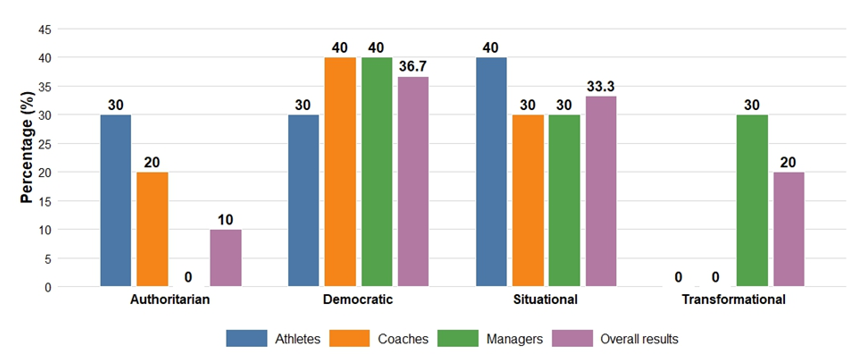
Figure 1 Perception of leadership styles in sports organizations in Ukraine (%).
The manager group showed the sharpest divergence from the others: no respondent identified the authoritarian style at all, with democratic (40%), situational (30%), and transformational (30%) approaches covering the full range. This is consistent with the hypothesis that strategic-level management in Ukrainian sport is moving more rapidly toward participative and vision-oriented models than operational-level coaching.
Turning to the factors that shape leadership effectiveness, the study distinguished between external conditions and internal resources, and the difference in their predictive weight is one of the most substantive findings to emerge from the data.11,13
External constraints were overwhelmingly dominated by a single factor: funding. It was cited as the principal barrier by 90% of coaches, 80% of athletes, and 70% of managers - a degree of consensus that points to a structural rather than incidental problem (Table 1). Infrastructure conditions and the instability of state support were secondary but consistent concerns. These findings are not surprising in the context of a country at war, but they clarify that resource scarcity is not experienced uniformly across organizational levels - coaches feel it most acutely, since resource limitations directly constrain what they can offer their athletes.
|
Respondent group |
Dominant external factors |
% of responses |
Dominant internal factors |
% of responses |
|
Athletes |
Funding; infrastructure conditions |
80–60% |
Decision-making ability |
70% |
|
Coaches |
Funding; political stability; state support |
90–40% |
Emotional resilience |
80% |
|
Managers |
Funding; state support |
70–50% |
Trust within the team; managerial experience; leadership support |
70–50% |
Table 1 Comparative characteristics of external and internal factors affecting leadership effectiveness in the field of physical culture and sport
Internal factors told a different story. For athletes, the quality they most associated with effective leadership was decision-making ability - the capacity to make clear, timely, and defensible judgments (70%). For coaches, emotional resilience was paramount (80%): the ability to maintain composure, sustain motivation, and model stability under conditions of genuine difficulty. For managers, trust within the team was the leading internal factor (70%), followed by managerial experience (60%) and access to support from senior leadership (50%).
The team is the organizational unit where these dynamics are most immediately visible. Unlike a formal group, which may exist on paper without genuine interdependence, a functioning team develops shared norms, mutual accountability, and a collective identity that makes the sum meaningfully greater than its parts.19 Research confirms that cohesion of this kind is not a natural byproduct of proximity - it requires deliberate cultivation through shared goals, reciprocal support, and a leadership culture that treats trust as an organizational asset rather than a personality trait.20
Team development follows recognizable patterns. The sequence of forming, storming, norming, performing, and adjourning described by Tuckman21 remains a useful heuristic, though in practice these stages rarely unfold neatly - disruptions in team composition or competition outcomes can reset dynamics that took months to build. The role of the coach or manager during storming phases is particularly consequential: leaders who can hold the space for productive conflict without either suppressing it or letting it become destructive significantly accelerate the path to effective performance.20,22
The distribution of roles within a team also matters more than is often acknowledged.19 When a group contains people who generate ideas but lacks those who execute them, or when there are too many coordinators and too few implementers, the team tends to underperform relative to the sum of individual abilities. Conversely, role diversity combined with mutual recognition of different contributions creates conditions for what might be called genuine team synergy - outcomes that individuals could not have produced alone.
The empirical data from 2022–2024 reinforced these theoretical points in concrete terms (Figure 2). Seventy-two percent of managers in the sample emphasized the importance of a positive socio-psychological climate as a leadership priority. Sixty-eight percent of coaches reported that involving athletes in joint decision-making visibly improved team effectiveness. Eighty-one percent of athletes stated that participation in planning their own training increased their sense of responsibility and motivation. These are not merely expressions of preference - they describe a causal relationship between participative management and performance outcomes that is consistent with the broader literature.5,23,24
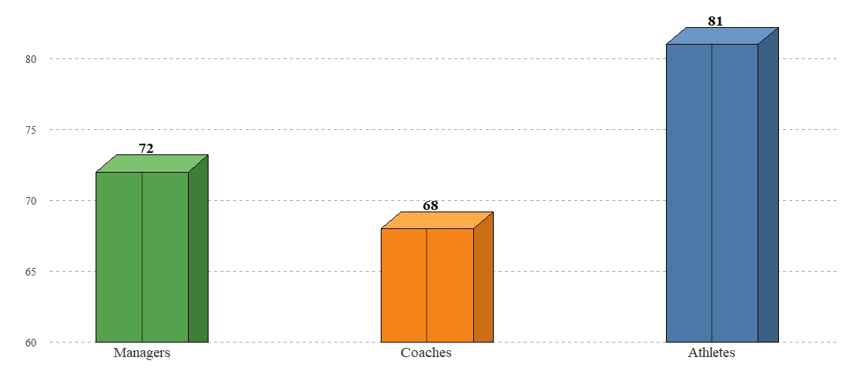
Figure 2 Percentage of respondents who confirmed the significance of partnership relations and psychological safety in sports organizations (2022–2024).
A separate line of analysis examined the values that managers and coaches in Ukrainian sports organizations identified as central to their practice (n = 62, 2024 data). The findings clustered around five themes. Respect for individuality - recognizing that each participant brings a distinct configuration of strengths, vulnerabilities, and motivations - was seen as foundational to any genuine effort to develop human potential.25 Trust and psychological safety were identified as preconditions for risk-taking, learning from failure, and honest communication under pressure.1 Shared responsibility and collegial decision-making were described not merely as ethical preferences but as practical necessities in complex, resource-constrained environments.3 Professional ethics - fairness, honesty, equal treatment - were seen as conditions for organizational legitimacy and long-term credibility.14 The social mission of sport, finally - its contribution to youth development, public health, and civil society - was cited as the source of meaning that sustained commitment through difficult periods.5
Seventy-nine percent of respondents in the professional survey rated human qualities - the capacity for empathy, honesty, and genuine interest in others' development - as more important for leadership effectiveness than formal managerial competencies. This finding deserves careful interpretation. It does not mean that technical skill is unimportant; it means that technical skill in the absence of these human qualities tends to produce compliance rather than commitment, and compliance tends to degrade under pressure precisely when commitment is most needed.6,10,23
Organizations that invest consistently in staff development - through mentoring, professional education, and the deliberate creation of career pathways - show measurable benefits in staff retention, organizational stability, and the capacity to innovate.6,11,13 The converse is also documented: organizations that treat staff development as a luxury to be deferred when resources are tight tend to lose their best people first, precisely because those people have options.26
Conflict within sports organizations is worth addressing directly, because it tends to be either over-managed or under-managed. Over-management - suppressing conflict in the name of team harmony - prevents the productive airing of disagreement that is often the precursor to genuine improvement. Under-management allows interpersonal friction to calcify into factional divisions that undermine collective performance. The research suggests that leaders who can facilitate constructive disagreement, creating space for different perspectives while maintaining orientation toward shared goals, produce more resilient teams than those who enforce surface-level consensus.20,22
Team culture - the shared norms, informal rules, traditions, and collective identity of a group - shapes behaviour in ways that formal organizational structure cannot fully capture.8,19 A mature team culture is one in which members can be honest about difficulties, can acknowledge failure without losing status, and can celebrate collective achievement without it becoming a source of individual rivalry. This kind of culture does not emerge spontaneously; it is cultivated, often slowly, through consistent leadership behaviour and the gradual accumulation of shared experience.
The broader context of digitalization adds a further dimension to these dynamics. Digital tools have materially changed what is possible in sports management - in training analytics, performance monitoring, fan communication, and administrative coordination.6,7,16 The manager who can integrate these tools effectively gains a genuine analytical advantage. But the integration of digital capacity with the human judgment needed to interpret its outputs and act on them wisely remains a challenge that technology itself cannot resolve.1,12
In Ukraine, the digitalization of sport is developing along several tracks simultaneously: national platforms for electronic documentation, distance learning systems for coaches, and growing engagement with European digital infrastructure.6,7,27 These developments are promising but uneven, and their benefits are distributed across organizations in ways that tend to reflect existing inequalities of resource and capacity.
The development trajectory of sports management in Ukraine over the past three decades has followed a broadly recognizable pattern - from centralized administrative control toward more market-oriented and participant-focused models - but with a pace and texture shaped by specifically Ukrainian conditions.16,28 The 1990s saw the dismantling of Soviet-era structures without a clear institutional alternative; the 2000s and 2010s brought gradual professionalization, international exposure, and the emergence of a generation of managers trained in contemporary approaches.11,15,28
Since 2014, and especially since 2022, sport in Ukraine has been embedded in a context of national emergency that has reshaped its social meaning. Sports events and facilities have become platforms for solidarity, for supporting veterans and displaced persons, and for maintaining a sense of normalcy and collective identity under extreme pressure.10,16 This is not a temporary deviation from the normal functions of sport - it is a demonstration of what sport can do when it is grounded in genuine human values rather than purely competitive ones.
The strategic priorities identified in Ukrainian sports policy point toward continued modernization of educational programmes, deeper integration of digital and humanistic competencies, psychological rehabilitation through sport, and stronger engagement with international partners.6,12,29 These are ambitious goals in a country managing active military conflict, and their realization depends less on institutional design than on the quality of the people who will implement them.
Ukraine's potential in this domain is real. The combination of strong sporting traditions, a generation of increasingly internationally oriented managers, and the social energy released by the crisis of 2022 creates conditions in which a genuinely distinctive and human-centred model of sports management could take root - one that does not simply import European frameworks but adapts them to specific Ukrainian realities.5,8,16
The empirical and theoretical findings of this study align with a broader shift visible in the international sports management literature - away from purely structural and performance-metric approaches toward frameworks that place organizational culture, leadership quality, and human development at the centre of analysis.1–3 Chelladurai and Kerwin1 and Northouse2 have both argued, from different disciplinary angles, that sustainable organizational effectiveness in sport depends on conditions that cannot be reduced to resource allocation or tactical planning. The Ukrainian data are consistent with this argument, and they extend it by specifying what it looks like in a context shaped by war, institutional instability, and active social transformation.6,16
The dominance of democratic and situational leadership styles among managers and coaches in the sample is consistent with what the broader literature describes as adaptive leadership30 - the capacity to adjust one's approach to the demands of a specific situation rather than applying a fixed formula. Mach, Ferreira, and Abrantes18 demonstrated in a sample of 690 professional team sport players that transformational leadership influences team performance primarily through the mediating mechanism of team cohesion, and that this effect is stronger in teams where there is consensus about the leader's approach. The Ukrainian data suggest a similar dynamic, though the presence of authoritarian elements at the coach-athlete level indicates that the conditions for this kind of cohesion-mediated effect are not uniformly in place.8,22
Erikstad and colleagues,23 studying transformational coaching in elite youth soccer, found positive associations between coaches' transformational behaviour and both task cohesion and task-oriented motivational climate. The implication - that leadership style shapes not just immediate performance but the motivational architecture of a team - resonates with what Ukrainian coaches and managers reported about the mechanisms through which internal leadership qualities produce their effects.
The comparison with international data is instructive precisely where it reveals divergence.3,20 Ukrainian sports teams appear to generate relatively high levels of internal cohesion and mutual support even under severe resource constraints. The paradox this creates - strong relational bonds within organizations that lack the institutional stability and financial security that sustain those bonds in comparable international settings8,16 - is one of the most interesting findings to emerge from the analysis. It suggests that motivation and social capital can partially compensate for structural deficiencies, but it also raises the question of how long such compensation remains viable without broader institutional improvement.
The finding that internal leadership characteristics - emotional resilience, decision-making capacity, trust within the team - are substantially stronger predictors of effectiveness than external constraints carries implications for both policy and practice.13,28 If internal resources are the primary lever, then investments in leadership development, coaching education, and organizational culture should take priority over waiting for external conditions to improve. This is not a counsel of resignation about resource constraints; it is recognition that the variable over which sports organizations have the most immediate control is also, as the data show, the variable that matters most.
Leadership effectiveness in sports organizations in Ukraine is shaped by the interplay of external and internal factors in ways that the correlation data make concrete (Table 2). The strong positive associations between internal psychological and managerial characteristics and effectiveness (r = 0.68–0.71), set against the moderate associations for external factors (r = 0.39–0.45), provide a quantitative anchor for what practitioners in the field already know intuitively: character and competence matter more than budget, though budget matters too.
|
Factor |
Type of factor |
Correlation coefficient (r) |
Nature of relationship |
|
Funding |
External |
0.42 |
Moderate positive |
|
Material resources |
External |
0.39 |
Weak positive |
|
State support |
External |
0.45 |
Moderate |
|
Emotional resilience |
Internal |
0.71 |
Strong |
|
Decision-making ability |
Internal |
0.64 |
Strong |
|
Trust within the team |
Internal |
0.68 |
Strong |
|
Managerial experience |
Internal |
0.59 |
Moderate |
Table 2 Correlation between external factors, internal barriers, and leadership effectiveness
Several findings from this study warrant emphasis. The individual is not simply a component of sports management systems - they are the primary determinant of whether those systems function as intended. This holds at every level: strategic, operational, and performative. The evolution from technocratic to humanistic management approaches in sport is not a philosophical preference; it reflects accumulated evidence about what actually produces sustained organizational effectiveness.
Human capital in sport is multidimensional in ways that standard HR frameworks tend to underspecify. Professional knowledge and technical skill matter, but so do moral values, relational competence, emotional intelligence, and physical and psychological health. Organizations that develop all of these dimensions consistently demonstrate greater stability and lower staff turnover than those that focus narrowly on technical performance metrics.
Leadership in this study functions as the hinge between human capital and organizational outcomes. Transformational, situational, and servant leadership approaches share a common orientation toward developing others rather than simply directing them - and this orientation, the data suggest, is what distinguishes leaders whose teams perform well under pressure from those whose teams underperform despite comparable resources. The manager who acts as a facilitator, mentor, and connector, rather than primarily as a controller, is not a softer version of the traditional sports manager; in the conditions documented here, they are a more effective one.
Teams are more than the sum of their members, but this only holds when the conditions for genuine cohesion - shared goals, mutual accountability, psychological safety, and constructive handling of conflict - are actively maintained. The five-stage developmental model remains a useful framework, but its practical value lies in helping leaders recognize where a team currently is, not in providing a guarantee of linear progress.
Digitalization is reshaping the manager's role in ways that are still unfolding. The analytical capacities that digital tools provide are genuinely valuable, but they require human judgment to interpret and act upon. The critical risk is not that technology replaces human decision-making - it does not, in the domains that matter most - but that organizations mistake data access for insight.
The most consistent finding across the study is the primacy of internal over external factors in determining leadership effectiveness. Insufficient funding, inadequate infrastructure, and political instability are real constraints that Ukrainian sports organizations face. They are also constraints that individual leaders cannot directly change. What they can change - their own decision-making quality, their emotional resilience, the trust culture within their team - turns out, on the evidence gathered here, to matter more. This is not a comfortable finding for those who advocate for better policy environments, and it should not be read as a reason to abandon that advocacy. But it is a practically important finding for anyone responsible for developing sports managers in Ukraine.
The post-war recovery period will test sports organizations in ways that cannot yet be fully anticipated. What the experience of 2022–2024 already demonstrates is that human solidarity, organizational trust, and genuine commitment to shared values are not soft factors that organizations address after the hard practical problems are solved. They are, in the conditions Ukraine currently faces, the hard practical factors - the ones that determine whether institutions hold together or fragment under pressure.
Prospects for further research should address the development of human capital in sport under conditions of accelerating digital transformation; the specific features of ethical leadership in Ukrainian sports management; and comparative analysis of team culture formation practices across national and international sports organizations operating under different institutional conditions.
None.
None.
The authors declare that there is no conflicts of interest.

©2026 Lysenko, et al. This is an open access article distributed under the terms of the, which permits unrestricted use, distribution, and build upon your work non-commercially.