Journal of
eISSN: 2373-6410


Research Article Volume 15 Issue 4
 Dia Djibril,1 Mbaye Khalifa Ababacar,1,2 Touré Kamadore,1,3 Ndiaye Moustapha1,2
1Clinic of neurosciences Ibrahima Pierre Ndiaye, Fann National University Hospital, Senegal
2Cheikh Anta Diop University Dakar, Senegal
3Iba Der Thiam University, Thies, Senegal
Correspondence: Diop-Sene Marieme Soda, Fann National University Hospital, Cheikh Anta Diop Avenue, BP 5035, Dakar, Senegal, Tel 00 (221)776311497
Received: September 01, 2025 | Published: October 10, 2025
Citation: Diop-Sène MS, Djibril D, Ababacar MK,et al. Prevalence and determinants of sleep disorders among students from Cheikh Anta Diop University of Dakar, Senegal. J Neurol Stroke. 2025;15(4):103-105. DOI: 10.15406/jnsk.2025.15.00631
Introduction: Sleep disorders among students are frequent and worrying given the multiple consequences they entail on mental and physical health as well as on academic abilities. The objective of our study was to measure the prevalence of sleep disorders in a population of students from Cheikh Anta Diop University in Dakar.
Methodology: We conducted a descriptive, quantitative and cross-sectional study over a period of one (1) month from June 10th to July 10th, 2024. This study concerned the students of Cheikh Anta Diop University of Dakar. We used a self- administered questionnaire for sociodemographic and lifestyle information, the Pittsburgh Sleep Quality Index (PSQI) and the Epworth Sleepiness Scale (ESS) for excessive daytime sleepiness.
Results: One hundred and one (101) students responded. The average age was 22 years. The prevalence of sleep disorders was 66% with 22% of severe disorders. The average sleep time was seven hours (07h) on weekdays and eight hours and thirty minutes (08h 30min) on weekends, marking a one-hour and thirty-minute sleep catch-up phenomenon (01h 30min). The prevalence of insomnia was 39%; excessive daytime sleepiness (EDS) and delayed sleep-phase disorder (DSPD) were noted among 7.9% and 55.44% of the students, respectively. Among parasomnias, we noted a high prevalence of nightmares (49.59%) and sleep paralysis (28.71%).
Conclusion: The high prevalence of sleep disorders and associated factors in this category of the population must alert all health professionals in order to carry out preventive actions.
Keywords: sleep disorders, students, Cheikh Anta Diop University, Dakar, Senegal
The study of sleep disorders has always been difficult given the subjectivity of it; however, several scientific communities have thus been interested in defining and classifying them. According to the “Diagnostic and Statistical Manual of Mental Disorder (DSM) IV”; sleep disorders are divided into two main parts: primary sleep disorders, consisting of dysomnia and parasomnia, and secondary sleep disorders associated with a mental pathology, or a general medical condition, or even induced by a drug or non-drug substance.1
University studies greatly demand vigilance and cognitive functions due to the significant hourly loads and the increased quest for excellence and performance. In students, sleep disorders have been a common problem for many years. The quality of sleep must therefore be at the center of this population’s concerns.2 In 2016, according to the National Observatory of Student Life, 40 to 50% of students had sleep problems, compared to 22% in 2013.3 The objective of our study was to evaluate the prevalence and determinants of sleep disorders in a population of students from Cheikh Anta Diop University of Dakar to propose recommendations aimed at improving sleep conditions and quality of life and of the students’ learning.
It was a descriptive, quantitative and cross-sectional study over a period of one (1) month from June 10th to July 10th, 2024, among students at the Cheikh Anta Diop University in Dakar (Senegal). Were included all students of university from the bachelor’s degree to the doctorate (PhD) without distinction of gender, age or faculty. Students absent at the time of the study and those who did not consent to participate were excluded from the study. Data collection was done through a self-administered questionnaire for sociodemographic and lifestyle information, the Pittsburgh Sleep Quality Index (PSQI) and the Epworth Drowsiness Scale (ESS) for excessive daytime sleepiness. The data was collected and analyzed using Excel 2016.
One hundred and one (101) students were collected over a period of one month. The average age of the students was 22 years with a minimum age of 18 years and a maximum of 26 years. Fifty students (49%) had a sleep time of between 6 and 8 hours; 30% less than 6 hours and 21% more than 8 hours of time. The average sleep time was 7 hours during the week and 8 hours 30 minutes during the weekend.
On weekdays, seventy-three students (72.28%) went to bed between 10h PM and midnight, twenty-seven students (26.73%) went to bed late (after 00h AM), and only one student before 10h PM. Seventy students (69.30%) woke up between 6 and 8am, twenty-one (21) (20.80%) before 6am and ten (10) (9.90%) after 8am. On weekends, sixty (60) students (59.40%) went to bed after midnight, thirty-eight (38) students (37.62%) between 10pm and midnight, and only three students (2.98%) went to bed before 10pm. Sixty-one (61) students (60.40%) woke up between 8h AM and 10h AM, twenty-two (22) students (21.78%) before 8h AM and eighteen (17.82%) after 10h AM.
According to the Pittsburg Sleep Quality Index, thirty-five (35) students (34%) had good sleep quality, forty-four (44) students (44%) had poor sleep quality, and twenty-two (22) students (22%) had severe sleep disorders (Table 1). Among the dyssomnia, thirty-nine students (38.6%) had insomnia with: 10% of difficulties falling asleep in less than 30 minutes, 41% of nocturnal awakenings, 8% of early awakenings and 41% with feeling of lack of sleep (Figure 1). According to the Epworth somnolence scale, forty-four students (43.6%) had moderate daytime somnolence, and eight students (7.9%) had excessive daytime somnolence. Thirty-five students (34.65%) presented with restless legs syndrome. A phase delay syndrome was noted in fifty-six students (55.44%). Thirty students (29.70%) had night snoring.
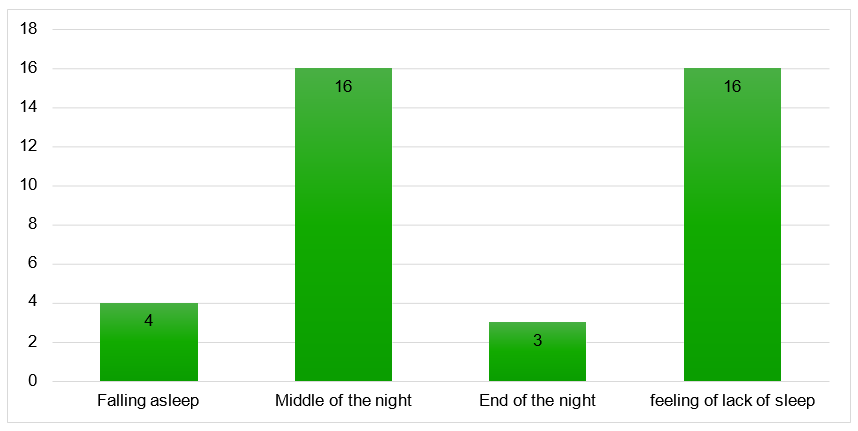
Figure 1 Distribution of students according to the type of insomnia.
|
Score |
[0 – 5] |
] 5 – 10] |
>10 |
|
Number |
35 |
44 |
22 |
|
Frequency |
34% |
44% |
22% |
Table 1 Distribution of students based on their PSQI score
PSQI, pittsburgh sleep quality index
Among the parasomnias, nightmares were noted among fifty students (49.5%). Sleepwalking was found in nine students (8.91%). Twenty-nine students (28.71%) had sleep paralysis. Sleep-talking was present in nineteen students (18.8%). Thirty-nine students (38.61%) presented hypnagogic hallucinations. Enuresis was noted in twelve students (11.88%) and bruxism was found in nine students (8.91%) (Figure 2). In our study, we did not note secondary sleep disorders associated with mental pathology, or a general medical condition, or induced by a drug or non-drug substance.
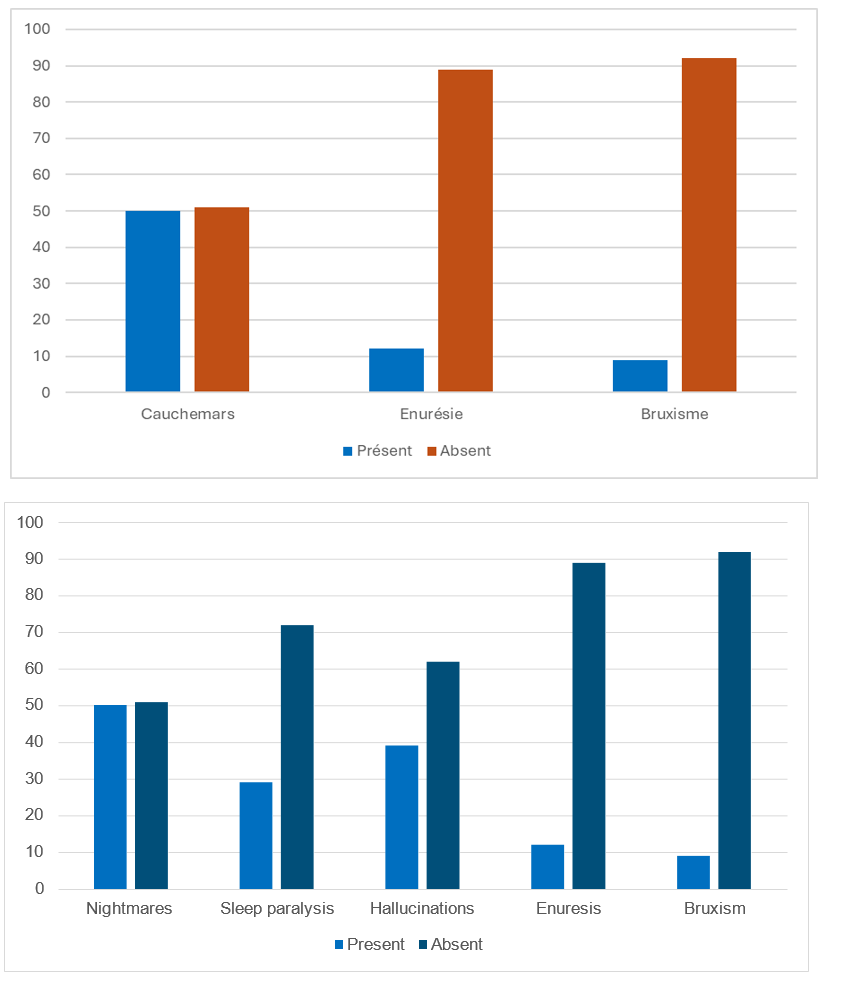
Figure 2 Distribution of students based on the presence or absence of non REM and REM sleep disorders.
Our study achieved a response rate of 100%, higher than the rates of Kamara B et al and Mahamane M who had a response of 88.09% and 57.83%.4,5 This high response rate is due to the way in which our questionnaires are distributed (delivered and retrieved on the same day) and to our presence on the premises mitigating any possible misunderstandings regarding the questions asked. In our study, we did not highlight any link between age and sleep disorders since our students were between 18 and 26 years old with an average age of 22 years. This average age was noted in certain series.6–9
According to the National Sleep Foundation American and the study by Ohayon et al, the total sleep time is considered normal from 7h 30 mn for subjects between 20 and 25 years.11 We noted 30% of students had a sleep duration of less than 6 hours. Most students (73%) went to bed between 10h PM and midnight on weekdays. While on the weekend, bedtime was after midnight for 60 students (59.40%). This profile was found among Iranian, French, and Nigerian students.10–12 The wake-up time during the week in our cohort was between 6 and 8 o'clock among 70 students (69.30%). On the other hand, the wake-up time during the weekend between 8h AM and 10h AM was found in 60.40% of the students. Similar results were found by some authors.10–14 It is therefore noted that students generally go to bed late, around midnight, and that they get up relatively early except on weekends. We found a more significant sleep time during the weekend (8h 30 min) than during the week (average of 7h). This weekend’s sleep catch-up is therefore revealing or a major indicator of a sleep deficiency responsible for daytime sleepiness, attention deficit, poor academic performance and even depression.
According to some studies, bedtimes should in principle be the same during the week as on weekends.15 Our study shows that 44% of students had poor sleep quality defined by a PSQI score above 5 and 22% with a PSQI above 10 referring to severe sleep disorders. These results are close to those obtained in the study conducted in Luxembourg and Germany, of which 48% for a PSQI score greater than 5 and 18% had severe disorders with PSQI greater than 10.16 Other authors found a percentage of 31% and 77%, respectively.17,18 Symptoms of insomnia were present in 39% of the students. This percentage was higher than the global prevalence of insomnia which is 3.9 to 22%.19
This insomnia was characterized by: 41% of nocturnal awakenings; 41% of lack of sleep sensation; 8% of early awakening and 4% by difficulties falling asleep. A study conducted among medical students in Agadir revealed an insomnia rate of 45%, including 11.5% nocturnal awakenings, 17.5% difficulty falling asleep and 5% early awakening.20 Night snoring was reported by 30% of students with a male predominance whereas it was 4.9% in the study conducted among medical students in Morocco and 29.1% among medical students in France with an association in these studies with the masculine gender.4,21
In our study, the prevalence of phase retardation syndrome was 55.44% with a predominance of male gender, our results are significantly higher than the studies conducted by Kamara B (2.1%) and Saxvig et al (8.4%).4,22 This high prevalence in our study could be explained by the significant use of the internet and electronic devices (smartphones and computers) late in the evening. Restless legs syndrome was found in 35% of students without gender predominance. Other authors found a percentage of 14.48% and 12.3% respectively without gender predominance.4,13 Sleepwalking was present in 8.9% of the students in our series, significantly higher than the percentage of studies conducted by Kamara B and Sweileh MW et al (2.6%).4,23 However, Dimitri V et al noted a much higher prevalence (22.06%).21
Sleep disorders are common in academia. They affect the physical and psychological balance of students with multiple consequences on their concentration and academic performance. Its prevalence was 66% among students at the Cheikh Anta Diop University of Dakar. More in-depth studies must be conducted to better assess the risk factors for sleep disorders in order to conduct a preventive policy and reduce the prevalence of certain avoidable factors.
None.
The authors declare that they have no conflict of interest.

©2025 Diop-Sène, et al. This is an open access article distributed under the terms of the, which permits unrestricted use, distribution, and build upon your work non-commercially.