Journal of
eISSN: 2373-437X


Short Communication Volume 13 Issue 3
Forest Research Institute, Hellenic Agricultural Organization – DEMETER, 57006 Vassilika, Greece
Correspondence: Forest Research Institute, Hellenic Agricultural Organization – DEMETER, 57006 Vassilika, Greece
Received: December 11, 2025 | Published: December 24, 2025
Citation: Diamandis S. Campylomyces heimii (Malençon) nacasone και Daedaleopsis nitida (Durieru &f Mont.) Zmitr. & Malysheva, two rare fungi in the sacred forests of Epirus, NW Greece. J Microbiol Exp. 2025;13(3):131-132. DOI: 10.15406/jmen.2025.13.00445
Sacred Forests are small groves or woodlands which surround or are located in the vicinity of ruined chapels, remote churches and abandoned monasteries. Such “Sacred Natural Sites” have survived through time due to the fact that local people paid religious respect to them. The Sacred Forests that were left to the laws of nature for years ended up with old trees and an abundance of dead wood and leaf litter suitable for a wide range of biodiversity.
Research on the fungal diversity of such “protected” ecosystems revealed a few rare fungi which could place them among hotspots for biodiversity. Two rare Basidiomycetes are presented here Campylomyces heimii (Malençon) Nacasone and Daedaleopsis nitida (Durieru & Mont.) Zmitr. & Malysheva which were recorded in the Sacred Forests of Epirus, NW Greece.
Keywords: Sacred forests, Campylomyces heimii, Daedaleopsis nitida, NW Greece, morphological features, rare fungi
Sacred Forests are small groves or woodlands which surround or are located in the vicinity of ruined chapels, remote churches and abandoned monasteries which are scattered throughout the countryside in Epirus NW Greece. Such “Sacred Natural Sites” have survived through time due to the fact that local people paid religious respect to them and avoided disturbing these sites for their personal use with activities such as cutting timber, harvesting firewood or grazing their animals.1 The Sacred Forests that were left to the laws of nature for years ended up with old trees and an abundance of dead wood and leaf litter suitable for a wide range of biodiversity.
Research on the fungal diversity of such “protected” sites revealed a few rare fungi which could place them among hotspots for biodiversity. According to Myers et al. hotspots in the Mediterranean basin show remarkable diversity and a large number of endemic species, but at the same time they are in danger of disappearance.
Two rare Basidiomycetes are presented here Campylomyces heimii (Malençon)2 Nacasone και Daedaleopsis nitida (Durieru & Mont.) Zmitr. & Malysheva which were recorded in the Sacred Forests of Epirus.
Study area and sampling
The present investigation was conducted in the mountains of the region of Epirus (NW Greece). Eight sacred groves were selected for the current study representing three different floral communities: conifers, broadleaved evergreens, and deciduous broadleaved forests. Sampling and assessment within these eight sites was conducted in two weekly visits with an interval of one week during three consecutive fall periods of the years 2013, 2014 and 2015 when the typical peak in mushroom fruiting occurred.
The sporophores found were first identified to species in situ according to their morphological features. In case of doubtful identification, sporophores were taken in portable coolers to the Forest Research Institute for laboratory examination and identification. Species taxonomy and nomenclature followed that of Index Fungorum.
Results – Fungi
Most of the results which were derived from the current project appear in Diamandis et al.1 Further investigation, however, on samples that were collected showed two interesting and rare species, C. heimii and D. nitida which are presented here.
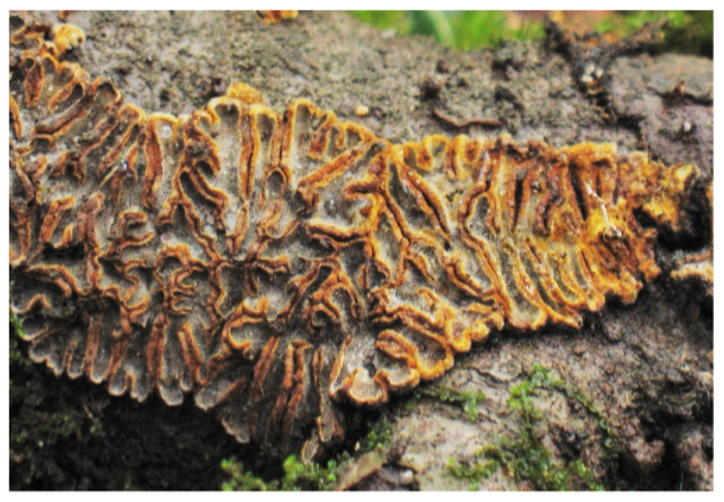
Figure 1 Campylomyces heimii on lying dead twigs of Oriental hornbeam (Carpinus orientalis).
The fungus was found in Beochoropoulo, Epirus by Nakas on “dead wood of broadleaved trees in a wood with Holm oak, maples, ash and elms”. The current recording was made in Elaphotopos on lying dead twigs of Oriental hornbeam (Carpinus orientalis) in 2015.
The fungus produces annual fruit bodies which remain on the twigs after the spores have been released and the hymenium is worn out. In this research area the fungus was found only on lying twigs of Oriental hornbeam and not on attached twigs of Holm oak as the case was in the previous 3 recordings in Morocco and Spain.
Given the long collecting experience of the Forest Research Institute in Greece and the relative bibliography, the fungus can be considered as rare. According to the IUCN recording scale it is definitely a Data Deficient organism.
The second fungus D. nitida (Polyporales, Polyporaceae) (Figure 2) is also a xylotrophic species which causes white rot to the wood of several oak species. It is mentioned on Holm oak (Q. ilex), cork oak (Q. suber), Turkey oak (Q. cerris) and downy oak (Q. pubescens) in Mediterranean ecosystems. In a recent distribution map issued by Naturalist.ca5 2 records appear in New Zealand, 1 in India, 2 in Turkey, 4 in Croatia and several in Italy, Southern France and Spain.
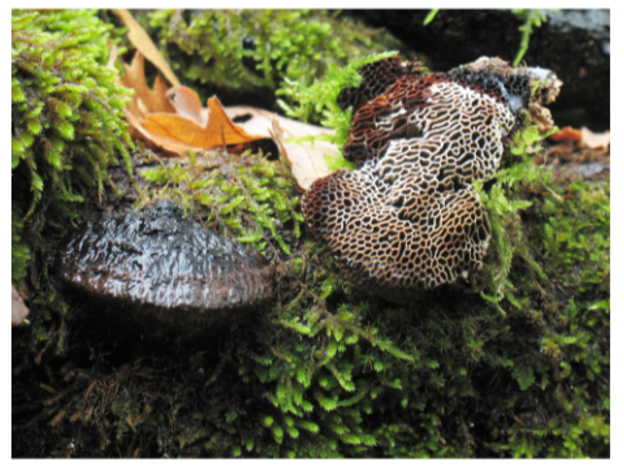
Figure 2 Daedaleopsis nitida on logs of Quercus cerris with advanced rot.
In Greece the fungus was recorded in Peloponnese (Argyra County Achaia) by Faulwetter and on the island of Lesvos by S. Argyriou. In this study it was found in the Sacred Forest of Agios Nikolaos, Municipality of Vitsa on logs of Q. cerris with advanced rot.
The current research confirmed that the Sacred Forests constitute a wonderful ecosystem, rich in biodiversity and sustain habitats for rare species. The protection of these areas through religion is diachronic -historical and consequently the conservation of rare species is ensured.6
The international bibliography referring to the two species is remarkably limited. Besides the 3 recordings that were mentioned pertaining to the fungus C heimii, there is one other recording from Turkey dealing with D. nitida which is characterized as pharmaceutical with antioxidant qualities and has a high content of Cu.
Usually, the size and visibility of species along with easy access, particularly in the Plant and Animal kingdoms, is what makes an impression and encourages research. When species are found to be endangered, they get a place in Lists of Endangered Species and are protected. Most of the fungi, however, are microscopic with their mycelium growing in the ground or on wood making them invisible. The presence of fungi is visible only when they fruit and produce beautiful sporophores (mushrooms), unique in color, shape and size. They are ephemeral and are visible only for a few days. Their role in nature is not analogous with their size or visibility. Fungi may be small or invisible, but their impact on nature is huge as they contribute in ensuring the balance, function and sustainability of entire ecosystems.7
It is unfortunate that in Greece there is no Book of Endangered Fungi where rare species could be included and protected. It is an urgent need to finalize work on such a Red Data Book, even though incomplete, before fungal species disappear without ever being recorded.8
None.
We declare that there is no conflict of interest of any kind.

©2025 Diamandis. This is an open access article distributed under the terms of the, which permits unrestricted use, distribution, and build upon your work non-commercially.