Journal of
eISSN: 2374-6947


Research Article Volume 6 Issue 1
1Department of Pharmacology, Government Medical College, Gondia, India
2Department of Pharmacology, Indira Gandhi Govt., India
3Second year medical student, Government Medical College, India
Correspondence: Kavita Jaiswal, Department of Pharmacology, Government Medical College, Gondia, India
Received: May 13, 2018 | Published: January 10, 2019
Citation: Jaiswal K, Moghe N, Mehta MC, et al. Knowledge, attitude & practices of type II diabetes mellitus patients in a tertiary care teaching institute of central India. J Diabetes Metab Disord Control. 2019;6(1):1-4. DOI: 10.15406/jdmdc.2019.06.00172
Introduction: Diabetes mellitus (DM) is a risk factor for cardiovascular and kidney disease. Studies have shown that increasing knowledge and awareness of patients about DM will help in reducing the morbidity and mortality.
Objectives: To determine the knowledge, attitude and practices (KAP) of diabetic patients and to co-relate it with the demographic and professional characteristics.
Material and methods: A cross-sectional, questionnaire based survey conducted in 100 patients attending the diabetic unit of a tertiary care teaching hospital in central India.
Results: Majority of the participants fell in the age group of 41-60 yrs (46%). Sixty percent participants were working and 40% were dependents. 94% patients were aware about high blood sugar level (BSL) and 90% were aware of monitoring it. 85% were aware about hypoglycemic symptoms and its treatment and 80% were knowing about development of other complications. Regular check up was done by 70%, while 73% were adhered to treatment. 62% participants were following diet schedule, 68% did regular exercise. Smoking was given up by 30% and alcohol by 16%. Complementary and alternative (CAM) patient’s medication was used by 41% patients.
Conclusion: The KAP of DM patients was good regarding awareness and complications of disease. These findings may be due to the literacy level and long standing disease of patients which makes them learn the things on their own. However the habit of curtailing of alcohol and smoking was found to be low which if taken care of can lead to more positive outcomes of disease.
Keywords: life style modifications, blood sugar level (BSL), questionnaire based study, type 2 DM
Diabetes mellitus (DM) is a risk factor for cardiovascular and kidney disease. It has been associated with unhealthy lifestyle habits, including inappropriate nutrition, lack of exercise, smoking, alcohol consumption, caffeine overuse, and improper sleeping habits,1 India is home to 69.1 million people with DM and is estimated to have the second highest number of cases of DM in the world after China in 2015.2 The prevalence of DM in India ranges from 5–17%, with higher levels found in urban areas.3‒9 DM is a chronic disease which threatens to overcome the healthcare system in the near future. During the past three decades, there have been remarkable changes in lifestyle of people mainly leading to decreased physical activity and unhealthy eating habits. These changes have had a considerable negative impact on the health of the society. Indeed, this lifestyle transformation is thought to be responsible for the epidemic of non communicable diseases and their complications. Lifestyle modifications like cessation of smoking and alcohol, regular exercise, dietary practices benefits in controlling blood sugar in diabetic patients It is essential to promote lifestyle modifications along with cost-effective use of health services for the control of chronic diseases like DM. Studies have shown that many patients did not have the appropriate knowledge of DM, increasing their knowledge and awareness about such diseases will help in reducing the morbidity and mortality of such diseases.10 Effective management of disease is associated with knowledge, attitude and practice (KAP) of diabetic patients regarding their life style practices. If patients are given proper education and guidance towards diabetes it will make a significant improvement in life style which will be helpful for good glycemic control. Education to diabetic patients would be more effective if we know the baseline KAP of the disease. KAP studies in diabetics could be helpful for minimizing the consequences of the disease.
To determine the KAP of diabetic patients and to co-relate it with the demographic and professional characteristics.
This was a cross sectional, questionnaire based, observational study conducted in a tertiary care teaching institute in central India. Prior approval from Institutional Ethics Committee was seeked. Patients were informed about their voluntary participation and their written informed consent was taken. 100 patients diagnosed as type 2 diabetes mellitus (T2DM) attending the diabetic unit of medicine department for regular follow-ups from 05 Aug -15 Sep 2015 participated in the study. Men and women of 18 years and above with T2DM as the chief reason, with or without other diseases, and who were receiving drug therapy for diabetes were eligible for inclusion in the study. Children, pregnant women, mentally incompetent and patients not willing to participate were excluded from the study. The study instrument was a self-developed, pre-validated semi-structured questionnaire related to knowledge, attitude, practices (KAP) of lifestyle modification in DM. While preparing the questionnaire new knowledge scale for patients with type 2 diabetes and poor literacy: the Spoken Knowledge in Low Literacy patients with Diabetes (SKILLD).11 was referred.
The questionnaire comprised of three sections, first part constituting socio demographic details of participants, the second comprised of knowledge evaluating blood sugar level(BSL), nutrition, physical activity, self-monitoring of blood glucose, effect of medication on BSL, different complications of DM, awareness about hypoglycemic symptoms and its treatment. The third part assessed attitude and practices of patient towards DM. The questionnaire consisted of both open and close-ended items which were filled by direct face-to-face interview with all eligible participants. The respondents were also allowed to offer their own suggestions/remarks apart from answering the questions. The questionnaire was first pretested in five participants, and suitable modifications were accordingly done.
The data pooled and expressed in MS Excel sheet. Graph pad prism software version 5.01 used to analyze data. Descriptive statistics such as frequencies, percentage and charts were used
Baseline characteristics of the respondents
One hundred type 2 diabetes mellitus patients were recruited for the study. Figure 1 shows that out of 100 patients 61 were men and 39 were women. The majority of the participants fell within the age group of 41-60 yrs (46%). It also shows that most of the participants had formal education <12th std (65%) with 35% educated upto or>12th std. The majority of the participants fell within the age group of 41-60 yrs (46%) and very few (10%) had a history of diabetes of less than 5 years duration (Table 1). Seventy-eight patients were taking only oral anti-diabetic drugs while 14 patients were on only insulin and 8 patients were on oral drugs + insulin. Sixty percent participants were working and hence earning a livelihood and the rest 40% were dependents (Figure 2 & Figure 3).
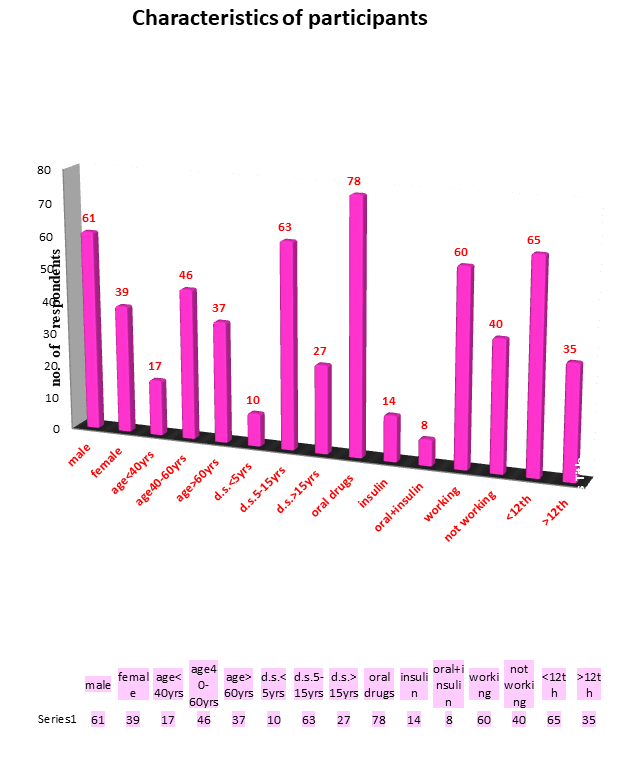
Figure 1 Demographic characteristics of study population.
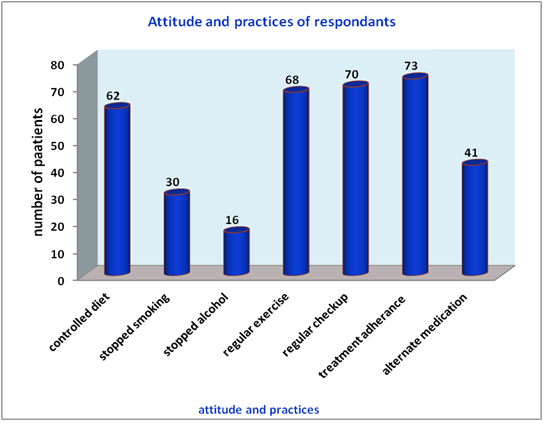
Figure 2 Attitude and Practices of life style modifications in Diabetes Mellitus patients.
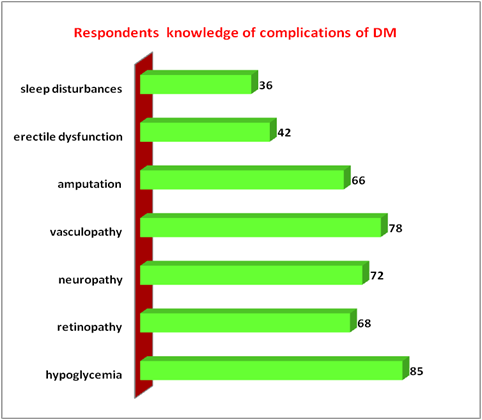
Figure 3 Respondents knowledge of complications of Diabetes Mellitus.
Questions as statements |
Yes (%) |
Aware about high blood sugar level(BSL) in DM |
94 |
Aware about monitoring BSL |
90 |
Know that drugs cause < normal BSL |
88 |
Drugs immediately stopped at control attained |
95 |
DM if not treated leads to complications |
80 |
Aware about hypoglycemic symptoms and its treatment |
85 |
Table 1 Respondents knowledge about Diabetes Mellitus (n=100).
The management of type 2 diabetes mellitus (T2DM) not only requires prescription of pharmacological agents by the physician but also intensive education about nutrition and psychoanalysis of the patients.12 In the present study the KAP of DM patients towards their disease and life style modification was assessed. One hundred T2DM patients were recruited for the study, out them 61 were men and 39 were women and majority of the participants fell within the age group of 41-60 yrs (46%). These findings are analogous to findings from another studies.13,14 This reveals the fact that T2DM usually has its onset after the age of 40 years. Endocrine and behavioural factors are involved in gender variation and affect the outcome. The present study also points out that most of the participants(65%) had formal education <12th std, and 35% educated up to or>12th std, a finding which is parallel to the results of another Indian study where 30% study population was educated up to secondary education and 16% had their education up to graduation level.15 Similar pattern of educational distribution characteristics are seen in two South African studies14,16 Another finding was 60% participants were working and hence earning a livelihood and the rest 40% were dependents. In a former study a majority of the participants were poverty-stricken.14 Poverty could limit accessibility to and affordability of a well-balanced diet and healthy food and this could explain why the majority of participants in their study had a less-than-acceptable lifestyle modification practice score despite having a positive attitude.
The participant’s knowledge was assessed based on their understanding toward DM, which included the meaning and monitoring of BSL, relationship of drugs and BSL, complications of DM. Most of the questions were answered correctly by the participants, indicating a relatively good overall knowledge toward the disease. In the present study 85% respondents were aware about hypoglycemic symptoms and its treatment, likewise in another study 90% of the participants were aware of the management of the hypoglycemic symptoms.15 Also in a study by Ambigapathy et al.17 majority of respondents (67%) were. knowledgeable about lifestyle modifications.17 In contrast the patients’ extremely poor knowledge of lifestyle modification has been replicated in a study in India, in which a majority of respondents (83.3%) had poor knowledge of the advantages of lifestyle modification.18 Knowledge of patients is at variance in different studies, this may be because of the dissimilarity in literacy level, training received and availability of information on T2DM for their study patients. Also it could be due to long standing disease, the patients gain the knowledge about it. In the present study 63% patients were diabetic since 5-15 years while 27 patients had long standing diabetes of more than 15 years and very few (10%) had a history of diabetes of less than 5 years duration, hence patients showed improved knowledge of the disease.
The attitude and practices about the life style modifications in diabetics in the present study is as follows. Regular check up was done by 70% participants, while 73% were adhered to treatment. Sixty-two percent participants were following diet schedule and 68% did regular exercise. Smoking was given up by 30% respondents while consuming alcohol was discontinued by 16%. Some studies report significant positive correlation between knowledge, attitude and practice. Better knowledge is associated with a better attitude and practices towards diabetes. Also most of these studies dealt with study participants who were already diagnosed with diabetes and attending hospitals or diabetes care centers.17,19,20 In the study by Fatema et al.20 participants were aware of the major causes of diabetes half of the participants had knowledge regarding the components of a well-balanced diet. 76% are aware of the treatment of diabetes. 70% of the study participants reported that exercise helps in controlling the diabetes.20 The study mentioned that these differences in positive attitudes towards the treatment of DM is explained by socio demographic status as well. In our present study, complementary and alternative medication (CAM) was used by 41% patients. In the Indian scenario one of the most common ailments for which CAM is practiced is DM.21 Diabetics should be made attentive of using CAM without physician’s advice since it can lead to drug interactions particularly in the elderly population.21
In the present study when looked for knowledge of complications of DM in the study population, we found hypoglycemia and its manifestations is very common symptom known by 85% of study participants. The other complications with which participants were acquainted were vasculopathy (78%), neuropathy (68%), and retinopathy (68%). So the present study population had good knowledge of complications which may be because of long standing disease. Yaa Obirikorang et al.22 conducted a study in Ghana population which aimed to determine the knowledge of diabetic complications among DM patients.22 They found that most common diabetic complication known by DM patients was diabetic foot (51.5%), followed by hypertension (35.4%), neuropathy (29.2%), hypoactive sexual arousal (25.4%), arousal disorder (21.5%), retinopathy (17.7%), heart disease (9.2%), and nephropathy (5.4%). The authors of Ghana study also looked for aassociation between levels of knowledge of DM complication and socio-demographic characteristics. They reported that elderly had adequate knowledge on diabetic complications than very younger population with approximately 66.7% of participants with 16–20 years duration of diabetes had adequate knowledge on diabetic complications than to those with 11–15 year duration (37.5%), 5–10 year (19.2%) and below 5 years (8.6%). This can again be explained by the long standing disease which reflexly increases knowledge of even complications of the disease. The authors of the former study also looked for factors associated with understanding of diabetic complications, and reported that patients with high income group with high level education had significant knowledge about complications of the disease. This could be again elucidated by easy availability and accessibility of knowledge by this group of patients. In conclusion, the knowledge of diabetic patients was good regarding awareness of BSL and complications of disease .The study population showed good attitudes and practices like regularity of exercise, review and follow up, following diet schedule and exhibiting treatment adherence. These findings could be correlated to the literacy level and long standing disease of patients which makes them learn the things on their own over a period of time. However the habit of giving up of alcohol and smoking was found to be low. If educational intervention of masses is done for controlling these negative habits there will be more good KAP of diabetics for their disease which can help to have positive outcomes.
None.
The author declares that there is no conflicts of interest.

©2019 Jaiswal, et al. This is an open access article distributed under the terms of the, which permits unrestricted use, distribution, and build upon your work non-commercially.