Journal of
eISSN: 2374-6947


Research Article Volume 12 Issue 2
 Adamaigbo Victor O,1 Ojobo Peter N,1 Obasi Stephen C,1 Ogbemudia Divine,1 Ngozichukwu Francis N,2 Okojie Beckley O,1 Edeaghe Ehikhamenor1
1Centre for Forensic Programmes and DNA Studies, University of Benin, Ugbowo, Benin City, Nigeria
2School of Integrated Biological and Chemical Sciences, University of Texas Rio Grande Valley, USA
Correspondence: Nwawuba Stanley Udogadi, University of Benin, Ugbowo, Benin City, Nigeria
Received: November 18, 2025 | Published: December 4, 2025
Citation: Stanley NU, Victor AO, Peter ON, et al. Food safety and nutritional quality of frozen chicken meat sold in Benin City, Nigeria. J Diabetes Metab Disord Control. 2025;12(2):71-78. DOI: 10.15406/jdmdc.2025.12.00300
The nutritional and safety profiles of chicken meat in Nigeria are not on par with the rapid growth of the poultry industry, leaving important knowledge gaps regarding its quality. This study therefore evaluates key nutritional and safety indicators of chicken meat sourced from different markets. Standard analytical methods were applied in assessing all samples. Proximate analysis showed that chicken meat obtained from a local farm contained significantly higher levels of fibre, ash, protein, and carbohydrates (percentage values) compared with imported chicken meat sold in various markets. The locally sourced sample also exhibited significantly (p < 0.05) higher concentrations of magnesium and potassium relative to the imported samples. As per metal contamination profile, manganese concentrations in all samples were determined to be within the allowable range, but lead and cadmium concentrations were found to be beyond it. Further, a risk assessment profile showed that HI was found to be less than 1 in all the samples. However, the carcinogenic risk of nickel and cadmium through consumption of the samples was observed to fall above the acceptable level. Thus, these levels of heavy metals and carcinogenic risk of frozen chicken observed in the study may constitutes a health risk in Nigeria.
Keywords: Poultry, frozen chicken meat, nutritional safety of frozen chicken meat, heavy metal contamination and risk assessment profile
Population expansion, urbanization, and shifting dietary preferences have all contributed to a notable increase in the demand for poultry products worldwide in recent decades, especially chicken meat.1 Domesticated birds reared primarily for human consumption are referred to as poultry. Common poultry include ducks, geese, quail, turkeys, and chickens. Guinea and peafowl, pheasants, pigeons, emus, and ostriches are less frequent poultry species.2,3 The most popular poultry in Nigeria are chicken, guinea fowl, and turkeys.2,4 The poultry industry in Nigeria is one of the most capitalized and commercialized agricultural subsectors, which has grown considerably in present-times.4,5 Despite this, domestic poultry consumption has been rising at a faster rate than local output. This might have significantly increase the population's reliance on imported frozen chicken meat.4 Although, Nigeria outlawed the importation of chicken meat in 2003 to boost domestic production.4,6 Since then, the import restriction has decreased but not completely eradicated Nigeria's consumption of imported frozen chicken meat, as hundreds of tons are still illegally smuggled into the nation every day in an effort to satisfy the demands of the bustling populace.4 Furthermore, it has been reported that chickens fed or injected with growth hormones can be raised and prepared for slaughter between five and seven weeks of age; although the normal growing strains to reach slaughter weight at approximately 14 weeks of age raising huge concern about it safety.4
With the immense consumption of frozen poultry products, much importance has been drawn to food safety, nutritional quality, and contamination with toxic substances. The proximate composition of chicken meat, including its moisture, protein, fat, fiber, ash, and carbohydrate content, helps in establishing the nutritional values and thus determines the quality and suitability of food for human consumption.7,8 Further, chicken meat mineral status have extensively been documented for its impact on human health. Essential minerals not limited to magnesium (Mg), potassium (K), sodium (Na), and calcium (Ca) plays critical physiological function including muscle contraction, fluid balance, nerve transmission and bone formation and any indication of imbalances of these minerals have been reported to result to possible negative effects,9,10 underlining the critical need for assessment on their levels in food products including chicken meat.
Above and beyond, essential minerals, heavy metals contamination of poultry products likewise pose a significant public health safety hazard. Environmental pollutants including as lead (Pb), nickel (Ni), cadmium (Cd), and manganese (Mn) bioaccumulates and biomagnifies through the food chain via various routes such as water, feed and the methods of processing.11,12 Nephrotoxicity, hepatotoxicity, neurotoxicity, and carcinogenic processes are among the serious health issues that have been associated to long-term exposure to these metals.13,14 Because these chemicals tend to bioaccumulate, even low levels of heavy metal contamination in foods could pose long-term health risks to consumers,11 health risk assessment is important in determining the potential health implication of metal contaminated chicken meat. The target quotient THQ and estimated daily intake (EDI) risk assessment methodologies provides quantitative insights into the degree of exposure and possible health risks due to heavy metal intake.15,16 This is very important for ensuring the safety of food and compliance with standards imposed by regulating bodies. The increased rate of consumption of frozen chicken meat in Nigeria has not been adequately supported by studies that provides detailed information on its nutritional composition and possible heavy metal contamination. This study consequently aims to evaluate the proximate composition, mineral content, level of heavy metals, and health risk assessment to ascertain possible dietary risks arising from heavy metal exposure in frozen chicken meat sold within Benin City, Nigeria.
Study site and sample collection
The research sites for this study encompass prominent open market places situated in the capital city (Benin City) of Edo State. This includes four significant open markets in Benin City labeled as market A, B, C, and D, which are the New Benin Market, Oluku Market, Uselu Market, and Aduwawa Market, respectively. Meanwhile, the local poultry was sourced from a nearby farm also within the Benin City area referred to as farm chicken. A total of twenty-five samples, featuring five raw chicken meat samples from each market location, were randomly collected, individually wrapped in polyethylene bags, and then conveyed to the laboratory for preparation and examination utilizing standard methodologies.
Assessment of proximate composition and mineral analysis
The composition of proximate analysis indicators (moisture levels, total ash, crude fiber, crude protein, and carbohydrate contents) was conducted following the standard methods outlined.17 A sample weighing five grams (5 g) was slightly heated till most of the organic materials contents burnt off on a Bunsen burner. It was then heated intensely for several hours in a muffle furnace until a white-grey ash was formed. Following cooling, the ashed material was combined with roughly 20 milliliters of purified water and 10 milliliters of diluted hydrochloric acid. Following boiling, this mixture was filtered into a 250 ml volumetric flask, properly cleaned with hot water, allowed to cool, and then adjusted to the appropriate volume. Spectrophotometric methods were used to analyze each sample's mineral content.18,19 Calcium (Ca), sodium (Na), potassium (K), and magnesium (Mg) were measured in the samples.
Metal evaluation
The specimens were rinsed with deionized water and dried in an oven at 40oC for 3-5 days before being crushed using a laboratory mortar and pestle. A digestion solution consisting of HNO3, HClO4, and H2O2 (10:1:2) was employed to pulverize the pre-treated specimens. Precisely 5.0 mL of the digestion solution was extracted into the digestion tube containing 0.5 g of each specimen and allowed to digest at 150 oC. To guarantee complete digestion. After adding 5.0 mL of the digestion solution to the tube, it was gradually heated until it became transparent. After allowing the solution to cool, the contents were filtered into a sterile 100 mL conical flask. Distilled water was added to correct the remaining volume. In order to ensure quality, blank setups were performed. A graphite furnace atomic absorption spectrophotometer (GBS Scientific Equipment SensAAS 1175, Australia) was then used to evaluate the selected heavy metals. Each metal's residual concentrations were reported as milligrams per kilogram of wet weight.
Quantitative assessment of human health risks
The possible dangers posed by human exposure to these metals through the consumption of contaminated chicken meat includes the evaluation of the Estimated Daily Intake (EDI), with respect to both carcinogenic and non-carcinogenic impacts using the US EPA model and its threshold guidelines as outlined in.20,21
Estimated Daily Intake (EDI) = Cm × Df
Bwt
Where:
Cm = Metal concentration in meat in mg/kg
Df = Daily intake of food (chicken meat) in kg per person
Bwt = Average body weight in kg per individual
Df: The daily intake value of chicken meat in kg per person was derived from the FOA report in (2021) and the research by Emurotu & Habib (2023), indicating that the typical daily intake of chicken meat in Nigeria was 1.16 kg (= 3.18 g/day) for adults and 0.4 kg (= 1.09 g/day) for children.
Bwt: The average body weights for adults were estimated at 70 kg (adults) and 24 kg (children) based on the findings of Ekhator et al.,20 and Kamaly et al.,22
Assessment of non-carcinogenic risk
The risk for non-carcinogenic impacts from metal intake in meat was assessed by applying the equations for Target Hazard Quotient (THQ) and Chronic Hazard Index (HI).15,22 THQ represents the proportion of the measured dose of a toxic substance to a benchmark dose deemed dangerous. When the ratio is 1 or higher, the exposed group faces a risk. THQ values were computed using the following equation below.15,21
Target Hazard Quotient (THQ) = EF × ED × IR × CM
BWA × ATn × RfD × 1000
Where:
THQ = Target hazard quotient,
EF = Exposure frequency (365 days per year),
ED = Exposure duration (30 years for non-cancer risk as indicated by the USEPA),
IR = Consumption rate of chicken tissue (g/person/day),
CM = Concentration of metal in chicken (mg/kg),
BWA= Average body weight,
ATn = Average exposure duration for non-carcinogenic substances (EF × ED), calculated as 10,950 days (365 days/year over 30 years) for non-cancer risk assessment
RfD = Reference oral dose of metal (an estimate of the daily exposure that humans could sustain over a lifetime without substantial risk of adverse effects (RfD for Cu, Cd, Cr, and Fe are 0.040, 0.001, 1.500, and 0.007 mg/kg body weight per day respectively.15,21,23
Hazard Index (HI) = THQ (Pb) + THQ (Cr) + THQ (Cd) + THQ (Cu) + THQ (Zn) + THQ (Ni) + THQ (Mn)
Where:
HI= Chronic Hazard Index
THQ = Target hazard quotient for multiple metals or toxic substances
Assessment of carcinogenic risk
This process is frequently referred to as target cancer risk evaluation, which indicates the likelihood of an individual experiencing lifetime health hazards due to the daily intake of cancer-inducing substances or metals in food (USEPA, 2018). The Incremental Lifetime Cancer Risk (ILCR) is calculated using the Cancer Slope Factor (CSF), which determines the likelihood of an individual developing cancer from prolonged oral exposure to toxicant levels throughout their lifetime, and is specific to each contaminant.15,21,23 Cancer slope factors associated with ingestion are quantified in units of (mg/kg/day). This was derived using the equation:
Carcinogenic risk = EDI × CPSo
Statistical analysis
Data were analysed using one-way ANOVA, and differences between means were assessed using Tukey’s HSD test. Statistical significance was set at p < 0.05, and results were expressed as mean ± standard deviation.
Figure 1 The proximate analysis of chicken meat samples used for the study showed that the frozen imported chicken significantly p<0.05 contained higher levels of moisture content as well as fat content but was noted to contain low levels of fibre, ash, protein and carbohydrate contents estimated in percentage relative to the chicken meat sample from the local farm (Figure 2).
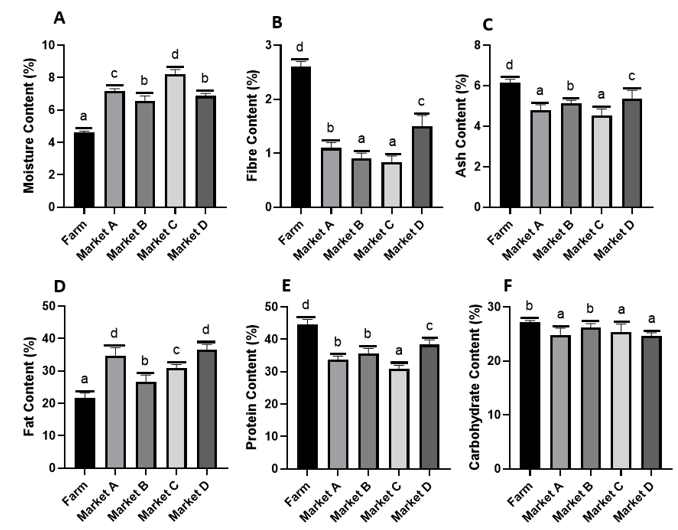
Figure 1 Proximate analysis of chicken meat. data are expressed as means±sd: mean values with different alphabets are significantly different at p<0.05.
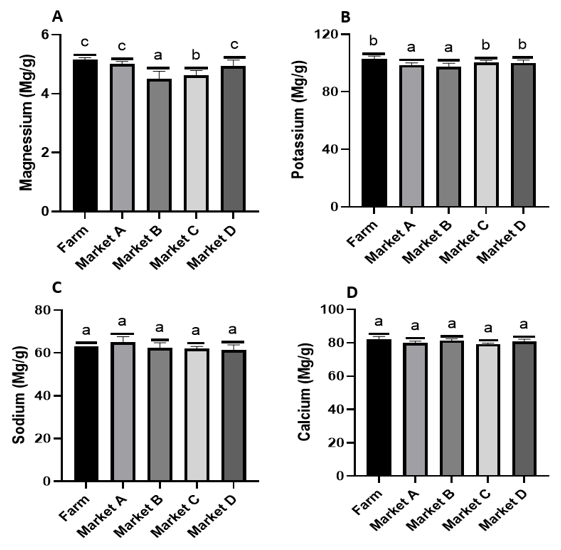
Figure 2 Mineral composition of chicken meat. data are expressed as means±sd: mean values with different alphabets are significantly different at p<0.05.
The result on the mineral composition of chicken meat samples examined in the present study revealed that the chicken meat samples from a local farm and market D contained significantly p<0.05 higher levels of magnesium (Mg) and potassium (K) in comparison to the other samples. However, no significant differences was noted for sodium (Na) and calcium (Ca) between the examined chicken samples used for this study (Figure 3).
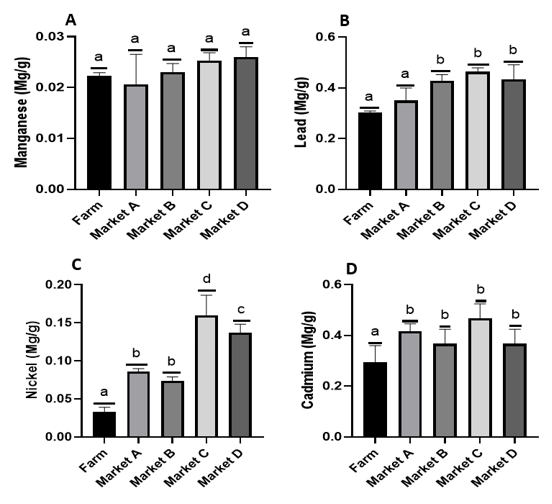
Figure 3 Metal analysis of chicken meat. data are expressed as means±sd: mean values with different alphabets are significantly different at p<0.05.
The result presented in figure 3 showed that they was a significant p<0.05 variations in the concentration of the analysed metals between the samples including lead (Pb), nickel (Ni) and cadmium (Cd), but no significant difference was noted for manganese (Mn). As it was noted that the chicken meat sample from the local farm significantly p<0.05 had lower concentration of selected metals (Table 1).
|
Samples |
Manganese (Mn) |
Lead (Pd) |
Nickel (Ni) |
Cadmium (Cd) |
|
Adult (Kg) |
||||
|
Farm |
0.000365 |
0.005021 |
0.000547 |
0.004855 |
|
Market A |
0.000348 |
0.0058 |
0.001425 |
0.00691 |
|
Market B |
0.000381 |
0.007076 |
0.00121 |
0.006082 |
|
Market C |
0.000414 |
0.007673 |
0.00232 |
0.007739 |
|
Market D |
0.000431 |
0.007175 |
0.005966 |
0.006082 |
|
Children (24Kg) |
||||
|
Farm |
0.000367 |
0.00505 |
0.00055 |
0.004883 |
|
Market A |
0.00035 |
0.005833 |
0.001433 |
0.00695 |
|
Market B |
0.000383 |
0.007117 |
0.001217 |
0.006117 |
|
Market C |
0.000417 |
0.007717 |
0.002333 |
0.007783 |
|
Market D |
0.000433 |
0.007217 |
0.006 |
0.006117 |
Table 1 Estimated daily intake (EDI) of selected metals (mg/kg/bw/day) for adults (70kg) and children (24kg) in exotic commercial chicken and imported frozen chicken
Table 1 The estimated daily intake (EDI) of metals for an individual weighing 70 kg is shown in Table 1, while the EDI for children is 24 kg. Adults' daily lead (Pd) intake varied from 0.005-0.0076 mg/kg bw day-1, whereas children's range was 0.005-0.0077 mg/kg bw day-1. Nickel (Ni) intake ranged from 0.001 to 0.0006 mg/kg bw day-1, while cadmium intake ranged from 0.004-0.008 mg/kg bw day-1 (Table 2).
|
Samples |
Manganese (Mn) |
Lead (Pd) |
Nickel (Ni) |
Cadmium (Cd) |
HI |
|
Adult (70Kg) |
|||||
|
Farm |
5E-05 |
0.00344 |
1.07E-05 |
0.01331 |
0.3624 |
|
Market A |
4.8E-05 |
0.00398 |
2.79E-05 |
0.01894 |
0.5510 |
|
Market B |
5.2E-05 |
0.00485 |
2.37E-05 |
0.01667 |
0.4096 |
|
Market C |
5.7E-05 |
0.00526 |
4.54E-05 |
0.02122 |
0.4127 |
|
Market D |
5.9E-05 |
0.00492 |
0.000117 |
0.01667 |
0 |
|
Children (24Kg) |
|||||
|
Farm |
1.7E-05 |
0.00118 |
3.67E-06 |
0.00456 |
0.1242 |
|
Market A |
4.8E-05 |
0.00136 |
9.57E-06 |
0.00649 |
0.1352 |
|
Market B |
5.22E-05 |
0.00166 |
8.12E-06 |
0.00571 |
0.1889 |
|
Market C |
5.68E-05 |
0.0018 |
1.56E-05 |
0.00727 |
0.1404 |
|
Market D |
5.91E-05 |
0.00169 |
4E-05 |
0.00571 |
0.1415 |
Table 2 Target hazard quotient (THQ) and hazard index (HI) for adults (70kg) and children (24kg) in exotic commercial chicken and imported frozen chicken
Table 2 show the target hazard quotient (THQ) and hazard index (HI) for adults (70kg) and children (24kg) for chicken meat samples. The THQ of each metal from chicken consumption in Benin City for both adults and children followed this increasing order: Ni < Mn <Pd<Cd. The highest THQ value was observed imported frozen chicken sold in market C (0.02 and 0.007) for adults and children in cobalt (Co). They hazard index (HI) was found to be less than 1 in all the samples (Table 3).
|
Samples |
(Manganese (Mn) |
Lead (Pd) |
Nickel (Ni) |
Cadmium (Cd) |
|
Adult (70Kg) |
||||
|
Farm |
2.552E-06 |
4.26797E-05 |
0.000935 |
0.001845 |
|
Market A |
2.436E-06 |
0.0000493 |
0.0024227 |
0.002626 |
|
Market B |
2.668E-06 |
0.0000602 |
0.0020565 |
0.002311 |
|
Market C |
2.9E-06 |
6.52169E-05 |
0.003944 |
0.002941 |
|
Market D |
3.016E-06 |
6.09911E-05 |
0.0101417 |
0.002311 |
|
Children (24Kg) |
||||
|
Farm |
2.56667E-06 |
0.0000429 |
0.000935 |
0.0018557 |
|
Market A |
0.00000245 |
4.95833E-05 |
0.002437 |
0.002641 |
|
Market B |
2.68333E-06 |
6.04917E-05 |
0.002069 |
0.0023243 |
|
Market C |
2.91667E-06 |
6.55917E-05 |
0.003967 |
0.0029577 |
|
Market D |
3.03333E-06 |
6.13417E-05 |
0.0102 |
0.0023243 |
Table 3 Carcinogenic risk of chicken meats in adults (70kg) and children (24kg)
Table 3 shows the carcinogenic risk of exotic commercial chicken and imported frozen chicken in adults (70kg) and children (24kg). The carcinogenic risk of each metal through consumption of chicken sold in Benin City for both adults and children was highest nickel (0.003944) and cadmium (0.002941) for adult and children 0.003967 and 0.0029577 respectively.
Monitoring and assessment of chicken meat provides critical information on its nutritional content, and potential metal contamination which has been indicated as a pathophysiological factor in the various disease developments.24 Further, the growing concern by the food sector on quality and safety has amplified the significance of evaluation on nutritional and safety profile of food products including meat.25,26 Proximate analysis which involves the measurement of vital nutritional components including protein, moisture, fat, carbohydrate, and ash (mineral content) is conducted with a set of laboratory procedures that determines the approximate composition of a food product.27–29 Thus, the proximate analyses of the chicken meat samples in this study revealed that the moisture content of the chicken meat sample from a local farm was significantly p<0.05 lower (4.60±0.1) in comparison to the imported frozen chicken purchased from different market locations used for the study. Market A (7.17±0.15), market B (6.57±0.3), market C (8.20±0.3) and market D (6.87±0.15) respectively. Moisture content characterizes the amount of water present in the chicken and it has been indicated to be a determinant of the overall weight of the product which influences texture and juiciness.30 Fat content was also observed to be significantly lower p<0.05 in the local chicken meat sample in comparison to the imported frozen chicken purchased from the different market locations. Conversely, the level of fibre, ash, protein and carbohydrate was significantly higher p<0.05 in the chicken meat sample from the local farm as compared to imported frozen chicken purchased from the various market in the study. The amount of dietary minerals that would be present in a given food sample is mostly determined by the amount of ash in the food. Additionally, it establishes the rate food ingredients would release the energy that has been stored in them.31 This suggests that compared to other chicken meat samples, the local farm's chicken mean could provide humans with greater calories and certain useful nutrients. Dietary fiber is an important part of a balanced diet, while protein is necessary for muscle growth, repair, and general bodily function, and its inclusion in food products, including frozen chicken, can have several positive effects on overall health.32 While poultry products like frozen chicken are not traditionally high in fiber, the overall dietary context matters.
The mineral composition of frozen chicken reflects the presence of essential minerals that are important for human health.33 These minerals are obtained by the chicken through their diet, water, and environmental exposure during their growth. The mineral content may differ as resulted of some factors including type of feed provided to the chickens, farming practices, and processing methods.34 The finding on mineral composition of the chicken sample revealed that magnesium was significantly greater p<0.05 in the chicken meat sample from local farm (5.17±0.06) vis-à-vis imported frozen chicken purchased from the various markets: market A (5±0.06), market B (4.50±0.26), market C (4.63±0.15) and market D (4.93±0.21) respectively. it was also observed that the level of potassium was significantly p<0.05 higher for the chicken meat (102.67±2.08) purchased from a local farm when compared to the imported frozen chicken purchased from different markets within Benin City metropolitan; market A (98.67±1.53), market B (97.38±2.52), market C (100.33±1.53) and market D (100±2.00) respectively. Similarly trend was also noted that for the other mineral elements analysed including sodium, and calcium. Magnesium is involved in muscle and nerve function, energy metabolism, and bone health.35 It can be present in both chicken meat and bones. Sodium is an essential electrolyte that aids control fluid balance and nerve function.36,37 The sodium content in chicken can vary based on factors such as the processing method and added seasonings. Potassium is important for heart health, muscle function, and fluid balance.36,37 Chicken meat contains potassium, but the amount may be influenced by the chicken's diet. Calcium is essential for bone and teeth formation, blood clotting, and muscle function.38 It is important to note that the permissible limits for these minerals (magnesium, potassium, sodium and calcium) in chicken meat are not strictly set by the international food safety systems. Minerals are naturally present in poultry meat as essential nutrients, and the concentrations of minerals can differ depending on the bird's diet, age, and rearing environment.
Heavy metals, such as lead, cadmium, mercury, and arsenic, are natural elements that, at elevated levels, can pose serious health risks to consumers.39 The accumulation of these metals in the tissues of food animals, including poultry, raises concerns about potential adverse effects on human health.12 Frozen chicken, a popular choice in the Nigerian market due to its convenience and extended shelf life, is particularly susceptible to contamination during various stages of production, processing, and distribution.20 Lead was detected in all the chicken meat samples but however significantly lower p<0.05 in the chicken meat purchased from a local farm in comparison with the imported frozen chicken purchased at the various market locations for this study. Evidently, all of the samples were found to be above the WHO/FAO maximum acceptable level of 0.01 mg/kg, the EU maximum allowable concentration of 0.02 mg/kg, and the USEPA maximum of 0.05 mg/kg.20 The most common means that the general public is exposed to Pb is through eating food that has been contaminated with the metal.40 These findings exceeded the Pb levels in Delta State chicken samples that were reported by Ekhator et al20.Elevated accumulation of Pb in the body can result to long-lasting neurological impairment (encephalopathy), blood deficiency (anemia), unconsciousness (coma), and fatality if not treated timely.40 According to the IARC, cadmium is a group 1 carcinogen. Research findings have demonstrated that long-term exposure to even trace concentration of cancer inducing heavy metals may lead to the development different forms of cancers.41 In this study, it was observed that, the concentration of (Cd) detected in the samples exceeded the permissible limit established by US EPA, WHO, and EU which is (0.05 mg/kg). Manganese (Mn) is a vital trace element for animals, playing a vital role in the body enzymatic functions and biochemical processes. Nonetheless, the Mn can result in both acute and chronic toxicity when present in high concentrations.42 Mn was present in all the samples with concentrations ranging from 0.021 to 0.026 mg/kg, falling within the acceptable framework value of 0.16 mg/kg.22
To evaluate the potential health risks of heavy metal exposure to humans in the affected population, information on dietary consumption is essential.16,20,23 An estimate of daily exposure to the human population that is probably not going to have a significant risk of negative effects over the course of a lifetime is known as the "tolerable daily intake" (TDI).20 The daily intake of lead (Pd) in this study varied between 0.005 and 0.0077 mg/kg bw day-1 for children and between 0.005 and 0.0076 mg/kg bw day-1 for adults. Nickel (Ni) intake ranged from 0.001 to 0.0006 mg/kg bw day-1, while cadmium intake ranged from 0.004-0.008 mg/kg bw day-1. A hazard index value of greater than 1 indicates a high chance of an unfavorable health consequence associated with consumption of the food product.16,20,23 The Hazard Index (HI), established to reflect the overall risk of metal toxicity, is the sum of all THQ values in a dietary sample.43 The highest THQ value was recorded in imported frozen chicken from Market C (0.02 for adults and 0.007 for children) for cadmium (Cd). All of the samples had hazard indices (HI) below 1, indicating that there is no public health risk associated with the chicken meat found in Benin City Metropolitan's main marketplaces.
According to Cléro et al.,44 carcinogenic risk is calculated and represented as the likelihood of developing cancer during a 70-year lifespan. Nickel (0.003944) and cadmium (0.002941) had the highest carcinogenic risks for both adults and children through dietary exposure to chicken meat sold in Benin City, with corresponding risks of 0.003967 and 0.0029577. This levels exceeds the tolerable risk level.45 This implies that the carcinogenic risk of consuming imported frozen chicken for both adults and children is a public health concern for the toxic metals Ni and Cd. The present study's findings regarding the carcinogenic risk and heavy metal levels in frozen chicken raise public health concerns in Nigeria and call for more regulations to protect the public's health. Findings of the present study provide the scope of evidence based on which policy makers and industry practices can be improved and consumers can make better food choices for the frozen chicken at the time of purchase and consumption. While this study provides baseline for further research on the toxicological and nutritional profile of chicken meat, and provide a baseline for future study on the correlation between heavy metal contamination and chicken meat nutritional quality in another geographical location, the study acknowledges that may be gap in the study particularly on the limited number of metal analysis.46
Assuring the safety of the meat products being provided to all parts of the world is a crucial component of the meat export sector, which is currently valued at over US$13 billion. Therefore, it is now essential to continuously evaluate and monitor the safety and quality of meat products. The findings of the study noted that the local farm's chicken flesh sample offered a superior choice in terms of the proximate and mineral profiles. As per metal contamination profile, manganese concentrations in all samples were determined to be within the allowable range, but lead and cadmium concentrations were found to be beyond it. Further, a risk assessment profile showed that hazard index (HI) was found to be less than 1 in all the samples. However, the carcinogenic risk of nickel and cadmium through consumption of chicken sold in Benin City for both adults and children was observed to fall above the acceptable risk level. Thus, these levels of heavy metals and carcinogenic risk of frozen chicken observed in the present study constitutes a public health concern in Nigeria, necessitating more stringent regulatory measures to ensure public health safety.
None.
The author declares that there are no conflicts of interest.

©2025 Stanley, et al. This is an open access article distributed under the terms of the, which permits unrestricted use, distribution, and build upon your work non-commercially.