Journal of
eISSN: 2574-9943


Case Report Volume 9 Issue 4
 Selene M Kizy,2 Amaranna G Egesimba,3 Kelly M Frasier4
1Internal medicine, Macclesfield District general hospital, East Cheshire NHS Trust, GBR
2Oakland University William Beaumont School of Medicine, Rochester, Michigan, USA
3City University of New York, department of health care management, USA
4Department of Dermatology, Northwell Health, New Hyde Park, USA
Correspondence: Abiola Z Odeyinka, Internal medicine, Macclesfield District general hospital, East Cheshire NHS Trust, GBR, UK
Received: November 10, 2025 | Published: November 21, 2025
Citation: Odeyinka AZ, Kizy SM, Egesimba AG, et al. Why sulfonamide related cutaneous reactions co-exists in quiescent lupus? a clinical summary. J Dermat Cosmetol. 2025;9(4):127-129. DOI: 10.15406/jdc.2025.09.00306
Systemic lupus erythematosus is a chronic autoimmune disease characterized by remitting and relapsing systemic symptoms, and circulating antibodies (anti-ds DNA, anti-Smith and anti-phospholipid antibodies). Multiple cases exist in patients who have developed severe cutaneous drug reactions, prompt medical dermatological treatment may alleviate the severity of this clinical manifestation. Individuals with underlying chronic autoimmune disease are two times more likely to develop these drug reactions due to triggering circulating antibodies and worsening their clinically complex condition by use of immunosuppressants.
Sulfonamide antibiotics are essential pharmacological agents used in the treatment of a variety of clinical conditions in medicine. In combination with Trimethoprim, they are used to provide a synergistic effect. Sulfonamides work by interfering with the production of folic acid in bacteria, which is essential for nucleic acid formation and DNA and RNA. Trimethoprim is an antibiotic that works by inhibiting bacterial dihydrofolate reductase, an enzyme essential for the conversion of dihydrofolate to tetrahydrofolate, the active form of folic acid. Patients with sulfonamide allergies may develop Steven-Johnson syndrome, hemolytic anemia, thrombocytopenia, agranulocytosis, urticaria, acute interstitial nephritis, and photosensitivity. Steven-Johnson syndrome is an inflammatory reaction caused by type IV hypersensitivity reaction; effector CD4+ T cells recognize antigen and release inflammation-inducing cytokines.
Keywords: erythema multiforme, Steven-Johnson syndrome; cutaneous drug reactions, systemic lupus erythematosus
Patients with Systemic Lupus Erythematosus (SLE) have a higher risk factor for developing an adverse cutaneous drug reaction due to increased immune susceptibility.1 However, there is insufficient evidence as to trimethoprim-sulfamethoxazole being one of the triggers. Several studies in the literature are conflicting about the prevalence of trimethoprim-sulfamethoxazole-related adverse drug reactions in patients with SLE. Around one-third of lupus (SLE) patients have reactions to Bactrim, and it can cause lupus flares as well. These reactions are more common in Caucasians, those with low lymphocyte counts (lymphopenia), and anti-SSA positive patients.2
The adverse reaction to trimethoprim-sulfamethoxazole is more frequent and severe in HIV-infected patients for treatment and prophylaxis of Pneumocystis jirovecii pneumonia, as compared to the general population due to reduced competency of the innate immune system (T-lymphocytes).3 A known patient with SLE in remission presented five days post-Trimethoprim-sulfamethoxazole treatment for a urinary tract infection, with severe diffuse erythema rash involving her scalp, palms, bilateral upper and lower extremities, trunk, back and ulcerations of oral mucosa and blisters lesions of the external genitalia.
A 62-year-old female patient arrived at the emergency unit with diffuse, erythematous itchy maculopapular rashes on her face, bilateral palms (Figure 1), upper and lower limbs, trunk, and back, with an onset period of 24 hours. Notably, she also complained of an itchy scalp and pain in both knee joints. Clinical examination showed significant erythema rash on her face, bilateral palms, upper and lower limbs, trunk (Figure 2) and back. Her current drug history was a recent five-day completed course of trimethoprim-sulfamethoxazole for urinary tract infection. No new medications were identified, and she had stopped taking her HRT 12 months prior. The patient's past medical history revealed Systemic Lupus Erythematosus (SLE), which had been in remission for 13 years. Table 1 highlights the inflammatory marker CRP showing a higher-than-normal value on triage.
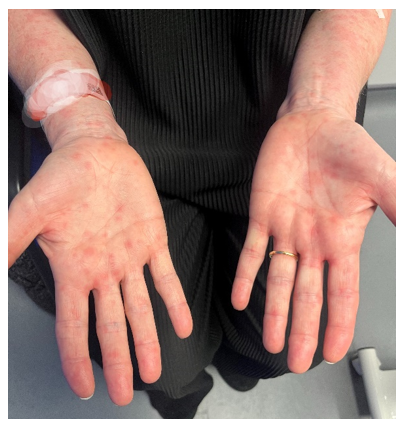
Figure 1 Diffuse itchy maculopapular rash of both hands.
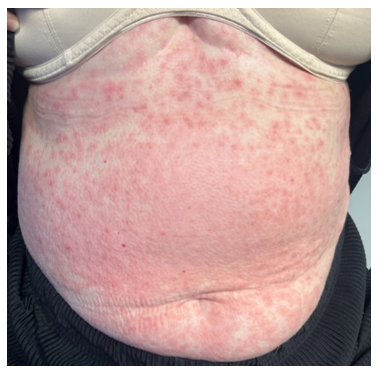
Figure 2 Diffuse erythema, blister lesions of the trunk.
|
Clinical parameter |
Value |
Reference range |
|
CRP |
148 mg/L |
<5 mg/L |
|
Anti-CCP antibody |
1.1U/ml |
<7 U/ml |
|
Anti-MPO antibody |
<0.7 IU/ml |
<3.5 IU/ml |
|
Anti-PR3 antibody |
<0.3 IU/ml |
<2 IU/ml |
|
Rheumatoid factor |
<15 IU/ml |
0-20 IU/ml |
|
Complement C3 |
1.52 g/L |
0.75-1.65 g/L |
|
Complement C4 |
0.30 g/L |
0.14 -0.54 g/L |
|
ASO titre level |
45 |
<200 IU/L |
Table 2 Key laboratory findings
C-reactive protein CRP; Anti Streptolysin O ASO; Hormone replacement therapy HRT
She was immediately admitted to our unit, receiving twice daily hydrocortisone intravenous injections to mitigate the ongoing inflammation. Significant ulcerations of the mucous membranes of the mouth, lower lips and blister lesions in the external genitalia developed on her second day.
Photographs of the lesions were taken and sent through the dermatology online referral system to the dermatology inpatient hospital nearby. The patient was prescribed a variety of steroid creams to be applied topically to the problem areas, as well as petroleum jelly to prevent significant loss of fluid from growing blisters and further desquamation of the stratum corneum of the epidermal layer.
Due to consideration of utmost patient safety, we elected to transfer her to the care of the on-call dermatologist at the nearby hospital. There, she continued a similar course of medical management and was discharged home after satisfying concerns regarding no new developing blisters. Rigorous follow-up at the dermatology outpatient clinic continued for 12 weeks.
Photosensitivity, a known side effect of trimethoprim-sulfamethoxazole can in turn trigger lupus flares in some individuals. Despite its common use for UTI, well-documented adverse side effects of sulfonamides antibiotics are severe type IV hypersensitivity reactions; Steven-Johnson syndrome SJS and toxic epidermal necrolysis TEN.4 Given the patient’s existing autoimmune SLE condition, which caused a high level of clinical concern for a serious cutaneous reaction, exacerbation of waned lupus is supported by elevated CRP levels. This Type IV hypersensitivity reaction was mitigated by prompt high-dose intravenous corticosteroids.
The differential diagnoses in this case included SJS, TEN, and SJS-TEN overlap, all of which share similar pathogenic mechanisms and clinical features.5 These conditions are differentiated primarily by the percentage of body surface area involved <10% for SJS, >30% for TEN, and 10-30% for SJS-TEN overlap.6 One study concluded that patients with active SLE who are administered trimethoprim-sulfamethoxazole antibiotics have a low threshold for adverse drug reactions such as erythema multiforme.7
Even though this patient had been in remission for 13 years, indicates that this immunologic vulnerability may still persist in the absence of active disease.
Though sulfonamide-associated SJS/TEN is well-recognized medical emergency, quiescent lupus may complicate both the presentation and clinical course of drug eruptions. Even with quiescent lupus, it is important to consider that an underlying immune dysregulation may lower the threshold for severe cutaneous adverse reactions, predisposing them to exaggerated hypersensitivity responses after drug usage. Presence of anti-Smith antibodies have been identified in extensive research as genetic factors predisposing SLE patients to adverse reactions caused by sulfonamides. Anti-Sm antibody is more common in African Americans and Asians with SLE than in individuals of European descent with SLE.8 Elevated anti-Sm levels persist even after anti-DNA, levels have returned to the normal range. This is useful when testing a patient with decreased signs or symptoms of SLE (i.e., a waning phase or quiescent lupus). It has been proposed that previous exposure to Epstein-Barr virus (EBV), may contribute to the development of anti-Sm antibodies due to molecular mimicry, as SmB and SmD proteins show sequence homology with Epstein-Barr virus nuclear antigen.8
The dermatologic findings in this case served as early indicators of a potentially life-threatening process and were central to guiding timely intervention. The prompt dermatologic evaluation she received may have prevented progression to the debilitating impacts of SJS and TEN such as hypovolemic shock from extensive fluid and electrolyte loss. It illustrates that clinical remission of SLE may not equate to complete immunologic neutrality, warranting careful monitoring of anti-Smith antibodies when initiating high-risk therapies in this population. Beyond anti-Sm, emerging autoantibody markers are being explored to enhance the diagnostic accuracy and molecular classification of SLE. In 2025, researchers identified IgG and IgA anti-LIN28A antibodies, which showed promise in distinguishing SLE subgroups and aiding early diagnosis. These markers are still under investigation but may eventually complement traditional tests such as anti-Sm and anti-dsDNA.9
Follow up three months assessment of the index patient in this case report identified that the skin was recovering however there was presence of significant hair thinning and loss, the hair texture and condition was adversely impacted. She also complained of residual tiredness and fatigue.
Many Lupus experts recommend that all lupus patients always carry an up-to-date medication list and that it also includes an allergy list that includes “sulfa antibiotics.”
Dermatology department, Salford Royal infirmary hospital, Manchester, United Kingdom.
Author contribution statement
Abiola Z Odeyinka was responsible for conceptualization, writing, revision and final approval of the manuscript. Selene M Kizy was responsible for the design, writing, and final approval. Amaranna G Egesimba was responsible for writing and final approval of the manuscript. Kelly M. Frasier provided supervision and critically reviewed the manuscript.
The authors declare there is no conflict of interest
None.

©2025 Odeyinka, et al. This is an open access article distributed under the terms of the, which permits unrestricted use, distribution, and build upon your work non-commercially.