Journal of
eISSN: 2574-9943


Case Report Volume 3 Issue 4
Dermatology-Venerology Department CHU hassan II FES, Morocco
Correspondence: M Bennani, Dermatology-Venerology Department CHU hassan II FES, Morocco
Received: July 18, 2019 | Published: August 2, 2019
Citation: Bennani M, Benkirane S, Elloudi S, et al. Acne induced by methotrexate: a case report. J Dermat Cosmetol. 2019;3(4):104-105. DOI: 10.15406/jdc.2019.03.00123
methotrexate, cell proliferation, acute leukemia, pathology
Methotrexate (4-amino-10-methylfolic acid) is an antagonist of folic acid that inhibits folic acid reduction and tissue cell proliferation. It is used to treat a variety of autoimmune disorders as well as hématologic or solide cancer: at two different doses for each pathology.1 This medication like others have many side effects. However, few case of acne vulgaris have been associated with the use of this treatment so fare. We are reporting a rare case of MTX-induced acne.
A 25-years-old patient, followed in the internal medicine department for acute leukemia, undergoing chemotherapy Protocol: high-dose methotrexate: 3000mg/m2, ie 5040mg on day 1 of the Protocol followed by Purinithol from day 2 to day 7, L asparginase day 3, GRAN from D + 9 to D14, and vincristine, which presented the day after the injection of methotrexate, a slightly pruriginous rash, diffused all over the face, the trunk, the back, and even the thighs, This eruption was made of monomorphic acneiform lesions, from pustules type, and diffuses inflammatory papules, without retentional lesions, with excoriations surmounted by haemorrhagic crusts (Figures 1-3) It was the 5th cycle of the patient, and he reported the appearance of his similar lesions, since first cure, 2 days after taking this high dose of MTX, with regression of the symptomatology 10 days after. In front of this conditions, the diagnosis of acne induced by MTX was retained (the other drugs were discarded since the eruption was objectified before their administration), a therapeutic abstention was recommended, with again a disappearance of the lesions 10 days after taking MTX.
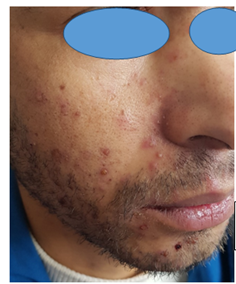
Figure 1 Multiple papules and pustules in the face.
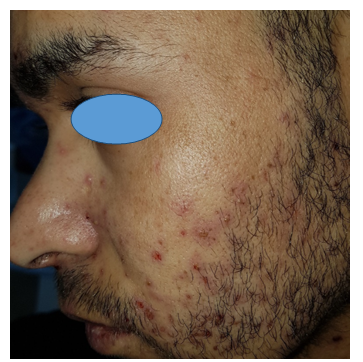
Figure 2 several excoriations surmounted of haemorrhagic crusts.
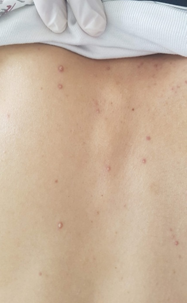
Figure 3 several papulo-pustules monomorphic at the level of the back.
A variety of drugs may provoke acne such as corticosteroids, cyclosporine, antipsychotics, anticonvulsants, epidermal growth factor receptor inhibitors, antidepressants, danazol, antituberculosis drugs, quinidine, azathioprine, testosterone,2 and TNF-a antagonists.3 Drugs that induced acne (DIA) are often having some specific clinical and histopathologic features. DIA is characterized by a medical history for drug intake, by a sudden onset, and at an unusual age, with a monomorphous eruption of inflammatory papules or papulo-pustules. The location of the acne lesions is beyond the seborrheic zone.4
The originality of our case is the rapid onset of eruption in less than 24 hours after injection, that was explained, by the high dose taken by the patient in a single injection. The sudden onset of diffuse inflammatory acne with no predominance in the seborrheic areas at each cycle after each MTX injection, and it spontaneous disappearance 10 days later, confirmed our diagnosis of MTX-induced acne, including all necessary for this entity.5
We report a case of methotrexate-induced acne, rarely reported in the literature, then adding this treatment to the long list of acne-inducing drugs.
None.
Author declares that there is no conflict of interest.
None.

©2019 Bennani, et al. This is an open access article distributed under the terms of the, which permits unrestricted use, distribution, and build upon your work non-commercially.