Journal of
eISSN: 2378-3184


Research Article Volume 15 Issue 3
 Faisal Rashid,2 Mohammad Sadequr Rahman Khan,1 Md Asaduzzaman1
1Department of Marine Bioresource Science, Faculty of Fisheries, Chattogram Veterinary and Animal Sciences University, Bangladesh
2Division of Post-Harvest Technology, Faculty of Fisheries, Sher-e-Kashmir University of Agricultural Sciences and Technology of Kashmir (SKUAST-K), India
Correspondence: Khandakar Zakir Hossain, Department of Marine Bioresource Science, Faculty of Fisheries, Chattogram Veterinary and Animal Sciences University, Khulshi-4225, Chittagong, Bangladesh & Division of Post-Harvest Technology, Faculty of Fisheries, Sher-e-Kashmir University of Agricultural Sciences and Technology of Kashmir (SKUAST-K), India, Tel +880-1703113087
Received: July 22, 2026 | Published: September 18, 2026
Citation: Hossain KZ, Rashid F, Khan MSR, et al. Value chain performance and market dynamics of small-scale bivalve fisheries: a case study from coastal cox’s bazar, Bangladesh. J Aquac Mar Biol. 2026;15(2):120-126. DOI: 10.15406/jamb.2026.15.00451
Small-scale bivalve fisheries in coastal Bangladesh constitute a vital yet highly informal sub-sector that is largely neglected in national fisheries governance frameworks. This study investigates the value chain performance, market dynamics, and socioeconomic contributions of artisanal bivalve fisheries across two distinct coastal systems in Cox’s Bazar, Bangladesh: Chawfaldandi (a well-connected mainland site) and Moheshkhali (a geographically isolated offshore island). A cross-sectional comparative field survey was conducted during the peak harvesting season (November 2025–April 2026). Employing a multi-stage purposive and snowball sampling strategy, primary data were gathered through face-to-face interviews from 150 stakeholders of each site across three specific nodes: harvesters/collectors (n=50), traders/retailers (n=50), and consumer households (n=50). The study focused on three economically important wild bivalve species: the Indian backwater oyster (Crassostrea madrasensis), the green mussel (Perna viridis), and the Asiatic hard clam (Meretrix meretrix). Despite substantial latent export and domestic tourism-driven potential, the sector remains constrained by its informal nature, wild stock dependence, and monsoon-driven seasonality. Implementing targeted strategies, such as community-based depuration systems, insulated ice storage, formal marketing cooperatives, certification of bivalve products, can significantly improve product safety, optimize income distribution for vulnerable coastal communities, and integrate these "hidden" small-scale fisheries into the broader blue economy framework.
Keywords: mollusca, crassostrea madrasensis, perna viridis, meretrix meretrix, livelihood, , shellfish governance, spatial variation, value chain analysis
Bivalve fisheries in coastal Bangladesh are a small-scale sector with an underdeveloped market, even though this fishery has the potential to significantly contribute to the country's local livelihood and economy.1 Bivalve fisheries and their value-added products did not grow smoothly due to a variety of constraints, including a lack of market policy, cold storage facilities, unskilled farmers, market segregation, poor transportation, a lack of product certification and export facilities, etc.1–4
In Cox’s Bazar, Indian backwater oyster Crassostrea madrasensis, green mussel Perna viridis, and Asiatic hard clam Meretrix meretrix, are normally harvested, processed, and marketed to local areas mostly in shucked meat form.5–7 Farmers in Cox's Bazar typically harvest wild bivalves from major coastal areas such as Chawfaldandi, Khurushkul, Moheshkhali, Nuniarchara, Teknaf, and Saint Martin's Island and sell whole shells or shucked bivalves to community people, Cox's Bazar town markets, and some restaurants.1,2,7 The value chain is limited to the basic roles of harvesting, trading, and retailing, with no institutionalized aggregation, processing, or certification functions, and with negligible post-harvest improvements such as depuration, hygienic handling, or packaging, limiting access to higher-value domestic and international markets.1,2 Solaiman et al.,3 also found that bivalves captured from natural fisheries are not depurated using normal methods. Post-harvest processes are carried out manually, and bivalves are sold to local markets in fresh condition shortly after collection.
In contrast, the sale of harvested bivalves in coastal Cox's Bazar remains primarily localized.1,2 As the value chain of harvested bivalves has not improved in line with worldwide standards, entrepreneurs, industrialists, and exporters have not paid attention to their marketing.1,2 Furthermore, geographical variables within the coastal region affect marketing efficiency.4,8 In Cox’s Bazar, mainland areas benefit from their closeness to Cox's Bazar urban centers, which provides access to tourism-driven demand from hotels and restaurants while also enhancing market diversification. In contrast, island systems have logistical problems, higher transaction costs, and limited transportation links, resulting in lower market integration and more reliance on local consumption.8 These distinctions highlight the importance of geographical accessibility in determining value chain efficiency and marketing potential for small-scale fisheries.9
The economic value of bivalve products is determined by value chain norms and access to national or worldwide markets.3,4 Most bivalve-producing countries, including China, Malaysia, Japan, the United States, and Korea, adhere to established standards, licensing, and certification, allowing them to export bivalve products all over the world.9–13 Bangladesh's government, seafood industry, and research organizations should also provide and enforce correct rules for bivalve farmers and companies so that bivalves can be exported readily.
Nonetheless, rising demand for bivalves in seafood restaurants and export markets suggests a significant market potential for the Cox's Bazar coastal area.1,14,15 So, additional research is needed to enhance the bivalve industry in Cox's Bazar. Although few previous studies or surveys have been conducted on the harvesting, processing, or marketing of bivalves in coastal Bangladesh, such studies have largely offered an overview of current conditions or challenges for bivalves in coastal Bangladesh.3,4 Studies on the value chain and market conditions of bivalves along the Cox's Bazar coast are still scarce.
So, the current study investigated two different coastal systems in Cox's Bazar: Chawfaldandi, a mainland location with a strong market connection, and Moheshkhali, an island system differentiated by physical isolation and infrastructure limits. The study sought to determine the value chain and market situation of harvested bivalves in two distinct coastal locations in Cox's Bazar. The objectives were to (i) map the structure and performance of existing bivalve value chains and markets in two contrasting coastal areas of Cox’s Bazar, (ii) assess their socioeconomic importance, and (iii) identify interventions to increase value addition, improve market access, and strengthen the role of bivalve fisheries in coastal development by analyzing harvesting practices, value chain structures, pricing mechanisms, and household consumption patterns.
This study was carried out at two significant bivalve harvesting sites in Cox's Bazar district, Bangladesh: Chawfaldandi (mainland) and Moheshkhali (offshore island). Chawfaldandi is closely connected to the Cox's Bazar urban market system, which allows for relatively efficient product flow and diverse market access. In contrast, Moheshkhali is an outlying island with limited transportation facilities and higher transaction costs, leading to more reliance on localized consumption networks. Both sites have large intertidal mudflats and estuary ecosystems that support natural populations of oysters, green mussels, and clams. These habitats support small-scale, seasonal, and artisanal fisheries, which are a major source of coastal livelihoods in the region.
Study design
A cross-sectional comparative field survey design was used to evaluate the bivalve value chain structure, market dynamics, and socioeconomic contributions at both research sites. The study used both quantitative and qualitative methodologies to capture production patterns, pricing dynamics, and consumer behavior across stakeholders.
Sampling strategyA multi-stage purposive sampling strategy was utilized to identify key stakeholders throughout the bivalve value chain. Respondents were selected based on their active involvement in harvesting, trading, or consumption of bivalves. Three stakeholder groups were identified: (i) harvesters/collectors, (ii) traders/retailers, and (iii) consumers (household representatives). Participants were identified through local networks and further validated using snowball sampling. Data saturation was used as the stopping criterion for interviews. A total of 50 collectors, 50 traders, and 50 household representatives were interviewed at each study site.
Taxa selection
The study focused on three economically important wild bivalve species: Crassostrea madrasensis (Indian backwater oyster/Kostura), Perna viridis (green mussel/Sabuj jhinuk), and Meretrix meretrix (Asian hard clam/Chilon). All species were collected from natural beds of the survey sites.
Value chain mappingA participative value chain mapping approach was used to reconstruct the bivalves' flow from harvesting to final consumption (Figure 1). Actor linkages, transaction pathways, and functional bottlenecks were discovered using a combination of stakeholder interviews and field observations.
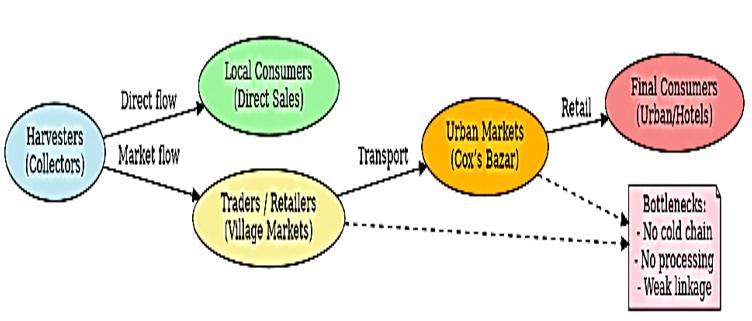
Figure 1 Participatory model of bivalve supply chain flows and functional bottlenecks.
Primary data were gathered through structured face-to-face interviews conducted throughout the peak harvesting season (November 2025-April 2026). Harvesting effort, seasonal availability, pricing at different market levels, sales volumes, and home consumption patterns were all collected.
All bivalve weight data were standardized to kilograms (wet weight, including shell where applicable). Price data were gathered in three market nodes: landing sites (collector level), village markets, and urban retail marketplaces in Cox's Bazar Sadar.
Data processing and analysisStandardized conversion units were used to ensure data consistency between sites and stakeholder groups. Production, consumption, and pricing patterns were summarized using descriptive statistics such as mean, range, and percentage.
Average prices were calculated using the midpoint of the reported price ranges. Price margin (Tk/kg) was calculated as the difference between the urban retail price and the landing price received by collectors using the following equation:
Price Margin (Tk/kg) = Urban Retail Price − Landing Price
Thematic analysis was used to identify structural constraints and inefficiencies in the value chain. A comparative analysis of the two study sites was conducted to assess spatial differences in production, market access, pricing, and value distribution.
Ethical considerations
The study involved voluntary interviews with adult participants and did not include medical interventions or the collection of sensitive personal information. Therefore, formal ethical approval was not sought. Before each interview, the purpose of the research was explained, informed verbal consent was obtained, participation was voluntary, and respondents could withdraw at any time. All responses were anonymized, and confidentiality was maintained throughout the study.
The quantitative indices of bivalve production and harvesting are reported in Table 1.
|
Indicator |
Chawfaldandi |
Moheshkhali |
|
Experience of collectors |
~20 years |
~20 years |
|
Harvest frequency |
3–4 days/week |
3–4 days/week |
|
Harvest season |
9 months/year |
9 months/year |
|
Mean monthly harvest/collector |
~1–2 tons |
~1 ton |
|
(whole-shell weight) |
||
|
Estimated number of collectors |
~100 |
~200 |
Table 1 Harvesting and production indicators in Chawfaldandi and Moheshkhali
Chawfaldandi collectors reported larger per-capita production (1-2 tons/month) than Moheshkhali (around 1 ton/month). Although per-capita production was lower in Moheshkhali, the area had a higher number of active collectors (200 vs. 100), indicating a greater community reliance on bivalves for income. Harvest frequency, seasonal availability, and years of experience were generally consistent across sites, indicating similar ecological circumstances and traditional knowledge systems.
Market activity indicators are presented in Table 2. Chawfaldandi had a slightly higher daily seller count (5-8) and daily sales volume (50 kg, whole-shell weight) than Moheshkhali. Both locations were operational from September to May, when harvesting was at its peak. Both sites lacked cold storage and processing facilities, which limited product shelf life and value addition.
|
Indicator |
Chawfaldandi |
Moheshkhali |
|
Sellers/day |
05-Aug |
05-Jun |
|
Daily sales volume (whole-shell weight) |
~50 kg |
~30 kg |
|
Selling period |
September–May |
September–May |
Table 2 Market supply indicators in Chawfaldandi and Moheshkhali
Value chain structure
Both locations exhibited two primary marketing channels: (i) direct sales by collectors to local households, and (ii) commercial sales through traders to Cox's Bazar urban markets. Because of its island position, Moheshkhali relied more on informal direct channels, but Chawfaldandi supported a greater volume of commercial transactions.
Price structure
Bivalve prices along the Cox's Bazar coast varied by point of sale, species, and location. To ensure clarity, the price structure was divided into three categories: (i) landing prices (from collectors), (ii) local consumer prices, and (iii) urban retail market prices. Tables 3 – 5 present the quantitative data, whereas the explanatory paragraphs clarify the trends.
|
Species |
Price Range (Tk/kg) |
|
C. madrasensis *(edible meat) |
300-400 |
|
P. viridis *(edible meat) |
150-200 |
|
M. meretrix *(edible meat) |
250-400 |
Table 3 Landing prices of bivalves at the collector level at both sites
*Prices are expressed on an edible meat weight basis to facilitate comparison among species.
|
Species |
Chawfaldandi(Tk/kg) |
Moheshkhali (Tk/kg) |
|
C. madrasensis (edible meat) |
350 |
300 |
|
P. viridis (edible meat) |
250 |
250 |
|
M. meretrix (edible meat) |
400 |
350 |
Table 4 Local consumer prices of bivalves
|
Species |
Retail Market Price (Tk/kg) |
|
C. madrasensis (edible meat) |
500-600 |
|
P. viridis (edible meat) |
300-400 |
|
M. meretrix (edible meat) |
500-700 |
Table 5 Retail market prices of bivalves in Cox’s Bazar Sadar market
Landing prices: Landing prices reflected the income earned by collectors at the time of harvest, before transportation or trade. As shown in Table 3, the Indian backwater oyster (C. madrasensis) was the most expensive on an edible meat weight basis, followed by the Asiatic hard clam (M. meretrix) and the green mussel (P. viridis). These prices were roughly similar across Chawfaldandi and Moheshkhali, implying that collectors are compensated fairly despite geographic variances.
Landing prices were capped by collectors' limited bargaining power and the lack of structured cooperatives or intermediaries. Pricing was broadly similar across locations, indicating that market access differences (mainland vs. island) had a greater impact on post-landing transactions than raw harvest pricing.
Local consumer prices: Local consumer pricing represented the amount paid by households who bought bivalves directly from collectors or local dealers. Chawfaldandi had slightly higher consumer prices for the Indian backwater oyster (C. madrasensis) and the Asiatic hard clam (M. meretrix) on an edible meat weight basis than Moheshkhali, whereas the green mussel (P. viridis) was priced similarly at both locations (Table 4). These differences reflected variations in local supply, accessibility, and consumer demand (Table 4).
Mainland Chawfaldandi consumers faced slightly higher prices, probably due to improved market access, higher household purchasing power, and consistent availability. Moheshkhali's relatively lower prices may have reflected lower daily turnover and a focus on local consumption rather than urban trade. The similar pricing of the green mussel at both locations may have reflected consistent demand and easier local access.
Urban retail market prices: Retail prices in Cox's Bazar urban markets were far higher than landing or local consumer prices (Table 5). The price of edible Asiatic hard clam meat was higher than that of edible green mussel and oyster meat (Table 5). This margin primarily reflected shipping, handling, and minimal sorting, as there was no considerable processing or depuration involved.
The increase in price from landing to retail reflected the limited value addition within the supply chain. The majority of the margin was made up of transportation and handling costs, with no post-harvest processing, cold storage, or grading included. This pattern indicated the potential to improve product availability and enhance collector income by using simple value-added tactics like depuration, packaging, or basic cold-chain systems.
Household consumption patterns
Household consumption data are summarized in Table 6. In Chawfaldandi, Rakhain and other ethnic communities mostly lived in Rakhain para and the adjacent Chawfaldandi coastal area, where 100 families consumed bivalves, with an average monthly intake of 30 kg per household. In contrast, ethnic communities were scattered throughout Moheshkhali upazila (Gorokhghata, Hoanak, Shaplapur, Mudirchara), and constituted over 250 consuming families, with a somewhat lower per-household consumption (20 kg/month), most likely due to supply and access issues. Bivalves were prepared in a similar manner across sites, including as curry, fried, and mixed seafood meals. These findings suggested that bivalves played an important role in the diets of coastal communities and contributed to household food security.
|
Indicator |
Chawfaldandi |
Moheshkhali |
|
Number of families consuming |
100 |
250 |
|
Monthly household consumption (kg) |
30 |
20 |
Table 6 Household consumption of bivalves in Chawfaldandi and Moheshkhali
The survey data indicated that bivalve harvesting played a significant role in the economic well-being of coastal communities in Chawfaldandi and Moheshkhali. Collectors in Chawfaldandi reported an average monthly harvest of 1-2 tons of whole-shell bivalves per person, whilst those in Moheshkhali gathered around 1 ton per person. With 100 active collectors in Chawfaldandi and 200 in Moheshkhali, the total production generated a significant income for both communities.
At the collector level, the monthly revenue from bivalves varied per species. Indian backwater oysters had the largest income, followed by the Asiatic hard clams and green mussels. Collectors earned approximately Tk 100,000 - 200,000 per month in Chawfaldandi and Tk 80,000 - 1,50,000 per month in Moheshkhali, depending on harvest volume and seasonal availability. Many families relied on this income as their major or secondary source of income, especially in Moheshkhali, where alternative employment possibilities were limited.
Trading and informal market activities also contributed to secondary income. Local traders in Chawfaldandi reported daily sales of 50 kg of bivalves (with shell), while Moheshkhali traders sold roughly 30 kg each day. Despite the lack of post-harvest processing, collectors and dealers continued to generate significant revenue through direct sales to families and urban marketplaces. These activities contributed not only to individual earnings but also to local circulation of money within the community, sustaining small businesses and transport services connected to the fishery.
Participation in bivalve harvesting was also highly inclusive: men and women from all ethnic groups, including those from Rakhine villages, actively participated in collection and trade. This broad participation contributed to the distribution of economic benefits across households and supported livelihoods, seasonal employment, and community resilience.
Overall, the survey demonstrated that bivalve fisheries generated seasonal employment, income diversification, and market-linked economic activity, making them an important part of the coastal economy in both mainland and island populations. Even without formal processing or cold-chain infrastructure, bivalves played an important role in sustaining livelihoods and fostering informal economic networks.
Value addition potential of bivalvesThe survey results indicated that green mussels and Asistic hard clams had the greatest potential for value addition, with urban retail prices increasing by approximately 100.0% and 84.6%, respectively, compared with landing prices (Table 7). Mainland Chawfaldandi had somewhat larger margins than Moheshkhali, which reflected the importance of transportation connectivity and proximity to urban markets.
|
Species |
Landing Price (Collectors) (Tk/kg) |
Local Consumer Price (Tk/kg) |
Urban Retail Price (Tk/kg) |
Price Margin (Tk/Kg) |
|
C. madrasensis (edible meat) |
350 |
375 |
550 |
200 |
|
P. viridis (edible meat) |
175 |
250 |
350 |
175 |
|
M. meretrix (edible meat) |
325 |
375 |
600 |
275 |
Table 7 Price margins of bivalves along the value chain (average prices)
The comparative investigation of Chawfaldandi and Moheshkhali indicated that both populations relied substantially on wild bivalve resources, which confirms other conclusions16,17 that small-scale bivalve fisheries in South Asia are predominantly artisanal and reliant on natural beds.18 Collectors at both sites had long-term experience (~20 years), suggesting the persistence of intergenerational knowledge transfer, similar to traditional oyster and mussel harvesting systems reported in India and the Philippines.19,20
Despite similar collecting procedures and seasonal limits, per-collector productivity varied significantly (Table 1). This finding is consistent with studies from other coastal systems, where mainland towns with better access to intertidal zones and urban markets have higher per-capita output.20 In contrast, Moheshkhali had a higher total participation rate (200 collectors vs. 100 in Chawfaldandi), indicating a greater community reliance on bivalves as a livelihood buffer in more remote locations, comparable to findings in Southeast Asian island-based fisheries.21,22
Monsoon-driven reductions in harvesting (June–August) were observed at both sites, consistent with seasonal patterns documented in Indian and Thai intertidal fisheries.17,19 These natural environmental limits limit year-round production, highlighting the susceptibility of artisanal bivalve livelihoods to climate change.19
Market dynamics and value chain
The present study revealed that bivalve marketing was informal and largely unstructured in both Chawfaldandi and Moheshkhali, which is consistent with previous findings from Thoothukudi, India, where small-scale shellfish trading is characterized by direct home sales and short supply chains.23 Both sites utilized two primary marketing channels: direct sales from collectors to families and commercial sales via traders to urban markets. However, Moheshkhali relied primarily on direct sales because transportation constraints limited daily market transactions. Furthermore, the lack of processing, grading, or depuration in both regions limited value addition, highlighting opportunities for livelihood improvement and market expansion through investment in post-harvest infrastructure. This reliance on informal channels is consistent with research from small-scale bivalve fisheries in the Philippines and Thailand, where island populations frequently engage in localized trade due to high transit costs and limited cold storage facilities.20,22
Due to its mainland location, Chawfaldandi had greater daily volumes (50 kg) and more active vendors (5-8 per day) than Moheshkhali (30 kg, 5-6 sellers), demonstrating the impact of market accessibility on trading intensity. Similar tendencies have been observed in other tropical coastal regions, where transport connection has a direct impact on bivalve distribution and price realization.14,19,24
Price structure and economic implications
Landing and consumer prices for bivalves were slightly higher in Chawfaldandi than in Moheshkhali, most likely due to higher production volumes and proximity to larger markets. Indian backwater oysters were the most expensive, followed by Asiatic hard clams and green mussels, consistent with pricing patterns seen in other coastal South Asian fisheries.16,19 However, their retail prices in the urban markets of Cox's Bazar were similar for both sites, implying that transportation and handling accounted for the majority of the value margin, whereas post-harvest processing contributed minimally. This finding supports previous observations that small-scale bivalve fisheries yield low income due to a lack of value-added infrastructure.14,25
Household consumption and socio-cultural importance
Household consumption patterns reflected site-specific accessibility and resource availability. Households in Chawfaldandi consumed a greater quantity of bivalves per family (approximately 30 kg/month) than those in Moheshkhali (approximately 20 kg/month), whereas a larger number of households consumed bivalves in Moheshkhali (250 households) than in Chawfaldandi (100 households). These trends suggest that bivalves can be used as both a daily dietary supplement and a source of low-cost protein, especially in island societies where other protein sources are restricted.26,27 Culinary techniques, such as curried, fried, or mixed seafood dishes, were constant across sites, indicating a strong cultural integration of bivalves into coastal diets. Similar socio-cultural roles of bivalves have been documented in India, Thailand, and the Philippines.17,28
Contribution of bivalves to coastal livelihoods
The survey findings confirmed that bivalve fisheries in Chawfaldandi and Moheshkhali are a significant source of income and employment for coastal communities. Similar to other small-scale bivalve fisheries in Southeast Asia, these fisheries provide both primary and supplementary livelihood opportunities, particularly in areas with limited alternative employment options.9–12 In Moheshkhali, where island isolation limited economic opportunities, the high number of active collectors emphasized the role of bivalves in community livelihood resilience, which is consistent with patterns observed in small-scale fisheries in Thailand and the Philippines.22,28
The survey also showed that bivalve fisheries helped coastal households diversify their income, thereby reducing economic risks associated with seasonal fluctuations. Indian backwater oysters and Asiatic hard clams, as higher-value species, generated greater economic returns than green mussels, consistent with earlier studies showing that species composition and market demand influence the economic returns of small-scale shellfish fisheries.1,23.29
In addition to direct income, bivalve fisheries contributed to informal economic networks. Local trade networks, which include collectors, dealers, and urban market middlemen, distributed income across the coastal economy. This pattern is consistent with global research indicating that small-scale fishing supports local trade, transportation, and microenterprises in rural coastal areas.3,4,9
Participation in bivalve harvesting and marketing also reflected social inclusion, with both men and women from diverse ethnic communities actively engaged in these activities. This is consistent with trends in Indian and Southeast Asian fisheries, where gender-inclusive involvement increases household income and community resilience.30,31
Overall, the findings showed that bivalve fisheries in Cox's Bazar contributed considerably to livelihood security, seasonal employment, and economic circulation in both mainland and island communities. While the sector remained largely informal and lacked post-harvest infrastructure, these fisheries offer a valuable long-term economic activity that can support local communities under changing environmental and socioeconomic conditions.32
Domestic value addition and future export-readiness potential
The results indicated that bivalves harvested from Cox's Bazar offered considerable opportunities for domestic value addition, as reflected by the observed price margins between landing sites and urban retail markets (Table 7). These price differences suggest that improvements in post-harvest handling, product quality, and marketing could increase returns to value chain actors. Other regions' experiences support this potential: in India, small-scale oyster and mussel fisheries have increased returns by implementing depuration, grading, and packaging practices,23 and in Thailand, green mussel farms have successfully expanded into domestic and regional export markets through similar interventions.22
FAO10–12 also emphasises that bivalves are high-value, environmentally sustainable seafood products that are well suited to blue economy initiatives and export-oriented development. However, the present study did not assess key export-readiness requirements such as depuration certification, traceability systems, cold-chain logistics, sanitary and phytosanitary compliance, or regulatory quality control. Therefore, the findings should be interpreted as indicating opportunities for domestic value addition and future export-readiness rather than immediate export potential. Despite this, Cox's Bazar confronts obstacles such as a lack of cold-chain infrastructure, insufficient depuration, seasonal harvesting gaps (September-May), and unpredictable supply, all of which limit existing market and export potential.1–4
Nonetheless, low-cost interventions could significantly benefit the sector. Investments in cold storage, hygienic handling, grading, and improved packaging could enhance product quality and market supply.1,2,5 Furthermore, formalising market relations through cooperatives or collaborations with regional seafood enterprises could open up export markets, raise prices, and improve the livelihoods of coastal people.4 Policy and training programs that support small-scale fisheries could help them integrate into national and export-oriented value chains.32
Overall, the findings suggest that strengthening domestic value addition should be considered the immediate priority for the bivalve sector in Cox's Bazar. With further investments in post-harvest infrastructure, quality assurance, regulatory compliance, and market organisation, the sector may become better positioned to pursue export opportunities in the future while improving the livelihoods of artisanal fishers and contributing to coastal economic development.
Comparative insights and policy implications
The present study highlighted how differences in production systems and market access influenced value-chain performance of bivalves between the two study areas. Specifically, the comparison of mainland and island bivalve harvesting locations demonstrated a significant trade-off between individual production and group participation. Mainland sites like Chawfaldandi benefited from increased market access, resulting in higher per-collector harvests and greater household consumption. In contrast, island sites such as Moheshkhali had higher participation rates but lower individual output, indicating a stronger reliance on communal resource usage and traditional harvesting practices. These trends indicated that although mainland collectors tended to maximise income per person, island communities prioritised communal engagement and social inclusion.3,31
Both systems faced several constraints that restricted their economic potential. These included a high reliance on wild bivalve populations, seasonal harvesting gaps during the monsoon, little value addition, and insufficient cold-chain infrastructure. Such challenges not only impaired income stability, but also limited options for expanded market participation, including exports. Addressing these constraints is critical for transforming small-scale bivalve fisheries into more resilient and profitable operations.1,2,4
Interventions to improve post-harvest management in bivalve fisheries can provide significant socioeconomic advantages to both individuals and coastal communities.33 Low-cost methods including insulated ice storage, simple depuration systems, and basic grading and hygienic packing have been found to drastically minimize post-harvest losses, stabilize supply chains, and improve product quality in small-scale clam fisheries.2,4,34 For example, improvements in handling and chilling systems in Thoothukudi, India, have resulted in measurable increases in producer prices and decreased spoilage,17 whereas similar community-based cold chain and hygiene interventions in Southeast Asia (particularly Vietnam and the Philippines) have improved both market reliability and household incomes.9,20
These approaches are especially pertinent in Bangladesh, where post-harvest infrastructure is limited and value addition is largely lacking.3 Such interventions also encourage more equal income distribution by supporting small-scale collectors and allowing women to participate in grading, sorting, and local processing activities.30,31
Beyond post-harvest improvements, increasing market access and consumer awareness is critical to unlocking new economic prospects.4 Formalized market linkages, combined with standardized handling protocols and basic certification systems, can facilitate entry into higher-value domestic markets such as hotels, restaurants, and the tourism sector in Cox's Bazar, while also providing long-term access to regional export markets such as India, Southeast Asia, and the Middle East, where demand for safe and traceable shellfish is growing.3 Experiences from shellfish value chain development in Vietnam and Thailand demonstrate that producer cooperatives, training programs, and public investment in cold-chain infrastructure can significantly improve price stability, compliance with quality standards, and market integration for small-scale producers.9,32 In particular, producer cooperatives have proven effective in aggregating supply, lowering transaction costs, and increasing bargaining power in fragmented coastal fisheries.33
Overall, targeted post-harvest interventions, institutional support mechanisms, and market development strategies can significantly improve livelihoods, strengthen community resilience, and unleash the untapped economic potential of small-scale bivalve fisheries in coastal Bangladesh. Importantly, such strategies promote not only income generation and domestic value addition but also enhance food safety, sustainable resource use, and social inclusion while establishing a foundation for future export readiness.
Bivalve fisheries in Chawfaldandi and Moheshkhali are small-scale, resource-dependent livelihoods that provide seasonal income, affordable nourishment, and preserve indigenous food traditions. Chawfaldandi benefits from improved market access, which leads to higher productivity and consumption, whereas Moheshkhali has a larger community involvement but lower per-capita output due to geographical limits. In both cases, marketing is informal and mainly unprocessed, limiting value creation and earning potential.
Strengthening fundamental post-harvest management, adding low-cost storage and processing, and boosting market access could increase economic returns while preserving the fishery's artisanal nature. Integrating these small-scale crops into more organized value chains provides a realistic strategy to promote livelihood resilience and nutritional security while also preserving ecological sustainability.
Khandakar Zakir Hossain: Methodology, Field work, Investigation, Software, Data curation, Writing – original draft & editing. Faisal Rashid: Writing – review & editing. Mohammad Sadequr Rahman Khan: Supervision, Project administration, Investigation, Writing – review & editing. Md Asaduzzaman: Supervision, Project administration, Investigation, Funding acquisition, Data curation, Conceptualization, Writing – review & editing.
This research was carried out as part of the 5th phase of the Bangladesh Academy of Sciences- United States Department of Agriculture (BAS-USDA) Endowment project, which was carried out by Chattogram Veterinary and Animal Sciences University under a cooperation agreement with BAS (F 127). We would like to thank the director and other personnel of the BAS-USDA Endowment Program for financing this research project.
The authors declare that there are no conflicts of interest.

©2026 Hossain, et al. This is an open access article distributed under the terms of the, which permits unrestricted use, distribution, and build upon your work non-commercially.