Journal of
eISSN: 2378-3184


Research Article Volume 14 Issue 2
 Tim Staufenberger,1,2 Evangelia Lamprakopoulou,3 Vicky Stratigaki,4 Geo Manassakis,3 Ivana Lukic,5 Alex Ziemba,6 Ghada El Serafy,6 Annelies Declercq,7 Rainer Geisler,8 Harald Rosenthal9
1R&D Centre University of Applied Sciences Kiel FmbH, Germany
2Kieler Meeresfarm GmbH & Co. KG, Germany
3INGS ICT Solutions, Greece
4Jan De Nul Group, Belgium
5 s.Pro – sustainable projects GmbH, Germany
6Deltares, The Netherlands
7Ghent University, Belgium
8University of Applied Sciences Kiel, Germany
9Schifferst, Germany
Correspondence: Eva Strothotte, R&D Centre University of Applied Sciences Kiel GmbH, Schwentinestr. 24, 24149 Kiel, Germany
Received: July 05, 2025 | Published: July 15, 2025
Citation: Strothotte E, Staufenberger T, Lamprakopoulou E, et al. Navigating the waves during a global crisis: overcoming challenges with pioneering solutions in multi-use offshore. J Aquac Mar Biol. 2025;14(2):99-110. DOI: 10.15406/jamb.2025.14.00421
Projects are often meticulously planned with contingency measures to address anticipated uncertainties. However, these preparations primarily focus on internal operational issues and system-related challenges, leaving little room for predicting and mitigating sudden disruptions originating outside the project's scientific or industrial scope. Recent global crises—including the COVID-19 pandemic and its subsequent supply chain disruptions, an energy crisis, regional armed conflicts, and soaring inflation—have introduced unforeseen challenges. Additionally, the rising threat of terrorist attacks has necessitated costly and expanded safety measures. These external factors have often been underestimated, highlighting their significant impact on both academic research and commercial pilot projects.
This paper examines the direct consequences of these crises on a Horizon 2020 EU project, exploring the strategies employed by project partners across different European sites to navigate these challenges. The project faced not only geopolitical uncertainties but also region-specific disruptions, such as supply chain breakdowns due to pandemic-related shutdowns, unexpected operational cost surges, and sudden supplier losses. The experiences documented in this study offer broader insights into crisis mitigation strategies for research and commercial endeavours.
Economic risk modeling played a crucial role in identifying alternative solutions, minimizing the risk of total failure, and determining the minimum economic viability requirements. In the final section, we discuss the unique challenges faced by transnational initiatives, exacerbated by global upheavals. Additionally, we highlight the growing risk of offshore energy infrastructure becoming a potential target for terrorist or wartime attacks, especially as renewable energy adoption reaches critical levels. Ensuring the security of critical infrastructure is essential—not only for the projects themselves but also for broader societal stability—necessitating significant investments in protective measures to prevent collateral damage.
Keywords: Crisis-management, multi-use, offshore, wind-energy, aquaculture, tourism
The concept of multi-use resource systems is accompanied by several unforeseen challenges and risks. Offshore activities, especially when implemented with a multi-use approach,1 are facing manifold challenges due to their highly diverse needs in logistics and operational intensity, particularly when extreme offshore events (e.g. unforeseen harsh weather conditions) require different responses for each of them. The future research needs for the developing offshore multi-use aquaculture industry have been clearly identified in the so-called “Bremerhaven Declaration on the Future of Global Open Ocean Aquaculture”.2 To achieve an optimum of combined resource uses, highly detailed, well-thought-out planning of the work program and careful selection of technologies is needed that goes beyond the specifics of each of the stakeholder interests and capabilities of operation. Various studies and reviews have described these needs and provided insight into initial test trials and conceptual approaches.3-8 The organization of complex logistics, preparation of infrastructure and pre-testing of materials and technologies are serious challenges while also assuring appropriate training of operational, multi-disciplinary personnel in formats never been employed before by any of the partners/stakeholders. Furthermore, adequate and effective licensing procedures and operational regulatory systems are still in need of improvements and adjustments9 at national and international level, including appropriate regulations for health and safety standards for people involved in multi-use systems. These face new scenarios, combining a wide range of disciplines for which over-arching experiences are limited. These need to be properly covered as essential elements for the successful functioning of multi-use systems located in the harsh offshore environment. Finally, the economic implications when considering multi-use concepts at pilot scale are of key importance. In this context it will be highly important for the development of this industry to strongly recommend standardization and simplification of regulatory frameworks so that governance can be improved and adaptation of participatory processes involving all stakeholders will not be hampered by over-regulation, particularly in the face of uncertainty and periods of crisis.8
In the past, offshore aquaculture trials have been proposed early on and were frequently undertaken to test designs, materials and species performance.10,11 General overviews are provided by Holm et al.12 and Goseberg et al.13 while the identification of potential technical risks have been reviewed by Klijnstra et al.,14 and specific structural design considerations by others15,16 as well as socio-economic implications in a multi-use setting.17 The experiences gained in past projects have all been carefully considered when planning the UNITED pilot projects. Relevant examples include Buck and Langan1 dealing with the principle perspectives of offshore multi-use concepts while others focused on highly site – specific aspects,7 including environmental risk assessment19-22 and other issues such as planning for sustainable management23 as well as increased biofouling due to introduction of exotic species by other ocean resource users such as the shipping industry (ballast water, hull fouling).24-28 These are all issues of high importance at sites close to international shipping routes. The state of knowledge on the potential effects of offshore wind farms on fisheries and aquaculture has been reviewed by Van Hoey.29 Spatial planning procedures in close contact with other industries (e.g. shipping, mining, gravel extraction, tourism) will be of vital importance for sustained development.30,31 Overall concepts on integrated coastal zone management involving modern multi-dimensional approaches are available, but do not yet incorporate continuous re-assessment and adaptations to changing conditions in ongoing projects. Various studies on the subject have been considered when dealing with the choice of material and the development of antifouling methods.32-35 As to the economic risk analysis for aquaculture products in the marketplace we refer to the methodologies discussed by Kam and Leung.36
Recently, Abhinav et al.37 performed a technological, environmental and socio-economic review of several multi-purpose platforms which were based on combinations of functionalities such as wind, wave and solar energy production, transport, leisure and aquaculture. Examples are the multi-purpose platforms studied during the MERMAID project for wind and wave energy production,38 or the approach proposed by the TROPOS project39 combining wind and solar production with aquaculture. Moreover, the MARIBE project focused on analyzing and developing business cases for a selection of the most promising multi-use combinations.40 In 2016, the H2020 MUSES project41,42 set out to analyze the state of multi-use development across Europe and highlight drivers, barriers, added values, and possible negative impacts. However, these projects do not report crisis management plans, as these projects have not experienced COVID-19 challenges and restrictions or any other severe crises. This paper presents an option to fill this gap.
The study by Stuiver et al.43 presents governance of exploitation of competing marine activities and infrastructures by combining economic activities at multi-use platforms at sea. They apply a framework specifying policy, economic, social, technical, environmental, and legal (PESTEL) factors to explore if governance arrangements may facilitate or complicate this approach in four case study sites in four European sea basins (the Mediterranean Sea, the Atlantic Ocean, the North Sea, and the Baltic Sea). The article concludes with policy recommendations on a governance regime for facilitating the development of multi-use platforms at sea in the future. The PESTEL framework identifies obstacles for multi-use platforms at sea, however crises management has not been examined in this paper.
Very few studies have focused so far on response options in face of unexpected crisis. Filho et al.44 presented an analysis of the extent to which COVID-19, and the lockdown in particular, has influenced sustainability research, and outlines the solutions pursued by researchers around the world to overcome the many challenges they have experienced. This paper also describes some measures that may be implemented in the future to take more advantage of existing technologies that support research on sustainable development. Several impacts on research are reported by Filho et al.44 such as impacts on laboratory procedures (especially when plants or animals are involved), engineering, manufacturing, construction and technology. Also, some positive impacts on research are reported here. This paper, however, does not discuss impacts on multi-use offshore projects or presents transferable results for these applications.
Das et al.45 emphasize the need for an inter-disciplinary approach to crisis response and plead for wider collaboration across disciplines and regions. They provide basic steps for organizations to better prepare for global crises and ensure that their RCD efforts are resilient in the face of unexpected challenges. The scope of this paper is to add and prove such steps.
Despite all these research efforts and insights gained, more specific studies are still needed to fully understand the impact evolving global crises may have as most of the research so far focused on the status quo in terms of economic and climate conditions. Research on rapid response methodologies when planning demonstration projects on for offshore multi-use platforms becomes increasingly important to close the current knowledge gaps. This paper focuses on “real live disrupting experiences” made during the UNITED project and the not yet explored possibilities of connecting tried and proven tools from project management to solve and overcome the challenges experienced in the North Sea, Baltic Sea and Mediterranean Sea with its different changes in environmental conditions.
This paper is based on the experiences gained during the Horizon 2020 EU project UNITED (Multi-Use offshore platforms demoNstrators for boostIng cost-effecTive and Eco-friendly proDuction in sustainable marine activities). At the core of the project is the ocean multi-use concept, expanding from initial experiences gained during the past decade18 but deriving new concepts. It envisages bundling natural, human and financial resources in the race for marine space to enhance the viability of offshore operations. It addresses the combination of a relatively new form of an old economic branch, namely aquaculture, with other offshore industries such as wind-energy, to increase the potential for synergistic effects. Within the UNITED project, five demonstration trials (“pilots”), were set up in three sea basins (North Sea, Baltic Sea, Mediterranean Sea) to cover a wide range of environmental conditions and combination of a diverse array of businesses (Figure 1).
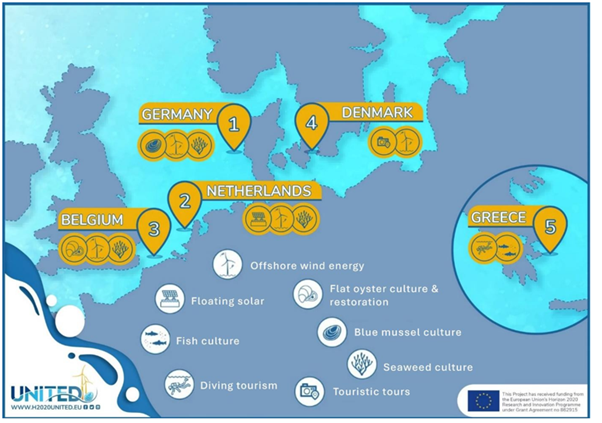
Figure 1 Map of the locations of the five pilots of the UNITED project and their multi-use approaches indicated by respective icons. (1) German pilot located far offshore in the German Bight, dealing with wind energy, mussel farming and seaweed culture; (2) Dutch Pilot located offshore but close to many other marine resource users, combining floating solar and wind energy production with oyster farming and seaweed culture (3) Belgium pilot focusing on native flat oyster culture for markets and restoration as well as on seaweed culture, (4) Danish pilot trying to link wind energy production with touristic activities (public attraction and learning).(5) The Greek pilot attempts to combine offshore fish farming with tourist diving activities.
German pilot
The German pilot is located at the offshore wind research platform FINO3 (Forschungsplattformen in Nord und Ostsee) in the North Sea and represents a unique confluence of offshore wind energy research and aquaculture test trials. The site is situated in an extremely exposed offshore location 45 nautical miles from the shoreline.
Therefore, this is the most exposed of all UNITED project pilots and thus represents one of the most challenging marine test areas worldwide. The FINO3 research platform is also located next to the 288-megawatt (MW) Dan Tysk wind farm in the North Sea, west of the island Sylt, in the German EEZ at the border to Denmark. The German pilot established a mussel- and algae-aquaculture system, working with two species Mytilus edulis (blue mussel) and Saccharina latissima (Sugar kelp). These species were chosen because they are already regionally established in the North Sea and hence are well adapted to the harsh environment. Also, both are already traded on international markets. The site-specific extreme variation in harsh environmental conditions dictated the extra-ordinary technical requirements for the design which were tested – as far as possible - for their sturdiness in models and simulations runs. Materials, sensor settings and handling procedures were also tested in a nearshore site to detect early on potential shortcomings. The final designs proved to be sufficiently sturdy to expect satisfactory function under the harsh conditions of the operational environment. Algae and mussels could be harvested, delivering the proof of principal, and enabling future undertakings to establish offshore aquaculture. Also, a sophisticated remote monitoring module was designed, tested and deployed to monitor physical and biological parameters.
The distinctive setting of this pilot underscores the heightened significance of remote operational logistics, which must be meticulously orchestrated to a greater extent than in other pilot endeavours. While the need for efficient logistics applies universally, the extreme conditions of this site magnify its importance.
Dutch pilot
The Dutch pilot project is located at the North Sea Farmers (NSF) Offshore Test site. An independent offshore test location of 6 km² is dedicated for research, pilots and upscaling trials. It is located 6.5 nautical miles from the coastline. The pilot focuses on the synergistic integration of macro-algal cultivation and floating solar energy production. In a preceding project, testing and re-design of the seaweed farm and conceptual design, basin testing, modelling and first offshore tests for the solar farm had been undertaken. The solar farm’s performance is hence being validated and was expanded during the course of project as the technical solutions met the identified requirements.
For the seaweed farm it was decided (after pre-testing) to use nets during the UNITED project. Two system setups have been moored using spar-buoys with production nets in between them. One system has been placed in-line with the tidal currents and the other is oriented perpendicular to this current. This setting should provide insights on which orientation will give the highest yield (i.e. light availability might differ both orientations, affecting photosynthesis efficiency).
Belgium pilot
Within the Belgian pilot, activities are centered at the “Belwind windfarm”, where a comprehensive approach intertwines the cultivation of European flat oysters (Ostrea edulis) and sugar kelp (Saccharina latissima) with an inventive flat oyster restoration endeavour. Especially engineered and tested restoration tables were positioned 25 nautical miles from the shoreline. The scour protection surrounding wind turbine monopiles served as an ideal habitat for oyster larval settlement. This synergy between aquaculture and restoration efforts enhances their collective economic value. Additionally, compliance with EU regulations mandates the importation of disease-free Ostrea edulis oysters to prevent the introduction of diseases into a region with an unknown disease status in the Belgian part of the North Sea. These disease-free oysters are only available from abroad (UK). The feasibility of co-cultivating flat oysters and sugar kelp on the same longline, to create a harmonious ecosystem, was explored. The successful realization of aquaculture and species restoration efforts within an offshore wind farm holds the potential to reinvigorate the seriously diminished flat oyster populations in this part of the North Sea, thus serving as a blueprint for the development of versatile multi-use sites in Belgium.
Danish pilot
The Danish pilot has a distinctive goal of combining the businesses of marine tourism and wind energy production. Positioned just a short distance offshore from Copenhagen, this pilot offers guided boat trips that provide visitors with the opportunity to ascend wind turbines and explore the inner workings of nacelles, offering breathtaking vistas but also informs on the benefits of wind-powered energy production, thereby helping to gain general acceptance of a renewable energy strategy by the public at large. Facilitating widespread accessibility to the site necessitates the comprehensive training and capacity building of personnel. All tour guides are active members of the “Middelgrunden Wind Turbine Cooperative”, ensuring their familiarity with the operational intricacies and safety protocols of the turbines, encompassing the pile and nacelle mechanisms. In adherence to the multi-use concept, local fishing boats serve as the transportation means to the turbines, thereby enlarging the number of stakeholders involved. Guides assume responsibility for managing the number of individuals on both the vessels and the turbine platform. The discretion to permit ascent to the nacelle rests with the guides, who are trained to consider specific criteria such as the age and physical condition of tourists, including small children. Safety of the visitors is of utmost importance, hence great care was given to develop safety concepts
Greek pilot
In contrast, the Greek pilot is in a more proximate offshore location within the Greek archipelago close to the island Patroklos and the broader vicinity of Cape Sounio. This region has immense significance due to its natural and historical characteristics, making it a protected area under NATURA 2000 and the Treaty of Barcelona. Currently, the site is operated by “Kastelorizo Aquaculture”, a company specializing in fish farming. This pilot exemplifies the concept of multi-use activities, primarily combining finfish aquaculture and scuba diving organized for tourist expeditions. These co-activities are expected to stimulate tourism growth in the region while fostering social acceptance of aquaculture practices and thus serving also an educational objective.
To streamline multi-use activities effectively, a common software platform fish monitoring and management system, AQUAWINGS, is employed. This system facilitates though close monitoring the coordination of aquaculture and tourist activities, ensuring optimal utilization of resources and minimizing environmental impact of the fish farm, while facilitating good fish performance and water quality.
The complexity of research projects necessitates comprehensive planning, often involving the incorporation of multiple-choice contingency strategies to contend with expected but not with suddenly emerging global disruptions in economies. Therefore, these strategies are predominantly focused on addressing internal challenges and system-relevant issues. The ever-present reality of unanticipated external challenges, such as those posed by global crises like the COVID-19 pandemic, energy shortages, disruptions in supply chains, regional conflicts, and soaring inflation rates, is often neglected during project planning and not part of the evaluation within the grant applications. These crises, arising after the initiation of projects, challenge the adequacy of established mitigation strategies and underscore the need for adaptable management frameworks.
Thus, the planning of the UNITED project proceeded in line with common preparatory procedures. This process was completed more than a year before the unexpected outbreak of COVID19 pandemic hit Europe in 2020. Within weeks after the project’s approval all plans and several of the objectives were at high risk, and others became even redundant due to the imposed outbreak restrictions. COVID19 showed the interconnectedness of global markets, sparking various other crises that appeared unexpectedly. The resulting obstacles had to be overcome in the further course of the project. Soon after the COVID19 outbreak, the emerging negative impacts were also exacerbated by the outbreak of an armed conflict in Europe. The most consequential crisis was still to come with the drastic effects of the energy crisis and subsequently high inflation rates. All these obstacles affect scientific projects severely, as they are planned with a fixed budget and fixed timeframe. While the timeframe can be adjusted, the biological annual cycle of the culture species cannot, thus a full year may be lost and additional funding, as can be obtained in private or business undertakings is usually impossible to acquire in scientific projects.
The "Horizon 2020" EU project serves as a case study that elucidates the multifaceted impact of unforeseen global crises on research endeavours. To address these unanticipated challenges, project partners devised creative solutions to ensure continued progress. Furthermore, the sudden loss of suppliers due to financial insolvencies necessitated the formulation of alternative collaboration mechanisms, highlighting the imperative of flexibility in transnational projects. The experiences documented within this project's journey offer valuable insights into the management of unforeseen crises in transnational research initiatives. The lessons learned emphasize the importance of adaptive planning, diversified collaborations, and leveraging digital communication tools.
In this study we take a special look at potential ways of solving such unforeseen massive problems arising not just from the COVID19 outbreak but also at those which are subsequently imposed and inter-connected while still ongoing (with unpredictable further surprises), requiring flexible ad-hoc adjustments even in the face of high uncertainty of their further implications. The solutions described demonstrate how intensified and rapid interactions and highly flexible and timely responses by all stakeholders had to be undertaken, from interim adjustments by licensing authorities to modifications of work by co-users and certainly to pilot operators themselves. A high level of readiness to adjust can help in the interim to assist most of the projects in shortening the transitional learning period while also identifying feasible alternatives to achieve the key objectives. It advocates for a proactive approach that considers external contingencies, even in the absence of definitive predictions. The findings of this investigational approach are valid and applicable for a wide range of endeavours, whether commercial or scientific.
Modified scenarios were necessary to cope with the crisis and resulted in shifted stakeholder engagement and requirements. Ad hoc but very well-founded decisions had to be made for each task. Constraints due to the pandemic fragmented the coordination of tasks that required scientific skills and frequent re-organization of teamwork. The necessary transitions highlighted not only the team's dedication to the project but also showcased its flexibility in upholding at least the key research objectives' integrity.
All these experienced difficulties may be encountered in almost any offshore activity.
Challenges within the “pilots” of the United Project
Several of the problems encountered and the resulting ad-hoc interim solutions were highly pilot specific, and these are briefly presented in Table 1.
|
Pilot |
Challenge |
|
German |
Installation of monitoring unit interrupted |
|
Considerable delays of services and material supplies with uncertain time horizons when services may resume |
|
|
Closed harbors because of lockdowns: Timely installation of algae seedling units impossible (subsequent loss of a full growing season) |
|
|
Dutch |
Rescheduling the installation of seaweed system (costly delays) |
|
Delayed delivery of monitoring equipment (data acquisition during start-up phase impossible; to be compensated by sporadic measures) |
|
|
Belgian |
Closed borders: Acquisition of seaweed and oyster seeding material not possible during the appropriate growing season |
|
Danish |
Closed borders: Cancellation of planned guided tourist tours |
|
Greek |
Closed borders: Cancellation of tours, increase in fuel prices required re-scheduling at great cost in case of outsourced contracts |
Table 1 Pilot-specific challenges experienced after the start of the UNITED project, occurring unexpectedly with the outbreak of the COVID Pandemic, the subsequent enforced lockdown periods, the following energy shortages and other cost explosions in the supply chain, followed by rising inflation rates in 2020-2023
The German pilot had planned to conduct monitoring of physical and biological parameters remotely, utilizing mainly a single, compact unit. A backup monitoring system was planned from the beginning. Such an en-bloc deployed unit would have allowed considerably cost savings at the far-offshore site because of minimized operational service requirements. However, because of the interruption of the supply chain, extensive delivery delays were not only insufficient but costly and only sporadic interim observations were possible. Another COVID related delay threatened the cultivation of algae in the German pilot. The respective algae are grown from seedlings and deployment is time sensitive to ensure proper seasonal growth to obtain the predicted yield. The COVID induced lockdown threatened the timely offshore deployment. Alternatively, nearshore “parking” of seed lines was undertaken in the hope that lockdown periods would not be extensive, and part of the natural growing season would be fully utilized.
The Dutch pilot encountered some technical performance issues with the seaweed system, resulting in minimal seaweed yields, rendering the recorded sensor data less valuable. These problems were caused indirectly by Covid 19 as delay in material delivery forced the pilot to cancel installation including the deployment of a “wave buoy” monitoring system.
In the Belgian pilot the acquisition of essential seaweed seeds from neighbouring countries—France and the Netherlands—was affected by the ripples of border closures. Moreover, the Brexit made it difficult to move oyster seeds from the UK into Belgium. A planned research endeavour, aimed at understanding the complexities of sampling and detecting parasites within European flat oysters (Ostrea edulis), had to be postponed, causing a delay of over a year, showing the vulnerability of monitoring time-sensitive data.
The Danish pilot encountered significant disruptions and challenges in its tourism activities, primarily attributable to COVID-19.46-48 Most of the offshore operations had to be cancelled due to the prevailing COVID-19 restrictions. Additionally, a highly anticipated “open house” event, originally slated for June 2020 had to be cancelled. Plans for the development of an expanded tourist service, which aimed to combine cultural elements, including museums, with boat tours, had to be postponed. One of the objectives was to obtain feedback from tourists as stakeholders in the Danish pilot. However, due to travel restrictions, only a small group of locals had the opportunity to participate in boat trips.
Within the Greek pilot, the COVID-19 pandemic caused delays in the delivery of critical equipment, particularly the current sensors, which affected the testing schedule.49 Another deviation from the original plan was the delay in the operational phase, attributed to the lockdown and the suspension of tourist activities. Government regulations-imposed restrictions on the number of individuals allowed on the same vessel for scuba diving. Tourist diving activities experienced a 60% decrease compared to the pre-COVID-19 period. This reduction was primarily attributed to safety concerns and travel restrictions. Moreover, the summer of 2022 witnessed significantly increased fuel charges, leading to a nearly 20% rise in diving fees.
Economic management tools to find the best solutions in unforeseen crises (dynamic decision toolbox)
The various types of problems and challenges outlined above are also often encountered in a managerial context, e.g. when cooperating with independent private companies, where restricted financial plans are in place, or other concerns affecting sustainability, or environmental considerations restrict variable decision options. or even if a volitive political environment is present.
All these factors lead to enhanced requirements for flexible planning of a project and rational, well-documented decision-making. A one-dimensional, static approach is not up to the task, neither in the view of the sponsors, nor of the project managers. Hence this paper suggests a transdisciplinary approach.
Four Modules are commonly used when planning and deciding steps for a project. These are
Using the latter two modules (WSM and DCFM) to vary parameters to show how certain events and risks might impact on the overall results. The excel models (see digital Electronic Supplement document) created will be fed with different parameters (e.g. a rise in material prices or a declining harvest in fish) and will help to optimize the financial results. This is regularly done during planning for a project but can also repeatedly be used in case of sudden disruptive changes in the natural or political/economic environments, requiring changes of certain parameters or adjustment of their numbers to derive at improved decisions. Thus, every change in one module (WSM or DCFM) may affect the commonly applied planning modules (1 and 2) to undertake adjustments within them (as indicated by the arrows in Figure 2.
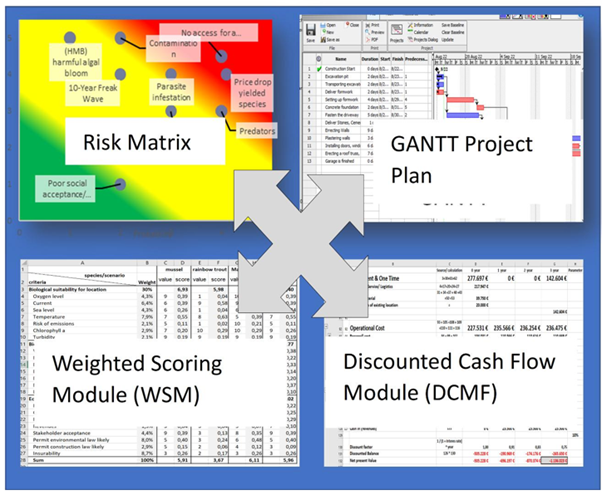
Figure 1 Overall visualization of the process interactions in a Dynamic decision-making toolbox which consists of four principal components that are used during planning and implementation of a project and are here also employed in case of an unforeseen crisis. The strong interconnections between these four modules are indicated by the arrows.
In this paper, we address primarily the two components WSM (Weighted Scoring Module) and DCFM (Discounted Cash Flow Module), since they are not commonly used in scientific project planning. Risk matrix and Gantt-chart are mandatory parts of most project proposals explicitly demanded by project sponsors and deciders. Also, they are well described in scientific literature21,22,50 while the methodology of WSM and DCFM are not easily found outside of the field of business administration and decision making.
The benefits of using these additional methods are meeting the demands of modern marine multi-use projects as described above and making comparisons between them and their components easier. These tools are well suited to compare heterogeneous projects.
Weighted scoring module (WSM)
The WSM is constructed and executed in four steps, that are described in detail in the Electronic Supplement document. The most important step to use the module for adapting to unforeseen eventualities can be described as follows:
The original criteria must be re-assessed to evaluate the suitability of a chosen species for the given location based on environmental conditions and physiological requirements (e.g. salinity tolerance, optimal oxygen levels, and available light climate). Further criteria need to be included that have an impact on investment, cost structure, environmental and economic risks. They are important for the decision process by the project sponsors (or project granting agency). A top-down approach is recommended, including brainstorming and benchmarking sessions (e.g., compare with other projects). Such a criteria identification process by all partners involved can be of high importance for the decision process. Ultimately it is important to structure the criteria mutually exclusive and collective exhaustive (MECE). It will only be then that opinions and understanding of the values will become clear among all stakeholders. Also, there is a need to limit the number of criteria (most likely a total of up to 20 would be sufficient).
If the WSM is used parallel to the DCFM to compare qualitative criteria, there should be no financial information in the WSM. If both modules are used in parallel, outcomes between them may somewhat differ but may provide stakeholders several options to choose from for the best economic decision while accepting some risks which are believed to be not of highest priority. Thus, the final outcome will be strictly a management decision selecting the best (safest) operational scenario (highest score) at higher costs or accept a lower cost approach at somewhat higher risks (lower scores for one or several criteria).
Weighting the new criteria
The criteria must be weighed against each other because not all of them will have the same importance in terms of the overall effect of the final decision. This procedure is further described in detail in the Electronic Supplement document.
Choosing a scale and starting to assign points
A scale for awarding points is chosen, that is neither too detailed nor too coarse, Sometimes, it might be advisable to set minimum values for some criteria to reflect their overall importance appropriately. (For details see Electronic Supplement document).
Calculating and simulating processes
After reassessing and weighing the criteria, the final step is to calculate the “score” of an option, (detailed example see Electronic Supplement document).
To simulate risk and crisis the module can be fed with different values to see how stable the result will remain against the assumed changes. This approach uses the same technique employed in the DCFM procedure to simulate various externality scenarios as will be described below.
Financial calculation via a (discounted) cash flow model
After Reassessing the criteria and creating scores for different options detailed financial calculation are needed. These can be used to calculate the funding that needs to be supplied by project sponsors and partners. Using the NPV (Net Present Value) method to discount future payment surpluses (or deficits) also might tell a commercial project whether it is generally worth executing. A description of this method is presented in Geisler,51 (for more details see also the Electronic Supplement document).
In business plans for private enterprises and startups revenue is the most unsure and most debated position. Forecasting sales revenues is very difficult, and it demands a lot of market research, prognosis and plausibility checks and repeated adjustments, while costs based on ultimate sources like vendor offers seem more certain.
The models at work in case of crisis and uncertainty
The four tools of project management (Figure 2) should be used in the first decision and planning and whenever there are extreme changes in one or more project conditions, such as were needed for anti-Covid measures. Disruptive changes need quick but sound decision making with the best new information and options available. Those need to be documented and processed in a transparent and objective manner.
Potentially arising critical issues of concern during sudden external influences
The following Tables 2-4 show some examples of how those models can serve that purpose and interact with each other in case of crisis or change in the general setting of the project.
Application of the dynamic decision toolbox under drastic changing operational scenarios (Examples from the Belgium and Greek pilots)
Belgium pilot case: Changing importance and priorities via changing criteria weights
After the start of the Belgian pilot project, a significant challenge emerged when the project had to source seaweed seeds from abroad, particularly caused by the unanticipated impact of the COVID-19 pandemic. The overall situation is represented as case 2 (Table 2), focusing on a change in weight/ importance. This new knowledge of vulnerability can be made visible using the weighted scoring module (WMS) by giving more weight to the criterion “accessibility” of the location.
|
Purpose/ Case |
Use of assessment modules |
|
1. During the planning phase a potential investor/ industry partner needs to know the financial impact of a certain issue, e.g. “What happens and can be done if the price of mussels will go down.” |
Change either price or volume in the DCFM model and the financial balance will change accordingly. For different values of the price the resulting line of yearly balances (fig. 4, row 126) can be transferred into a matrix. Four lines of different “Balances” can be calculated with alternative prices of 2€, 3€, 4€ and 5€.52 |
|
2. During the planning process while still choosing a species for a location, you want to simulate the effects of a temporary lockdown on the overall performance of the undertaking. Is it still the right choice of species if a lockdown happens again? |
Increase the weight of a criterion in the WSM like “Species does not need “frequent attention” or “long intervals between maintenance periods are acceptable”. The choice of species may vary accordingly. |
|
3. Basic factors in a initial risk analysis matrix (not part of this paper) change and thus the “impact value” for a certain risk must be recalculated (e.g. planned implementation period for the construction has doubled). |
Double the value in lines days of divers, helicopters and ship time/costs needed (fig. Table 4). If the overall financial result, like balance in the first year deteriorates by e.g. 20% a value of risk “impact” can be assigned according to the rules of the “impact” axis of your risk matrix. For example: if 20% higher construction cost is a “medium to low impact” according to your adjusted risk matrix rules, then you might give this possible event a value of 2 on a 5-point scale. |
|
4. In case of an immediate event (e.g. 3-month lockdown) at hand, participants may to decide whether to continue or terminate the participation or cancel some specifically planned activities |
Enter all the changed parameters for this impending event in the DCFM and present the financial impact of this scenario, so the stakeholders can make adjustment decisions. |
|
5. Governmental regulations may change during the implementation phase and additional criteria (sustainability, ESG criteria) are affecting the project. |
Especially in the WSM Module, additional criteria can be added and shifting priorities can be mapped by a change in the weighting of certain criteria. |
|
6. A change in the Gantt Module of the project needs to be backed by financial data, e.g. the duration of installations (additional service time, etc.). |
Cost resources can be re-calculated in the DCFM to incorporate new/adjusted values for the Gantt. |
|
7. Lessons learned from the adjustments made need to be quantified in terms of overall cost implications |
A comparison between planned values and actuals delivers insights into how these events might influence decisions and financial outcomes can be presented. |
Table 2 Potentially arising critical issues of concern (purposes/event cases) for which the application of the dynamic decision toolbox can help to find optimal solutions. Seven examples are presented for the German pilot project combining offshore wind energy production and macroalgae aquaculture
In the original (“old”) scenario, accessibility was held in low regard by just 10% of weight/importance. Cost and infrastructure were both 20% and all other criteria (e.g. biological factors) were 50%. (see Electronic Supplement document for very detailed explanation of the method). After reassessing different criteria, the weight of the criterion “accessibility” increased from 10% to 30%, and subsequently some of the other criteria lost some weight in their importance (The required changes in the criterion “accessibility “(due to the pandemic) has led to a new assessment within the weighted scoring module (WSM) and showed that the use of location 1 (closer to shore) has now become preferrable to location 2 (offshore). Note that only the weighing in the model needs to be changed to generate decision options for alternatives (Table 3).
|
Old |
|
Location 1 |
Location 2 |
||
|
weight |
value |
score |
value |
score |
|
|
Cost |
20% |
4 |
0,8 |
5 |
1 |
|
Accessability |
10% |
8 |
0,8 |
2 |
0,2 |
|
Infrastructure |
20% |
6 |
1,2 |
7 |
1,4 |
|
(All other criterion) |
50% |
7 |
3,5 |
8 |
4 |
|
Sum |
100% |
|
6,3 |
|
6,6 |
|
New |
|
Location 1 |
Location 2 |
||
|
weight |
value |
score |
value |
score |
|
|
Cost |
15% |
4 |
0,6 |
5 |
0,75 |
|
Accessability |
30% |
8 |
2,4 |
2 |
0,6 |
|
Infrastructure |
15% |
6 |
0,9 |
7 |
1,05 |
|
(All other criterion) |
40% |
7 |
2,8 |
8 |
3,2 |
|
Sum |
100% |
|
6,7 |
|
5,6 |
Table 3 Re-assessment of two project locations: Location 1 is close to shore; Location 2 is further offshore). Comparing two scenarios: the original calculation (top part "Old") and the “new” assessment in response to the Pandemic (bottom part "New"). Using the weighted scoring module (WSM) a limited set of pre-selected criteria was considered. The criterion “accessibility” was originally given priority and was weighted with 10% – giving an overall assessment with the highest score (6,6) for Location 2. The re-assessment of the same two locations using the weighted scoring module (WSM), increased in the importance of the criterion “accessibility” and thus led to reduced importance of other criteria and resulted in the awarding of the highest score to location 1
The required changes in the criteria “accessibility “(due to the pandemic) has led to a new assessment within the weighted scoring module (WSM) and showed that the use of location 1 (closer to shore) has now become preferrable to location 2 (offshore). Note that only the weighing in the model needs to be changed to generate decision options for alternatives.
Greek pilot case: Consequences of the Suspension of tourist activities within the multi-use pilot
In the Greek Pilot, a notable incident unfolded when the operational phase faced delays attributed to COVID-19 lockdown measures and the suspension of tourist activities. This incident shows the adaptation and decision-making processes in response to unforeseen challenges.
The COVID-19 pandemic and associated lockdown measures disrupted multi-use operations that combined aquaculture and tourism at the Greek Pilot site. This results in a loss of customers compared to the expected numbers, represented by a reduction in trips per day and people on a boat (Table 4).
|
|
Original plan |
during COVID |
after COVID |
|
Days of diving (d) |
60 |
60 |
60 |
|
Trips per day (t) |
10 |
4 |
6 |
|
Persons per day (p) |
8 |
4 |
8 |
|
Price per diving per person |
|||
|
(€) |
200 € |
200 € |
200 € |
|
Revenues from diving (d*t/d*p/t*€/d +p) |
|||
|
960.000,- |
192.200,- |
576.000,- |
|
Table 4 A simplified discounted cash flow model for different intensities of touristic scenarios. Revenues from before Covid, during COVID and thereafter. The number of days for diving trips remained the same while the number of trips and number of people per trip were variably reduced
After the lifting of the COVID-19 restrictions, tourist diving activities experienced also a 60% decrease and did not return to the pre-COVID-19 numbers, represented by an increase of people in the boat but a decrease of trips per day (Table 4).
To better showcase the correlation of revenues in relation to trip number per day, in Figure 3 only this parameter about trips is represented in comparison to revenue. However, COVID 19 was only one of the elements of successive crises, followed by the dramatic energy and inflation effects. Thus, the originally planned number of trips per day were never fully resumed after COVID.
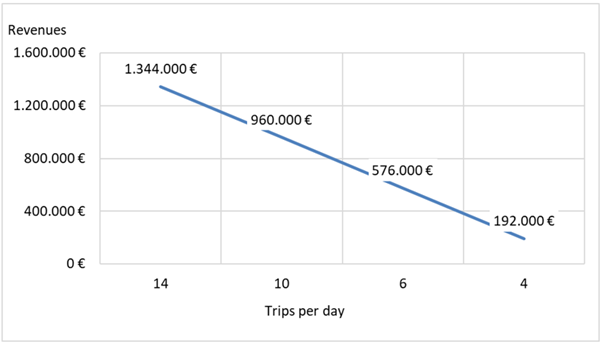
Figure 3 Estimated differences in revenues with increasing crises constraints within the Greek pilot demonstrated by the change one of the important business parameters (number of tourist trips/day).
This example is simple and just a typical linear relation. However, simulations with more complex sets of variables might approach a maximum (saturation) level, either at an exponential rate or even another variable (U-shaped) curve, offering different levels of opportunities and/or restrictions to decide upon.
Certainly, the modelled examples above depend on a solid prognosis and are far from being perfect. They should be understood as exercises that impact on costs, time and resources but are crucial for deriving at profound decisions to make necessary modifications and continued adjustments that help to achieve success.
Specific Solutions adopted for the different Pilots of the UNITED project:
German pilot solutions
Interim solution for delayed installation of a full monitoring system at the offshore site
As monitoring of mussels and algae is time sensitive to cover the whole growth season, it was decided to rely also on backup interim test sites with easy access (closer to shore) to collect data in time while at the offshore pilot location the deployment of a limited unit registering only a few key parameters was realized. This saved essential parts of the program without losing the entire annual cultivation cycle. This approach has incidentally also led to unexpected positive effects, needing less manpower (smaller crew size and smaller service boats) for the deployment of the lighter units.
Solution for delayed installation of the algal culture system
As an interim solution the deployment of the unit was conducted at a nearshore area (with easy access and no need for additional rented transport boats, where the algae were “parked “. The selected “parking” area enabled the continuation of the project without losing a full annual production year because transfer to the offshore test site was only possible after the pandemic restrictions were removed. To incorporate such “emergency alternatives” right from the beginning of a project can greatly reduce the risk of failure in case of unexpected harsh impacts at the main location.
Dutch pilot solutions
Solution for problems with the “seaweed system”: The system was redesigned and relocated to a backup nearshore site with non-favourable conditions, resulting in reduced yield. However, the experiments could go on and provided the basis for a 5-fold yield increase in the subsequent second growth period.
Alternative Solution for unsuccessful “wave buoy” installation: The Dutch pilot was forced to explore ad-hoc an alternative solution involving more cost-effective and lightweight design buoys for the remainder of the UNITED project. As a positive result, the lighter design improved the operational safety. Additional wave attenuation testing series were conducted at Deltares’ 2D scale model facilities, known as the ‘Scheldt Flume’, to secure excellent effectiveness of the necessary redesign.
Belgium pilot solutions
Solution for the oyster seed procurement problems: Due to the Pandemic (travel restrictions) the Belgium pilot had to look for other suppliers to purchase disease-free European flat oysters. This unexpected disruption of the supply chain required a strategic adjustment, a thoughtful effort to secure these necessary resources, and caused an unplanned yet pivotal phase in the project. Although solved, delays occurred in the monitoring strategy showing the monitoring time is a sensitive issue easily affecting the entire project.
Danish pilot solution
Solving problems caused by the COVID-13 restrictions: In response to the safety restrictions, a reduced number of boat expeditions were conducted with smaller numbers of visitors, accompanied by newly implemented hygiene protocols. Consequently, the existing guide training underwent an extended revision to incorporate safety measures in line with COVID-19 guidelines, marking a new phase in the operational procedures.
As a positive outcome of the needed changes, operational viability was achieved through a new and innovative tourist concept where boat trips to visit the site have been combined with museum tours or even linked to nearby diving expeditions, to enhance the attractiveness of the operation and these program combinations may not have materialized without the crises.
Greek pilot solutions
Solutions to overcome delays in material availability: The Greek pilot developed additional efforts to ensure proper equipment testing including laboratory tests so that the shortages in supplies were overcome with simple alternatives, some just for temporarily bridging the gap, others turned out to be useful improvements in general.49
Solutions for COVID-13 restrictions on tourism: The Greek pilot successfully conducted tourist expeditions once lockdown restrictions were lifted. Still the resumed tourist participation was restricted and this was primarily attributed to safety concerns, resulting in a lower number of expeditions to the project site than planned for under normal circumstances.
Coping with suddenly increasing energy costs: The summer of 2022 witnessed significantly increased fuel charges, leading to a nearly 20% rise in diving fees. As a positive innovation WINGS ICT Solutions implemented specific technological solutions to help to reduce energy costs. Solar panels were installed and integrated into the mooring system, thereby reducing the dependencies on external energy supplies.
In this contribution we describe managerial tools for coping with imposed drastic and unforeseen changes. Giving the same examples on potential solutions and adding detailed step by step instruction (mainly in the electronic supplement) the reader is enabled to cope with different unforeseen situations.
Coping with the unforeseen; Solutions and alternative options identified during the project
One of the major challenges due to COVID19, the energy and inflation crisis, arose because of restrictions initially affecting the supply and service industries so that pre-test, and new design set-ups were significantly hampered. The pressure grew to focus on automation, improving alternative logistics, engage in additional ad-hoc training and capacity building of personnel not familiar with the improvised methodical adjustments as well as with arising new health and safety issues. The operational offshore phase of the project had to build on these ad-hoc developed strategies, which had so far only partly or not at all been tested. The pre-testing and adjustment phase of the project was ongoing much longer than initially planned but provided the most valuable experiences on flexible and/or highly creative ad-hoc adjustments, some showed initial inadequacy to respond appropriately to the ongoing complications due to the COVID19 situation. Nevertheless, they resulted in several highly innovative novelties for which testing could not be completed but must continue to gain optimum solutions, as there are no practical past examples to learn from. Limited examples of successful MUCLs under these new conditions are available and further research input is needed to improve the effectiveness of these new solutions. Thus, the overall approach chosen allows always a continuous response to arising problems, thereby supporting in a positive manner the development of the offshore multi-use industry.
One lesson learned from the pre-risk assessment was the need to always develop alternatives for most of the project components already at the onset of the project planning. This, even for the most unlikely impairment, will from now on have to be included in preparing priority response schedules. Because of the lack of contingency plans for so far unforeseeable events such as pandemic outbreaks or increase of extreme weather events due to climate change, several properly planned activities ready for timely implementation had to be either postponed or at least partly cancelled. These circumstances were also attributed to governmental ad-hoc decisions such as lock downs because of the pandemic, which not even restricted but also prohibited commonly available response options.
Another major negative effect of the COVID19 pandemic has been the extremely prolonged and even uncertain delivery times for equipment and parts as well as services, including the purchase of aquaculture species for seeding the test units. This reached even an “escalation level” because of subsequently superimposed high inflation rates and energy supply restrictions. Alternatives had to be found to serve as much as possible the original plans for data acquisition, particularly for monitoring instruments and their capabilities.
Forming a broad stakeholder register turned out to be the most valuable to develop a fairly rapid response system to any new unforeseen situation faced in the UNITED project. The pandemic led to an extensively expanded range of stakeholders which needed almost daily contacts to cope with newly arising risks. Stakeholders helped foster consensus building and gaining improvement-oriented inputs in a timely fashion. Thus, newly adapted pilot solutions in one place mandatorily required close communication not only within the pilot, but also between affected parties and this for the remainder of the project.
The pandemic demanded a new way of training and capacity building of personnel, creating teams with broad skills rather than single specialists. The pre-operational phase (first project year) has been used to determine the future-oriented skills for the safe operation of the pilots. The training objectives so far were not only to educate internal personnel but also to facilitate a trans-disciplinary knowledge exchange of best practices from different fields, and to combine skills between teams to be always operational.
Potential new elements to be incorporated into future contingency plans
In cases of a necessary lengthy lockdown (e.g. pandemic effect), one should explore the opportunity to which extent remotely controlled operations can be employed to continue a reasonable operation and avoid total shutdowns. Most likely, drones may be designed and programmed (– supported by artificial intelligence –) for at least some of the essential monitoring and sampling activities. This could help to allow timely responses in case of very sudden events (e.g. tornados or terrorist attack) and – in the long-run – may also assist to reduce overall operational costs.
Preparing for long-term trend changes in environmental conditions extreme events due to climate change (including increasing number of extreme events)
According to the 2023 IPPC report, it is obvious that global warming will overall affect weather conditions, creating scenarios with an increasing frequency of unusual extreme wind and wave forces as well as precipitation. So-called century storms will increase in the coming decade by 20-30 times or even more. Therefore, it is not sufficient to just prepare early warning systems for safeguarding the work forces. Emergency and rescue methodologies also for system components will have to be developed that are strong and can be cost-effectively employed for the sustainable operation of the industry. Even if the offshore windfarm-aquaculture units are not directly affected, indirect longer-term implications can be anticipated. We have already alarming examples that massively drifting debris (from tsunamis, hurricanes and tornados) can hit the units. In case of trans-oceanic transfer of debris53 the arrival of exotic fouling species resulting from overseas tsunamis is already reality.54-57 There may be some lead time to prepare counteractions, such as specific anti-fouling coatings26 but methods for ad-hoc rescue must also become available. There may be potentially simple and cost-effective measures to prevent damage to the wind-aquaculture units, but none has yet been satisfactorily developed or tested. Here is an urgent need to invest in adequate development of preventive technologies. To help improve effectiveness of the development of methods against debris and foreign biofouling, a close link to the initiative of a European biofouling database to support the MRE (marine renewable energy) sector and other maritime industries is strongly recommended.35 Research into additional rescue scenarios is strongly recommended.
As we have learned from the Covid19 event, it is not sufficient to prepare alternative solutions ad-hoc but long-term planning (perhaps a decade ahead) is necessary to obtain realistic and functional operational scenarios also under climate change.
Incorporation of early protection measures against terrorist attack
Although not discussed yet, but of utmost importance: With the present geo-political dramatic changes towards totalitarianism the need for adequate defense measures to protect against attacks of important regional infrastructure (such as the growing and extending renewable energy industries) becomes more and more obvious. Large-scale offshore wind farms can be easily attacked by remotely controlled military drones. Such military logistics are particularly attractive because one hits a specific industry without causing massive collateral damage. While linking with the national defense strategies, one could cost-effectively incorporate developments of combined techniques for drones that serve the protection needs as well as some of the monitoring/sampling needs for all involved stakeholders (e.g. windfarm operators).
Another long-term advantage of shifting to more use of specifically designed drones will be the reduced need for service boats, allowing to gain not only operational flexibility but also reducing the risk of transfer of alien species (including parasites and pathogens) which are commonly attached to ship hulls and anchor chains. Most of the service boats are at home in harbors that have frequent contact with the overseas ship traffic and thus are exposed to a large variety of exotic species. As is well known that due to global shipping there are about 3700 foreign species in intercontinental transit daily and are mostly delivered at „invasion hotspots” (commercial harbors) serving as hubs for further distribution through the local ship traffic. Aquaculture is at particular risk of “infection” from these global activities and needs careful protection. The risk of transfer of exotics via service boats, tourist boats, and commercial inshore vessels is obvious and frequently ignored, leading to subsequent effects (disease outbreaks and production loss) and these are nowadays more frequently demonstrated in the science literature.42,58
In the future more stringent control measures on recreational and tourist boats visiting offshore aquaculture farms need to be implemented to safeguard the industry. The risks associated with these transportation means are still largely underestimated as most of these boats start off their travel from invasion hotspots.59
Several crises affected the Horizon 2020 project UNITED immensely. While the COVID 19 pandemic is been coped with, inflation and armed conflicts are still ongoing and have long lasting repercussions. Different negative effects overlapped and even cumulated. Documenting the effects and the lessons learned is strongly recommended, so that future crises scenarios are better anticipated. From such exercises benefits to multiple sectors may be generated and infrastructural synergies may be created. Translating the COVID19 pandemic experience conceptually to project planning and management in the aquatic environment, the early incorporation of emergency response strategies will help to avoid or at least minimize damage to the aquaculture business.
The pandemic caused severe delays in all parts of the operational phase of the project with a terrible “domino-effect” downstream from the source to the end-user (the “pilots”). The need for a time buffer to cope with unforeseen obstacles should be incorporated in any project proposal in terms of manpower planning as well as alternative (though less preferred) supply sources for equipment and resources so that sufficient flexibility can be gained to cope with the problems. In the future, alternative operational approaches and their financial consequences should already be included in the project planning phase, without an opportunity for testing. In other words, the interplay of global crises and transnational projects underscores the need for dynamic frameworks that accommodate unforeseen challenges.
Coping with crisis also spurt new ideas, new ways of coping and elevated the digital communication immensely, sparking even something good in all the dire situations.
Applying modern management tools (such as WSM, DCFM) and multi-stakeholder measures (e.g. strict hygiene, jointly used service boats, and preparedness for immediate alternative actions) requires broadly skilled personnel instead of narrowly focused specialists. Such concepts are already under development, and the need for them seen by different energy and offshore institutions.60,61
This work was supported by European Union’s Horizon 2020 (grant agreement no 862915, Projekt UNITED) research and innovation programs.
We sincerely thank the entire UNITED consortium for their valuable knowledge, input and support throughout the development of this publication.
A very special thank you goes to Ingrid Rosenthal for generously providing us with an ideal working environment in her and her husband’s home. Her thoughtful attention to our needs—whether it was coffee, drinks, or nourishing meals—created a warm, welcoming, and familiar atmosphere that greatly supported the completion of this paper.
Thank you!We declare that there is no conflict of interest of any kind.

©2025 Strothotte, et al. This is an open access article distributed under the terms of the, which permits unrestricted use, distribution, and build upon your work non-commercially.