International Journal of
eISSN: 2574-8084


Research Article Volume 12 Issue 6
 Miguel Ramalho,2 Yong Zhang,3-5 Michael Jay,5 Lorrin M Koran6
1Richard Semelka Consulting, PLLC, USA
2Department of Radiology. Hospital da Luz, Portugal
3Weifang Medical University, China
4Stemwell Global Holdings, USA
5 Division of Molecular Pharmaceutics, University of North Carolina, USA
6Stanford University Medical Center, USA
Correspondence: Richard C. Semelka, M.D., Richard Semelka Consulting, PLLC, 3901 Jones Ferry Road, Chapel Hill, NC 27516, USA, Tel 9196028792
Received: November 07, 2025 | Published: November 18, 2025
Citation: Semelka RC, Ramalho M, Zhang Y, et al. Urinary lead levels in patients who received gadolinium contrast agents treated with intravenous Ca-DTPA chelation. Int J Radiol Radiat Ther. 2025;12(6):148-152. DOI: 10.15406/ijrrt.2025.12.00438
Purpose: To evaluate the effectiveness of intravenous Ca-DTPA to increase urinary lead excretion in subjects treated for Gadolinium Toxicity.
Methods: 24-hour urine lead levels were conducted pre-and post-chelation with intravenous Ca-DTPA in 33 subjects.
Results: Lead was present in all 47 urine samples from the 33 subjects. All samples but one showed increased urine lead content following chelation therapy. Mean pre- and post-chelation lead values for the first chelation session in all 33 subjects were: 0.53 ± 0.38 mcg/24 hours and 6.29 ± 4.66 mcg/24 hours in chelation 1.p<0.0001, which represented a mean increase of 14.1-fold. Second and third chelation sessions performed in a lesser number of this group showed similar results. Post-chelation lead amounts exceeded the laboratory norm for unprovoked urine samples in 28 of the 33 study participants.
Conclusion: Our results show that intravenous Ca-DTPA is consistently effective in increasing urinary lead output. As lead is ubiquitous in the population this may have important clinical implications.
CDC, centers for disease control and prevention; DDI, doctor’s data, Inc.; Ca‑DTPA, Calcium‑diethylenetriaminepentaacetic acid; GSC, gadolinium storage condition; LDD, lead deposition disease;LSC, lead storage condition; DMSA, dimercaptosuccinic acid
Lead is well-recognized as a toxic agent in humans with health effects on the nervous system, lungs, kidneys, hematological system, fertility, and cancer risk.1,2 Lead exposure can come from almost anywhere. Recently, a considerable alarm was raised in the U.S. regarding lead in the water system of various cities, and a federal Lead Exposure and Prevention Advisory Committee was established.3. The 2015 Flint, Michigan case stimulated this development.4 Since Flint, greater attention has been paid to replacing old city water systems that contain lead pipes and plumbing.5,6 Other lead sources, such as leaded gasoline sold for use in farm equipment, aircraft, off-road vehicles, race cars, and marine engines, factory emissions, and even dietary sources such as baby food and candies, have been described.5 The U.S. Center for Disease Control notes that lead is also acquired in utero from maternal lead stores (CDC).7
This study reports 1) the frequency of lead present in the 24-hour urine samples of subjects residing in 16 states who participated in either of two IRB-approved studies that evaluated diethylenetriaminepentaacetic acid removal of gadolinium in individuals who had been administered a GBCA as part of an MRI procedure.8,9 and 2) whether lead excretion is enhanced by treatment with the chelating agent DTPA. The administration schedule of the chelation therapy is Calcium-DTPA (Ca-DTPA) on day 1 and Zinc-DTPA (Zn-DTPA) on day 2.
To document the effect of intravenous Ca-DTPA in chelating gadolinium and to enhance its urinary clearance, 24-hour urine samples were sent to Doctor's Data, Inc (DDI), St Charles, IL (https://www.doctorsdata.com/contact; e-mail: info@doctorsdata.com), which determined pre- and post-chelation Gd and lead amounts in collected urine samples using inductively coupled plasma mass spectrometry (ICP-MS). For these studies, all patients were treated with Ca-DTPA. This chelating agent was employed rather than Ca-EDTA, a commonly used chelator also for lead, as DTPA shows greater affinity to Gd by several magnitudes: log Ktherm 22.1 vs. 17.3, i.e., around sixty-three thousand-fold greater affinity.10,11
The Doctor's Data, Inc. Toxic Metals Report includes lead as one of the metals whose amount is measured and reported. The report states that reference levels for each metal are "representative of a healthy population under non-provoked conditions." Chelation provocation agents can increase urinary excretion of metals/elements. The reference interval for lead is < 2 mcg/24 hours.
A total of 47 paired pre- and post-chelation urine samples were obtained from 33 subjects (15 men and 18 women) ranged from 21 to 66 years old (48.1 ± 11.9) and resided in 16 states (Arizona (n=2); California (N=3); Colorado (n=2); Florida (n=4); Georgia (n=1); Illinois (n=1); Maryland (n=3); North Carolina (n=5); New Jersey (n=1); New York (n=2); Ohio (n=1); Pennsylvania (n=2); Texas (n=1); Virginia (n=2); Wisconsin (n=1); and West Virginia (n=2)) (Table 1). Nine subjects underwent two urine measurements for chelation treatments, and five underwent three urine measurements for chelation treatments.
|
Patient # |
Age/ |
State |
Pre-CT 1 Pb** |
Post-CT 1 Pb |
Pre-CT 2 Pb |
Post-CT |
Pre-CT |
Post-CT |
|
Gender |
2 Pb |
3 Pb |
3 Pb |
|||||
|
1 |
49 M |
MD |
0.3 |
3.1 |
|
|
|
|
|
2 |
59 M |
NC |
0.6 |
9.6 |
0.8 |
9.3 |
0.5 |
9 |
|
3 |
48 F |
NJ |
0.6 |
7.6 |
0.2 |
6.6 |
0.6 |
8.1 |
|
4 |
28 F |
CA |
0.4 |
4.7 |
0.3 |
4.3 |
|
|
|
5 |
21 F |
NC |
0.2 |
1.8 |
|
|
|
|
|
6 |
44 F |
IL |
0.2 |
3.5 |
0.3 |
4.7 |
0.2 |
5.2 |
|
7 |
55 F |
MD |
0.4 |
5.8 |
0.3 |
3.9 |
|
|
|
8 |
60 F |
CO |
0.5 |
8.2 |
|
|
|
|
|
9 |
44 M |
FL |
0.2 |
3.3 |
|
|
|
|
|
10 |
66 M |
WV |
0.9 |
7.2 |
0.3 |
6.2 |
|
|
|
11 |
36 M |
FL |
0.1 |
3.6 |
|
|
|
|
|
12 |
57 F |
AZ |
1.5 |
7.3 |
0.3 |
3.6 |
0.3 |
4.8 |
|
13 |
44 F |
NC |
0.1 |
1.4 |
|
|
|
|
|
14 |
59 M |
VA |
0.5 |
9.6 |
|
|
|
|
|
15* |
66 M |
AZ |
0.8 |
9.8 |
|
|
|
|
|
16 |
57 F |
PA |
0.4 |
8.3 |
|
|
|
|
|
17 |
32 F |
NY |
0.2 |
3.4 |
|
|
|
|
|
18* |
56 M |
MD |
1.1 |
9.1 |
|
|
|
|
|
19 |
61 F |
OH |
1.7 |
20 |
|
|
|
|
|
20 |
47 M |
VA |
0.7 |
6 |
|
|
|
|
|
21 |
48 F |
CA |
0.6 |
4.6 |
|
|
|
|
|
22 |
50 M |
NC |
0.3 |
8.5 |
|
|
|
|
|
23 |
36 F |
CA |
0.4 |
3 |
|
|
|
|
|
24 |
61 M |
FL |
0.8 |
21 |
|
|
|
|
|
25 |
52 F |
TX |
0.2 |
8.7 |
0.4 |
5.3 |
0.7 |
8.9 |
|
26* |
46 M |
NC |
0.4 |
0.3 |
|
|
|
|
|
27 |
46 F |
NY |
0.2 |
4.1 |
|
|
|
|
|
28 |
53 M |
WI |
0.3 |
0.9 |
|
|
|
|
|
29 |
29 F |
CO |
0.2 |
2.9 |
|
|
|
|
|
30 |
65 F |
PA |
0.7 |
8 |
|
|
|
|
|
31 |
29 F |
WV |
1.1 |
8.2 |
|
|
|
|
|
32 |
46 M |
FL |
0.4 |
2.2 |
|
|
|
|
|
33 |
39 M |
GA |
0.4 |
1.9 |
1.5 |
1.6 |
|
|
Table 1 Patient demographics and 24-hour urine lead levels pre- and post-chelation with intravenous Ca-DTPA
* Gadolinium Storage Condition patient
** All urine lead levels are mcg/24 hours
Pre-CT, Pre-Chelation with intravenous Ca-DTPA
Post-CT, Post-Chelation with intravenous Ca-DTPA
The subjects in this study have been included in two prior studies that only reported on Gadolinium findings.8,9 Four of the total number of subjects had received Gadolinium contrast, but were not sick from it, and their lead findings are also in this present report. Intravenous DTPA was performed as a two-day chelation process for each chelation session. Ca-DTPA was administered on the first day and Zn-DTPA on the second. Details of this technique have been previously reported.12 24hr urine was obtained only following the first day of Ca-DTPA, as this agent removes more Gadolinium than Zn-DTPA.
Statistical analysis
Continuous variables were checked for normality with the Kolmogorov-Smirnov-Lilliefors test and χ2 goodness of fit. Because no evidence against normality was found, they were reported as mean ± standard deviation. Statistical analysis of lead content difference from pre-chelation to post-chelation was made using a 2-sample T-test for dependent samples in all subjects (first chelation). The data were evaluated with Friedman's Two-Way Analysis of Variance for subjects with two and three chelation treatments. Pearson correlation method was used to evaluate the correlation between lead elimination and age. These calculations were performed using StatsToDo open-source software.13 and Excel spreadsheets.
In thirty-three subjects, the 24-hour urine lead levels pre- and post-chelation were obtained for the first session (chelation 1), in nine subjects for the second session (chelation 2), and in five subjects for the third session (chelation 3).
In chelation 1, the mean pre- and post-chelation lead values were 0.53 ± 0.38 mcg/24 hours and 6.29 ± 4.66 mcg/24 hours, respectively (p <0.0001). In chelation 2 the mean pre- and post-chelation lead values were 0.49 ± 0.42 mcg/24 hours and 5.05 ± 2.17 mcg/24 hours, respectively (p <0.01). In chelation 3, the mean pre- and post-chelation lead values were 0.46 ± 0.21 mcg/24 hours and 7.02 ± 2.04 mcg/24 hours, respectively (p <0.01) (Table 2).
|
|
|
Mean Pre |
|
Mean post |
Lead increase |
|
|
|
Chelation 1 |
|
0.53 ± 0.38* |
|
6.29 ± 4.66 |
14.1-fold |
|
|
|
|
|
|
|
|
|
|
|
|
Chelation 2 |
|
0.49 ± 0.42 |
|
5.05 ± 2.17 |
14.9-fold |
|
|
|
|
|
|
|
|
|
|
|
|
Chelation 3 |
|
0.46 ± 0.21 |
|
7.02 ± 2.04 |
17.2-fold |
|
|
Table 2 Pre- and post-chelation lead values and lead increase after chelation
* mean ± standard deviation (mcg/24 hours)
Lead content showed an overall mean of 14.1-fold increase after chelation 1, 14.9-fold increase in chelation 2, and 17.2-fold increase in chelation 3.
A statistically significant correlation between lead elimination and age was found with Pearson correlation coefficient = 0.562, p-value <0.001.
All but one of the paired urine samples (46/47) showed an increase in lead from pre- to post-chelation. In one GSC patient, lead excretion dropped minimally from pre-to post-chelation (from 1.7 mcg/24 hours to 1.5 mcg/24 hours).
Post-chelation urine lead levels in 28 of the 33 study participants exceeded the Doctor’s Data, Inc. norm for unprovoked samples (< 2 mcg/24 hours).
Figure 1 shows a plot of age versus urine lead level. There was a strong correlation between age and amount of lead eliminated with chelation.
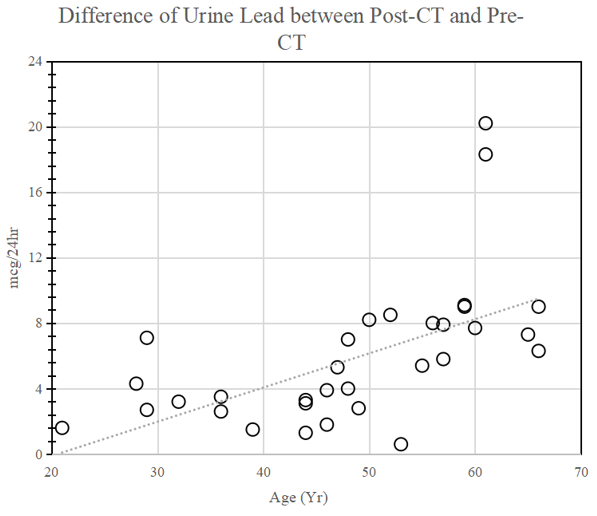
Figure 1 Plot of age versus urine lead levels pre-CT and post-CT.
Figure 2 shows a boxplot of differences between Pre-Chelation and Post-Chrlation Urine Lead.
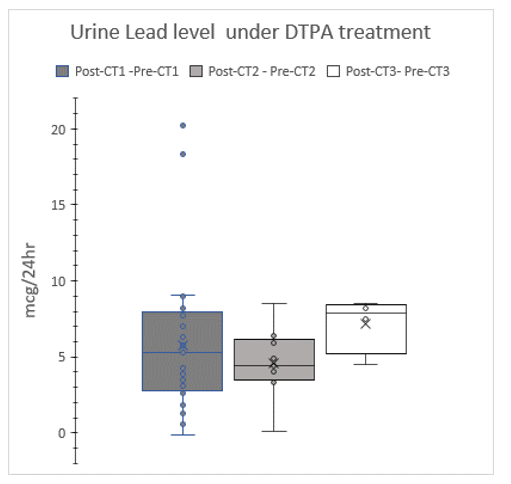
Figure 2 Boxplot of differences between pre-CT and post-CT urine lead.
All study participants had urinary lead present, regardless of what USA state they residing in. There was a 14- to 17-fold increased lead urinary output following chelation, which was higher than anticipated in a general population across America. Because chelation treatment was focused on Gd removal, we do not know whether the lead was causing unrecognized or unreported signs and symptoms of toxicity. The clinical significance of this is unknown, but given that the CDC has declared no known safe level of lead, our finding raises concern. It seems plausible that multiple metal toxicities may be synergistic or additive in producing signs and symptoms.
We suspect that occult symptoms of lead exposure and toxicity may be common and, like at least some of the symptoms of GDD, involve immunological responses. Pro-inflammatory immune responses have been reported in workers chronically exposed to lead, and TNF-alpha and IL-2 have been reported to be elevated in these workers.14,15 and patients with GDD.8
A recent review illustrated the difficulty in determining the health effects of low-level lead blood levels.16 One study found a significant difference between blood lead level elevation in patients with fibromyalgia syndrome and a healthy control group.17 Another investigation showed that metal-induced inflammation, including lead, could trigger fibromyalgia in susceptible patients.18 A recent study19 showed that fibromyalgia symptoms likely result from autoimmune conditions that increase the activity of pain-sensing nerves throughout the body. We speculate that ubiquitous exposure to lead and other heavy metals could partly explain the universal increase in fibromyalgia cases. Other conditions, such as depression or depressive symptoms, may not be uncommon symptoms of lead exposure.20,21
Regarding the diagnosis of lead-induced symptoms, the occurrence of a Flare reaction in patients with GDD when Gd is removed through chelation is a clinical finding that distinguishes sickness (GDD) from simple retention, Gadolinium Storage Condition (GSC).8 This may be true for other metals as well, including lead. Perhaps the terms Lead Deposition Disease (LDD) meaning Lead Toxicity, analogous to GDD, for individuals who are symptomatic from lead retention, and Lead Storage Condition (LSC), analogous to GSC, for those not symptomatic, could be added in the future to the medical lexicon. Our findings show that effective chelation causes Flare in individuals with toxicity to the metal, and not in those without toxic symptoms.9
The effectiveness of intravenous Ca-DTPA in removing lead was remarkable, with a 14- to 17-fold increase from pre-chelation to post-chelation excretion. The lead log stability constants common for the two lead removal agents are DMSA, 17.4, and Ca-EDTA, 18.04.11 In comparison, the log stability constant of Ca-DTPA for lead is 18.80.10 This translates to Ca-DTPA having a binding constant with lead 25 times greater than DMSA - and almost six times greater than Ca-EDTA. This difference is critical since the higher the stability constant, the less metal is redistributed among body tissues, i.e., taken up by the chelator but released before excretion. For example, while DMSA is an effective chelator of lead from soft tissue, DMSA's stability constant indicates that some of the chelated lead is redeposited in other soft tissues, including the brain. While more effective in removing lead from bone than DMSA, EDTA also redistributes some lead to soft tissues, including the brain and liver.22,23 suggested that DMSA be used after EDTA chelation to remove the lead initially removed from tissues by EDTA but redistributed before being excreted. This introduces a complexity without certainty of its effectiveness. Using just one agent with greater stability is a more straightforward and logical strategy. DMSA and EDTA chelating drugs alone or together may be less desirable than using DTPA alone since stability constants indicate that both drugs would release more of the chelated lead to redistribution than would DTPA.
We suggest that for metals like lead and Gd, which are deposited in soft tissues and bone, one should use the agent with the highest stability constant and the largest removal from bone. This appears to be underappreciated in the medical treating community. In the case of Gd, thermodynamic stability (another term for log stability constant) is essential for GBCA contrast agents to avoid the release of Gd and the risk of toxicities, most notably Nephrogenic Systemic Fibrosis.24
Concern reasonably exists about determining when toxicity from a retained metal is present and how to treat it. Chelation, like almost all medical treatments, carries risks. In this respect, the evolution of chelation treatment for GDD has been relatively straightforward. The GBCA exposure event is clear, and the timeline for developing symptoms is also apparent (within one month of exposure and most often within 24 hours). Since exposure to environmental metals such as lead may be more insidious and long-term, a clear timeline is usually not present, and the link to symptoms may be obscured.
Our study also showed that the amount of lead in urine, which is a reflection of the amount of lead retained in the body, was higher in older individuals, which was statistical significance. This may represent simply age-related, more lead incorporated with passing time. We however consider that the greater amount of lead in older individuals reflected that they would have experienced more time before the advent of lead removal from gasoline. Two individuals in our study were shown to be significant outliers in the amount of lead excreted, which we interpret as probable work-related exposure.
This study has some limitations, the major one being the absence of a comparison to the chelating agents in standard practice for lead removal, DMSA, and Ca-EDTA. The explanation is that these patients were acquired from studies exploring the pathophysiological bases of GDD. Future studies should make this comparison, although the authors are concerned about the safety of studying an agent with a far lower stability constant (e.g., DMSA). A second related limitation is the symptoms of Lead presence and removal were not determined. Lastly, it would be of value to study lead specifically and evaluate a broader, world-wide data pool of subjects.
In summary, this study of lead levels in individuals investigated for Gd retention following GBCA administration, shows that iv Ca-DTPA was very effective at removing lead, which is in line with the high log Stability constant The log Stability constant is higher than for other chelators in common use for lead removal. This report also showed that lead was present in all subjects included, who resided across the USA. Suggesting that lead may be ubiquitously present potentially in everyone. Older individuals also showed more lead in them. Further studies are needed to evaluate individuals who are suspected of Lead Toxicity, and also to compare with other chelating agents, although risks from other agents should be noted.
None.
The authors have no conflicts of interest to declare.

©2025 Semelka, et al. This is an open access article distributed under the terms of the, which permits unrestricted use, distribution, and build upon your work non-commercially.