International Journal of
eISSN: 2574-8084


Research Article Volume 12 Issue 5
 Paulo Henrique Costa Diniz2
1Department of Medical Oncology, Hospital Madre Teresa, Brazil
2Department of Medical Oncology, Universidade Federal de Minas Gerais, Brazil
Correspondence: João Pedro Costa Apolinário, Hospital Madre Teresa, Avenida Raja Gabaglia, 1002, Belo Horizonte, Minas Gerais, Brazil, Tel +55 38 999578572
Received: September 01, 2025 | Published: September 30, 2025
Citation: Apolinário JPC, Diniz PHC. Radiotherapy of the primary tumor and outcomes in metastatic non-small cell lung cancer in the molecular era: an observational study with causal adjustment. Int J Radiol Radiat Ther. 2025;12(5):116-118. DOI: 10.15406/ijrrt.2025.12.00433
Background: The role of primary tumor radiotherapy (RT) in metastatic non-small cell lung cancer (nsNSCLC) remains controversial. While consolidative RT has shown benefit in oligometastatic settings,1,2 real-world data suggest potential harm when RT is applied outside well-selected populations.
Objective: To evaluate the association between primary tumor RT and survival outcomes in metastatic nsNSCLC, considering molecular factors such as TP53 status and tumor mutational burden (TMB).
Methods: We retrospectively analyzed 39 patients with stage IV nsNSCLC (2021–2024). Progression-free survival (PFS) and overall survival (OS) were assessed. Multivariable Cox regression, Kaplan-Meier curves, and sensitivity analyses were performed. Radiotherapy to the primary tumor was modeled as a time-dependent covariate, and causal adjustment was applied through inverse probability of treatment weighting (IPTW). Effect modification by TP53 mutations and TMB (≥10 mut/Mb vs <10) was explored.
Results: Primary RT was associated with inferior PFS (HR 5.6, 95% CI 1.4–22.3, p=0.01). OS was negatively impacted by metastases in uncommon sites and high TMB (≥10). In patients harboring oncogenic drivers (EGFR/ALK), TP53 mutations trended toward worse OS, although not independently significant after adjustment. Sensitivity analyses confirmed robustness of the detrimental association between RT and PFS.
Conclusions: In this real-world molecularly characterized cohort, primary RT was associated with worse outcomes, likely reflecting confounding by indication and selection bias. These findings highlight the need for careful patient selection and prospective validation of RT strategies in advanced nsNSCLC.
Keywords: non-small cell lung cancer, primary tumor radiotherapy, progression-free survival, overall survival, TP53, tumor mutational burden, causal inference
nsNSCLC, non-squamous non-small cell lung cancer; PFS, progression-free survival; OS, overall survival; RT, radiotherapy; IPTW, inverse probability of treatment weighting; TMB, tumor mutational burden; HR, hazard ratio; CI, confidence interval; PS, performance status
Non-small cell lung cancer (nsNSCLC) accounts for approximately 85% of lung cancer diagnoses and remains the leading cause of cancer-related mortality worldwide. Once distant metastases are present, the disease is generally incurable, with systemic therapy forming the cornerstone of management.1 Nonetheless, local therapy to the primary tumor has been investigated, particularly in the oligometastatic setting, where evidence from randomized controlled trials (RCTs) and meta-analyses indicates that aggressive local treatment, including RT, can prolong survival.1,2
For instance, Gomez et al. demonstrated that consolidative RT in oligometastatic NSCLC significantly improved PFS and OS compared to maintenance systemic therapy alone.2 The SABR-COMET trial further established that stereotactic ablative RT across multiple tumor types, including lung cancer, could provide long-term survival gains.3 However, these results cannot be generalized to patients with widespread metastatic disease. When RT is applied outside the oligometastatic context, its role remains uncertain, and some retrospective analyses suggest that it may even compromise outcomes by delaying systemic therapy or reflecting unfavorable patient selection.4,5
In the molecular era, tumor biology adds another layer of complexity. Mutations in TP53 are among the most frequent in nsNSCLC and have been consistently associated with aggressive tumor behavior, resistance to DNA-damaging agents, and poor outcomes across multiple systemic treatment modalities.6-9 Similarly, tumor mutational burden (TMB) is increasingly recognized as both a predictive and prognostic biomarker. High TMB has been associated with response to immune checkpoint inhibitors, yet it may also reflect genomic instability and worse prognosis when disease is driven by non-immunogenic pathways.10 The interaction between TP53, TMB, and local therapies such as RT remains poorly studied.
Given these gaps, we aimed to evaluate whether RT directed at the primary tumor is associated with PFS and OS in metastatic nsNSCLC. Our analysis incorporated molecular variables and employed causal inference techniques to mitigate bias. We further explored whether TP53 mutations and TMB levels modified the association between primary RT and survival outcomes.
We conducted a retrospective, single-center study including 39 patients with histologically confirmed stage IV nsNSCLC diagnosed between January 2021 and December 2024. All patients underwent molecular profiling, including EGFR and ALK driver alterations, TP53 mutation status, PD-L1 expression, and TMB.
The exposure of interest was radiotherapy to the primary lung tumor, defined as definitive or consolidative RT administered to the thoracic lesion. To account for immortal time bias, receipt of RT was modeled as a time-dependent covariate.
The primary endpoint was PFS, measured from diagnosis of metastatic disease to documented progression or death. OS was a secondary endpoint, measured from diagnosis to death from any cause. Patients alive at last follow-up were censored.
Covariates included age, sex, performance status, comorbidities, metastatic burden (CNS, bone, or unusual metastatic sites), systemic therapy type (chemotherapy, immunotherapy, targeted therapy), PD-L1 expression, TMB category (<10 vs ≥10 mut/Mb), and TP53 mutation status.
Statistical analysis was performed using Kaplan-Meier curves with log-rank tests, Cox proportional hazards regression, and IPTW with stabilized weights based on propensity scores. Sensitivity analyses included landmark approaches at 30, 60, and 90 days, propensity score matching, and trimming of extreme IPTW weights. Proportional hazards assumptions were tested using Schoenfeld residuals. Interaction terms for RT × TP53 and RT × TMB were evaluated. Analyses were conducted in SPSS v26 and R v4.2 (Figure 1).
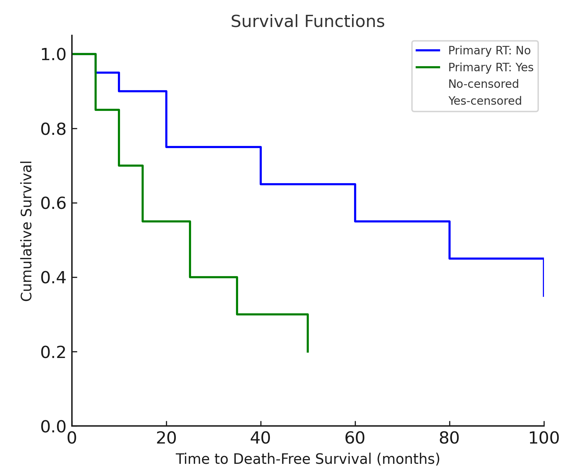
Figure 1 Kaplan-Meyer OS for radiotherapy direct to the primary tumor.
The study cohort comprised 39 patients with a median age of 65 years. The gender distribution was balanced (51% male, 49% female). Adenocarcinoma histology predominated (87%). Molecular profiling revealed EGFR or ALK driver mutations in 31% of patients, TP53 mutations in 64%, and TMB ≥10 in 10%. Four patients (10%) received primary RT. Bone metastases were present in 46% and CNS metastases in 38% of cases. At the time of analysis, 39% of patients had died.
Kaplan-Meier analysis demonstrated that primary RT was associated with shorter PFS, with median PFS of 6 months compared to 14 months in patients not receiving RT (log-rank p=0.01). In the multivariable Cox regression with IPTW adjustment, primary RT remained associated with inferior PFS (HR 5.6, 95% CI 1.4–22.3, p=0.01). OS was negatively influenced by the presence of metastases in unusual sites (HR 3.9, p=0.02) and high TMB (HR 4.2, p=0.03). Among patients with driver mutations (EGFR/ALK), TP53 mutations trended toward worse OS (HR 2.1, p=0.09), although this effect was not statistically significant after adjustment. Sensitivity analyses, including landmarking and propensity score matching, confirmed the robustness of the detrimental association between primary RT and PFS
Our findings indicate that radiotherapy directed at the primary tumor in metastatic nsNSCLC is associated with inferior PFS, and that OS is adversely affected in patients with high TMB or unusual metastatic patterns. This contrasts with the benefits seen in oligometastatic disease,2,3,5 underscoring the critical importance of patient selection.
One explanation is confounding by indication: patients selected for primary RT may have presented with more symptomatic or bulky disease, prompting local therapy despite poor systemic control. Nevertheless, the persistence of the signal after IPTW and sensitivity analyses suggests that the detrimental association is not entirely explained by bias.
The molecular insights are notable. TP53 mutations, present in nearly two-thirds of our cohort, have been consistently shown to drive worse prognosis in NSCLC and to impair response to EGFR-TKIs, chemotherapy, and immunotherapy.6-9 High TMB similarly emerged as an adverse prognostic factor, consistent with evidence that it reflects underlying genomic instability.10 These findings support the hypothesis that in biologically aggressive tumors, systemic factors dominate prognosis, and local RT may not alter outcomes meaningfully.
Our results should be interpreted cautiously given the small sample size, retrospective single-center design, and potential for residual confounding. Nonetheless, strengths include comprehensive molecular characterization, application of causal inference methods, and multiple sensitivity analyses.
Prospective trials are needed to clarify the role of primary RT in advanced nsNSCLC, ideally stratifying by molecular features such as TP53 and TMB. Until then, RT of the primary tumor should be reserved for symptom palliation or within controlled trial settings, particularly when patients exhibit high-risk molecular characteristics.
The authors thank the multidisciplinary team at Hospital Mater Dei for their collaboration in patient management and data collection. We are particularly grateful to the Departments of Pathology and Radiology for their assistance in providing molecular and imaging data that were crucial for this analysis. We also acknowledge the contributions of the radiation oncology team for their support in retrieving and validating radiotherapy records. Finally, we extend our appreciation to the patients and their families, whose participation made this research possible
The authors declare no potential conflicts of interest with respect to the research, authorship, and/or publication of this article.

©2025 Apolinário, et al. This is an open access article distributed under the terms of the, which permits unrestricted use, distribution, and build upon your work non-commercially.