International Journal of
eISSN: 2574-8084


Technical Paper Volume 13 Issue 2
 Ranjith kumar,2 Nandhiya M,1 Dhivya S,1 Yuveka S1
1Department of Research and Development, Panacea Medical Technologies Pvt. Ltd., India
2 Department of Radiology, Vijay Super Specialty Hospital & Cancer Centre, India
Correspondence: Manikandan P, Senior Project Lead, Panacea Medical technologies Pvt Ltd, Plot #35, Phase-IV, Malur Industrial Area, Malur, Kolar (D), Karnataka – 563130, India
Received: April 09, 2026 | Published: April 21, 2026
Citation: Manikandan P, Ranjithkumar, Nandhiya M, et al. Comprehensive benchmark and multi-unit quality assurance evaluation of a cassette-based lilac mammography system. Int J Radiol Radiat Ther. 2026;13(2):46-52. DOI: 10.15406/ijrrt.2026.13.00453
Background: Structured quality assurance (QA) is essential in mammography to ensure consistency of tube output accuracy, image quality, radiation safety, and system performance. This study presents a benchmark-oriented and multi-unit QA evaluation of the Lilac cassette-based mammography system.
Materials and methods: Comprehensive QA tests were performed in accordance with national and international guidelines, including the Atomic Energy Regulatory Board (AERB), American Association of Physicists in Medicine (AAPM), American College of Radiology (ACR), International Atomic Energy Agency (IAEA), European guidelines (EU), and International Electrotechnical Commission (IEC 60601-2-45). Measurements were carried out using a calibrated RaySafe dosimetry system. The evaluated parameters included kVp accuracy, timer accuracy, output linearity, reproducibility, Half Value Layer (HVL), radiation leakage, and radiation survey. Image quality assessment was performed using a Gammex 156 mammography phantom, and all results were compared with recommended tolerance limits.
Results: All evaluated parameters were within prescribed limits, with tube voltage accuracy within ±1 kV, output reproducibility showing CoV < 0.05, and HVL values complying with ACR recommendations. Leakage radiation and room survey levels were within acceptable limits, and phantom image quality met ACR criteria. Multi-unit analysis showed minimal inter-system variation.
Conclusion: The Lilac cassette-based mammography system demonstrates stable radiation output, appropriate beam quality, reliable performance, and compliant radiation safety characteristics, confirming its technical reliability and suitability for routine clinical use.
Keywords: Mammography, Quality Assurance, kVp Accuracy, Image Quality, Radiation Safety
Breast cancer is the most frequently diagnosed malignancy among women worldwide and remains a major cause of cancer-related mortality. According to GLOBOCAN 2020, approximately 2.3 million new breast cancer cases and 685,000 deaths were reported globally, representing 11.7% of all newly diagnosed cancers.1 Early detection through organized screening programs significantly improves survival rates. Mammography continues to be the primary imaging modality for breast cancer screening due to its high sensitivity in detecting microcalcifications and early-stage, non-palpable lesions.2,3 The diagnostic accuracy of mammography is strongly influenced by system technical performance and radiation characteristics. Mammography operates at low X-ray energies; therefore, small deviations in tube voltage (kVp) accuracy, beam filtration, half-value layer (HVL), radiation output stability, and detector response can substantially affect image contrast, spatial resolution, and average glandular dose (AGD).4 Inadequate control of these parameters may reduce lesion detectability and increase unnecessary radiation exposure. To ensure consistent image quality and radiation safety, structured QA programs are recommended by professional and regulatory bodies including the ACR, AAPM, IAEA, European guidelines, IEC 60601-2-45 and AERB, (India).2,5-9 Comprehensive mammography QA protocols include evaluation of kVp accuracy, HVL, total filtration, output reproducibility, compression force performance, and phantom-based image quality assessment. These evaluations support compliance with the principle of maintaining radiation dose As Low As Reasonably Achievable (ALARA). Benchmark-oriented QA studies provide reference ranges for system performance and acceptance criteria across different mammography systems.10 Multi-parameter evaluations are essential for verifying radiation output stability, imaging reliability, and regulatory compliance, thereby supporting safe and effective clinical use. This study includes a comparison of benchmark QA results from published literature with the Siemens Mammomat Inspiration system, and an evaluation of the stability and consistency of the Lilac mammography system using QA results from ten units.
System description
The Lilac Mammography System is available in digital, full-field digital, and cassette-based variants. The present study evaluates the cassette-based system in Figure 1 manufactured by Panacea Medical Technologies Pvt Ltd, Bangalore, Karnataka, India. The unit supports both standing and seated examinations with adjustable height and flexible gantry movement for easy patient positioning. It provides selectable focal spots, multiple field sizes, and interchangeable Aluminium (Al), Molybdenum (Mo), and Silver (Ag) filters to optimize beam quality for different clinical needs. The system includes a motorized compression mechanism with controlled force and thickness adjustment to ensure adequate immobilization and patient comfort. Key operating and compression parameters are displayed digitally on the console for real-time monitoring. Detailed technical specifications are summarized in Table 1.
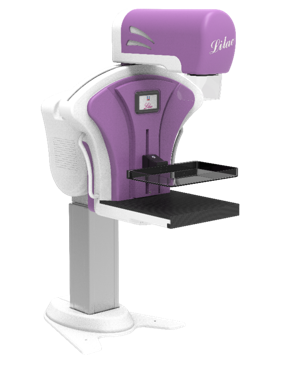
Figure 1 Lilac Cassette Mammography system used for QA evaluation.
|
Description |
Specification |
|
Diagnostic Positions |
Standing & seated |
|
Source to Distance |
65 cm |
|
Focal Spot Sizes |
0.1 / 0.3 mm |
|
Floor to Carbon Fibre Support (Iso centric) |
Min 65 cm & Max 135 cm |
|
Collimator Field size |
10 x 10 cm² (Min field size) |
|
Filter Material |
0.5 mm Al |
|
Missing length of Chest Wall |
4 mm |
|
Compression Force |
Up to 200 N |
|
Compression range |
210 mm to 10 mm |
|
Digital Display |
Displays the machine mode Machine details: |
Table 1 Technical specification of lilac cassette-based mammography
Benchmark oriented QA framework
This study was designed as a benchmark-based quality assurance evaluation. All measured QA parameters of the Lilac mammography system were compared with acceptance criteria recommended by AERB and international guidelines such as AAPM, ACR, EU guidelines, IAEA2,5-7,11 and IEC 60601-2-45,11 as well as performance ranges reported in published multi-system mammography QA studies.3,4,10 Benchmark reference data were obtained from previously published literature reporting QA evaluations of mammography units from different manufacturers. From these studies, the Siemens Mammomat Inspiration system (Unit-1), which satisfied all QA requirements, was selected as the benchmark reference.3 These studies were used to define reference datasets for tube voltage accuracy, radiation output stability, beam filtration, HVL, compression force performance, image quality indicators, and radiation safety measurements. For each parameter, the measured values of the Lilac system were evaluated against both recommended tolerance limits and the performance ranges reported for clinically established mammography units. This benchmark-oriented approach was used to assess the stability, consistency, and overall technical equivalence of the Lilac system.
Multi-unit stability evaluation
In addition to the benchmark comparison, a multi-unit QA evaluation was conducted on ten Lilac mammography systems installed at different clinical and factory locations to assess inter-unit consistency and manufacturing repeatability. All systems were evaluated using identical QA instruments, exposure conditions, and protocols, covering key parameters including kVp accuracy, output reproducibility, HVL, compression performance, image quality, leakage radiation, and radiation survey.
QA tools and standards
Image quality assessment was performed using an ACR mammography accreditation phantom (Model 156), which simulates a standard compressed breast of 4.2 cm thickness composed of tissue-equivalent material (50% glandular and 50% adipose equivalent). The phantom contains embedded test objects, including fibers, speck groups (microcalcifications), and masses of varying diameters to evaluate low-contrast detectability and spatial resolution. Images were acquired under clinically relevant exposure conditions and scored based on visibility criteria as defined by ACR guidelines.5 Spatial resolution assessment showed acceptable limiting resolution consistent with clinical requirements was used to assess limiting spatial resolution in line pairs per millimetre (lp/mm). Image representation was evaluated by analyzing contrast visibility, sharpness, and artefact presence under standard viewing conditions using a calibrated diagnostic monitor.
All procedures were conducted following established quality control guidelines from ACR, AAPM, IAEA, EU guidelines, IEC 60601-2-45 and AERB. Testing methodology, acceptance criteria, and tolerance limits were adopted from these standards and previously published benchmark mammography QA studies.
Testing protocols
The evaluation included:
Each parameter was compared with recommended tolerance limits and benchmark values reported in the literature.
A. Accelerating voltage (kVp) accuracy test
The collimator was fully opened, and the aluminium filter was selected. The RaySafe MAM sensor was placed on the image receptor at a distance 6 cm from the chest wall edge. Multiple kVp settings across the clinical range were measured. The percentage error (PE) between the measured and set values was calculated using:
where, PE, percentage of error, Measured kVp ‑ X‑ray tube operating voltage measured in the dosimeter, set kVp ‑ Reading noted from X‑ray tube control panel. The accepted tolerance was ±1kV according to AAPM & EU guidelines.2,9 The Measured values are presented in the results section.
B. Machine output measurement
Radiation output (mGy/mAs) was measured at different kVp and mAs combinations. Each exposure was repeated thrice to evaluate reproducibility and minimize systematic errors. Output stability was assessed using the coefficient of variation (CoV):
A CoV < 0.05 was considered acceptable as recommended by AAPM/ACR QA guidelines.5,9
C. Half value layer (HVL)
HVL measurements were performed by placing the Raysafe sensor at the center of the bucky at 65 cm SID. Exposure was acquired from 25 to 35 kVp at constant 5 and 10 mAs using the Al (T/F) combination. In each exposure, the HVL value was noted and compared with its corresponding HVL range, which is calculated using the formula provided by the ACR & EU guidelines.5,9
where C = 0.12 mm Al for Mo/Mo. HVL values were measured and summarized in the results.
D. Calibration of compression device
Compression performance was evaluated according to ACR, AAPM, IAEA, EU guidelines and AERB mammography QA guidelines.2,5,8
A calibrated weighing scale was placed on the bucky surface at the chest-wall edge. The compression paddle was lowered to predefined force settings (50–200 N). The applied load was recorded in kilograms (kg) and converted to newtons (N) using:
The converted force values were compared with the console-displayed force to assess compression accuracy. Paddle travel range, gradual force increase (micro-compression), and emergency release mechanisms were also functionally verified.
E. Leakage radiation measurement
Leakage radiation was measured at 5 cm from the external surface of the X-ray tube housing as per IEC 60601-2-4511 and other relevant guidelines.2,5-7,9 The collimator was kept fully closed. The system was operated in mammography mode using test exposure parameters as per the approved test protocol. An X2 survey detector was positioned at 5 cm from the tube housing using spacers to maintain fixed distance. Measurements were obtained at multiple locations around the tube housing, including the front (anode side), back (cathode side), Left, Right and top surfaces.
Leakage radiation was recorded in mGy/hr. Maximum leakage radiation was calculated using the standard correction formula as per the QA protocol.
F. Image quality assessment
Image quality was evaluated using a Gammex 156 mammography accreditation phantom positioned on the image receptor and aligned with the chest wall edge in Figure 2 shows the setup. Standard clinical exposure settings were used. The visibility of fibers, speck groups, and masses was scored according to ACR criteria, requiring detection of at least 4 fibers, 3 speck groups, and 3 masses for acceptance.5
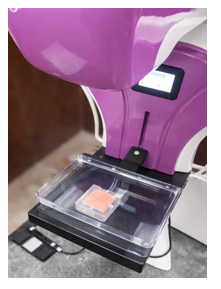
Figure 2 Image quality assessment setup using a Gammex 156 mammography accreditation phantom.
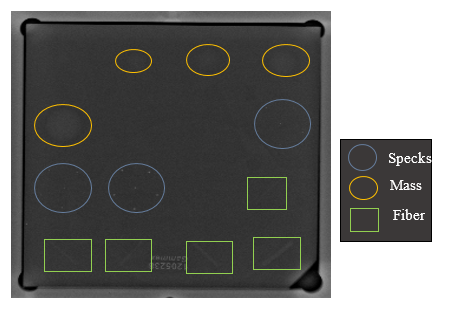
Figure 3 Image quality assessment results of the mammography system.
G. Radiation survey
A radiation survey was performed to evaluate scattered radiation levels around the mammography room. The collimators were kept fully open. A 4 cm thick slab phantom was placed on the carbon fiber breast support to simulate a patient scatter condition. A Raysafe X2 survey meters were used to measure radiation levels at the following locations:
Exposure was made under routine clinical operating conditions as specified in the approved test report. Radiation readings were recorded in mR/h. The maximum weekly radiation level (mR/week) was calculated using:
Where workload = 300 mA min per week. Radiation survey measurements were evaluated in accordance with AERB guidelines and radiation protection principles described in.6
All evaluated QA parameters of the Lilac cassette-based mammography system were within AERB, AAPM, IAEA, EU guidelines and ACR tolerance limits. Tube voltage accuracy, radiation output reproducibility, and HVL measurements provided stable beam performance. Phantom image quality satisfied the acceptance criteria for fibers, specks, and masses. Multi-unit evaluation of ten systems showed minimal inter-unit variation, confirming consistent and reliable performance.
Accuracy of operating potential
Measured kVp values across the clinical operating range showed close agreement with the set values. The percentage error remained within ±1kv for all tested points, satisfying the tolerance limits recommended by AAPM guidelines, as shown in Table 2 and Table 3. Accurate tube voltage is essential for supporting consistent beam quality and image contrast. The observed agreement shows stable high-voltage generator performance and supports reliable exposure control in clinical operation.
|
Mammography unit |
Operating tube voltage (25 to 35 kVp) & Tube current 5 mAs |
||||||||||||
|
25 |
26 |
27 |
28 |
29 |
30 |
31 |
32 |
33 |
34 |
35 |
|
||
|
Siemens-Mammomat Inspiration |
Maximum |
3.1 |
2.3 |
1.92 |
0.8 |
1.1 |
1.6 |
0.7 |
1.3 |
0.4 |
1.2 |
0.9 |
|
|
Mean |
2 |
1.2 |
0.8 |
0.4 |
0.4 |
0.4 |
0.7 |
0.7 |
0.4 |
0.6 |
0.4 |
|
|
|
Lilac Unit |
Maximum |
0.8 |
1.2 |
1.1 |
1.1 |
1 |
1 |
1 |
0.3 |
0.6 |
0.6 |
0.6 |
|
|
Mean |
0.8 |
0.8 |
0.9 |
1 |
1 |
0.9 |
0.5 |
0.3 |
0.3 |
0.5 |
0.6 |
|
|
Table 2 Percentage error (%) in operating tube voltage (kVp) at 5 mAs. Mean and maximum values represent the percentage error (%) between measured and set kVp values
|
Mammography units |
Operating tube voltage (25 to 35 kVp) & Tube current 10 mAs |
|||||||||||
|
25 |
26 |
27 |
28 |
29 |
30 |
31 |
32 |
33 |
34 |
35 |
||
|
Siemens-Mammomat Inspiration |
Maximum |
2.8 |
2.71 |
1.15 |
1.84 |
0.71 |
0.34 |
0.69 |
0.35 |
1.23 |
0.62 |
0.61 |
|
Mean |
1.22 |
1.93 |
0.42 |
0.75 |
0.39 |
0.4 |
0.1 |
0.37 |
1 |
0.33 |
0.34 |
|
|
Lilac Unit |
Maximum |
1.2 |
1.54 |
1.48 |
1.43 |
1.38 |
1.33 |
0.65 |
0.63 |
0.91 |
1.18 |
1.14 |
|
Mean |
1.2 |
1.54 |
1.23 |
1.43 |
1.37 |
1.33 |
0.65 |
0.52 |
0.71 |
0.88 |
0.95 |
|
Table 3 Percentage error (%) in operating tube voltage (kVp) at 10 mAs. Mean and maximum values represent the percentage error (%) between measured and set kVp values
Reproducibility of radiation output
Radiation output increased consistently with increasing tube potential, showing predictable system behaviour. Repeated measurements at identical exposure settings showed minimal variation. The calculated coefficient of variation for output reproducibility was less than 0.05 for all test conditions Table 4, confirming good short-term output stability.
|
kV |
mAs |
Siemens-mammomat inspiration (COV) |
Lilac mammograph |
|
25 |
5 |
0.0060 |
0.0016 |
|
10 |
0.0100 |
0.0027 |
|
|
26 |
5 |
0.0070 |
0.0055 |
|
10 |
0.0070 |
0.0002 |
|
|
27 |
5 |
0.0010 |
0.0051 |
|
10 |
0.0060 |
0.0019 |
|
|
28 |
5 |
0.0040 |
0.0026 |
|
10 |
0.0500 |
0.002 |
|
|
29 |
5 |
0.0020 |
0.0026 |
|
10 |
0.0500 |
0.0006 |
|
|
30 |
5 |
0.0020 |
0.0036 |
|
10 |
0.0420 |
0.0013 |
|
|
31 |
5 |
0.0020 |
0.0018 |
|
10 |
0.0390 |
0.002 |
|
|
32 |
5 |
0.0010 |
0.0023 |
|
10 |
0.0450 |
0.0019 |
|
|
33 |
5 |
0.0030 |
0.0034 |
|
10 |
0.0130 |
0.0015 |
|
|
34 |
5 |
0.0020 |
0.0043 |
|
10 |
0.0080 |
0.0012 |
|
|
35 |
5 |
0.0030 |
0.003 |
|
10 |
0.0050 |
0.0041 |
Table 4 Coefficient of variation (CoV) of radiation output at different tube voltage (kV) and tube current-time product (mAs)
Stable radiation output is critical for maintaining consistent image quality and controlling patient dose. The low variability observed in this study indicates reliable generator performance and supports the suitability of the system for routine clinical imaging.
Half-Value layer measurement
The measured HVL values increased with tube voltage and remained within the acceptable ranges calculated using ACR recommendations Table 5. These results confirm that the total beam filtration of the system is appropriate for mammography applications. Adequate filtration is essential to remove low-energy photons that contribute to patient dose without improving image quality. The compliance of HVL values with recommended limits shows that the Lilac system provides suitable beam quality for breast imaging and supports dose optimization.
|
Operating voltage (kVp) |
Operating current (mAs) |
ACR recommended HVL value (mmAI) |
Measured HVL values (mmAI) |
|
|
Siemens-mammomat inspiration |
Lilac mammography |
|||
|
25 |
5 |
0.28-0.37 |
0.3 |
0.335 |
|
10 |
0.31 |
0.34 |
||
|
26 |
5 |
0.29-0.38 |
0.32 |
0.353 |
|
10 |
0.32 |
0.338 |
||
|
27 |
5 |
0.30-0.39 |
0.32 |
0.337 |
|
10 |
0.33 |
0.345 |
||
|
28 |
5 |
0.31-0.40 |
0.34 |
0.356 |
|
10 |
0.34 |
0.367 |
||
|
29 |
5 |
0.32-0.41 |
0.35 |
0.353 |
|
10 |
0.34 |
0.363 |
||
|
30 |
5 |
0.33-0.42 |
0.36 |
0.373 |
|
10 |
0.36 |
0.374 |
||
|
31 |
5 |
0.34-0.43 |
0.36 |
0.381 |
|
10 |
0.36 |
0.377 |
||
|
32 |
5 |
0.35-0.44 |
0.37 |
0.384 |
|
10 |
0.37 |
0.394 |
||
|
33 |
5 |
0.36-0.45 |
0.39 |
0.396 |
|
10 |
0.39 |
0.3864 |
||
|
34 |
5 |
0.37-0.46 |
0.4 |
0.399 |
|
10 |
0.4 |
0.385 |
||
|
35 |
5 |
0.38-0.47 |
0.41 |
0.4 |
|
10 |
0.41 |
0.4 |
||
Table 5 Half value layer measure
Calibration of the compression device
Compression force measurements showed good agreement between the console display and externally measured values across the operating range (50–200 N). The maximum measured force for the Lilac system was 195 N. These values are comparable to benchmark literature values reported for the Siemens Mammomat Inspiration system (107.87 N), confirming safe and consistent compression performance.
Leakage radiation measurement
Leakage radiation from both systems remained within the prescribed regulatory limits. The Lilac system showed comparable safety performance to the benchmark unit, and detailed comparative results are presented in Table 6. The maximum leakage values (mGy/hr) represent measurements across all tested directions, while the leakage dose in mGy per hour was calculated based on a workload of 40 mA, as per guidelines. Benchmark unit results were referenced from the literature.10
|
Unit |
Radiation leakage level (mGy/hr) |
Maximum (mGy/hr) |
mGy in 1 hour |
||||
|
Right |
Left |
Front |
Top |
Back |
|||
|
Siemens -mammomat inspiration |
0.0022 |
Not reported |
0.0022 |
0.000010 |
|||
|
Lilac |
1.70000 |
2.90000 |
1.10000 |
1.00000 |
1.10000 |
2.900000 |
0.013809524 |
Table 6 Leakage radiation measurement
Image quality assessment
Phantom image showed clear visualization of fibers, speck groups, and masses represented Figure 2-. The system met ACR acceptance criteria in Table 7, with the required minimum number of test objects consistently identified. These findings indicate adequate low-contrast detectability and spatial resolution.
|
Phantom |
Object |
Siemens-mammomat inspiration |
Lilac mammography |
|
Gammex |
Fiber (n=4) |
4 |
4 |
|
Specks (n=3) |
3 |
3 |
|
|
Mass (n=3) |
4 |
4 |
Table 7 Coefficient of variation (CoV) of radiation output at different tube voltage (kV) and tube current-time product (mAs)
The satisfactory phantom performance confirms that the combined effects of beam quality, detector response, and exposure control provide clinically acceptable image quality, supporting the system’s capability for early breast lesion detection.
Radiation survey
Radiation survey measurements in the present study showed a maximum weekly radiation level of 0.029 mR/week at a workload of 300 mA·min/week at representative controlled and uncontrolled locations, which is well below the tolerance limits. For the Siemens mammography unit, the calculated maximum weekly radiation level was 0.047 mR/week. Although both systems remain within permissible limits, these results indicate that both systems comply with established radiation safety standards.
Multi-unit stability evaluation of mammography
The values represent the standard deviation across the ten units, along with the acceptance criteria in the last column for comparison. All tested parameters, including operating potential accuracy, timer accuracy, tube output linearity, output reproducibility, HVL, leakage radiation, radiation survey, and phantom image quality, were within the recommended limits. Only small variations were observed between units. Overall, the systems demonstrated stable radiation output, consistent beam quality, reliable exposure control, and uniform image performance. The quality assurance results of the ten Lilac mammography systems are presented in Table 8.
|
Parameters tested |
Setup condition |
Mean ± SD of Ten units measured value |
Tolerance |
|
|
Accuracy of Operating potential(kVp) |
27 kVp |
27.09 ± 0.32 |
±1kV |
|
|
35 kVp |
34.76 ± 0.49 |
|||
|
38 kVp |
37.69 ± 0.67 |
|||
|
Accuracy of Timer (Time) |
600 ms |
0.25 ± 0.17 % |
<10% |
|
|
Linearity of tube control (kVp) |
28 kVp |
0.029 ± 0.028 |
CoL<0.1 |
|
|
Reproducibility of output (Cov), (kVp) |
20 kVp |
0.0035 ± 0.0027 |
CoV<0.05 |
|
|
34 kVp |
0.0060 ± 0.0076 |
|||
|
Radiation Leakage level from X-ray tube housing (kVp, mA) |
40 kVp, 35 kVp |
0.0012 ± 0.0016 |
<0.02mGy in one hour |
|
|
120 mA |
||||
|
Half Value Layer Measurement (kVp) (kVp) |
28 kVp |
0.33 ± 0.02 mm Al |
Recommended Value: 0.3 mm AI ≤HVL≤0.37 mmAL at 28kVp |
|
|
Performance of imaging phantom (kVp) |
28 kVp |
5 |
>4 Fibers clearly visible |
|
|
4 |
>3 Calcification clearly visible |
|||
|
4 |
>3 Masses clearly visible |
Table 8 Multi-Unit stability evaluation of lilac mammography
In this study, the Lilac cassette-based mammography system was evaluated using a combined approach of benchmark comparison and multi-unit QA analysis. Unlike single-unit evaluations, this work assesses both performance compliance and inter-unit consistency, providing a broader evaluation of system reliability in clinical deployment. The tube voltage accuracy remained within ±1 kVp, indicating stable generator performance. This is important because variations in kVp can affect image contrast and patient dose.4,10 The reproducibility results (CoV < 0.05) confirm stable short-term radiation output, ensuring consistent imaging performance across repeated exposures.2,6 The linearity of output (CoL < 0.1) demonstrates proportional system response to exposure settings, supporting predictable operation under clinical conditions. HVL values were within recommended limits and increased with tube voltage, indicating appropriate beam filtration. This ensures an optimal balance between image quality and patient dose, in agreement with QA guidelines.2,9 Radiation leakage remained within the regulatory limits, confirming effective shielding and compliance with radiation safety standards.4,11 Phantom image quality met ACR criteria, demonstrating adequate contrast resolution and lesion detectability for clinical mammography applications.3,10 A key strength of this study is the multi-unit evaluation across ten systems, which showed minimal inter-unit variability. This demonstrates manufacturing consistency and quality control at a production level. Unlike single-unit studies, this approach provides evidence of uniform performance across installations, supporting reliable system behaviour in large-scale screening programs. From a clinical perspective, consistent system performance reduces variability in image quality and radiation dose between centers, improving diagnostic confidence and supporting standardized screening workflows. Overall, the results extend beyond routine QA verification by confirming system reliability in practical clinical environments. This study confirms compliance with international QA standards and demonstrates robust system performance. Multi-unit analysis further establishes system-level consistency, supporting confidence in widespread clinical deployment. Future studies may include advanced software-based QA methods and automated image quality analysis.
This benchmark-based and multi-unit QA evaluation shows that the Lilac cassette-based mammography system provides stable radiation output, appropriate beam quality, consistent compression performance, and compliant radiation safety characteristics. All evaluated parameters met AERB, AAPM, IAEA, EU guidelines, IEC 60601-2-45 and ACR acceptance limits. Inter-unit analysis across ten systems confirmed manufacturing consistency and technical reliability, supporting its suitability for routine clinical use. The measured values were consistent with benchmark data reported in published multi-system QA studies. Overall, the Lilac mammography system delivers stable performance and clinically acceptable image quality while maintaining radiation safety, providing strong support for regulatory and quality assurance requirements.
The authors would like to thank the clinical users of the Lilac Mammography System for their valuable feedback and support. We also acknowledge the contribution of the internal teams involved in system development and evaluation in the preparation of this manuscript.
There is no conflict of interest.

©2026 Manikandan, et al. This is an open access article distributed under the terms of the, which permits unrestricted use, distribution, and build upon your work non-commercially.