International Journal of
eISSN: 2577-8269


Research Article Volume 9 Issue 5
 Felipe Gomes Dutra,2 Amanda Vieira Sarubbi,3 Mona Adalgisa Simões,4 Fransisco Cesar Pabis,5 Giuliana Stravinskas Durigon6
1Department of Medicine & Pediatrics, Regional University od Blumenau, Brazil
2Department of Pediatrics, Joana de Gusmão Hospital, Brazil
3Medicine, Regional University of Blumenau, Brazil
4Pediatrics, Santo Antônio Hospital, Brazil
5Medicine, University of the Region of Joinville, Brazil
6Infectology, Santo Antônio Hospital, Brazil
Correspondence: Julia Simões Pabis, Department of Medicine & Pediatrics, Regional University od Blumenau, Brazil, Tel +55 47 9974-7248
Received: October 22, 2024 | Published: October 8, 2025
Citation: Pabis JS, Dutra FG, Sarubbi AV, et al. Profile of pediatric hospitalizations due to respiratory virus infection in a tertiary hospital in southern Brazil. Int J Fam Commun Med. 2025;9(4):128-132. DOI: 10.15406/ijfcm.2025.09.00394
Background: Viral respiratory infections represent prevalent diseases globally, peaking during specific seasonal periods. Within pediatric populations, these infections hold heightened significance owing to the immunological susceptibility inherent to this age group.
Methods: A retrospective observational cross-sectional study was conducted from February 1, 2022, to February 28, 2023, examining all pediatric hospitalizations attributable to respiratory viruses at Hospital Santo Antônio de Blumenau. Patient counts were retrieved via a systematic inquiry of hospitalizations documented within the electronic system of the hospital. The study compiled data including age, gender, duration of hospitalization, ICU admission requirement, mechanical ventilation necessity, respiratory virus PCR outcomes, hospitalization month, and mortality rates.
Results: Among the 1158 patients, a male predominance and the age of under four years old were observed. Regarding respiratory swab results, 45.9% yielded no isolated respiratory virus, while 15.3% identified Rhinovirus, 13.9% Respiratory Syncytial Virus, 7.2% Adenovirus, and 6.5% SARS-CoV-2. 7 fatalities were recorded, 3 isolating specific respiratory viruses (RSV, SARS-CoV-2, and Influenza A).
Conclusions: Significant variations in the respiratory virus profile between 2022 and 2023 are evident, particularly in terms of seasonal duration and predominant strains. The findings within the deceased sample underscore the clinical severity associated with RSV, Covid-19, and Influenza A in addition to highlighting the importance of preventive measures, such as vaccination or monoclonal therapy.
Keywords: Pediatrics, respiratory viruses, viral panel
Viral respiratory infections represent prevalent diseases globally, characterized by high incidence rates. While respiratory viruses circulate year-round, their prevalence peaks during specific seasonal periods. Within pediatric populations, these infections hold heightened significance owing to the immunological susceptibility inherent to this age group.1 Respiratory infections stand as the primary cause of hospitalization in developing nations, precipitating substantial costs to public health infrastructure and exerting social ramifications on the population.2 The etiological diagnosis of viral respiratory infections contributes to reducing hospitalization costs, as well as reducing harmful effects on patients, improving the quality of care.1 This study aims to assess demographic and clinical profiles of pediatric ward hospitalizations due to respiratory viruses using electronic medical records of Hospital Santo Antônio in Blumenau – SC between February 2022 and February 2023. Its objectives include characterizing the affected population, identifying prevalent viral strains, and discerning seasonal patterns in incidence rates.
A retrospective observational cross-sectional study spanning from February 1, 2022, to February 1, 2023, was conducted to analyze all pediatric hospitalizations related to respiratory viruses at Hospital Santo Antônio de Blumenau - SC. Patient counts were acquired through a systematic inquiry within the Tasy electronic system of the hospital. The study encompassed data collection on patient demographics including age and gender, length of hospital stay, Intensive Care Unit (ICU) admissions, mechanical ventilation requirements, results of respiratory virus panel analysis obtained via aspirate and/or nasopharyngeal swab, subjected to molecular polymerase chain reaction (PCR), as well as the month of hospitalization and mortality rates.
The inclusion criteria was all pediatric patients with positive PCR results for respiratory viruses (SRAG) hospitalzied at Hospital Santo Antônio in Blumenau – SC between February 1, 2022, and February 1, 2023. The exclusion criteria was cases with incomplete records.
The collection of virus PCR was conducted through nasopharyngeal swabs, subsequently dispatched to the Public Health Central Laboratory (LACEN) of Santa Catarina for analysis. Through most of the study duration, the protocol outlined in Flowchart 1 was adhered to for PCR procedures.
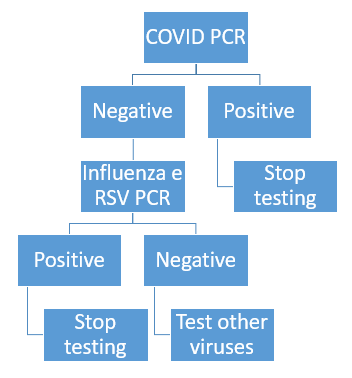
Flowchart 1 LACEN SARS Results Evaluation Flowchart.
Initially, all variables were analyzed descriptively. For quantitative variables, this analysis was performed by calculating means and standard deviations. For qualitative variables, absolute and relative frequencies were calculated. Data were analyzed using the statistical program SPSS17. The study adhered to the guidelines stipulated in Resolution 466 of 2012 by the National Health Council and was implemented subsequent to receiving approval from the Ethics Committee (Number 6.138.499, June/2023).
Among the 1158 patients analyzed, 56.3% were male, with the majority (88.8%) residing in Blumenau and the remainder in other cities of Santa Catarina. Predominantly, hospitalizations were observed in children under four years of age, accounting for around 72% of cases, while a minority of only near 4% of hospitalizations pertained to children over 11 years old. Age distribution ranged from 5 days to 16 years, with a mean and median age of 1 year.
Concerning the outcome of hospitalizations, out of the 1158 patients examined, 1122 (96.7%) were discharged, 27 (2.3%) were transferred to their city of origin or reference services, and 7 fatalities were recorded (0.6%).
As for the respiratory swab results, 45.9% did not isolate any respiratory viruses, 6.5% had Sars-Cov-2 result and 46.2% isolated other respiratory viruses described in Table 1.
|
Virus |
N |
% |
|
Rhinovirus |
177 |
15.3 |
|
Respiratory Syncytial Virus |
161 |
13.9 |
|
Adenovirus |
84 |
7.2 |
|
Covid-19 |
76 |
6.5 |
|
Parainfluenza type 3 |
26 |
2.2 |
|
Influenza A |
25 |
2.2 |
|
Metapneumovirus |
23 |
2 |
|
Enteroviruses |
15 |
1.4 |
|
Bocavirus |
10 |
0.9 |
|
Parainfluenza type 1 |
7 |
0.6 |
|
Coronavirus NL63 |
5 |
0.4 |
|
Coronavirus HKU1 |
3 |
0.3 |
|
Influenza B |
1 |
0.1 |
|
Parainfluenza type 2 |
1 |
0.1 |
Table 1 Incidence of respiratory viruses in the studied period
Regarding the severity of hospitalization, 11.2% remained in the emergency room and 84.6% remained hospitalized in the ward. Out of the 1158, 18.9% of patients required ICU admission (221 cases) and 9.2% required mechanical ventilation. Regarding the length of hospital stay, the average was 6.1 days, median of 3 days, ranging from 0 to 120 days.
Of the 221 cases that required ICU admission, 57% were male, and 74.7% resided in Blumenau. The mean age of these patients was 2 years, with age distribution ranging from 5 days to 14 years and a median of 8 months. Among this cohort, 48.4% (107 cases) required mechanical ventilation. The average duration of ICU stay was 9.35 days, with a range from 0 to 44 days and a median of 6 days. The results of the SRAG (Severe Acute Respiratory Syndrome) of these patients are depicted in Table 2. Among the 76 confirmed cases of COVID-19, most were male (56.6%) and resided in Blumenau (94.8%). Of those, 3 required ICU admission (3.9%), 1 required mechanical ventilation and 1 related death occurred (1.3%). The others remained in a pediatric ward (56.6%) or emergency room (14.5%) and were discharged or transferred to the hospital of origin.
|
Virus |
N |
% |
|
Negative |
73 |
33 |
|
Respiratory syncytial virus bronchiolitis |
64 |
29 |
|
Rhinovirus |
44 |
19.9 |
|
Covid-19 |
13 |
5.9 |
|
Adenovirus |
12 |
5.4 |
|
Parainfluenza type 3 |
5 |
2.3 |
|
Metapneumovirus |
4 |
1.8 |
|
Bocavirus |
2 |
0.9 |
|
Influenza A |
2 |
0.9 |
|
Enteroviruses |
1 |
0.5 |
|
Parainfluenza type 1 |
1 |
0.5 |
|
Total |
221 |
100 |
Table 2 Results of SRAGs collected in ICU
Throughout the study duration, 7 fatalities were documented, with 3 cases isolating a respiratory virus. Among these fatalities, 85.7% were residents of Blumenau, and 71.4% were female. The mean age was 2 years, with a median of 1 year, ranging from 18 days to 13 years. A majority (85.7%) remained in the ICU, while 14.2% (1 case) were managed in the pediatric ward. In terms of hospitalization duration, the average stay was 22 days, with a minimum of 2 days, a maximum of 88 days, and a median of 18 days.
The fatality in which SARS-CoV-2 was isolated pertained to a female patient aged 4 months and 8 days, presenting with comorbidities including trisomy 21, laryngomalacia, and heart conditions (mild ASD, mild pulmonary branch stenosis, mild tricuspid valve leak). Mechanical ventilation was necessitated during her hospitalization in the pediatric ICU. The death in which RSV was isolated came from a collection after 3 days of hospitalization. It was a female patient, aged 1 year and 7 months, who had no comorbidities. Mechanical ventilation was required during her hospitalization in the pediatric ICU. However, this patient was admitted due to sepsis of pulmonary focus, with Streptococcus pneumoniae isolated in both the admission blood culture and pleural fluid. The fatality in which Influenza A was isolated involved a female patient, aged 11 years and 7 months, diagnosed with Hemophagocytic Syndrome and also suffering from Aspergillus pneumonia. The patient presented comorbidities including Autism Spectrum Disorder, underwent a 5-day course of Oseltamivir, and required mechanical ventilation during her hospitalization in the pediatric ICU. The remaining 3 fatalities requiring ICU admission tested negative for SARS. The fourth fatality occurred in a pediatric ward, without transfer to an ICU bed, and exhibited negative SRAG results.
Among the 1158 patients under study, 50 exhibited SARS co-infections. Among this cohort, 40% were female, with a mean age of 2 years, ranging from 20 days to 13 years, and a median of 1 year. Throughout hospitalization, 80% were managed in a pediatric ward, 6% in an emergency room, and 14% necessitated ICU admission. The average hospital stay was 6 days, with a median of 4 days, and a range from 0 to 50 days. Mechanical ventilation was required by 10% of these patients (5 cases). The primary viruses isolated in cases of co-infection comprised a combination of Adenovirus and Rhinovirus, accounting for 44% of cases, with no other co-infection exceeding 10%.
In this study, the seasonality of respiratory viruses was examined. In February 2022, COVID-19 was the most prevalent virus, accounting for 34.5% of cases, followed by RSV (7.3%). In March 2022, enteroviruses and adenoviruses were the most prevalent, with 4 cases each (7.1% each), followed by RSV, rhinoviruses, and COVID-19, each with 3 cases (5.4%). From April to June, RSV was the predominant virus, comprising 16.1% to 26.4% of cases. In June 2022, in addition to RSV, influenza A (9.3%) and COVID-19 (8.5%) were detected. From July to November, rhinovirus accounted for the majority of hospitalizations, ranging from 15.5% to 26.4% of cases. In December, RSV was positive in 31.6% of cases, followed by rhinovirus (11.8%), COVID-19, and adenovirus (9.2% each). In January 2023, COVID-19 predominated, comprising 15% of cases, followed by RSV (10%). In February 2023, COVID-19 accounted for the majority of cases (10.3%), followed by RSV (5.1%). The seasonality of viruses of major clinical and epidemiological importance is described in Graphic 1.

Graphic 1 Colour. Seasonality of the main respiratory viruses detected between February 2022 and February 2023 in children hospitalized in the municipality of Blumenau, SC, BR. Bars represent the absolute numbers of samples positive for a given virus.
With the onset of the pandemic, a notable decrease in pediatric hospitalizations and respiratory virus infections became evident, particularly in 2020. Non-pharmaceutical interventions (NPIs) like mask-wearing, school closures, and physical distancing, implemented to curb SARS-CoV-2 transmission, also suppressed the circulation of other respiratory viruses. This led to a period of historically low activity for these viruses, not to mention the disruption of the normal seasonality and epidemiology of both respiratory syncytial virus (RSV) and Influenza.3 In certain location, pediatric care demand saw a reduction of up to 70%.4 Following this phase, subsequent increases in hospitalizations suggest potential epidemiological shifts arising from the isolation measures.5
The impact of the pandemic on the RSV season was seen by a supressed circulation of the virus. During the 2020-2021 surveillance year, the usual winter RSV epidemic did not occur in the U.S. and other parts of the world due to widespread NPIs. This created an "immunity debt," where a large number of children and infants lacked prior exposure to the virus. However, the next year was seen a atypical seasonality and resurgence. When NPIs were relaxed, a major resurgence of RSV occurred with an atypical seasonality. Linked to this, in the U.S., the 2021-2022 season began much earlier than usual, starting in May and peaking in July6. Similarly, a Danish study noted a summer and autumn resurgence in 2021. The study found a notable uptick in RSV cases starting in April 2022, peaking in May, with a surprising resurgence in December, deviating from the typical June-July peak. Besides, with the immunity debt, RSV cases were seen in older children who would have typically been exposed earlier in life. While the severity for an individual child in Denmark did not seem to be worse during the 2021 resurgence, hospital admissions were higher among older children.7,8
Regarding the Influenza Virus, like RSV, its circulation dropped sharply worldwide following the implementation of NPIs. The unprecedented reduction in global travel during the pandemic also played a major role, as it limited the migration and spread of influenza strains across continents. However, as travel restrictions and other NPIs were lifted, influenza activity quickly rebounded to pre-pandemic levels in many regions.3,7 This study observed a low circulation of Influenza A, which peaked in June 2022, which contrasts with some national reports from InfoGripe which indicated a predominance of Influenza A in September for certain pediatric age groups,9 suggesting a potential post-pandemic phenomenon with a low circulation in the Itajaí valley region.
In our monthly comparative analysis juxtaposed with national reports from InfoGripe,9 a discernible pattern emerges wherein the fluctuations in Severe Acute Respiratory Syndrome (SRAG) cases exhibit a somewhat parallel trajectory. Following a plateau observed in February and March 2022, there is a subsequent rise in cases from April onwards, mirroring the expected seasonal trends of respiratory viruses, which typically exhibit increased incidence during autumn and winter seasons. However, the pattern deviates during the decline in SRAG cases nationally, potentially reflecting regional variations attributable to temperate climates. Monthly prevalence comparisons reveal deviations from national trends.
For instance, in February 2022, a prevalence of SARS-CoV-2 was observed, akin to the national observation. Conversely, March 2022 displayed a national upsurge in RSV cases, whereas our service reported a slight predominance of adenovirus and enterovirus cases. April and May exhibited similar patterns, characterized by a prevalence of RSV. However, in June, disparities emerged; while the national InfoGripe report highlighted SARS-CoV-2 predominance, particularly in the 5 to 11 age group, followed by Rhinovirus, our findings showcased RSV predominance, succeeded by Influenza A, with SARS-CoV-2 ranking third alongside a few cases of Rhinovirus. July presents another noteworthy discrepancy between the national InfoGripe report and our findings. While InfoGripe indicates a prevalence of SARS-CoV-2, our study highlights a predominance of Rhinovirus cases, followed by RSV, with SARS-CoV-2 ranking fifth.
In August and September, congruence emerges in the prevalence of Rhinovirus cases, except in the 5 to 11 age group, where InfoGripe notes a slight predominance of Influenza A, closely followed by Rhinovirus. Furthermore, in the 12 to 17 age group, a significant predominance of Influenza A is observed during September. In October, InfoGripe indicates a decline in SARS cases within the pediatric population, emphasizing a predominance of RSV. However, our observations do not align with this trend; we instead observe a predominant presence of Rhinovirus. November findings show similarities in the rise in SARS-CoV-2 cases across all age groups, and a contrast with InfoGripe's declining trend in SRAG cases while our study maintains a plateau. In December, InfoGripe reports a significant RSV presence, particularly in São Paulo, the Federal District, and the three Southern states of Brazil, along with increased RSV presence in children from Espírito Santo, Minas Gerais, and Roraima, consistent with our findings of RSV predominance.9
It was seen a declining trend in SRAG cases across the pediatric population in January 2023 is noted in both sets of findings. However, our study indicates a slight predominance of SARS-CoV-2, whereas the InfoGripe report highlights a notable RSV presence in children aged 0 to 4 years, particularly in Espírito Santo, the Federal District, Minas Gerais, São Paulo, and the three Southern states, followed by SARS-CoV-2. In February 2023, a significant predominance of rhinovirus cases, followed by SARS-CoV-2 and low counts of other viruses, is observed in our study. Conversely, InfoGripe reports a predominance of RSV in children aged 0 to 4 years, closely followed by rhinoviruses and SARS-CoV-2, with a slight increase in rhinovirus cases noted in some states, particularly among children aged 5 to 11 years. It is noteworthy that post-pandemic variations may contribute to these differences, necessitating further studies in subsequent years to discern whether they signify a new seasonal pattern, regional climate dynamics, or isolated post-pandemic anomalies.9
When comparing with other registries, the findings are consistent with reports from the U.S. CDC and a Danish national study. The U.S. CDC noted that the typical October-April RSV season did not occur in 2020-2021, replaced by an atypical season that began earlier in May and peaked in July 2021, and the 2022-2023 season also started earlier than pre-pandemic years.10 A Danish study similarly found a summer and autumn resurgence of RSV in 2021.7 These observations mirror the study's, reinforcing that RSV activity began in April 2022, peaked in May, and had an unusual resurgence in December, deviating from the typical winter peak in Southern Brazil.
Concerning Rhinovirus, our study exhibited it as as the most predominant virus from July to November, and again in February 2023. There was a notable increase commenced in July, peaking in August, persisting as the predominantly isolated virus from July to November, followed by a significant decline in December and January. There was a resurgence in February 2023, which marked the highest number of positive results in our study. Rhinovirus was identified in 19.9% of cases requiring ICU admission, with no associated fatalities. These findings also reflect the general disruptions seen elsewhere. A study in Italy noted that post-pandemic, Rhinovirus emerged as a highly prevalent virus, suggesting viral competition and dynamic shifts in circulation patterns.11 In Canada, while other viruses were suppressed, Rhinovirus continued to circulate, albeit with regional variations.12
Regarding RSV in our study, there is a notable uptick in cases beginning in April, peaking in May, followed by a gradual decline in subsequent months, with a resurgence in December, making it the second highest month in terms of case count during the evaluated period. Typically, RSV peaks in the southern region between June and July.13 While an increase in December is common, the magnitude of this peak is unexpected. Among cases necessitating ICU admission, RSV was isolated in 29%, with one resulting in fatality. It is worth noting that RSV was identified concurrently with severe pneumococcal infection. Literature suggests that respiratory viral infections may precede severe pneumococcal infections, implying that the patient may have harbored RSV before hospitalization. While RSV is not directly implicated in mortality, it may have predisposed the patient to pneumococcal infection. Nonetheless, our findings underscore RSV's significance concerning clinical severity, ICU requirement, and mechanical ventilation prevalence.14
Despite the undersocre of our study, the findings align with other studies that have shown the link between RSV and severe outcomes.7,8,11,12 A Danish study noted that while RSV disease didn't seem to be more severe for the individual child during the 2021 resurgence, hospital admissions were higher among older children, possibly due to a "postponed first RSV infection". This study's observation of a death involving a co-infection of RSV and Streptococcus pneumoniae is also supported by Danish registry data, which found that hospitalization for RSV infection significantly increased the risk of invasive pneumococcal disease in children under 2 years old.7
Concerning the Influenza A virus, it peaked in June; however, there was no discernible predominance of this virus throughout the months evaluated in the study, indicating a low circulation within the Itajaí valley region. It is noteworthy that national reports from InfoGripe indicated a predominance of Influenza A during September in certain pediatric age groups, suggesting that our findings may represent a post-pandemic phenomenon.9 Further investigations are warranted to ascertain whether this reduced circulation will persist in the future.
Given its prevalence of 2.2% among isolated viruses during the study period and 0.9% among viruses isolated in ICU patients, its significance in our study is notable, particularly as the virus was isolated in one of the three fatal cases with detected viruses. The child who tested positive for influenza A and subsequently succumbed to death experienced a severe inflammatory complication associated with influenza infection, highlighting the potential preventive role of vaccination against the virus at the time.
As for SARS-CoV-2, it peaked in February 2022, maintaining comparatively lower numbers in the subsequent months of our study without experiencing any new peaks. Nonetheless, its clinical significance remained noteworthy, as evidenced by its association with a fatal outcome despite lower prevalence rates, amounting to only 6.5% during the study period and 12.4% among patients with any detected virus. Notably, SARS-CoV-2 tends to manifest greater clinical severity in children under 2 years of age, particularly those with underlying comorbidities.15 Therefore, adherence to the National Immunization Program (PNI), which mandates the initiation of vaccination against SARS-CoV-2 in children from 6 months of age, is imperative to safeguard this vulnerable demographic from severe infections and fatalities. It is notable that the vaccine is highly safe and effective in this age group.
Influenza A is a virus for which vaccination is already well established by the PNI, alongside the availability of antivirals such as Oseltamivir. This emphasizes the importance of vaccination against these viruses to prevent potentially avoidable deaths. RSV, on the other hand, has prevention measures targeted at highly specific groups, including the use of monoclonal antibodies such as Palivizumab. Additionally, there is the emergence of new drugs within the same class, such as Nirsevimab16, which offers new prospects for combating this virus. Therefore, studies like ours serve as valuable tools to identify specific periods of high RSV circulation, enabling the formulation of strategies for the broader application of these medications during these periods.
Coinfections were identified in fewer than 5% of the cases, with the predominant combination being Adenovirus and Rhinovirus, constituting 22% of the total combinations, while no other combination exceeded 10%. Less than 15% of coinfection cases required intensive care, with a maximum ICU duration of 6 days. These findings suggest that this subgroup may not significantly contribute to the severity of conditions, thereby affirming the challenge in associating coinfections with more severe outcomes.17 It is noteworthy that as per the LACEN-SC protocol, the comprehensive respiratory virus panel was not conducted in all samples. It was exclusively performed in samples negative for SARS-CoV-2 and subsequently negative for RSV and Influenza. Consequently, coinfections involving SARS-Cov-2, RSV, and Influenza were not assessed.
The limitations of this study were a small sample size and scope. Additionally, the study's protocol, which was based on the LACEN-SC protocol, did not involve a comprehensive respiratory virus panel for all samples. This is because the full panel was only performed on samples that tested negative for SARS-CoV-2, followed by negative results for RSV and Influenza.
It can be inferred that the most prevalent virus may not necessarily be the one posing the greatest clinical severity. Moreover, it is evident that viruses of greater clinical relevance have preventive measures in place, indicating that ICU admissions and fatalities may potentially be preventable through vaccination and the administration of monoclonal antibodies. Regarding seasonality, regular updates of this profile are imperative to evaluate the genuine post-pandemic effects.
No conflict of interest.
This research did not receive any specific grant from funding agencies in the public, commercial, or not-for-profit sectors.
This study was previously approved by the Hospital Santo Antônio’s ethical committee. Number 6.138.499, June/2023.

©2025 Pabis, et al. This is an open access article distributed under the terms of the, which permits unrestricted use, distribution, and build upon your work non-commercially.