International Journal of
eISSN: 2381-1803


Research Article Volume 18 Issue 5
 Deh Zhou Patricia, Apkole Koffi Jacques, Coulibaly Aboubacar, Koudougou Traoré, Tagninon Oulaï Desirée, Bleyere Nahounou Mathieu
Laboratory of Physiology, Pharmacology and Pharmacopoeia, Training and Research Unit-Nature Sciences, Nangui Abrogoua University, Côte d’Ivoire
Correspondence: Montéomo Gnaté Francois, Laboratory of Physiology, Pharmacology and Pharmacopoeia, Training and Research Unit-Nature Sciences, Nangui Abrogoua University,Abidjan, Côte d’Ivoire
Received: October 06, 2025 | Published: November 21, 2025
Citation: Francois MG, Patriciaa DZ, Jacques AK, et al. Nutritional anemia of pregnancy in Bingerville-Côte d’Ivoire.Int J Complement Alt Med. 2025;18(5):201-204. DOI: 10.15406/ijcam.2025.18.00749
Background: Monitoring hematological parameters in anemic pregnant women is of paramount importance to provide appropriate treatment, avoiding adverse effects. Some hematological parameters as erythrocyte indices can establish some type of anemia. The objective of this work is to evaluate the hematological profile of pregnant women with nutritional anemia during pregnancy. 100 women aged 18 to 45 years, including 50 women who presented anemia during pregnancy and 50 other non-anemic pregnant women (as controls), were followed in prenatal consultations at the mother and child hospital in Bingerville (Abidjan).
Material and methods: Blood samples taken during routine prenatal visits from the antenatal vein of the elbow crease in these women were used to determine hematological parameters (erythrocyte lines and indices, platelet). Then, complete blood count was performed by "Sysmex XN-1000", an automated hematology and the values of erythrocyte parameters were determined. The data were analyzed by R 4.2.1 and R Studio software. In addition, pregnant women were subjected to an anonymous questionnaire mainly including the taking of iron supplements and the educational level.
Results: The presence of anemia in patients has led to a significant decrease in red blood cells (3.67± 0.06.103 /mm3), hemoglobin (10.04 ± 0.09g/dL), hematocrit (29.86 ± 0.29%), mean corpuscular volume (MCV, 80.02 ± 0.74fL) and mean corpuscular hemoglobin (MCH, 27.69 ± 0.33pg) noticed only to anemic women. The platelet count of anemic and non-anemic mothers did not undergo any significant variation (245.32 ± 8.07.103 mm3 vs 236.02 ± 7.43.103 mm3; p = 0.399) with a slight increase in this rate in few anemic pregnant women. In the latter group, almost all women did not present thrombocytopenia (96% vs 4%). The erythrocyte indices (MCV, MCH) in anemic pregnant women allowed to affirm that 25 patients (50%) were designated normochromic normocytic and 25 patients (50%) hypochromic microcytic. The deterioration of erythrocyte parameters in anemic pregnant women (hypochromic microcytic) for nutritional anemia could be explained by iron deficiency. There’s then the question of a low level of education.
Conclusion: These changes essentially require economic and educational empowerment and then prenatal monitoring with iron supplementation of anemic pregnant women to achieve encouraging results in thrombopenia tests in this same group.
Keywords: Nutritional anemia, pregnancy, erythrocyte parameters, thrombocytes, Abidjan
Anemia is a major global health problem affecting hundreds of millions of people, particularly young children and women of childbearing age. The World Health Organization (WHO) estimates that 40% of children aged 6–59 months and 37% of pregnant women are affected. The condition leads to significant health issues like fatigue and impaired development, and it is a major contributor to maternal mortality.1,2
In Africa, anemia is a major public health problem affecting 54% of pregnant women with regional variations. The main causes of anemia in these pregnant women were age, education level, marital status, number of births in the last five years, trimester of pregnancy, social status and region of residence.3 For example, a prospective study conducted by Tettegah4 in Ghana demonstrated that people with low level of education and having lower occupational status of pregnant women, increased their susceptibility to anemia, even when they attended an antenatal clinic. A complete blood count (CBC) during the first trimester is recommended for all pregnant women to screen for anemia.6 In this setting, routine assessment of anemia has been based on hemoglobin levels < 11 g/dL. However, other red blood cell indices such as mean corpuscular volume (MCV), mean corpuscular hemoglobin content (MCHC), and mean corpuscular hemoglobin concentration (MCHC) are used in the diagnosis of anemia.6 Furthermore, thrombocytopenia is the second most common hematological abnormality during pregnancy, after anemia.7 It has been noted that red blood cells and blood platelets were higher in the first trimester of pregnancy compared to the third trimester, all associated with hypercoagulability.8
Pregnancy induces many changes in maternal physiology, including an increase in blood volume and changes in hematopoiesis. These adaptations are necessary to support the developing fetus, but may also mask underlying nutritional deficiencies or pathologies that contribute to anemia.5 In Côte d’Ivoire, part of Sub-Saharan Africa, several studies carried out on maternal anemia have focused on the risk factors for this pathology such as traditional dietary practices, limited access to iron-rich foods and multiparity.9,10 This work aims to evaluate the hematological profile (erythrocyte and thrombocytic) of women who have or have not had nutritional anemia during pregnancy.
Study population and inclusion and non-inclusion criteria
This is a cross-sectional and prospective study. A total of 100 pregnant women aged 18 to 49 were followed at the Obstetrics and Gynecology Department of the Mother and Child Hospital in the commune of Bingerville (Abidjan-Côte d’Ivoire) from January 2022 to June 2022. Pregnant women who presented anemia during pregnancy were selected as target subjects (hemoglobin < 11 g/dL) according to the criteria for pregnant women.1 Mothers who indicated a normal hematological profile will be recruited as non-anemic (hemoglobin ⩾ 11 g/dL) or controls. Mothers who presented rheumatism, hypertension, diabetes, positive HIV and hepatitis B serological status were excluded. In addition, mothers who were recently transfused, involved in surgical procedures, hospitalized and whose age was less than 18 years were not selected for the study. In addition, thrombocytopenia is present when the platelet count of pregnant women is less than 150×109/L.8,11
Ethical considerations
The protocols used in this study were approved by the Ethics Committee for Health Sciences at Nangui Abrogoua University. The guidelines were consistent with internationally accepted principles for laboratory use and care. Approval was also obtained from the Study Directorate and the Medical and Scientific Directorate of the Mother and Child Hospital of Bingerville (Côte d'Ivoire). All participants received detailed explanations of the study before giving their written informed consent.
Blood sample collection
Whole blood was drawn from each of the recruited subjects and collected in sterile 5 mL blood collection tubes containing the anticoagulant EDTA. Samples were collected by venipuncture at the elbow crease (arm) on an empty stomach in the morning for women attending pediatric consultations and during labor for women attending childbirth.
Assay of hematological parameters and questionnaire
Hematological parameters were measured on samples collected in EDTA tubes by a “Sysmex XN-1000” hematological analyzer (Sysmex France, ZAC Paris). The blood samples collected were used to perform a blood count where it was found mainly the erythrocyte lineage (red blood cell count, hemoglobin level, and hematocrit) and thrombocytes. These samples were also used to estimate the erythrocyte indices: mean corpuscular volume (MCV), mean corpuscular hemoglobin content (MCHC) and mean corpuscular hemoglobin concentration (MCHC). In addition, pregnant women were subjected to an anonymous questionnaire mainly including the taking of iron supplements and the educational level.
Statistical analysis
Statistical analyses were performed using R 4.2.1 and R Studio software. Study results are expressed as means followed by the standard error of the mean (M ± SEM). The Student t-test was used to compare the means of biological parameters between pregnant and non-pregnant women with a significance of P < 0.05.
Study of erythrocyte and thrombocytic lines of anemic and non-anemic pregnant women
The levels of erythrocyte parameters of anemic women were significantly reduced compared to those of non-anemic pregnant women. The hematological values are provided in the following table (Table 1).
Morphological type of anemia in anemic pregnant women (Figure 1)
Study of thrombocytopenia types in anemic pregnant women (Table 2)
Anemia is usually detected during a routine complete blood count at the first examination after pregnancy confirmation. Table 1 presents the erythrocyte profiles of the study participants with approximate mean ages between the anemic and non-anemic pregnant women groups respectively (28.05 ± 3.2 years and 29.02 ± 4.1 years; p = 0.325). The levels of RBC, Hb, Hte, MCV and MCHC were significantly decreased in anemic mothers compared to those of non-anemic mothers unlike the MCHC level (Table 1). Hemoglobin (Hb) is a protein present in red blood cells that carries oxygen. Usually, Hb levels are closely related to the number of red blood cells. Thus, as pregnancy progresses, Hb levels also decrease slightly due to hemodilution. Thus, the decrease in particular Hb and Hte (Hte being the % of Hb in the blood) can cause anemia linked to nutritional deficiency in micronutrients, particularly iron and vitamins, caused by a diet poor in these elements and lacking in diversity.12 In addition to malnutrition, there could be added factors of an infectious, genetic or sociodemographic nature.1,13
The average Hb level of 10.04 g/dl observed in anemic pregnant women (2 or 4%) (Table 1 and 2) generally belonged to the category of mild anemia (10 < Hb < 10.9 g/dl g/dl), according to the WHO classification criteria for anemia and it is higher than that of 9.31 g/dl representing moderate anemia (7 < Hb < 9.9 g/dl) because of the destruction of red blood cells by malaria noted in this second case.14 Mild anemia can increase the risks for the mother and the baby if not taken care of by a health professional for appropriate diagnosis and treatment, especially since anemia is often caused by insufficient iron and folic acid intake.15
|
Parameters |
Anemic women (n = 50) |
Non-anemic women (n = 50) |
P value |
|
RBC (10³/mm³) |
3.67± 0.06* |
4.25± 0.06 |
1,942.10 -4 |
|
Hb (g/dL) |
10.04± 0.09* |
12.31 ± 0.11 |
2.2.10 -4 |
|
Hte (%) |
29.86± 0.25* |
35.86± 0.29 |
2.2.10 -4 |
|
MCV (fL) |
80.02± 0.74* |
82.71± 0.51 |
0.002 |
|
MCH (pg) |
27.69± 0.33* |
29.52± 0.26 |
2.2.10 -4 |
|
MCHC (g/d/L) |
33.55± 0.22 |
34.09± 0.19 |
0.067 |
|
PLT (10³/mm³) |
245.32±8.07 |
236.02±7.43 |
0.399 |
Table 1 Parameters of erythrocyte lines, thrombocytes and erythrocyte indices of pregnant patients
* Significant difference between anemic and non-anemic pregnant women (p < 0.05)
RBC: Red Blood Cell; Hb: Hemoglobin; Hte: Hematocrit; MCV: Mean Corpuscular Volume, MCH: Mean Corpuscular Hemoglobin ; MCHC: Mean Corpuscular Hemoglobin Concentration; PLT: Platelets, Each value represents the mean ± SEM, n = 100.
|
Types of thrombocytopenia |
Number of patients |
Percentages (%) |
|
Mild thrombocytopenia (100-149 X 10 9 /L) |
2 |
4 |
|
Moderate thrombocytopenia (50-100 X 10 ⁹/L) |
0 |
0 |
|
Severe thrombocytopenia (< 50 x10 9 /L) |
0 |
0 |
|
No thrombocytopenia (> > 149x109/L |
48 |
96 |
|
Total |
50 |
100 |
Table 2 Thrombocytopenia types in anemic pregnant women (n = 50)
NB: 48 (96%) anemic pregnant women had a platelet count above 149.10 9 /L (normal level) so they hadn’t thrombocytopenia.
The morphological characteristics of anemia in anemic pregnant women counted 50% normocytic normochromic anemia (NNA) and 50% hypochromic microcytic anemia (HMA) (Figure 1). In the latter case (HMA), the size of the globule is reduced, the hemoglobin per globule is lowered and a decrease in the values of MCV, TCMH. Regarding (NNA) during pregnancy, it is characterized by a low hemoglobin level with red blood cells of normal size and color, often due to chronic diseases. Diagnosis involves further investigations of the cause, and treatment focuses on the underlying cause such as dietary intervention rather than the anemia itself.16,17 Some studies did not count this equality of % of morphological characteristics. Thus, the ANN is higher compared to HMA (66.3% vs 14.7%; n =159) in Cameroon18 and (33.6% vs 13.7%; n = 211) in Ghana16 unlike in Libya (8.3% vs 46.3%; n = 54)19 and in Ethiopia (18.2% vs 51.5%; n =33).7 The relatively high rates of HMA (50%) (Figure 1) could be related according to the questionnaire to the low level of education and the absence of iron supplementation in more than half of the anemic women. This gave the work under study the name of martial or nutritional anemia.20 In addition to martial deficiency could be added, there could probably be poor medication adherence, resulting in side effects.21 Furthermore, to ensure maternal and fetal health, in pregnant women diagnosed with anemia in a clinical setting, daily supplementation of 120 mg of iron and 400 μg or 0.4 mg of folic acid should be administered until her hemoglobin level returns to normal and continue with the standard antenatal dose to prevent recurrence of anemia.22
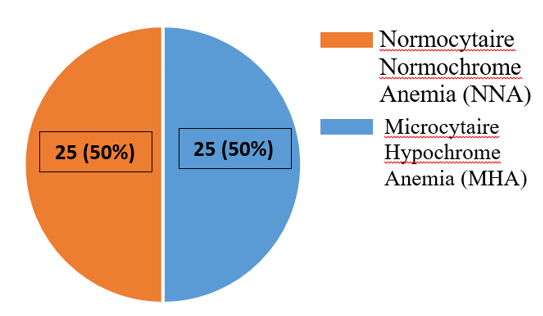
Figure 1 Distribution of morphological type of anemia in anemic pregnant women (n = 50).
Thrombocytopenia is an abnormality of hemostasis characterized by an abnormally low platelet count (≤ 150×103/mm3).7,23 Blood platelets or thrombocytes are responsible for blood clotting and during labor in pregnant women, they are crucial to prevent excessive bleeding in case of tearing. Regarding the level of blood platelets, no significant variation was recorded in anemic mothers compared to non-anemic mothers (Table 1). Nevertheless, this slight increase in platelets in anemic pregnant women (Table 1) could be attributed to mild thrombocytopenia (platelet count < 50-100×109/L) observed in a small number of women (4%) (Table 2). This mild thrombocytopenia characterized by mild symptoms could be explained by an increase in platelet production in the bone marrow during pregnancy, to control the hemorrhage that occurs during childbirth.8 It’s therefore a benign type of gestational thrombocytopenia during pregnancy which does not represent a danger for the mother or the baby and whose monitoring does not require any specific treatment 7 unlike diagnosed thrombocytopenia which requires intervention.24 In some studies, a higher prevalence of this mild thrombocytopenia among pregnant women in regions was 11% in Nigeria25 and 14% in Ethiopia.26 This variation in the prevalence of thrombocytopenia could be explained by the difference in contributing factors such as age, residence and socio-economic status of the study participants.27
In this study, microcytic hypochromic anemia in pregnant women is were common condition where red blood cells are smaller than normal (microcytic) and have reduced hemoglobin content (hypochromic). The most frequent cause could be iron-deficiency anemia in half of anemic pregnant women. Hence the need for regular monitoring to diagnose and manage this nutritional anemia, which is essentially iron deficiency, based on the questionnaire. In addition, the absence of thrombocytopenia in almost all anemic pregnant women is an encouraging result that may be due to the efforts made by governments to achieve the Sustainable Development Goals.
The author would like to thank the entire Nutrition team of the Laboratory of Physiology, Pharmacology and Pharmacopoeia, Nangui Abrogoua University and Dominique Ouattara Mother and Child Hospital in Bingerville for their contribution to the completion of this work.
This work was self-funded.

©2025 Francois, et al. This is an open access article distributed under the terms of the, which permits unrestricted use, distribution, and build upon your work non-commercially.