International Journal of
eISSN: 2381-1803


Literature Review Volume 13 Issue 6
1NICM, Western Sydney University, Penrith NSW 2751, Australia
Correspondence: Shivani P Shah, Western Sydney University, Locked Bag 1797, Penrith NSW 2751, USA
Received: September 21, 2020 | Published: December 31, 2020
Citation: Shah SP, Steiner GZ. A systematic review of randomised controlled trials examining Curcuma longa for dementia. Int J Complement Alt Med. 2020;13(6):259-264. DOI: 10.15406/ijcam.2020.13.00525
Curcuma longa has been used to treat several ailments traditionally, such as rheumatoid arthritis, conjunctivitis, skin cancer, small pox, chicken pox, wound healing, urinary tract infections and liver ailments. Due to its therapeutic properties, it has recently grown in popularity as a potential adjunct therapy for dementia. However, no systematic review of randomised controlled trials has been conducted to evaluate its efficacy and safety for cognitive decline. In this dissertation, literature searches were conducted using four electronic databases, including PubMed Central, Science Direct, CINAHL, and PsycINFO. We retrieved five published studies which were randomised control trials and have included these in the review. Search terms used were ‘dementia’, ‘Alzheimer*’, ‘ageing’, ‘mild cognitive impairment’, ‘cognitive decline’, ‘turmeric’ and ‘curcuma longa’. Efficacy measures such as biochemical markers, neuropsychological assessments, and pharmacological measures have been extracted from studies and synthesised in the review. Although several in vitro and in vivo model studies have found neuroprotective effects of curcumin in Alzheimer’s disease, there is not sufficient evidence to support curcumin use in humans with Alzheimer’s disease, and healthy volunteers. Short term usage of curcumin has been found to be safe. Various reasons such as its low bioavailability and inconsistency in study designs were responsible for discrepancies between preclinical findings and human trials.
Keywords: dementia, alzheimer’s disease, ageing, mild cognitive impairment, cognitive decline, turmeric, curcuma longa
Turmeric and its applications
Turmeric is yellow coloured spice derived from rhizomes of Curcuma longa, which belongs to the ginger family (Zingiberacea). Curcumin, which is diarylheptanoid polyphenol; is the major active constituent of turmeric, which contains more than 28 phyto-compounds (Veniglla, Gyengesi, & Muench, 2015). Traditional use of turmeric is as a culinary spice; it is also prescribed as an herbal medicine in traditional medicine systems. For example, turmeric is well known for its body cleansing properties in Ayurvedic, Chinese, and Persian medicine. It is also used in Indian, Asian, and Middle Eastern foods.1 Traditionally, in Ayurvedic medicine, turmeric has been used to treat ailments such as arthritis, gastric ulcers, jaundice, fever, liver disease, urinary tract disease, and skin disease.2 Currently, curcumin is thought to be a promising medicinal spice for treating people with Alzheimer’s Disease (AD) as it reduces pathology in transgenic mouse models of AD.3
In 2015, nearly 46.8million people were living with dementia worldwide.4 Approximately, 9.9 million new cases of dementia are recorded each year globally with one new case every 3.2 seconds (ADI, 2017). Around 1.1% of global GDP (US $818 billion) was contributing to the cost of dementia in 2015.5 In Australia, dementia is currently the leading cause of disability for people over age of 65 years, and it is the second leading cause of death.6 Given the lack of current treatment, investigation of any therapy which may alleviate symptoms or delay deterioration within AD patients should be conducted.
Mechanisms of action
The yellow pigmented portion of curcuminoids, which consist of 2–5% of rhizomes, are comprised of sesquiterpenes, carbohydrates, protein, resins and caffeic acid.7 Three major curcuminoids occur naturally in these Curcuma species: Curcumin, demethoxycurcumin and bisdemethoxycurcumin curcumin.7 Curcumin phytochemicals, which give the yellow to orange colour to turmeric are thought to be responsible for its therapeutic effects. Commercially available preparations of curcumin (e.g., cavacurcumin, wagner bio-curcumin, longvida, etc.) contain approximately 77% diferolymethane, 18% demethoxycurcumin (DMC) and 5% bimethoxycurcumin (BDMC).7 Curcumin is hydrophobic in nature and soluble in dimethyl sulfoxide, acetone, ethanol, and oils. Maximal absorption is around 420nm.7
Curcumin exerts a range of anti-inflammatory effects throughout the body as it is able to penetrate the central nervous system (Venigella, Gyengesi, & Muench, 2015). Curcumin has been shown to stimulate the proliferation of embryonic neural progenitor cells, and neurogenesis in the adult hippocampus; this may positively impact neuroplasticity.1 Its various anti-inflammatory properties have been shown to enhance amyloid beta (Ab) phagocytosis by microglial macrophages.1 Further, curcumin plays a neuroprotective role and leads to inhibition of Ab aggregation and deposition.1 Disilvestro, et al.8 showed that plasma content of Ab protein, a hallmark of AD, was reduced following curcumin supplementation in healthy middle-aged people.
Curcumin has also been shown to reduce oxidative stress, lower cholesterol levels, and inhibit acetylcholinesterase activity.1 Hishikawa et al.2 showed that among AD patients with behavioural and psychological symptoms of dementia, curcumin can regulate levels of neurotransmitters including norepinephrine, dopamine, and serotonin.2 It inhibits Mono-Amine Oxidase (MAO)-A and MAO-B enzymes, which play a role in the breakdown of dopamine and serotonin. Plasma alanine amino transferase, a liver injury marker, also showed reduced activity with curcumin.
An overview of preclinical studies
Changes in biochemical parameters have been reported in transgenic AD model rodent studies. In AD-model transgenic mice, Ab deposition and plaque burden was decreased following curcumin treatment. Curcumin inhibited Ab induced tau phosphorylation, microglial activation, inflammation and oxidative damage.1 Genomic instability levels are reduced among transgenic mouse models of AD due to curcumin. Lim et al. (2001) showed that AD model Tg2576 mice aged 10 months old that were fed a curcumin diet (160 parts per million (ppm)) for 6months resulted in reduced levels of oxidised proteins, the inflammatory cytokine, IL-1b, astrocyte marker glial fibrillary acidic protein (GFAD), soluble and insoluble Ab, and also plaque burden. Frautschy et al.3 also conducted a curcumin study using Sprague-Dawly rats infused with Ab40 and Ab42 showing signs of neurodegeneration. Those authors observed that dietary curcumin (2000ppm (5.43 mmol/g)) suppressed Ab-induced oxidative damage and memory impairment, and increased microglial labelling within areas adjacent to Ab deposits.
Positive effects of curcumin have also been found in behavioural studies on transgenic AD model rodents. Curcumin reversed changes in synaptophysin and post synaptic density 95 (PSD-95) levels related with brain plasticity, and improved rat performance in length and latency within the water maze test. Belviranli et al. showed that aged female rats supplemented with curcumin for 12d showed improved spatial memory (Morris water maze test) and reduced oxidative damage was observed in their brains. Han-Chang et al.9 showed that oxidative stress was decreased and active avoidance and locomotor activity was improved in the curcumin-protected group in AD rat model.
McClure et al.10 suggested that curcumin can only be applied to animal models as the iv-injection formulation is unfit for human use. A novel technique adopted the use of aerosolite, a curcumin derivative FMeC1 to facilitate safe delivery to the brain. A translational approach was adopted in a 5XFAD mouse model study which suggested inhalation exposure to an aerosolised FMeC1 improved distribution of the compound in the brain.10 Aerosol delivery has also been confirmed by immunohistochemistry data. FMeC1 binds to amyloid plaques deposited in hippocampal areas and the cortex. Preclinical studies support the use of aerosolite among humans as it is non-invasive as effective method to improve cognition, but this has not been tested yet.10
Other in vivo studies using Ab infused male Sprague Dawley rat model of AD examined the effect of combined curcuminoids and individual curcumin constituents with respect to genes related to synaptic plasticity.1 Genes affecting actin, Ca- calmodulin-dependent protein kinase formulation (particulate size < 80nm) were studied in vivo using AD transgenic mouse models. Significant improvements in working and cued memory have been observed with the use of non-capsulated curcumin compared to placebo with higher concentration of nano-formulation in plasma and within the brain. Goozee et al.1 argued that clinical studies of curcumin depict limited effects to date due to relatively low solubility and bioavailability.
Potential clinical efficacy
Curcumin and turmeric have been shown to play a significant role in increasing detoxifying enzymes, DNA damage prevention, DNA repair, and decreasing mutations and tumor formation.2 Curcumin’s potential neuroprotective effects demonstrated in the in vitro and in vivo studies outlined in Goozee et al.1 especially protection from the loss of functional neurons and synapses, indicate that it has potential for efficacy against neurodegenerative diseases. Studies conducted by Goozee et al.1 support curcumin’s neuroprotective and cognitive enhancing properties against AD. Curcumin supplementation has been shown to lead to health promotion, with protective effects observed on cardiovascular health, such as increased plasma content of nitric oxide and lowering plasma concentrations of the SICAM molecule, linked to atherosclerosis.8 Even low dose of specific curcumin preparation showed numerous health benefits. As outlined above, the potential efficacy of turmeric supports anti-oxidant, anti-inflammatory, anti-carcinogenic, anti-fertilizing, anti-bacterial, anti-microbial, anti-depressant activities, and anti-neurodegenerative effects. Significant improvement in neurocognition, injury and wound healing have also been observed.7
Aims
The aim of this systematic review was to evaluate evidence from clinical trials on the efficacy of curcumin to improve cognitive function among people with AD. Given that curcumin is thought to positively impact cognitive function among people with AD, and a number of clinical trials have been completed or are currently underway, a systematic review would help to determine if curcumin has efficacy for the treatment of dementia. Such a review would also help to set future guidelines for conducting clinical trials involving the use of curcumin. To the best of our knowledge, all currently published randomised controlled trials are included in this review.
Eligibility criteria
Eligibility criteria of articles were determined on the basis of several initial scoping searches and reviewing article content. Eligibility criteria were decided in alignment with the research aim, which was to evaluate the efficacy of turmeric for cognitive decline. That is:
Peer-reviewed studies were included if they reported a clinical trial and both curcumin intervention and a population of people with cognitive decline. Reviews, cohort studies, annual meetings, conference proceedings, book chapters, case studies, cross sectional studies, preclinical (in vitro and in vivo), and news article collections were excluded, as they did not meet inclusion/exclusion criteria.
Search strategy
The research team and an experienced librarian reviewed the search strategy before the systematic search was conducted. Peer-reviewed journals were searched for using four databases. Abstracts were reviewed from PubMed Central, Science Direct, CINAHL, and
PsycINFO ranging from databases’ dates of initiation to June 23, 2016. Similar search strategies were carried out in the other three databases, with only minor alteration to allow changes in the use of searching symbols. Reference lists of major articles were also searched for other potential studies.
Data extraction
Each full text article was assessed for extraction of study characteristics. Data extracted included authors, publication date, aim, study design, disease type, aspects of the study population, number of participants, age (mean and SD), gender ratio, recruitment of participants, diagnostic criteria, efficacy measures (mood and quality of life measures, clinical assessments, biochemical measures, cognitive measures or neuropsychological test battery), definition and dosage of curcumin and placebo, intervention administration and duration, methodologies, follow-up period, adverse events and key findings.
Study selection
Figure 1 illustrates the study selection process. Five studies met the inclusion criteria for review: Baum et al.11 Cox, et al.,12 Lee et al.,13 Rainey- Smith et al.,14 and Ringman et al.3 All studies included in the review were unique studies.
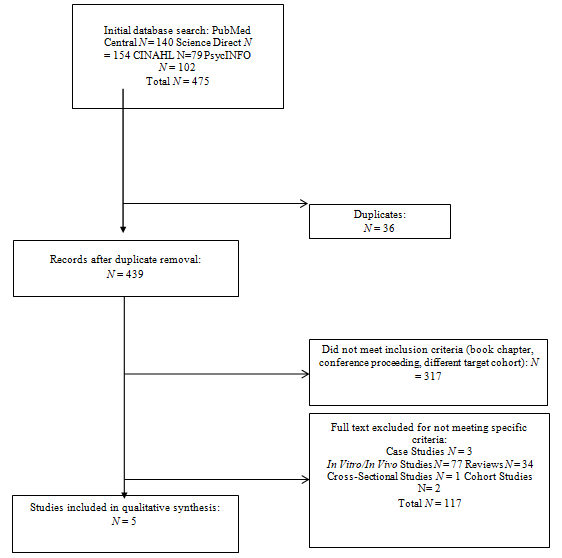
Figure 1 Flowchart of study selection.
Study characteristics
Table 1 details a summary of the characteristics of the 5 studies including aims, setting, population, intervention type and duration, outcome measures, efficacy of intervention, adverse events, withdrawals, and retention. Two studies included 1 intervention and 1 placebo group.11,14 Three studies had parallel treatment arms; of which two studies had two parallel treatment arms3,11 and one had four parallel treatment arms.13 Baum et al.11 was carried out in China, Cox et al.12 and Rainey-Smith et al.14 in Australia, Lee et al.13 in Taiwan, and Ringman et al.3 in the United States (Figure 1) (Table 1).
Participants: Across all the included studies, the total sample size was N = 261 (92 males, 169 females, mean age = 71.8, SD = 6.6 years). A priori power calculations were carried out to determine sample size in all 5 studies, all of which achieved target sample size.11–14 All randomised controlled trials were conducted with Curcuma longa in a human cohort. Across their studies, Baum et al.11 and Ringman et al.3 examined 70 patients with AD. Lee et al.13 studied 48 patients with newly diagnosed untreated pre-diabetes. Rainey Smith et al. (2016) and Cox et al. (2015) observed 156 cognitively healthy older adults altogether.
Recruitment: Only three studies specified recruitment location. They were as follows: Lee et al.13 recruited patients from a hospital outpatient clinic, Ringman et al.3 recruited from an AD research centre and Rainey Smith et al.14 recruited from community dwellings.
Intervention design: Studies examined treatment duration ranging from 1 day to 12 months. All five studies administered an oral intervention. In three studies, oral intervention was in the form of capsule (Cox et al., 2015; Rainey Smith et al., 2016; Ringman et al., 2012). Ringman et al. (2012) administered 500 mg curcumin (or placebo) in 4 capsules twice a day with a fatty meal. Rainey Smith et al. (2016) administered one 500 mg BCM-95*CG (BiocurcumaxTM) capsule or placebo three times a day after meals with water. Cox et al. (2015) administered one 400 mg LongVida® Optimised Curcumin capsule once daily (approximately 80 mg curcumin in a solid lipid formulation) or placebo. Baum et al. (2008) administered 4g curcumin capsules per day orally in treatment group. In Lee et al. (2014), patients ingested white bread along with either placebo, 2g cinnamon, 1g turmeric, or cinnamon 2g + turmeric 1g.
Outcome measures: A variety of outcome measures were analysed across the studies: biochemical markers, cognitive/neuropsychological, and pharmacological. Four studies included biochemical markers as an outcome measure (Cox et al., 2015; Lee et al., 2014; Rainey Smith et al., 2016; Ringman et al., 2012). Four studies analysed neuropsychological measures (Baum et al., 2008; Cox et al., 2015; Lee et al., 2014; Rainey Smith et al., 2016). One study also conducted pharmacokinetic analyses (Baum et al., 2008).
Compliance, withdrawals, and adverse events: Two studies reported on compliance (Cox et al., 2015; Rainey Smith et al., 2016), two reported on withdrawals (Baum et al., 2008; Ringman et al., 2012), and two reported on adverse events (Rainey Smith et al., 2016; Ringman et al., 2012). Information on the reporting of compliance, withdrawals and adverse events is summarised in Table 1.
Efficacy Measures
Biomarkers: In Baum et al. (2008), Serum A40 levels, plasma isoprostanes and Vitamin E were studied as biochemical measures. Serum A40 levels did not change among dose of 4g/day curcumin at 0, 1, or 6 months among probable AD patients, compared to placebo. No change was observed in plasma isoprostanes levels between baseline and 6 months for this treatment group compared to placebo. Baum et al. (2008) also found vitamin E levels increased during 1 month by 1±3 % with curcumin (8±2 % for capsules vs. 4±5 % for powder vs. -21±5% with 0g placebo) in probable AD patients. Plasma Ab1-41, CSF Ab1-42, CSFtau, ptau, F2 Isoprostanes were studied as biomarker in Ringman et al. (2012), which did not change throughout the study by taking 4*500 mg capsules twice daily for 48 weeks with fatty meal placebo or curcumin in patients with mild to moderate AD.
Neuropsychological assessment: In Lee et al.13 Working Memory (WM) was studied as a cognitive measure (test not specified) which did not change with response to turmeric and cinnamon in newly diagnosed untreated pre-diabetes on cinnamon 2g + turmeric 1 g for 6 hours compared to placebo, cinnamon 2g, and turmeric 1g group. In Ringman et al.,3 no change was observed in treatment group in patients with mild to moderate AD with respect to Alzheimer’s Disease Assessment Scale-Cognitive Subscale (ADAS-cog), Neuropsychiatric Inventory (NPI), Alzheimer’s Disease Cooperative Study- Activities of Daily Living (ADCS- ADL) scale or Mini Mental State Examination (MMSE) scores using repeated measures on treatment of 4*500mg capsules twice daily with fatty meal curcumin or placebo for 48 weeks. In Rainey Smith et al.14 mean Montreal Cognitive Assessment score improved by 0.64 points in the curcumin group of 1*500mg BCM-95*CG (BiocurcumaxTM) capsules three times a day after meals with water and by 0.09 point in the placebo group from baseline to 12 months in cognitively healthy older adults (N=96). In Cox et al.,12 1hr after dose of 400mg Long Vida® Optimized Curcumin capsule (once daily administration) there was a significant beneficial effect of acute curcumin treatment on number of correct responses during serial three subtraction task among cognitively healthy older adults for 4weeks compared to placebo.
Pharmacological measures: Baum et al.11 studied pharmacokinetic measures and found increase in plasma levels of curcumin and curcuminoids on 1*4g curcumin capsules per day orally among patients with probable AD.
The systematic review analysed the efficacy of curcumin for the treatment of dementia, and MCI. Randomised controlled trials incorporating curcumin treatment were evaluated. The discussion will focus on the two aims of this review (1) intervention efficacy and (2) safety measures.
Study characteristics
The majority of studies tested curcumin intervention, with most using a tablet or capsule for oral administration. Details regarding the composition of commercially available extracts were not found among most studies such as Ringman et al.3 Treatment duration varied considerably between studies from 1 day to 12months which added complexity to comparisons between studies. Different methodologies such as questionnaires and pharmacological analytic methods were used which also made results difficult to compare.
Intervention efficacy
Outcome measures including biomarker, neuropsychological and pharmacological measures were analysed. There were no significant changes among major biomarker measures. No change was observed among biomarkers such as Serum Ab40, plasma isoprostanes, plasma Ab1-41, CSF Ab1-42, CSFtau, ptau, and F2 Isoprostanes.3,11 Vitamin E levels showed significant improvement after curcumin treatment among probable AD patients.11 There was no change observed among cognitive and quality of life measures such as working memory, ADAS- Cog, NPI, ADCS-ADL, and MMSE when compared to placebo.3 Mean MoCA score showed improvement and beneficial effect was observed on number of correct responses during serial three subtraction task.14 Pharmocokinetic measures such as plasma levels of curcumin and curcuminoids increased significantly.11
Comparison to preclinical studies
Results from clinical trials are not consistent with findings from preclinical studies. This section will compare the findings on curcumin between clinical and preclinical studies. Curcumin exhibited various positive outcomes in animal models such as neuroprotective effects against AD, Parkinson’s disease, epilepsy and depression.2 In transgenic mice, curcumin shows protective effects, such as disruption of ß-amyloid deposition and ß-amyloid disaggregation, preventing oligomer and fibril formation; even at low dose of curcumin administration.15 Curcumin seems to be more effective when treating transgenic animal models than in sporadic late-onset AD in humans with associated cerebral atrophy and neuronal death. Some positive outcomes of curcumin have been observed in a few of the clinical trials explored here, but the evidence is not convincing enough to draw any conclusions in relation to efficacy.14
Some of the lowest prevalence rates of AD have been observed in India, where there is widespread consumption of turmeric.2 Associations have been found between curry consumption and better cognitive function in elderly Asian community- dwellers.16 However, in AD clinical trials, curcumin has been unable to produce sufficient brain levels of curcumin following oral administration.15 Hence, it is difficult to understand the beneficial effect on cognition observed in cohort studies. On considering heterogeneous populations such as dementia and probable AD, curcumin supplementation shows no effect on serum total cholesterol, LDL-C, triglycerides and HDL-C. 17 There is not sufficient evidence from clinical trials to suggest that curcumin could be an effective treatment for dementia.15 Curcumin may be effective for other indications, as it has been found to be effective and safe agent in treatment in patients with major depressive disorder without concurrent suicide ideation or other psychotic disorders.18
Safety measures
Curcumin short term use appears to be safe. The majority of studies reported compliance, withdrawals and adverse events.3,11–14 Patients withdrew due to gastrointestinal complaints, falls, dizziness, respiratory tract infection, worsened memory and difficulty swallowing pills. Haematological safety of using curcumin treatment was found among all clinical trials reviewed here. No other major side effects were reported. This is probably due to curcumin having poor water solubility and poor oral bioavailability, with administered doses primarily excreted in faeces.2 To overcome this challenge, new formulations along with piperidine, nanoparticle, micelles and liposomes have been developed to improve bioavailability.15 Major focus in relation to its dose response is to increase the bioavailability, BBB penetration and to sustain the half-life of curcumin.1
Strengths, limitations, and recommendations
Heterogeneity of the intervention and methodology employed made meta-analysis difficult. Outcome measures were difficult to analyse due to variation in methodology. Two studies did not report recruitment setting.11,12 Short follow up periods makes it difficult to detect potential long-term changes in dementia symptoms and progression. Reliable findings could be yielded from current ongoing clinical trials as they have larger sample sizes. Future work could consider focusing on only one intervention or methodology in order to quantify efficacy such as blood biomarkers or neuroimaging. Curcumin’s poor bioavailability is a major hurdle. Hence, as discussed, formulation along with piperidine, nanoparticle, micelles and liposomes should be developed and utilised in future research.15,19–27
This systematic review summarised and critically appraised efficacy of curcumin treatment on people with MCI and dementia. It was found that most studies focused on people with AD, utilized curcumin intervention that was on average 6 months long and used biomarker, neuropsychological and pharmacological assessment as an outcome measure. Nearly all studies reported positive results. According to pharmacodynamics, curcumin acts as neuroprotective against dementia than reversal medication. To the date this review was finalized (15 May, 2017) only few clinical trials have been conducted which have led to inconclusive results. Future findings from ongoing clinical trials will explain potential therapeutic efficacy of curcumin for dementia in more detail.
None.
Author declares that there are no conflicts of interest.
None.

©2020 Shah, et al. This is an open access article distributed under the terms of the, which permits unrestricted use, distribution, and build upon your work non-commercially.