International Journal of
eISSN: 2574-9862


Research Article Volume 10 Issue 1
 Neelam Bansal, Varinder Uppal
Guru Angad Dev Veterinary and Animal Sciences University, Ludhiana 141004, India
Correspondence: Anuradha Gupta, Department of Veterinary Anatomy, Guru Angad Dev Veterinary and Animal Sciences, University, Ludhiana 141004, India
Received: October 18, 2025 | Published: January 23, 2026
Citation: Gupta A, Uppal NBV. Comparative gross anatomical studies on vertebral column of emu (dromaius novaehollandiae) and domestic fowl (gallus gallus domesticus) . Int J Avian & Wildlife Biol. 2026;10(1):1-6. DOI: 10.15406/ijawb.2026.10.00245
The vertebral column of emu and domestic fowl was compared to find anatomical differences between flying and non-flying birds. The study revealed that the cervical vertebrae were 17 in emu and 14 in domestic fowl. Atlas was ring shaped with single occipital condyle and the axis had triangular dens anteriorly and foramen transversarium at junction of body and transverse process in both birds. There was a gradual increase in the length of the body from third to last cervical vertebrae. The anterior facets on the bodies of vertebrae were concave anteriorly and convex posteriorly. The cervical ribs were present ventrally in both the birds. The free ends of cervical vertebrae were more pointed in domestic fowl as compared to emu. Thoracic vertebrae were nine in number and were freely movable in emu whereas there were seven thoracic vertebrae in fowl, out of which first and sixth were free and second to fifth fused to form notarium. First thoracic vertebrae had bifid spinous process and there was a gradual increase in length of spinous process first to last thoracic vertebrae in Emu. The ventral spinous was well developed in the first two thoracic of emu and in all the thoracic vertebrae of domestic fowl. The lumbosacral mass was formed by 18 vertebrae (last thoracic, six lumbar, ten sacral and first coccygeal vertebrae) in emu and 16 vertebrae (last thoracic, 14 lumbar and sacral and first coccygeal vertebrae) in domestic fowl. There were 5 coccygeal vertebrae in emu out of which the last three were fused and boat shaped whereas there were 7 coccygeal vertebrae in fowl last four were fused together to form triangular pygostyle.
Keywords: emu, domestic fowl, vertebral column
Emu are large flightless birds originated from arid regions of Australia and is the second largest bird in height, after ostrich.1 They are totally marketable birds and their feathers, eggs and toe nails are being used in creative jewelry drawls for fashion items and craft goods such as backgrounds for fine artistic paintings. Therefore emu farming is profitable in agriculture sector. The highly flexible neck facilitated by the saddle shaped articular surface of the bodies of vertebrae plays an important role in pruning and eye sight. The number of cervical vertebrae varied with the length of the neck enabling birds with immobile eyes to rotate their head and to focus on objects which are close to or far away.2 The great degree of movement exhibited by the atlanto - occipital joint enables the beak to perform wide varieties of tasks.1 The rigidity of the backbone of birds is due to the fused vertebrae (notarium and synsacrum) in vertebral column. The rigidity furnishes support to the back and wings during its flight and enables to maintain an upright posture during standing.3 The backbone terminates in the pygostyle which provides support to the tail feather.4 The present study was conducted to elucidate comparative gross morphological differences between vertebral column of emu and fowl due to the paucity of literature.
The vertebral column of emu and domestic fowl was compared to find anatomical differences between flying and non-flying birds. The study was conducted on the vertebral column of emu birds brought for post mortem examination to the Department of Veterinary Pathology and fowl bones present in Department of Veterinary Anatomy, College of Veterinary Science, Guru Angad Dev Veterinary and Animal Sciences University, Ludhiana. The raw vertebral column collected from post-mortem waste was processed via following steps5,6 to obtain clean bones.
Cervical vertebrae were 17 in emu and 14 in domestic fowl. Similarly, Kumar and Singh2 and Sridevi et al.1 reported that the cervical vertebrae were 17 in number in emu whereas Nickel et al.7 noticed 14 cervical vertebrae in fowl and duck, 17 in goose and 12 in the pigeon. However, Mc lelland8 found 16 cervical vertebrae in the adult chicken. The cervical ribs were present ventrally with pointed free ends as bony spicules which were comparatively thickened in emu. These cervical ribs increased in thickness from sharp pointed ends to short stumpy ends caudally as recorded by Kumar and Singh2 in emu and Egwu et al.4 in fowl.
The atlas vertebra was ring shaped with dorsal and ventral arch both in emu and domestic fowl (Figure 1 and 2). The atlas lacked a vertebral body, dorsal arch of atlas was thin delicate and had a small notch about the middle of its anterior border as reported by Nickel et al.7 in domestic birds. The posterior border of the dorsal arch articulated laterally with the anterior articular process of the axis. Behind this articulation, the arch presented a short blunt caudo-laterally directed process on either side both in emu and domestic fowl. The ventral arch presented anteriorly a deep articular facet for the single occipital condyle. Posteriorly, the ventral arch presented a slightly concave articular facet which articulated with the anterior articular facet on the body of axis. The atlas vertebrae of emu and fowl had no difference except the size of vertebrae. The articular facet extended dorsally and presented a depression for the odontoid process of axis as reported by Kumar and Singh2 in emu and Nickel et al.7 in domestic birds. Posteriorly, the ventral arch presented a slightly concave articular facet which articulated with the anterior articular facet on the body of axis as reported by Rajalakshmi et al.3 in emu.
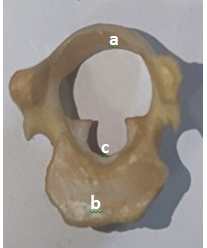
Figure 1 Posterior view of atlas vertebra in Emu.
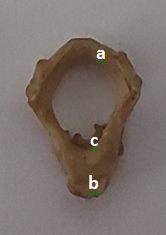
Figure 2 Posterior view of Atlas vertebra in Fowl.
a. Dorsal arch, b. Articular facet for occipital condyle, c. Ventral arch
The body of the axis had a triangular odontoid process / dens anteriorly (Figure 3). Similar findings have been reported by Kumar and Singh2 in emu. The dens reached up to occipital condyle. Below the dens was a saddle shaped articular facet which articulated with the posterior articular facet of atlas. The dorsal spinous process was in the form of a thick ridge which was pointed and narrow anteriorly and broader and blunt posteriorly with foramen at its root. The ventral spinous process was in the form of ridge. The anterior articular facet was small oval facet while the posterior facet was a large, oval and slightly concave facet directed downwards. In front of the posterior articular facet there was a large foramen. Between the anterior and posterior articular facets was a short thick transverse process with foramen transversarium in emu (Figure 3) but this foramen was absent in domestic fowl (Figure 4). It had a flat dorsal surface but the ventral surface showed articular facet as reported by Kumar and Singh2 and Rajalakshmi et al.3 in emu. The dens reached up to occipital condyle which concurred with finding of Nickel et al.7 in domestic birds.
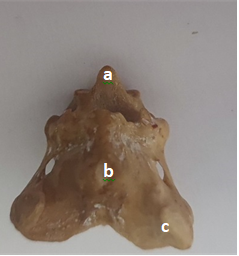
Figure 3 Dorsal view of Axis vertebra in Emu.
a. Dens, b. Spinous process, c. Transverse process
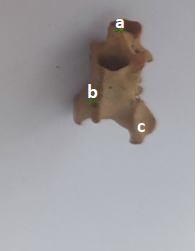
Figure 4 Dorsal view of Axis vertebra in Fowl.
a. Dens, b. Spinous process, c. Transverse proces
There was a gradual increase in the length and width of the body of cervical vertebrae from 3rd to 17th in emu. The anterior facet on body of vertebrae was concave while the posterior facet was convex which was in agreement with the finding of Rajalakshmi et al.3 in emu. The anterior articular facet of 3rd and 4th cervical vertebrae were oval, convex placed dorso-laterally and was directed dorso-medially (Figure 5). The posterior articular process of 3rd and 4th were large oval, slightly concave,separated by a shallow notch and directed downwards (Figure 6). Similar observations have been reported in emu.2,3 The dorsal spinous process was thick plate like with a rough dorsal border and presented a fossa on its cranial and caudal ends. The cranial fossa became deeper, wider and the caudal fossa was V shaped (Figure 6) which concurred with the finding recorded by Kumar and Singh2 and Rajalakshmi et al.3 in emu. The root of the transverse process from the 3rd cervical vertebrae onwards presented a foramen transversarium in both the birds (Figure 5 & 7). The present findings are in agreement with the findings of Kumar and Singh2 in emu and Nickel et al.7 in domestic birds. The bodies of the cervical vertebrae were constricted ventrally about the middle until the 15th cervical vertebrae which concurred with the findings of Kumar and Singh2 in emu. Richard (2011) described the presence of haemal canal in the cervical vertebrae of pelican for the protection of carotid arteries.
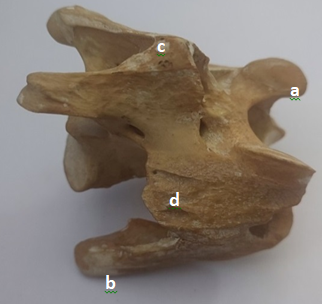
Figure 5 Lateral view of cervical vertebra in Emu
a. Anterior articular facet, b. Cervical libs
c. Spinous process, d. Transverse process
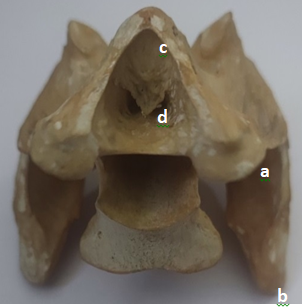
Figure 6 Posterior view of cervical vertebra in Emu.
a. Posterior articular facet, b. Cervical rib, c. Spinous process, d. Fossa
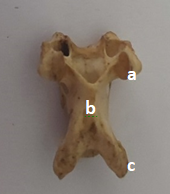
Figure 7 Dorsal view of Cervical vertebra in Fowl.
a. Anterior articular facet, b. Spinous Process, c. Posterior articular facet
Thoracic vertebrae were nine and freely movable as reported by Kumar and Singh2 in emu. Whereas there were seven thoracic vertebrae in fowl, out of which first and sixth were free, and second to fifth were fused to form notarium (Figure 10) as reported by Egwu et al.4 in fowl. Similarly, Nickel et al.7 found seven in fowl and Pigeon and 9 in duck and goose. The dorsal spinous process (Figure 8) was plate like as reported earlier by Kumar and Singh2 in emu. The spine of the last thoracic vertebrae showed the maximum height (Figure 9) in emu. The spine of 8th and 9th showed forward inclination. The ventral spinous was well developed in the first two thoracic of emu and in all the thoracic vertebrae in domestic fowl. Similarly, Kumar and Singh2 observed that the first two thoracic vertebrae had well developed ventral spinous process in emu. The thoracic vertebrae were freely movable in emu which was similar to the findings of McLelland8 in duck and goose.
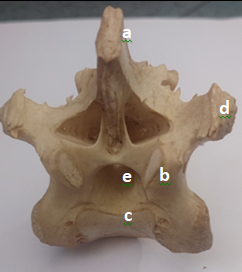
Figure 8 Anterior view of thoracic vertebra in emu.
a. Spinous process, b. Anterior articular facet
c. Body, d. Transverse process, e. Vertebral canal
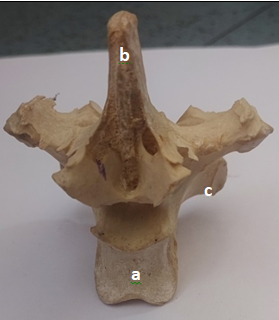
Figure 9 Posterior view of thoracic vertebra in emu.
a.Body, b. Spinous process, c. Posterior articular Facet
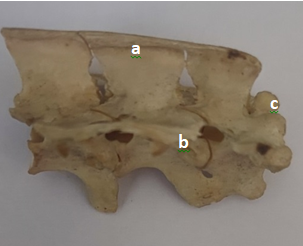
Figure 10 Lateral view of Notarium of Fowl.
a.Spinous process, b. Transverse process, c. Anterior articular facet
The transverse processes were broad plate like and increased in width from the 1st to 3rd and 4th, 5th and 6th thoracic vertebrae were largest in width. The root of the transverse processes was pierced by the anterior and posterior foramen transversarium. The lateral borders of transverse processes had groove which articulated with the tuber costae of corresponding rib. Kumar and Singh2 found that the transverse processes of 4th to 7th thoracic vertebrae possessed additional facets for articulation with ribs in emu. The anterior articular process of the 1st thoracic vertebrae was similar to cervical vertebrae. The anterior articular facets were oval and directed upward whereas the posterior articular facets were oval and directed downward (Figure 8 and 9). Kumar and Singh2 observed the caudal articular facets were slightly convex and less deep than cranial articular process in emu. Between the anterior articular process and dorsal spinous process on either side, there was a pocket like fossa which gradually deepened caudally and had numerous foramens (Figure 8).
The lumbosacral mass was formed by 18 vertebrae (last thoracic, six lumbar, ten sacral and first coccygeal vertebrae) in emu (Figure 11 and 12). The synsacrum was formed by fusion of 16 vertebrae (last thoracic, 14 lumbar and sacral and first coccygeal vertebrae) in domestic fowl (Figure 13 and 14). Nickel et al.7 explained that the lumbosacrum was consisted of 14 to 15 vertebrae depending on the species which were fused into a bony rod the synsacrum in domestic birds.
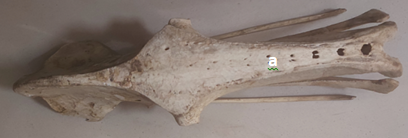
Figure 11 Dorsal view of Lumbosacral mass in Emu.
a. Dorsal sacral foramina
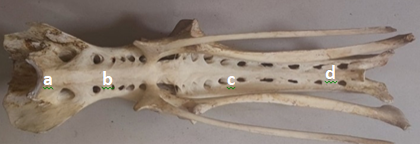
Figure 12 Ventral view of Lumbosacral mass in Emu.
a. last thoracic vertebra, b. Lumbar vertebrae
c. Sacral vertebrae, d. Ventral sacral foramina
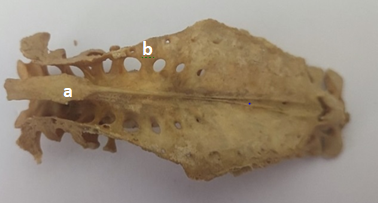
Figure 13 Dorsal view of synsacrum in Fowl.
a. Spinous process, b. Transverse process
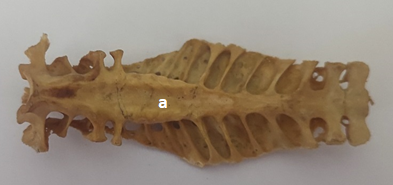
Figure 14 Ventral view of synsacrum in Fowl.
a. Ventral Spine
There were five coccygeal vertebrae in emu out of which the last three were fused and boat shaped (Figure15) which concurred with findings of Kumar and Singh2 in Emu. The dorsal spinous process of first to fourth coccygeal vertebrae was double and transverse processes were directed downward and gradually reduced in its length and width. The dorsal spinous processes fused to form a median crest with two lateral ridges on either sides of the summit of the crest, which was bulbous along its posterior limit. The ventral aspect of the bodies of fused vertebrae presented a median sulcus bordered by two sharp crests along its lateral aspect. Similarly, a ventral crest was found in duck Nickel et al.7 There were seven coccygeal vertebrae in fowl and last four were fused together to form triangular pygostyle (Figure 16). Similarly Nickel et al.7 and Egwu et al.4 reported five coccygeal vertebrae in domestic birds. They described that coccygeal vertebrae had strong transverse processes and distinct spines in fowl. The pygostyle present in fowl supports the tail feathers and musculature during flight (Table 1).4
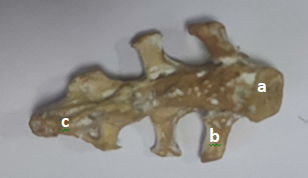
Figure 15 Dorsal view of coccygeal vertebrae in Emu.
a. Body, b. Transversal process, c. last cocyggeal vertebrae
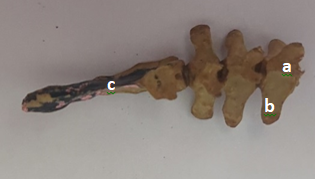
Figure 16 Dorsal view of coccygeal vertebrae in Fowl.
a.Body, b. Tranversal process, c. Pygostyle
|
Vertebra |
Emu |
Fowl |
|
Cervical |
· Number of cervical vertebrae was 17. · The cervical ribs were thickened. |
· Number of cervical vertebrae was 14. · The cervical ribs were pointed. |
|
Thoracic |
· Number of thoracic vertebrae was 9. · All the thoracic vertebrae were freely movable in emu. |
· Number of thoracic vertebrae was 7. · 1st and 6th were freely movable, second to fifth were fused to form notarium and 7th one is fused with synsacrum. |
|
Lumbo- Sacral mass |
· The fused thoracic, lumbar, sacral and coccygeal vertebrae formed lumbosacral mass. · The lumbosacral mass is formed by 18 vertebrae i.e. last thoracic, six lumbar, ten sacral and first coccygeal vertebrae in emu |
· The fused thoracic, lumbar, sacral and coccygeal vertebrae formed synsacrum. · The synsacrum was formed by fusion of 16 vertebrae i.e. last thoracic, 14 lumbar and sacral and first coccygeal vertebrae in fowl |
|
Coccygeal |
· There were five coccygeal vertebrae in emu. · The last three were fused and boat shaped |
· There were 7 coccygeal vertebrae in fowl. · last four were fused together to form triangular pygostyle |
Table 1 Showing the characteristic features of different vertebrae in Emu and Fowl
The vertebral column of birds, excluding the cervical region, differs significantly from that of mammals, particularly with respect to regional collation. Depending on the species, there may be fusion of thoracic vertebrae, termed the notarium in fowl, or fusion of thoracic, lumbar, sacral and coccygeal vertebrae called lumbosacral / mass in emu and fowl. Free coccygeal vertebrae were followed by the pygostyle in fowl for supporting of tail feathers, providing control surfaces, especially during takeoff and landing. Disparity in function (in relation to flying) is due to structural difference in the vertebral column between emu and fowl. Thoracic and lumbar vertebrae have more differential features due to their involvement in the support of appendicular skeleton.9–15
None.
Authors have declared no conflict of interest in this manuscript.

©2026 Gupta, et al. This is an open access article distributed under the terms of the, which permits unrestricted use, distribution, and build upon your work non-commercially.