eISSN: 2469-2778


Case Report Volume 13 Issue 1
 Ahmed Rashidul Hasan2
1Associate Professor, Dept. of Pediatric Hematology and Oncology, Combined Military Hospital, Bangladesh
2Assistant Professor, Dept. of Pediatric, Bangladesh Shishu (Children) Hospital, Dhaka, Bangladesh
Correspondence: Dr Kamrun Nahar, Associate Professor, Dept. of Pediatric Hematology and Oncology, Combined Military Hospital, Dhaka, Bangladesh, Tel +8801711220833
Received: June 05, 2025 | Published: June 19, 2025
Citation: Nahar K, Hasan AR. Unexplained bleeding in a child: a rare case of factor XIII deficiency. Hematol Transfus Int J. 2025;13(1):22-25. DOI: 10.15406/htij.2025.13.00346
Rare bleeding disorders (RBDs) include inherited deficiencies of coagulation factors, fibrinogen, factor (F)II, FV, FV + FVIII, FVII, FX, FXI, and FXIII, and vitamin K-dependent anticoagulant proteins, Protein C, and Protein S. Due to their rarity and limited epidemiological data or sufficient knowledge about epidemiology and clinical outcomes, RBDs often pose significant diagnostic and therapeutic challenges. FXIII protein plays a pivotal role in stabilizing the blood clot by facilitating the cross-linking of the fibrin polymer, thus ensuring effective hemostasis. The deficiency of FXIII coagulation factor results in normal clot formation but a lack of stability to maintain the clot, which leads to prolonged bleeding. Approximately 95% of affected individuals have a deficiency of the A subunit, while the remaining have a B subunit deficiency.
Congenital FXIII deficiency is a rare, autosomal recessive disorder with variable bleeding manifestations. Though rare, acquired cases are also seen mostly in older patients with autoimmune disease, malignancy, and DIC. They manifest with a normal coagulation profile, demanding a high level of suspicion in a patient with a bleeding disorder for accurate diagnosis. Factors such as a strong family history of bleeding disorders, consanguineous marriage, and recurrent early miscarriages gave a strong suspicion. Patients with moderate and mild deficiency can have only mucocutaneous bleeding or may be completely asymptomatic. Severe bleeding manifestations, such as CNS or umbilical cord bleeding, or recurrent hemarthroses and hematomas are common in severe deficiency.
Following a normal coagulation workup, clot solubility tests may be used, though their sensitivity and specificity are limited. The preferred diagnostic approach includes quantitative FXIII assays and immunological testing. The management plan includes comprehensive education to patients and their families, prophylactic precautions, lifestyle, and treatment. The mainstay of treatment is replacement of missing factors with recombinant FXIII concentrates. Due to limited availability, high cost of rFXIII concentrates, other alternative options are transfusion of cryoprecipitate, fresh frozen plasma (FFP). However, these alternatives carry risks such as infection transmission and infusion-related complications. A multidisciplinary approach should be taken to achieve an optimum outcome, patient safety, and minimize complications.
Keywords: FXIII deficiency, recombinant FXIII concentrate, clot solubility test, rare bleeding disorders
Coagulation is a vital physiological process by which blood forms a clot to prevent excessive blood loss following vascular injury. It involves a complex cascade of events, primarily mediated by platelets, clotting factors, and the vascular endothelium. When there is an injury, an immediate vasoconstriction occurs to reduce blood flow – a response known as Vascular Spasm. Subsequently, platelets adhere to the damaged vessel wall, aggregate to form a Platelet Plug, and it also release substances that promote further clotting. Then a series of enzymatic reactions starts working, named the Coagulation Cascade, leading to fibrin formation, which stabilizes the clot. Maintaining a proper balance between clot formation and breakdown is essential for effective hemostasis.1
Disorders of coagulation can result in either excessive bleeding (as seen in hemophilia) or excessive clotting (thrombosis). One major concern of this excessive bleeding disorder is the deficiency of clotting factors (proteins). Numerous coagulation factors act through three different pathways, forming the coagulation cascade, and their deficiencies make a hazardous condition upon injury. Among these, FVIII and FIX deficiencies are the most common; others are relatively rare and categorized as rare bleeding disorders (RBDs). The RBD includes deficiency of fibrinogen (FI), prothrombin (factor II), FV, FVII, FX, FXI, or FXIII, the combined deficiency of FV and FVIII, and two important vitamin K-dependent anticoagulant proteins, protein C, protein S.2
In this report, we present a case of a two-year-old girl diagnosed with factor XIII deficiency, one of the rarest inherited genetic bleeding disorders. It is an autosomal recessive disorder that occurs due to the deficiency of coagulation factor XIII (FXIII), or fibrin stabilizing factor.3,4 It is the rarest factor deficiency, occurring in 1 per 5 million births.4
FXIII, also known as fibrin-stabilizing factor,1 plays a crucial role in the final stage of the coagulation cascade by stabilizing the fibrin clot.1,4 Unlike most coagulation disorders, patients with FXIII deficiency do not have impaired initial clot formation; instead, it results in unstable clots that later break down, resulting in prolonged, uncontrolled, and sometimes life-threatening bleeding episodes.4 Clinical presentation can range from mild mucocutaneous bleeding to severe manifestations such as umbilical stump bleeding, intracranial hemorrhage, or recurrent soft tissue hematomas.5,6 Most cases are diagnosed in infancy due to abnormal bleeding. FXIII deficiency can be either congenital or acquired, the latter typically associated with autoimmune disorders, malignancies, or disseminated intravascular coagulation (DIC).7 This report highlights this rare condition's clinical presentation, diagnostic approach, and management. Early recognition, diagnosis, and regular prophylactic treatment are crucial in managing RBDs, including FXIII deficiency, for reducing the risk of severe bleeding-related complications and improving the quality of life for affected individuals.8
A 2-year-9-month-old female child, born to non-consanguineous parents, presented with recurrent bleeding episodes. The first episode was noticed at the age of 9 months, following trauma in her left cheek and resulting in a 3x3-inch hematoma with persistent oral bleeding (Figure 1). Initial laboratory investigations showed a normal complete blood picture (CBC), with platelet concentration 3,22,000 /mm3, mean platelet volume (MPV) 7.8 fL (normal range 7.20-9.20). Coagulation studies revealed normal bleeding time (BT) or closure time (CT); a prothrombin time (PT:15.1 seconds (reference: 11.8–14.3 s), an international normalized ratio (INR) of 1.2, and an activated partial thromboplastin time (aPTT) of 31 seconds (reference: 23–34 seconds). Biochemistry, including renal & liver function tests, serum electrolytes, calcium, and iron profiles, was unremarkable. Conservative management with tranexamic acid, oral hygiene care, and oral antibiotics (cefixime) leads to gradual improvement. No active bleeding source could be identified, but persistent oozing continued. A multidisciplinary team with oral and maxillofacial surgeons, ENT specialists, and pediatric surgeons was involved for evaluations and provisionally diagnosed as a ‘cheek hematoma following blunt trauma’.
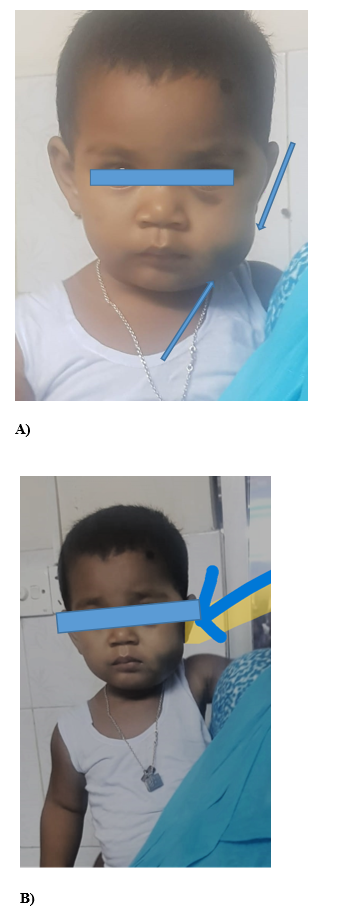
Figure 1 Left cheek swelling with blackish discoloration.
Approximately six months later, she again presented with recurrent oozing from teeth and mild gingival swelling. Repeat coagulation studies & platelet studies remained normal. However, the nature of bleeding in comparison to the wound suspicion raises to an underlying bleeding disorder. Platelet disorder was excluded as platelets’ morphology, number, and MPV were normal. Platelet aggregation tests were normal, but platelet function tests were unavailable. Common coagulation factors assay, like FVIII (148%), FIX (162%), were found within normal limits. Then looked for rarer factors like Liquid fibrinogen (FIB) levels 234 mg/dl (normal; 200-400 mg/dl), FV (77%), all found normal. von-Willebrand’s antigen (vWF:Ag; 98%) and Ristocetin Cofactor assay showed normal activity. Due to unavailability, other factor VII, XI, and XIII assays could not be performed. A positive clot solubility test raised suspicion for FXIII deficiency. Advanced testing, including a quantitative FXIII assay and whole-exome sequencing (sent abroad due to local unavailability), confirmed low FXIII activity (0.28 U/mL; ref: 0.44–1.43 U/mL) and a heterozygous likely pathogenic variant in the F13A1 gene, confirming the diagnosis.
Over this time, she continued to experience oozing and intermittent bleeding episodes after trivial injuries. Her parent was counseled regarding the diagnosis, bleeding risks, and future management. Special attention was given to the implications for menstruation and pregnancy in the future. As recombinant FXIII concentrate was unavailable and cost-prohibitive, the patient was managed with periodic fresh frozen plasma (FFP) transfusions, cryoprecipitate transfusions and other supportive care. Precautions were advised for future surgical procedures. Follow-up was arranged at the local hospital or with the local hemophilia center. Until the last follow-up; she is doing relatively well with all safety precautions.
Parental consent was obtained for publication.
Rare bleeding disorders (RBDs) are named for a heterogeneous group of inherited coagulation factor deficiencies with varying clinical manifestations.8 Deficiencies in coagulation factors I (FI), FII, FV, combined FV and FVIII (CF5F8), and vitamin K-dependent coagulation factors FVII, FX, FXI, and FXIII are referred to as rare bleeding disorders (RBDs) or rare coagulation factor deficiencies (RCFDs) or recessively inherited coagulation disorders.9 They are considered ‘Rare’ as they collectively account for 3-5% of all hereditary bleeding disorders, while hemophilia A, B, and von Willebrand factor disease comprise ~95% to 97%.10 Among RBDs, FVII deficiency is the most common, and the most severe clinical bleeding manifestations were noticed in FX and FXIII.2 The most frequently affected bleeding sites of RBDs were the skin and mucus membranes.2
The deficiency of factor XIII (FXIII), also known as fibrin stabilizing factor deficiency, was first reported in the literature in 1960 by Duckert et al.3 It is the rarest factor deficiency, occurring in 1 per 5 million.4 It is inherited in an autosomal recessive fashion, meaning both parents must carry the gene to pass it on to their children.7 It can affect both sexes equally across all racial groups.4 Although literature reported on the presence of consanguinity, a higher incidence of compound heterozygosity is observed among non-consanguineous families.11
As it is very rare, very few case reports has been found, like Kitano H et.al reported a 29-year-old male, presented with pain with swelling around the posterior teeth of the right mandible.12 Eker I et al. reported a case of female presented with spontaneous abortion having this rare disease.13 Jain M et al reported a post-operative case having this disorder.14
Plasma FXIII circulates as a hetero-tetramer (A2B2), consisting of two FXIII-A subunits (synthesized in hematopoietic cells) and two FXIII-B subunits (produced by hepatocytes).5 FXIII-A subunit deficiency predominance (95%), whereas FXIII-B is a rare variety.7,15 Factor XIII plays an important role in the cross-linking of polymerized fibrin, stabilizing the clot, achieving hemostasis, and promoting wound healing, thrombosis, and tissue repair.16
Unlike hemophilia A or B, which causes prolonged bleeding, when a child is born with FXIII deficiency, his or her coagulation process will act normally; a clot will still develop, but it will prematurely break down and cause recurrent bleeding episodes.4 Patients usually first noted excessive bleeding from the umbilical cord stump (approximately 80% of cases4) or post-circumcision.9 Patient may feature poor wound healing, spontaneous intracranial hemorrhage (30%), bruising, nose and mouth bleeds, muscle bleeds, and delayed bleeding following surgery.4 Women can experience menorrhagia, long, heavy menstrual periods, and recurrent pregnancy loss, while men may have fertility issues.3 Intracranial hemorrhage (ICH) is a major cause of mortality in FXIII-deficient patients.4 The severity of symptoms ranges from mild to severe, depending on FXIII activity levels; spontaneous bleeding is common when levels fall below 5–10%, with increased risk below 15%.5 The half-life of FXIII is 9–15 days.17
Though it is usually inherited, and may also be acquired too. Congenital FXIII deficiency can be due to defects in either FXIII-A genes (Type 2 defect) or FXIII-B genes (Type 1 defect).7 Acquired FXIII deficiency is rare, still occurs due to autoantibodies against FXIII.18 Which may result from liver disease, certain leukemias, Disseminated Intravascular Coagulation (DIC), inflammatory bowel disease, autoimmune conditions such as systemic lupus erythematosus, rheumatoid arthritis, certain medications (e.g., isoniazide, valproic acid, chemotherapeutic agents, and tocilizumab).5,7 It typically affects middle-aged or elderly individuals, presenting with deep tissue hematomas or delayed bleeding with activity ranges in plasma from 50 to 75% of normal.7 Normal Plasma FXIII activity levels range from 50 to 220%. Though a level below 50% generally indicates FXIII deficiency but spontaneous bleeding can be prevented by maintaining a level between 5 and 30%.4,7 Like other bleeding disorder classifications of the severity of RBDs based on the residual level of the missing factors, activity <1% for the severe form, 1-5% for the moderate, and >5% for the mild.9,10
Diagnosis for FXIII deficiency is usually done on high clinical suspicion. Identify patients presenting with suspected bleeding disorder through comprehensive clinical evaluation and medical history, but on normal standard laboratory coagulation tests, including platelet count, fibrinogen level, bleeding time, prothrombin time (PT), international normalized ratio (INR), and activated partial thromboplastin time (aPTT), are usually normal.6,11 High suspicion may lead to FXIII activity level, making the diagnosis, as the clotting end point is not affected by the absence of FXIII, but the quality of the clot, which is abnormal. Diagnostic workup includes: FXIII activity assay (quantitative functional test), Clot solubility test (positive only at very low FXIII activity levels <1–3%7 even 0), FXIII antigen assay. The extent of bleeding usually correlates with plasma FXIII levels, risk of spontaneous bleeding increases when level falls below 15%, and symptoms are usually seen when level falls below 5%.5 Further tests may be done with inhibitor screening & genetic testing.6
The most effective treatment of coagulation factor deficiencies is replacement with specific deficient clotting factors, using specific plasma-derived or recombinant products. The U.S. Food and Drug Administration (FDA) has approved two FXIII replacement products: plasma-derived FXIII concentrate (Fibrogammin P; Corifact®) in 2011 and human recombinant product FXIII-A 2; rFXIII-A2 (Tretten®) in 2013.4 FXIII concentrate is the preferred therapy, and prophylactic replacement is recommended for patients with FXIII activity <1%. Human rFXIII-A2 has a half-life of 6–9 days and is primarily used for routine prophylaxis.19 It is a homodimer that binds with the patient’s own endogenous circulating FXIII-B subunits to form the heterotetramer FXIII-A2B2.4 Those having activity <4-5% but severe bleeding phenotypes, prophylactic therapy may also be considered.20 These products are generally safe but may cause mild side effects (e.g., headache, injection site reactions) and carry a small risk of thrombosis or inhibitor formation at high doses.5
Unfortunately, these therapies remain inaccessible in many parts of the world. In such cases, alternative treatment options have been used traditionally, including cryoprecipitate, fresh frozen plasma (FFP), or virus-inactivated plasma.7 However, they carry risks of transfusion reactions, bloodborne infections, immune sensitization, and allergic reactions.15 Dosing of FFP is 10 mL/kg every 4–6 weeks (FXIII content: 0.5–1.5 U/mL)21 and Cryoprecipitate is 1 bag per 10–20 kg body weight in every 3–4 weeks (contains ~20–30% of the original FXIII).22 As the half-life of endogenous FXIII is long, ranging from 5 to 11 days, prophylactic therapy with fresh frozen plasma or cryoprecipitate can be administered every 4 weeks.23 The recommended prophylactic goal is to maintain FXIII activity above 5%. Patients with prior ICH or severe bleeding may need higher trough levels.5
Acute bleeding episodes require individualized dosing guided by history with severity of the bleed and bleeding history, thromboelastography (TEG), and clot solubility. Minor bleeding episodes can be treated with antifibrinolytic agents such as epsilon-aminocaproic acid or tranexamic acid, which help prevent excessive fibrinolysis without causing systemic thromboembolic complications.9
For acquired cases, there is still no current standard for therapy.18 Management may include: Corticosteroids, IVIG, Rituximab, Plasmapheresis, Factor replacement (response may be limited in the presence of inhibitors). Inhibitors for FXIII antibodies arise very rarely, may be associated with medications such as isoniazid, penicillin and phenytoin.7,11 Treatment with anti-CD20 (rituximab), steroids, IVIG, or even plasmapheresis has been reported as a good responder and resolution of the inhibitor.
Patient with FXIII deficiency will require lifelong monitoring and treatment with regular follow-up at a specialist center, prefer Hemophilia Treatment Centres (HTCs) if available. Patients and their families should receive comprehensive education, including information on potential symptoms, risk factors, and the importance of prompt medical attention. They should carry an emergency band. They should avoid nonsteroidal anti-inflammatory drugs (NSAIDs) like ibuprofen due to their antiplatelet effects. Immunizations should be administered via the subcutaneous route rather than intramuscular injection to minimize bleeding risk. For surgical procedures, careful preoperative planning with hematology specialists is essential. Contact sports, which carry a high risk of head injury, need to be avoided.
Women with severe FXIII deficiency often experience menorrhagia and an increased risk of miscarriages, postpartum hemorrhage. A multidisciplinary team approach is essential for managing pregnancy in FXIII-deficient patients. Treatment should be individualized based on the patient's bleeding phenotype.6 While some experts advocate the use of tranexamic acid, caution is warranted due to its thrombosis risk. Neuraxial anesthesia can be considered after thorough risk-benefit discussions in patients without a significant bleeding phenotype. In some cases, FVII has been successfully utilized.24 Advanced coagulation testing, such as rotational thrombo-elastography, may provide additional insights into bleeding risk assessment.24 High recommendation for treatment with recombinant FXIII concentrates over FFP.25 They should receive regular FXIII replacement therapy to maintain the activity above 10% throughout pregnancy, with dose adjustments as pregnancy progresses.25 A booster dose is also recommended before labor to prevent hemorrhage and avoid postpartum replacement therapy.4
With early diagnosis, appropriate therapy, and regular follow-up, patients with FXIII deficiency can expect a normal life expectancy. However, untreated individuals are at risk for life-threatening ICH, recurrent fetal loss, hemarthrosis, and delayed post-traumatic bleeding. Inhibitor development is rare but associated with high morbidity and morbidity.5
Although, like other coagulation factor deficiency disorders, there is a lifelong risk of bleeding with FXIII deficiency, the prognosis is excellent because of the good response to treatment with FFP, cryoprecipitate, or plasma-derived FXIII concentrate. Because the half-life of FXIII is long, prophylaxis is easily accomplished for those patients with the worst bleeding history, and the incidence of inhibitor development is extremely low.7 But the main drawback is the limited access to the treatment options due to high cost and unavailability of the specific factor concentrates.
Congenital FXIII deficiency is an extremely rare disorder, with acquired forms even rarer. Despite its rarity, it poses a significant risk of life-threatening bleeding and demands early recognition, timely initiation of factor replacement therapy, and lifelong follow-up. For this, clinicians should be aware of this during unexplained bleeding disorders in infants to young children, even in adults. Advances in treatment, including FXIII concentrates, have improved patient outcomes, but access to these treatments remains a challenge in many parts of the world. A tailored, multidisciplinary approach is essential for optimal management, especially during high-risk situations such as pregnancy and surgical interventions.
None.
The authors declare that there are no conflicts of interest.

©2025 Nahar, et al. This is an open access article distributed under the terms of the, which permits unrestricted use, distribution, and build upon your work non-commercially.