eISSN: 2577-8250


Research Article Volume 7 Issue 2
Vilnius Academy of Arts, Lithuania
Correspondence: Jolanta Zabulytė, Faculty of Kaunas, Vilnius Academy of Arts, Lithuania
Received: July 23, 2025 | Published: July 30, 2025
Citation: Zabulytė J. Variations of floral decoration in old Lithuanian wooden crosses. Art Human Open Acc J. 2025;7(2):99-106. DOI: 10.15406/ahoaj.2025.07.00259
.
Keywords: .
KL – Kryždirbystė Lietuvoje, Vilnius, 1998
LKV – Lietuvos kryždirbystės vaizdai: Adomo Varno negatyvų rinkinys, Vilnius, 2023
Zabulytė – Jolanta Zabulytė, Anykščių krašto kryždirbystė: mediniai paminklai, Vilnius, 2018
The ornate Lithuanian wooden crosses of the late 19th century - the first half of the 20th century belong to rural culture, therefore they are part of folk art. They have been studied from various aspects: since the beginning of the 20th century, attempts have been made to classify them according to structure and decorative elements, but their diversity has led to the lack of a comprehensive typology; individual decorative motifs and symbols have been discussed more than once, and much attention has been paid to regional features. However, some issues have not been analyzed in more detail. One of these is the nature of the plant ornament and its regional peculiarities. Since the variety of the decor of old Lithuanian crosses is extremely rich, in this text I will limit myself to a brief analysis of the essential features, focusing on1 the decoration of monuments in two large regions that reveal the creative style of local rural masters - Samogitia and Aukštaitija.2 In order to reveal the main features of the former rich tradition, the article discusses only the common variants of cross decoration, distinguishing types according to the composition of the ornament in the structure of the monument, discussing the forms of plant motifs, and presenting interpretations of their symbolism.
1Samogitia – geographically located below, Aukštaitija – above (analogy with Lower and Upper Austria, etc.)
2In other regions of Lithuania, plant ornamentation is found only on individual monuments, where flowers cut from tin are usually placed on the facades of the mast or/and the cross chapel.
As in all folk art, plant motifs are used in the decoration of crosses of two types, which are distinguished by all researchers of crosses: 1) specific - tulips, lily flowers, oak leaves and 2) stylized, expressing not a specific plant, but only the idea of a plant - four- or six-petal flowers (daisies - rosettes), leaves of various shapes, buds, quite often modest or more complex S-shaped motifs, becoming winding garlands with plant details - small flowers, leaves, buds. A popular feature of combining the two styles in folk art is indicated by Juzef Perkovskis, who claims that the stylistic originality of plant ornament is manifested in the rejection of naturalism and the non-use of identical flowers and leaves in one composition, in the simplification of forms, when the leaves of the plant are replaced by spirals and an almost Art Nouveau decorativeness is created.3 This is also typical of cross decor - stylized motifs are combined with specific ones, such as a tulip or lily flower combined with leaves that are not typical of this plant, or S-shaped curls of various configurations, etc.
Although crosses belong to the field of religion, the grapes and pomegranates popular in church art were not popular in the ornamentation of traditional Lithuanian wooden monuments – only isolated examples of crosses by the original master Vincas Svirskis have been found, with bunches of grapes depicted on the pillars. In most cases, analogies are noticeable in the decor of wooden crosses with the decoration of rural architecture, furniture, and some woodwork, and this is natural, because Lithuanian cross-making belongs to the same rural culture, therefore decorative elements recognizable by the local population and seen in other areas of folk art are used. On the other hand, the influence of church decor is also obvious, but it is manifested mainly in the use of religious symbols and the image of the cross – the Tree of Life, and not in the copying of specific plant forms, although there were also certain local variations.
Types of floral decoration of wooden crosses in Samogitia, their variants, interpretations of symbolism
Plant decoration is classified into types according to two features - its role in complementing the silhouette of the cross and its role as part of the structural elements of the cross, i.e. without affecting the essential shape of the cross.
Type I - accentuation of the Latin cross silhouette with external ornaments
In this type of cross, the wooden carving ornament is attached to all the crossbars and the outer parts of the stem (in the corners of the logs). Four variants of the composition of the decor were used: 1) when the ornament surrounds almost all parts of the cross (often only the plinth of the monument is undecorated (Figure 1), 2) when the decoration highlights the center of the Latin cross (Figure 2), 3) when the first two variants are supplemented with rays of various designs (Figure 3). 4) These crosses were mostly recorded in Samogitia and several variants of floral decoration were used.
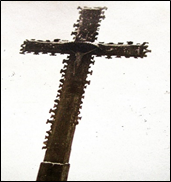
Figure 1 Gravestone cross, 1883, Šiauliai (LKV, p. 208).
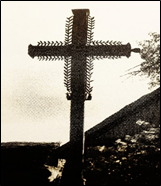
Figure 2 Homestead cross, 1897, Gudeliai village, Šiauliai district (KL, p. 418).
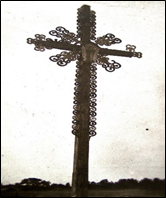
Figure 3 Gravestone cross, Ringės village, Tauragė district (KL, p. 428).
One of them is the “ tooth” bands , the edges of the sides of the cross consist of a rhythmic repetition of small stylized two or three petal shapes, sometimes they are combined with the shapes of sunflowers-rosettes and triangles. The prevalence of such a decor is characteristic only of a few areas of Samogitia, therefore it can be stated that it is4 a principle of decoration of tall wooden crosses formed by local craftsmen. The primary source of such a decor could have been the oldest cross with an analogous decoration, built in 1857 near the Augustavas Manor (Klovainiai), which could have been created by local craftsmen working in the manor’s workshops. This idea is also confirmed by the fact that it was in Klovainiai and Šiauliai counties that there were the most crosses with such or similar decoration. The crosses of the two crosses in these areas were also decorated using an analogous principle, which indicates a former common tradition of local decoration.
"Tooth" bands around the entire cross are also found in Aukštaitija, but here geometric shapes prevail, not plant ones - triangles, crosses, semicircular figures, and very rarely, silhouettes of trefoil flowers are used together with them.
Another type of decoration of Samogitian crosses is garlands of stylized plants that more or less surround the side parts of the monument. These are usually garlands made of modest or more complex S-shaped “waves” with small leaves, sometimes with small flowers (Figure 4). This type of decoration is rarer (mainly recorded in Šiauliai County), and the crosses are characterized by a light openwork ornate silhouette.
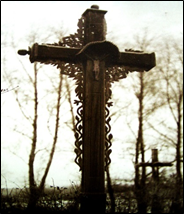
Figure 4 Gravestone cross, 1892, Joniškis cemetery, Šiauliai district (LKV, p. 130).
A similar decor is used in another variant of this type – when the ornaments in the silhouette of the monument are composed in the form of a Greek (isosceles) or short Latin cross (the longer lower part of the pillar is left undecorated, Figure 2). Sometimes easily recognizable plant motifs are used for their decor e.g., oak leaves (Figure 5). Such crosses, like the ones discussed earlier, are very diverse – they have a more modest or more complex ornament design and are widespread in the same areas of Šiauliai and Klovainiai, therefore they are another variation of the local decorative tradition.
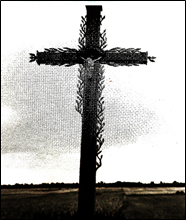
Figure 5 Cross in the fields of Endriuškiai village, 1901, Šiauliai district (LKV, p. 178).
Another variant of this type of decorative composition is particularly ornate, when the monument uses four short or longer rays of the same or different pattern, or more complex openwork “shields” Figure 3, (Figure 6). It should be noted that, as in the case of the previous variant, S-shaped and stylized plant bands were also used in the decoration of double crosses, mainly in Šiauliai County. Since the stylistics of the decoration of these monuments are similar and such motifs are found in one area, it can be assumed that these are the works of one master and/or his students and followers. This style of cross decoration has not been found in other regions, which only confirms the specificity of the local tradition.
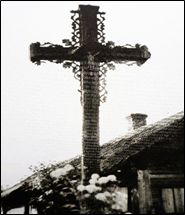
Figure 6 Homestead cross, 1901, Gibaičiai village, Šiauliai district (KL, p. 398).
Interpretations of the symbolism of type 1 cross decoration
What meanings could the decoration of the entire cross or its upper part with plant motifs have had? Speaking about the forms of plant ornaments themselves, it must be noted that due to the stylization characteristic of folk art, it is difficult to determine what specific flower is depicted. In the folk art of Samogitia - in architectural decoration, textiles, and furniture painting - tulip and lily motifs are very common, often named by researchers only by the name of lily. This is a three-petal profile, with a wider (tulip) or narrower (lily) lower part. These plants appeared in Lithuania quite late, and there were older plants with a similar three-petal profile - bells - in the meadows, so it can be assumed that people were not interested in a specific flower, but in the form of three petals, because the number 3 had a sacred, divine meaning not only in Christian iconography, but also in the old Baltic tradition. After changing religion,5 the number 3 in the decoration of crosses also acquired a new additional meaning, associated with the Christian St. An expression of the Trinity. Along with three-petaled flowers, daisies - rosettes6 also belong to the celestial sphere, so they can also be associated with the Creator and holiness.
The symbolism of the cross decorated with stylized plant ornaments may be related to the Tree of Life. In Christian iconography, the green cross symbolizes the Tree of Life expressing victory over death, associating it with the mythologems of the Tree of Life in Paradise and the Cross of the Crucifixion on Golgotha.7 The latter symbolism was developed in Europe in the early middle Ages, and the literary presentation of the cross-tree was understandable to illiterate people, because it corresponded to the images of the cult of sacred trees that had not yet disappeared at that time. The cross-tree, symbolizing the Kingdom8 of Heaven and eternal life returned to humanity through the sacrifice of Christ, was also popular in the church art of the Baroque era, therefore the image of the Tree of Life was expressed by a wooden cross decorated with plants.
Since Lithuanian wooden crosses belong to the field of religion, it is natural that the origins of the cross-tree image may be related to church art. Since many churches in Lithuania were rebuilt, no data has survived about the examples of religious art that existed in them, therefore it is impossible to compare possible influences in specific areas of Samogitia. The earliest known example - Christ crucified on a massive, oak-like olive tree from the 18th century (around 1740) was in the Vilnius church.9 The other two tree-crosses have survived in Samogitia in Tver, and in Aukštaitija - in Antašava churches. Such examples of altar crosses could also have been prototypes of crosses decorated with garlands, but this type of decoration was not widespread in Aukštaitija, so there was no direct influence in this region.
On the other hand, local tradition influenced the iconography of church art, as the vine, which does not grow in Lithuania, was replaced by plants familiar to the villagers, used in folk art. These features are visible in some Crucifixes on the beams of Baroque- style churches in Samogitia: in Seda, following the Baroque tradition, two branches of vine are depicted on either side of the Crucifix, but under the influence of the image of a flower in a vase popular in folk art, the cross "grows" in a pot/vase; in Tirkšliai Church, the Crucifix is surrounded by vine garlands and stylized Christmas tree branches in a vase popular in folk art.
The rural cultural environment also plays a significant role in the origin of the decor – long-standing folklore, its own customs and beliefs, in which ancient and Christian images are intertwined. There are many examples of the Tree of the World and Life growing in the sacred center in mythological Lithuanian folklore,10 the remains of the tree cult are also visible in folk beliefs,11 the identification of the tree and the cross is also shown by the expression “we planted a cross”12 and the belief that only a wooden monument is sacred. In folklore, it is clearly seen that the tree, like plants, expresses the essential symbolism of life and fertility – growth, flowering, maturity and seed, because the main property of a plant is to be reborn from the womb of the earth in time, and the longevity of trees – surpassing even human age – is a visible image of the continuity of life. Therefore, in church and folk art, leafy, budding and flowering plants belong to the same symbolism of the manifestation of life.
Another possible reason for the decoration of wooden crosses with plant motifs may be related to the decoration of monuments with garlands of field flowers not only during celebrations, but also during religious holidays. This tradition is visible not only in archival photographs, but has survived to this day - the monument's pillar, and sometimes the upper part of the cross, is wrapped with long braided garlands of plants. In this way, respect for the monument is shown, and a festive atmosphere is also given.
Therefore, it can be stated that the distinctive decoration of wooden crosses with plant
"teeth" and garlands of stylized plants that spread in Samogitia may be related to the Cross of Christ - the Tree of Life seen in churches, but original variations of the decoration emerged under the influence of local culture.
Type 2 crosses with plant-shaped rays
This is the most numerous type and is characterized by a variety of decorative motifs, and it was also widespread in Samogitia. There were crosses decorated with abundant plant rays in some areas of Kaunas and Marijampolė, but only isolated examples were recorded, so it is difficult to speak of a unified local tradition.
The rays composed in the cross form different silhouette variants – from simpler to complex cross sun shapes. Most often they are combined with the decor of the transverse ends, creating a single ornamental composition. There are many variants of this type of cross, each of them differs not only in the pattern of the rays, but also in their lengths, combinations of decor with other parts of the cross, so I will only present the general features.
The first variant is four rays, quite often combined with a decoration of the transverse ends. Shorter ones form a more passive, longer ones a more active X-shaped silhouette of the cross. The most modest form of this variant is four rays of a solid profile, which are made up of one plant "branch" with small leaves and a stylized bud or flower blossom. More often the ray is formed in a "bouquet", i.e. it is made up of various three symmetrically composed elements, sometimes using S-shapes of a complex design (Figure 7). Crosses of this style have been recorded in Samogitia in Šiauliai, Tauragė, Mažeikiai, Raseiniai counties, and in other areas of Lithuania - only isolated examples of plant rays of simple shapes used.
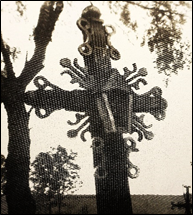
Figure 7 Gravestone cross in the Batakiai cemetery (fragment), Tauragė district (KL, p. 507).
The second option is when two or three “bouquet” shaped rays are attached to a smaller or larger circumference of the cross. They are shorter or longer, but do not reach the length of the crossbars. The motifs of the rays’ decoration are similar to those discussed earlier, and the shape, length, and different number of them determine a different silhouette of the top of the cross, and sometimes together with the decoration of the post and crossbars they form a single composition (Figure 8&9). The prevalence of crosses of this style covers the areas of Tauragė, Mažeikiai, and less often Kretinga, and in other regions they are found extremely rarely.
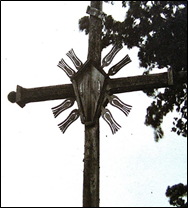
Figure 8 Gravestone cross (fragment), 1894, Žemaičių Naumiestis cemetery, Tauragė district (LKV, p. 542).
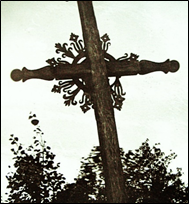
Figure 9 Gravestone cross (fragment), Tauragė cemetery (LKV, p. 525).
The third variant includes crosses close to the second, but the nature of the silhouette of the top differs - long rays reaching almost to the end of the crossbars form an active openwork blooming "sun" in the silhouette. Crosses of this style were very common in Samogitia in Raseiniai, to a lesser extent in Kretinga and Tauragė counties. The shapes and composition principles of the rays are very diverse, so I will mention only the more interesting ones. Quite often, the central space between the crossbars is filled with one wide ray cut out of the S-shape with plant details, and their sides rest on the sides of the crossbars. The nature of the "sun" at the top of the cross depends on the pattern of the rays - when the stylized plant rays are wider, the shape of the "sun" is more graphic (Figure 10, 11), and when using openwork of a complex pattern, the top of the cross takes on the appearance of a solar disk resembling paper cutouts (Figure 12). In the Raseiniai and Tauragė areas, the “suns” of the crosses were sometimes formed with rays of straight lines, reminiscent of blooming flowers – daisies (two long lateral leaves, and a flower on a stem in the center (Figure 13). A similar principle of forming the “sun” was also used in Kaunas and Marijampolė counties, but there were not many such monuments compared to Samogitia (Figure 14). In other Samogitian crosses of this variant, more than three rays of stylized plants were used, creating a very graphic silhouette (Figure 15). As in other cases of decoration, the sun-shaped decoration was also used in double crosses, usually composing rays of a different pattern at the top and bottom (Figure 16).
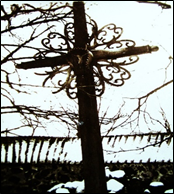
Figure 10 Cross in the churchyard of Betygala church, Raseiniai district (LKV, p. 380).
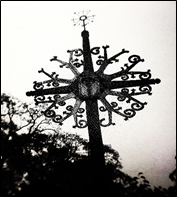
Figure 11 Cross in the cemetery of Skirsnemunė town, Raseiniai district, (LKV, p. 398).
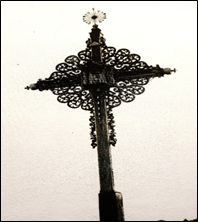
Figure 12 Raudonėnų village Youth Cross (built with the joint funds of the village's young people), 1889, Raseiniai district (KL, p. 469).
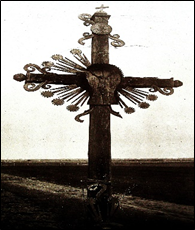
Figure 13 Roadside cross, 1884, Naukaimio village, Raseiniai district (LKV, p. 439).>
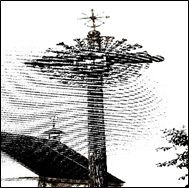
Figure 14 Cross ir the Zapyškis town cemetery, Kaunas district (KL, p. 456).
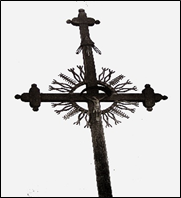
Figure 15 Cross ir the Gargždai town cemetery, Klaipėda district (LKV, p. 353).
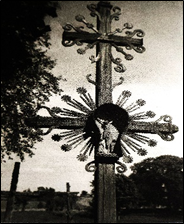
Figure 16 Gravestone cross, 1883, Raseiniai cemetery (KL, p. 540).
All these crosses are exceptional, unique, and have no analogues not only in the same areas, but also in the Lithuanian and global context, and this reveals the creativity and originality of the rural people of the late 19th century.
Interpretations of the symbolism of type 2 cross decorations
What could be the era of origin of such a style and the origins of the decoration? Culturologist Jonas Balys, who wrote about folk ornamentation and the origin of cross decoration, suggests that this is not an old tradition, but an innovation of the early 20th century.13 One has to disagree with this opinion, because the majority of Samogitian crosses decorated with openwork rays and "suns" were created in the second half of the 19th century - at the end (1873 - 1897), and there are not many such crosses built at the beginning of the 20th century. On the other hand, their beginning can be associated with a full hundred years earlier - with the beginning of the 19th century. This is evidenced by a double cross from 1810 in the Viduklė area (Raseiniai county), decorated with different openwork rays (Figure 14). Therefore, it is possible that the decoration of rays in this style originated in one area and by the end of the 19th century - the beginning of the 20th century spread over a larger area.
The origin of the Žemaitija radiant crosses, especially its “solar” forms, may be related to both liturgical utensils and the unique worldview of the rural people, thanks to which the original transformations of Christian iconography took place. From a religious point of view, the analogy of the form may be related to the Baroque radiant monstrances, which were seen in churches during services and religious processions. Baroque was very widespread in the architecture and interiors of Žemaitija churches, there are also small wooden churches of unique shapes built by local craftsmen that have survived, in which the “folk baroque” style is clearly visible. By the way, the latter factor may have also determined the abundance of plant forms in the decor of Žemaitija wooden crosses,14 because the baroque, full of flexibility and splendor, did not avoid various forms of vegetation.
The ornate Baroque monstrances made of precious metals are directly associated with divinity and Christ: the upper part of the monstrance – the radiant glory – expresses light, divinity and eternity, therefore corresponding to the symbolism of the halo, and the Host placed on top of the glory signifies the sacrifice of Christ on the cross, which in the liturgy becomes the body of Christ. This symbolism can also be seen in radiant crosses, as more modest or more ornate rays surround the center of the cross, which depicts the Crucified One. In this way, not only holiness and divinity could be expressed, but also the main Christian religious element – the sacrifice of Christ – was emphasized.
Another analogy is the well-known image of Christ as the Sun (Sol) in Christian iconography. Invictus) is an image taken from the ancient Roman Sun god Helios and his celestial chariot. This iconographic image spread in church art from the 12th century to the end of the 19th century,15 so it could also be seen by rural people, associated with the light of heaven, the Sun, and divine protection.
On the other hand, the question arises, why was it not satisfied with the straight, simple, wavy rays, which were most often used in monstrances? They are simpler in terms of technical execution, so it is logical that this form could have been popular for this reason, but there are only isolated examples of wooden crosses with straight or wavy rays in the Lithuanian cross heritage. Therefore, the gaze is directed to rural culture, especially folklore and folk art, which reflect the symbols used by everyone at that time.
The main decoration of the crosses, radiating with ornate rays, is concentrated at the top, so the silhouette of the monument is dominated by the "sun" of the cross, which, depending on the structure of the ray pattern, becomes a flower-shaped circle or an openwork sun. The symbolism of the flower, the wheel, and the Sun is related in Lithuanian folklore, so I will provide brief interpretations of the possible meaning of their use in crosses.
In Lithuanian folklore, as in many European nations, the Sun travels across the sky in a chariot (wheels) drawn by white horses. The sky is associated with light and divinity, so this image directly corresponds to Sol Invictus image. If the villagers did not see this image in churches, they could hear the juxtaposition of Christ and the Sun in services and identify it with the light that is very important for farmers. In folklore, the connection between the Sun and wheels is very obvious - the Sun not only rides in a chariot, but also rolls across the sky, and therefore is itself a wheel.16 The sign of a wheel with spokes is also a symbol of the Sun not only in Lithuania, but throughout the world, therefore the composition of the rays according to the principle of a wheel expresses not only the light of the sun, but also the movement of the light.
The combination of the spokes - rays of the wheel and plant forms also has counterparts in folklore when the Sun takes the form of a rose, for example, in the riddle “On Christmas morning the rose bloomed “(Sun). In textiles, the ornament of an eight-leaf rosette, a rhombus with outgrowths (rays) is called a "rose", in folk art the Sun is also expressed by a rose, which symbolizes the idea of life characteristic of plants. A significant aspect of the image of the Sun - rose (rosette, wheel) is the similarity of the crown of sun rays and the branched rosebush, the rose flower17 and, according to Algirdas Julius Greimas, the immanent meaning of the rose as a cross - "intersection", the expansion of the intersection point by a circle (circle).18 Another important semantic connection is the depiction of a flowering plant in the decor of furniture, especially dowry chests. A stylized lush bush growing in a vase with three-leafed flowers or sunflowers (rosettes), or just a vertical stem with a Sun-shaped flower - the Tree of Life, at the top of which the heavenly luminary often shines, expresses not only the flowering of youth, but also symbolizes fertility, success and happiness in life. Thus, the symbols of the Sun and the flower - rosette used in everyday life are related to the well-being of human life, vital force, and in a general sense - to the union of the life-giving, giving birth to the earth and divine light. We also see meaningful analogies in Christian iconography - the connection between the Son of God and the rose is reflected in the symbolism of the blood of Christ, visually expressed in the stained glass windows of the light sources of Gothic churches - rosettes, in the center of which the Son of God is depicted, symbolizing the eternity of God's world.
Another aspect related to the Sun and flowers – in Lithuanian folklore, the Sun is not only the light of heaven, but also the guardian of the living and the dead, the heavenly mother, therefore it is no coincidence that the afterlife is perceived as the garden of God or the Sun, the garden of the Sun. The garden of the Sun is a “garden of ghosts”, because it is looked after by the Sun – heavenly and earthly plants grow from the light emanating from her face. The garden of the Sun (Paradise, garden of ghosts) – a land of blooming flowers and eternal light, a consolation for the dead – they not only live here, but also bloom with flowers themselves, shine with suns.19 The stylistics of wooden crosses-sun rays may also be related to this concept - perhaps the idea of the sacred vegetation of this Garden of the Sun was expressed through combinations of stylized plants that do not exist in reality? Analogies also exist in the Christian religion - Christ is the Sun, and believers await an afterlife in a Paradise full of light.
Plants, like trees, constantly accompanied a person living in nature - they were both food and medicine, they also had their own symbolism, which is evident in calendar, religious customs and beliefs, in homestead flower gardens. The role of protection related to health and human well-being is important in the purpose of plants, so it is no coincidence that certain trees were planted in the territory of the homestead, nursery flowers and wild herbs were used not only as medicinal herbs, but also to protect the house, they and trees were intermediaries between the two worlds - oracles, bringing knowledge through dreams.20 The protective purpose is especially clearly seen in the use of plants consecrated in the church - they are placed in the corners when building a house, stuck to the ceiling from thunderstorms, placed in a coffin with the deceased, etc.
A plant, a tree is a part of God's creation, therefore it also contains the power of the divine, which is strengthened by the Sun.21 For the reasons listed, crosses with leaves and flowers in the form of suns erected in homesteads and cemeteries can express not only the manifestation of life, but also divine protection of the living and the dead, because wooden monuments were erected not only as religious symbols, but also for many other purposes.22 On the other hand, remembering furniture painting, it can be stated that crosses with flowers in the form of suns are another variant of the Tree of Life, which spread in Samogitia in other areas than monuments surrounded by plant ornament.
3 Perkovskis J. Ornamentation of Samogitian Folk Art: Form and Symbolism. Vilnius; 1999:82.
4 Wooden Lithuanian crosses reached a height of 6–8 meters.
5Christianity was introduced in Samogitia at the beginning of the 15th century, and wider catechization in the periphery took place only in the 17th century.
6In Lithuanian, the flower of a flower with many petals, like the decorative motif, is now called "sunshine”. For clarity, it is also referred to in the text by the international term "rosette".
7Speltz A. Styles of Ornament: From Antiquity to the Nineteenth Century. London: Bracken Books; 1996:15-20, Eliade M. The Eternal Return Myth: Archetypes and Repetitions. Vilnius; 1996:17; Encyclopedia of Mythology , Vol. 2, Vilnius, 1999, p. 118, etc.
8 Christian Symbols. London: G. Bell and Sons; 1971:2–4.
9 Matušakaitė M. Senoji medžio skulptūra ir dekoratyvinė drožyba Lietuvoje. Vilnius: Baltos Lankos; 1998:131-132, ill. 224.
10Beresnevičius G. Lithuanian Religion and Mythology. Vilnius; 2004:246-260,211–224.
11Buračas B. Venerated trees (tree cult in Lithuania). Our Forests. 1944;(1-2):82–83.
12 Šinkūnaitė L. The history and existence of the Hill of Crosses: from suffering to eternal being. In: Lithuanian Cross-Making in the Global Context. 2005:30.
13Balys J. Folk ornaments and the origin of crosses. Margutis.1957;( 6–7):4.
14In Aukštaitija and other regions of Lithuania, there were not many Baroque-style churches, and more attention was paid to the more modest Classicist and Neo-Gothic styles. The Lithuanian capital Vilnius is an exception - most of its churches are in the Baroque style.
15 Kajackas A. Bažnyčios liturgija. Kaunas; 1998:52-64; Ferguson G. Signs and Symbols in Christian Art. New York; 1961:45.
16For more information, see: Razauskas D., Ryto rato ritimai , Vilnius, 2000.
17Vaitkevičienė D. Gardens of the sun. Folk Culture. 1997;(1):29.
18Greimas AJ. In search of the nation's memory: about gods and people. Vilnius; 1990:468.
19Vaitkevičienė D., pp. 27–35.
20 Basanavičius J. Iš gyvenimo lietuviškų vėlių bei velnių. Chicago; 1903:LXIX. Marcinkevičienė N. People – about death and the afterlife. Folk Culture. 1997;(5):19. Stundžienė B. The uniqueness of tree symbolism in songs. In: Augalų ir gyvūnų simboliai. Vilnius; 1999:215–237. Merkienė R. Plants in the 20th century Lithuanian worldview: reality in the symbol system. In: Augalų ir gyvūnų simboliai ols. Vilnius: Gervelė; 1999:193–215.
21The belief in the power of the Sun on plants has survived to this day, as they are collected for health purposes until June 24 (the old Dew festival, later Midsummer), as they are most "drunk" by the Sun (the longest days, the most light).
22Some of them are: an offering for the deceased, an offering to God in request or thanksgiving, a memorial, seeking God's protection, etc.
In the Aukštaitija region, the specifics of crosses with plant decoration are different - here there is no samoatia-specific circling of the entire cross with garlands of stylized plants or "teeth", crosses decorated with rays were not built (only isolated examples, when straight rays are used in the back part of the cross chapel). Plant decoration was not popular in Aukštaitija monuments - it was usually used only as small details (e.g., quatrefoil crossbar ends, sunflowers placed in them, etc.).
Type 1 – crosses with altar chapels
In the Highlands, and especially in its eastern part, a type of cross characteristic of this region with smaller and more modest and larger and more ornate cross chapels, whose architectonics and decorative elements resemble church altars, spread only? Due to this specificity, they are called crosses with chapels-altars or altar crosses. The plant decoration in them is only an addition, so it does not affect the silhouette of the cross. Most often, these are small stylized, modest or more complex flowering, leafy bushes in vases - Trees of Life. They are composed in the following variants: 1) two or four stylized flowering bushes growing from a vase are placed in vases at the bottom of the chapel at the feet of the Crucified (Figure 17); 2) two or more plant additions of different styles are used in particularly ornate cross chapels of this type. The base of these crosses and the chapel has a graceful floral ornament (Figure 18&19). This type of decoration is found in Rokiškis and Zarasai counties, and in some areas of Anykščiai, Kupiškis, and Utena counties.
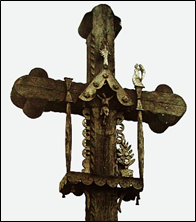
Figure 17 Cross in the fields of Bradėsiai village (fragment), Zarasai district (LKV, p. 302).
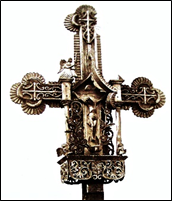
Figure 18 Homestead cross (fragment), 1900, Miegoniai village, Rokiškis district (LKV, p. 120).
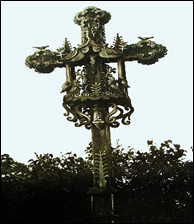
Figure 19 Homestead cross, 1883, Laužadžiai village, Rokiškis district (KL, p. 500).
Since these crosses have a number of elements similar to the altars of churches (a stylized canopy or foot, candles, angel figures, column-shaped supports for the canopy and foot, and a monstrance or host that is quite often placed), an analogue of the plant motif must also be sought in this space. In Baroque churches, stylized plant bushes in vases are placed at the top of the altars, depicted in the antepedium , and are found in the decor of the pulpits and pews. Such motifs, as well as the decoration of altars with fresh flowers, could have influenced the origin of plants in vases in the compositions of chapels-altars in Aukštaitija. On the other hand, in contrast to Samogitia, there are not many Baroque and neo-Baroque style churches in Aukštaitija; classicism and neo-Gothic styles prevailed here, in which the form of the Tree of Life - a bush growing in a vase - was not used. Therefore, the question of why this motif spread in Aukštaitija in particular awaits further research. The style of depicting the Tree of Life used in wooden crosses differs from the forms used in other branches of folk art - textiles, furniture painting, and architecture, but its stylization is close to folk art, as the specifics of the depiction depended on the technical abilities of each master.
Type 2 – plant “crown” in the cross
Another variant of the use of plant ornament belongs to isolated cases. Some of these are the monuments of Petras Blažis from Anykštėna, created until the 1930s. His style is characterized by emphasizing the cross with a two-part “wreath”, the lower part of which uses stylized plant patterns (Figure 20). As in the works of other Lithuanian masters, his crosses are similar, but not identical, therefore the ornamentation of the plant “wreath” part also differs. A similar decorative principle is sometimes found in other areas of Aukštaitija, but only in isolated examples and differs in symmetrical composition, the use of various types of S or other forms. The emphasis on the center of the cross with a “wreath” may be related to respect for the monument, expressed by decorating it with plants, or perhaps a certain influence of the altar chapels built in this region, by composing the garland of plant ornaments only around the Crucified One?
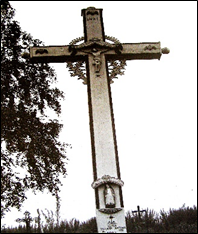
Figure 20 Gravestone cross in Kurkliai cemetery, 1923, the author Petras Blažys, Anykščiai (Zabulytė, il. 203).
In summary, it can be stated that the popularity of plant motifs in wooden crosses of the late 19th century and the first half of the 20th century and the abundance of their variants distinguish Samogitia from other regions of Lithuania. The popularity of plant motifs in wooden crosses of Samogitia was influenced by the decor of Baroque churches and liturgical objects, coinciding with the archaic images preserved by conservative farmers, because aspects of the meanings of vegetation are related to the content of religious monuments - a wooden cross is both a sacred symbol of the Tree of Christ, the Tree of Life and the expression of the Sun, and the protection of the living and the dead. Therefore, a monument decorated with plant ornaments is a bridge between God and man in various areas of his activity and life. In the decor of wooden crosses of Samogitia, the meanings of plant motifs act as elements of a single symbol system, expressing the category of holiness common to Christianity and the archaic tradition, leafing and blooming with the flowers of eternal life.
In the crosses of Aukštaitija, plant motifs are used more sparingly and are more often found only as small details, while the Trees of Life used in the crosses with chapels – altars, typical of this region, are close to the decoration of Baroque churches. The use of plant decor to complement the silhouette of the cross is found only in isolated cases (P. Blažis crosses).
None.
The author declare that there is no conflict of interest.

©2025 Zabulytė. This is an open access article distributed under the terms of the, which permits unrestricted use, distribution, and build upon your work non-commercially.