eISSN: 2577-8250


Research Article Volume 8 Issue 3

Postdoctoral Stay, National Pedagogical University, Mexico
Correspondence: Mauro G Peralta Silverio, Postdoctoral Stay, National Pedagogical University, Ajusco Unit, Mexico
Received: September 15, 2026 | Published: September 28, 2026
Citation: Silverio MGP. Toward the development of a new academic culture: the case of the academic program for the master’s degree in pedagogy at FES aragón, UNAM (2005–2009). Art Human Open Acc J. 2026;8(3):159-164. DOI: 10.15406/ahoaj.2026.08.00286
The purpose of this research was to explain the construction of a new academic culture within the Master’s Program in Pedagogy at the Aragón School of Higher Studies of the National Autonomous University of Mexico (UNAM), based on the development of its Academic Project (AP), following a diagnostic assessment. The research also outlines the methodology developed during the period from 2005 to 2009, when it was implemented, and presents some empirical data and findings. Therefore, it can be affirmed that this innovative pedagogical experience successfully initiated the formation of a new academic culture by integrating the program’s core functions—teaching, research, and cultural dissemination—across various dimensions that structured its academic project. This project was completed thanks to the collaborative work of its faculty. Finally, the completed academic project, with its 10 operational programs, is presented as the outcome of this research.
Keywords: new academic culture, academic project, master’s in pedagogy at FES aragón, UNAM
The development of the academic project for the Master’s in Pedagogy at FES Aragón UNAM began by revisiting previous assessments conducted during working sessions with faculty members who had been with the program since the previous administration in 2003; this was enriched with findings from a new situational assessment conducted in 2005.
At the first working meeting in 2003, the lack of collegial collaboration was identified as the main problem, and it was agreed to develop an academic project that would enable the promotion, development, and consolidation of the Master’s in Pedagogy program; this would be achieved by analyzing and restructuring collegial collaboration.
As a result of the second working meeting in 2005, it was agreed to evaluate and monitor the collegial work, address the need to organize academic bodies in order to strengthen and consolidate them, strengthen research, teaching, and the dissemination of culture by all program stakeholders, and finally, consolidate the tutoring system.
Finally, the situational analysis by Peralta (2007) provided insight into the program’s current status: its strengths, weaknesses, and areas of opportunity. It is important to note that the findings made it possible to classify the program’s needs into four dimensions: academic, pedagogical, institutional, and managerial; establishing as a priority the development of an academic plan to organize its core functions and address needs related to specific operational programs (Table 1).
|
Dimensions |
Findings of the Assessment |
Needs to Consider |
Consequence |
|
Academic |
No academic life |
Revitalizing academic life |
Need |
|
Individualistic and fragmented culture |
A culture of collaboration and teamwork |
||
|
Demands for faculty participation |
Reassigning faculty based on their academic training |
||
|
Pedagogical |
The program lacked a pedagogical focus |
The focus is on educational practices and student development |
of the construction of |
|
There was no space for debate, construction, in-depth exploration, and pedagogical research |
Opening of Field IV: Construction of Pedagogical Knowledge |
||
|
Problems with educational practices: committees, tutoring |
Redefinition of educational practices: colloquia, committees, tutoring |
||
|
Institutional AL |
The current curriculum was not being implemented |
Reorganization of research fields and lines |
Project Academic |
|
Work methods that would give the program its identity |
Drafting of the founding document |
||
|
There was no time or space for work meetings |
Meetings of program leaders, research fields, and research areas |
||
|
Management |
Bureaucratic-administrative |
Strategic, open, and democratic |
for the Master’s in Education from the FES Aragón |
|
There was no internal decision-making committee decision-making |
Dynamic team responsible for research areas |
||
|
Low graduation rates |
Degree options |
||
Table 1 Situational assessment of the master’s program in pedagogy at FES aragón (2005)
This table presents the findings of the diagnostic assessment, classified into four dimensions, which served to justify the importance of developing the program’s academic plan; based on this plan, fundamental decisions were made to foster its academic culture.
Research problem
One problem identified was the lack of studies documenting the challenges of curricular changes and outlining how to provide theoretical training to stakeholders to help them adapt to such changes. It was not known for certain why or for what purpose to change, nor were the implications clear. Work continued in isolation, following traditional methods and in line with the academics’ original training. This research problem originated in the Master’s program in Pedagogy, as it lacked an academic project that would provide it with direction and its own identity. A bureaucratic-administrative management model persisted, characterized by fragmented, individualistic practices.1 Pedagogy, across its various fields of knowledge and lines of research, was absent; there was a lack of clarity and purpose in its training processes, practices, and outcomes. The field of pedagogy, as an object of study, was absent.
Research questions
How can the issues that stakeholders had identified in previous assessments be addressed? What academic actions should be implemented in the academic project? What theoretical management approach would best address the identified issues?
Research objectives
To develop a proposal for an academic intervention that would address the issues raised by the teachers. To document the participatory management experience implemented by the program. In this way, the pedagogical debate was revived by developing the theoretical foundation of the academic project based on four dimensions: (Frigerio and Poggi.,2) Organizational, Pedagogical, Administrative, and Community.
Research assumptions
The absence of theoretical training makes it impossible to justify and understand the need for changes related to a new academic culture. The academic project of the Master’s in Pedagogy enabled the integration of objectives and actions for innovation and the continuous improvement of the program. The academic project allowed for the coordination of projects, programs, strategies, actions, and proposals from different lines of research. It reconstructs the pedagogical meaning for the participants by reframing their pedagogical practices within a horizontal framework (Table 2).
|
The Academic Project |
To transform an academic culture |
To what end? |
|
1 
|
2 
|
3 
|
|
It is the means to achieve educational goals based on the following dimensions: |
It is the space where the participants develop, grow, and are educated. |
Improving student education |
|
Academic |
It is the context in which it takes place Academic Life |
Achieve effective coordination between curricular and extracurricular activities. |
|
Pedagogical-curricular |
|
Create organizational conditions among individuals |
|
Institutional |
|
Optimize the program’s core functions. |
|
Management |
|
|
Table 2 Purpose of the Academic Project and Its Relationship to Academic Culture
Source: Table prepared by the author, based on empirical fieldwork.
This table illustrates the ultimate goal of the Academic Project for the Master’s Degree in Pedagogy: to move toward a distinct academic culture, with the aim of consolidating the program to an international level in accordance with CONACYT standards.
For any type of transformation in any educational institution, it is first necessary to conduct a situational analysis in order to subsequently develop a project, which may be educational, institutional, pedagogical, academic, or center-based (according to existing literature in Latin America and Spain). This depends on the scope, intent, or institutional level of the expected transformation, as well as on its conditions, contexts, and the prevailing meanings and interpretations of its stakeholders. In this case, it is an academic project designed to address the need to initiate a transformation of the program’s current reality (this process must be holistic and integrative), with the aim of creating the necessary institutional, academic, and curricular conditions for the generation of knowledge—which is the raison d’être of the graduate program. Below are some examples of the development of management projects in higher education, which will help illustrate the significance of their design, as well as the fundamental importance of having an academic project for the Master’s in Pedagogy at FES Aragón.
Project Development. According to Pozner.,3 schools today require changes in their style and leadership. Moreno.,4 for his part, in “Institutional Administration and Management in Graduate Programs in Education,” emphasizes the need to form collegial academic bodies that replace traditional bureaucratic structures of institutional management based on preserving the status quo and maintaining a power structure rooted in personal loyalties, top-down directives, and attempts to control groups and ideas. In the realm of higher education institutions as well as in graduate programs, as Vera., 5 notes, transformations and adjustments are taking place with a view to providing quality educational services, as Naranjo.,6 points out, these are grounded in equity, relevance, efficiency, and effectiveness, in addition to incorporating a new culture of evaluation to promote transparency, accountability, and institutional improvement, as noted by Pacheco.,7 and Díaz Barriga.8
The trends stemming from current educational policies compel institutions to seek a new form of academic management, based on strategic management,9 and to organize themselves around projects—educational, pedagogical, institutional, academic, curricular, and school-based; all of which share the common elements of conducting assessments, reorganizing and redistributing their various units or areas, as well as forming groups and working effectively as a team, as proposed by Ander-Egg.10 In this process, stakeholders engage, build, reach consensus, and translate it into an educational project,11 in which everyone participates in its development for continuous improvement. This set of projects is conceptualized in various ways:
The fundamental difference between these projects and those developed for the program is that most of them are framed in theoretical, propositional terms—focusing on what “should be”; whereas this research documented the experiences of the participants, giving them a voice so they could understand how teachers are viewed by their peers, with the aim of beginning to theorize or reconceptualize their teaching practice. Another important difference is that these proposals are carried out at different educational levels—elementary, secondary, and higher education—in Latin America and Spain. However, there is no prior research of this kind that shows how the participants interpreted the transition from their academic culture to a Master’s program in pedagogy at the FES Aragón of the UNAM.
This figure illustrates the stages involved in developing the Academic Project, which were necessary for its subsequent implementation (Figure 1).
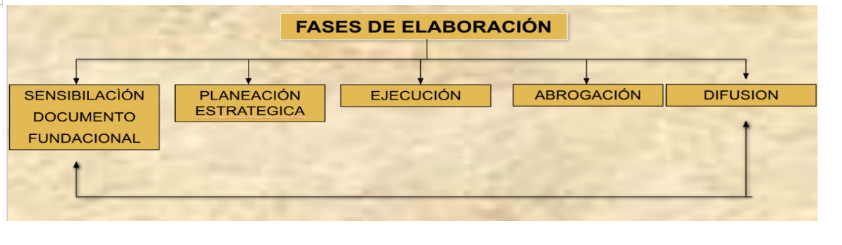
Figure 1 Phases of development for the academic project of the master’s in pedagogy.
Source: Figure created by the author, based on empirical fieldwork
In this way, the phases of academic project development were analyzed.13 It should be noted that qualitative research was prioritized because it allowed for the documentation of new guidelines for teaching regulation from an interpretive perspective, as it established a solid theoretical framework that enabled pedagogical intervention.
Field techniques and instruments applied in the research
(Table 3) The table above shows the techniques and instruments used in the field research. This empirical material allowed us to examine the issue from different angles and perspectives, capturing the testimonies of the various stakeholders involved in the development of the Academic Project for the Master’s Degree in Pedagogy at the FES Aragón, UNAM.
|
Empirical work |
Actions |
Number |
|
Master’s program assessments |
Preliminary awareness-raising sessions (20003, 20005) |
2 |
|
Situational assessment (2005) |
1 |
|
|
Surveys of students and faculty (2007) |
2 |
|
|
Interviews |
Division Head |
1 |
|
Academic Coordinator |
1 |
|
|
Field Supervisors |
4 |
|
|
Research Area Leaders |
5 |
|
|
Founding and Successful Mentor |
4 |
|
|
Students from various fields |
5 |
|
|
Video Recordings |
Academic events |
2 |
|
Tutorial Committee Meetings |
2 |
|
|
Seminar meetings |
5 |
|
|
Observation records |
Academic events |
2 |
|
Field Research Meeting |
3 |
|
|
Surveys |
Conducted among students, tutors, and professors |
5 |
|
Photo Archive |
Records of various events and activities |
5 |
Table 3 Empirical framework used in the research
Source: Figure created by the author, based on empirical fieldwork.
Implementation of the academic project for the master’s degree in pedagogy
The main finding was the application of the cyclical model of actions; that is, it is not terminal, linear, or unidirectional. We were able to experience the phases and actions across four dimensions in the implementation of the Academic Project for the Master’s Degree (Figure 2).
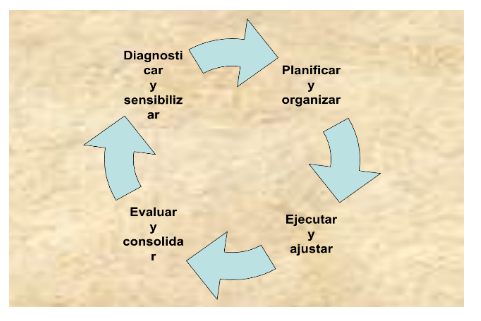
Figure 2 Phases and actions in the implementation of the academic project for the master’s degree in pedagogy.
Source: Figure created by the author, based on empirical fieldwork.
The figure above illustrates the theoretical-methodological link in the implementation of the Academic Project, which allowed us to identify obstacles and challenges for its subsequent consolidation.
Factors considered in the development of the academic plan for the master’s program in pedagogy (Table 4)
In this table, we can observe the foundations, problems, proposals, and preliminary results that emerged during the development of the academic project for the program in question (Table 5).
|
Dimensions |
Subdimensions |
Axes of Transformation |
Purposes |
|
Academic |
Relationships |
Among Academics |
Interactions with others and others |
|
Collegiality |
Tutor-Tutee |
A relationship based on freedom, equality, and creativity, coupled with responsibility |
|
|
|
Teacher-student |
Foster dynamic seminars, tutorials, committees, and colloquia |
|
|
|
Student-student |
Learning to work in groups and teams based on their own proposals |
|
|
|
Group- and team-based work |
|
|
|
|
Attractive, fostering academic growth |
|
|
|
Pedagogical |
Building knowledge Analysis of the curriculum |
Independent research |
Generation of pedagogical knowledge in different areas of the curriculum |
|
an independent manner, to solve |
Improving admission criteria |
||
|
educational problems |
Type of knowledge to be prioritize, relationship between content |
||
|
Organization |
|
||
|
Selection and organization of knowledge |
|
||
|
Transmission and classification of content |
|
||
|
Assessment of knowledge |
|
||
|
Institutional |
Formal |
Internal institutional networks (actors) Relationships with other entities (IISUE, FF, and L) |
Establishment of technical advisory |
|
Informal |
Implementation of curriculum transformation |
||
|
|
In accordance with conditions and contextual characteristics |
||
|
Management |
Strategic, |
(Internal) body of research line leaders |
Adapt and facilitate School management to support student learning |
|
Democratic |
|
|
|
|
Participatory |
|
|
|
|
Development of the academic project What is it for? What is committed to? |
|
|
|
Table 5 Development of the academic project across dimensions of the master’s in pedagogy
Source: Table prepared by the author, based on empirical fieldwork.
This table presents the dimensions and sub-dimensions that made it possible to identify areas of action, transformation, and clear objectives regarding what was intended to be achieved in each field and line of research, with the active and committed participation of various stakeholders.
An important aspect to highlight is that, following the development of the academic project, the need was identified for the stakeholders to move on to the next stage: the theorization of their educational practice; that is, to reflect on their pedagogical goals or purposes within each research line, for which it was deemed necessary to consolidate the foundational document for each research line (Table 6).
In preparing this table, the term “Academic Project” is used to refer to the means by which the objectives and actions of the Master’s Program in Pedagogy (viewed as a whole) were established, aimed at innovation and continuous improvement of the program, while encouraging the active participation of all stakeholders.
The project is structured according to the four dimensions proposed by the Argentine Educational Management perspective, which—unlike the Spanish proposal—distinguishes between the organizational and administrative dimensions. While it is true that the administrative process encompasses the stages of planning, organization, direction, and control, for the purposes of this study, it is important to examine the organizational phase separately—specifically, the division of labor between the Fields of Knowledge and the Lines of Research—as this helps clarify the participation of stakeholders in a collegial manner. In both the Argentine and Spanish perspectives, these dimensions are viewed as a system governed by the Pedagogical-Curricular dimension, in which the sum of the parts contributes to the aforementioned innovation and continuous improvement of educational practices.21–34
To establish a new academic culture for the Master’s Program in Pedagogy at the Aragón School of Graduate Studies, National Autonomous University of Mexico, the following was required:
None.
The author declares no conflicts of interest.
None.

©2026 Silverio. This is an open access article distributed under the terms of the, which permits unrestricted use, distribution, and build upon your work non-commercially.